


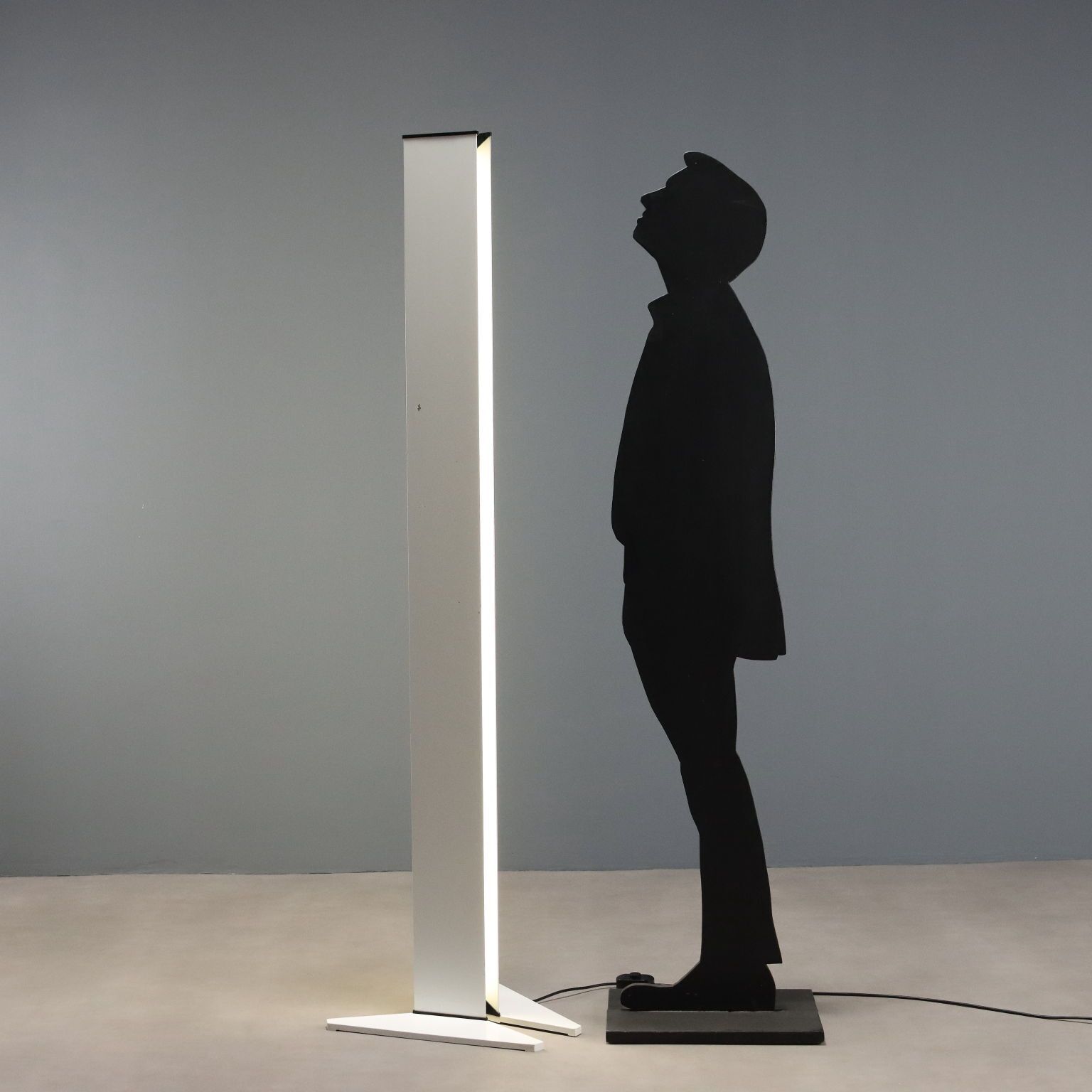
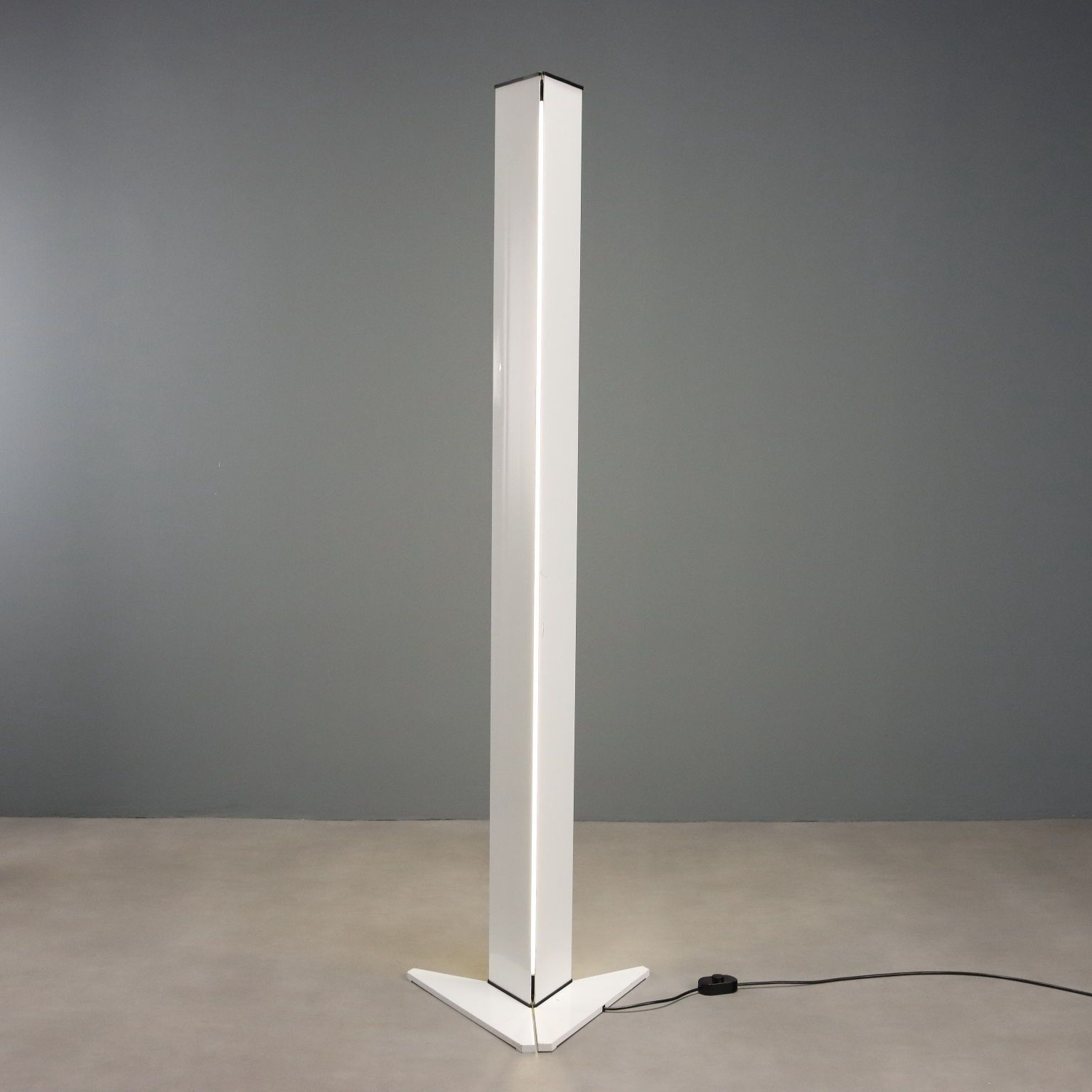
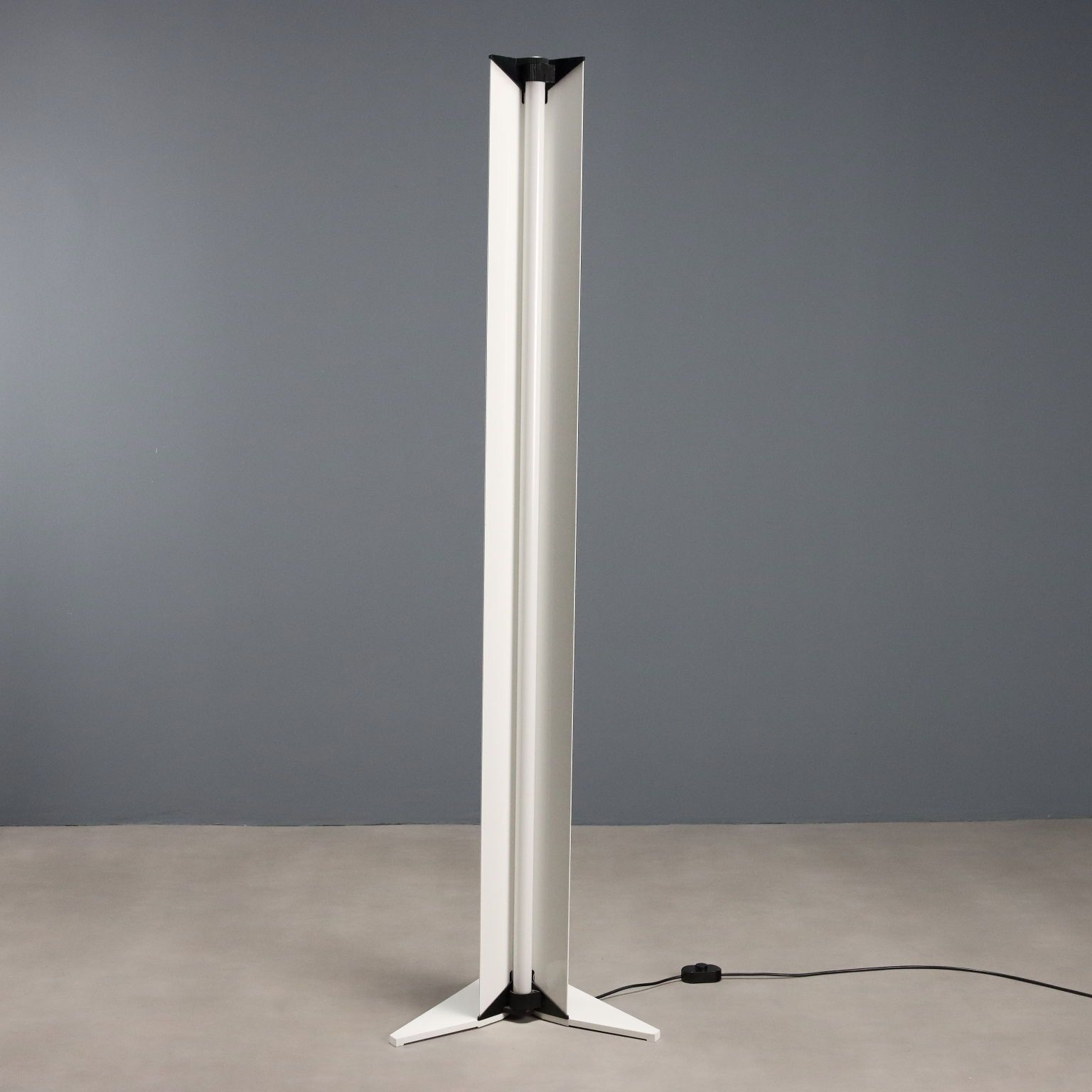

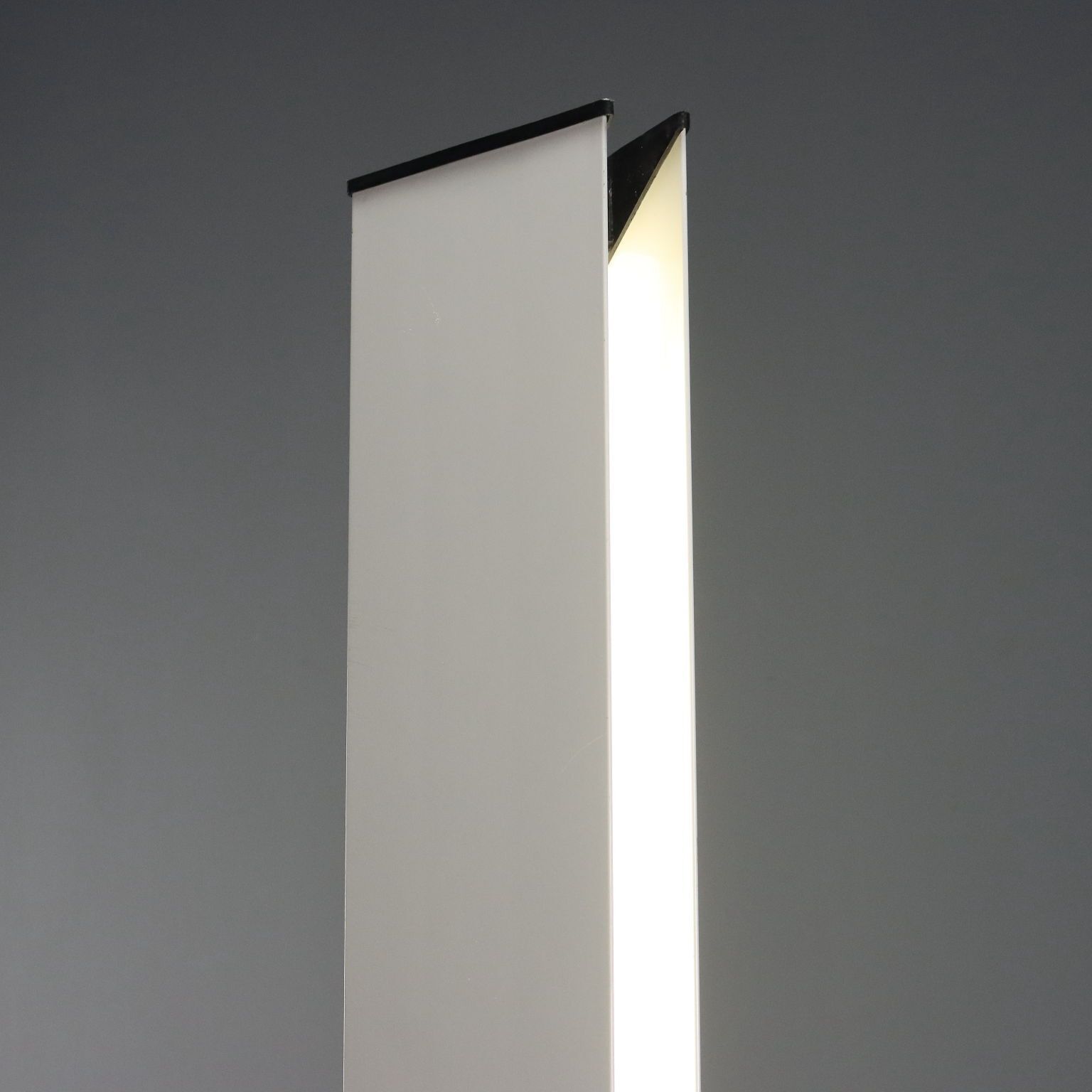
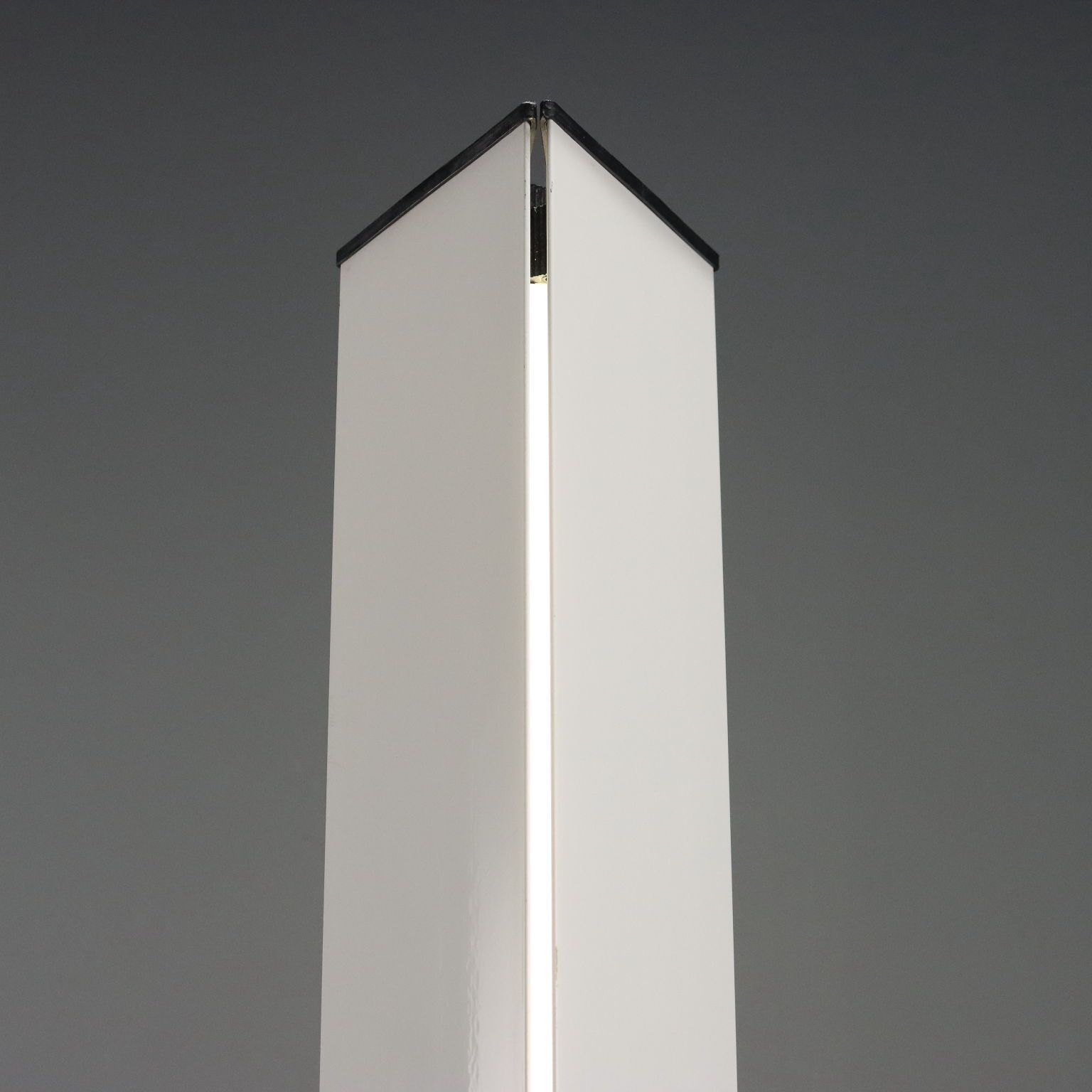
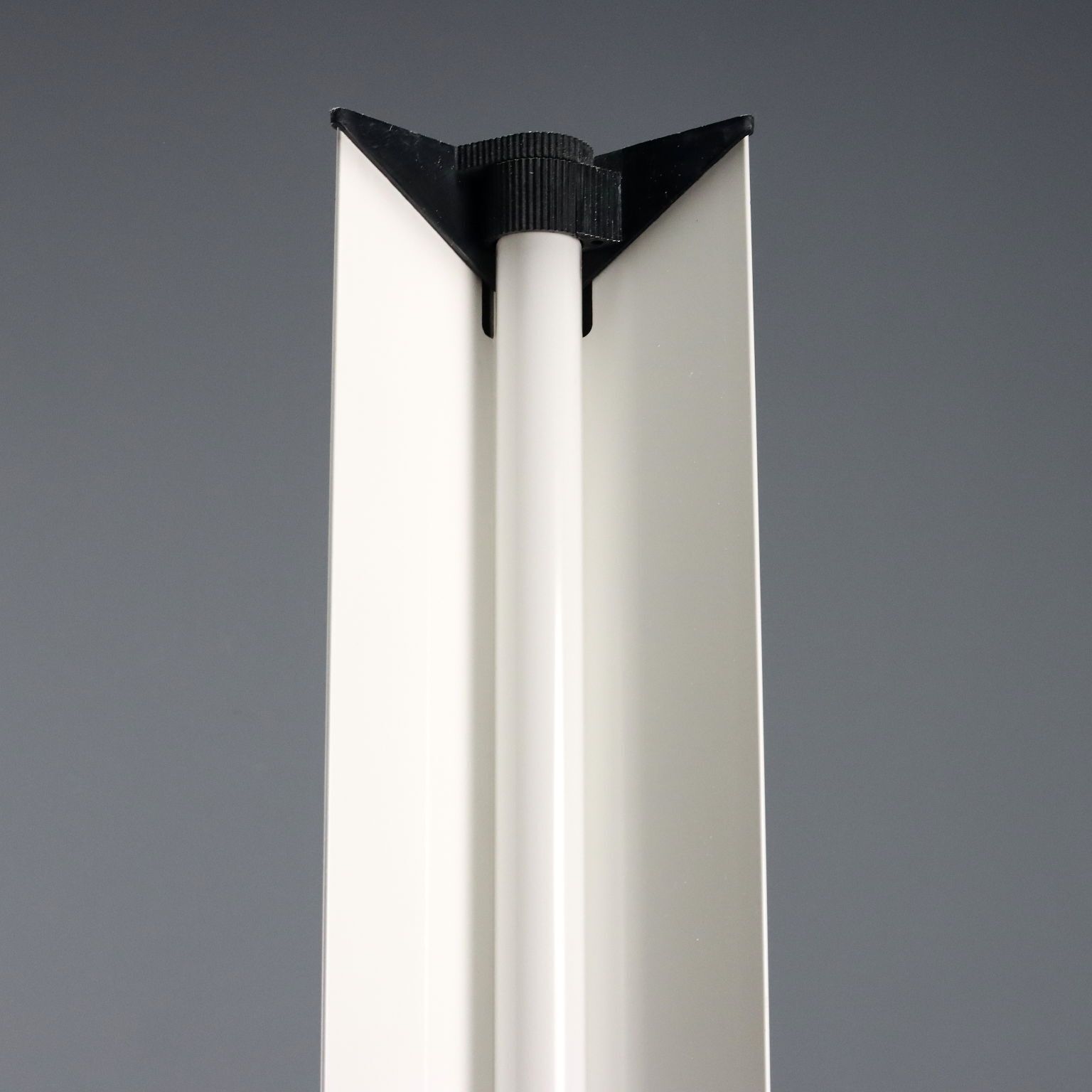
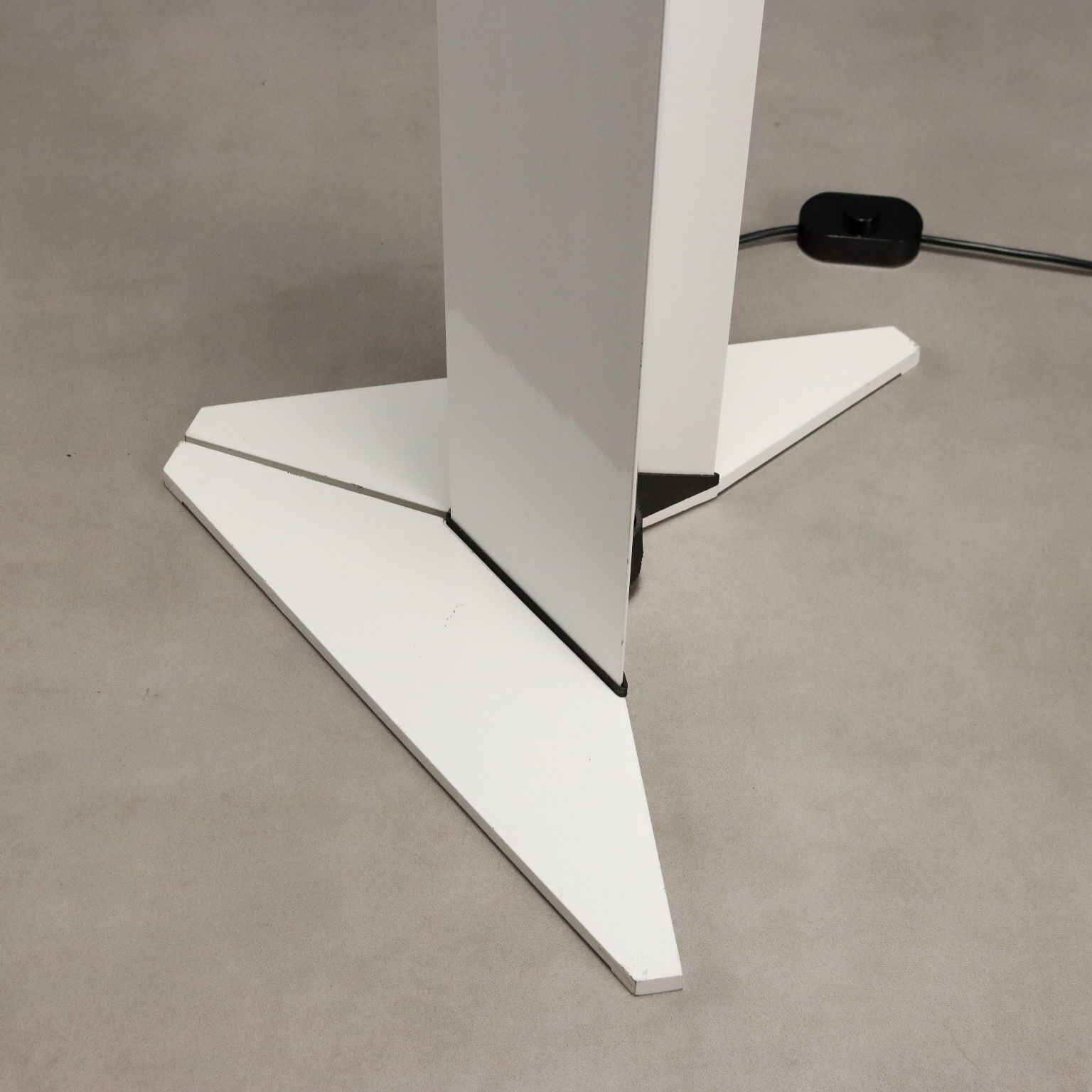


Flos Capricorno Lamp Vintage Design Afra & Tobia Scarpa 1970s
SOLD

Hassle-free returns
-
 Easy returns (14 days)
-
Free return if the item isn't as described
-
Buyer protection
Damage is rare, and you're fully protected if it happens.
Dimensions
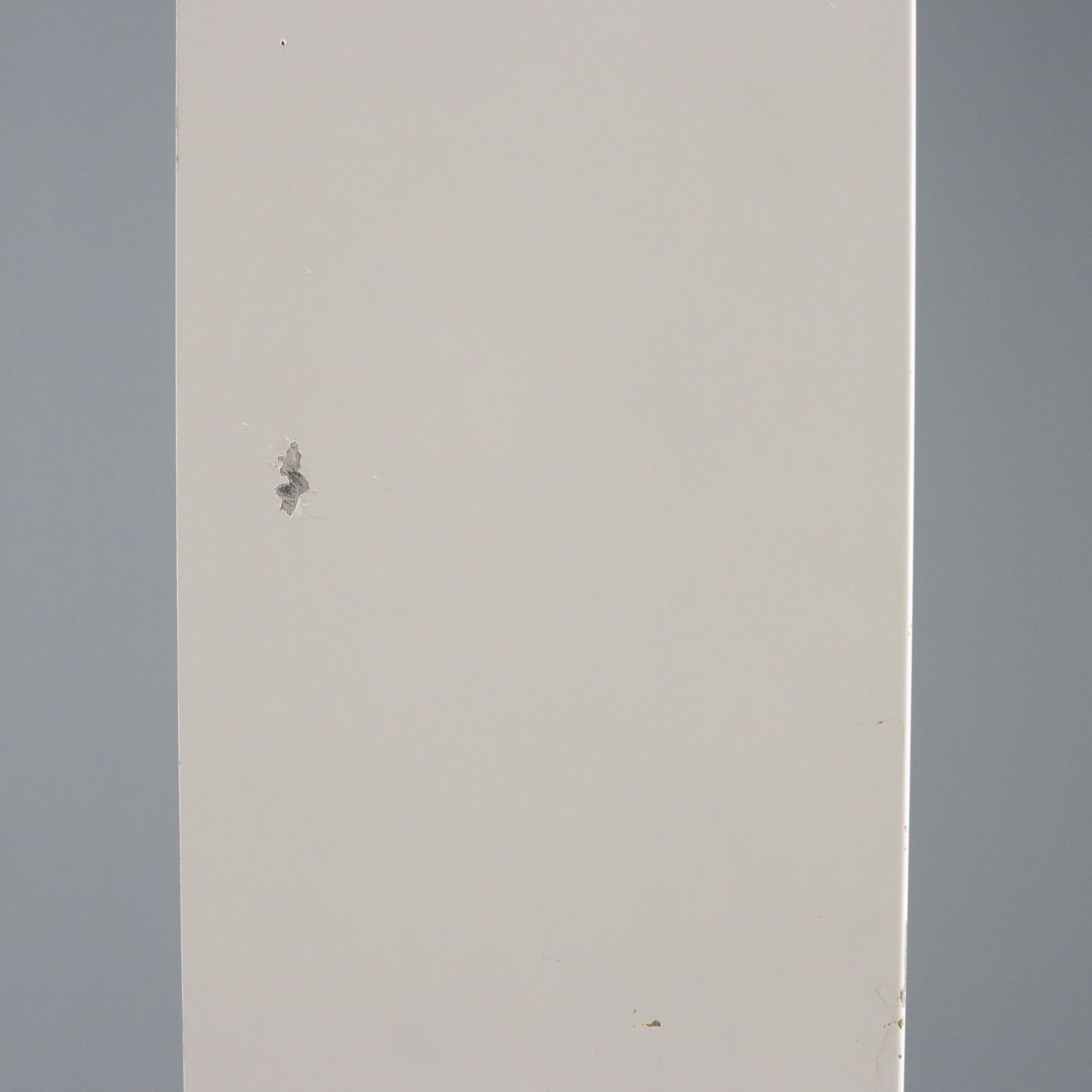
Wear Condition

Good
Style
Vintage
Item Location
CAMBIAGO , Italy
Product Details
Description
Vintage floor lamp in white lacquered metal whose light intensity can be adjusted by opening or closing the frame. It bears the manufacturer's mark. Designer: Tobia Scarpa creates the first works at the Venini glassworks. 1957 - begins working with Afra Bianchin. 1959/60 - Tobia Scarpa designs the first design project in the Furniture course held by Franco Albini (Pigreco armchair). 1959/63 - Collaborates with his father Carlo, professor at I.U.A.V. (University Institute of Architecture in Venice) on architectural design projects. 1969 - They graduate in architecture from the Faculty of Venice, but already have a consolidated professional activity behind them. 1960 - Actively participate in the founding of the company Flos. 1960/63 - Collaborate with Dino Gavina as designers and create the sofa 'Bastian' and the bed 'Vanessa'. 1963 - Begins collaboration with the Meda company. 1964 - Collaborate with the company Stildomus whose owner is Aldo Bartolomeo. They meet Luciano Benetton for whom they will design the first factory (the knitwear factory), the house, and the chain of stores, protagonist of a new approach to managing production, distribution, and sales, thus taking care of the company's image. 1966 - They design for Eclisse and Vico Magistretti. 1981 - They design for Goppion. 1986 - They collaborate with Casas. 1987 - They collaborate with Meritalia. 1989 - They design for IB Office.
Discover more about Tobia Scarpa with our insights:
FineArt: Two 'Soriana' Armchairs
FineArt: Three-seat 'Soriana' Sofa
FineArt: Two-seat 'Soriana' Sofa
FineArt: Two 'Soriana' Armchairs
FineArt: 'Soriana' Two-seat Sofa
Soriana, the sofa with a complex image
(n.1935) , Afra Bianchin (1937 - 2011) was an Italian designer, architect and restorer.nAn image of 20th century Italian design and culture, together with her spouse.nThey began their collaboration in 1959, with the design of the armchair.nTheir activity contributed to the representation of Veneto and Lombardy.nThey won the “Compasso d'oro” award in 1970, establishing a professional link with Benetton.nThe Scarpas also designed numerous restorations in the Veneto region. (1937 - 2011) Brand/Manufacturer: At the origin of Flos there is above all a bright idea, the thought that from a light bulb, or rather from a new idea of how to design artificial light, objects suitable to change a little the way of life of Italians could be born: a population known to be very spoiled by being born, raised and living in a territory where at every step one stumbles upon something to do with art. At the end of the 1950s, a gentleman named Dino Gavina, a very individualistic man and almost obsessed with the idea that Italy had to be the new homeland of a new culture of furniture, after meeting the inventor and small producer from Merano Arturo Eisenkeil, set his mind that after having created many new pieces of furniture (with Achille and Pier Giacomo Castiglioni, Ignazio Gardella, Carlo and Tobia Scarpa and other geniuses of Italian architecture), it was also time to create new lamps. The cocoon technique used by Eisenkeil, a resin sprayed on a metal frame, seemed perfect to start with: it was not about decorating a light bulb, but giving magic to the light coming from it by filtering through a nebulous but therefore fascinating material, like clouds are. Quickly many other beautiful and still very surprising techniques followed the cocoon technique for a country still so tied to old ideas of furnishing: so much so that, whether willing or not, already from its prehistory Flos (that is the company with the name invented by Pier Giacomo Castiglioni succeeding Eisenkeil) found itself in that interesting, sometimes uncomfortable position of those obliged to continuously produce inventive objects. In 1966 a new phase opened with the transition of the company from the artistic management of Dino Gavina to the more entrepreneurial one of Sergio Gandini. Already engaged since 1959 in furnishing with his wife Piera in the store Stile of Brescia (a space that is already a point of reference for many companies in the sector), when Flos moved to his city, to exploit the historic competence of what today would be called an industrial district for metalworking, Gandini was soon involved as a partner in the company by Gavina himself and Cesare Cassina. Afra and Tobia Scarpa and the Castiglioni brothers, from then on and for many years to come, were the creative soul of all Flos production. In the case of Flos the meeting with the two Castiglioni brothers is certainly fortunate, first, and then with only Achille, after the premature death of Pier Giacomo in 1968. Inventors more than architects, artists as well as designers, they are capable of assembling existing industrial components (as in the Toio, or the Mezzadro stool for Zanotta) or invented ones (as in the Arco, the Splugen, the Black and White or the Parentesi, conceived in 1969 with Pio Manzù) until creating new kinds of artificial lighting, with an immediacy of form and meaning difficult to find in other designers. Even more exemplary is the harmony created between them and Sergio Gandini, when he called them to become co-responsible for all product choices. It is no longer just about creating an important object, a formal sign of great mastery, but designing its entire life cycle in production and on the market, up to the final use. The beautiful utopia of the object that necessarily meets the public's taste only by the skill of the designer is overcome by a concrete realism, which makes Gandini, Castiglioni, and Scarpa work together on problems such as packaging, graphics, storage, distribution, with the same commitment dedicated to the study of light or the product material. The first foreign company was opened in Germany in 1971, while 1973 is the year of the expansion of the plant (from 800 to 5400 sqm) and the acquisition of Arteluce: the one-man company of Gino Sarfatti, one of the greatest Italian talents in lighting design, author since the 40s of excellent pieces but then still tied to a product and supply dimension largely limited. With the collaboration of Paolo Rizzatto, then a novice designer, and Marco Pezzolo at the management, Gandini began to reschedule the catalog: he kept a few original iconic Sarfatti pieces, generating over time with designers such as King Miranda and Arnaldi, Ezio Didone, Marc Sadler, Matteo Thun, Rizzatto himself, a series of new products very successful and important commercially. The real strategic change, however, happened with the arrival of Philippe Starck, who started collaboration with Arà (1988), a curious horn-adjustable lamp reflecting the fairytale imagery of an author launched towards extreme popularity. Piero Gandini had already sensed the commercial possibilities of Starck's work and willingly accepted when he, now very established as an interior designer, proposed to mass-produce a small plastic object imagined for a New York hotel: Miss Sissi, a kind of icon of the lamp shade, 'What everybody thinks in their unconscious a lamp is,' 'Quello che tutti nel loro incoscio pensano come una lampada,' Starck would say in a conference years later. Sergio Gandini was initially somewhat doubtful, but in 1991 the project went into production and it was an incredible success. In the 90s the slow decline of the incandescent lamp continued, giving way to the invasion of energy-saving ones, while the real revolution began to take shape with LEDs.
Wear Condition
Good
Cancellations
We offer free cancellations and full refund for orders cancelled before dispatching. View full policy.
Returns
We have a 14-day return guarantee for orders from individual sellers, within the UK and European Union. View full policy.
Additional Delivery Info from Seller
Estimated delivery time
One to two weeks
Free collection available
Yes
Made to Last
The average lifespan of a Vinterior piece is 100 years, while modern flat-pack typically takes just 3 years to reach landfill. When you choose pre-loved, you can shop with confidence in quality, craftsmanship and longevity. With our top-rated customer service team and price match guarantee, there's no better way to shop pre-loved.

Shopping at Vinterior


Similar Floor Lamps
Similar Floor Lamps
Add to a wishlist
Create Wishlist
Completethe room
Good design is all in the layering. Whether you're adding impact or refining the details, now’s the time to find what’s missing.
Reviews
5.0

Based on 5 reviews



Wear conditions
Excellent
Shows little to no signs of wear and tear.
Good
May show slight traces of use in keeping with age. Most vintage and antique items fit into this condition.
Average
Likely to show signs of some light scratching and ageing but still remains in a fair condition.
Apparent Wear and Tear
Visible signs of previous use including scratches, chips or stains.
Please refer to condition report, images or make a seller enquiry for additional information.
Cancellations and Returns
Last updated: 12/02/2026
Clear, predictable protection for every pre-loved purchase.
Simple £75 flat return fee for UK-to-UK mainland furniture when you change your mind.
Applies to furniture with a final selling price of up to £5,000 (excluding delivery and service fees) and delivered from a UK mainland seller to mainland UK addresses. Excludes Northern Ireland, Channel Islands, Scottish Highlands & Islands, Isle of Wight and Isles of Scilly.
Buying vintage should feel inspiring, not uncertain.
Every order on Vinterior is backed by straightforward returns, free cancellations, and extra peace of mind for UK furniture purchases.
1. Free cancellations
Changed your mind before dispatch?
You can cancel any order before it's shipped for a full refund, including delivery.
To cancel an order, click Create cancellation on the order page.
Once an item has been dispatched, delivery costs are not refundable.
Bespoke, personalised or made-to-order pieces cannot be cancelled.
2. Returning an item
You have 14 days from delivery to request a return.
There are two return types:
A. The item isn't as described (free return)
If your piece arrives and it doesn't match the listing in any material way (incorrect description, undisclosed damage, inaccurate measurements, misleading photos), you are fully protected:
- Free return
- The seller or Vinterior arranges pickup
- Full refund, including outbound delivery costs once the seller receives the item
This applies to all purchases.
B. You changed your mind
UK-to-UK furniture deliveries:
To make UK furniture returns predictable and stress-free, we offer a simple flat return fee of £75.
- Applies to furniture delivered from a UK mainland seller to a mainland UK address. Excludes Northern Ireland, Channel Islands, Scottish Highlands & Islands, Isle of Wight and Isles of Scilly.
- Pickup arranged for you
- One clear fee, no surprises
We coordinate the return with either the seller's chosen courier or our trusted delivery partner.
All other items
Most smaller items are straightforward to return.
You can still return your item within 14 days.
- For smaller or parcel-sized items, you can choose to post the item back yourself using a tracked service, or the seller can suggest a preferred courier.
- For larger or more fragile pieces, the seller may recommend the safest return method.
- Return delivery costs vary depending on size and courier.
The seller will confirm the best option based on the item.
3. If your item arrives damaged
Damage on arrival is uncommon, especially for UK furniture deliveries.
But if something does go wrong, you're fully protected.
- Let us know as soon as possible (ideally within 72 hours of delivery) so we can resolve things quickly
- Share photos so we understand what happened
- We’ll help arrange a return and refund if needed
You’re always protected when something goes wrong in transit.
Your statutory rights apply for up to 30 days from delivery.
4. What can't be returned
Some items cannot be returned:
- Bespoke, personalised, or made-to-order pieces
- Items altered after delivery
5. How to start a return
- Log in to your Vinterior account
- Open your order
- Click Create a return
- Add notes + photos if relevant
We'll guide you through the rest.
6. What happens next
- We review your request, confirm the return and advise on next steps
- Pickup or return method is arranged
- The item is returned to the seller
- We issue your refund once the seller confirms the item's condition
Returns are completed smoothly once the pickup is arranged.
7. Refunds
Once the seller receives the piece back in the same condition it was sent, we'll issue your refund to your original payment method.
Once a refund is issued, it may take up to 5–10 working days for the funds to appear back on your original payment method, depending on your bank or card provider.
If the item is returned with new damage that wasn't present at delivery, the refund may be adjusted following review.
Need help?
If you have questions about a return or your order, our support team is here to help. Email us at [email protected] or find other ways to contact us here.
What your service fee covers
-
 14-day return guarantee
-
Flat-fee return shipping on UK furniture
-
Seller vetting
-
Dedicated customer support
| Order Value (£) | Fee (£) |
|---|---|
| 0 — 49.99 | 2.75 |
| 50 — 99.99 | 5.50 |
| 100 — 199.99 | 11.00 |
| 200 — 399.99 | 21.00 |
| 400 — 599.99 | 30.00 |
| 600 — 799.99 | 40.00 |
| 800 — 999.99 | 50.00 |
| 1,000 — 1,499.99 | 55.00 |
| 1,500 — 1,999.99 | 60.00 |
| 2,000 — 4,999.99 | 82.50 |
| 5,000+ | 110.00 |
Added at checkout, based on your basket total.
