


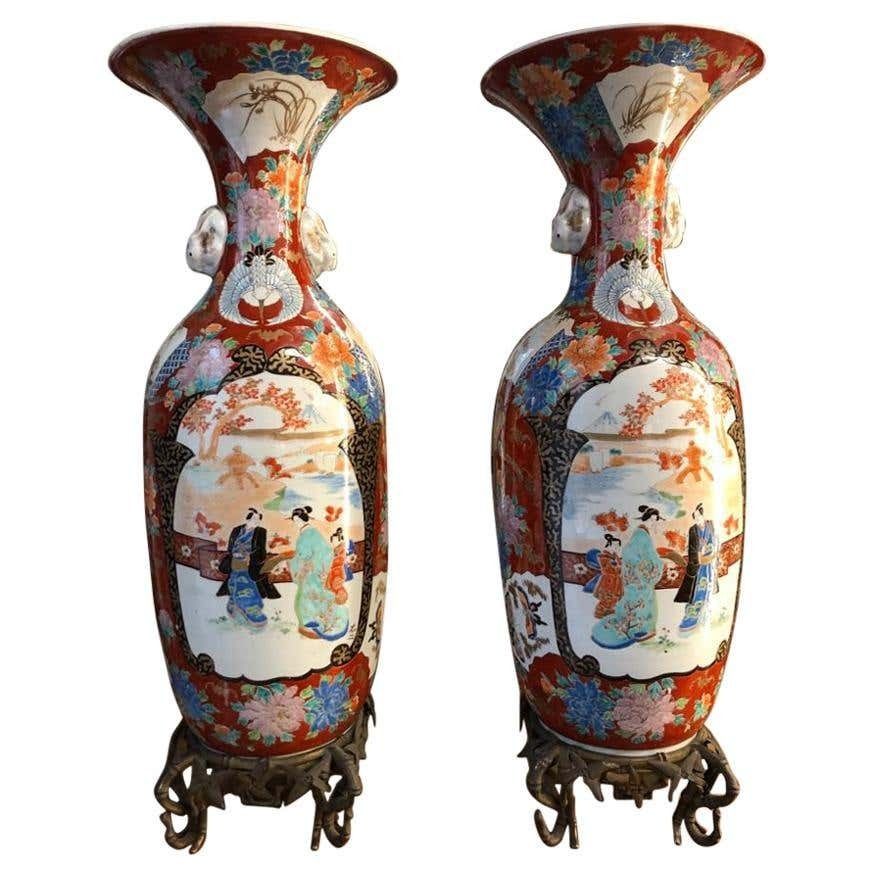
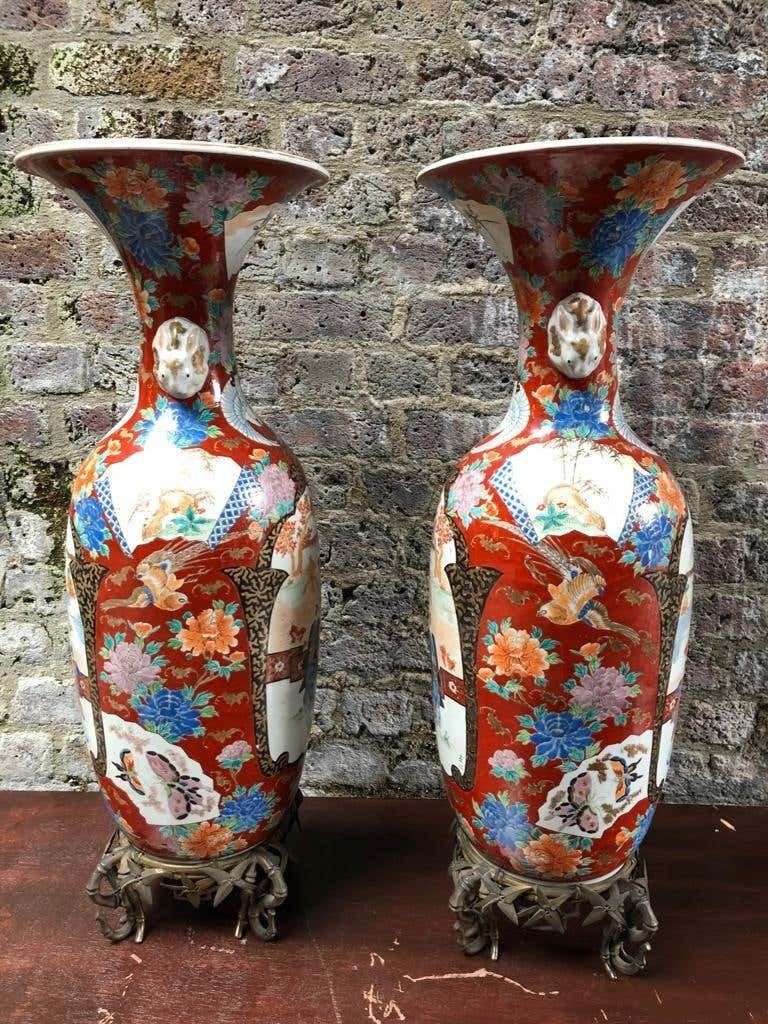
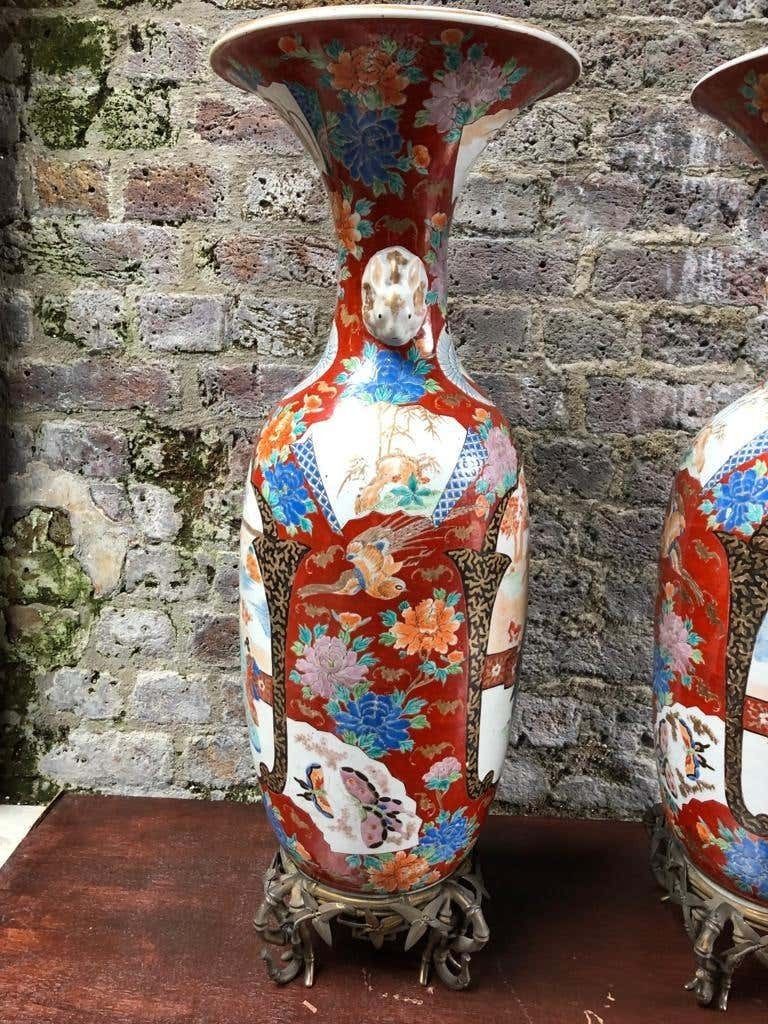
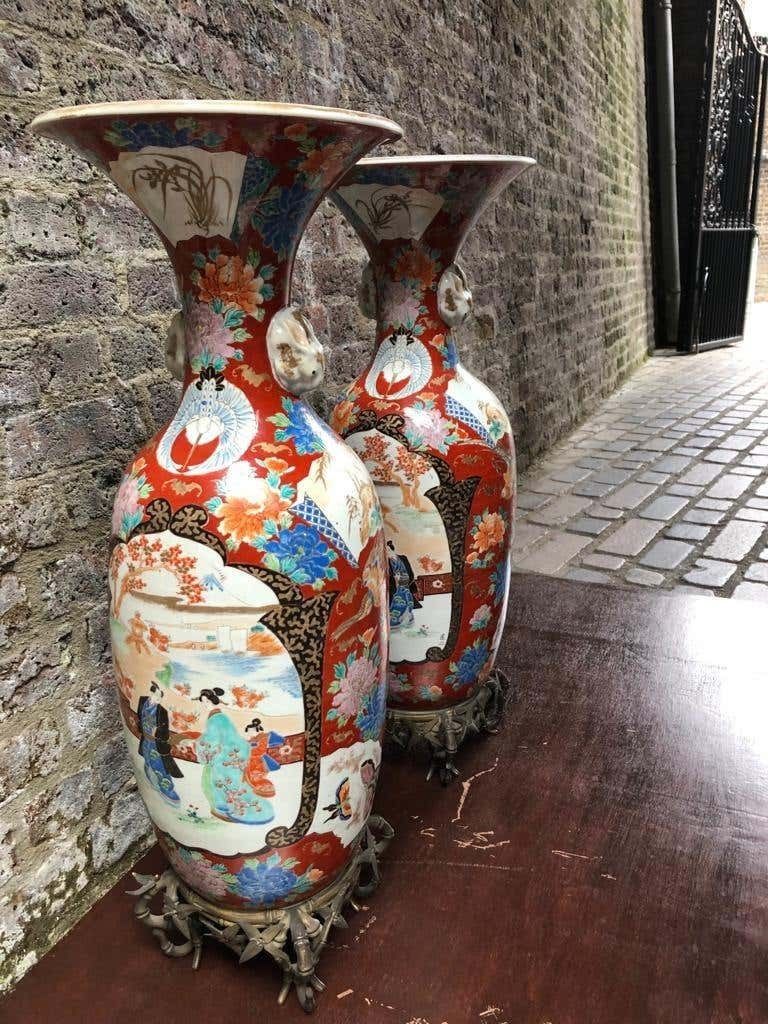
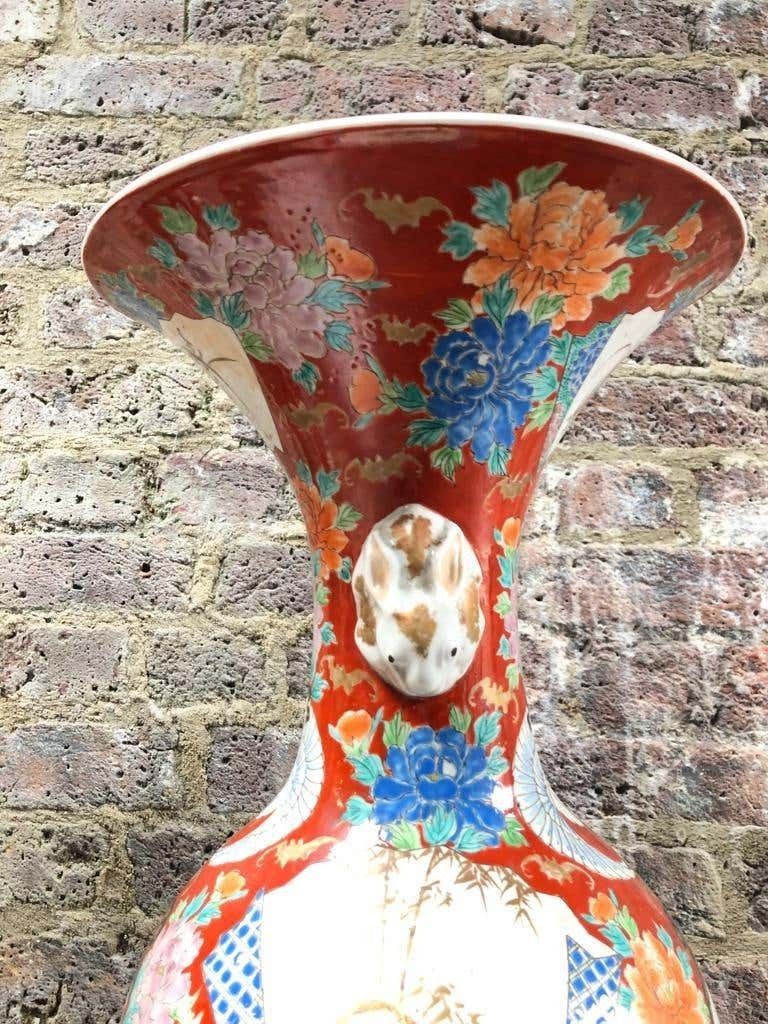
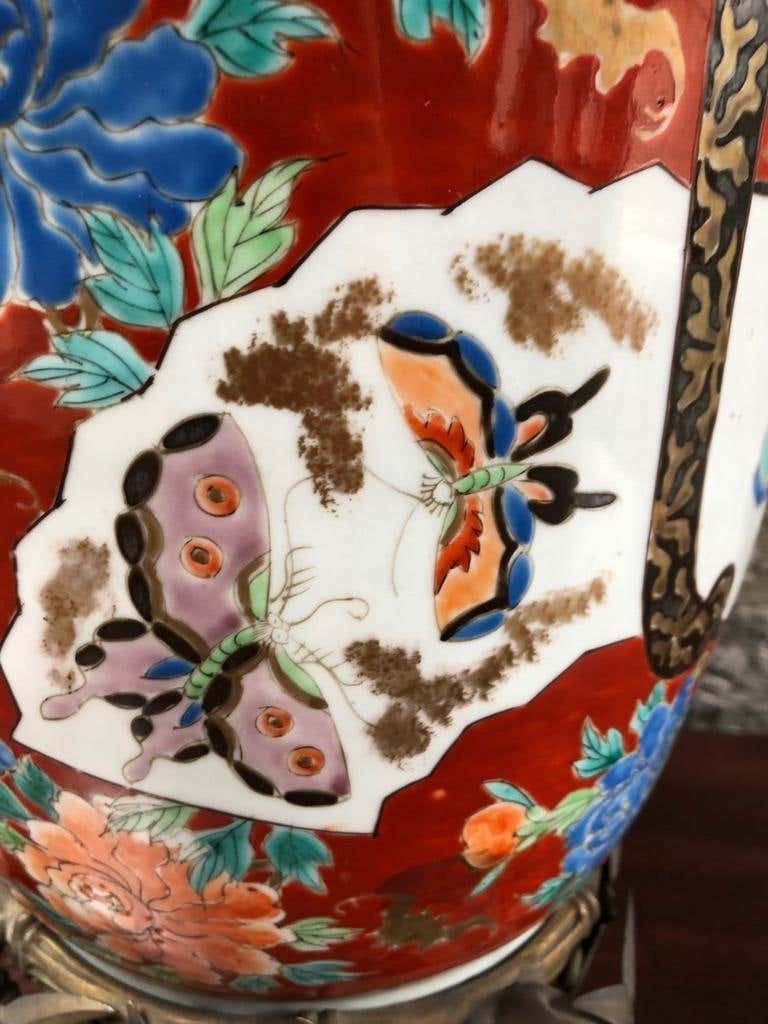
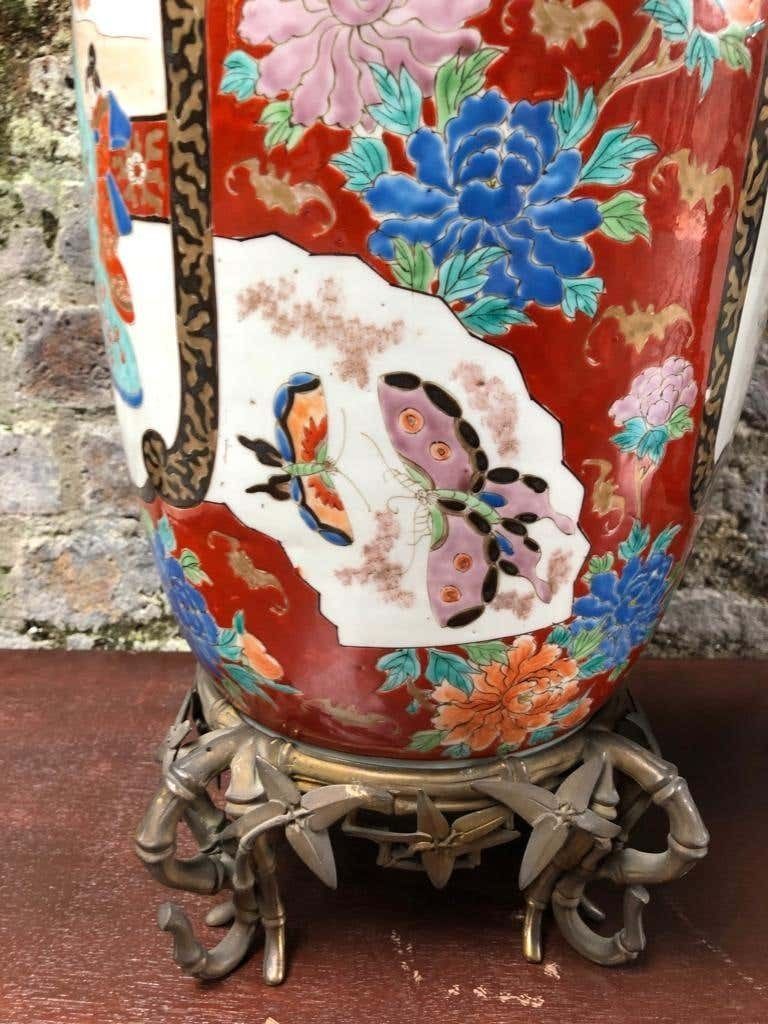
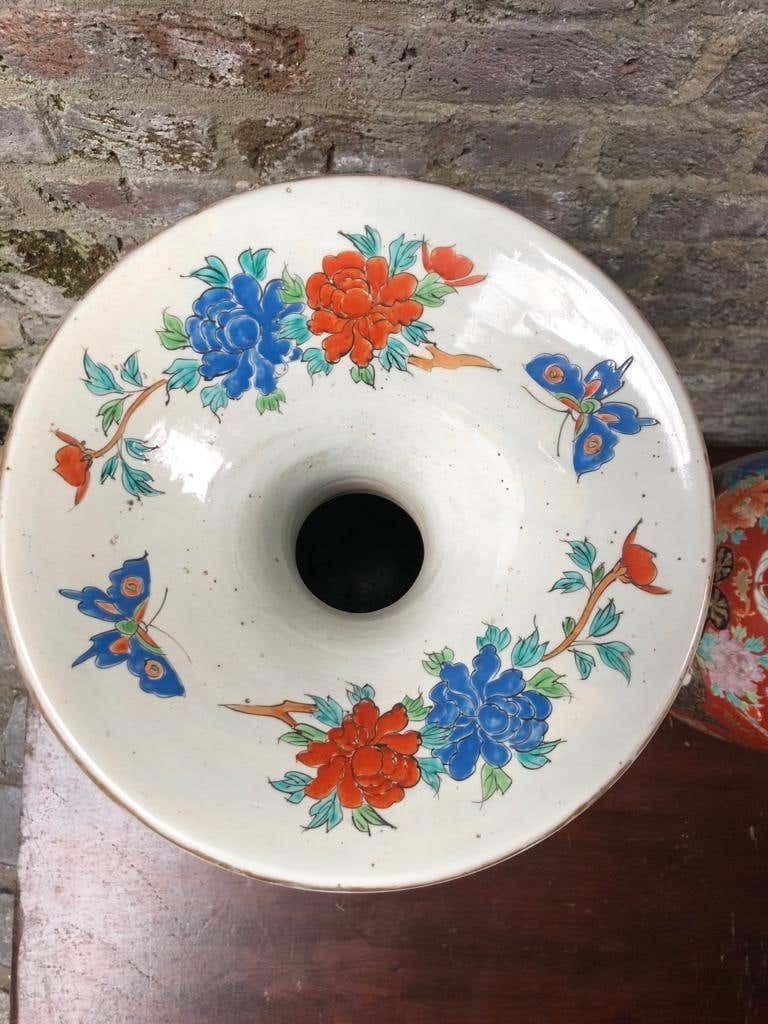
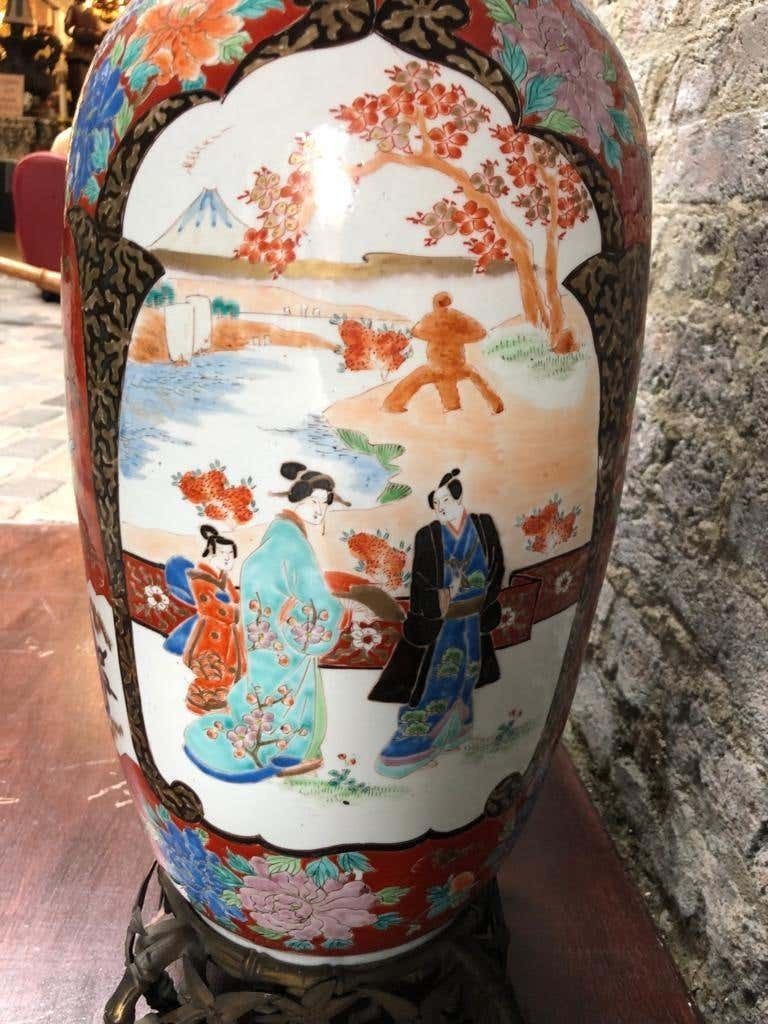
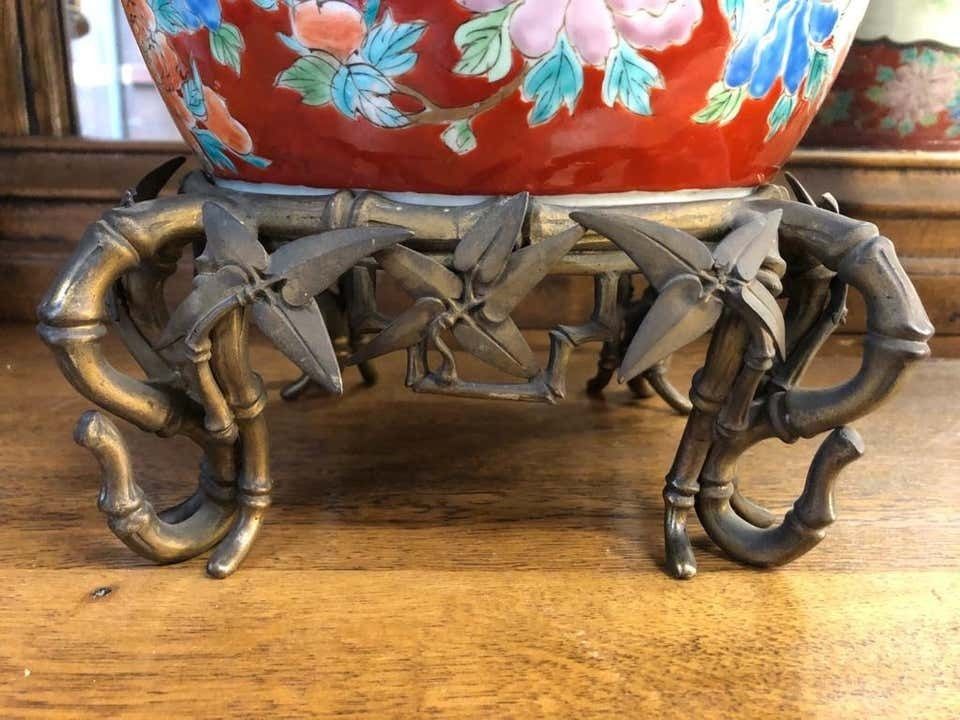
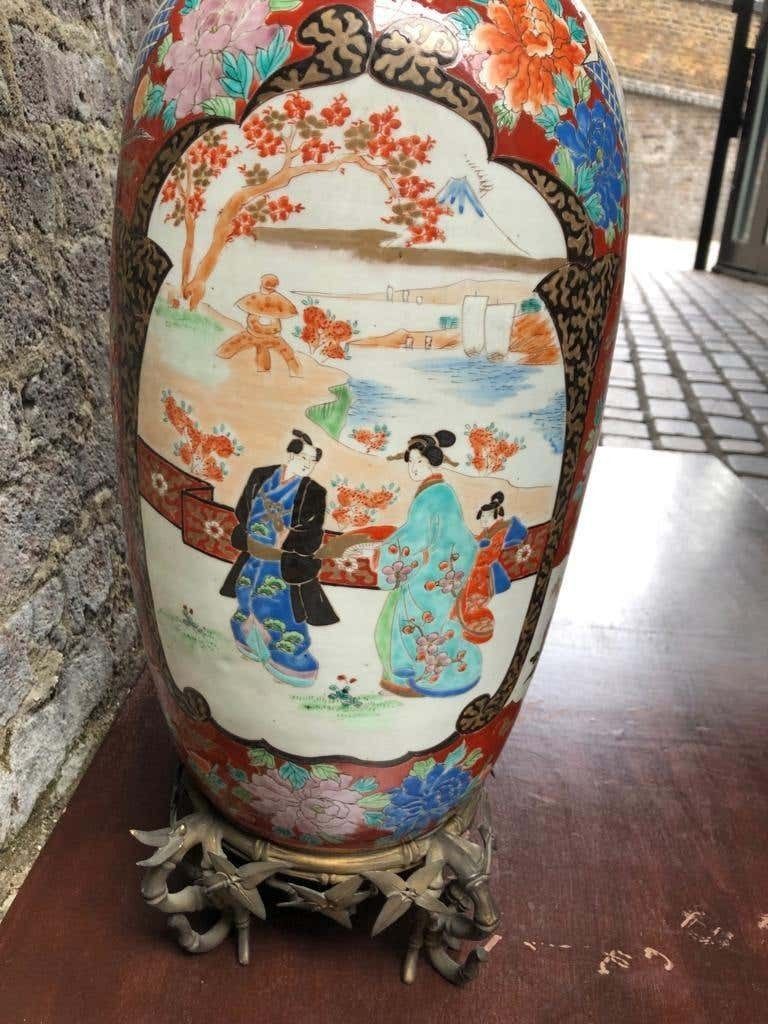
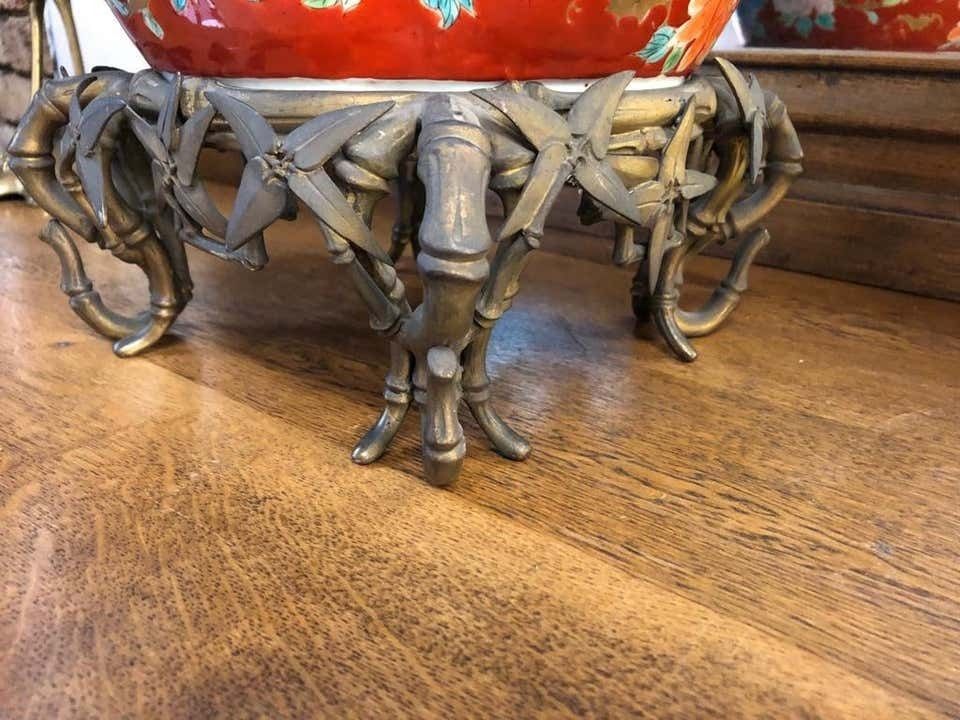
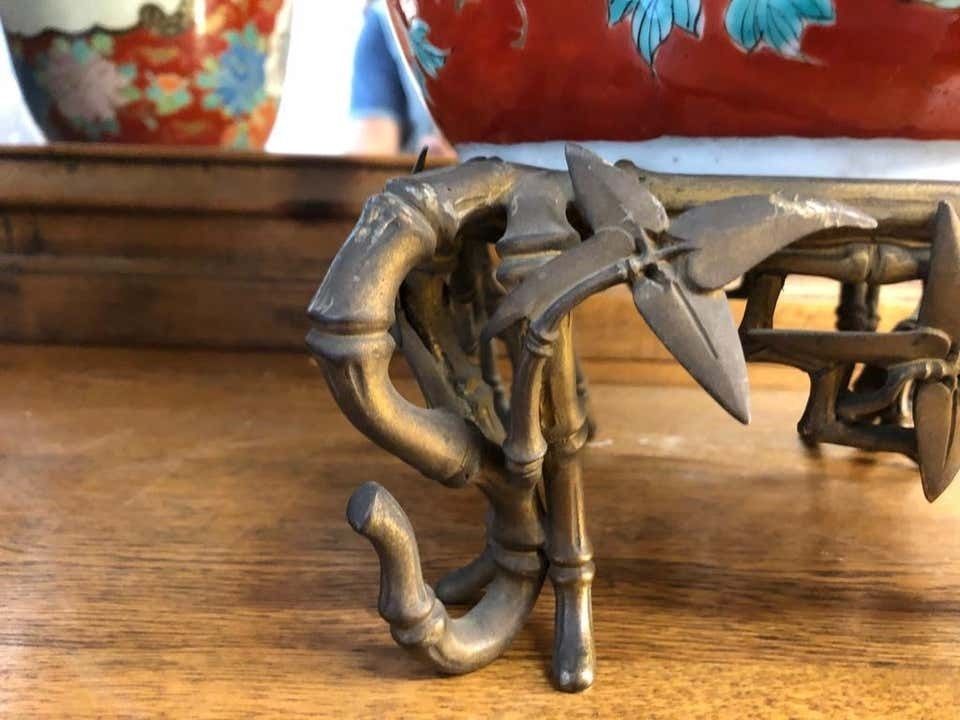
19th Century Pair, Japanese Meiiji Imari Porcelain Vases

 London, United Kingdom

Hassle-free returns
-
 Easy returns (14 days)
-
Free return if the item isn't as described
-
Buyer protection
Damage is rare, and you're fully protected if it happens.
Dimensions
Wear Condition
Good
Material
Porcelain
Style
Antique, Oriental, Traditional
Product Details
Description
A monumental pair of Japanese Meiji period Imari Porcelain vases, with foliage bronze stands, dating from the late 19th Century. Each vase features a bulbous shape with the traditional smooth rim, over the body decorated with reserve panels depicting court garden scenes and smaller shaped panels with views of Mount Fuji on chrysanthemums and peonies background adorned with colourful butterflies. Instill a certain elegance to a special place in your home with these fabulous vases. mari ware Imari ware is a Western term for a brightly-coloured style of Arita ware Japanese export porcelain made in the area of Arita, in the former Hizen Province, northwestern Kyushu. They were exported to Europe in large quantities, especially between the second half of the 17th century and the first half of the 18th century. Typically Imari ware is decorated in underglaze blue, with red, gold, black for outlines, and sometimes other colours, added in overglaze. In the most characteristic floral designs, most of the surface is coloured. The style was so successful that Chinese and European producers began to copy it. Sometimes the different overglaze styles of Kakiemon and Kutani ware are also grouped under Imari ware. The name derives from the port of Imari, Saga from which they were shipped to Nagasaki, where the Dutch East India Company and the Chinese had trading outposts. In the West the multi-coloured or "enameled" wares became known as "Imari ware", and a different group kakiemon, while blue and white wares were called "Arita ware", in fact, the two types were often produced at the same kilns. Today, the use of "Imari" as a descriptor has declined, and they are often called Arita wares (or Hizen wares, after the old province). Imari ware was copied in both China and Europe and has been continuously produced to the present day. Early Imari (shoki imari) is a traditional and somewhat confusing term used for very different wares that were made around Arita before about 1650. The porcelains are generally small and sparsely painted in underglaze blue for the domestic market, but there are also some large green celadon dishes, apparently made for the southeast Asian market, in a porcellaneous stoneware. Arita's kilns were set up in the 17th century after kaolin was discovered in 1616. A popular legend attributes the discovery to an immigrant Korean potter, Yi Sam-pyeong (1579–1655), although most historians consider this doubtful. After the discovery, some kilns began to produce revised Korean-style blue and white porcelains, known as Early Imari, or "Shoki-Imari". In the mid-17th century, there were also many Chinese refugees in northern Kyushu due to the turmoil in China, and it is said that one of them brought the overglaze enamel colouring technique to Arita. Thus Shoki-Imari developed into Ko-Kutani, Imari, and later Kakiemon, which are sometimes taken as a wider group of Imari wares. Ko-Kutani was produced around 1650 for both export and domestic market. Kutani ware is characterized by vivid green, blue, purple, yellow and red colours in bold designs of landscapes and nature. Blue and white porcelain pieces continued to be produced and they are called Ai-Kutani. Ko-Kutani Imari for the export market usually adopted Chinese design structure such as Kraak style, whereas Ai-Kutani for the domestic market were highly unique in design and are accordingly valued very much among collectors. Ko-Kutani style evolved into Kakiemon-style Imari, which was produced for about 50 years around 1700. Kakiemon was characterized by crisp lines and bright blue, red and green designs of dramatically stylized floral and bird scenes. Imari achieved its technical and aesthetic peak in the Kakiemon style, and it dominated the European market. Blue and white Kakiemon is called Ai-Kakiemon. The Kakiemon style transformed into Kinrande in the 18th century, using underglaze blue and overglaze red and gold enamels, and later additional colours. Imari began to be exported to Europe when the Chinese kilns at Jingdezhen were damaged in the political chaos and the new Qing dynasty government halted trade in 1656–1684. Exports to Europe were made through the Dutch East India Company, and in Europe the designation "Imari Porcelain" connotes Arita wares of mostly Kinrande Imari. Export of Imari to Europe stopped in the mid-18th century when China resumed export to Europe since Imari was not able to compete against Chinese products due to high labour costs. By that time, however, both Imari and Kakiemon styles were already so popular among Europeans that the Chinese export porcelain copied both, a type known as Chinese Imari. At the same time, European kilns, such as Meissen and English potteries such as Johnson Bros. and (Royal) Crown Derby, also imitated the Imari and Kakiemon styles. Export of Imari surged again in the late 19th century (Meiji era) when Japonism flourished in Europe. Thus in the western world today, two kinds of true Japanese Imari can be found: that exported in the mid-Edo period, and that exported in the Meiji era. From the viewpoint of collectors, these two types are completely different, though Kinrande appearances are similar.
H 32 in. x W 9 in. x D 9 in.
H 81.28 cm x W 22.86 cm x D 22.86 cm
Wear Condition
Good
Cancellations
We offer free cancellations and full refund for orders cancelled before dispatching. View full policy.
Returns
We have a 14-day return guarantee for orders from individual sellers, within the UK and European Union. View full policy.
Additional Delivery Info from Seller
Free collection available
Yes
Made to Last
The average lifespan of a Vinterior piece is 100 years, while modern flat-pack typically takes just 3 years to reach landfill. When you choose pre-loved, you can shop with confidence in quality, craftsmanship and longevity. With our top-rated customer service team and price match guarantee, there's no better way to shop pre-loved.

Professional Seller
Shopping at Vinterior


Similar Vases
Similar Vases
Add to a wishlist
Create Wishlist
Completethe room
Good design is all in the layering. Whether you're adding impact or refining the details, now’s the time to find what’s missing.
Wear conditions
Excellent
Shows little to no signs of wear and tear.
Good
May show slight traces of use in keeping with age. Most vintage and antique items fit into this condition.
Average
Likely to show signs of some light scratching and ageing but still remains in a fair condition.
Apparent Wear and Tear
Visible signs of previous use including scratches, chips or stains.
Please refer to condition report, images or make a seller enquiry for additional information.
Cancellations and Returns
Last updated: 12/02/2026
Clear, predictable protection for every pre-loved purchase.
Simple £75 flat return fee for UK-to-UK mainland furniture when you change your mind.
Applies to furniture with a final selling price of up to £5,000 (excluding delivery and service fees) and delivered from a UK mainland seller to mainland UK addresses. Excludes Northern Ireland, Channel Islands, Scottish Highlands & Islands, Isle of Wight and Isles of Scilly.
Buying vintage should feel inspiring, not uncertain.
Every order on Vinterior is backed by straightforward returns, free cancellations, and extra peace of mind for UK furniture purchases.
1. Free cancellations
Changed your mind before dispatch?
You can cancel any order before it's shipped for a full refund, including delivery.
To cancel an order, click Create cancellation on the order page.
Once an item has been dispatched, delivery costs are not refundable.
Bespoke, personalised or made-to-order pieces cannot be cancelled.
2. Returning an item
You have 14 days from delivery to request a return.
There are two return types:
A. The item isn't as described (free return)
If your piece arrives and it doesn't match the listing in any material way (incorrect description, undisclosed damage, inaccurate measurements, misleading photos), you are fully protected:
- Free return
- The seller or Vinterior arranges pickup
- Full refund, including outbound delivery costs once the seller receives the item
This applies to all purchases.
B. You changed your mind
UK-to-UK furniture deliveries:
To make UK furniture returns predictable and stress-free, we offer a simple flat return fee of £75.
- Applies to furniture delivered from a UK mainland seller to a mainland UK address. Excludes Northern Ireland, Channel Islands, Scottish Highlands & Islands, Isle of Wight and Isles of Scilly.
- Pickup arranged for you
- One clear fee, no surprises
We coordinate the return with either the seller's chosen courier or our trusted delivery partner.
All other items
Most smaller items are straightforward to return.
You can still return your item within 14 days.
- For smaller or parcel-sized items, you can choose to post the item back yourself using a tracked service, or the seller can suggest a preferred courier.
- For larger or more fragile pieces, the seller may recommend the safest return method.
- Return delivery costs vary depending on size and courier.
The seller will confirm the best option based on the item.
3. If your item arrives damaged
Damage on arrival is uncommon, especially for UK furniture deliveries.
But if something does go wrong, you're fully protected.
- Let us know as soon as possible (ideally within 72 hours of delivery) so we can resolve things quickly
- Share photos so we understand what happened
- We’ll help arrange a return and refund if needed
You’re always protected when something goes wrong in transit.
Your statutory rights apply for up to 30 days from delivery.
4. What can't be returned
Some items cannot be returned:
- Bespoke, personalised, or made-to-order pieces
- Items altered after delivery
5. How to start a return
- Log in to your Vinterior account
- Open your order
- Click Create a return
- Add notes + photos if relevant
We'll guide you through the rest.
6. What happens next
- We review your request, confirm the return and advise on next steps
- Pickup or return method is arranged
- The item is returned to the seller
- We issue your refund once the seller confirms the item's condition
Returns are completed smoothly once the pickup is arranged.
7. Refunds
Once the seller receives the piece back in the same condition it was sent, we'll issue your refund to your original payment method.
Once a refund is issued, it may take up to 5–10 working days for the funds to appear back on your original payment method, depending on your bank or card provider.
If the item is returned with new damage that wasn't present at delivery, the refund may be adjusted following review.
Need help?
If you have questions about a return or your order, our support team is here to help. Email us at [email protected] or find other ways to contact us here.
What your service fee covers
-
 14-day return guarantee
-
Flat-fee return shipping on UK furniture
-
Seller vetting
-
Dedicated customer support
| Order Value (£) | Fee (£) |
|---|---|
| 0 — 49.99 | 2.75 |
| 50 — 99.99 | 5.50 |
| 100 — 199.99 | 11.00 |
| 200 — 399.99 | 21.00 |
| 400 — 599.99 | 30.00 |
| 600 — 799.99 | 40.00 |
| 800 — 999.99 | 50.00 |
| 1,000 — 1,499.99 | 55.00 |
| 1,500 — 1,999.99 | 60.00 |
| 2,000 — 4,999.99 | 82.50 |
| 5,000+ | 110.00 |
Added at checkout, based on your basket total.
