


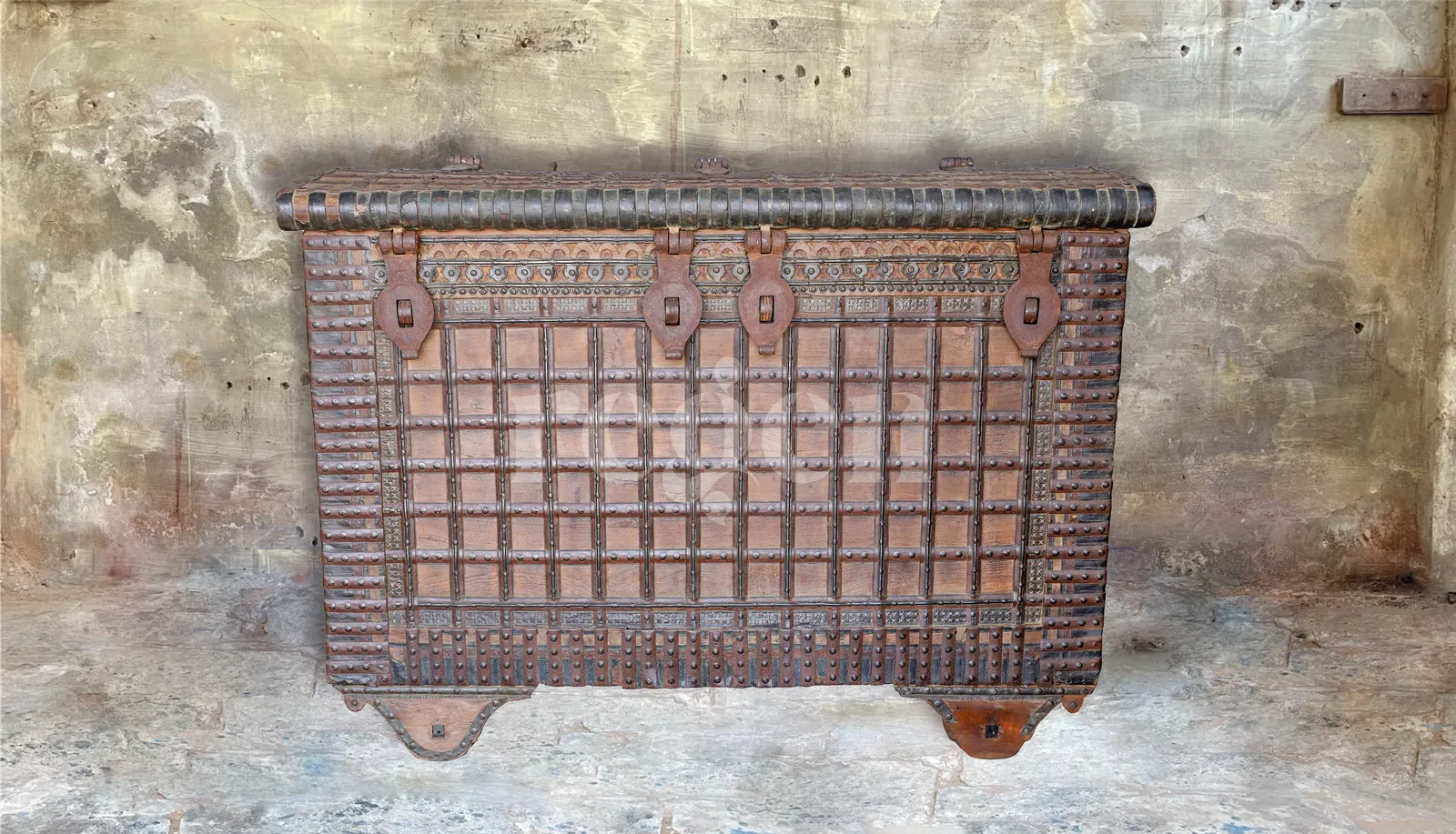
Antique Damchiya Bridal Dowry Chest With Four Distinct Iron Locks, Circa 1890

 Edenbridge , United Kingdom

Hassle-free returns
-
 Easy returns (14 days)
-
Free return if the item isn't as described
-
Buyer protection
Damage is rare, and you're fully protected if it happens.
Dimensions
Wear Condition
Good
Material
Other Wood, Iron
Style
Antique, Oriental, Traditional
Product Details
Description
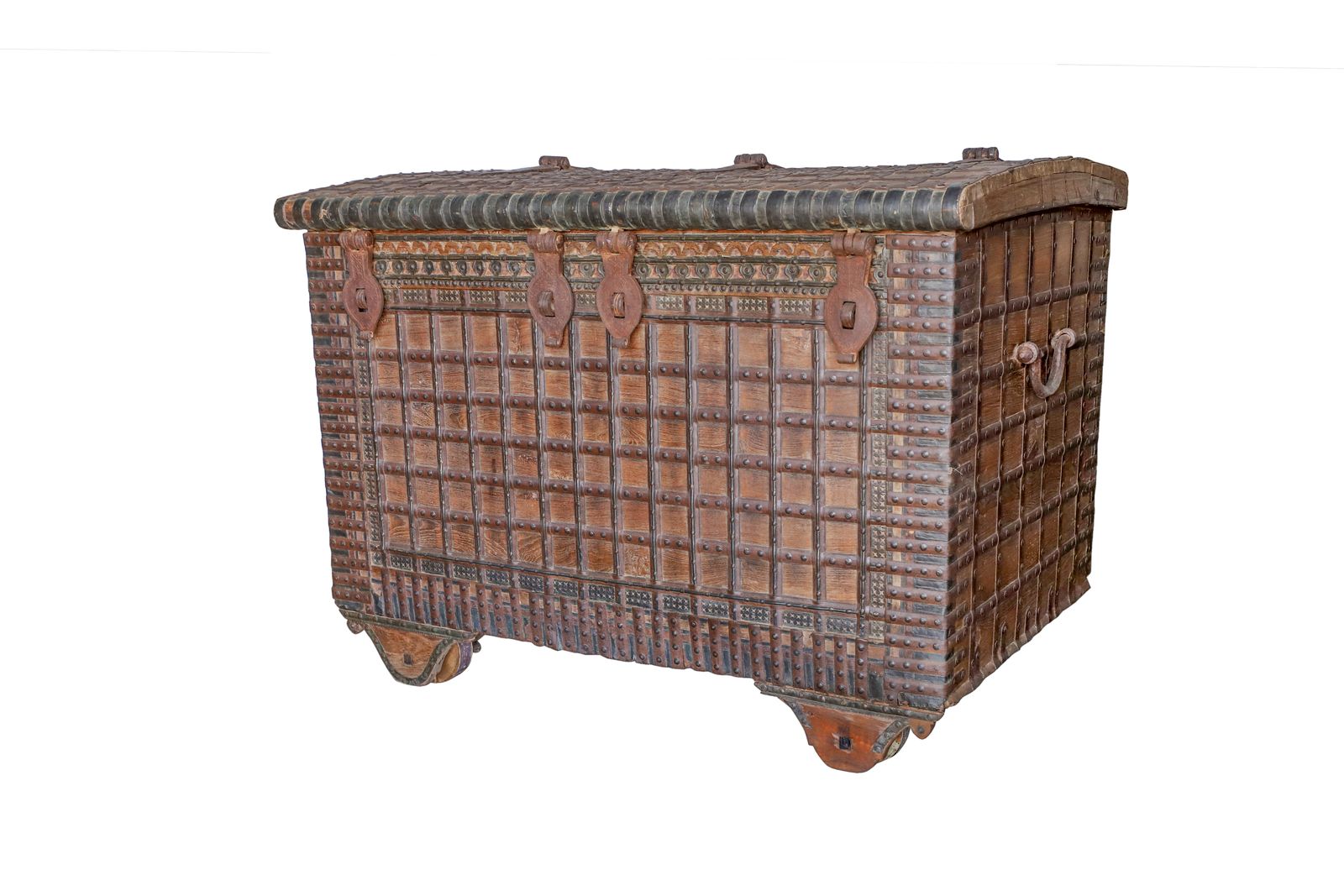
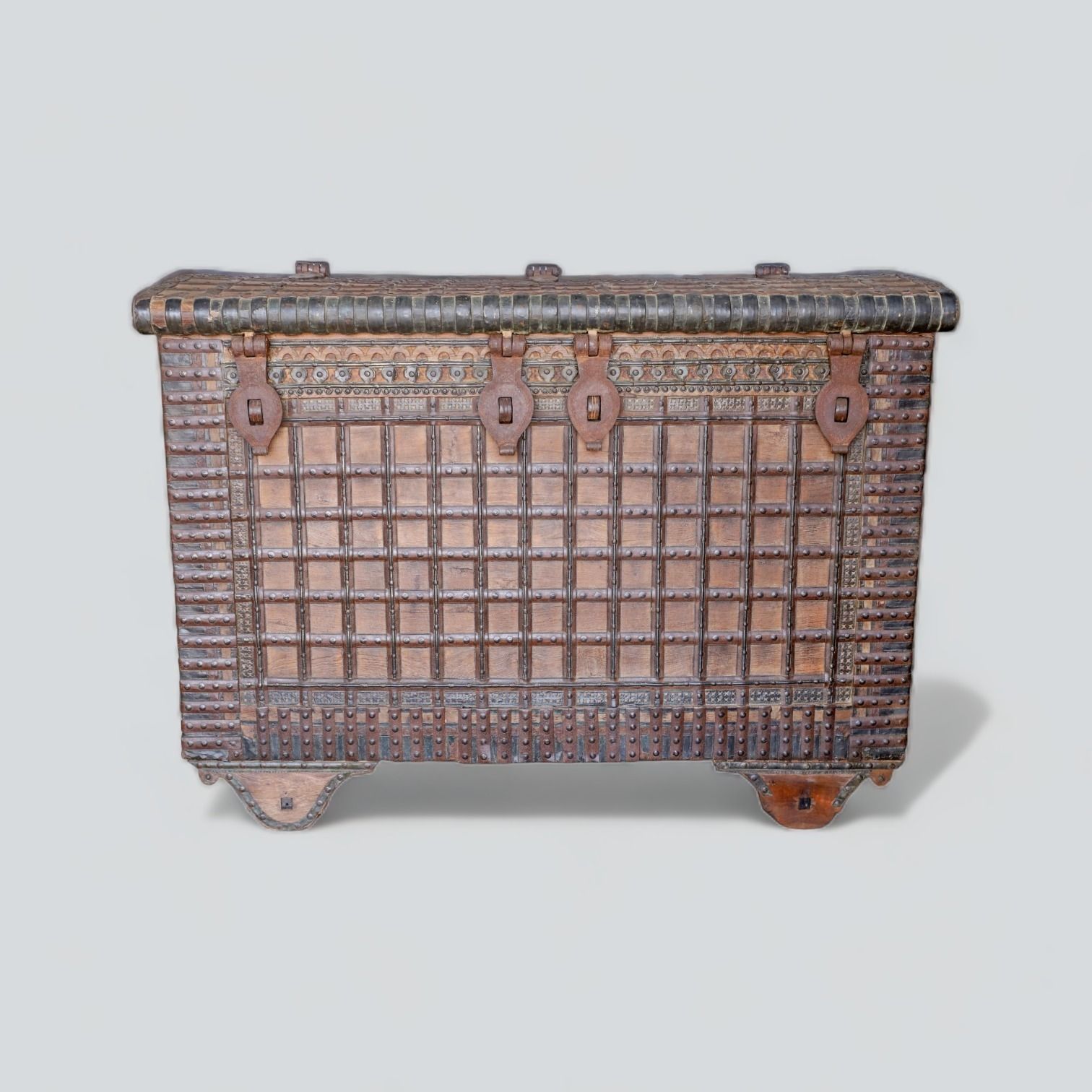
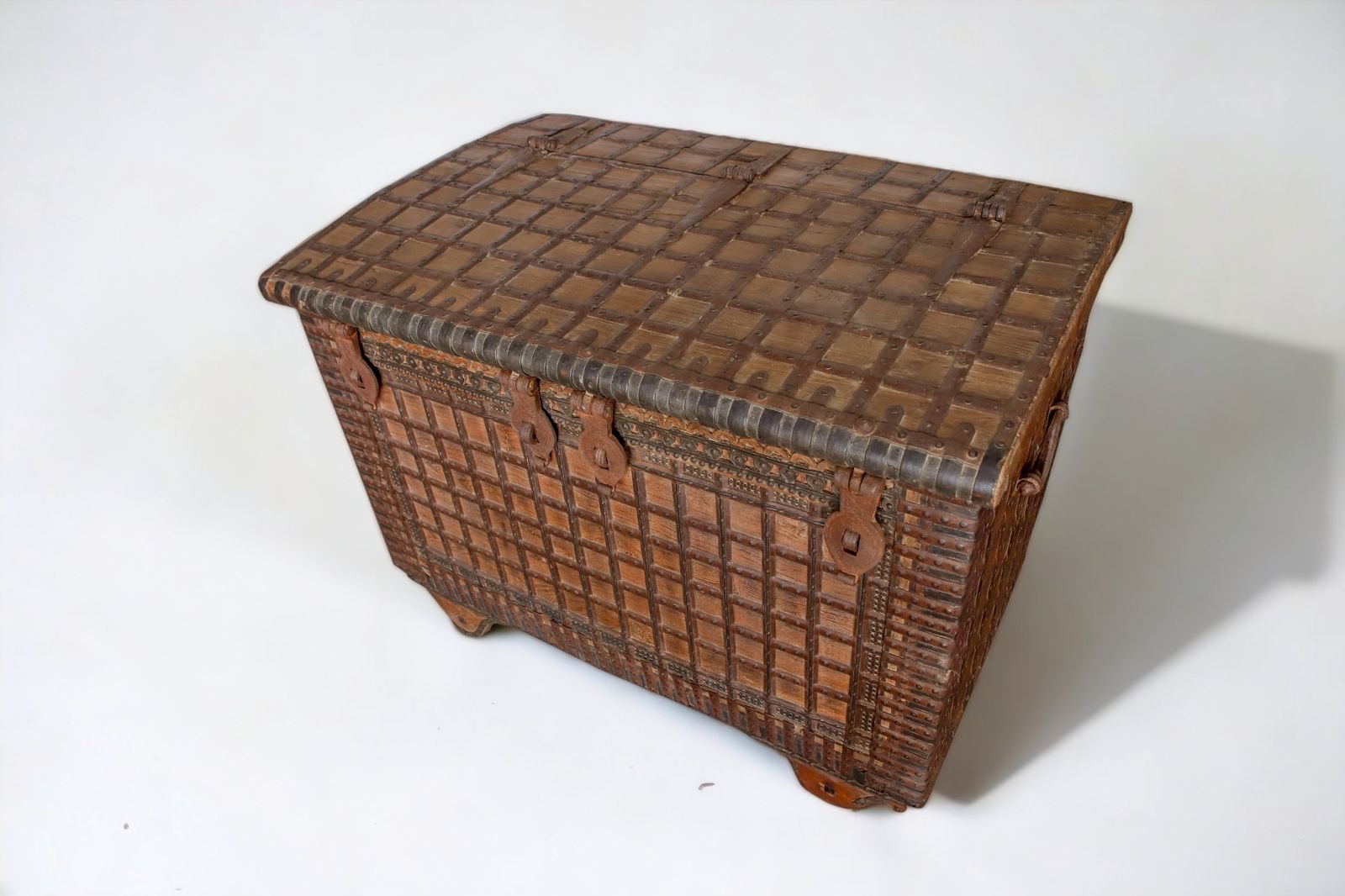
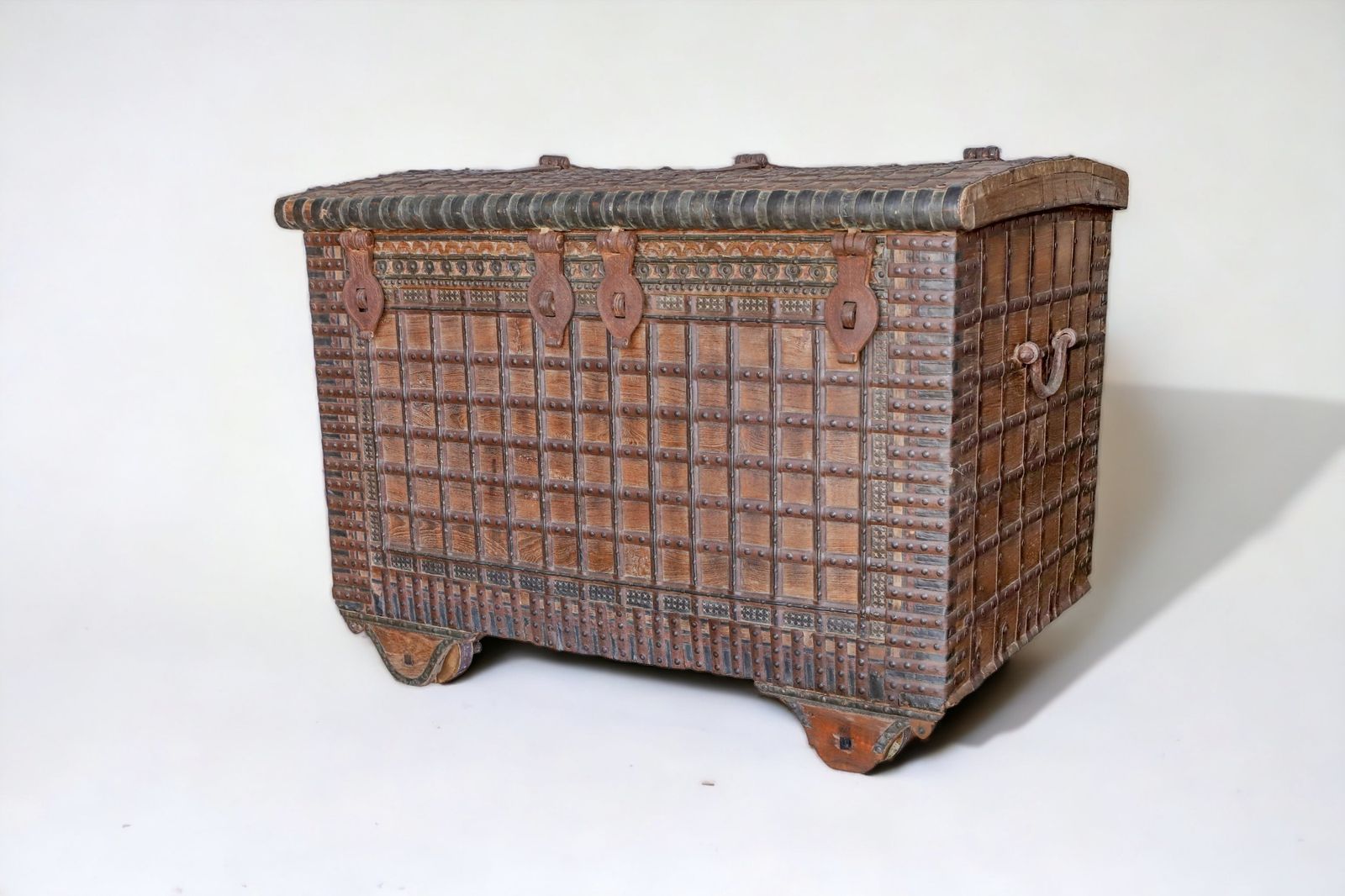
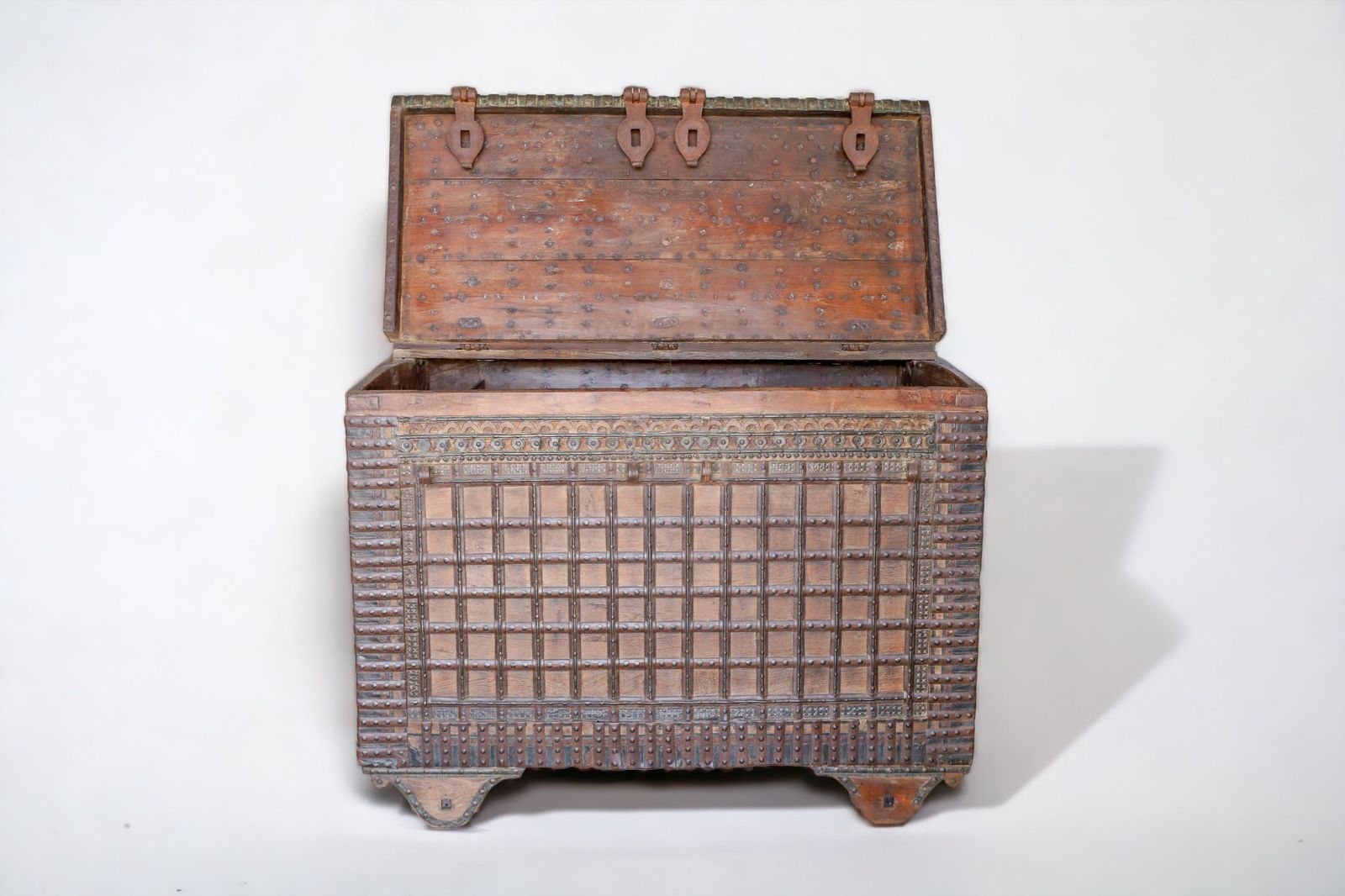
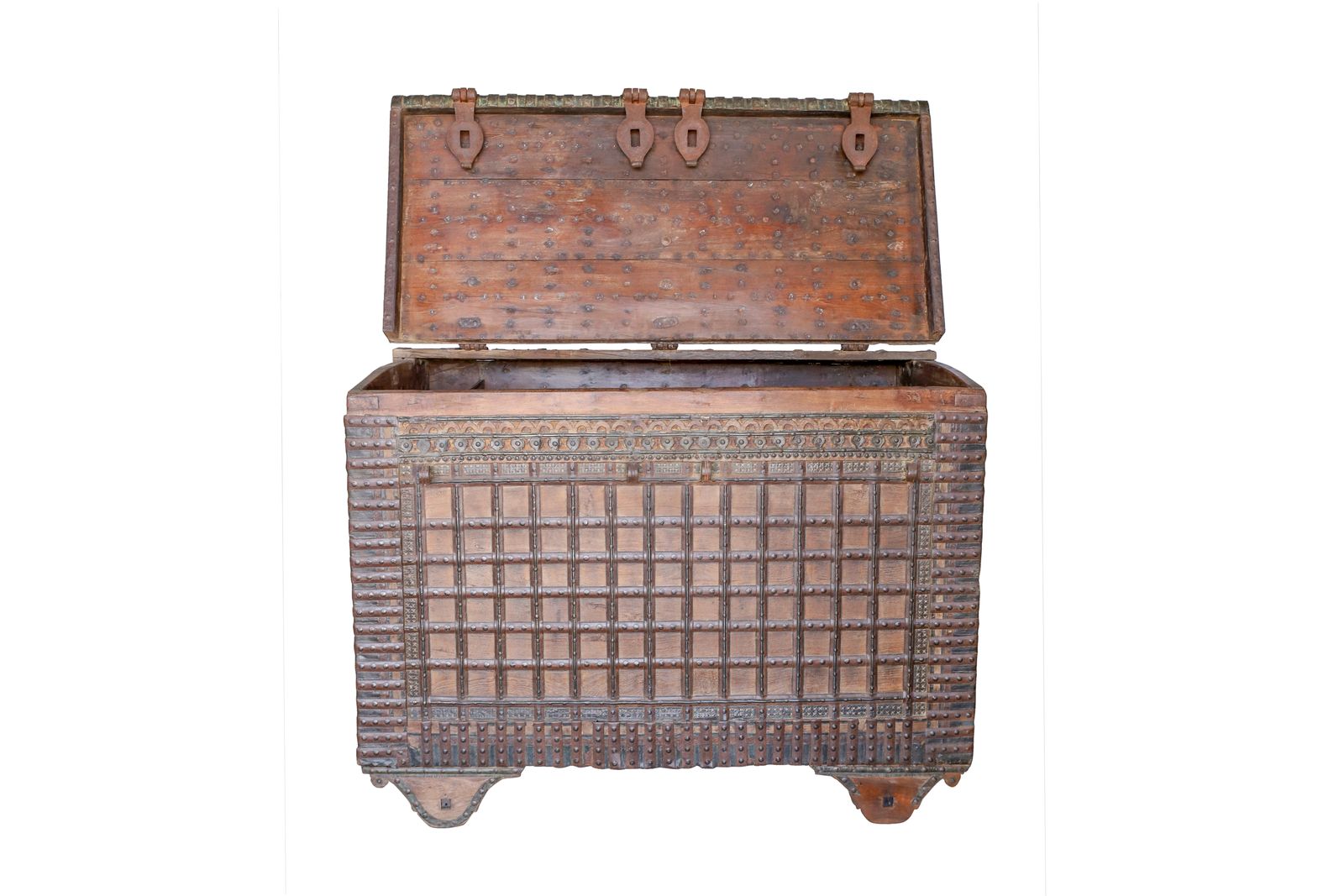
Antique Damchiya Bridal Dowry Chest with Four Distinct Iron Locks, Circa 1890.
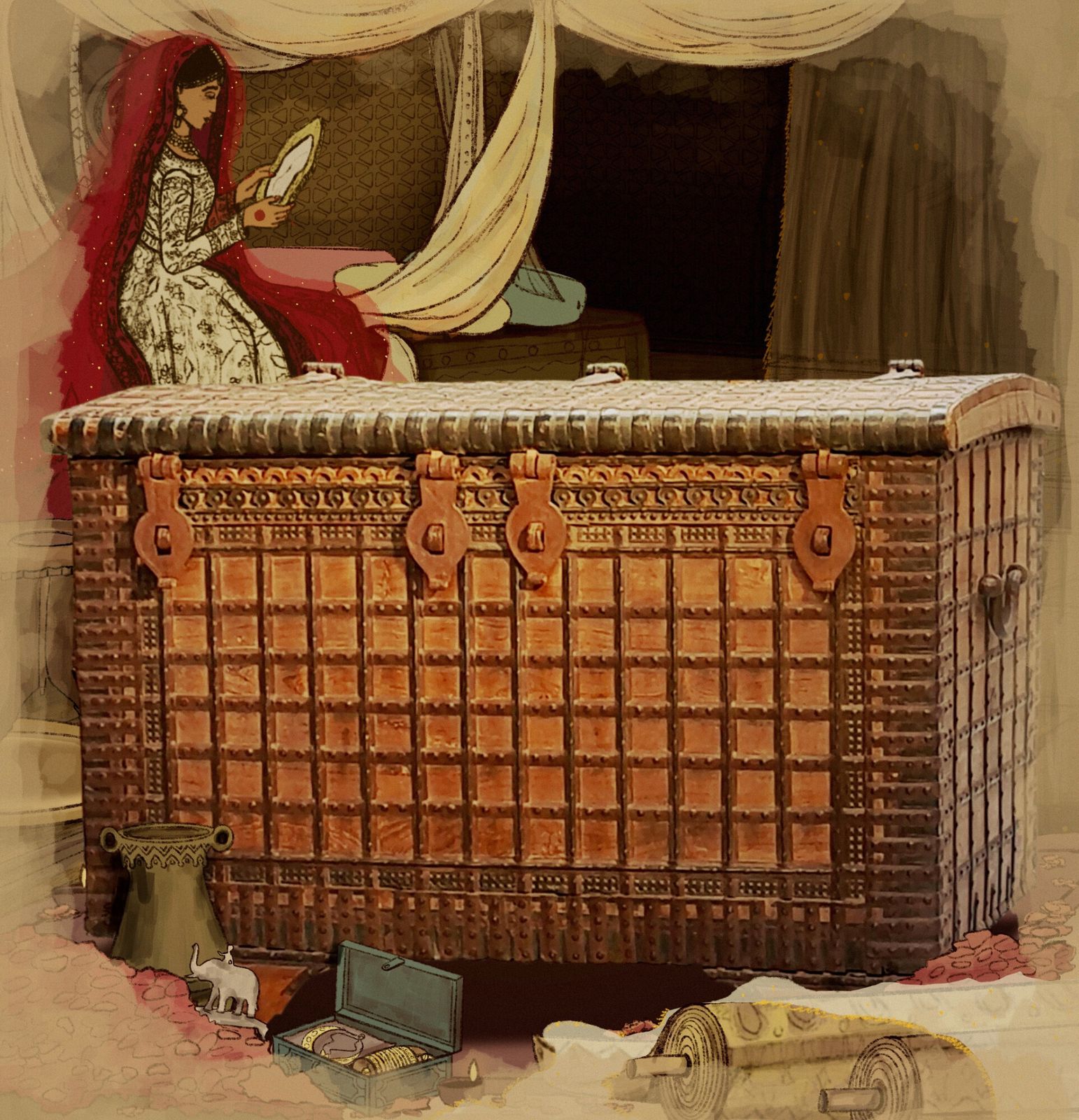
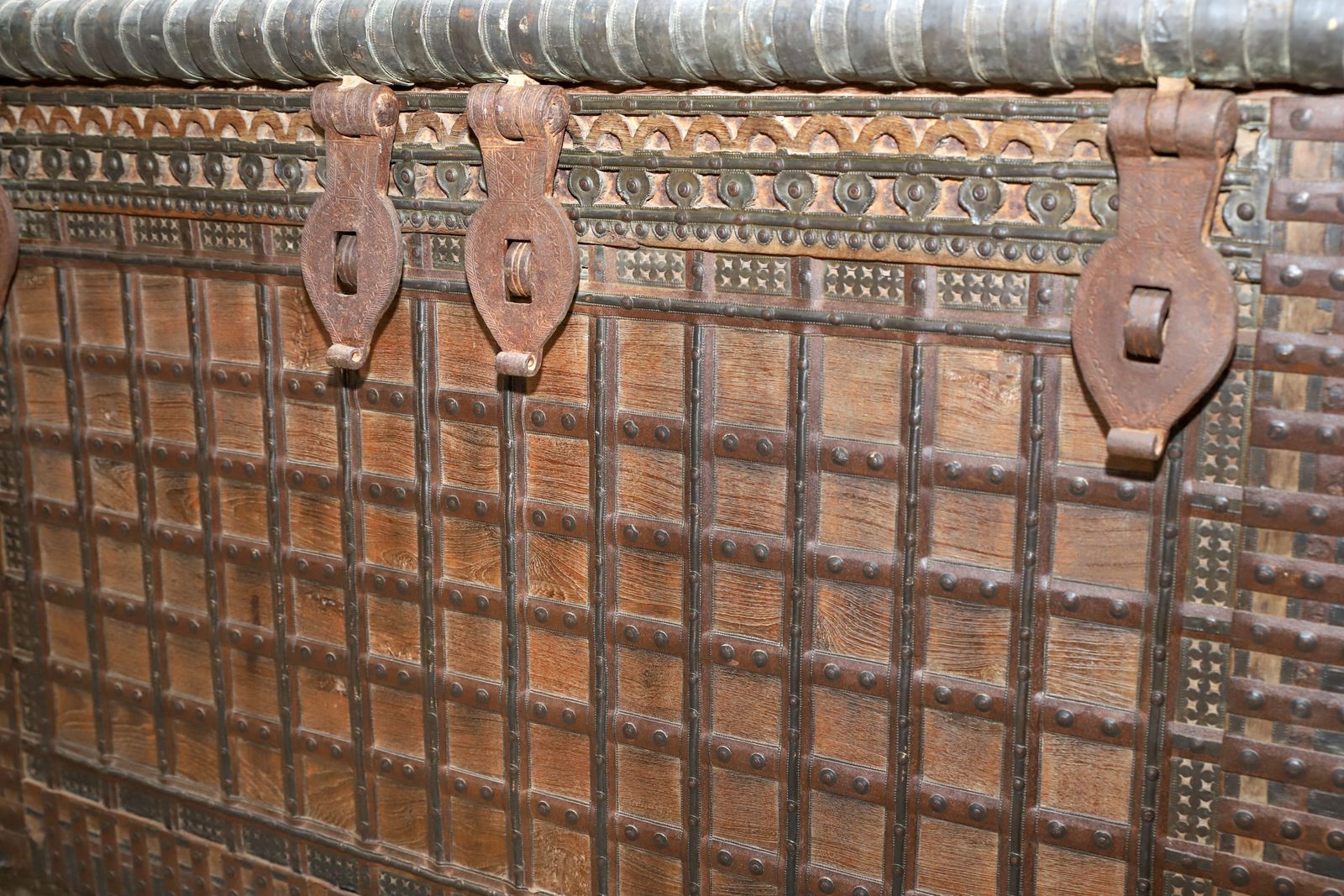
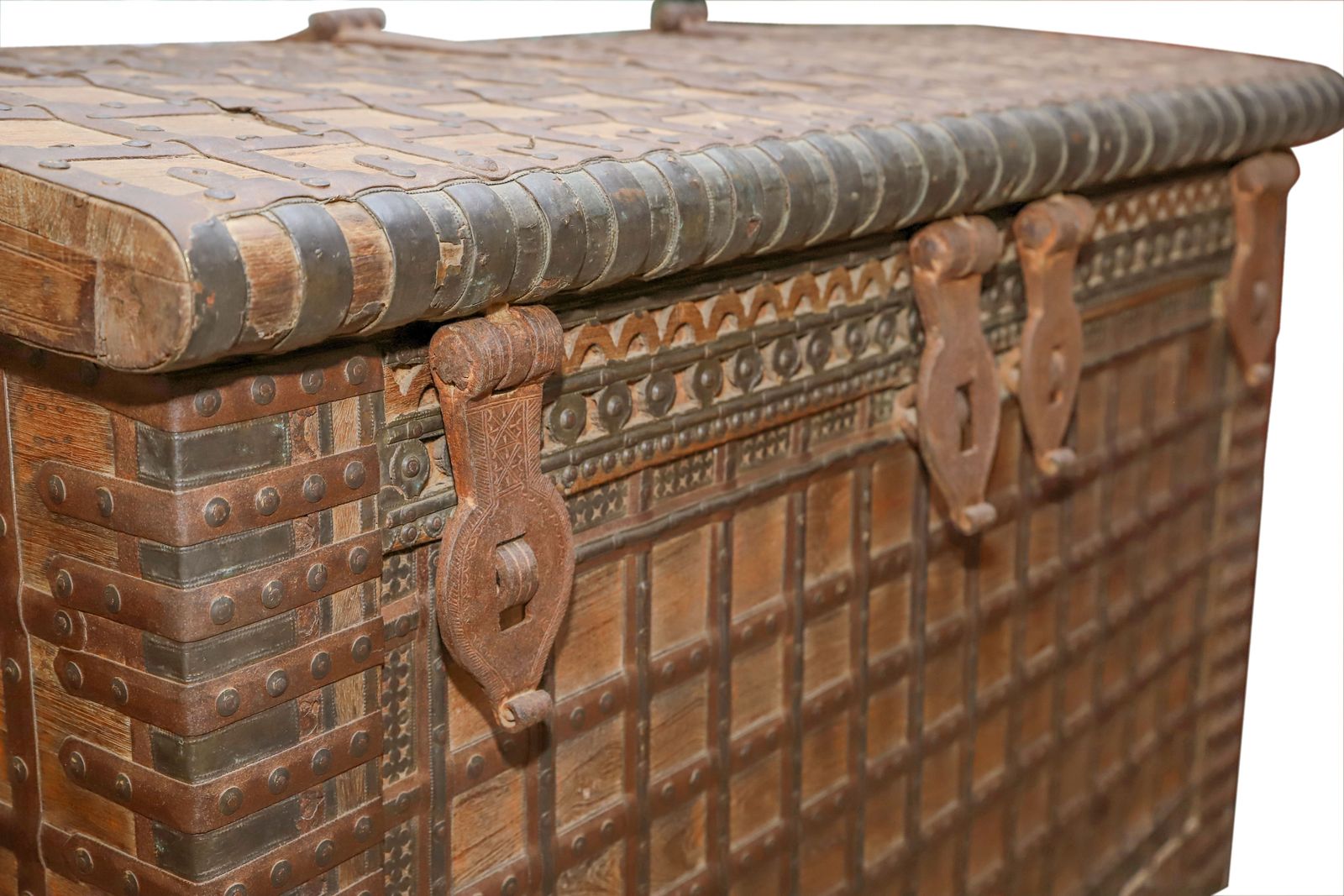
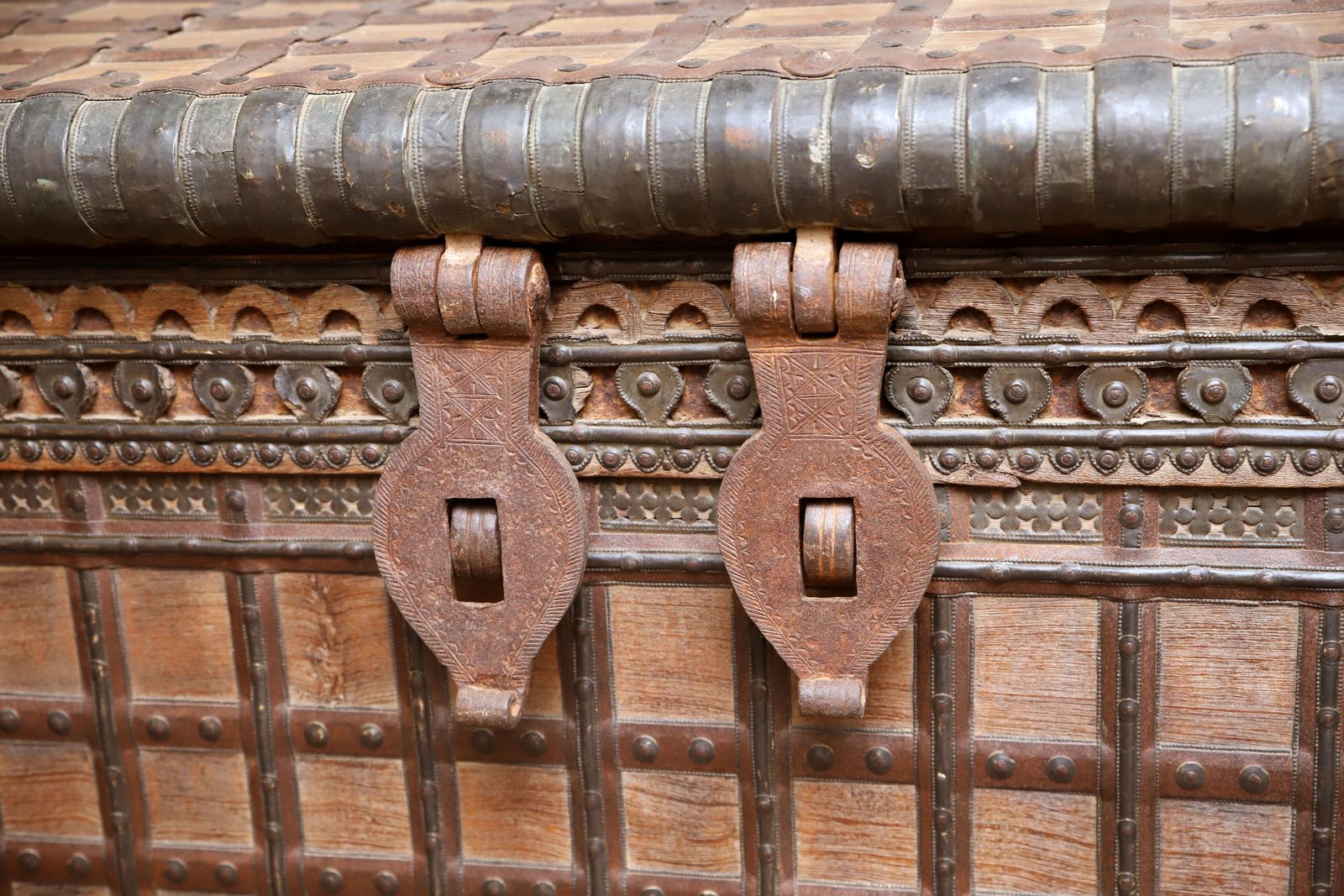
This unique Damchiya also referred to as a dowry chest, with four distinctive, imposing iron locks, circa 1890, is a standalone exquisite feature piece of furniture. These dowry chests were presented to a bride at the time of her marriage, by her parent’s household. it would have been used to store valuables, jewellery, linen, silverware, glassware, kitchenware, or any other such article that was considered valuable by the societal parameters of the period.
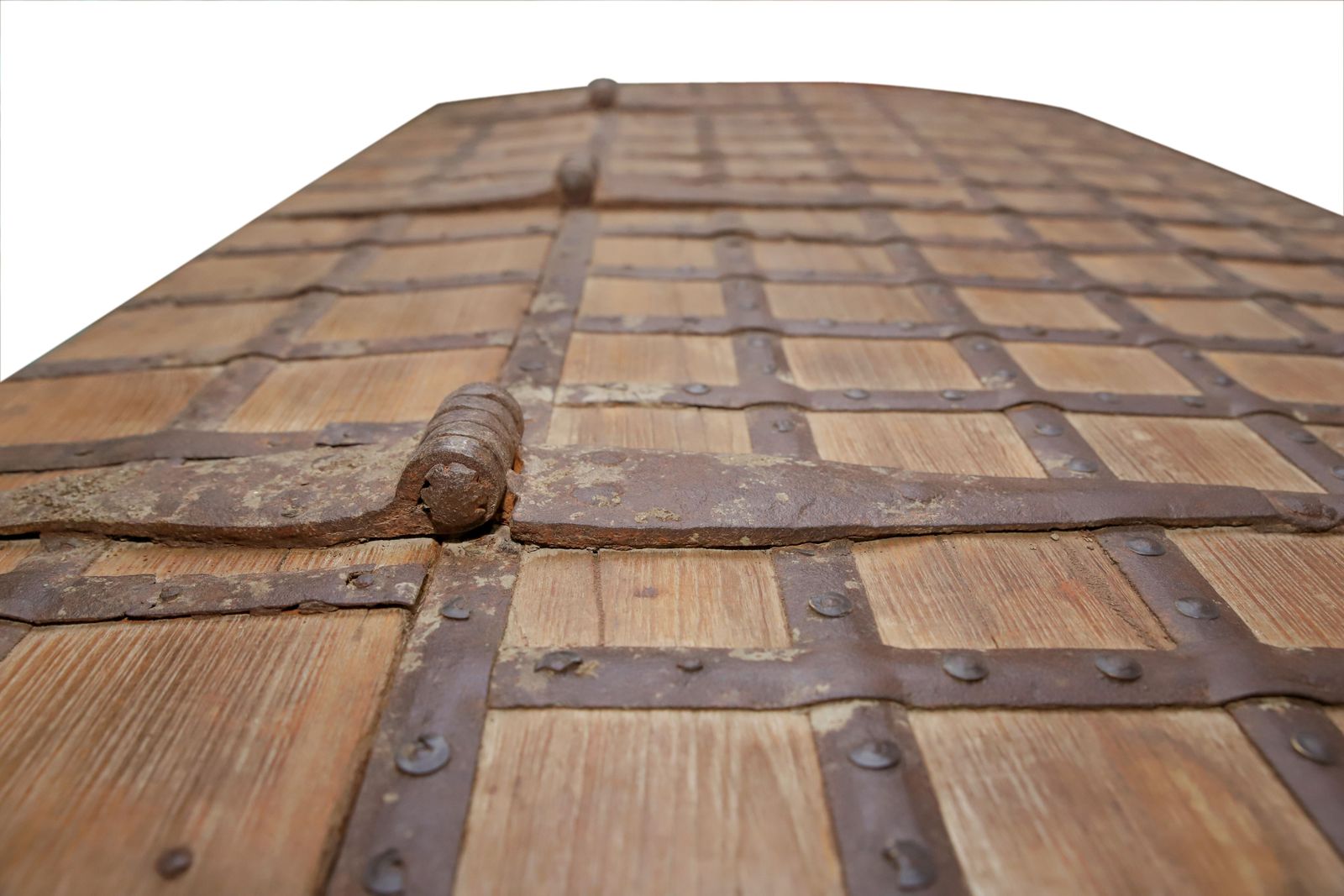
Alongside the four locks, the attention to detail draws your eyes toward the iron straps that cover the chest entirely. The handles and hinges are heavy and ornate, and the wheels have been carefully camouflaged from view at the front and are exposed at the back. Also referred to as a Hope chest, damchiya, sandook, majju, or pataaro is said to have, originated due to the Portuguese influence in India. History suggests that the Portuguese sailor’s chest served as the inspiration for these dowry chests.
The craftsmen of ancient or medieval India were not interested in the creation of furniture. While they were famous for their skill and technique in creating ships, palaces, doors, wooden sculptures, carvings, etc., we hardly find any mention of them creating any household furniture other than those ceremonial in nature.
By no means does it signify that Indians lacked knowledge of furniture-making. Varahamihira, in the 6th century CE, mentions fourteen species of wood ideal for making furniture, in accordance with their properties. Shilpashastras find mentions of sixty-four techniques detailing the art of cutting, seasoning, and crafting wood. There are sculptures depicting religious or spiritual figures seated in asanas (elevated seats). The art and skill existed, but furniture-making was not in vogue.
Furniture like charpai (cot), pidha (a small wooden stool for sitting), and mooda (a type of wooden chair for sitting), etc. do find mention in various texts, but their presence was minimal, and there is no significant record of their history or importance. Most of the activities of Indians, like sleeping, sitting, eating, etc., were floor-oriented; hence, dhurris and carpets played an important role in the household.
The arrival of the Mughals had a significant influence on the creation of household furniture in India. During their time, writing desks, tables, etc. with decorations of ivory, carvings in gold or silver, and the use of dark wood and mirrors became prominent in most parts of northern India. The development of furniture in India is mostly of recent origin, most notably with the advent of European colonisation. The European colonisers introduced India to Western furniture, which then began to be produced in India with indigenous materials.
Wood was the primary raw material required to construct a dowry chest. Usually, hardwood such as teak, mahogany, rosewood, walnut, or any other hardwood that could be acquired locally was used. These woods were able to provide a strong and sturdy structure to the chest to withhold weight.
Traditionally, in India, the women of the house would embroider linen or any other textiles along with accumulating valuables from the birth of a girl child, which could later be given to her as dowry at the time of her marriage. Even young girls would have used the chest as a storage place for any item they may find important or valuable, and that could be taken with them as dowry after their marriage.
The families that had limited means used to collect and save articles of value in this chest, which was then presented as a dowry at the time of the wedding. The prosperous families, along with collecting and saving the valuable articles, used to commission a special dowry chest to be presented at the wedding.
The dowry cabinet was constructed to be of varied sizes and designs. The chests could be hollow from the inside or have different compartments made for housing different objects. The appearance of the chest carried great importance as it signified the wealth and status of the bride’s family. Most of the dowry chests were fully sculpted, but the design, decoration, and painting depended on the region. These chests were beautifully carved, painted, or uniquely decorated, and although there were guidelines for the decoration of the dowry chest, the owner could exercise the right to specify the carvings and ornamentations according to his or her wishes. Often, a chest contained hidden latches, secret compartments, and openings that were accessible only to the bride. Up to fifteen secret compartments could be constructed in a dowry chest. Mostly, every household had a personal suthar (carpenter) who was tasked with creating the dowry chest. Only the suthar and his successor, along with the owner of the chest, were aware of the complex mechanism of the hidden compartments of the chest, which were confided in the bride at the time of her marriage.
If the dowry chest was to be passed on to a daughter by her mother, the knowledge of the secret compartments was passed on to the daughter at the time of her marriage. Other members of the house and other descendants did not know these hidden compartments and their functioning, leading to the possibility of a large fortune being lost at the sudden demise of the owner of the chest.
Most of the chests, instead of being placed on the ground, rested over two pairs of legs to protect the chest from dampness, termites, or rodents. However, nails were not used to combine the different parts of the chest but were “stitched together” with the help of a wooden pivot to complete the structure.
Dimensions
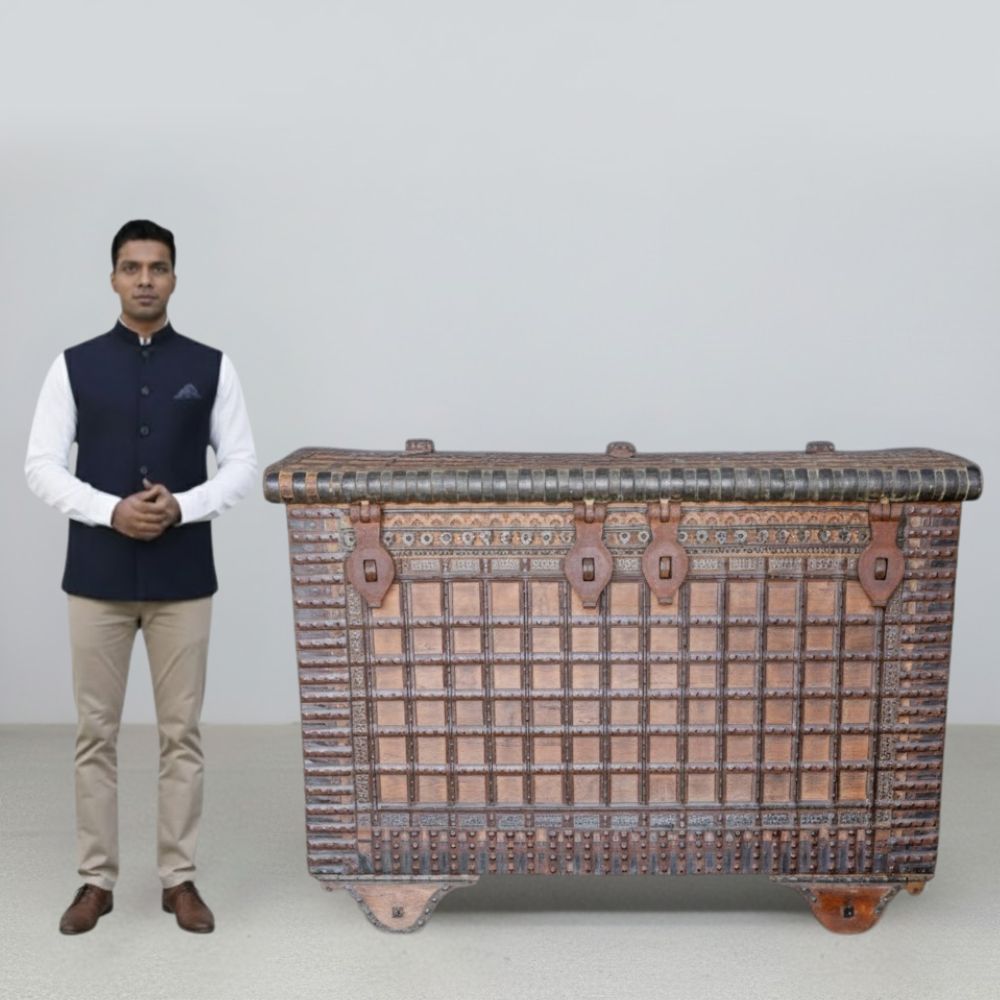
Width: 160cm
Height: 120cm
Depth: 103cm
Weight: 224kg
The chest in itself carried as much importance as the dowry and was usually ornamented with carvings or paintings. The doors and panels of the dowry chests were decorated uniquely. These dowry chests were richly decorated with geometrical and floral patterns or symbols of good luck (like Lord Ganesha or Swastika). The colours mostly used for painting these chests included red (which signifies purity), yellow (which signifies happiness), and blue (which signifies determination).
Apart from the regional presence and variations of the dowry chests, the popular kind of dowry chests, which were even exported from India, were classified into four main types
Shirazi (Persian) Chest - Originating in Persia (now Iran), these chests were made of teak and were considered to be of the finest quality and exceptionally rare to find. The chests were decorated with plated brass with intricate flower designs on them. It lacked any central design, and the minimal decoration on the front left much of the wood in view.
Surat Chest - Named after Surat, a city in Gujarat, these teakwood chests were similar to Shirazi chests in design but varied in decoration. Surat's chests are plated with heavy brass work on the front, covering almost the entire entirety of this design, leaving very little room for showing the wood.
Bombay Chests - Named after Bombay (now Mumbai), a city in Maharashtra, these chests are made of teak
Malabar Chests - Named after the southwestern coast of India, these chests are made of rosewood, easily recognized by the scanty brass work inlaid on the front.
Wear Condition
Good
Cancellations
We offer free cancellations and full refund for orders cancelled before dispatching. View full policy.
Returns
We have a 14-day return guarantee for orders from individual sellers, within the UK and European Union. View full policy.
Additional Delivery Info from Seller
Free collection available
Yes
Made to Last
The average lifespan of a Vinterior piece is 100 years, while modern flat-pack typically takes just 3 years to reach landfill. When you choose pre-loved, you can shop with confidence in quality, craftsmanship and longevity. With our top-rated customer service team and price match guarantee, there's no better way to shop pre-loved.

Shopping at Vinterior


Similar Trunks
Similar Trunks
You may also like
You may also like
Add to a wishlist
Create Wishlist
Completethe room
Good design is all in the layering. Whether you're adding impact or refining the details, now’s the time to find what’s missing.
Reviews
4.88

Based on 8 reviews




Wear conditions
Excellent
Shows little to no signs of wear and tear.
Good
May show slight traces of use in keeping with age. Most vintage and antique items fit into this condition.
Average
Likely to show signs of some light scratching and ageing but still remains in a fair condition.
Apparent Wear and Tear
Visible signs of previous use including scratches, chips or stains.
Please refer to condition report, images or make a seller enquiry for additional information.
Cancellations and Returns
Last updated: 12/02/2026
Clear, predictable protection for every pre-loved purchase.
Simple £75 flat return fee for UK-to-UK mainland furniture when you change your mind.
Applies to furniture with a final selling price of up to £5,000 (excluding delivery and service fees) and delivered from a UK mainland seller to mainland UK addresses. Excludes Northern Ireland, Channel Islands, Scottish Highlands & Islands, Isle of Wight and Isles of Scilly.
Buying vintage should feel inspiring, not uncertain.
Every order on Vinterior is backed by straightforward returns, free cancellations, and extra peace of mind for UK furniture purchases.
1. Free cancellations
Changed your mind before dispatch?
You can cancel any order before it's shipped for a full refund, including delivery.
To cancel an order, click Create cancellation on the order page.
Once an item has been dispatched, delivery costs are not refundable.
Bespoke, personalised or made-to-order pieces cannot be cancelled.
2. Returning an item
You have 14 days from delivery to request a return.
There are two return types:
A. The item isn't as described (free return)
If your piece arrives and it doesn't match the listing in any material way (incorrect description, undisclosed damage, inaccurate measurements, misleading photos), you are fully protected:
- Free return
- The seller or Vinterior arranges pickup
- Full refund, including outbound delivery costs once the seller receives the item
This applies to all purchases.
B. You changed your mind
UK-to-UK furniture deliveries:
To make UK furniture returns predictable and stress-free, we offer a simple flat return fee of £75.
- Applies to furniture delivered from a UK mainland seller to a mainland UK address. Excludes Northern Ireland, Channel Islands, Scottish Highlands & Islands, Isle of Wight and Isles of Scilly.
- Pickup arranged for you
- One clear fee, no surprises
We coordinate the return with either the seller's chosen courier or our trusted delivery partner.
All other items
Most smaller items are straightforward to return.
You can still return your item within 14 days.
- For smaller or parcel-sized items, you can choose to post the item back yourself using a tracked service, or the seller can suggest a preferred courier.
- For larger or more fragile pieces, the seller may recommend the safest return method.
- Return delivery costs vary depending on size and courier.
The seller will confirm the best option based on the item.
3. If your item arrives damaged
Damage on arrival is uncommon, especially for UK furniture deliveries.
But if something does go wrong, you're fully protected.
- Let us know as soon as possible (ideally within 72 hours of delivery) so we can resolve things quickly
- Share photos so we understand what happened
- We’ll help arrange a return and refund if needed
You’re always protected when something goes wrong in transit.
Your statutory rights apply for up to 30 days from delivery.
4. What can't be returned
Some items cannot be returned:
- Bespoke, personalised, or made-to-order pieces
- Items altered after delivery
5. How to start a return
- Log in to your Vinterior account
- Open your order
- Click Create a return
- Add notes + photos if relevant
We'll guide you through the rest.
6. What happens next
- We review your request, confirm the return and advise on next steps
- Pickup or return method is arranged
- The item is returned to the seller
- We issue your refund once the seller confirms the item's condition
Returns are completed smoothly once the pickup is arranged.
7. Refunds
Once the seller receives the piece back in the same condition it was sent, we'll issue your refund to your original payment method.
Once a refund is issued, it may take up to 5–10 working days for the funds to appear back on your original payment method, depending on your bank or card provider.
If the item is returned with new damage that wasn't present at delivery, the refund may be adjusted following review.
Need help?
If you have questions about a return or your order, our support team is here to help. Email us at [email protected] or find other ways to contact us here.
What your service fee covers
-
 14-day return guarantee
-
Flat-fee return shipping on UK furniture
-
Seller vetting
-
Dedicated customer support
| Order Value (£) | Fee (£) |
|---|---|
| 0 — 49.99 | 2.75 |
| 50 — 99.99 | 5.50 |
| 100 — 199.99 | 11.00 |
| 200 — 399.99 | 21.00 |
| 400 — 599.99 | 30.00 |
| 600 — 799.99 | 40.00 |
| 800 — 999.99 | 50.00 |
| 1,000 — 1,499.99 | 55.00 |
| 1,500 — 1,999.99 | 60.00 |
| 2,000 — 4,999.99 | 82.50 |
| 5,000+ | 110.00 |
Added at checkout, based on your basket total.
