


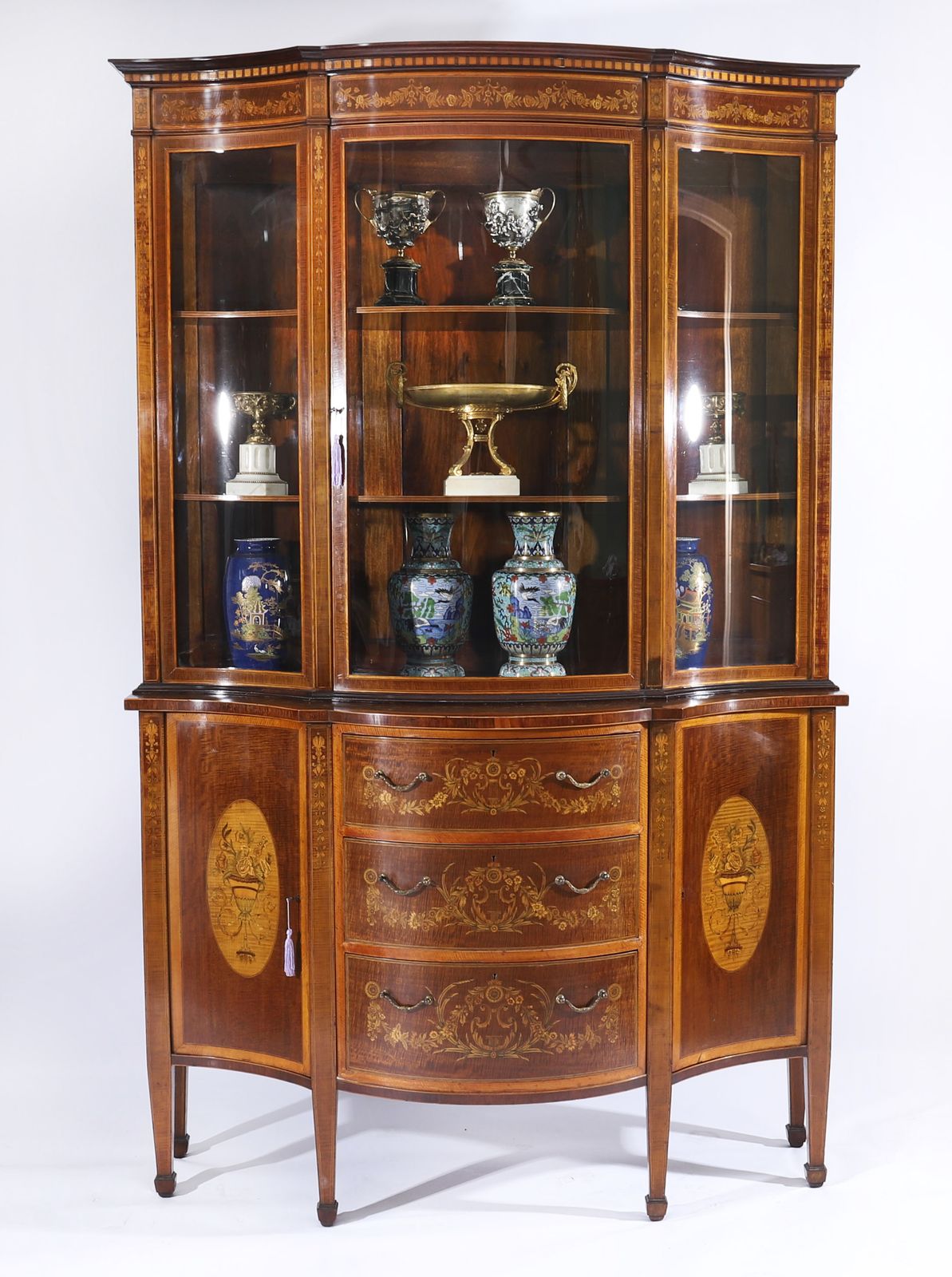
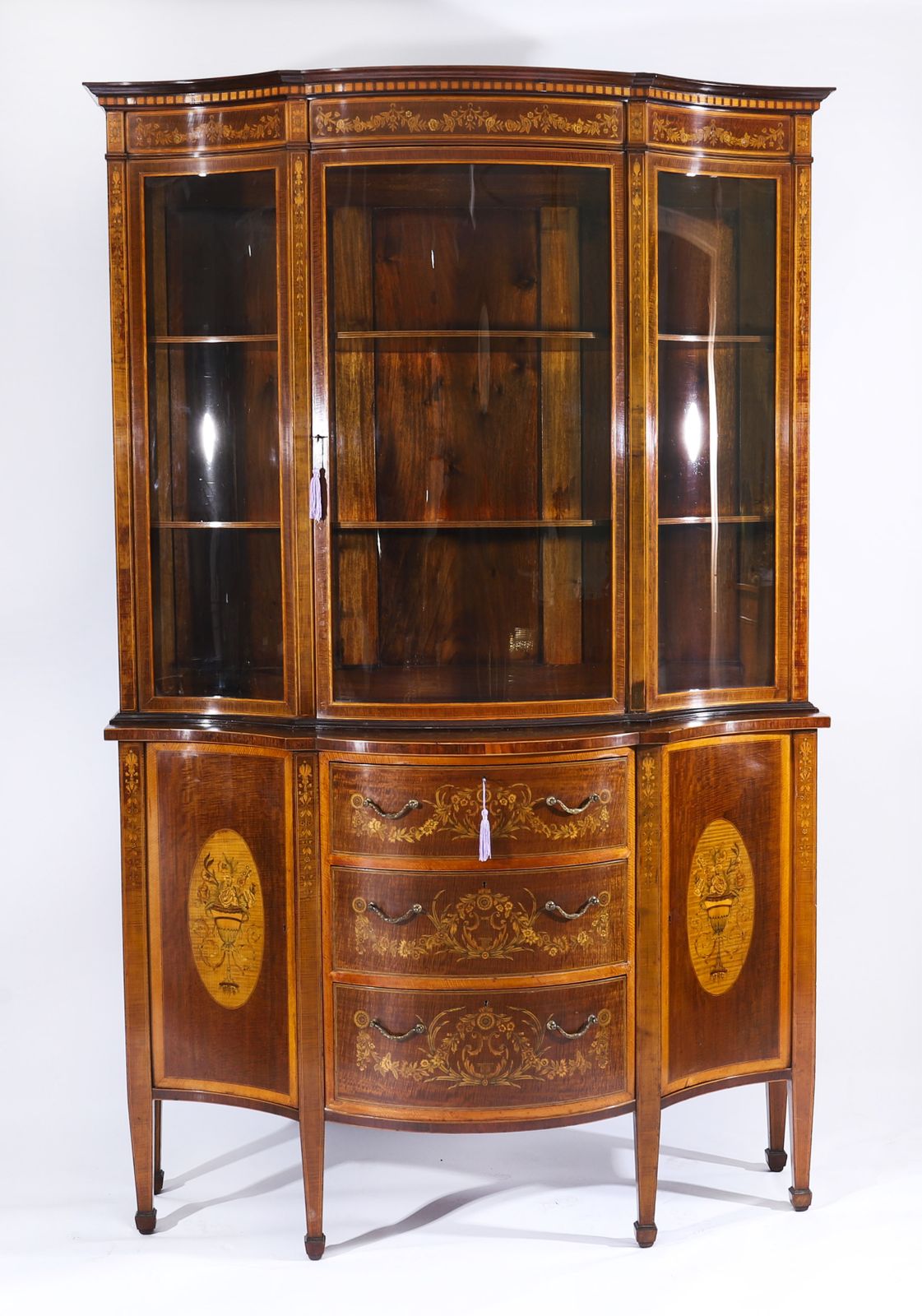
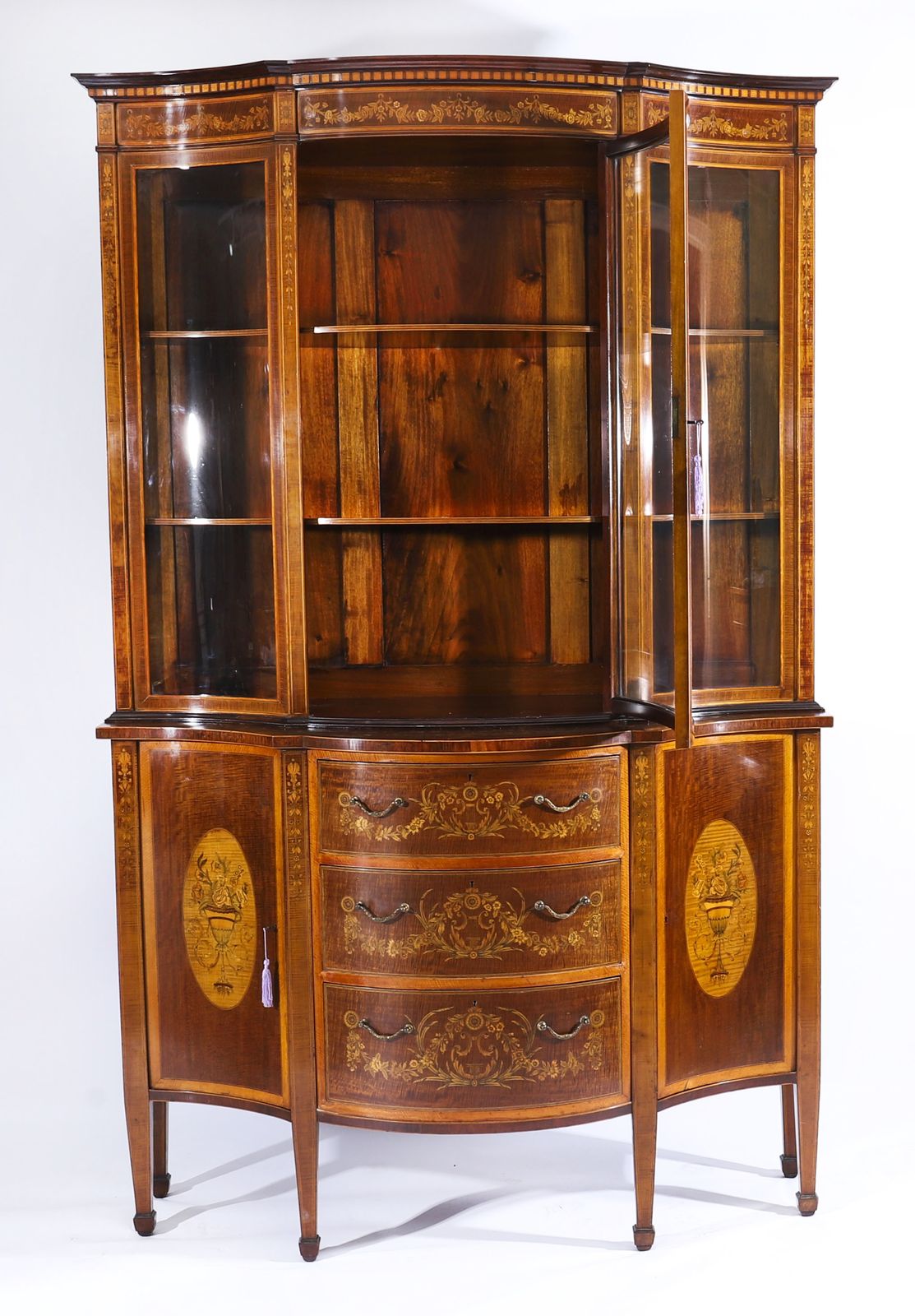
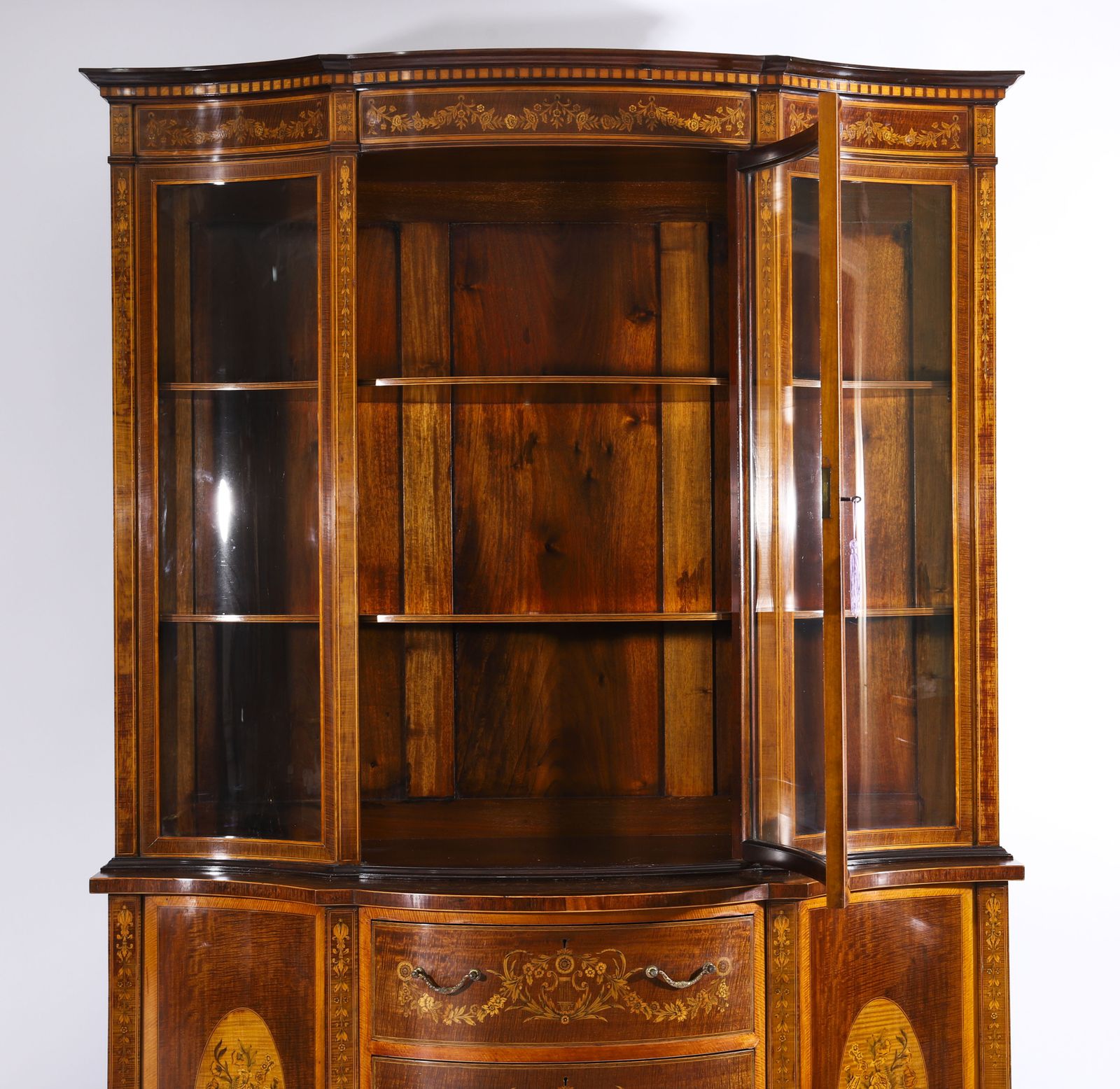
Antique Marquetry Serpentine Display Cabinet Edwards & Roberts 19th C

 London, United Kingdom

Hassle-free returns
-
 Easy returns (14 days)
-
Free return if the item isn't as described
-
Buyer protection
Damage is rare, and you're fully protected if it happens.
Dimensions
Wear Condition
Excellent
Style
Antique, Georgian, Victorian
Item Location
London, United Kingdom
Product Details
Description
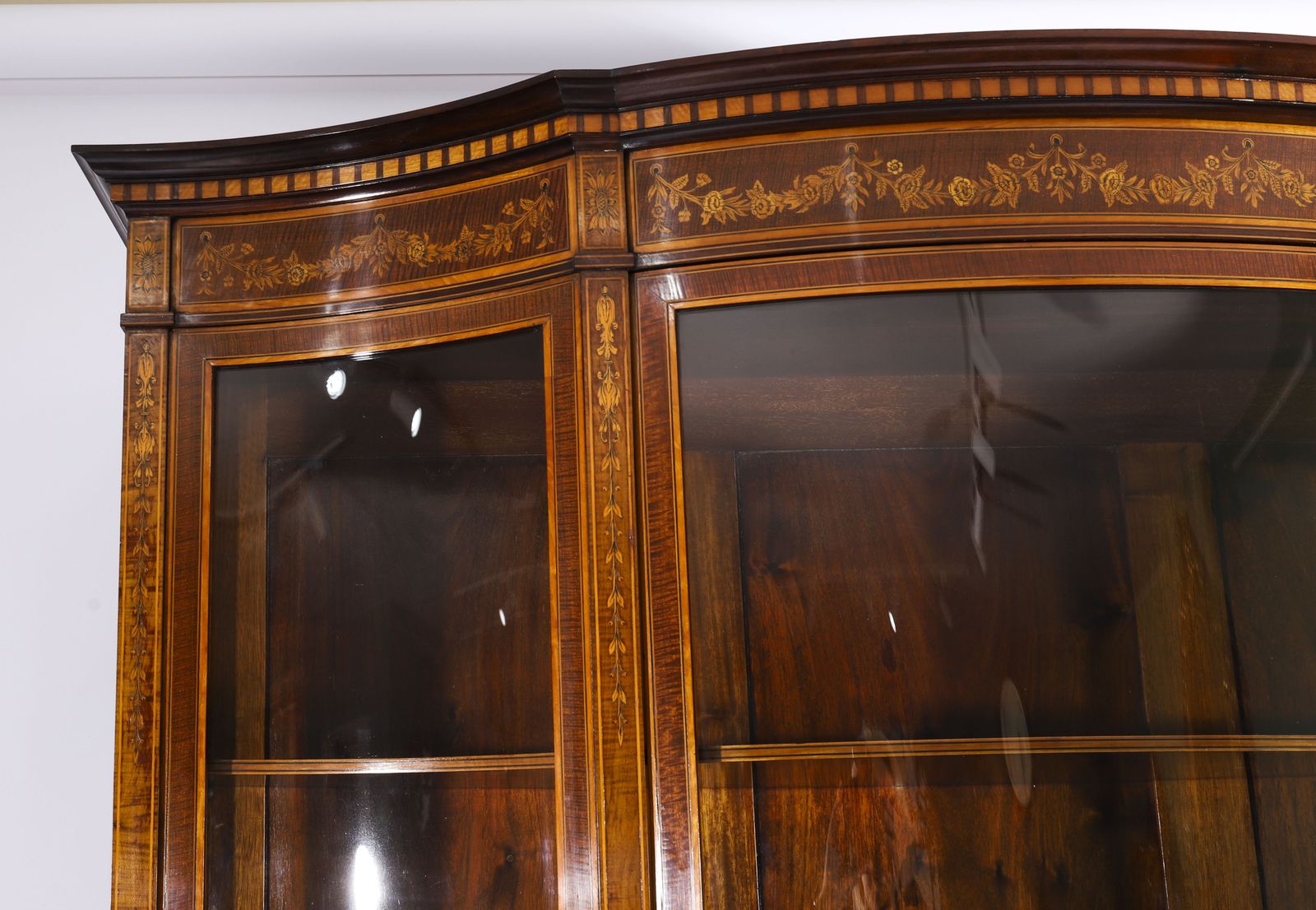
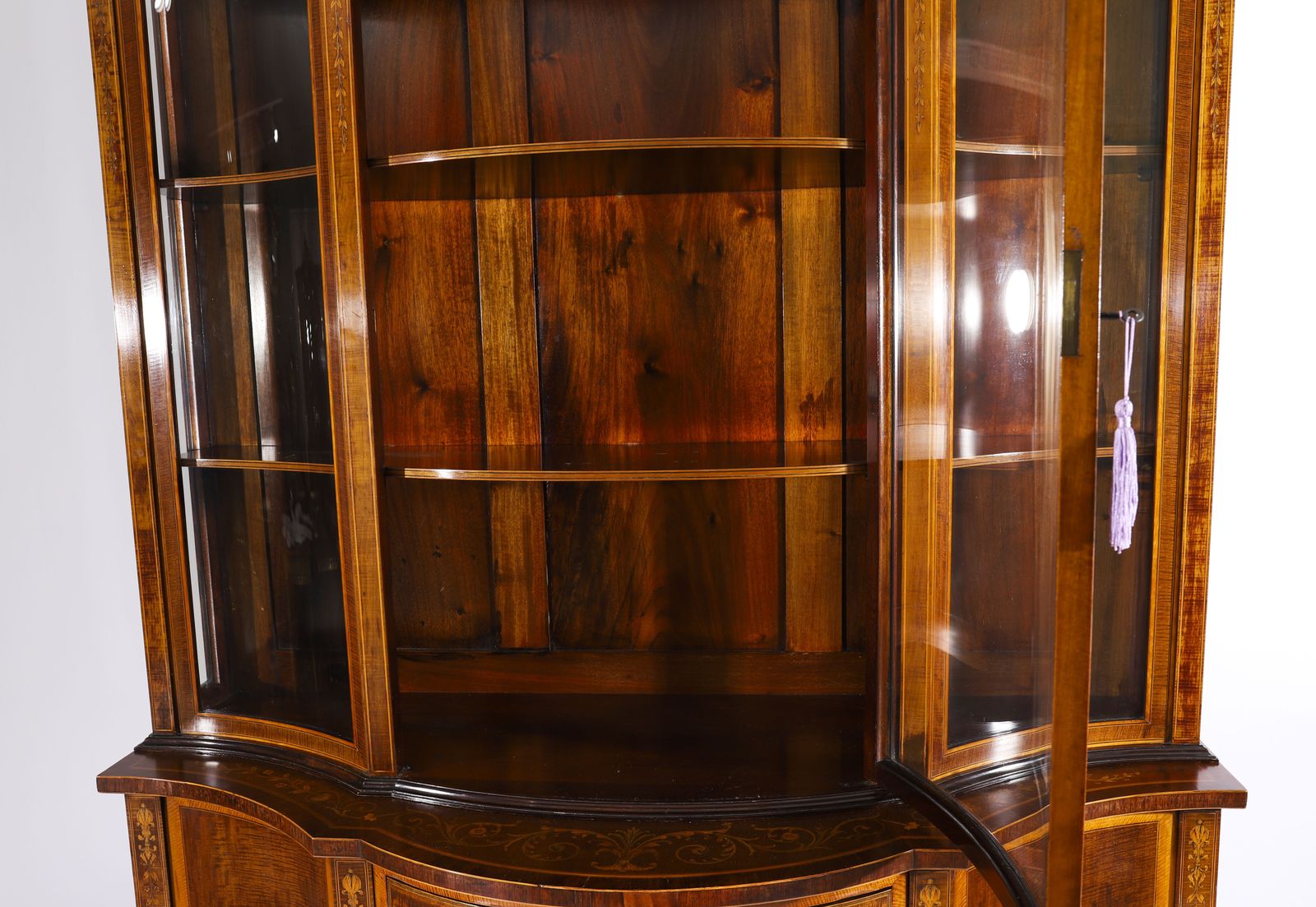
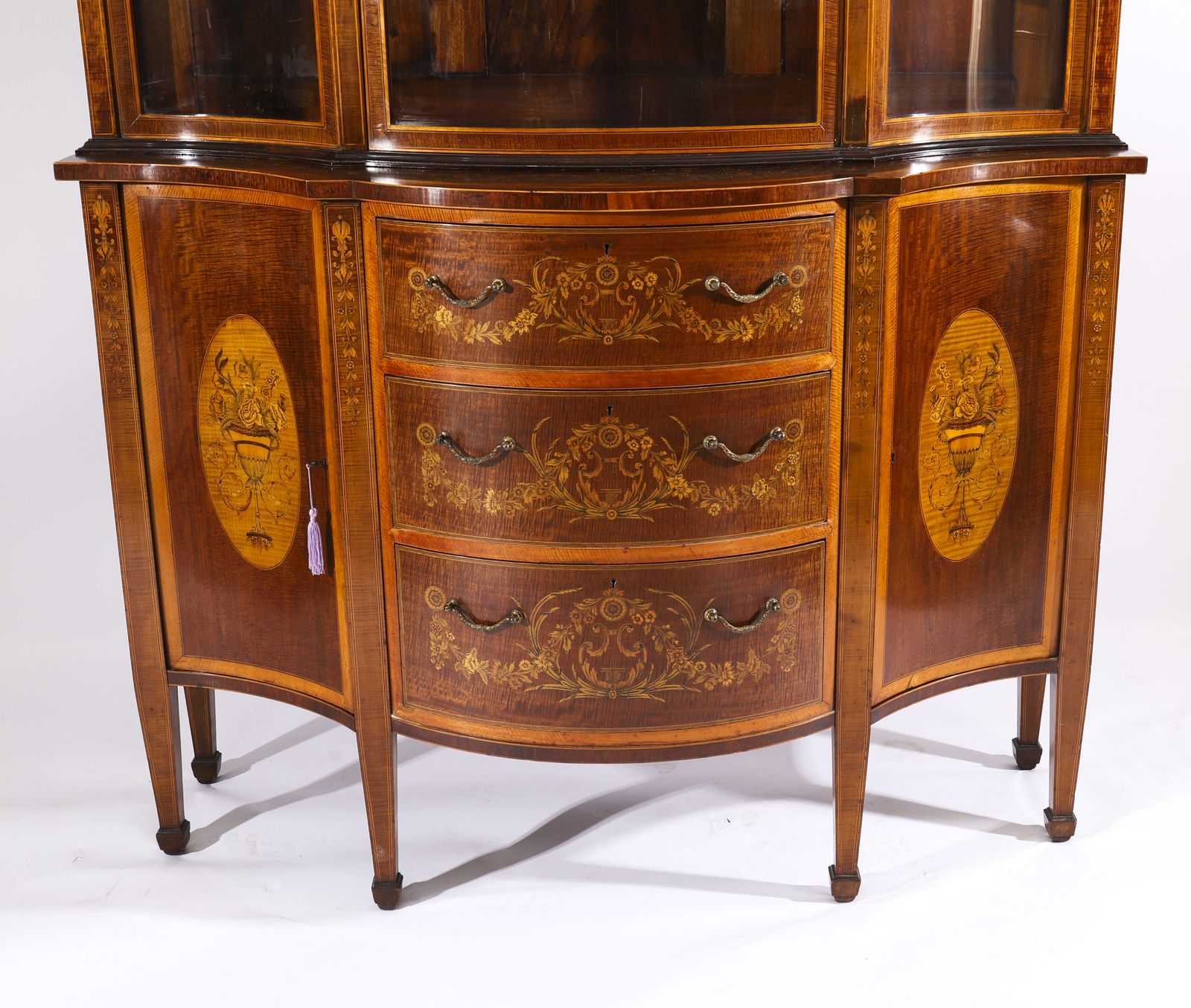
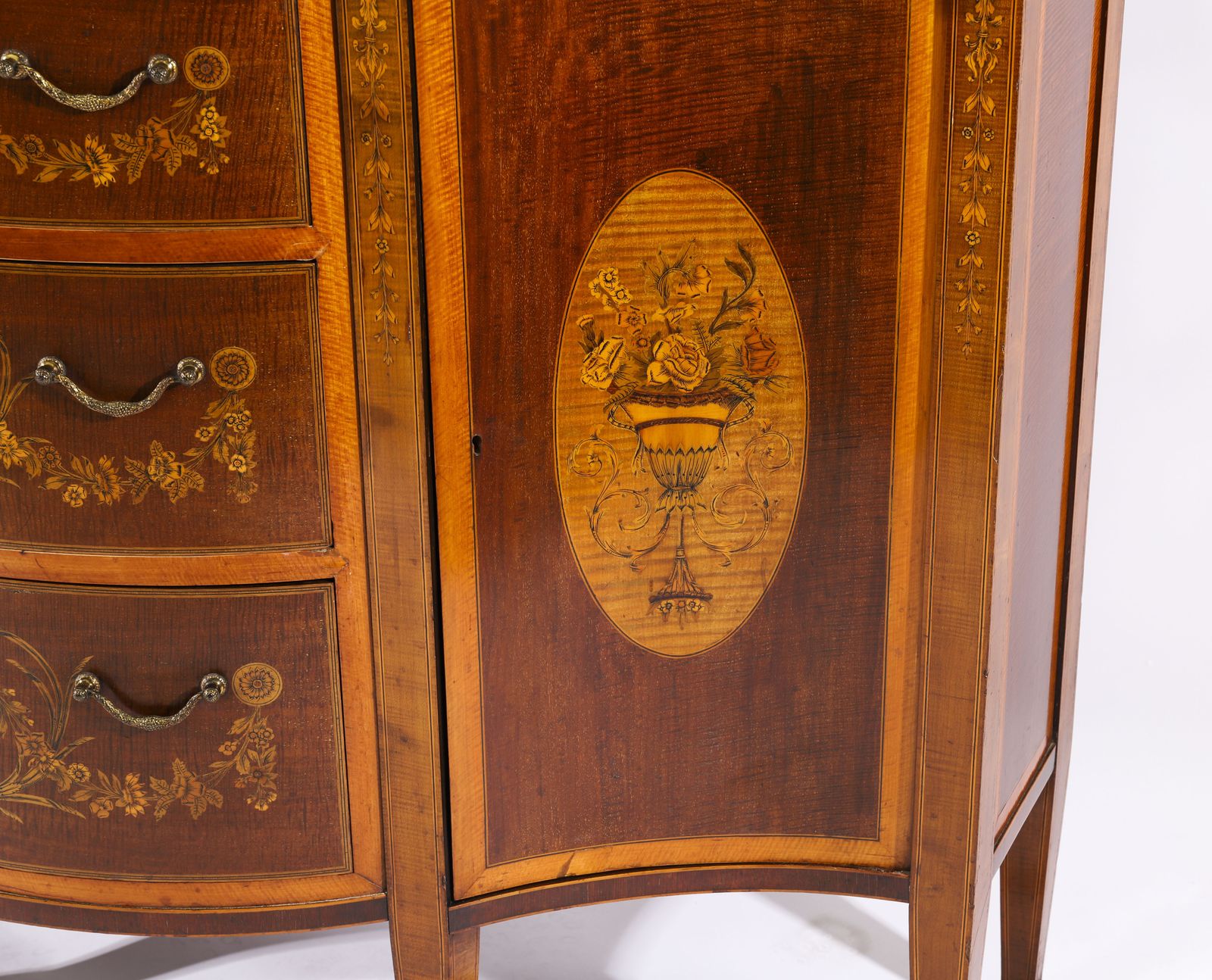
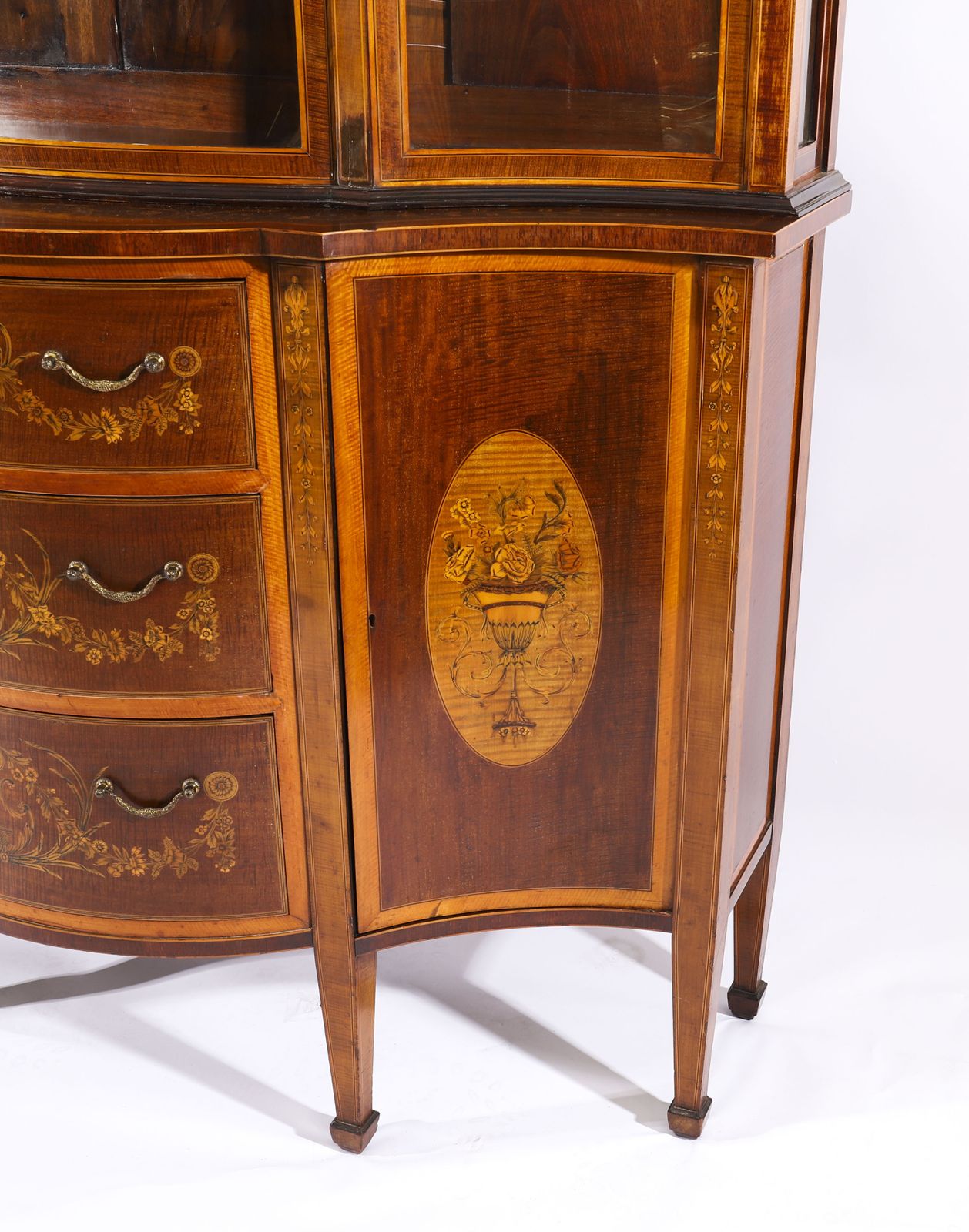
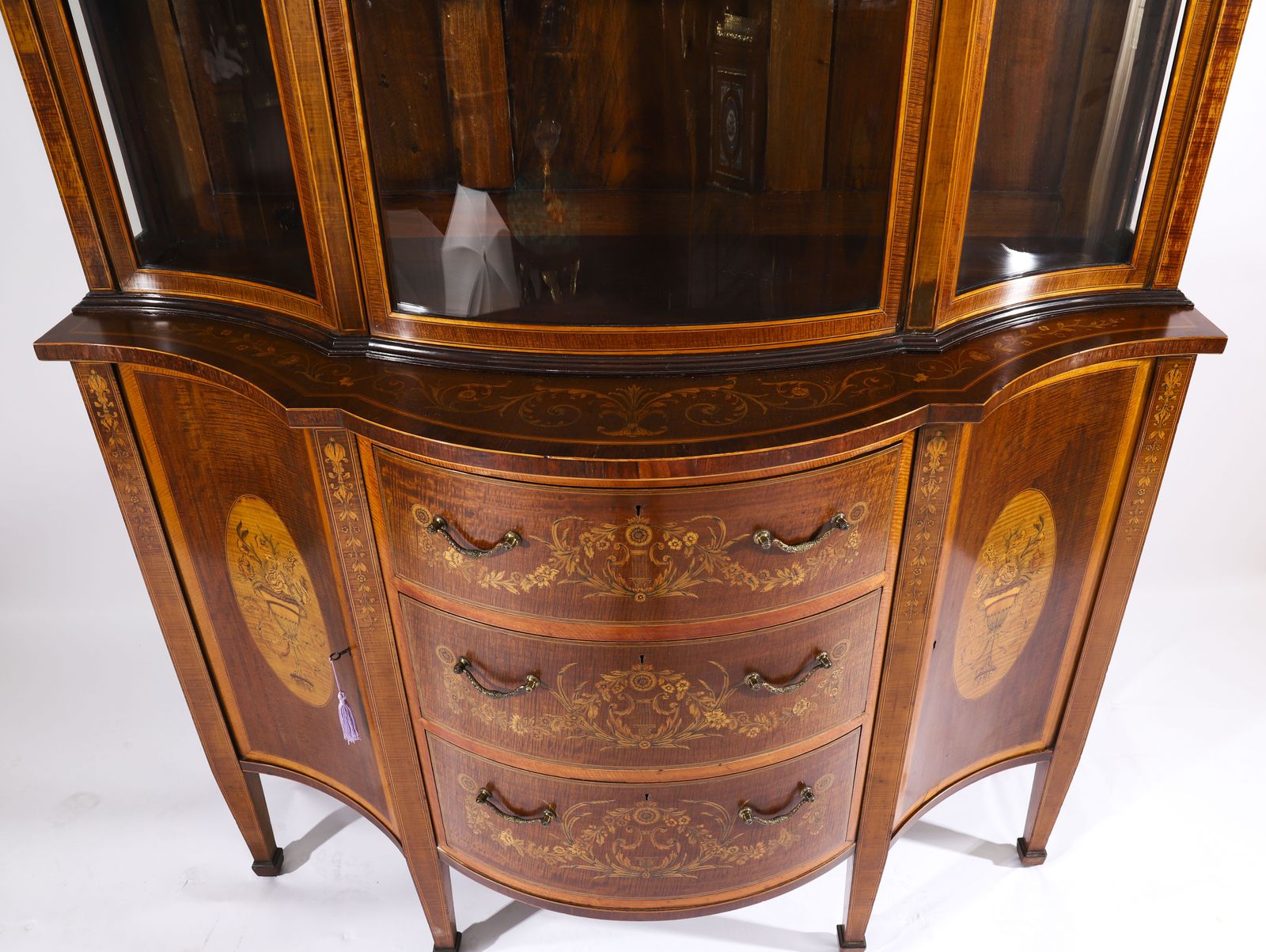
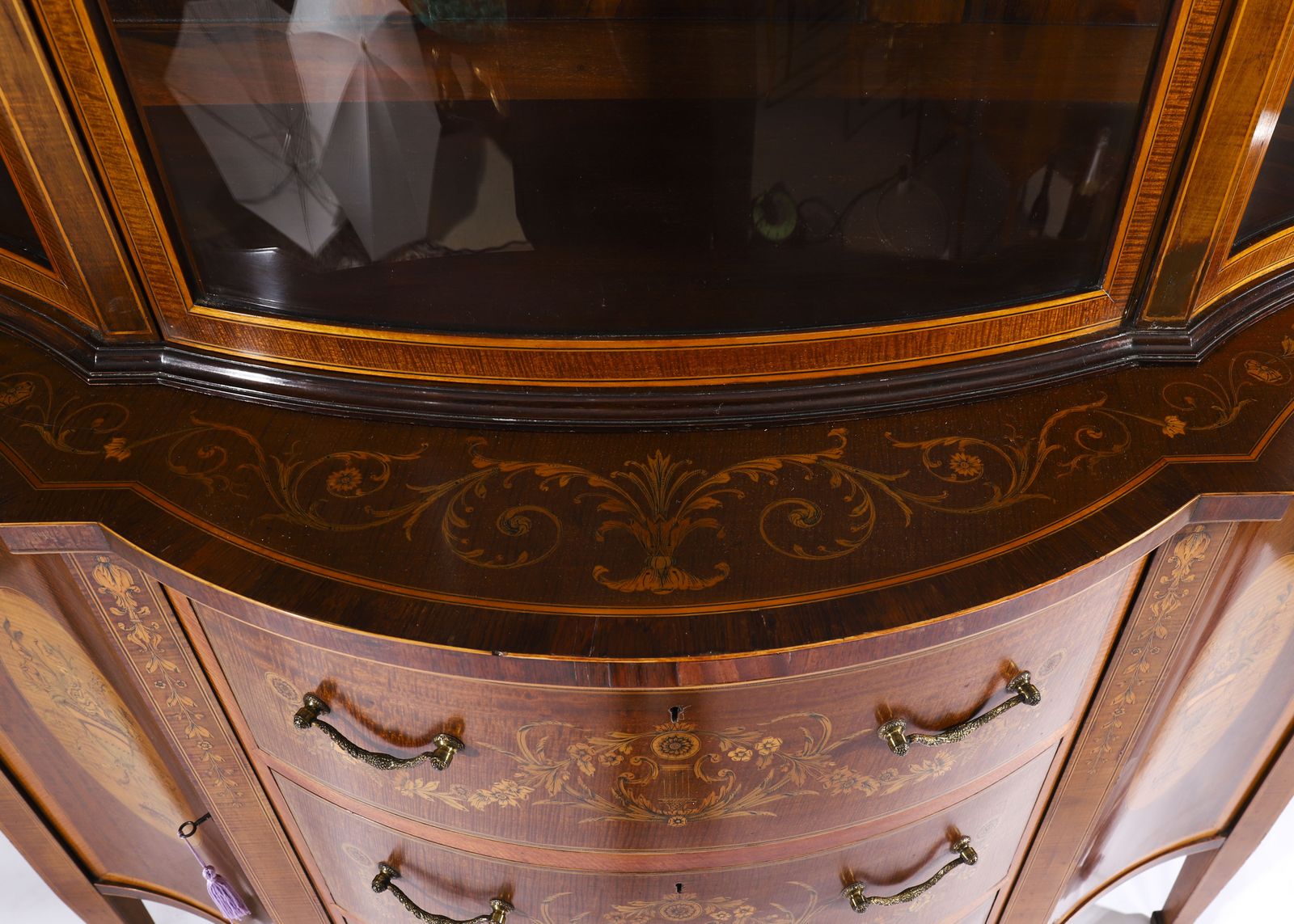
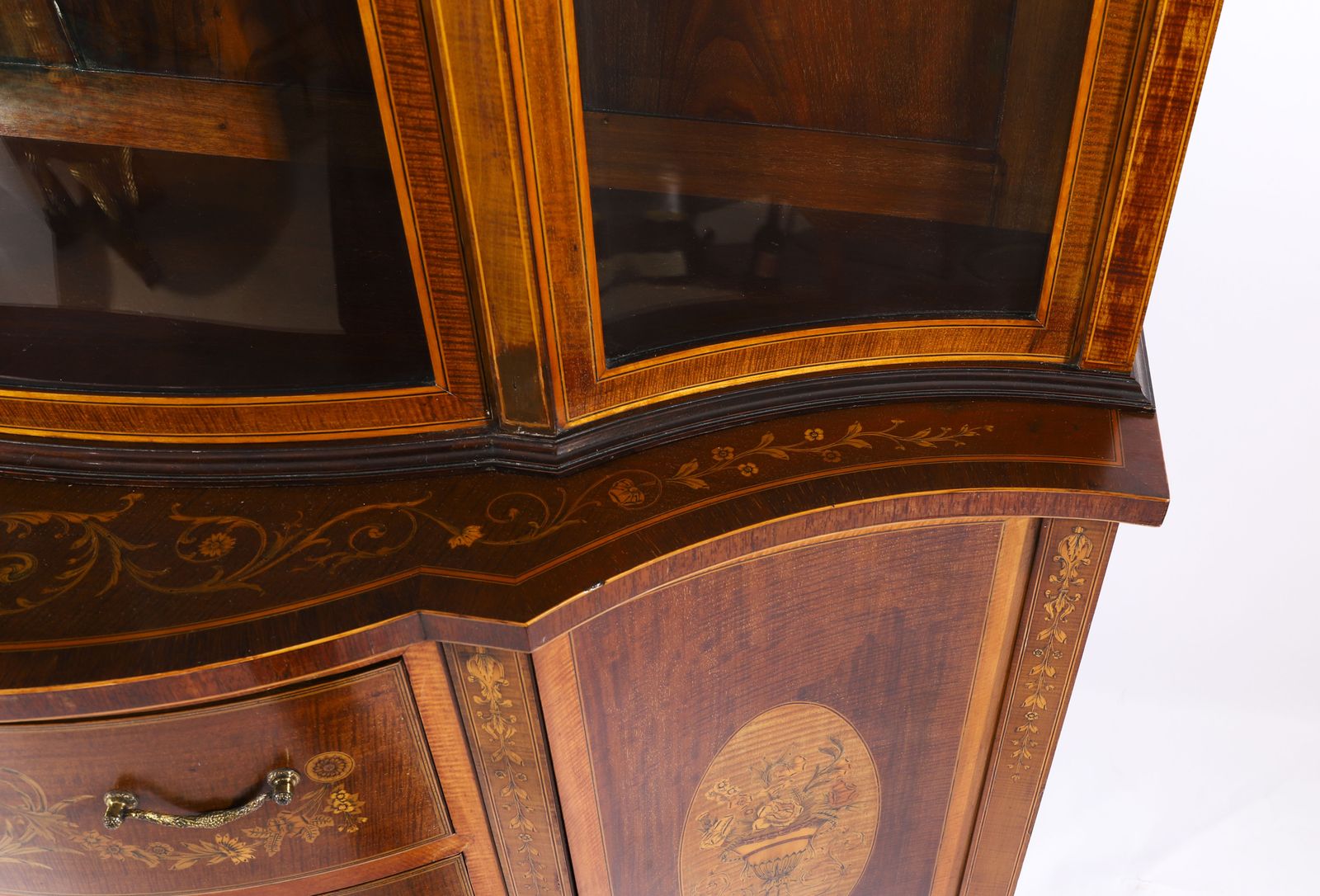
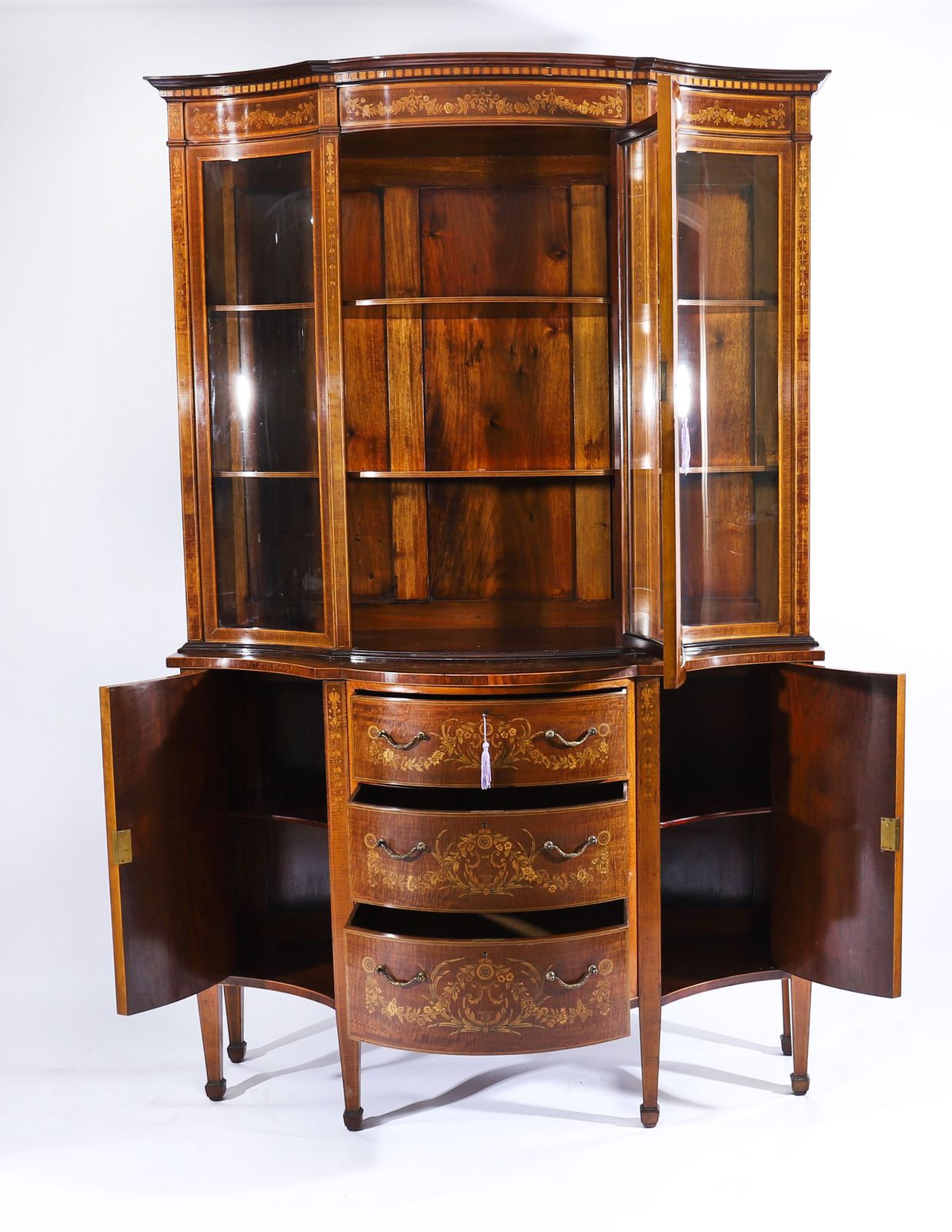
This is a beautiful antique late Victorian top quality serpentine display cabinet, bookcase, masterfully crafted in rich flame mahogany, satin wood with marquetry decoration, in the manner of Thomas Sheraton, made by the renowned cabinet makers and retailers Edwards & Roberts, Circa 1880 in date.
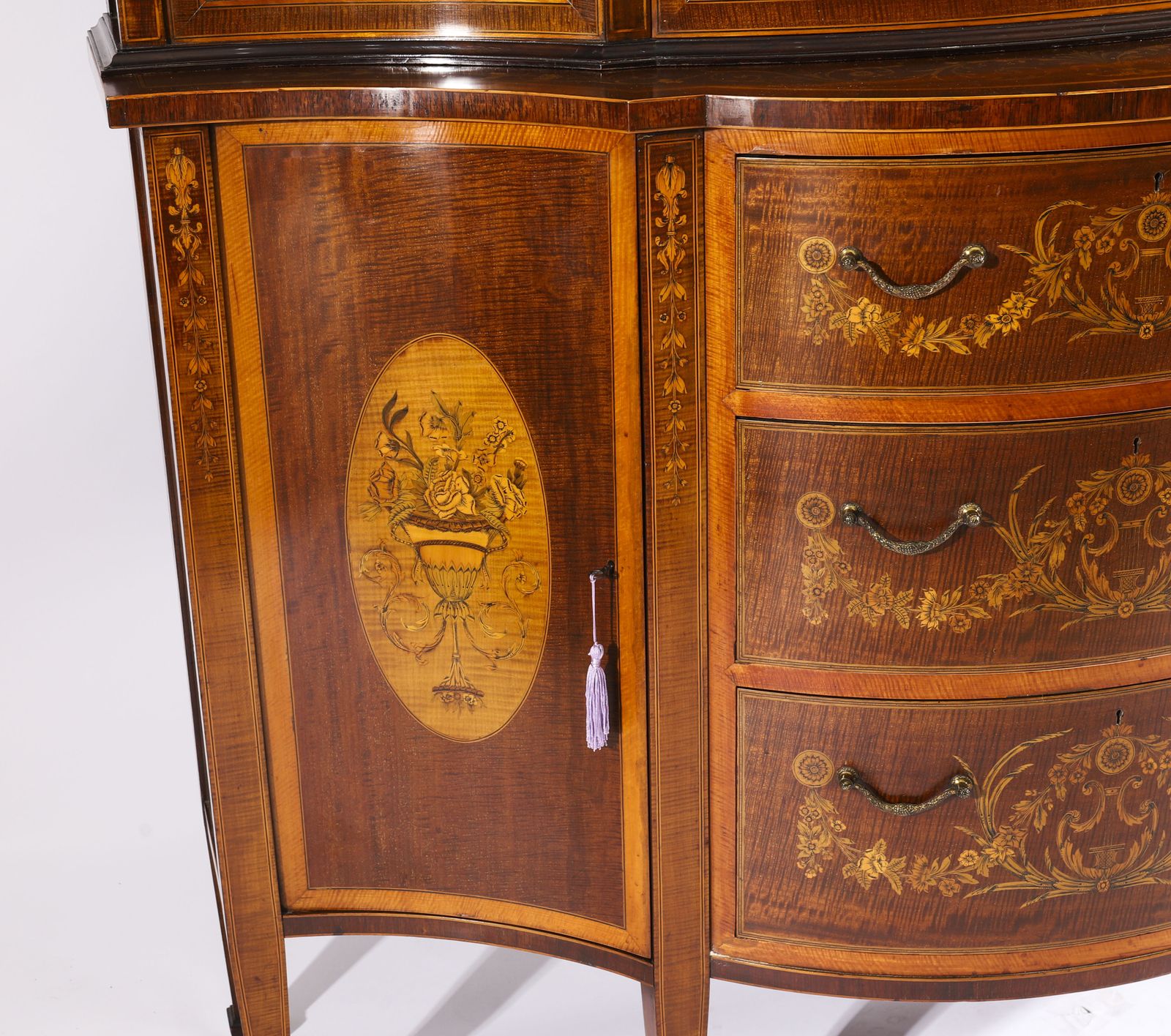
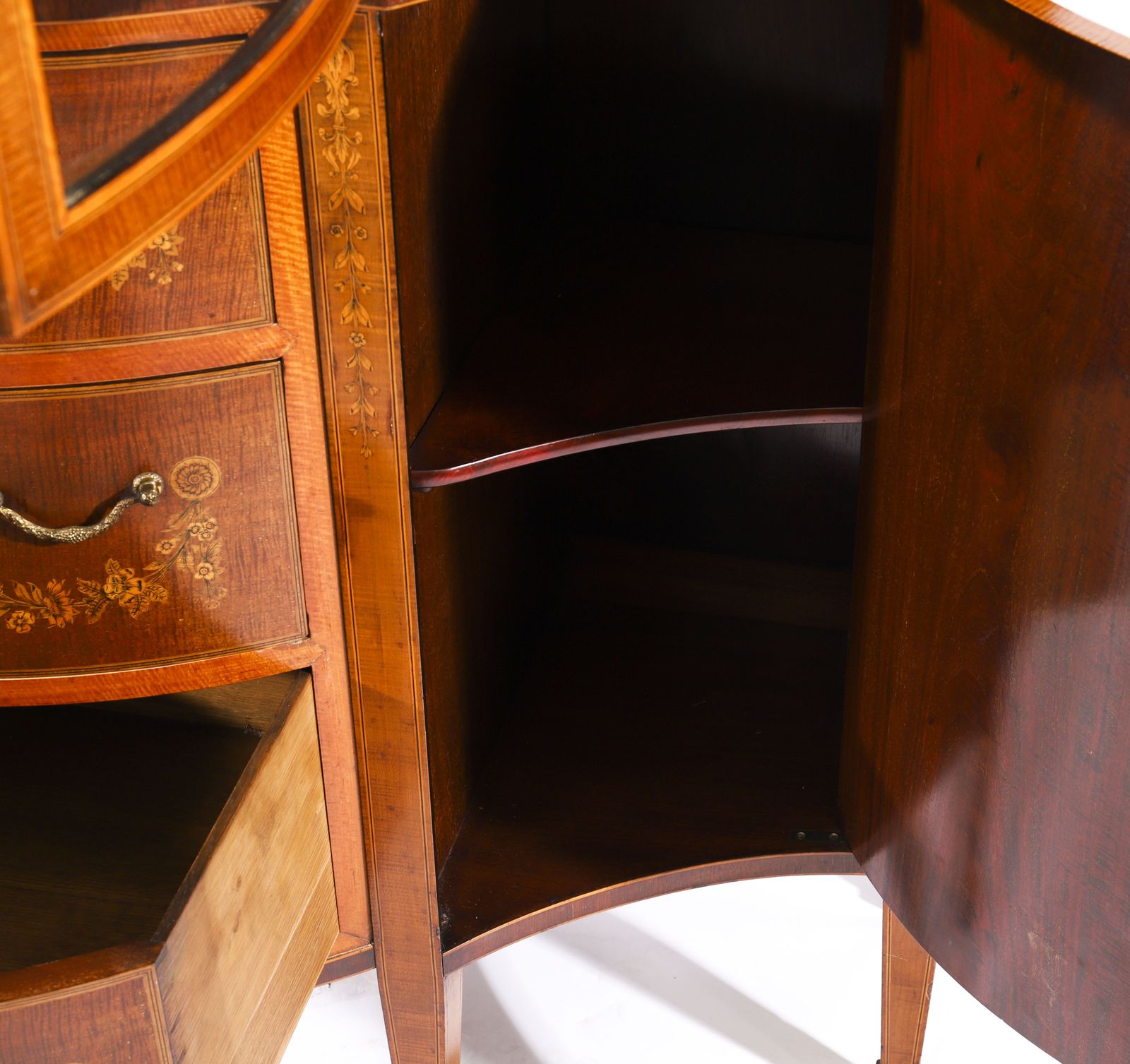
The top part is surmounted with a pediment cornice and has a large central door with convex glazing flanked by shaped serpentine glass on each side. The interior has two shelves that will display your collectables perfectly. The lower section has three drawers (the first one signed Edward & Roberts) with two side doors, each opening to a cupboard with central shelf.
Beautifully decorated throughout with the finest marquetry decoration the cabinet is raised on four square tapering legs that terminate in spade feet.
There is no mistaking its superb quality and very grand design, which is certain to make it a talking point in your home and stand proud in whichever room you choose to display it.
Complete with working locks and key.
Condition:
In excellent condition having only been beautifully cleaned polished and waxed in our workshops, please see photos for confirmation.
Dimensions in cm:
Height 205 x Width 130 x Depth 50
Dimensions in inches:
Height 6 foot, 9 inches x Width 4 foot, 3 inches x Depth 1 foot, 8 inches
Edwards & Roberts
The firm Edwards & Roberts was one of the best English antique furniture cabinet makers of the second half of the nineteenth century. The company was founded in 1845 and by 1854 was trading as ‘Edwards & Roberts', 21 Wardour Street, Antique and Modern Cabinet Makers and Importers of Ancient Furniture'. By 1892 they occupied more than a dozen buildings in Wardour Street, where they continued to trade until the end of the century.
They became one of the leading London cabinet makers and retailers producing high quality furniture and working in a variety of styles, both modern and revivalist. Their business also involved retailing, adapting and restoring the finest antique furniture and there are many examples of their earlier furniture with later embellishments bearing their stamp. The quality of timber used was always the best quality with fine burr walnuts, finely figured mahogany and lighter toned satinwood as they specialised in marquetry, inlay and ormolu.
Satin wood
is a hard and durable wood with a satinlike sheen, much used in cabinetmaking, especially in marquetry. It comes from two tropical trees of the family Rutaceae (rue family). East Indian or Ceylon satin wood is the yellowish or dark-brown heartwood of Chloroxylon swietenia.
The lustrous, fine-grained, usually figured wood is used for furniture, cabinetwork, veneers, and backs of brushes. West Indian satin wood, sometimes called yellow wood, is considered superior. It is the golden yellow, lustrous, even-grained wood found in the Florida Keys and the West Indies.
It has long been valued for furniture. It is also used for musical instruments, veneers, and other purposes. Satin wood is classified in the division Magnoliophyta, class Magnoliopsida, order Sapindales, family Rutaceae.
Flame Mahogany
Thomas Sheraton - 18th century furniture designer, once characterized mahogany as "best suited to furniture where strength is demanded as well as a wood that works up easily, has a beautiful figure and polishes so well that it is an ornament to any room in which it may be placed." Matching his words to his work, Sheraton designed much mahogany furniture. The qualities that impressed Sheraton are particularly evident in a distinctive pattern of wood called "flame mahogany."
The flame figure in the wood is revealed by slicing through the face of the branch at the point where it joins another element of the tree.
Marquetry
is decorative artistry where pieces of material of different colours are inserted into surface wood veneer to form intricate patterns such as scrolls or flowers.
The technique of veneered marquetry had its inspiration in 16th century Florence. Marquetry elaborated upon Florentine techniques of inlaying solid marble slabs with designs formed of fitted marbles, jaspers and semi-precious stones. This work, called opere di commessi, has medieval parallels in Central Italian "Cosmati"-work of inlaid marble floors, altars and columns. The technique is known in English as pietra dura, for the "hardstones" used: onyx, jasper, cornelian, lapis lazuli and colored marbles. In Florence, the Chapel of the Medici at San Lorenzo is completely covered in a colored marble facing using this demanding jig-sawn technique.
Techniques of wood marquetry were developed in Antwerp and other Flemish centers of luxury cabinet-making during the early 16th century. The craft was imported full-blown to France after the mid-seventeenth century, to create furniture of unprecedented luxury being made at the royal manufactory of the Gobelins, charged with providing furnishings to decorate Versailles and the other royal residences of Louis XIV. Early masters of French marquetry were the Fleming Pierre Golle and his son-in-law, André-Charles Boulle, who founded a dynasty of royal and Parisian cabinet-makers (ébénistes) and gave his name to a technique of marquetry employing brass with pewter in arabesque or intricately foliate designs.
Thomas Sheraton
(1751 - 1806) was an English cabinetmaker and one of the leading exponents of Neoclassicism. Sheraton gave his name to a style of furniture characterised by a feminine refinement of late Georgian styles and became the most powerful source of inspiration behind the furniture of the late 18th century. His four-part Cabinet-Maker and Upholsterers' Drawing Book greatly influenced English and American design.
Sheraton was apprenticed to a cabinetmaker, but he became better known as an inventor, artist, mystic, and religious controversialist. Initially he wrote on theological subjects, describing himself as a “mechanic, one who never had the advantage of collegiate or academical education.” He settled in London c. 1790, and his trade card gave his address as Wardour Street, Soho.
Supporting himself mainly as an author, Sheraton wrote Drawing Book (1791), the first part of which is devoted to somewhat naive, verbose dissertations on perspective, architecture, and geometry and the second part, on which his reputation is certainly based, is filled with plates that are admirable in draftsmanship, form, and proportion.
In 1803 Sheraton, who had been ordained a Baptist minister in 1800, published his Cabinet Dictionary (with plates), containing An Explanation of All Terms Used in the Cabinet, Chair and Upholstery Branches with Dictionary for Varnishing, Polishing and Gilding.
Some of the designs in this work, venturing well into the Regency style, are markedly unconventional. That he was a fashionable cabinetmaker is remarkable, for he was poor, his home of necessity half shop. It cannot be presumed that he was the maker of those examples even closely resembling his plates.
Although Sheraton undoubtedly borrowed from other cabinetmakers, most of the plates in his early publications are supposedly his own designs. The term Sheraton has been recklessly bestowed upon vast quantities of late 18th-century painted and inlaid satinwood furniture, but, properly understood and used in a generic sense, Sheraton is an appropriate label recognizing a mastermind behind the period. The opinion that his lack of success was caused by his assertive character is hypothetical.
Wear Condition
Excellent
Cancellations
We offer free cancellations and full refund for orders cancelled before dispatching. View full policy.
Returns
We have a 14-day return guarantee for orders from individual sellers, within the UK and European Union. View full policy.
Additional Delivery Info from Seller
Free delivery in London.
Estimated delivery time
Less than one week
Free collection available
Yes
Made to Last
The average lifespan of a Vinterior piece is 100 years, while modern flat-pack typically takes just 3 years to reach landfill. When you choose pre-loved, you can shop with confidence in quality, craftsmanship and longevity. With our top-rated customer service team and price match guarantee, there's no better way to shop pre-loved.


Shopping at Vinterior


Similar Cabinets
Similar Cabinets
You may also like
You may also like
Add to a wishlist
Create Wishlist
Completethe room
Good design is all in the layering. Whether you're adding impact or refining the details, now’s the time to find what’s missing.
Reviews
5.0

Based on 13 reviews




Wear conditions
Excellent
Shows little to no signs of wear and tear.
Good
May show slight traces of use in keeping with age. Most vintage and antique items fit into this condition.
Average
Likely to show signs of some light scratching and ageing but still remains in a fair condition.
Apparent Wear and Tear
Visible signs of previous use including scratches, chips or stains.
Please refer to condition report, images or make a seller enquiry for additional information.
Cancellations and Returns
Last updated: 12/02/2026
Clear, predictable protection for every pre-loved purchase.
Simple £75 flat return fee for UK-to-UK mainland furniture when you change your mind.
Applies to furniture with a final selling price of up to £5,000 (excluding delivery and service fees) and delivered from a UK mainland seller to mainland UK addresses. Excludes Northern Ireland, Channel Islands, Scottish Highlands & Islands, Isle of Wight and Isles of Scilly.
Buying vintage should feel inspiring, not uncertain.
Every order on Vinterior is backed by straightforward returns, free cancellations, and extra peace of mind for UK furniture purchases.
1. Free cancellations
Changed your mind before dispatch?
You can cancel any order before it's shipped for a full refund, including delivery.
To cancel an order, click Create cancellation on the order page.
Once an item has been dispatched, delivery costs are not refundable.
Bespoke, personalised or made-to-order pieces cannot be cancelled.
2. Returning an item
You have 14 days from delivery to request a return.
There are two return types:
A. The item isn't as described (free return)
If your piece arrives and it doesn't match the listing in any material way (incorrect description, undisclosed damage, inaccurate measurements, misleading photos), you are fully protected:
- Free return
- The seller or Vinterior arranges pickup
- Full refund, including outbound delivery costs once the seller receives the item
This applies to all purchases.
B. You changed your mind
UK-to-UK furniture deliveries:
To make UK furniture returns predictable and stress-free, we offer a simple flat return fee of £75.
- Applies to furniture delivered from a UK mainland seller to a mainland UK address. Excludes Northern Ireland, Channel Islands, Scottish Highlands & Islands, Isle of Wight and Isles of Scilly.
- Pickup arranged for you
- One clear fee, no surprises
We coordinate the return with either the seller's chosen courier or our trusted delivery partner.
All other items
Most smaller items are straightforward to return.
You can still return your item within 14 days.
- For smaller or parcel-sized items, you can choose to post the item back yourself using a tracked service, or the seller can suggest a preferred courier.
- For larger or more fragile pieces, the seller may recommend the safest return method.
- Return delivery costs vary depending on size and courier.
The seller will confirm the best option based on the item.
3. If your item arrives damaged
Damage on arrival is uncommon, especially for UK furniture deliveries.
But if something does go wrong, you're fully protected.
- Let us know as soon as possible (ideally within 72 hours of delivery) so we can resolve things quickly
- Share photos so we understand what happened
- We’ll help arrange a return and refund if needed
You’re always protected when something goes wrong in transit.
Your statutory rights apply for up to 30 days from delivery.
4. What can't be returned
Some items cannot be returned:
- Bespoke, personalised, or made-to-order pieces
- Items altered after delivery
5. How to start a return
- Log in to your Vinterior account
- Open your order
- Click Create a return
- Add notes + photos if relevant
We'll guide you through the rest.
6. What happens next
- We review your request, confirm the return and advise on next steps
- Pickup or return method is arranged
- The item is returned to the seller
- We issue your refund once the seller confirms the item's condition
Returns are completed smoothly once the pickup is arranged.
7. Refunds
Once the seller receives the piece back in the same condition it was sent, we'll issue your refund to your original payment method.
Once a refund is issued, it may take up to 5–10 working days for the funds to appear back on your original payment method, depending on your bank or card provider.
If the item is returned with new damage that wasn't present at delivery, the refund may be adjusted following review.
Need help?
If you have questions about a return or your order, our support team is here to help. Email us at [email protected] or find other ways to contact us here.
What your service fee covers
-
 14-day return guarantee
-
Flat-fee return shipping on UK furniture
-
Seller vetting
-
Dedicated customer support
| Order Value (£) | Fee (£) |
|---|---|
| 0 — 49.99 | 2.75 |
| 50 — 99.99 | 5.50 |
| 100 — 199.99 | 11.00 |
| 200 — 399.99 | 21.00 |
| 400 — 599.99 | 30.00 |
| 600 — 799.99 | 40.00 |
| 800 — 999.99 | 50.00 |
| 1,000 — 1,499.99 | 55.00 |
| 1,500 — 1,999.99 | 60.00 |
| 2,000 — 4,999.99 | 82.50 |
| 5,000+ | 110.00 |
Added at checkout, based on your basket total.
