


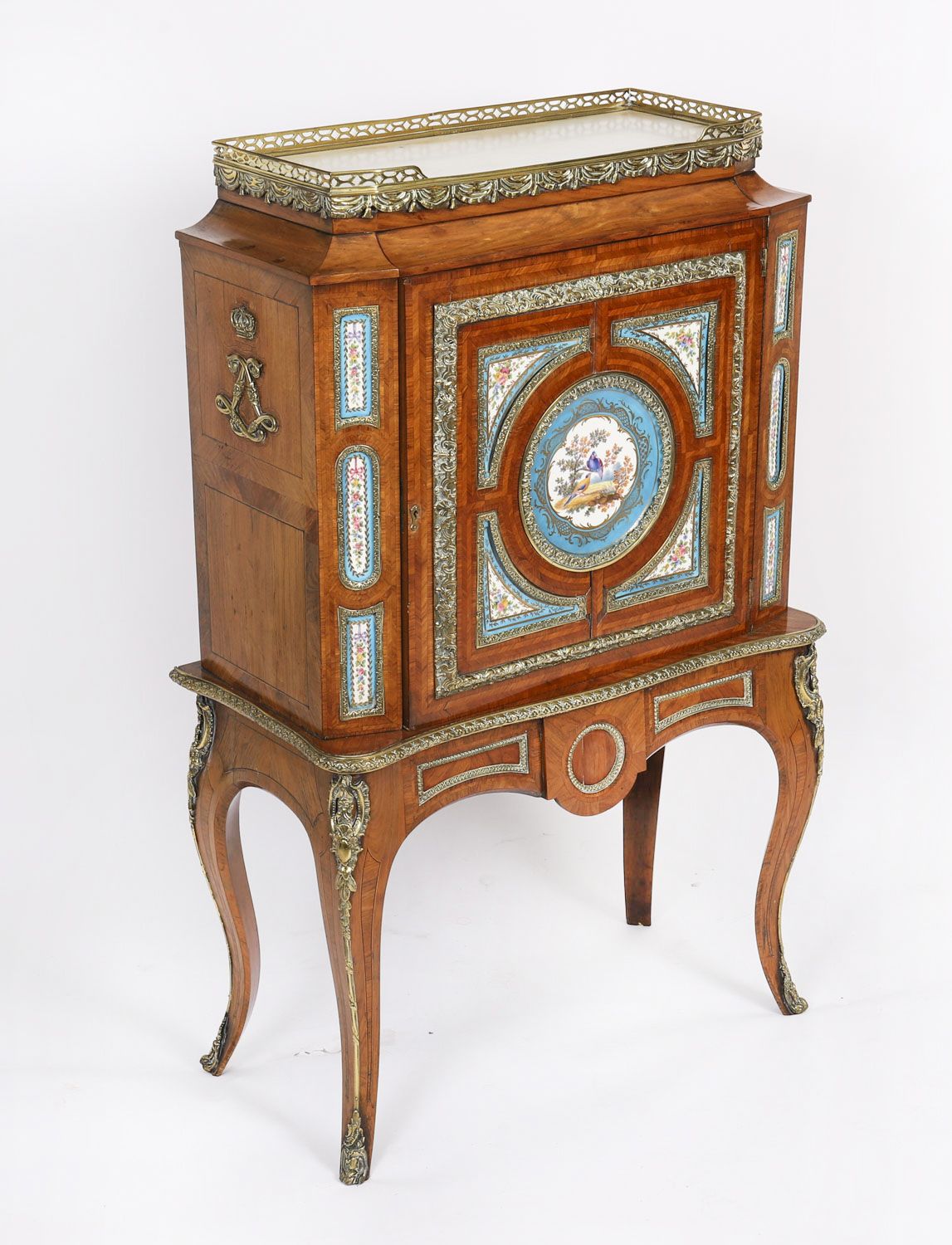
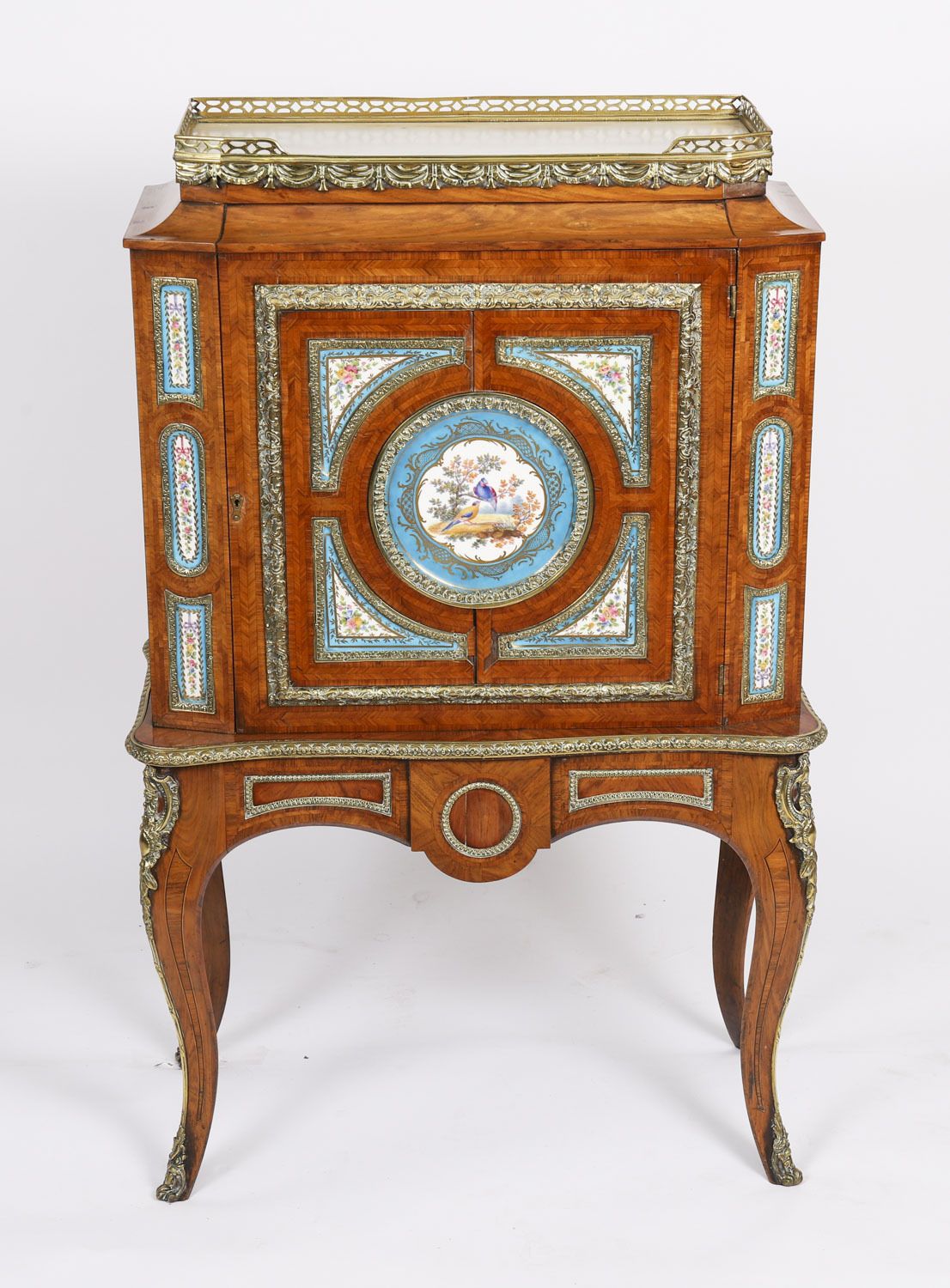
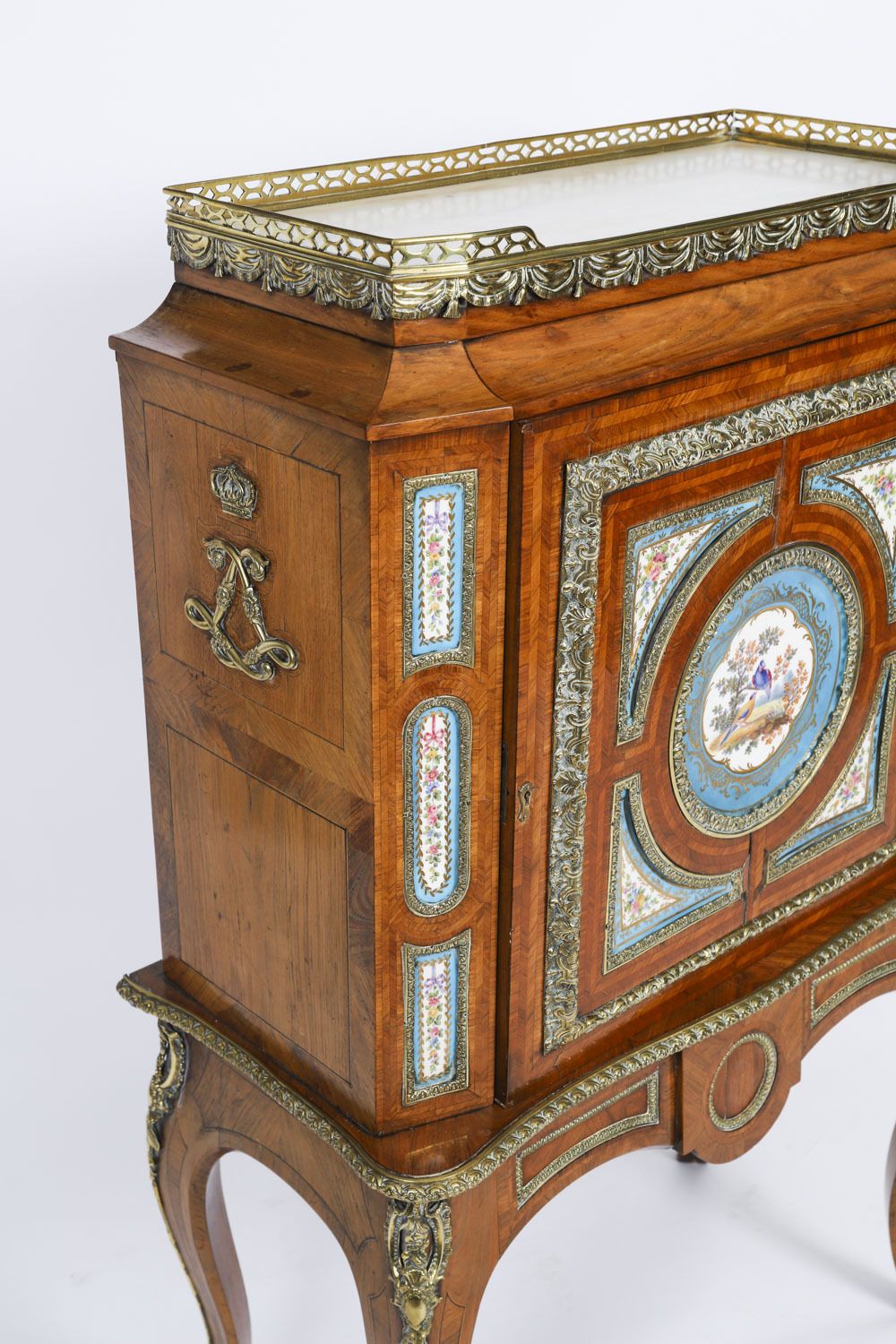
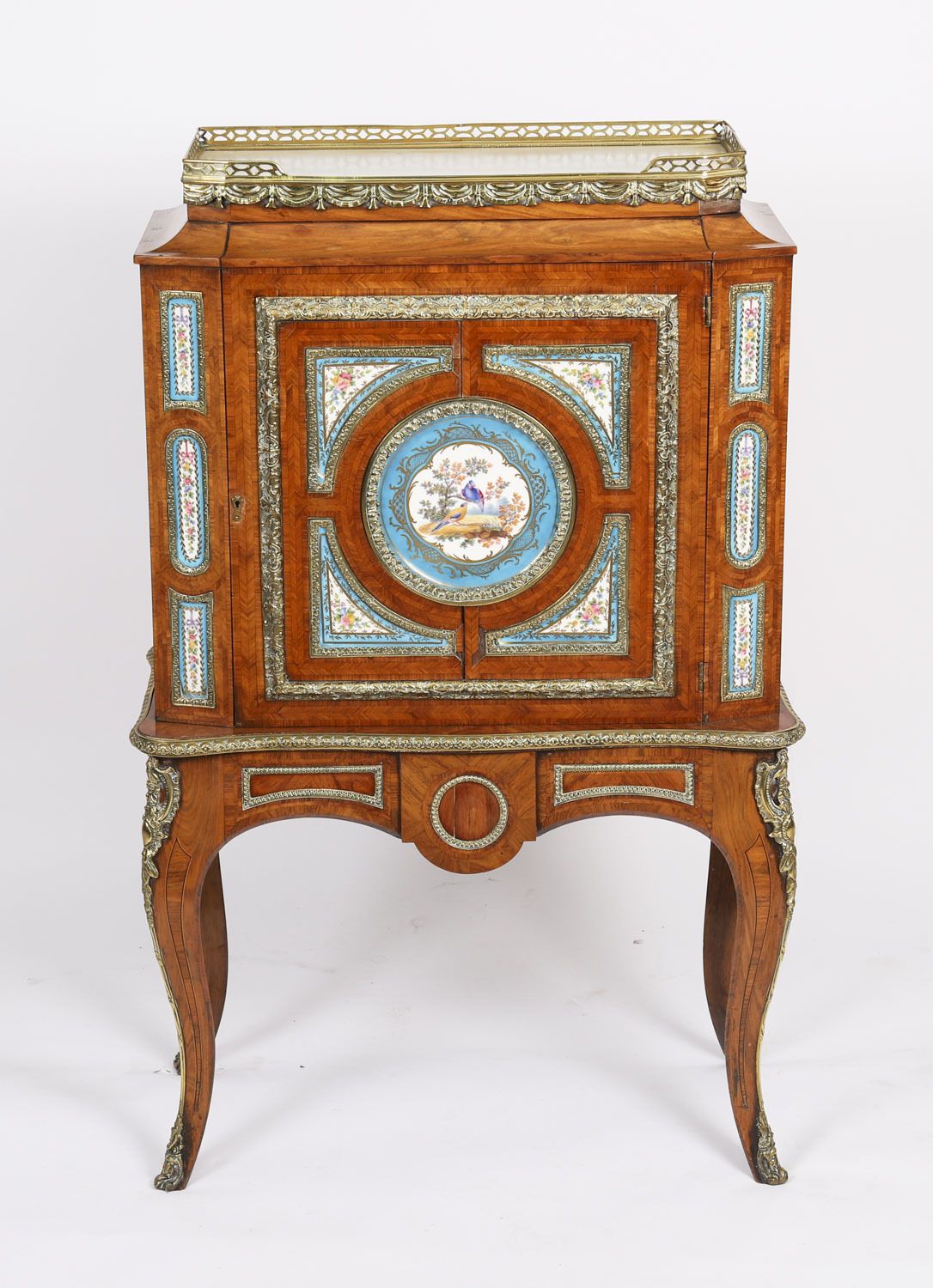
Antique French Kingwood Ormolu Pier Cabinet Sevres Plaques 19th Century

 London, United Kingdom

Hassle-free returns
-
 Easy returns (14 days)
-
£75 flat-fee return if you change your mind (UK mainland only)
-
Free return if the item isn't as described
-
Buyer protection
Damage is rare, and you're fully protected if it happens.
Dimensions
Wear Condition
Excellent
Style
Antique
Item Location
London, United Kingdom
Product Details
Description
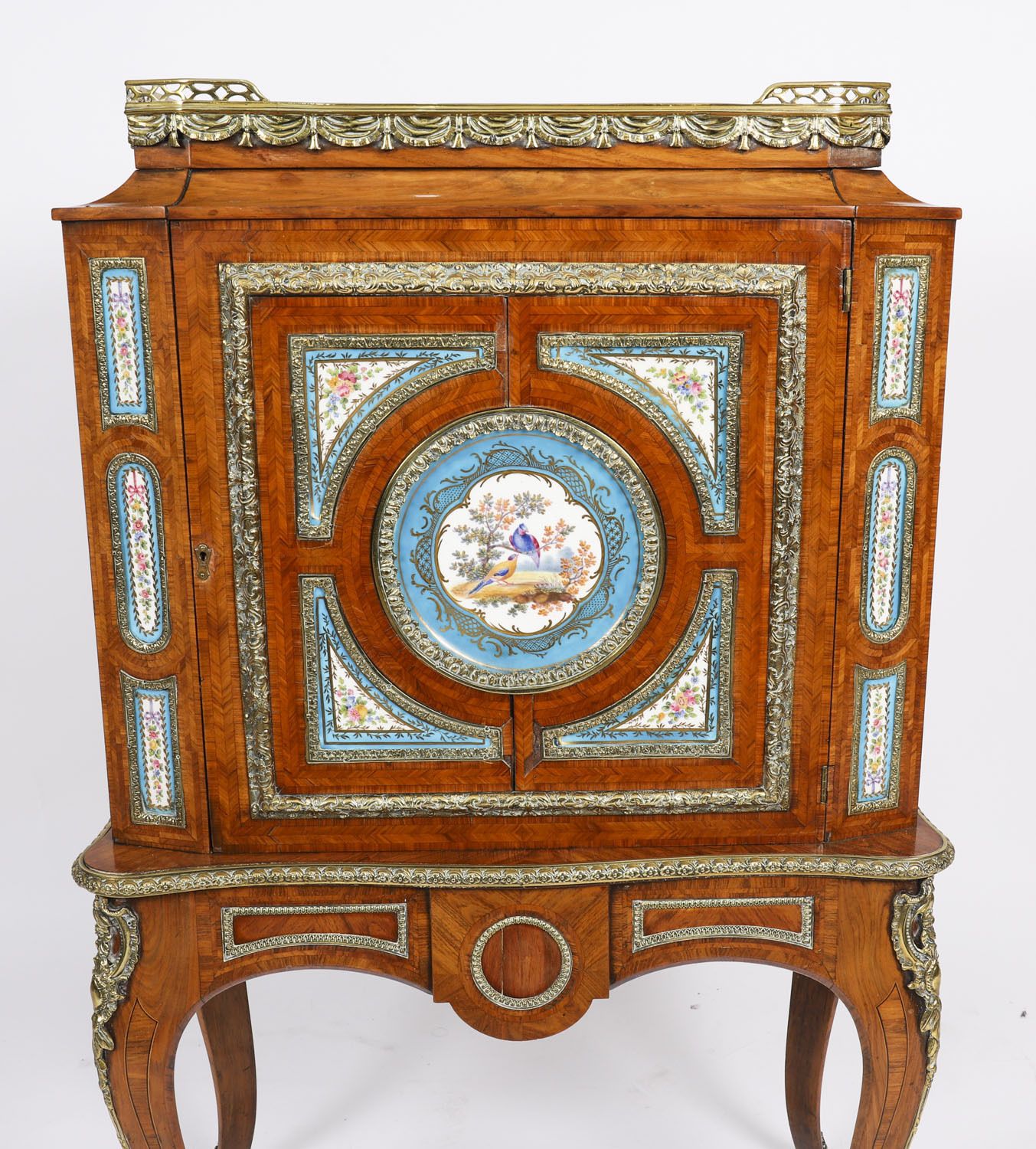
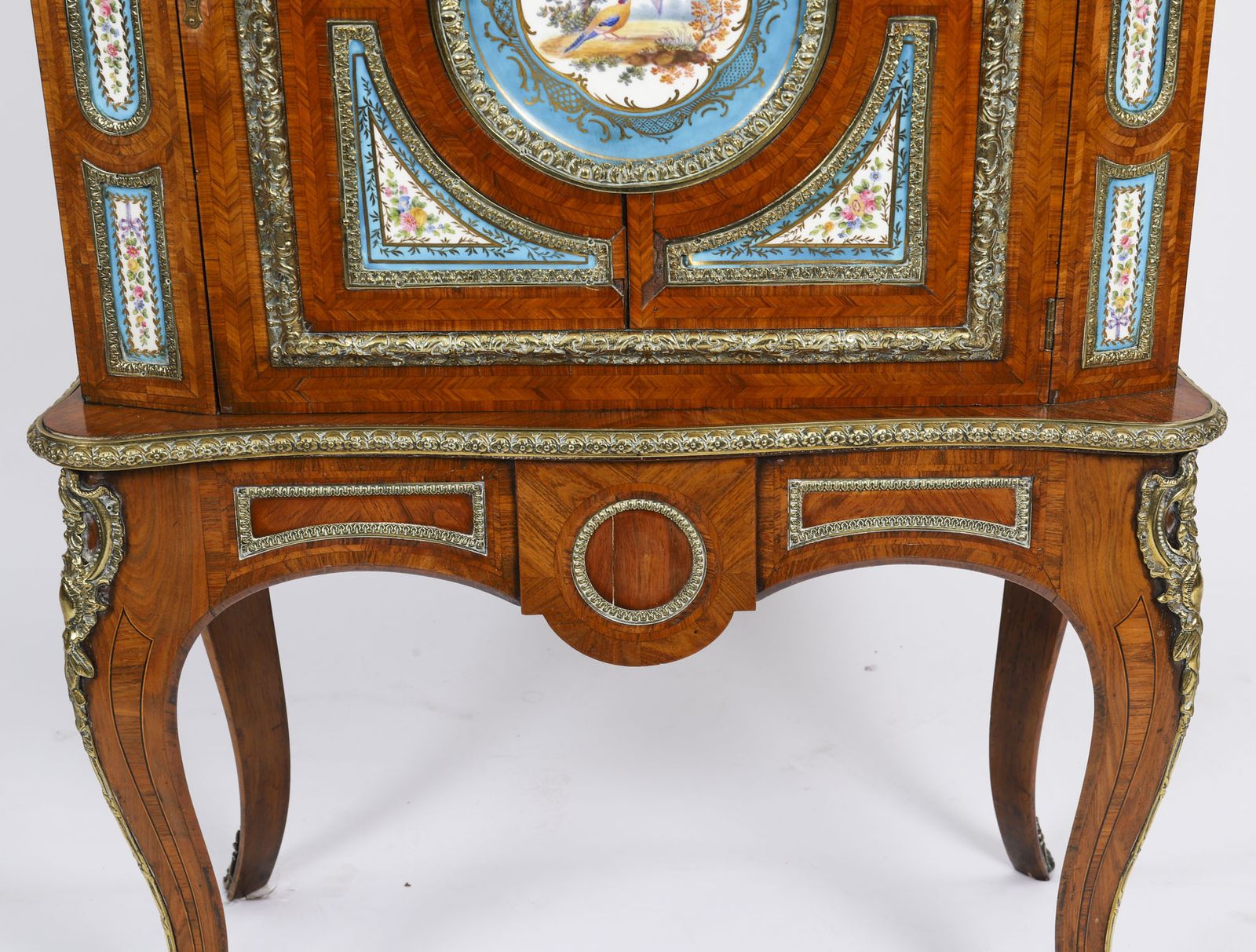
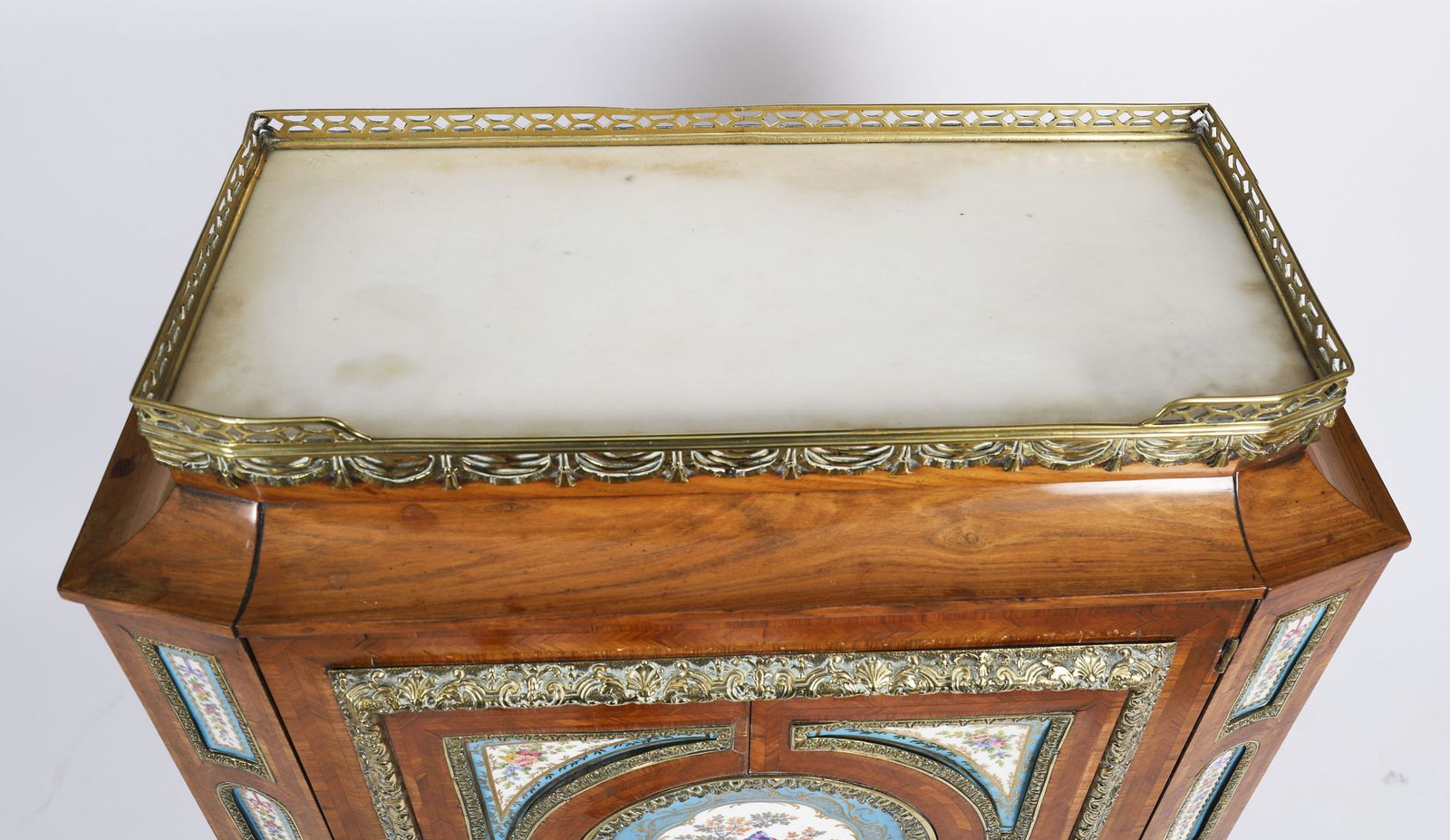
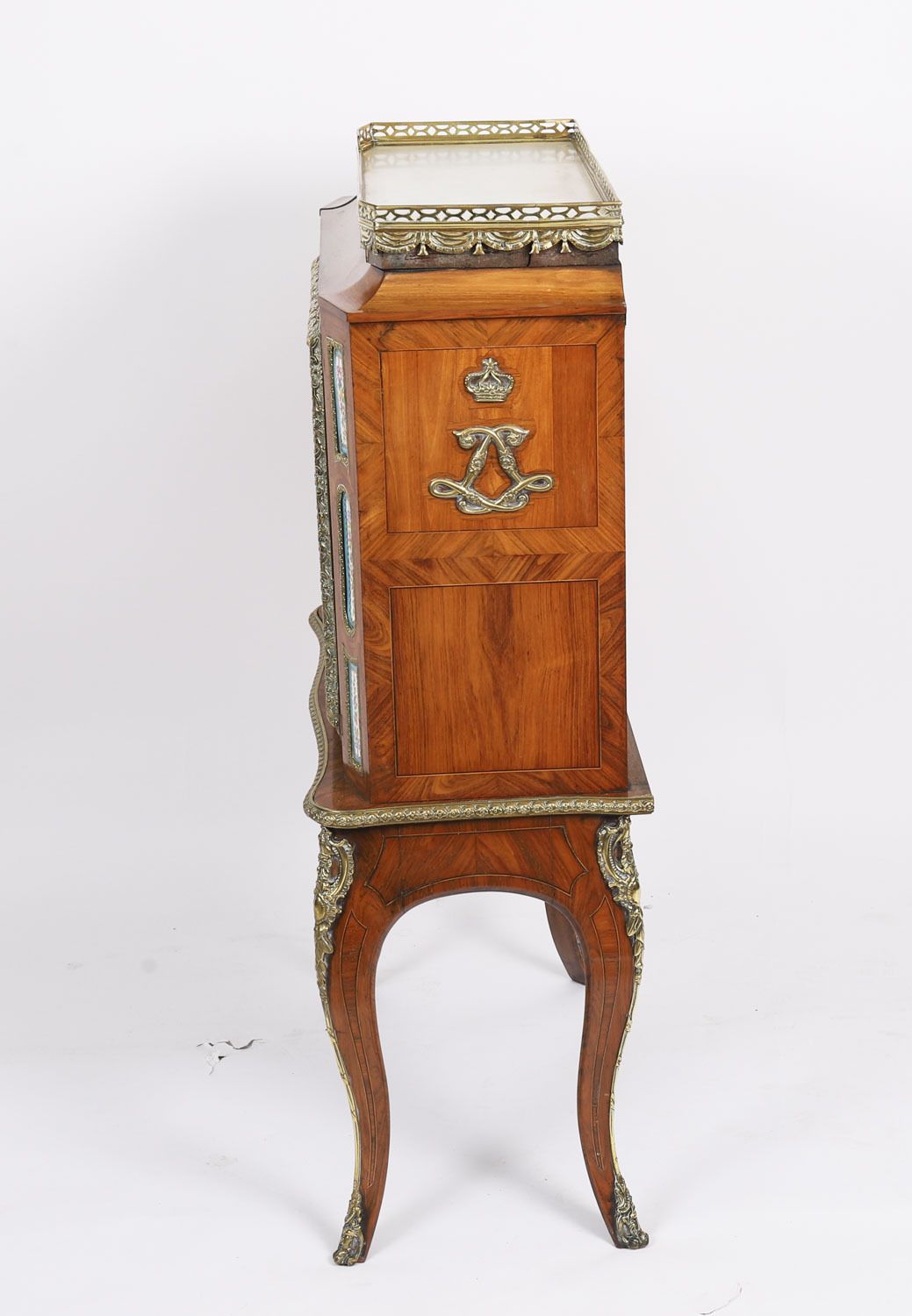
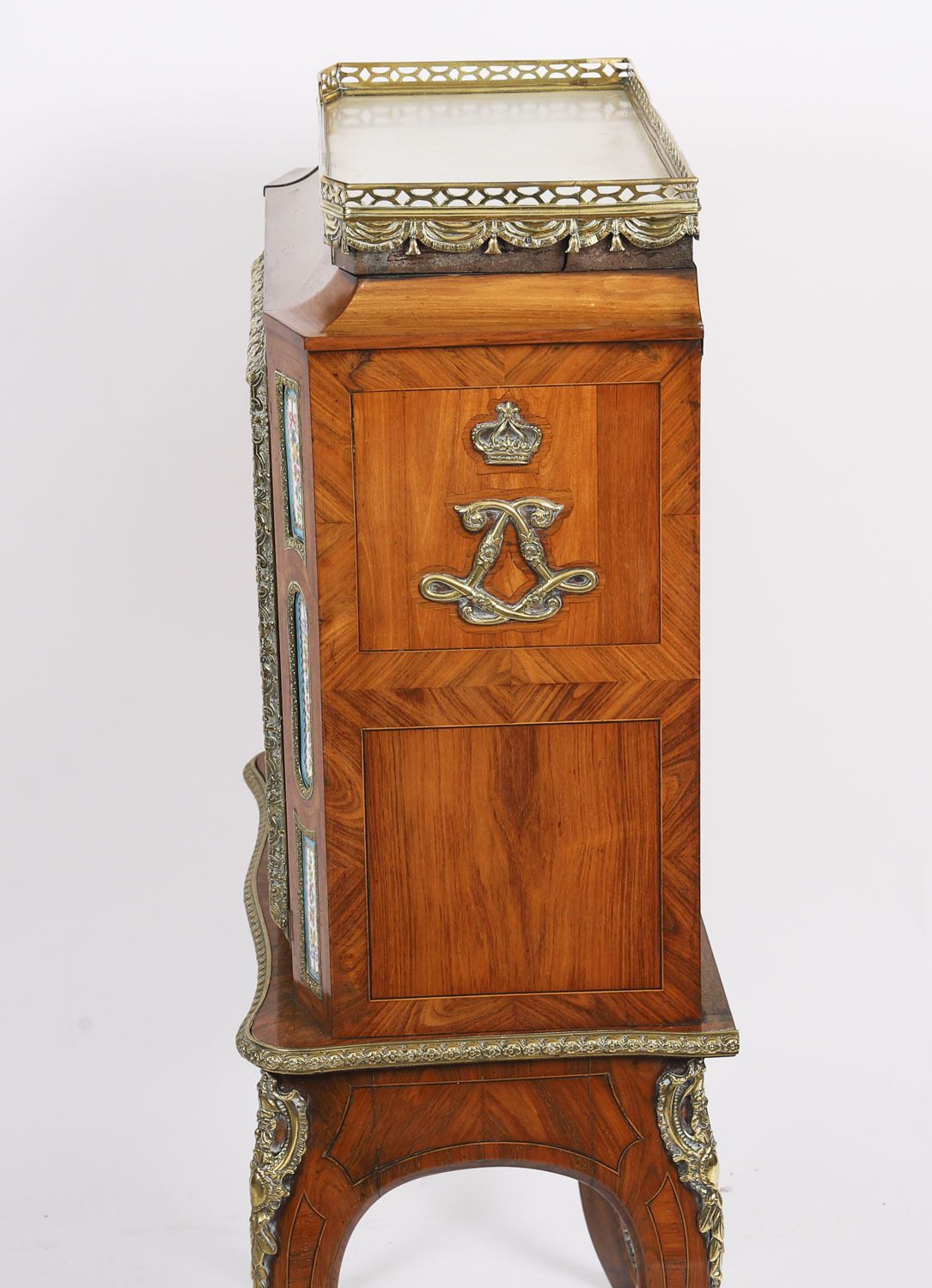
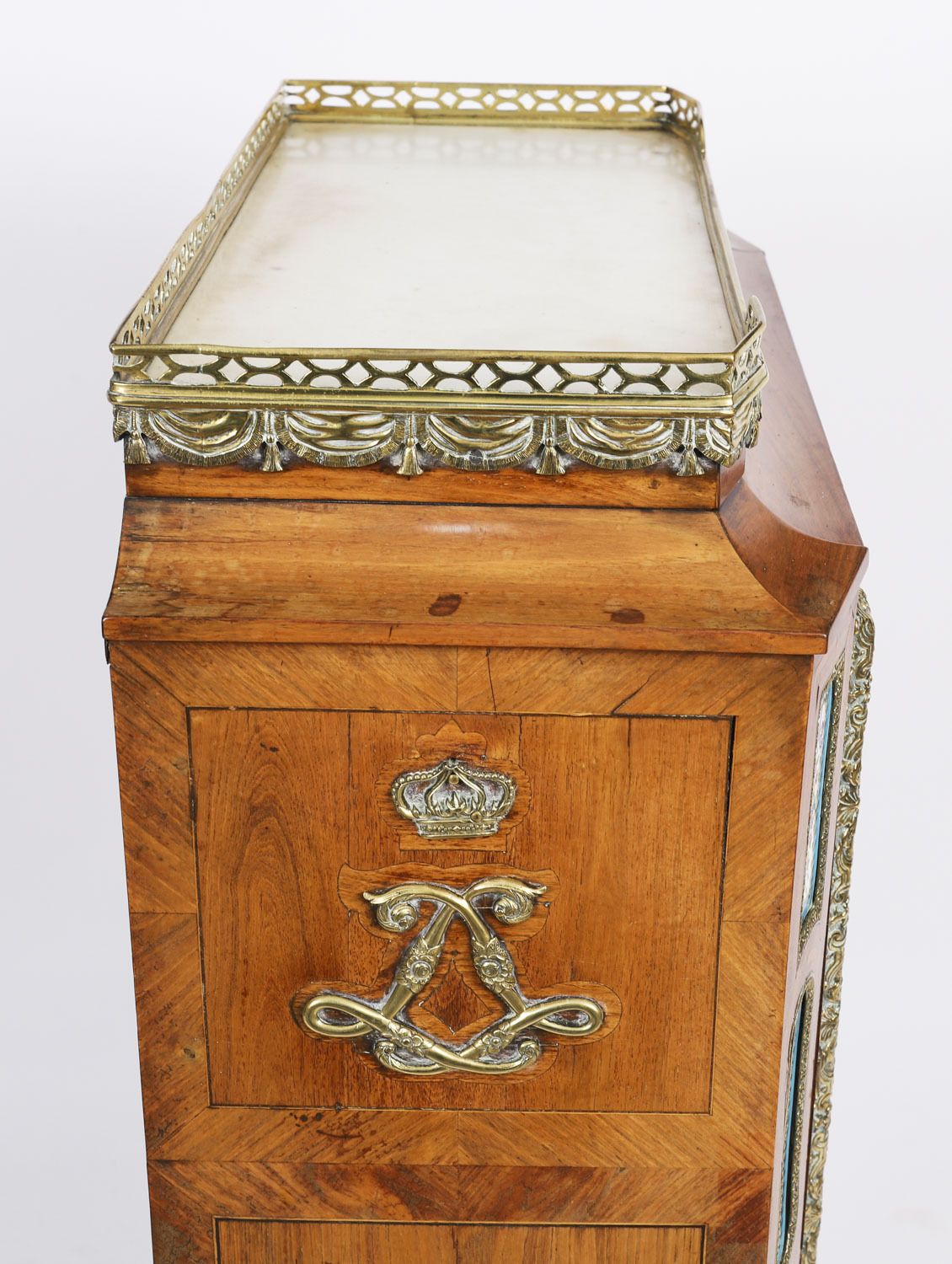
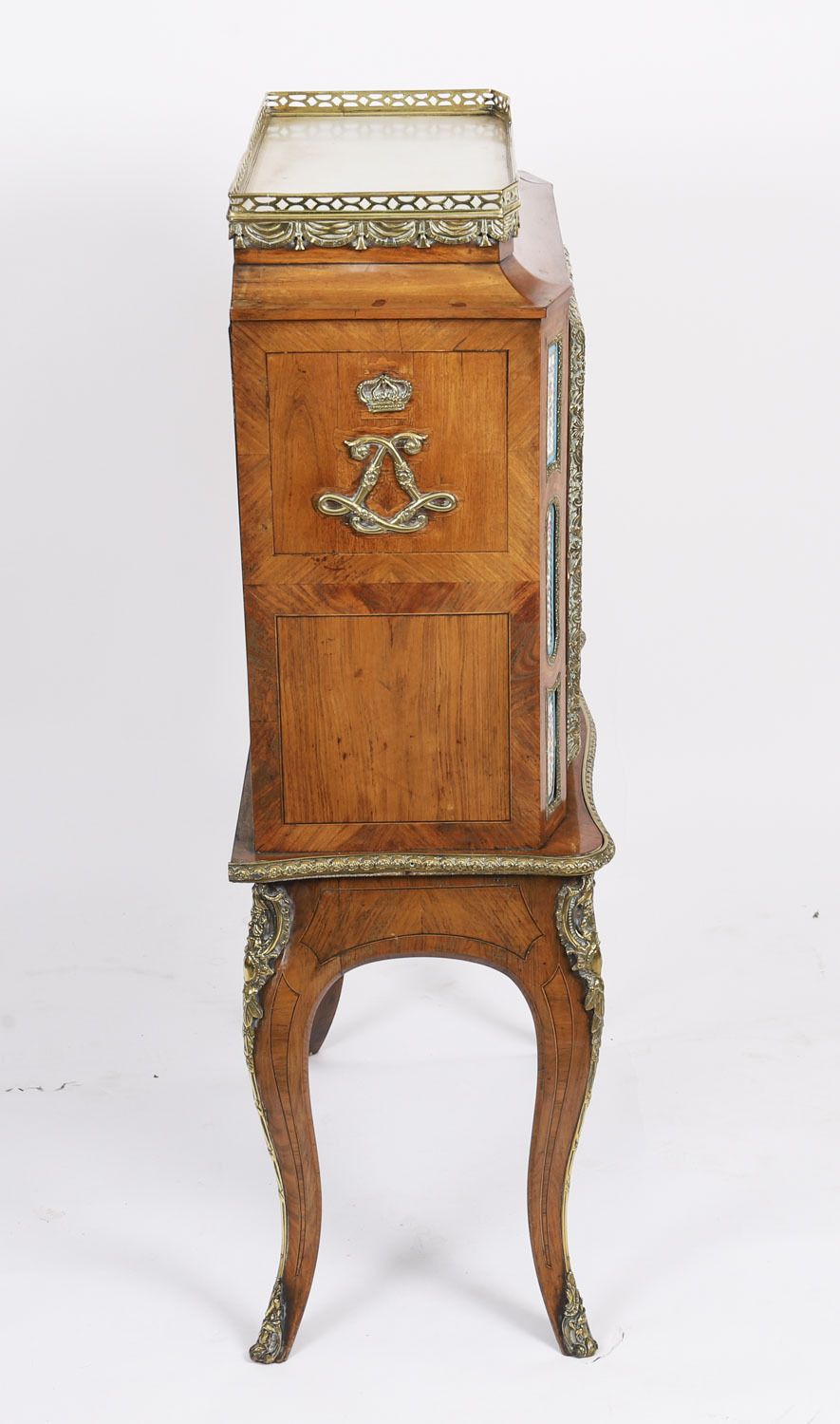
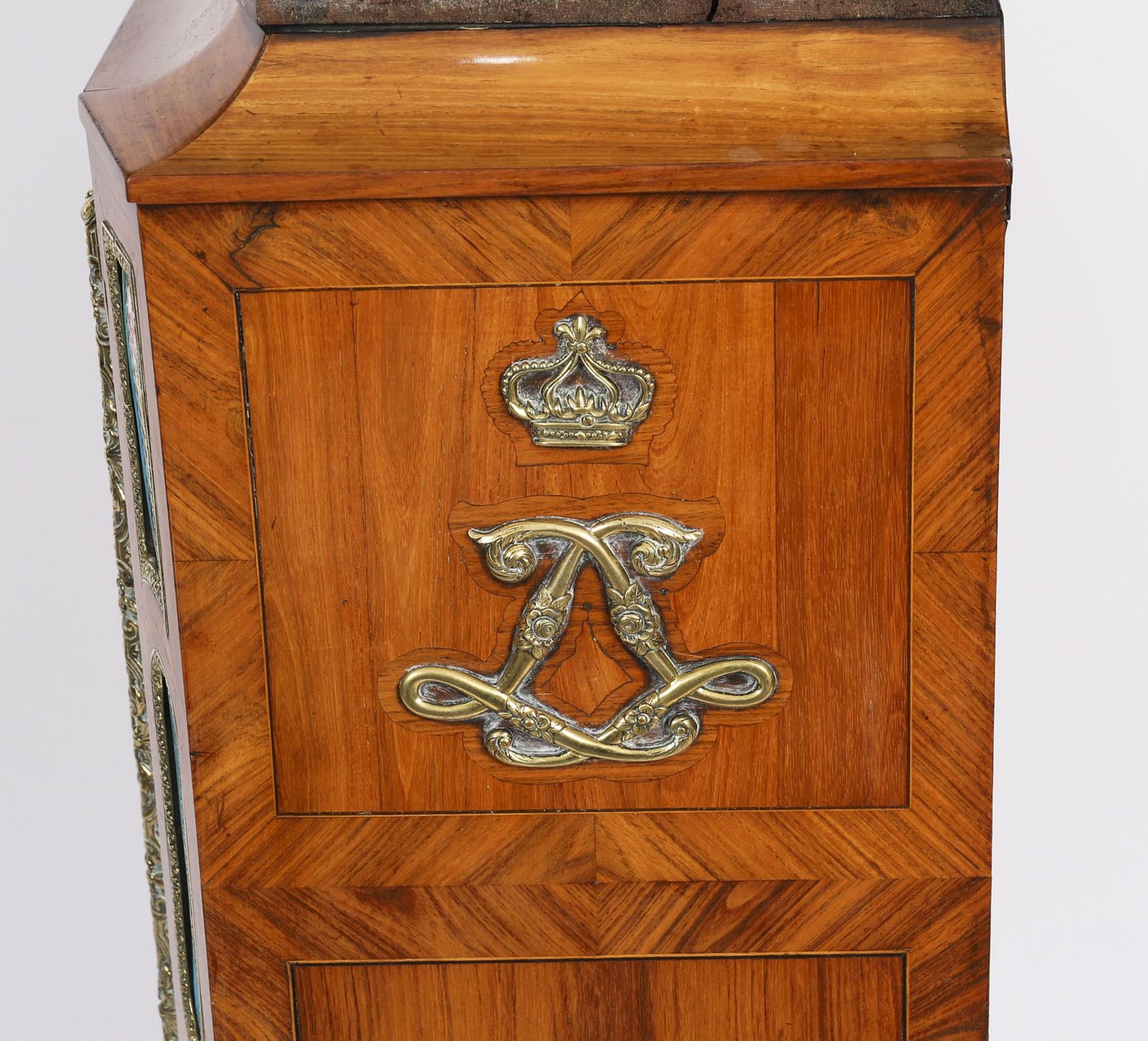
This stunning antique French king wood, ormolu and Sèvres Porcelain-Inset Meuble d`Appui pier cabinet dates from circa 1880.
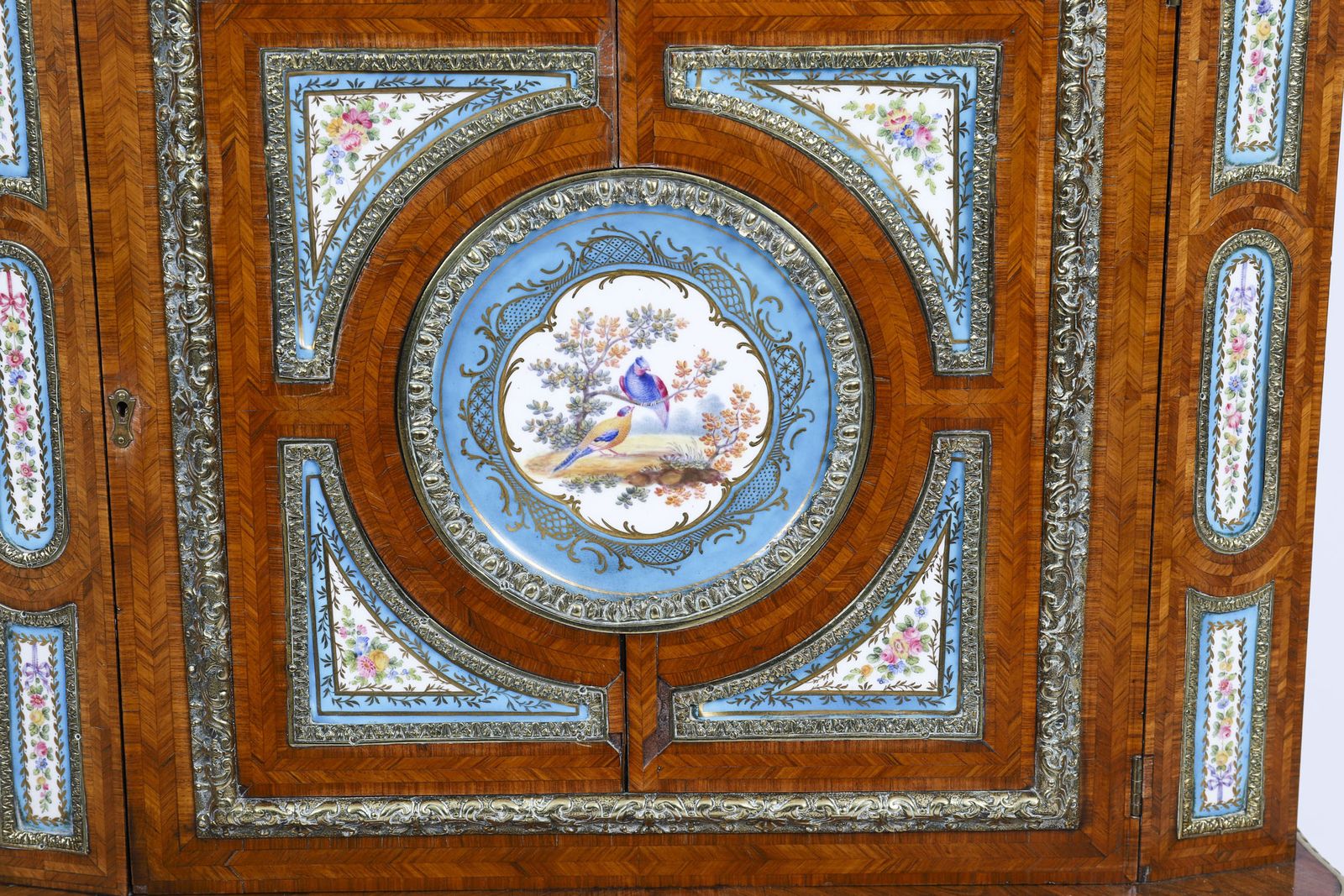
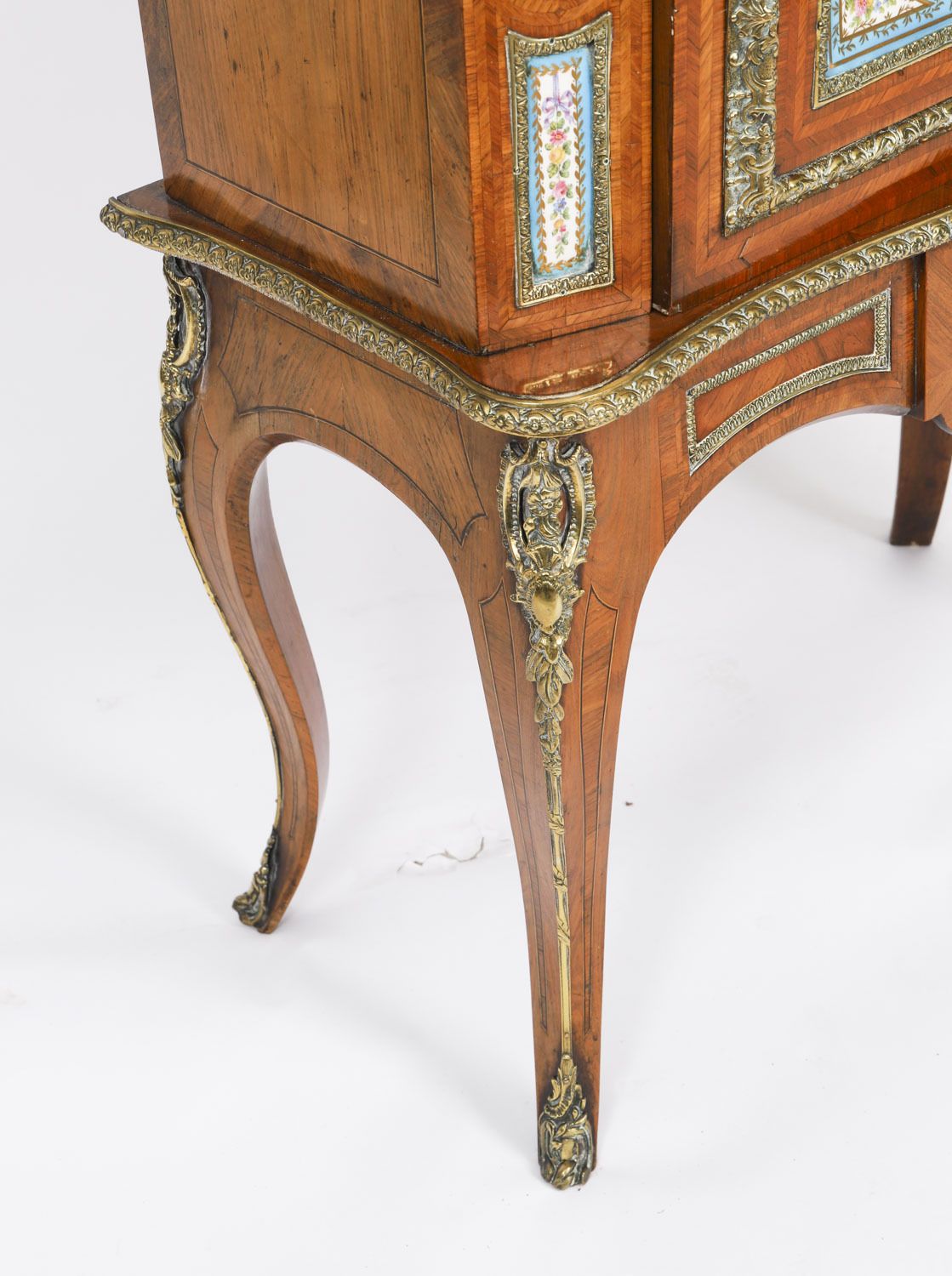
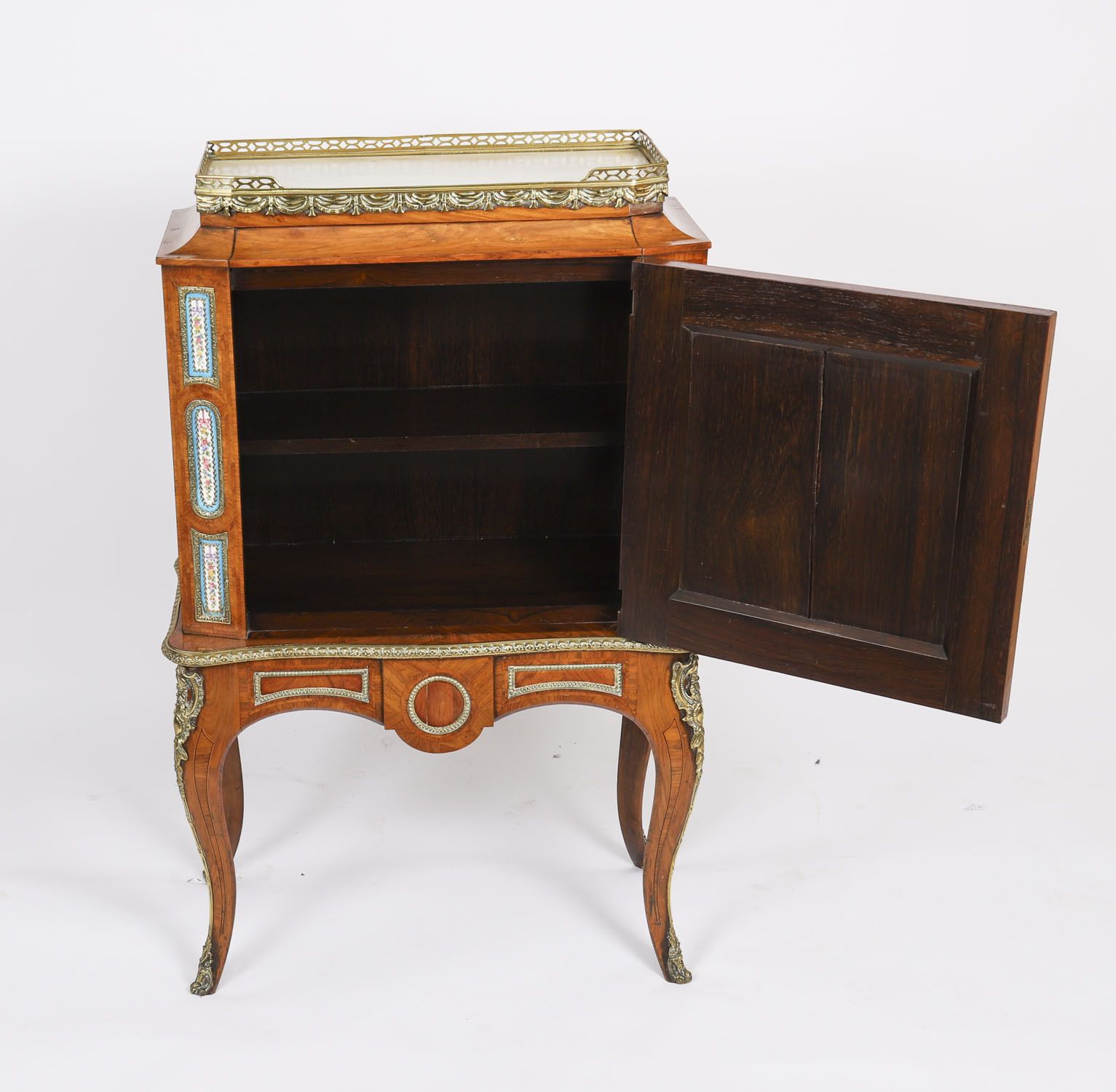
The demi lune white Carrara marble top has a pierced brass gallery above a central cupboard door inset with five large turquoise and floral Sevres porcelain plaques and flanked by canted stiles inset with six further small plaques, which opens to real a single shelf.
The cabinet is set on a serpentine base with scrolled apron and raised on stout cabriole legs with ormolu cast mounts and sabots.
Add this beautiful pier cabinet with its great provenance to any room in your home.
Provenance:
Corby Castle,Carlisle, England
Lord and Lady Ballyedmond
See photo
Condition:
In goodcondition. As an antique item, the pieces shows signs of use commensurate with age, these minor condition issues are mentioned for accuracy and, as seen in the accompanying photographs, it displays beautifully.
Dimensions in cm:
Height 98 x Width 63 x Depth 32
Dimensions in inches:
Height 3 foot, 3 inches x Width 2 feet, 1 inch x Depth 1 foot, 1 inch
Corby Castle
One of Cumbria's most historically important mansion houses, grade I-listed Corby Castle sits on a plateau, rising above the picturesque River Eden to the east of Carlisle. The Manor of Corby was granted to Hubert de Vallibus by Henry II and passed to Andrew de Harcia, Earl of Carlisle before being given to Richard Salkeld in 1336. The estate remained in the hands of the Salkeld family until it was sold in 1611 to Lord William Howard, the third son of Thomas Howard, 4th Duke of Norfolk. The house is built around a red sandstone peel tower, or fortified tower house, built in the 13th century; William Howard added a two-storied L-shaped house to the peel tower, and the house was once again modified in the early 19th century by descendant Henry Howard. Between 1812 and 1814, Scottish architect Peter Nicholson gave the castle a new rectangular plan and the harmonious neo-classical façade in the distinctive local red sandstone that graces the building today. Corby Castle remained in the Howard family until 1994, when Lord and Lady Ballyedmond, as new owners, began an inspired revival of Corby, giving new life to one of the great Cumbrian mansions.
Sevres Porcelain
traces its roots in France to early craftsmen who had small manufacturing operations in such places as Lille, Rouen. St. Cloud, and most notably Chantilly. It is from Chantilly that a cadre of workers migrated to the Chateau de Vincennes near Paris to form a larger porcelain manufactory in 1738.
French King Louis XV, perhaps inspired by his rumoured relationship with mistress Madame de Pompadour, took an intense interest in porcelain and moved the operation in 1756 to even larger quarters in the Paris suburb of Sevres. Sevres was also conveniently near the home of Madame de Pompadour and the King's own Palace at Versailles.
From the outset the king's clear aim was to produce Sevres Porcelain that surpassed the established Saxony works of Meissen and Dresden. Though the French lacked an ample supply of kaolin, a required ingredient for hard-paste porcelain (pate dure), their soft-paste porcelain (pate tendre) was fired at a lower temperature and was thus compatible with a wider variety of colours and glazes that in many cases were also richer and more vivid. Unglazed white Sevres Porcelain "biscuit" figurines were also a great success. However, soft-paste Sevres Porcelain was more easily broken. Therefore, early pieces of Sevres Porcelain that remain intact have become rare indeed.
The Sevres Porcelain manufactory always seemed to be in dire financial straits despite the incredibly fine works it produced. In fact, the king's insistence that only the finest items be created may have contributed to the difficulties. Only a limited number of European nobility could afford the extravagant prices demanded for such works. King Louis XV and eventually his heir, the ill-fated Louis XVI, were obliged to invest heavily in the enterprise. Ultimately, the Sevres Porcelain Factory produced items under the name of "Royal" and thus the well-known Sevres mark was born. King Louis XV even mandated laws that severely restricted other porcelain production in France so as to retain a near monopoly for his Sevres Porcelain. The king even willingly became chief salesman for the finest of his products, hosting an annual New Year's Day showing for French nobility in his private quarters at Versailles. He eagerly circulated among potential buyers, pitching the merits of ownership and policing the occasional light-fingered guest.
Sevres Porcelain may have indeed given the makers of Meissen and Dresden a run for their money by the end of the 18th Century but for the French Revolution. By 1800, the Sevres Porcelain Works were practically out of business due to the economic devastation of the new French Republic.
About the time when Napoleon Bonaparte named himself Emperor of France (1804), a new director was named for the Sevres Porcelain Manufactory. Alexandre Brongniart, highly educated in many fields, resurrected Sevres Porcelain. Soft-paste porcelain was eliminated altogether thanks to the earlier discovery of kaolin near Limoges. For four decades until his death, Brongniart presided over monumental progress for Sevres Porcelain, catering not only to Napoleon himself, but at last to include the more financially profitable mid-priced market in the emerging middle class.
Burr Walnut refers to the swirling figure present in nearly all walnut when cut and polished, and especially in the wood taken from the base of the tree where it joins the roots. However the true burr is a rare growth on the tree where hundreds of tiny branches have started to grow. Burr walnut produces some of the most complex and beautiful figuring you can find.
Ormolu (from French 'or moulu', signifying ground or pounded gold) is an 18th-century English term for applying finely ground, high-carat gold in a mercury amalgam to an object of bronze.The mercury is driven off in a kiln leaving behind a gold-coloured veneer known as 'gilt bronze'.
The manufacture of true ormolu employs a process known as mercury-gilding or fire-gilding, in which a solution of nitrate of mercury is applied to a piece of copper, brass, or bronze, followed by the application of an amalgam of gold and mercury. The item was then exposed to extreme heat until the mercury burned off and the gold remained, adhered to the metal object.
No true ormolu was produced in France after around 1830 because legislation had outlawed the use of mercury. Therefore, other techniques were used instead but nothing surpasses the original mercury-firing ormolu method for sheer beauty and richness of colour. Electroplating is the most common modern technique. Ormolu techniques are essentially the same as those used on silver, to produce silver-gilt (also known as vermeil).
Carrara marble - is a type of white or blue-grey marble popular for use in sculpture and building decor. It is quarried at the city of Carrara in the province of Massa-Carrara (Tuscany, Italy).
Carrara marble has been used since the time of Ancient Rome; the Pantheon and Trajan's Column in Rome are constructed of it. Many sculptures of the Renaissance, such as Michelangelo's David, were carved from Carrara marble. For Michelangelo at least, Carrara marble was valued above all other stone, except perhaps that of his own quarry in Pietrasanta. The Marble Arch in London and the Duomo di Siena are also made from this stone, as are the interiors of Manila Cathedral, the cold-white marbles of the Sheikh Zayed Mosque and the campus of Harvard Medical School.
Wear Condition
Excellent
Cancellations
We offer free cancellations and full refund for orders cancelled before dispatching. View full policy.
Returns
We have a 14-day return guarantee for orders from individual sellers, within the UK and European Union. View full policy.
Additional Delivery Info from Seller
Free delivery in London.
Estimated delivery time
Less than one week
Free collection available
Yes
Made to Last
The average lifespan of a Vinterior piece is 100 years, while modern flat-pack typically takes just 3 years to reach landfill. When you choose pre-loved, you can shop with confidence in quality, craftsmanship and longevity. With our top-rated customer service team and price match guarantee, there's no better way to shop pre-loved.


Shopping at Vinterior


Similar Cabinets
Similar Cabinets
You may also like
You may also like
Add to a wishlist
Create Wishlist
Completethe room
Good design is all in the layering. Whether you're adding impact or refining the details, now’s the time to find what’s missing.
Reviews
5.0

Based on 13 reviews




Wear conditions
Excellent
Shows little to no signs of wear and tear.
Good
May show slight traces of use in keeping with age. Most vintage and antique items fit into this condition.
Average
Likely to show signs of some light scratching and ageing but still remains in a fair condition.
Apparent Wear and Tear
Visible signs of previous use including scratches, chips or stains.
Please refer to condition report, images or make a seller enquiry for additional information.
Cancellations and Returns
Last updated: 12/02/2026
Clear, predictable protection for every pre-loved purchase.
Simple £75 flat return fee for UK-to-UK mainland furniture when you change your mind.
Applies to furniture with a final selling price of up to £5,000 (excluding delivery and service fees) and delivered from a UK mainland seller to mainland UK addresses. Excludes Northern Ireland, Channel Islands, Scottish Highlands & Islands, Isle of Wight and Isles of Scilly.
Buying vintage should feel inspiring, not uncertain.
Every order on Vinterior is backed by straightforward returns, free cancellations, and extra peace of mind for UK furniture purchases.
1. Free cancellations
Changed your mind before dispatch?
You can cancel any order before it's shipped for a full refund, including delivery.
To cancel an order, click Create cancellation on the order page.
Once an item has been dispatched, delivery costs are not refundable.
Bespoke, personalised or made-to-order pieces cannot be cancelled.
2. Returning an item
You have 14 days from delivery to request a return.
There are two return types:
A. The item isn't as described (free return)
If your piece arrives and it doesn't match the listing in any material way (incorrect description, undisclosed damage, inaccurate measurements, misleading photos), you are fully protected:
- Free return
- The seller or Vinterior arranges pickup
- Full refund, including outbound delivery costs once the seller receives the item
This applies to all purchases.
B. You changed your mind
UK-to-UK furniture deliveries:
To make UK furniture returns predictable and stress-free, we offer a simple flat return fee of £75.
- Applies to furniture delivered from a UK mainland seller to a mainland UK address. Excludes Northern Ireland, Channel Islands, Scottish Highlands & Islands, Isle of Wight and Isles of Scilly.
- Pickup arranged for you
- One clear fee, no surprises
We coordinate the return with either the seller's chosen courier or our trusted delivery partner.
All other items
Most smaller items are straightforward to return.
You can still return your item within 14 days.
- For smaller or parcel-sized items, you can choose to post the item back yourself using a tracked service, or the seller can suggest a preferred courier.
- For larger or more fragile pieces, the seller may recommend the safest return method.
- Return delivery costs vary depending on size and courier.
The seller will confirm the best option based on the item.
3. If your item arrives damaged
Damage on arrival is uncommon, especially for UK furniture deliveries.
But if something does go wrong, you're fully protected.
- Let us know as soon as possible (ideally within 72 hours of delivery) so we can resolve things quickly
- Share photos so we understand what happened
- We’ll help arrange a return and refund if needed
You’re always protected when something goes wrong in transit.
Your statutory rights apply for up to 30 days from delivery.
4. What can't be returned
Some items cannot be returned:
- Bespoke, personalised, or made-to-order pieces
- Items altered after delivery
5. How to start a return
- Log in to your Vinterior account
- Open your order
- Click Create a return
- Add notes + photos if relevant
We'll guide you through the rest.
6. What happens next
- We review your request, confirm the return and advise on next steps
- Pickup or return method is arranged
- The item is returned to the seller
- We issue your refund once the seller confirms the item's condition
Returns are completed smoothly once the pickup is arranged.
7. Refunds
Once the seller receives the piece back in the same condition it was sent, we'll issue your refund to your original payment method.
Once a refund is issued, it may take up to 5–10 working days for the funds to appear back on your original payment method, depending on your bank or card provider.
If the item is returned with new damage that wasn't present at delivery, the refund may be adjusted following review.
Need help?
If you have questions about a return or your order, our support team is here to help. Email us at [email protected] or find other ways to contact us here.
What your service fee covers
-
 14-day return guarantee
-
Flat-fee return shipping on UK furniture
-
Seller vetting
-
Dedicated customer support
| Order Value (£) | Fee (£) |
|---|---|
| 0 — 49.99 | 2.75 |
| 50 — 99.99 | 5.50 |
| 100 — 199.99 | 11.00 |
| 200 — 399.99 | 21.00 |
| 400 — 599.99 | 30.00 |
| 600 — 799.99 | 40.00 |
| 800 — 999.99 | 50.00 |
| 1,000 — 1,499.99 | 55.00 |
| 1,500 — 1,999.99 | 60.00 |
| 2,000 — 4,999.99 | 82.50 |
| 5,000+ | 110.00 |
Added at checkout, based on your basket total.
