


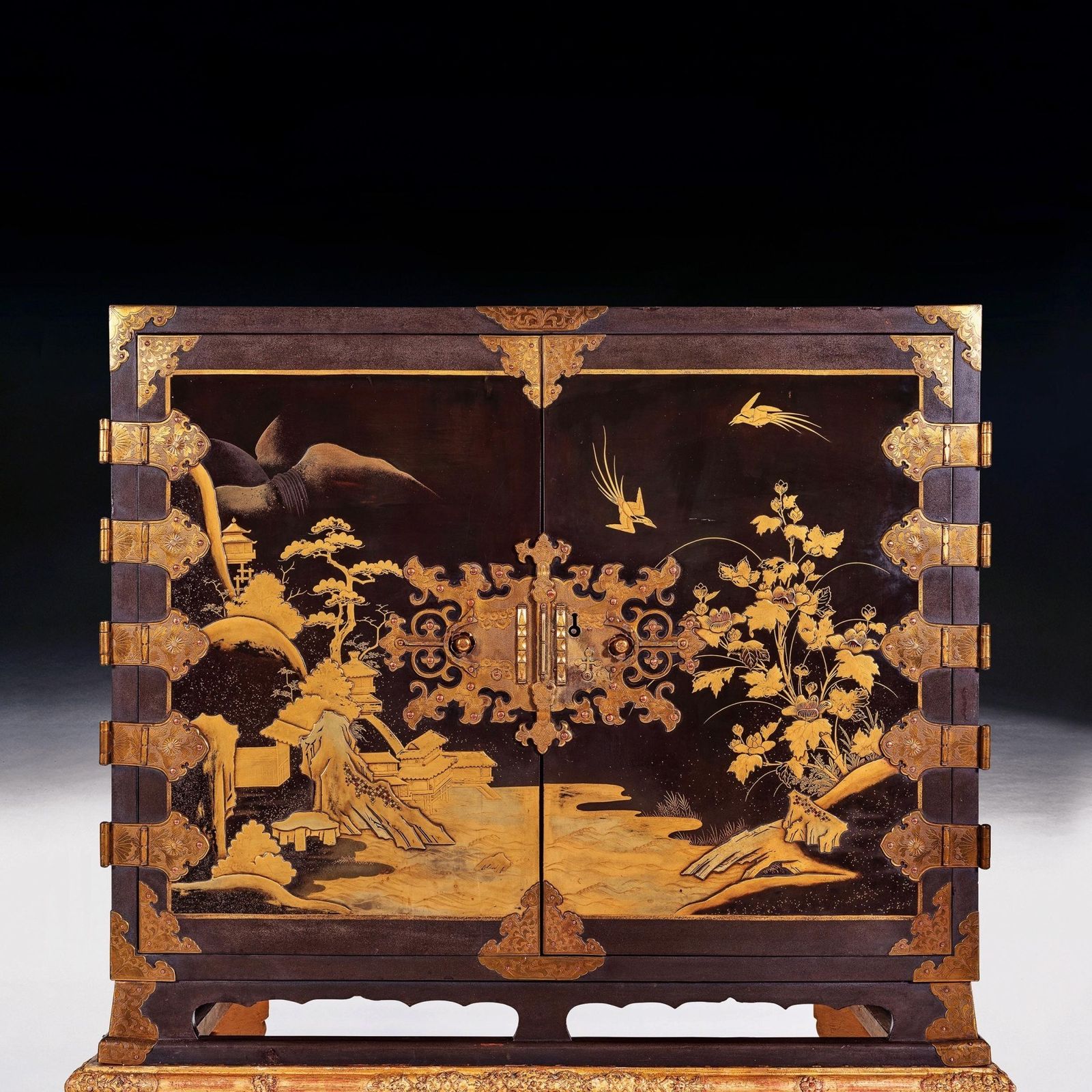
17th Century Japanese Lacquer Cabinet On French Giltwood Regence Stand

 Benington, United Kingdom

Hassle-free returns
-
 Easy returns (14 days)
-
Free return if the item isn't as described
-
Buyer protection
Damage is rare, and you're fully protected if it happens.
Dimensions
Wear Condition
Good
Material
Other Wood
Item Location
Benington, United Kingdom
Product Details
Description
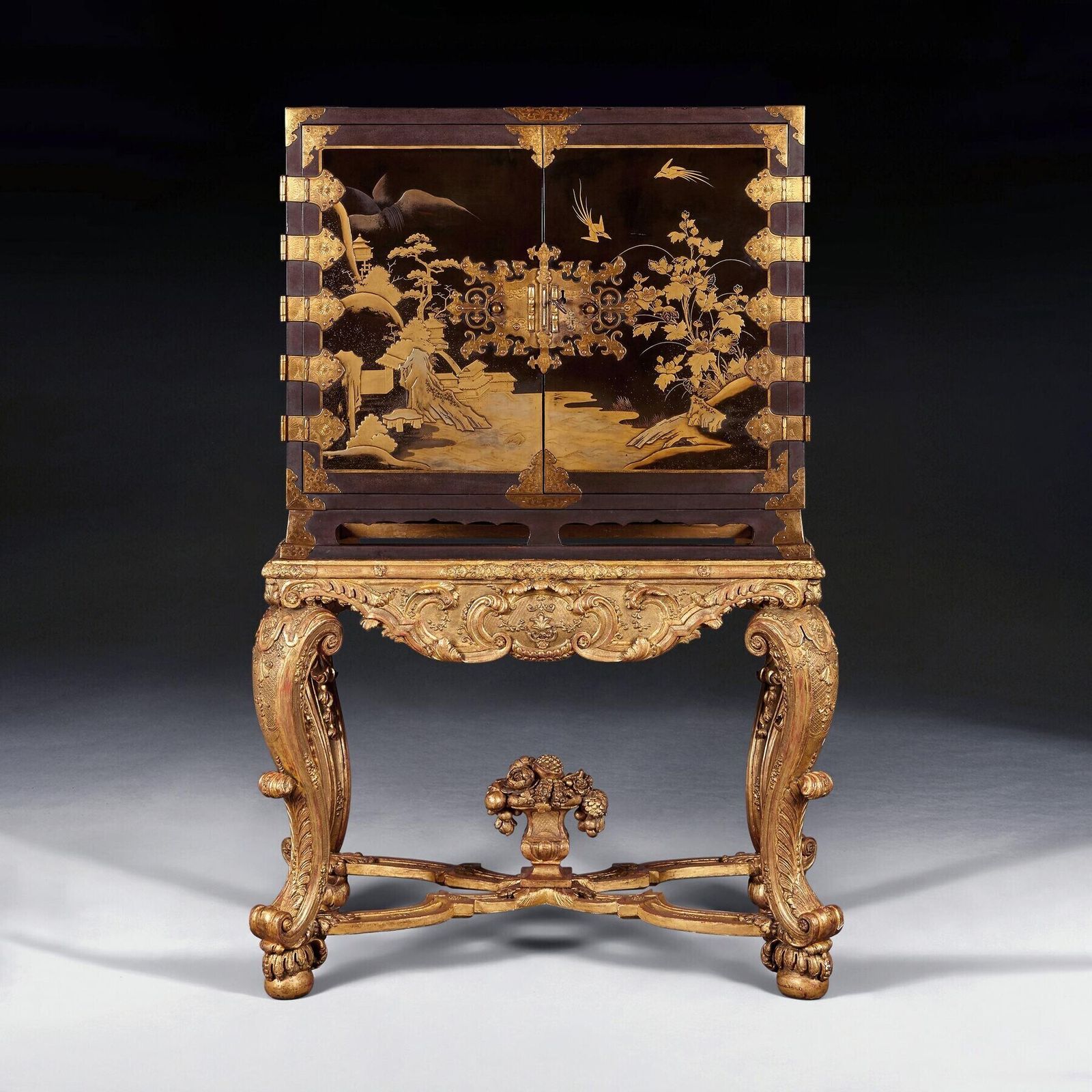
An Extremely Fine and Very Important 17th Century Japanese Lacquer Cabinet on French Giltwood Stand of Regence Period circa 1680-1690
Provenance
Likely acquired by Herman Willem Daendels (1762-1818)
Mr. Herman August Daendels (1918-2000), Amsterdam
Eurasia Antiques, Amsterdam
Biënnale des Antiquairs, Paris, 1998
Private Collection, Belgium
Kollenburg Antiquairs, Oirschot-chosen for the press release for the Art Affair Fair, Amsterdam, in 2020, Also taken to TEFAF Maastricht
A Private European collection
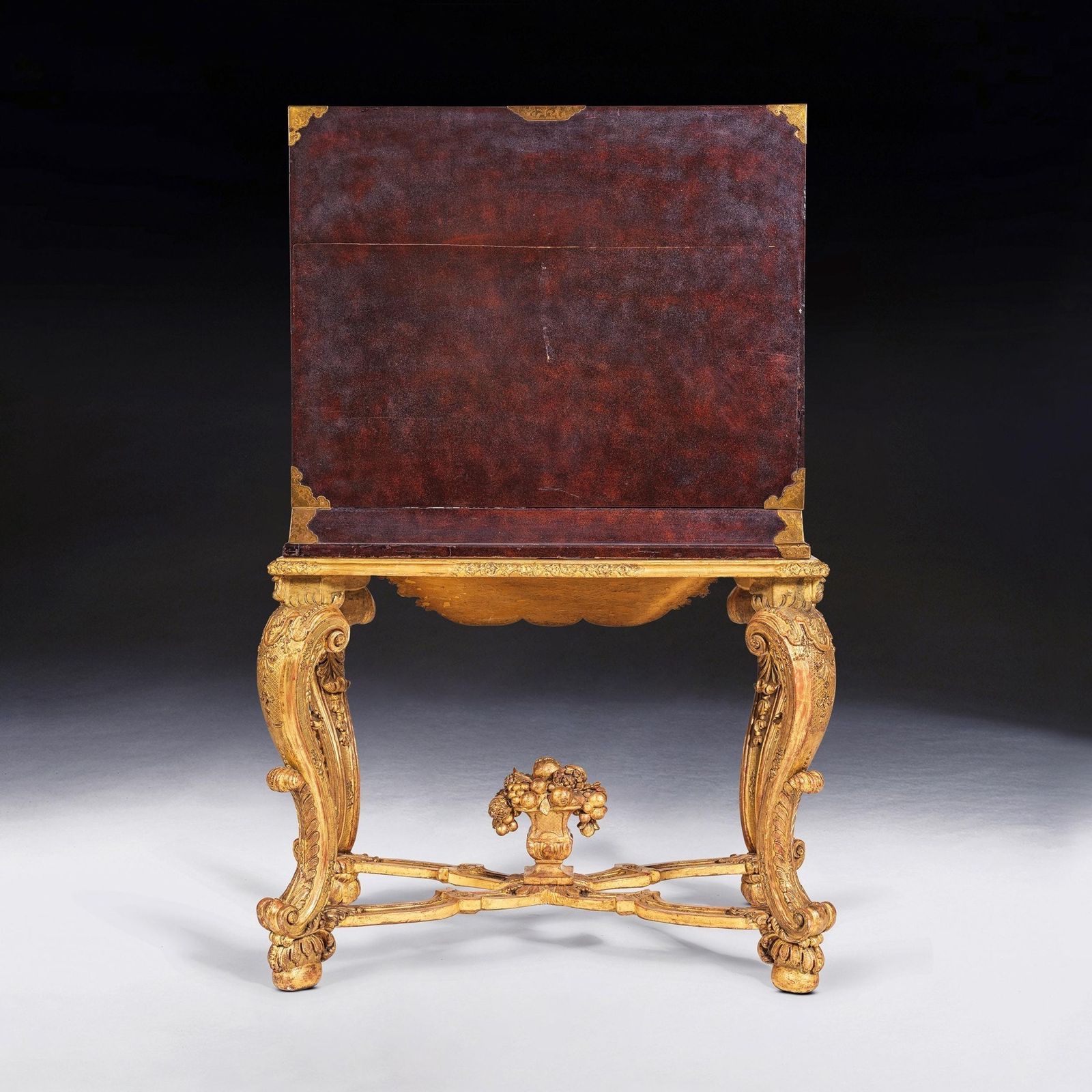
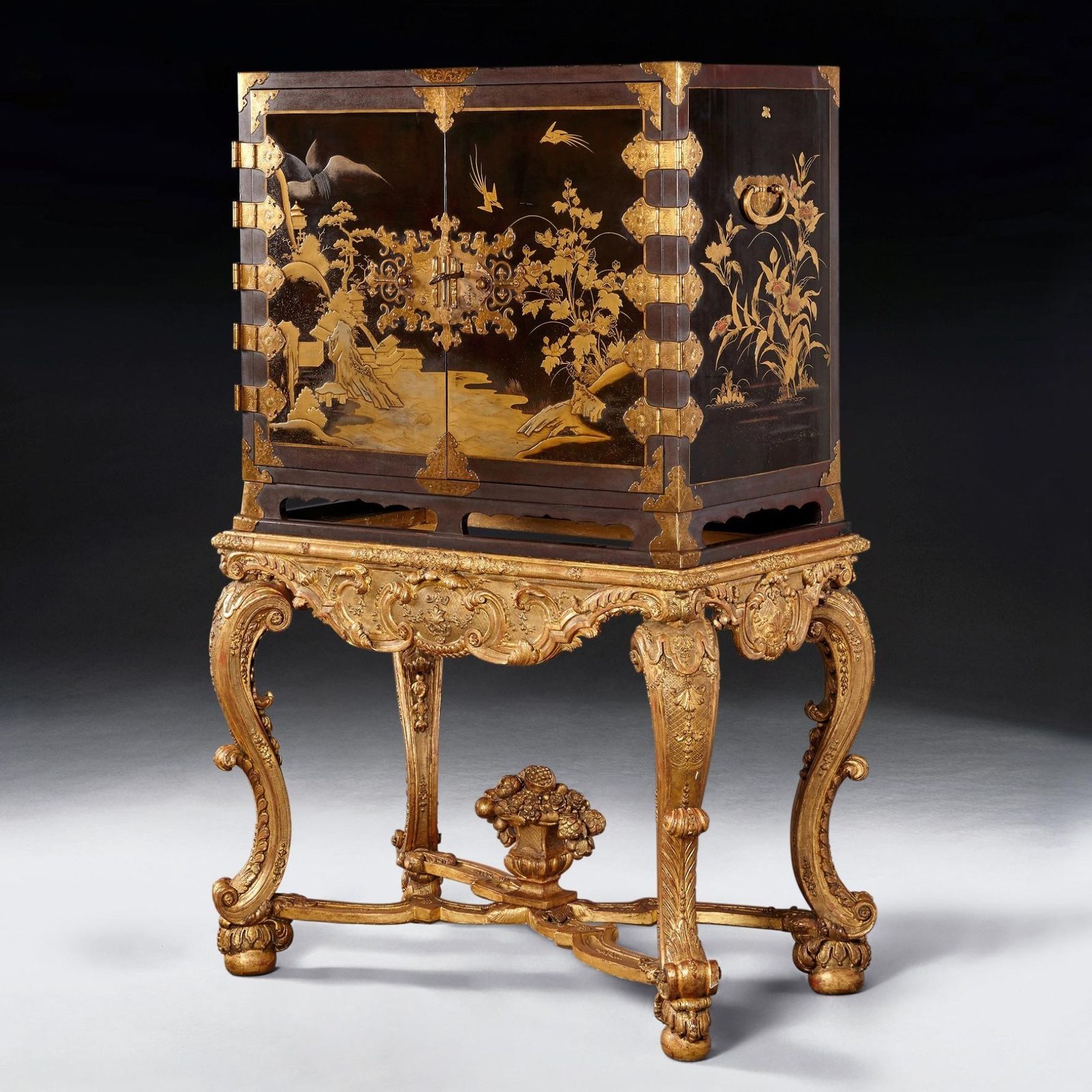
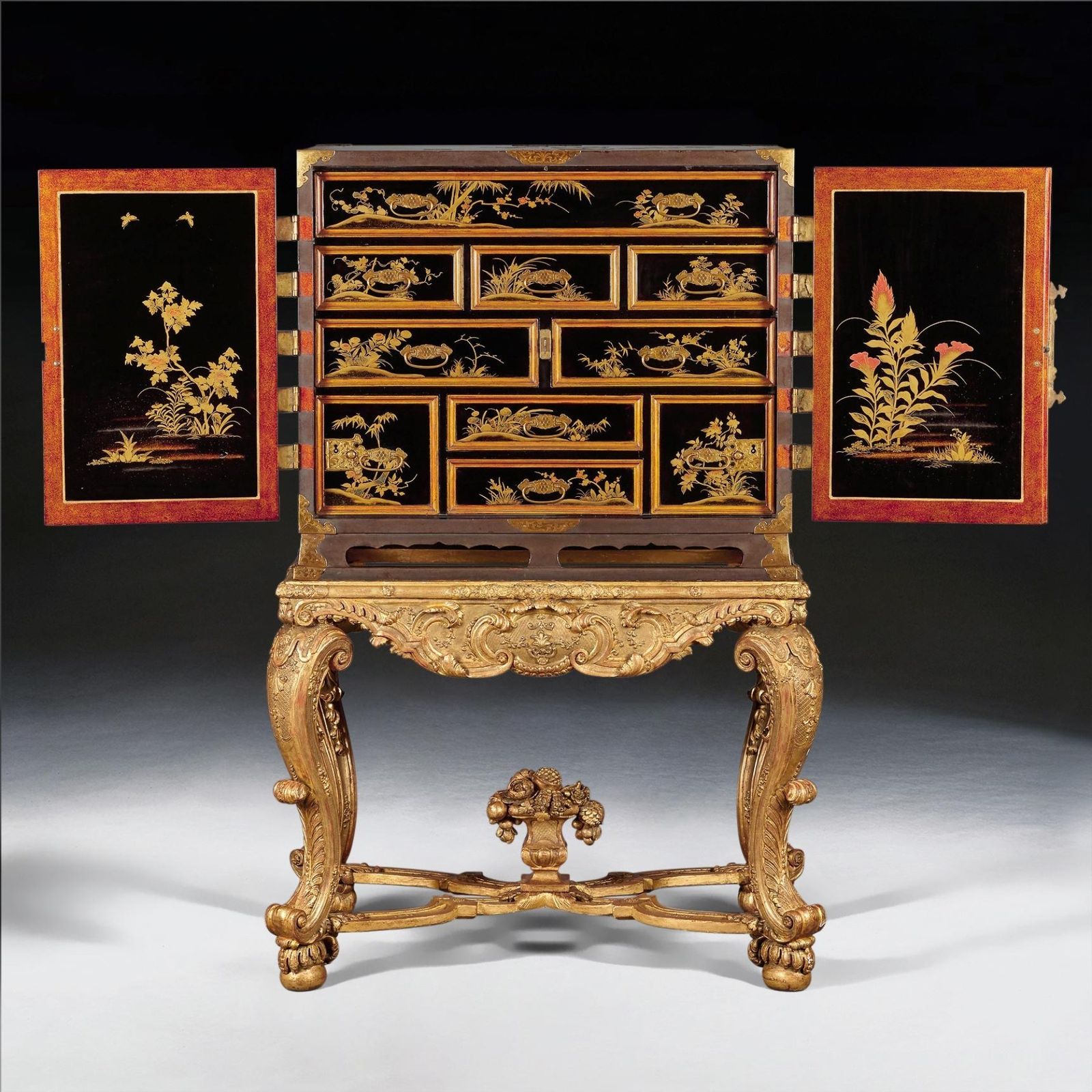
This fine Japanese lacquer cabinet or ‘Cantoor’ was presumably originally acquired by a French connoisseur due to the French Regence period base it sit upon. The craze for lacquer in the west from the 16th century onwards has been extensively documented and it is generally accepted that the finest of all lacquers, technically speaking, were those produced in Japan rather than China. This cabinet is one of the best examples of Japanese export lacquer.
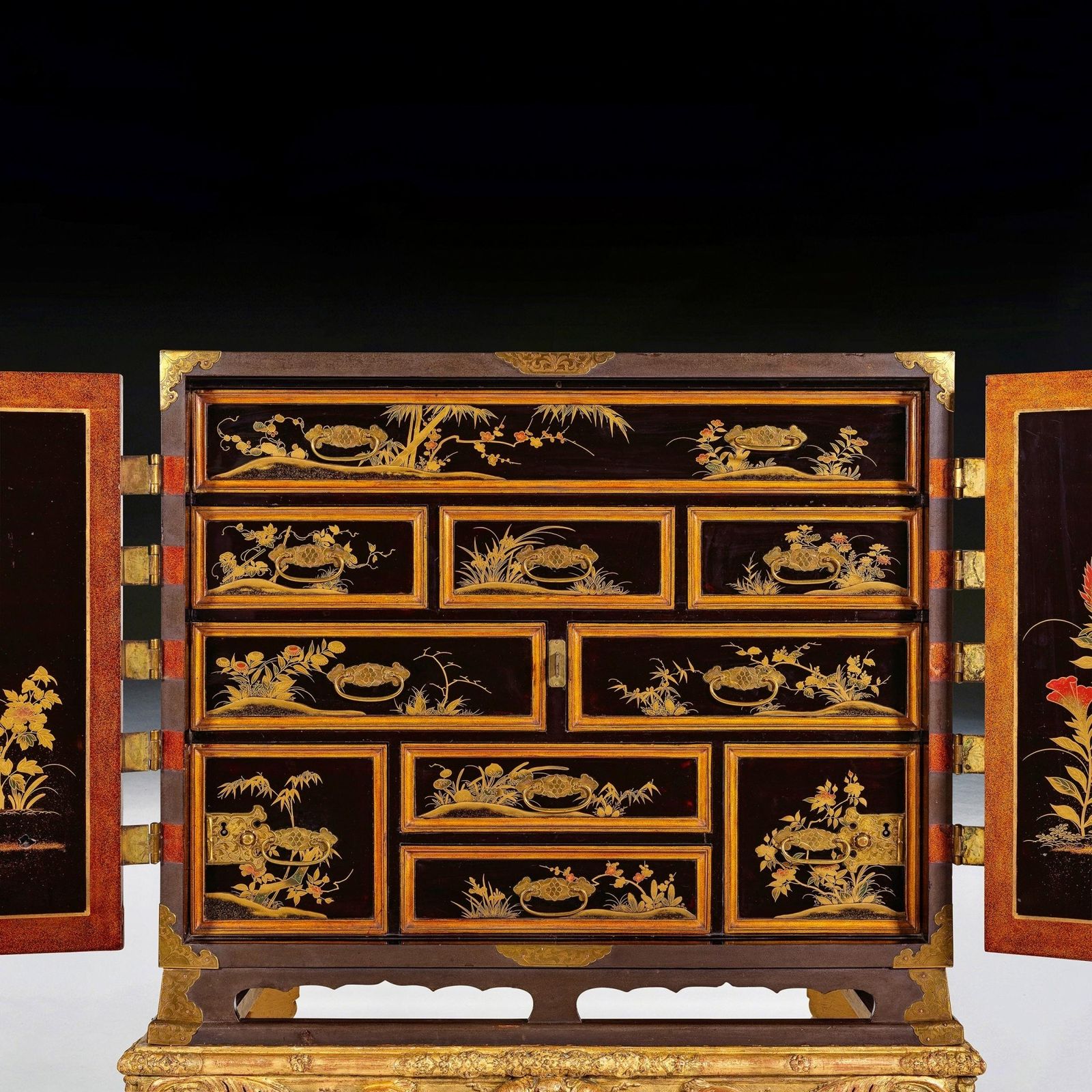
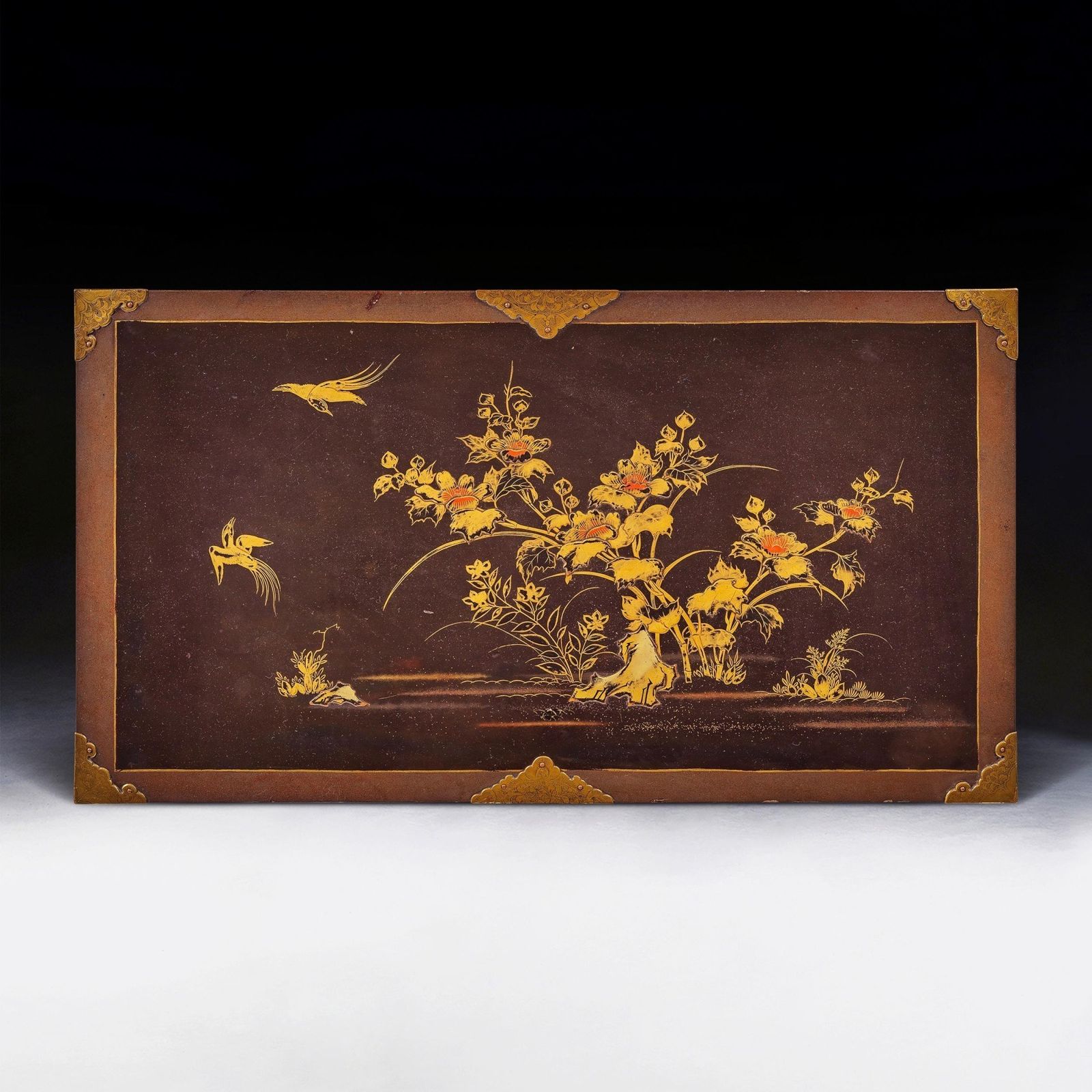
The lacquer work on the cabinet, executed in a variety of techniques including Maki-e, is exquisite and survives in amazing condition. The front depicts a landscape with mountains, temples, trees and a river with flying phoenixes, the lacquered boarders are more of a powdered effect. Each door has five gilt metal engraved brass hinges with further engraved gilt metal mounts to protect the corners of the doors and the outer carcase. There is a two part gilt metal lock plate to the centre of elaborate design that is particularly finely executed.
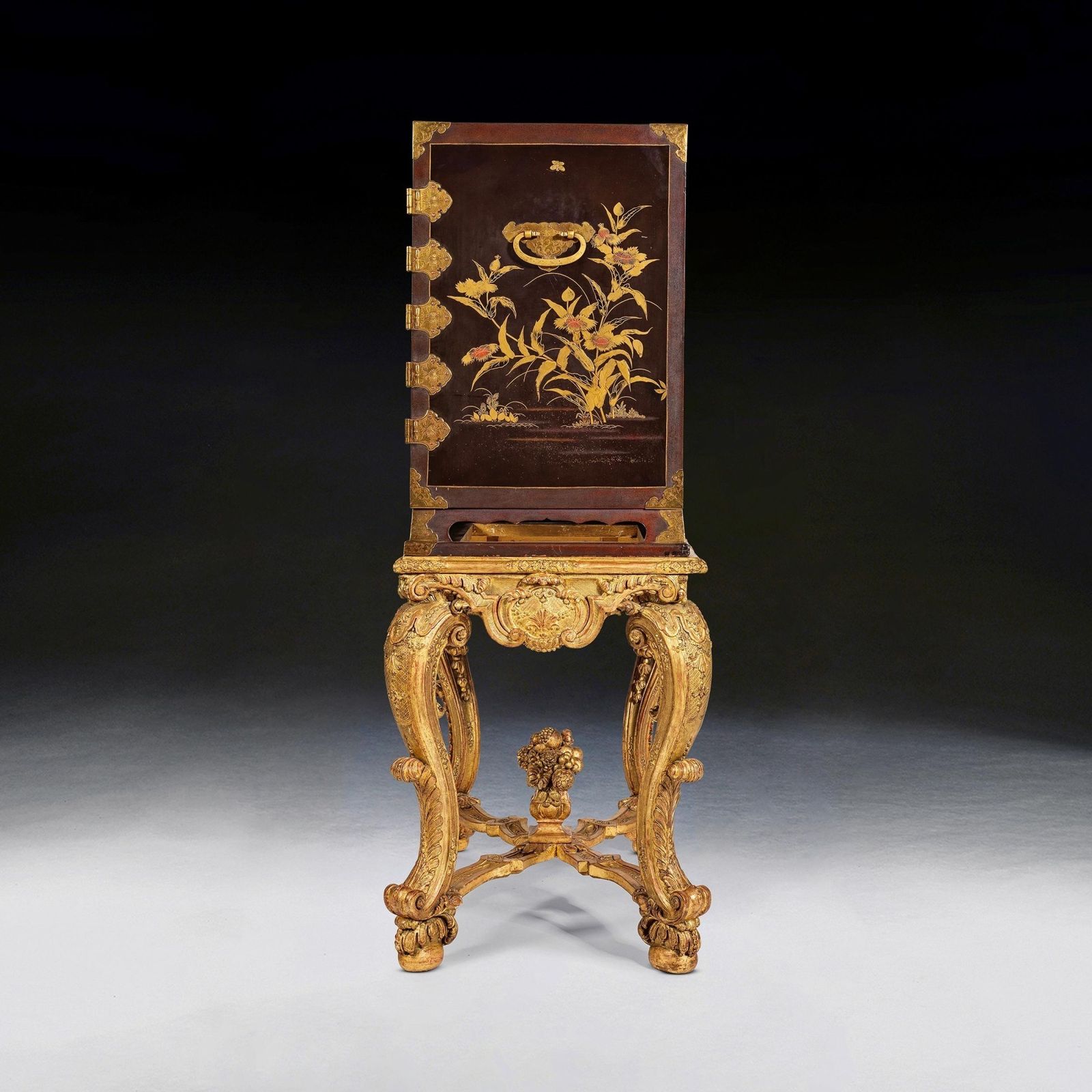
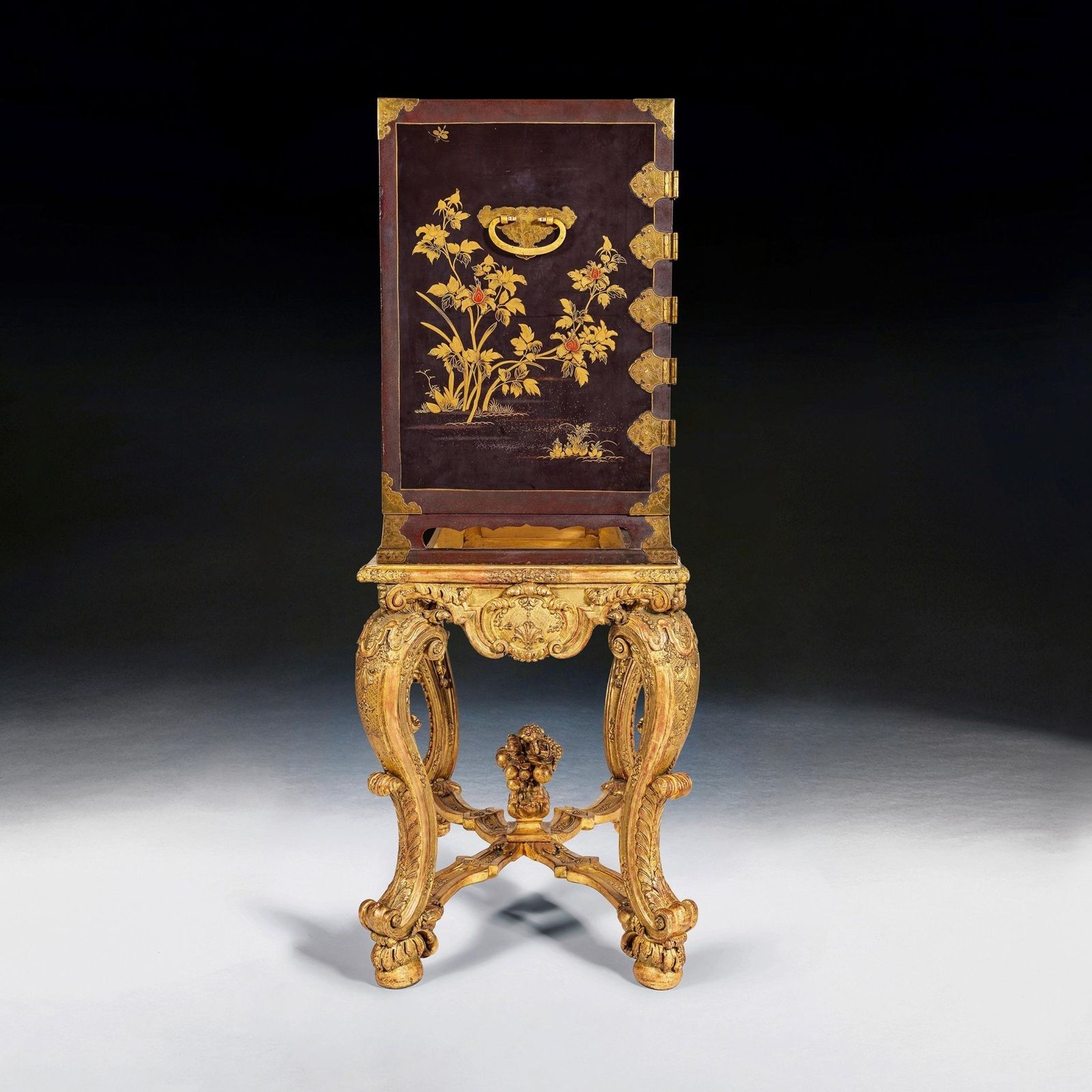
The sides being decorated with feature scenes of flowers and insects, with large and impressive engraved gilt brass handles. Like all of the finest lacquer, the decoration is executed in a variety of levels of relief, making the scene much more three dimensional as a result.
With Japanese export lacquer there was a evolutionary sequence to stylistic change that can be traced back with some accuracy during the 16th and 17th centuries. The Namban lacquer of the late 16th century relied on highly wrought mother of pearl inlay and gold lacquer on a black ground. As the 17th century unfolded, there was progression towards a generally finer lacquer without the use of mother of pearl coupled with this was an increased interest in a more pictorial style with landscapes being used more extensively initially within boarders. Gradually by 1690’s the borders began to disappear from export lacquer work, so the fact that borders are still in evidence on our piece is further proof of being earlier than 1690 in date for the lacquer work.
Most early Japanese lacquer arrived in the west through the Portuguese mercantile companies but this changed by around 1630 when most of the trade between Europe and Japan was conducted through the Dutch East India Company, as is almost certainly the case with the present piece.
The so-called "pictorial style" of Japanese lacquer work was developed around c.1630 specifically to suit the taste of the new Dutch market for such pieces and, as such, this became highly influential throughout the rest of Europe. Lacquer work required painstaking is built up of many layers of the prepared sap of thelacquer tree Rhus vernicifera. After applying each layer, the object is dried in a room with a high humidity and then sanded. The effects of relief are achieved by mixing lime through the lower layers of paint. For the decoration in gold, the maki-e technique is applied, whereby gold powder is strewn or gold foil is placed onto the wet varnish. The gold then sinks somewhat into the lacquer. After the lacquer layer has dried, it can be polished.. As such, pieces like the present cabinet would take a very long time to produce and this was also a factor in the high prices attached to goods of this sort in both the export and domestic Japanese markets.
The cabinet is supported on an exuberant giltwood stand French in origin and made in the RÈgence period in the early 18th century. The stand features four finely made cabriole legs, joined by a platform stretcher with a central vase of flowers and fruit in the manner of J. B. Monnoyer. The curving aprons to the front and both sides with the carved detail being extremely fine. The ground has been finely engraved with trellis work at points and there are raised areas with applied floral carving. The stand and the cabinet complement each other perfectly, creating an exceptional work of art that will appeal to any modern day connoisseur just as it would have fascinated those wealthy enough to afford such pieces in the early 18th century in France and the rest of Europe.
These early Japanese lacquer cabinets always have integral feet and were shipped to Europe without stands which were always manufactured for them when they arrived at their destination. Due to the Dutch control of the trade with Japan in the 17th century, purchases made by monarchs and leading connoisseurs throughout Europe would have been placed through agents in Amsterdam. Records survive relating to purchases of Japanese lacquer of this sort made by Louis XIII and Louis XIV and sent to Pairs via Amsterdam, the high cost of shipping via another European country added to the luxurious nature of these pieces and the exclusivity attached to ownership of them. It also became increasingly clear to European connoisseurs that Japanese lacquer products were superior to their Chinese equivalents and, as such, the trade in Japanese lacquer became a highly profitable business for the Dutch VOC (East India Company) and the various allied businesses.
Additional dimensions information:
Width: 37 inches - 94cm Height: 62 inches - 157cm Depth: 20 1/2 inches - 52cm
Wear Condition
Good
Cancellations
We offer free cancellations and full refund for orders cancelled before dispatching. View full policy.
Returns
We have a 14-day return guarantee for orders from individual sellers, within the UK and European Union. View full policy.
Additional Delivery Info from Seller
Estimated delivery time
One to two weeks
Free collection available
No
Made to Last
The average lifespan of a Vinterior piece is 100 years, while modern flat-pack typically takes just 3 years to reach landfill. When you choose pre-loved, you can shop with confidence in quality, craftsmanship and longevity. With our top-rated customer service team and price match guarantee, there's no better way to shop pre-loved.

Shopping at Vinterior


Similar Cabinets
Similar Cabinets
You may also like
You may also like
Add to a wishlist
Create Wishlist
Completethe room
Good design is all in the layering. Whether you're adding impact or refining the details, now’s the time to find what’s missing.
Reviews
5.0

Based on 1 review


Wear conditions
Excellent
Shows little to no signs of wear and tear.
Good
May show slight traces of use in keeping with age. Most vintage and antique items fit into this condition.
Average
Likely to show signs of some light scratching and ageing but still remains in a fair condition.
Apparent Wear and Tear
Visible signs of previous use including scratches, chips or stains.
Please refer to condition report, images or make a seller enquiry for additional information.
Cancellations and Returns
Last updated: 12/02/2026
Clear, predictable protection for every pre-loved purchase.
Simple £75 flat return fee for UK-to-UK mainland furniture when you change your mind.
Applies to furniture with a final selling price of up to £5,000 (excluding delivery and service fees) and delivered from a UK mainland seller to mainland UK addresses. Excludes Northern Ireland, Channel Islands, Scottish Highlands & Islands, Isle of Wight and Isles of Scilly.
Buying vintage should feel inspiring, not uncertain.
Every order on Vinterior is backed by straightforward returns, free cancellations, and extra peace of mind for UK furniture purchases.
1. Free cancellations
Changed your mind before dispatch?
You can cancel any order before it's shipped for a full refund, including delivery.
To cancel an order, click Create cancellation on the order page.
Once an item has been dispatched, delivery costs are not refundable.
Bespoke, personalised or made-to-order pieces cannot be cancelled.
2. Returning an item
You have 14 days from delivery to request a return.
There are two return types:
A. The item isn't as described (free return)
If your piece arrives and it doesn't match the listing in any material way (incorrect description, undisclosed damage, inaccurate measurements, misleading photos), you are fully protected:
- Free return
- The seller or Vinterior arranges pickup
- Full refund, including outbound delivery costs once the seller receives the item
This applies to all purchases.
B. You changed your mind
UK-to-UK furniture deliveries:
To make UK furniture returns predictable and stress-free, we offer a simple flat return fee of £75.
- Applies to furniture delivered from a UK mainland seller to a mainland UK address. Excludes Northern Ireland, Channel Islands, Scottish Highlands & Islands, Isle of Wight and Isles of Scilly.
- Pickup arranged for you
- One clear fee, no surprises
We coordinate the return with either the seller's chosen courier or our trusted delivery partner.
All other items
Most smaller items are straightforward to return.
You can still return your item within 14 days.
- For smaller or parcel-sized items, you can choose to post the item back yourself using a tracked service, or the seller can suggest a preferred courier.
- For larger or more fragile pieces, the seller may recommend the safest return method.
- Return delivery costs vary depending on size and courier.
The seller will confirm the best option based on the item.
3. If your item arrives damaged
Damage on arrival is uncommon, especially for UK furniture deliveries.
But if something does go wrong, you're fully protected.
- Let us know as soon as possible (ideally within 72 hours of delivery) so we can resolve things quickly
- Share photos so we understand what happened
- We’ll help arrange a return and refund if needed
You’re always protected when something goes wrong in transit.
Your statutory rights apply for up to 30 days from delivery.
4. What can't be returned
Some items cannot be returned:
- Bespoke, personalised, or made-to-order pieces
- Items altered after delivery
5. How to start a return
- Log in to your Vinterior account
- Open your order
- Click Create a return
- Add notes + photos if relevant
We'll guide you through the rest.
6. What happens next
- We review your request, confirm the return and advise on next steps
- Pickup or return method is arranged
- The item is returned to the seller
- We issue your refund once the seller confirms the item's condition
Returns are completed smoothly once the pickup is arranged.
7. Refunds
Once the seller receives the piece back in the same condition it was sent, we'll issue your refund to your original payment method.
Once a refund is issued, it may take up to 5–10 working days for the funds to appear back on your original payment method, depending on your bank or card provider.
If the item is returned with new damage that wasn't present at delivery, the refund may be adjusted following review.
Need help?
If you have questions about a return or your order, our support team is here to help. Email us at [email protected] or find other ways to contact us here.
What your service fee covers
-
 14-day return guarantee
-
Flat-fee return shipping on UK furniture
-
Seller vetting
-
Dedicated customer support
| Order Value (£) | Fee (£) |
|---|---|
| 0 — 49.99 | 2.75 |
| 50 — 99.99 | 5.50 |
| 100 — 199.99 | 11.00 |
| 200 — 399.99 | 21.00 |
| 400 — 599.99 | 30.00 |
| 600 — 799.99 | 40.00 |
| 800 — 999.99 | 50.00 |
| 1,000 — 1,499.99 | 55.00 |
| 1,500 — 1,999.99 | 60.00 |
| 2,000 — 4,999.99 | 82.50 |
| 5,000+ | 110.00 |
Added at checkout, based on your basket total.
