


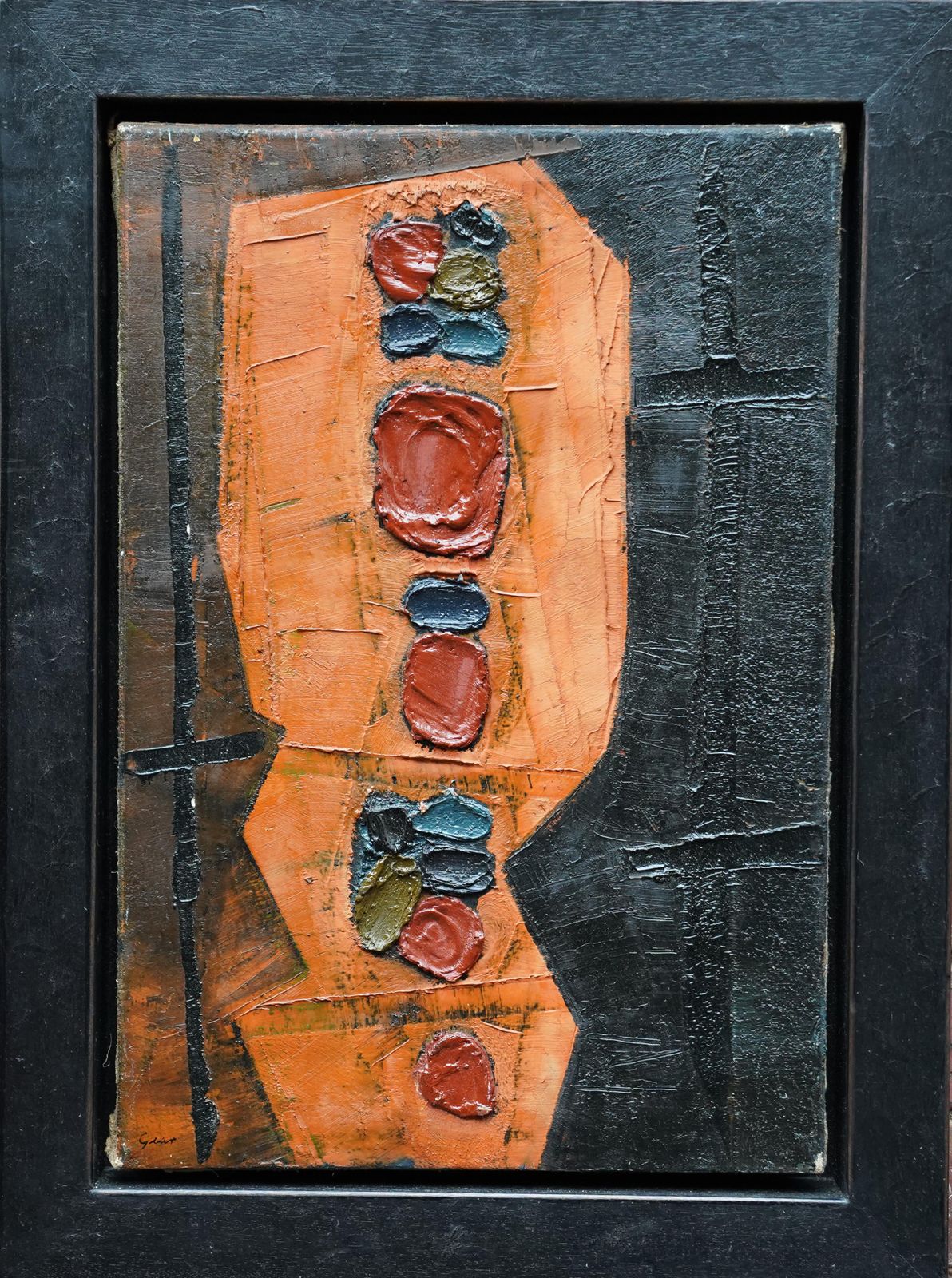
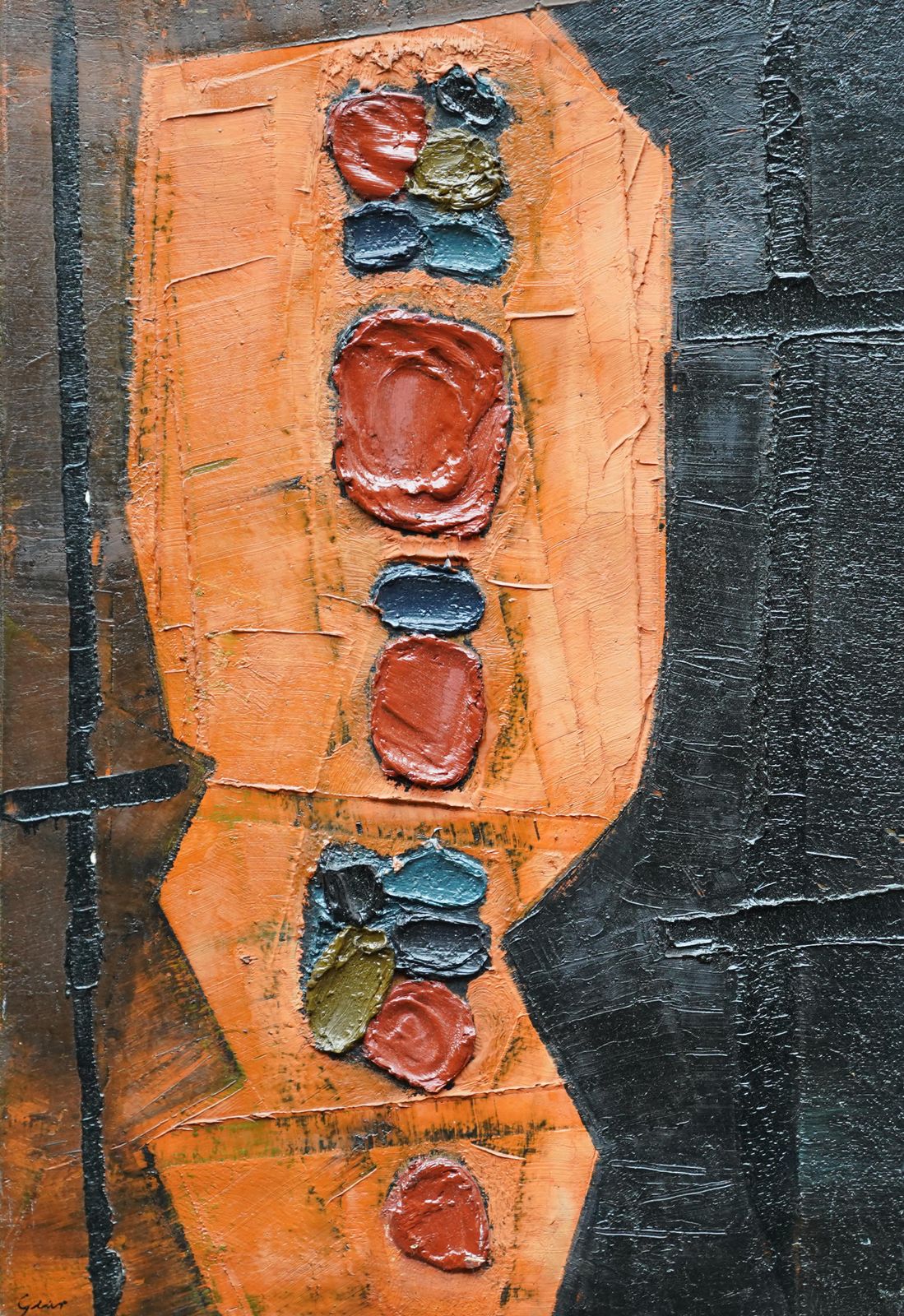
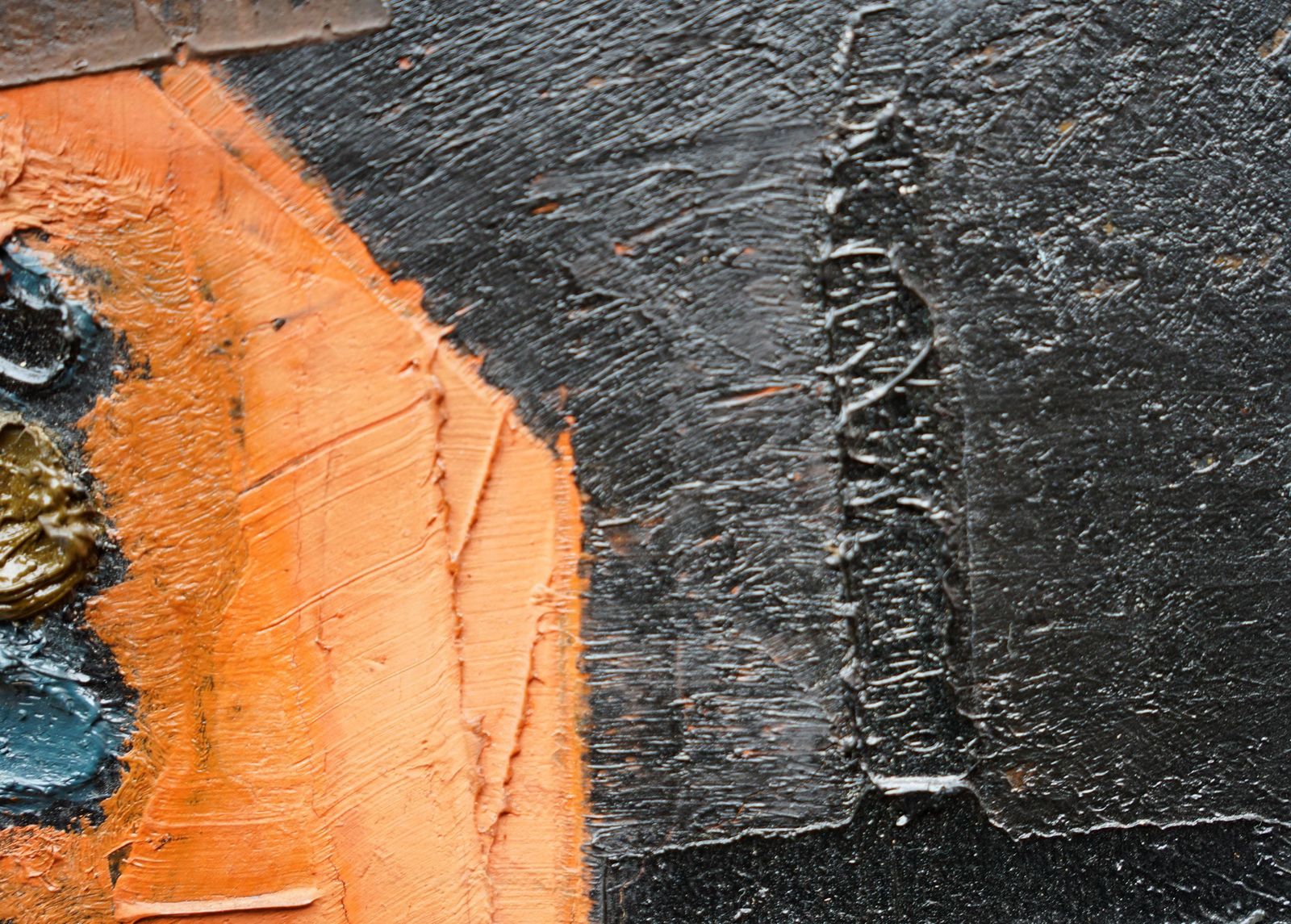
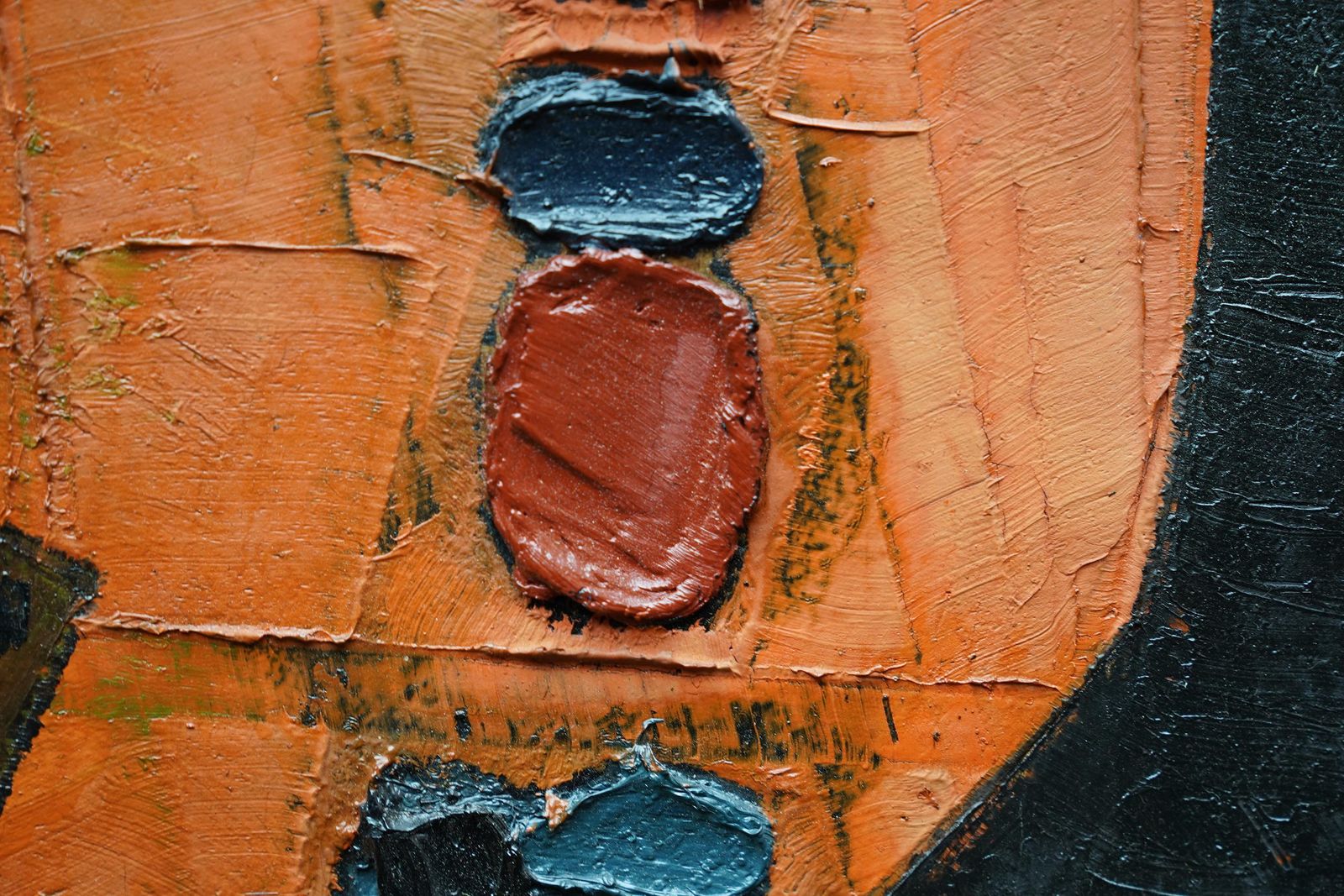
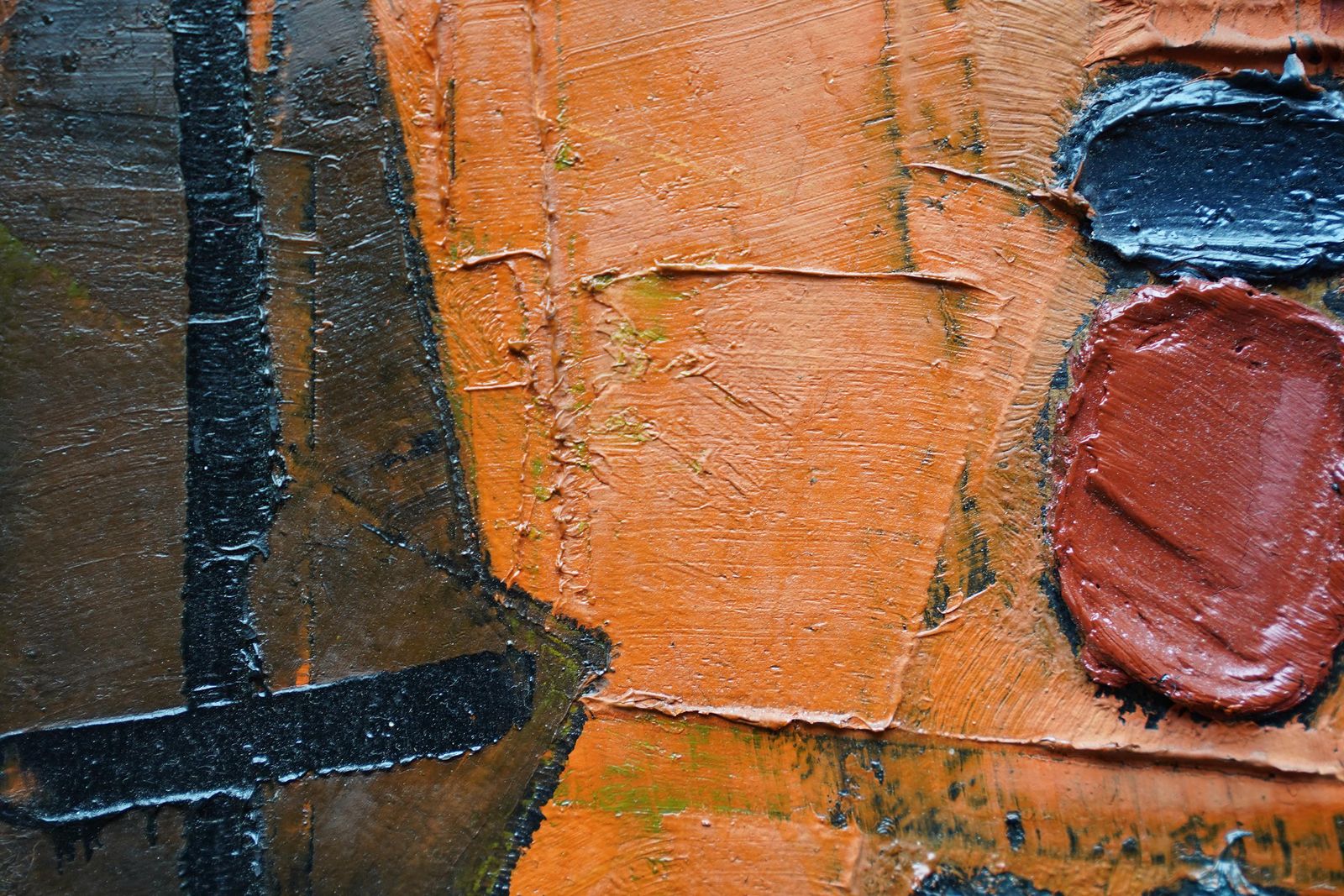
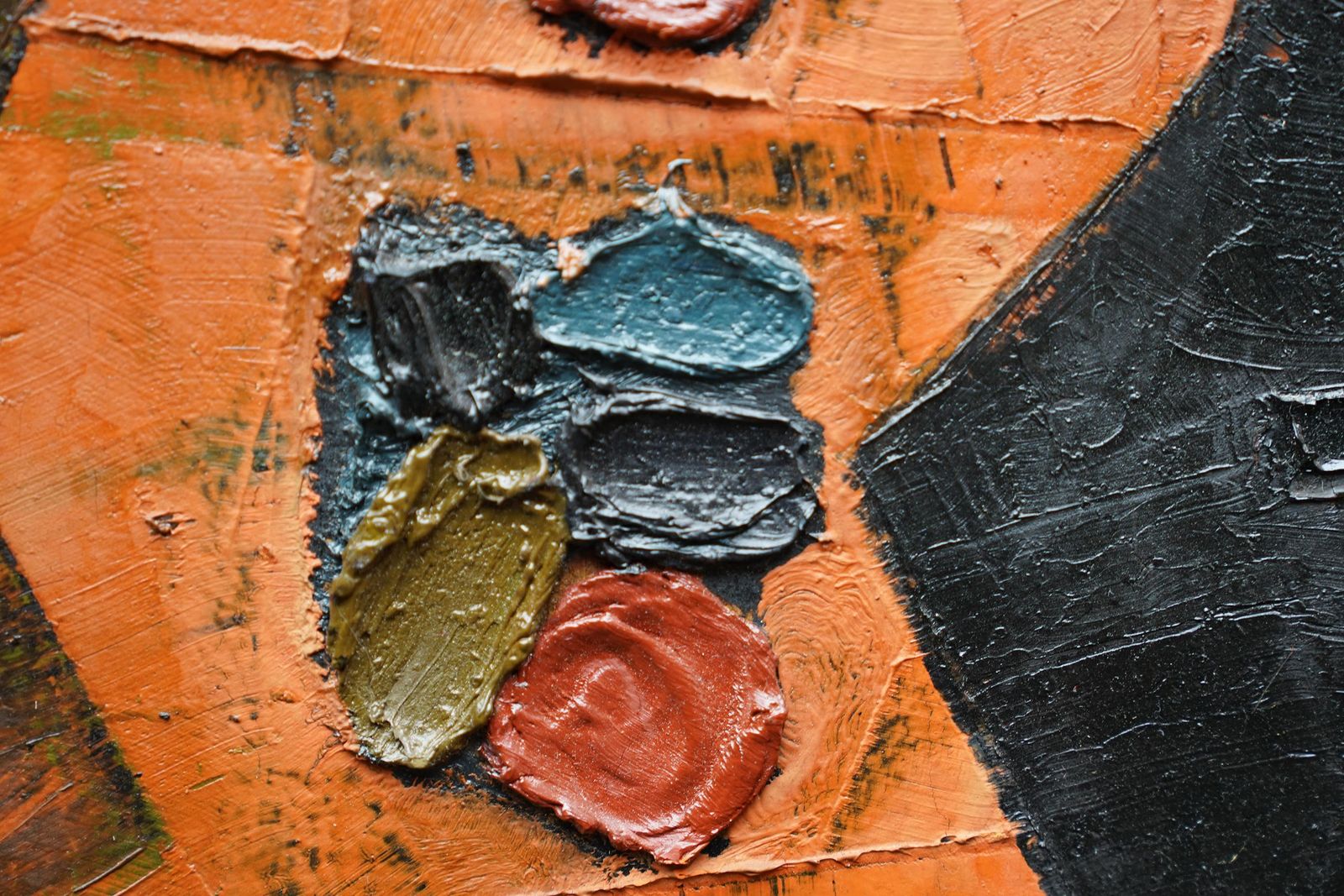
William Gearenigma No. 1 Scottish 1950's Abstract Art Oil Painting Orange Black1954

 Stourbridge, United Kingdom

Hassle-free returns
-
 Easy returns (14 days)
-
Free return if the item isn't as described
-
Buyer protection
Damage is rare, and you're fully protected if it happens.
Dimensions
Wear Condition
Good
Material
Oil Paint
Style
Modernist, Vintage, Minimalist, Victorian
Product Details
Description
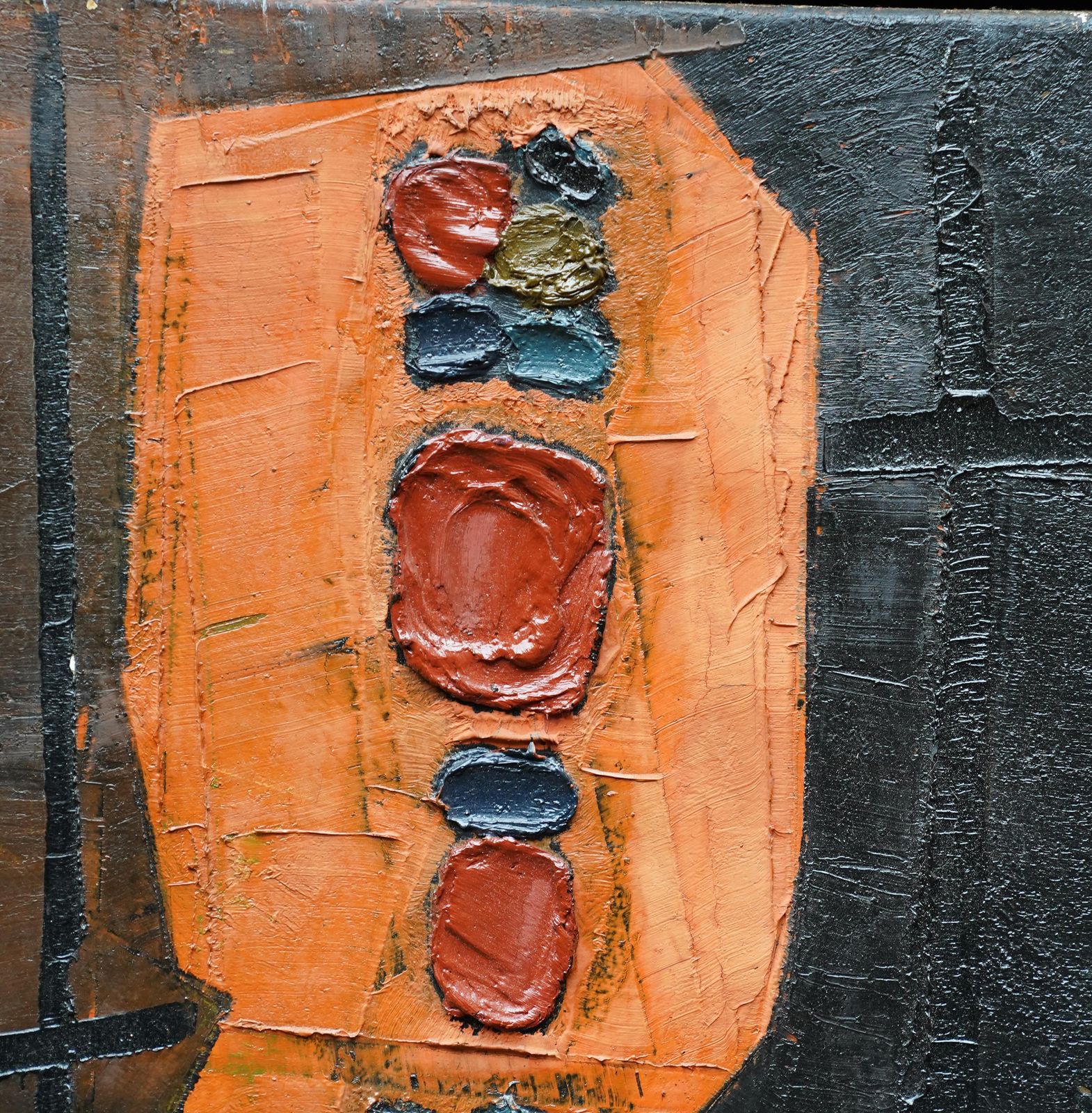
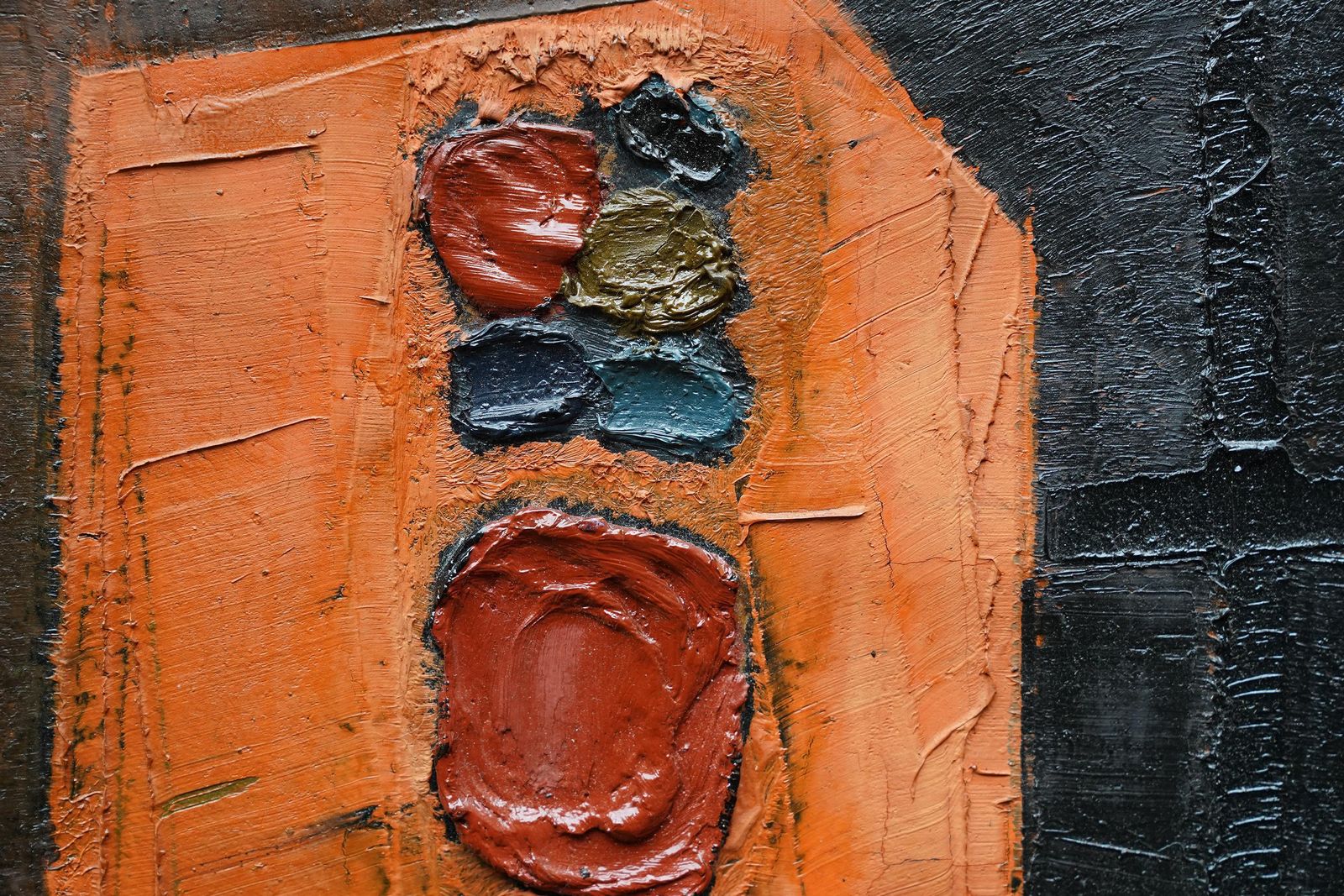
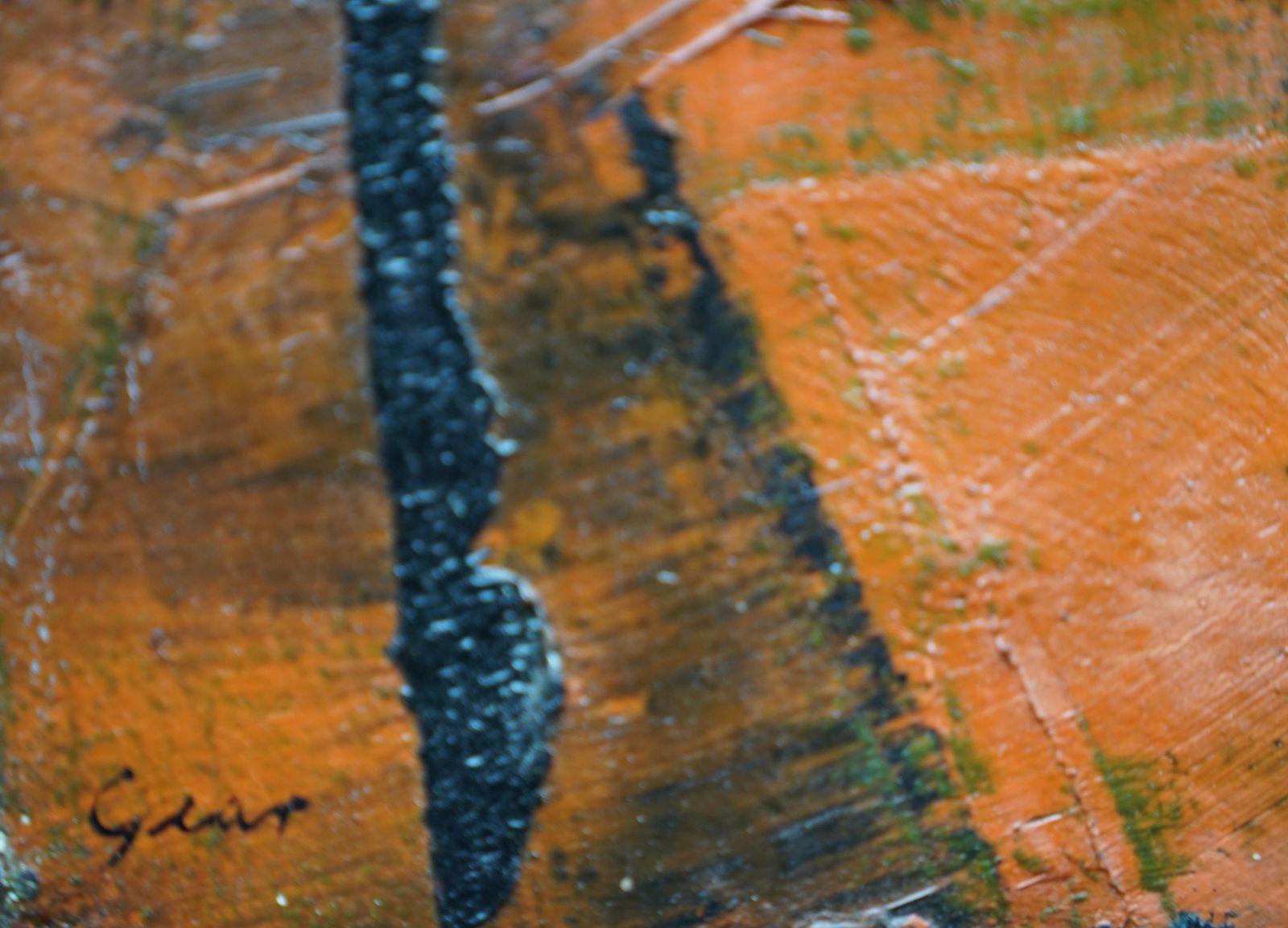
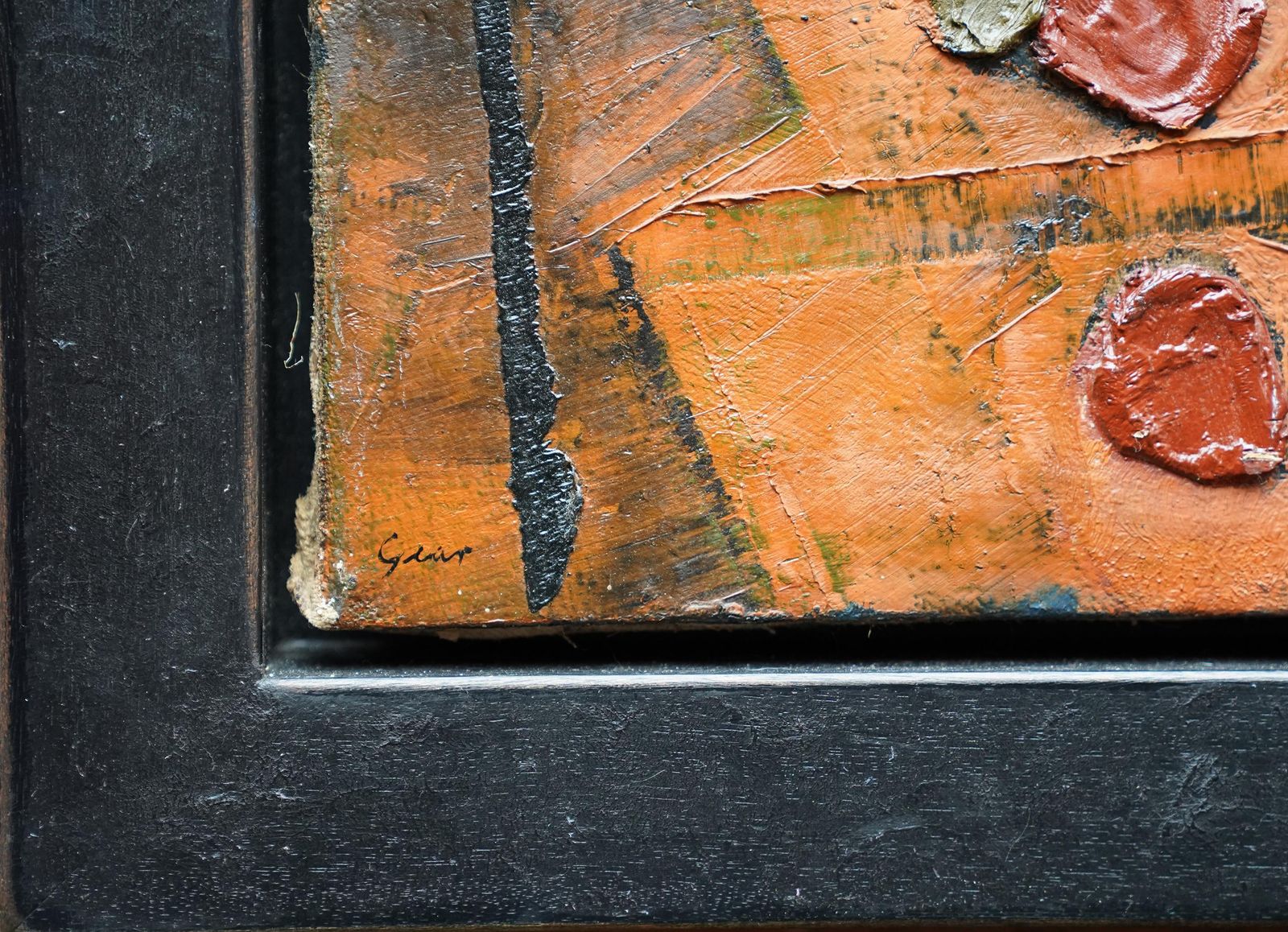
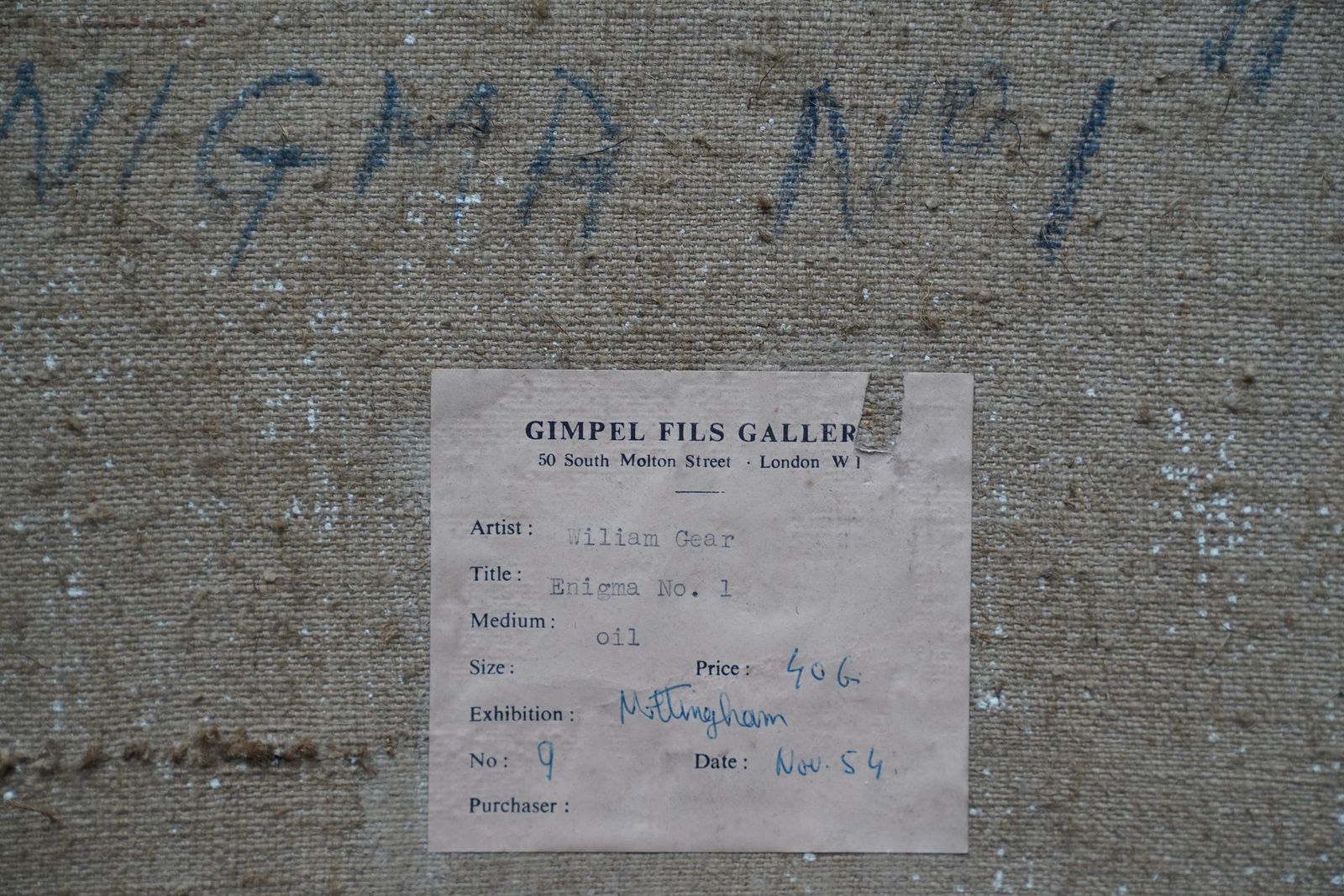
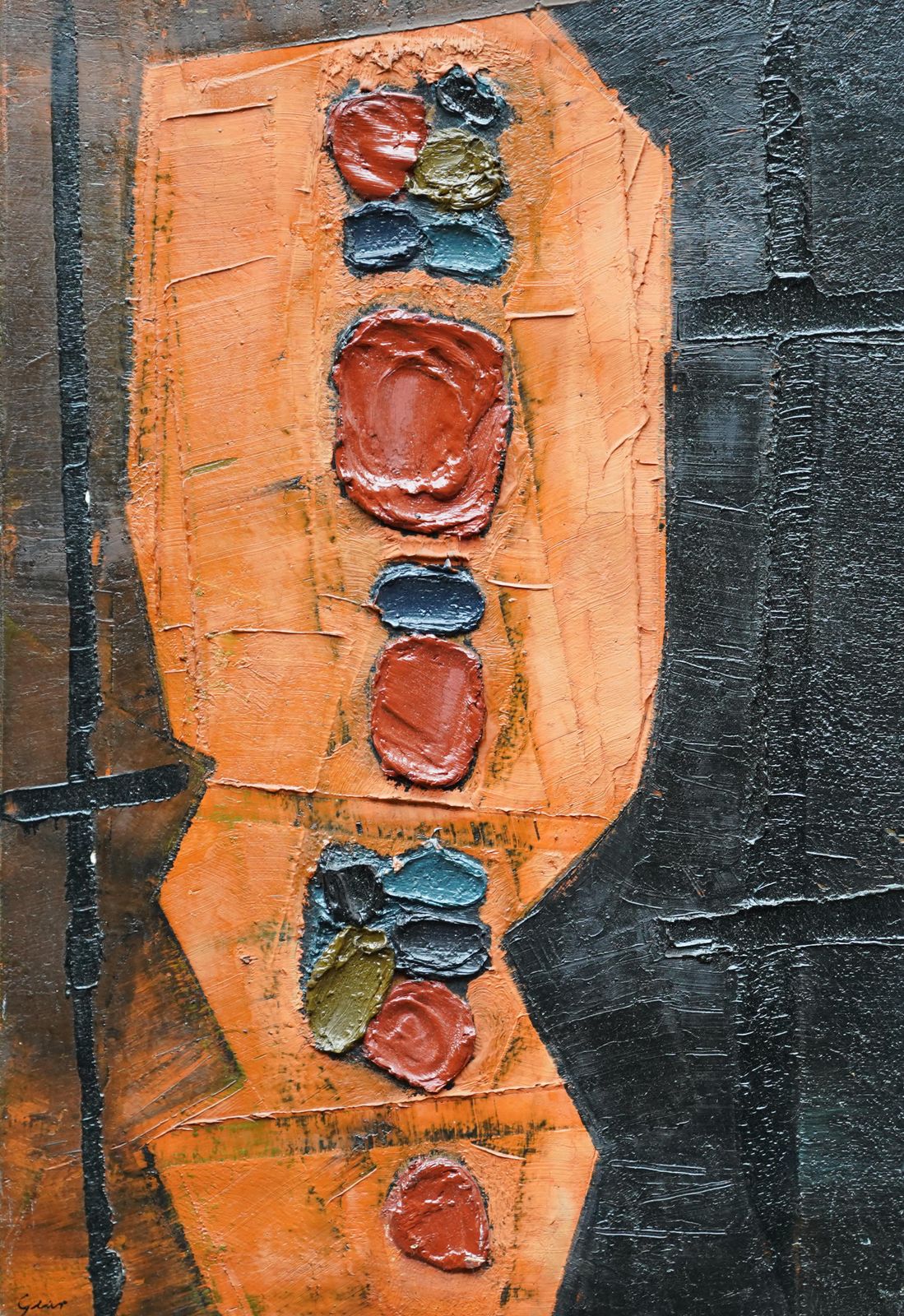
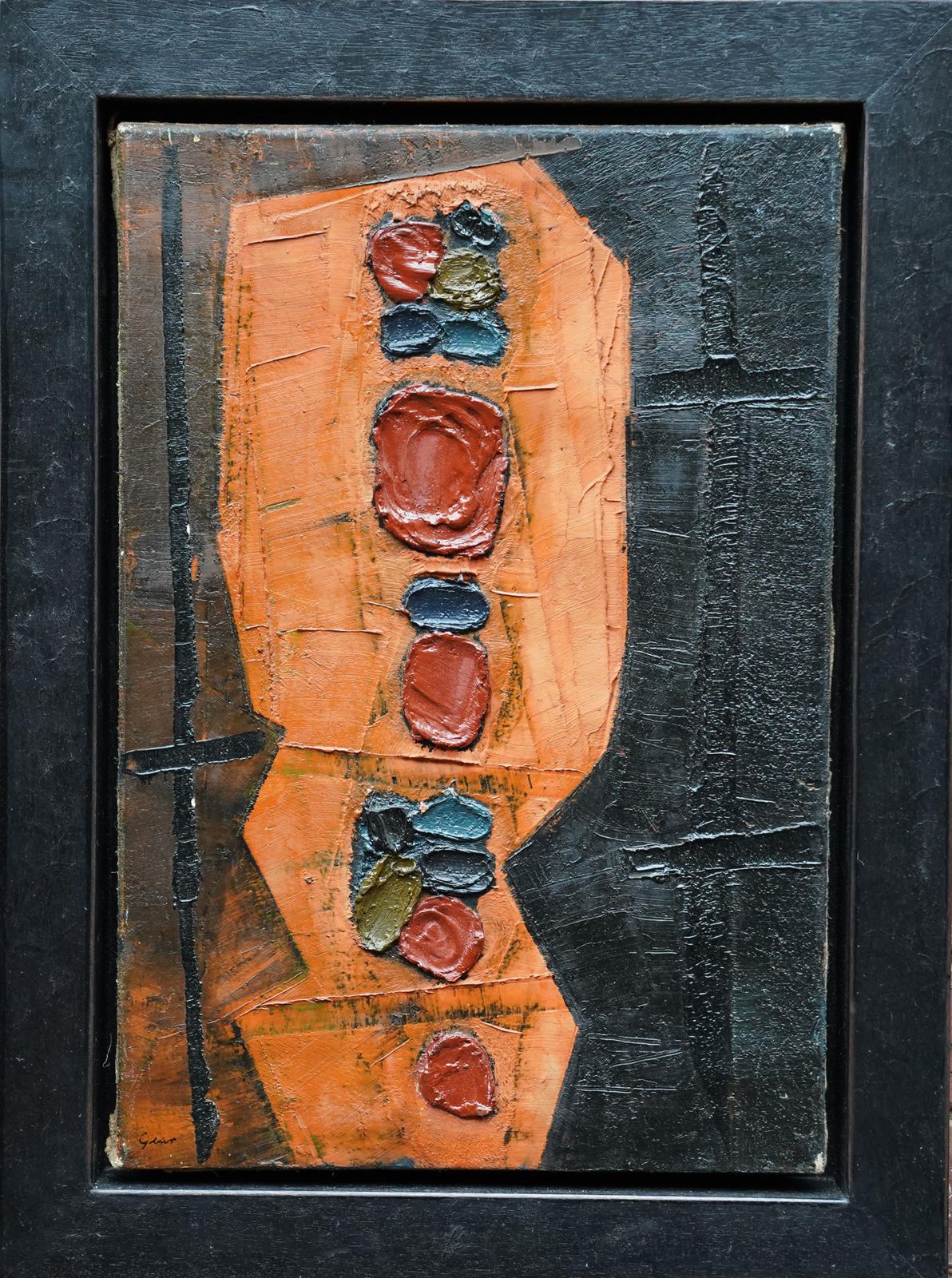
This superb Scottish abstract oil painting is by noted artist William Gear. It was painted in 1954, entitled Enigma 1 and is an orange geometric shape on a black background that blends into a black surround frame. Painted in blocks there is heavy impasto blobs of red, green and blue down the centre of the orange that almost look like gems. It is very pleasing to the eye and an excellent example of Gear's work from that early period. It has exceptional provenance in that it was exhibited by Gimple Fils Gallery in the fifties.
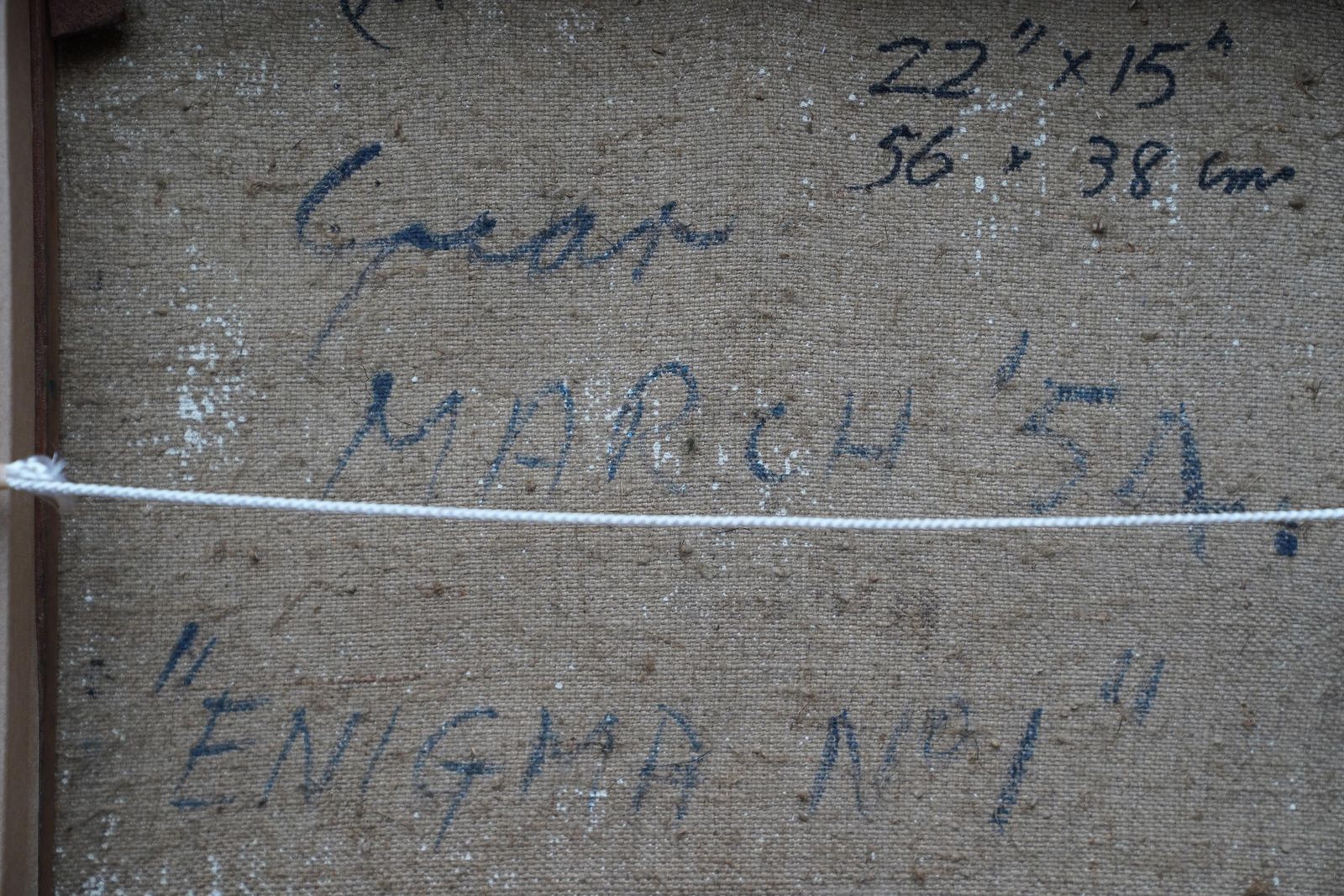
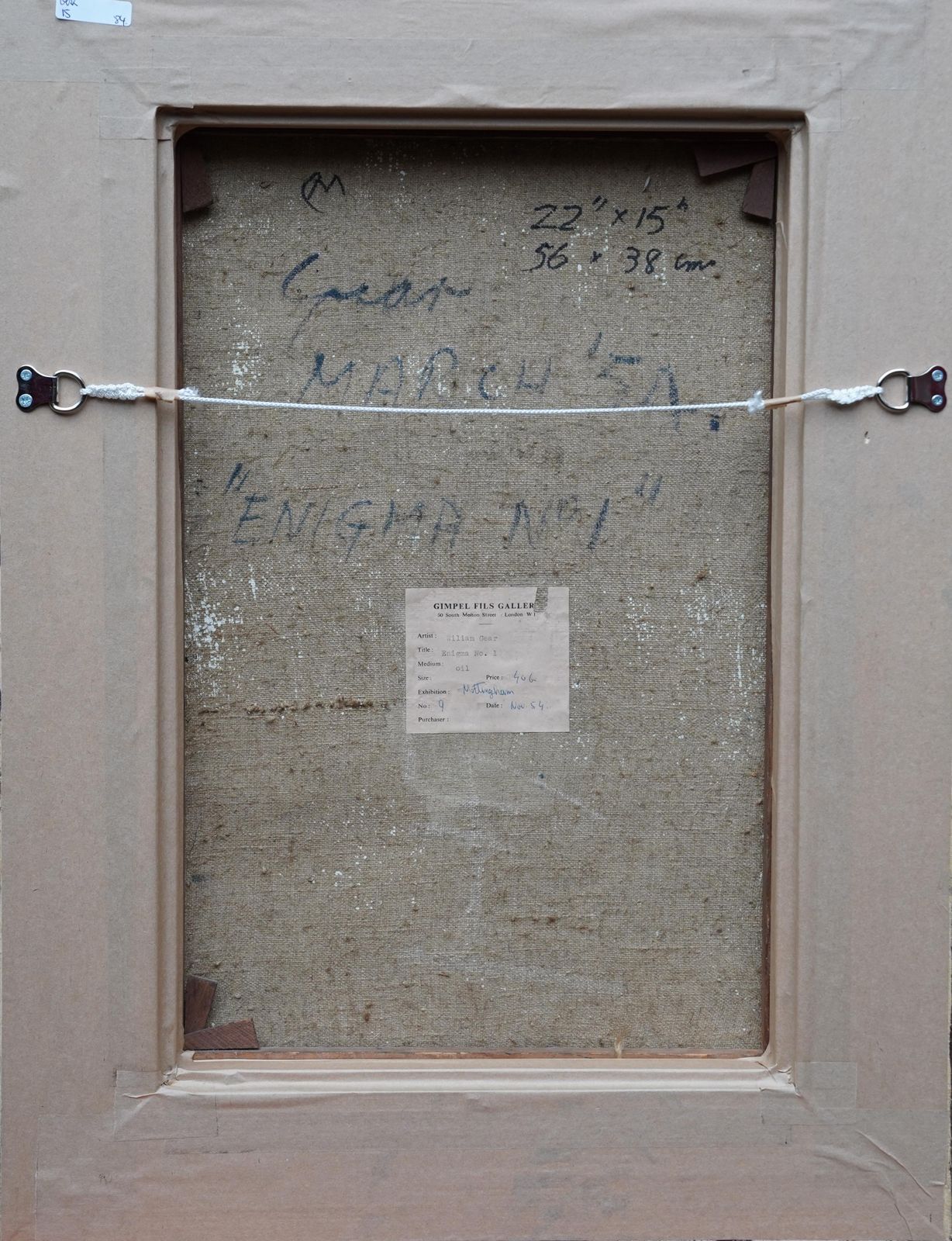
Unsigned on front, signed titled and dated '54 verso.
Provenance. The family of William Gear.
Gimpel Fils label verso.
Condition. Oil on canvas, image size 22 inches by 15 inches, in good condition.
Frame. Housed in a black surround frame, 26 inches by 19 inches, in good condition.
William Gear (1915-1997). Few British painters have played an active role in the modern abstract movement of post-war Europe. William Gear was the most passionate and committed exception. He continued the tradition of the Edinburgh-Paris axis established by J.D. Fergusson, Samuel Peploe and others, spending vital years between 1947 and 1950 living and working in Paris. Significantly, in recent years, he received the greatest acclaim in France, Germany and the Netherlands. He was born in 1915 in Methil, Fife, into a mining family; the particular landscape of "pitheads, the sea, rocks, castles, trees, storms and poverty" marked his earliest identity with a place and probably remained the most influential to his art. Years later he recalled as a schoolboy visiting the local art gallery in Kirkcaldy and seeing 12 colourful still-lifes by Peploe. Art-history lessons during student years at Edinburgh College of Art, in particular Byzantine classes under David Talbot Rice, also influenced his concern for structure. This had as much to do with the formal language of painting as sheer delight in the medium itself. Gear never missed an opportunity to show people the merits of a well-constructed painting. On a travelling scholarship in 1937, he chose to study with Fernand Leger, described by Gear as "a keystone for me, seldom abstract, rather a degree of abstraction". The Second World War interrupted these formative years and, by 1940, Gear had joined the Royal Corps of Signals. Dispatched to the Middle East, he still had the discipline to paint - mostly works on paper of damaged landscapes - with exhibitions in Jerusalem, Tel Aviv, Cairo as well as Siena and Florence. His naturally robust and tenacious temperament was profoundly affected by visiting Bergen-Belsen, and this certainly influenced the later experiments with the black armature. As the British officer in Celle, working for the Monuments, Fine Arts and Archives Section of the Control Commission, he focused on securing the safety of the Berlin Art Collection in Schloss Celle, and organised an important series of modern art exhibitions, including the rejected work of Karl Otto Gotz. Only a few weeks before his death, this service to "democratic art and artistic freedom" was recognised in Hanover by a unique Leporello Award, appropriately instigated by fellow artists and presented by the Lower Saxony government. Demobbed in 1947, Gear headed for Paris, where he established a one-room studio at 13 Quai des Grands Augustins. This exciting period saw him gravitating towards what he called "the freer, dramatic approach of abstraction lyrique" rather then "the dogmatic hard-edged school of Mondrian and De Stijl". Within a year there were exhibitions at two of the pioneering salons and a first one-man show at the Galerie Arc en Ciel. At the same time inclusion in Cobra shows in Amsterdam and Copenhagen in 1949, alongside Constant, Corneille and Appel, underpinned his affiliation to a reinvigorated form of abstract expressionism. He worked at the time in the fluid medium of opaque water-colour, usually on card with pockets of intense colour on a white or neutral ground. While some pieces were purely abstract, others carried their own suggestion of landscape, or even a form of Celtic figuration. The same year saw an exhibition at the Betty Parsons Gallery in New York, alongside Jackson Pollock. The impact of American abstract expressionism however remained a sore subject, which in conversation was usually dismissed with a curt reminder of what he and others were already painting in Europe. The decision to return to England in 1950 was both personal and practical. Recently married to Charlotte Chertok, and with a baby, he had already secured in 1948 the first of a series of London exhibitions with the Gimpel Fils Gallery. The atmosphere surrounding the Festival of Britain also appeared to offer fresh opportunities. Notoriously, Gear was awarded one of the Festival of Britain Purchase Prizes for Autumn Landscape, a large oil on canvas which took six difficult months to complete. The event produced written questions and answers in the House of Commons and a tirade of abuse from the national press, not to mention a topic for debate on the radio programme Any Questions. While the episode made him a household name, the longer-term effects were, arguably, more detrimental. He chose not to live in London or join fellow abstract artists in St Ives, preferring the independence of a village in Kent between 1953 and 1958. This period saw the continued development of large landscape structures, as well as "side-roads" into sculptural subjects and minimalist colour paintings, which openly acknowledged the influence of Nicolas de Stael. These works have still to be properly exhibited. Mau-Mau (1953), for example, painted for the Contemporary Art Society but at the last minute withdrawn from display at the Tate Gallery, has its first London showing in the current golden jubilee exhibition at the Redfern Gallery. Gear was out of critical favour for most of the 1960s and 1970s. He exhibited more irregularly, despite returning to the use of dark structures broken by selected movements and light-inflected primary colours. While contemporaries questioned his move to Eastbourne as Curator of the Towner Art Gallery (1958-64), Gear's response was to take on the Purchase Committee. He changed the local authority's collection policy from Victorian and local views to securing the foundation of a major collection of post-war British art. His move to Birmingham came with the appointment as Head of the Faculty of Fine Art, Birmingham College of Art, in 1964, a post held until retirement in 1975, by which time he had become increasingly un- interested in the growing bureaucracy surrounding art education. His support and encouragement to artists living in Birmingham however continued with the purchases made for Birmingham Museums and Art Gallery on behalf of the Friends organisation (1987-94) as well as for his own personal collection. Most recently he instigated the idea of a gallery of modern art in Birmingham. Fortunately, the last 15 years have also gone some way to reverse the years of neglect. Gear and Stephen Gilbert (also Scottish) were the only British artists included in the major Cobra 1948-51 exhibition at the Musee d'Art Moderne, Paris, in 1982. The Cobra enthusiast Karel van Stuijvenberg has been a prominent patron and, in 1995, Gear took delight in attending the opening of the Cobra Museum of Modern Art in Amstelveen, near Amsterdam. He was equally proud of his long overdue election to the Royal Academy in 1995, and in the last years relished working with the fluidity and strong colours of oil stick. Tessa Sidey. Exhibited and held by worldwide galleries including The Tate.
Condition report:
Good
Wear Condition
Good
Cancellations
We offer free cancellations and full refund for orders cancelled before dispatching. View full policy.
Returns
We have a 14-day return guarantee for orders from individual sellers, within the UK and European Union. View full policy.
Additional Delivery Info from Seller
Free collection available
Yes
Made to Last
The average lifespan of a Vinterior piece is 100 years, while modern flat-pack typically takes just 3 years to reach landfill. When you choose pre-loved, you can shop with confidence in quality, craftsmanship and longevity. With our top-rated customer service team and price match guarantee, there's no better way to shop pre-loved.

Professional Seller

Shopping at Vinterior


Similar Paintings
Similar Paintings
Add to a wishlist
Create Wishlist
Completethe room
Good design is all in the layering. Whether you're adding impact or refining the details, now’s the time to find what’s missing.
Wear conditions
Excellent
Shows little to no signs of wear and tear.
Good
May show slight traces of use in keeping with age. Most vintage and antique items fit into this condition.
Average
Likely to show signs of some light scratching and ageing but still remains in a fair condition.
Apparent Wear and Tear
Visible signs of previous use including scratches, chips or stains.
Please refer to condition report, images or make a seller enquiry for additional information.
Cancellations and Returns
Last updated: 12/02/2026
Clear, predictable protection for every pre-loved purchase.
Simple £75 flat return fee for UK-to-UK mainland furniture when you change your mind.
Applies to furniture with a final selling price of up to £5,000 (excluding delivery and service fees) and delivered from a UK mainland seller to mainland UK addresses. Excludes Northern Ireland, Channel Islands, Scottish Highlands & Islands, Isle of Wight and Isles of Scilly.
Buying vintage should feel inspiring, not uncertain.
Every order on Vinterior is backed by straightforward returns, free cancellations, and extra peace of mind for UK furniture purchases.
1. Free cancellations
Changed your mind before dispatch?
You can cancel any order before it's shipped for a full refund, including delivery.
To cancel an order, click Create cancellation on the order page.
Once an item has been dispatched, delivery costs are not refundable.
Bespoke, personalised or made-to-order pieces cannot be cancelled.
2. Returning an item
You have 14 days from delivery to request a return.
There are two return types:
A. The item isn't as described (free return)
If your piece arrives and it doesn't match the listing in any material way (incorrect description, undisclosed damage, inaccurate measurements, misleading photos), you are fully protected:
- Free return
- The seller or Vinterior arranges pickup
- Full refund, including outbound delivery costs once the seller receives the item
This applies to all purchases.
B. You changed your mind
UK-to-UK furniture deliveries:
To make UK furniture returns predictable and stress-free, we offer a simple flat return fee of £75.
- Applies to furniture delivered from a UK mainland seller to a mainland UK address. Excludes Northern Ireland, Channel Islands, Scottish Highlands & Islands, Isle of Wight and Isles of Scilly.
- Pickup arranged for you
- One clear fee, no surprises
We coordinate the return with either the seller's chosen courier or our trusted delivery partner.
All other items
Most smaller items are straightforward to return.
You can still return your item within 14 days.
- For smaller or parcel-sized items, you can choose to post the item back yourself using a tracked service, or the seller can suggest a preferred courier.
- For larger or more fragile pieces, the seller may recommend the safest return method.
- Return delivery costs vary depending on size and courier.
The seller will confirm the best option based on the item.
3. If your item arrives damaged
Damage on arrival is uncommon, especially for UK furniture deliveries.
But if something does go wrong, you're fully protected.
- Let us know as soon as possible (ideally within 72 hours of delivery) so we can resolve things quickly
- Share photos so we understand what happened
- We’ll help arrange a return and refund if needed
You’re always protected when something goes wrong in transit.
Your statutory rights apply for up to 30 days from delivery.
4. What can't be returned
Some items cannot be returned:
- Bespoke, personalised, or made-to-order pieces
- Items altered after delivery
5. How to start a return
- Log in to your Vinterior account
- Open your order
- Click Create a return
- Add notes + photos if relevant
We'll guide you through the rest.
6. What happens next
- We review your request, confirm the return and advise on next steps
- Pickup or return method is arranged
- The item is returned to the seller
- We issue your refund once the seller confirms the item's condition
Returns are completed smoothly once the pickup is arranged.
7. Refunds
Once the seller receives the piece back in the same condition it was sent, we'll issue your refund to your original payment method.
Once a refund is issued, it may take up to 5–10 working days for the funds to appear back on your original payment method, depending on your bank or card provider.
If the item is returned with new damage that wasn't present at delivery, the refund may be adjusted following review.
Need help?
If you have questions about a return or your order, our support team is here to help. Email us at [email protected] or find other ways to contact us here.
What your service fee covers
-
 14-day return guarantee
-
Flat-fee return shipping on UK furniture
-
Seller vetting
-
Dedicated customer support
| Order Value (£) | Fee (£) |
|---|---|
| 0 — 49.99 | 2.75 |
| 50 — 99.99 | 5.50 |
| 100 — 199.99 | 11.00 |
| 200 — 399.99 | 21.00 |
| 400 — 599.99 | 30.00 |
| 600 — 799.99 | 40.00 |
| 800 — 999.99 | 50.00 |
| 1,000 — 1,499.99 | 55.00 |
| 1,500 — 1,999.99 | 60.00 |
| 2,000 — 4,999.99 | 82.50 |
| 5,000+ | 110.00 |
Added at checkout, based on your basket total.
