


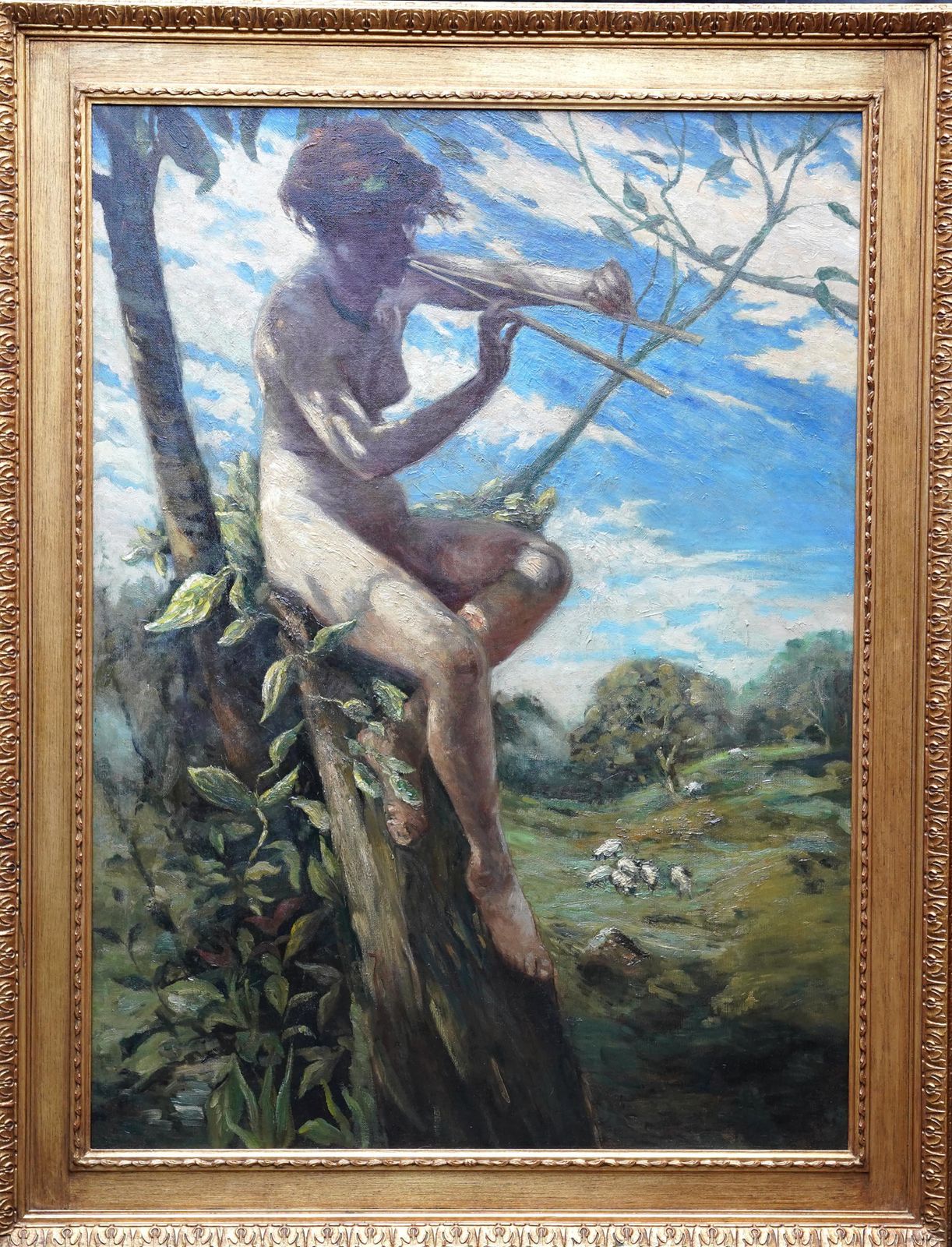
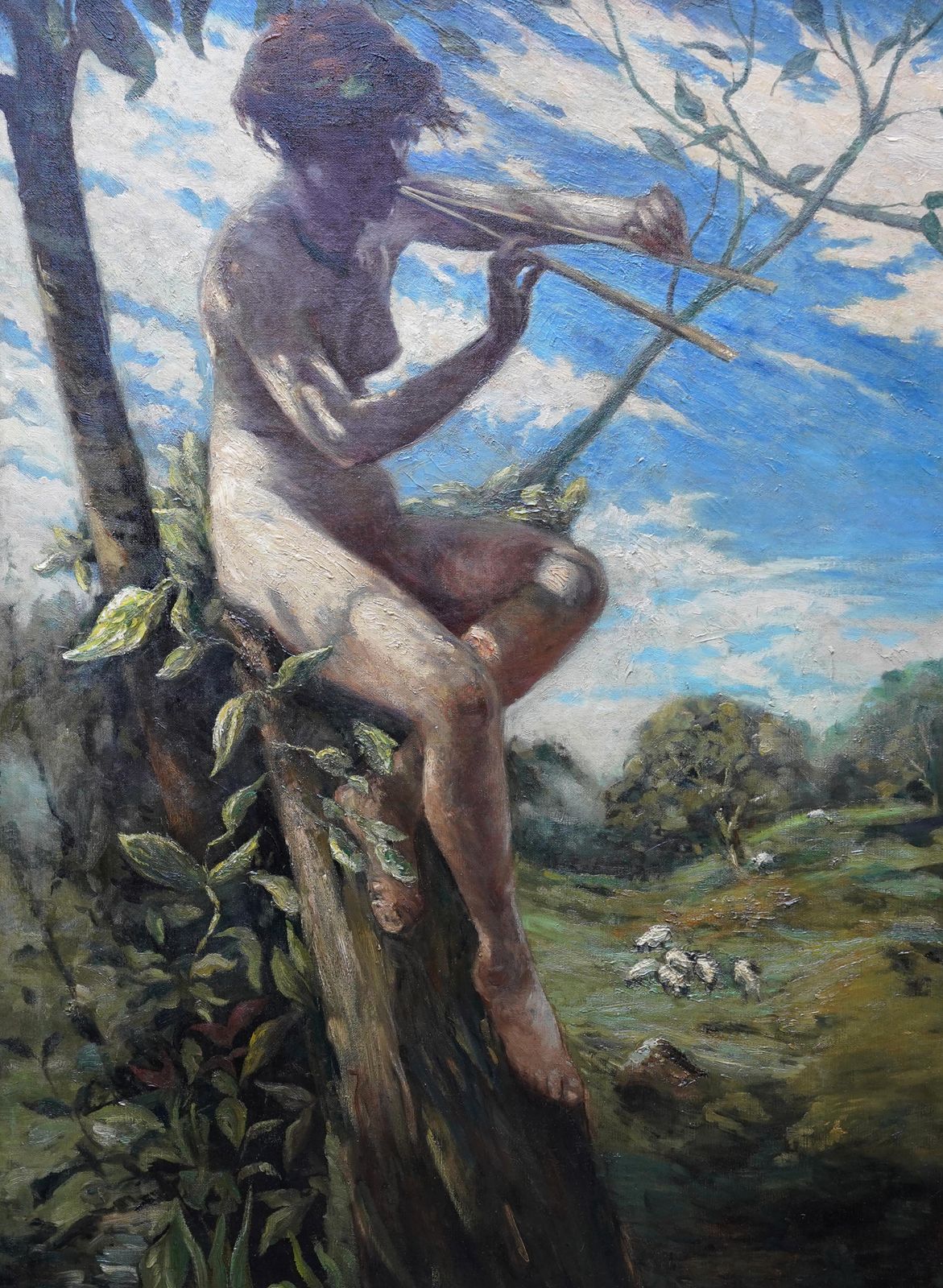
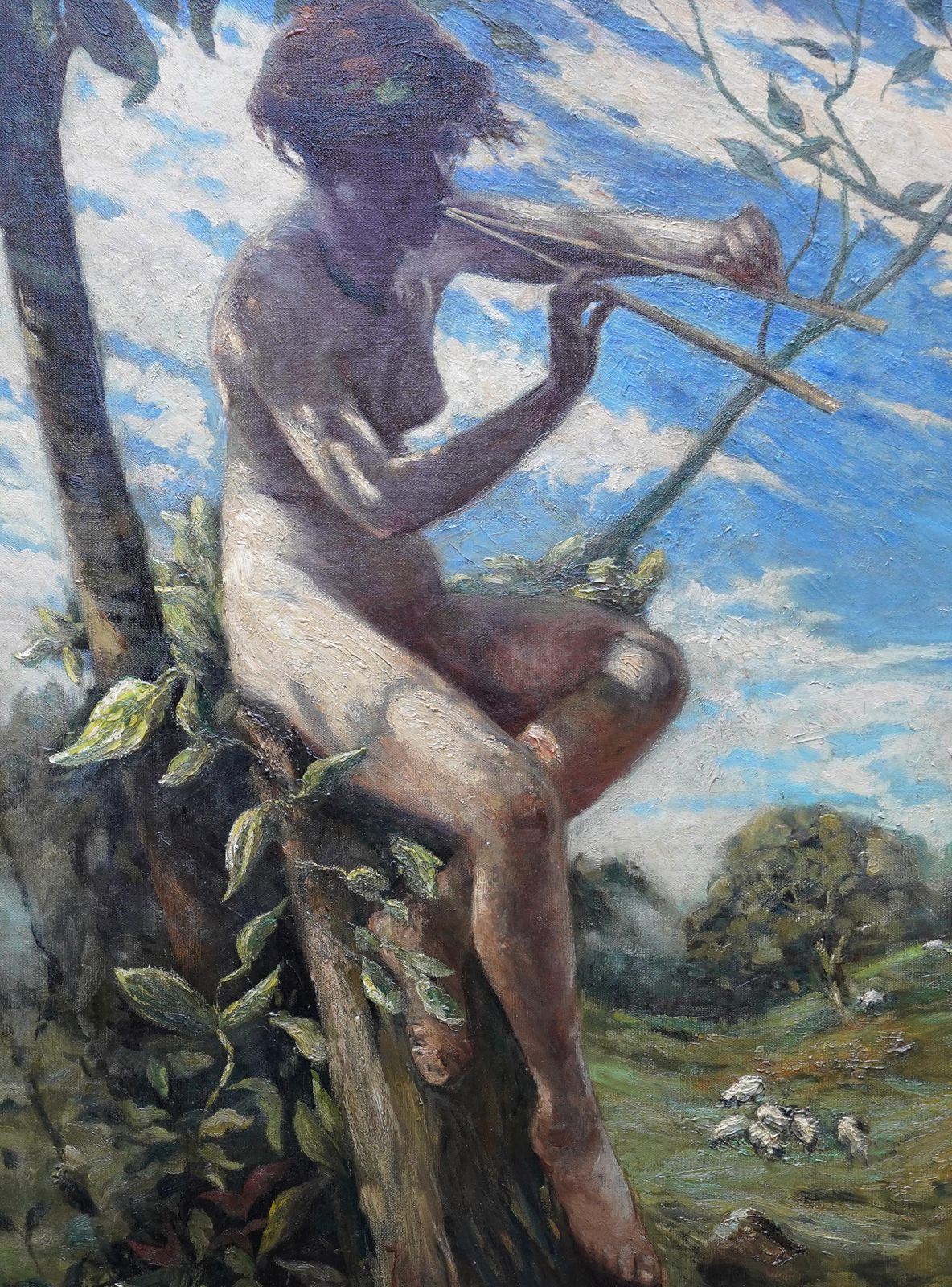
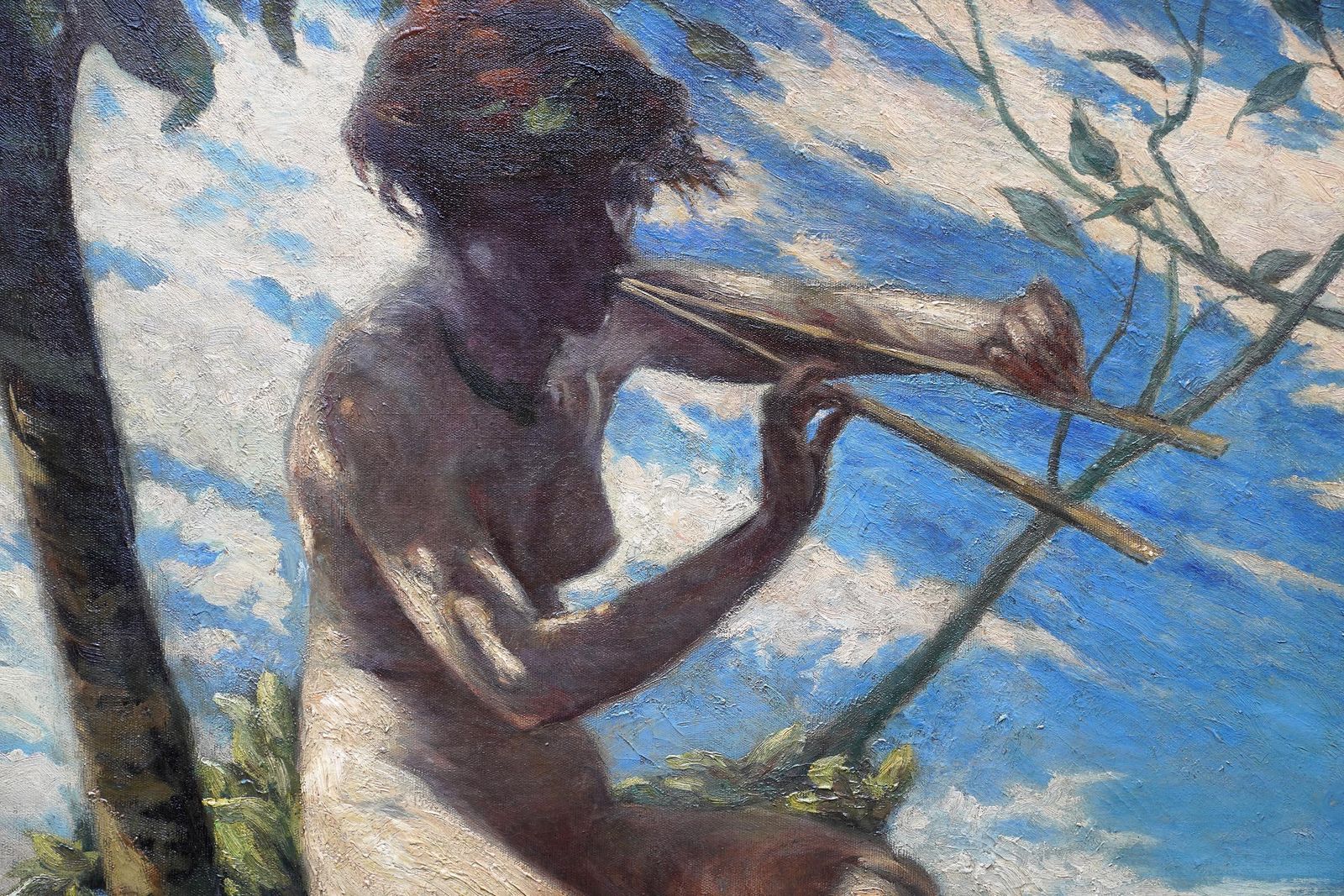
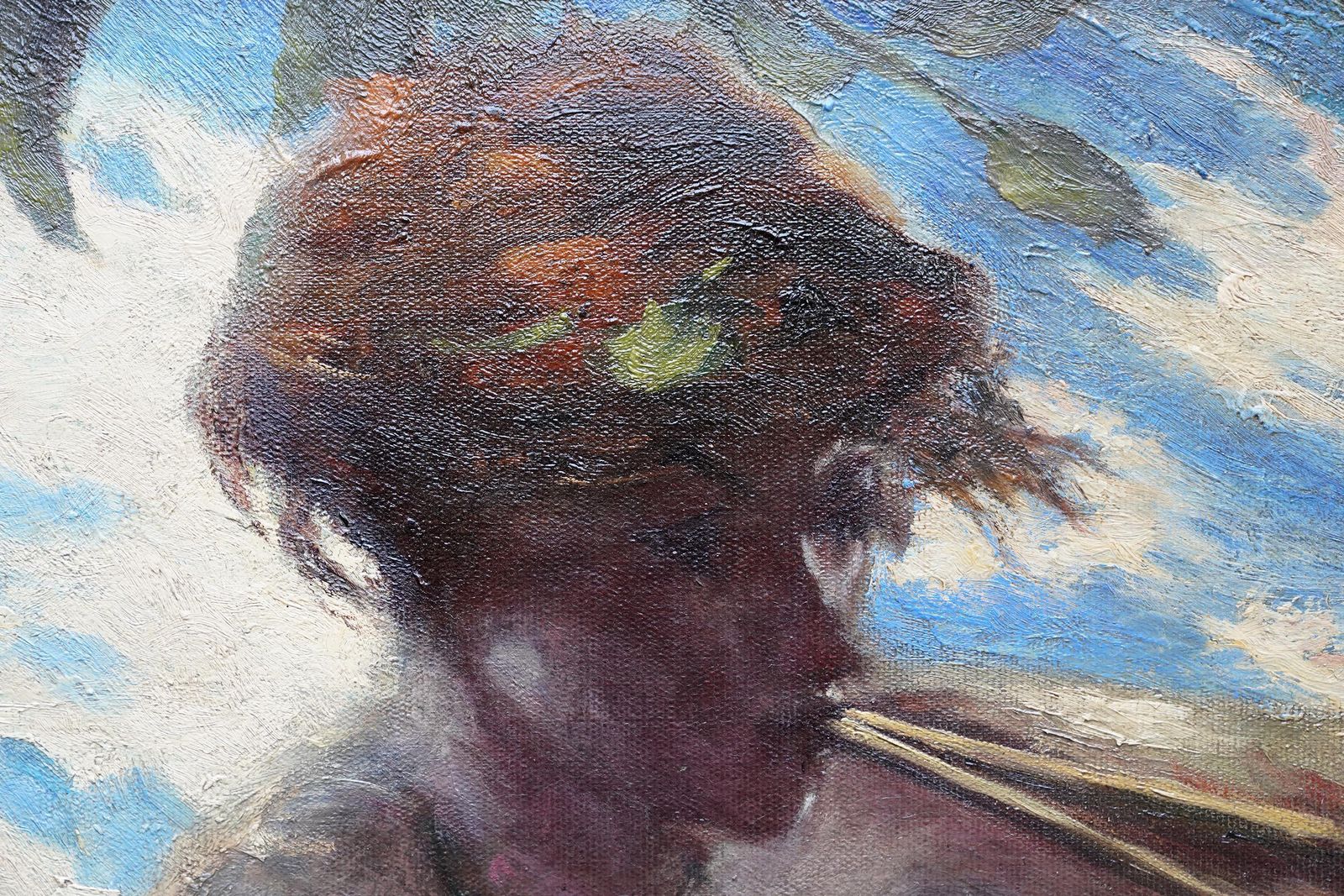
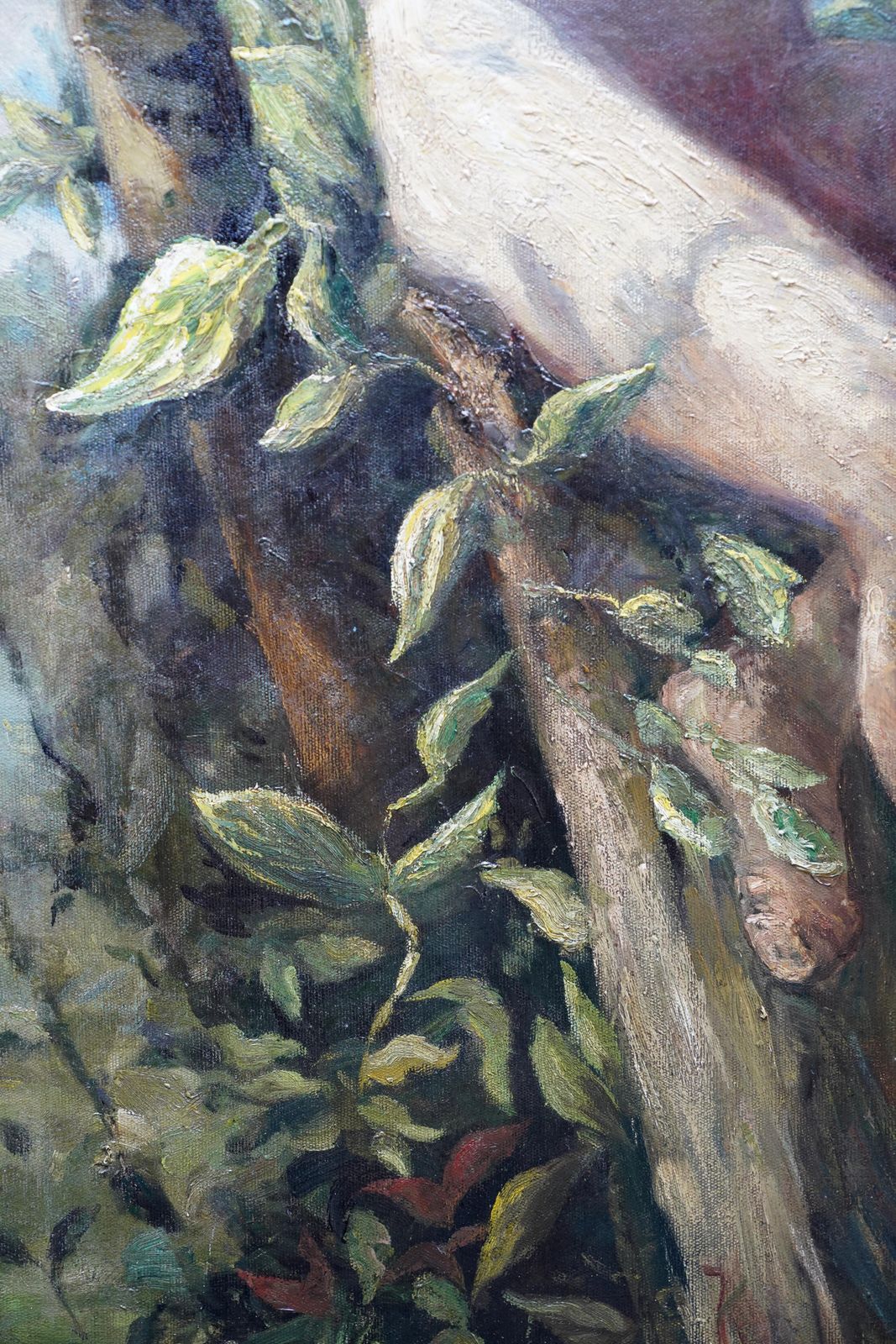
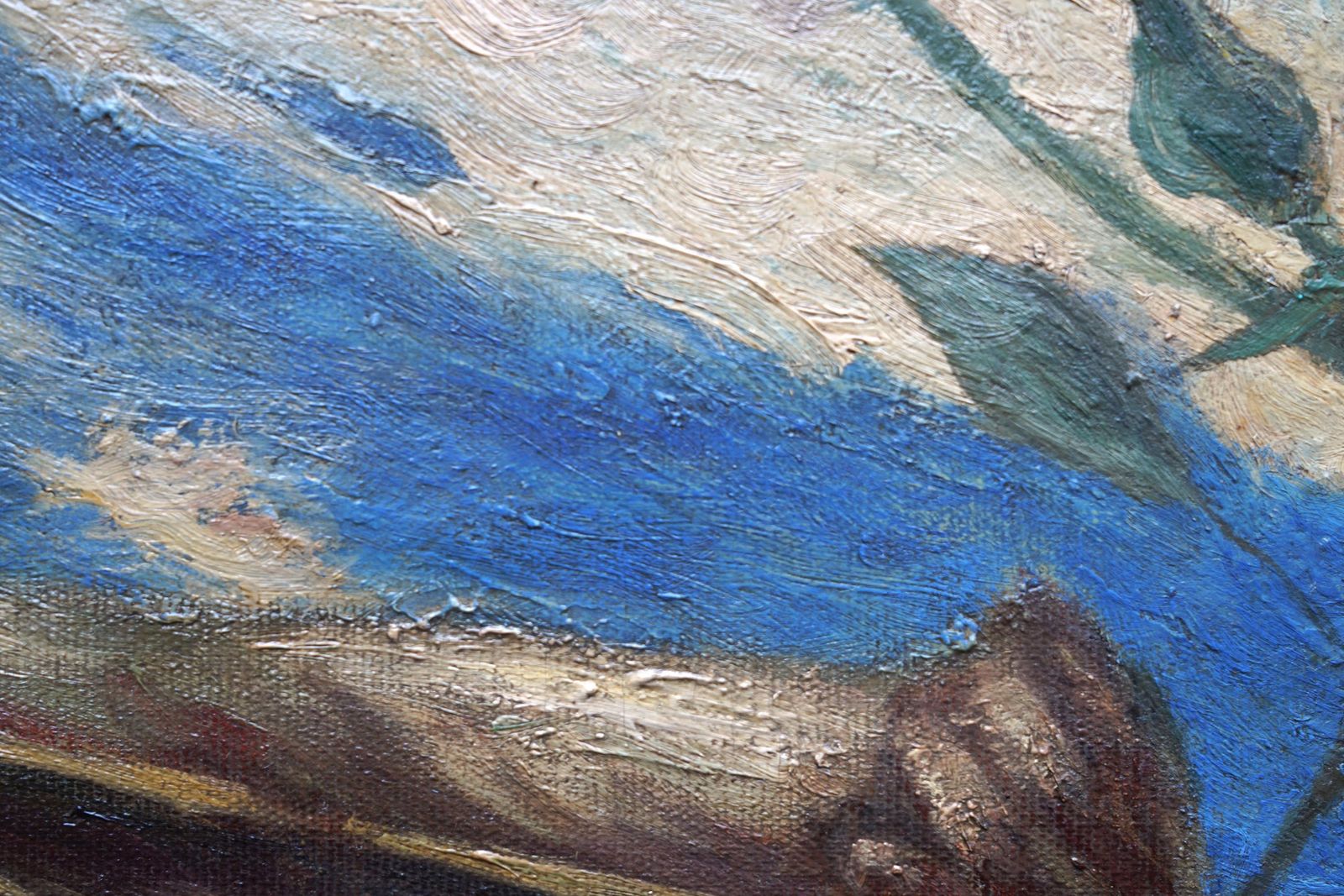
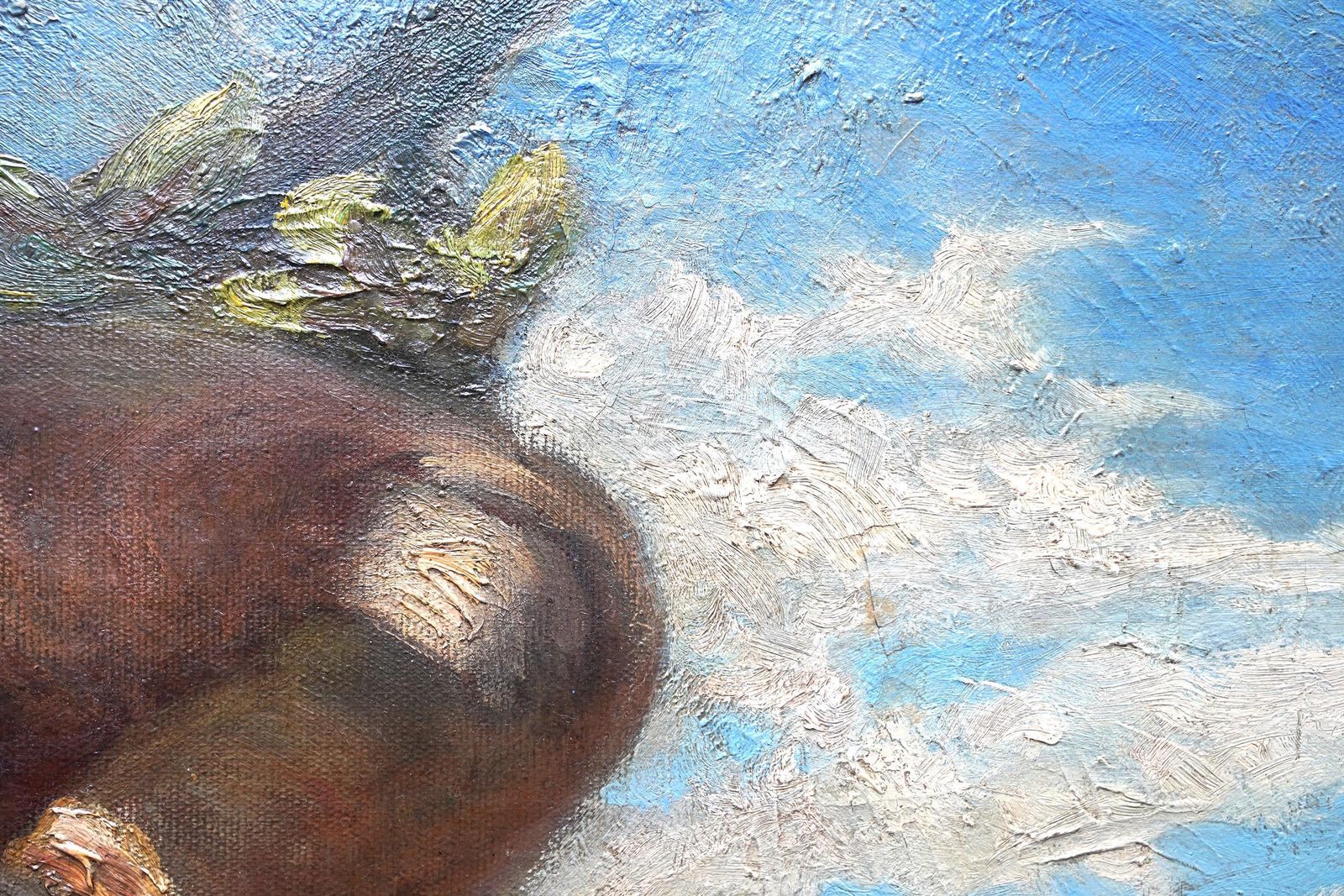
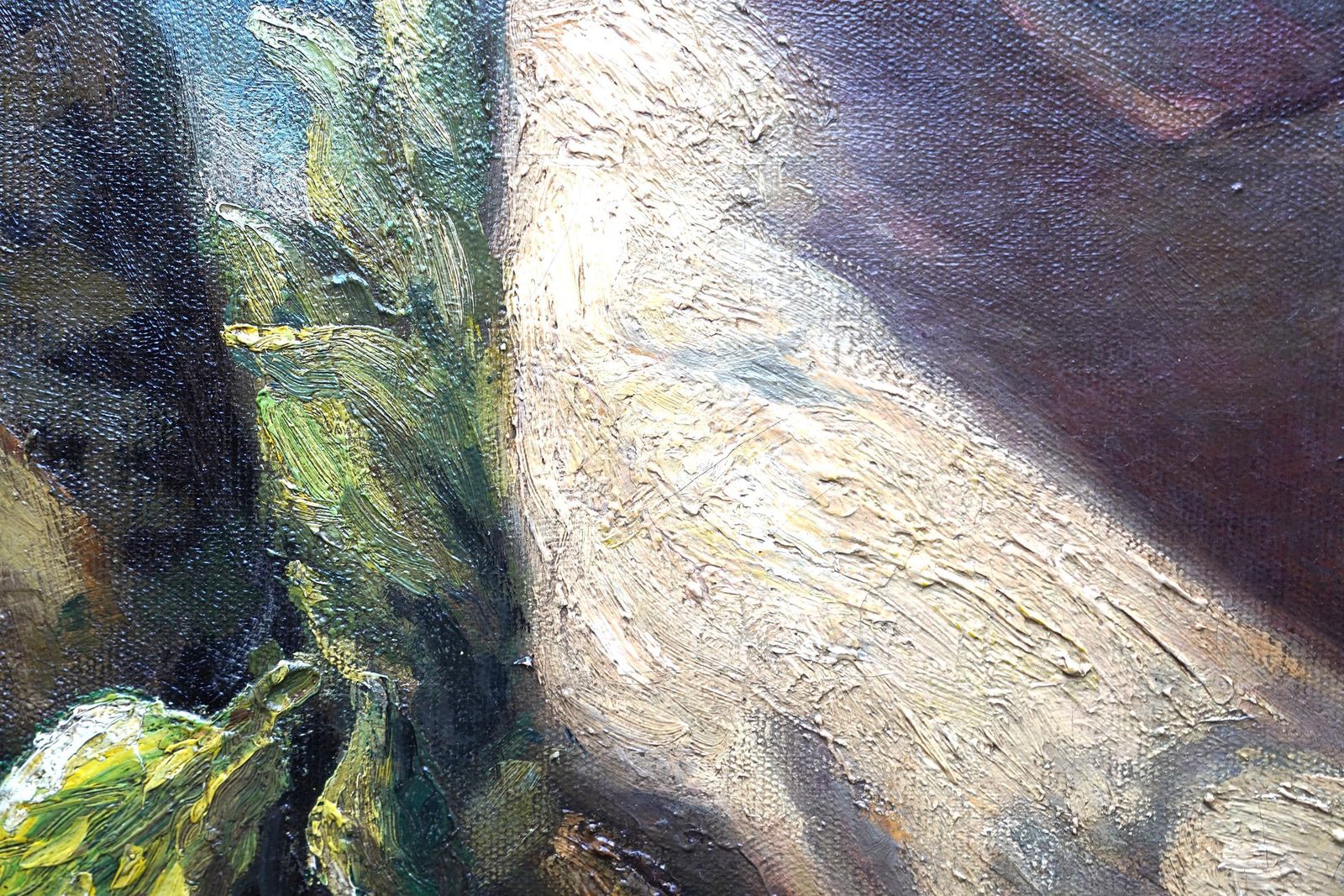
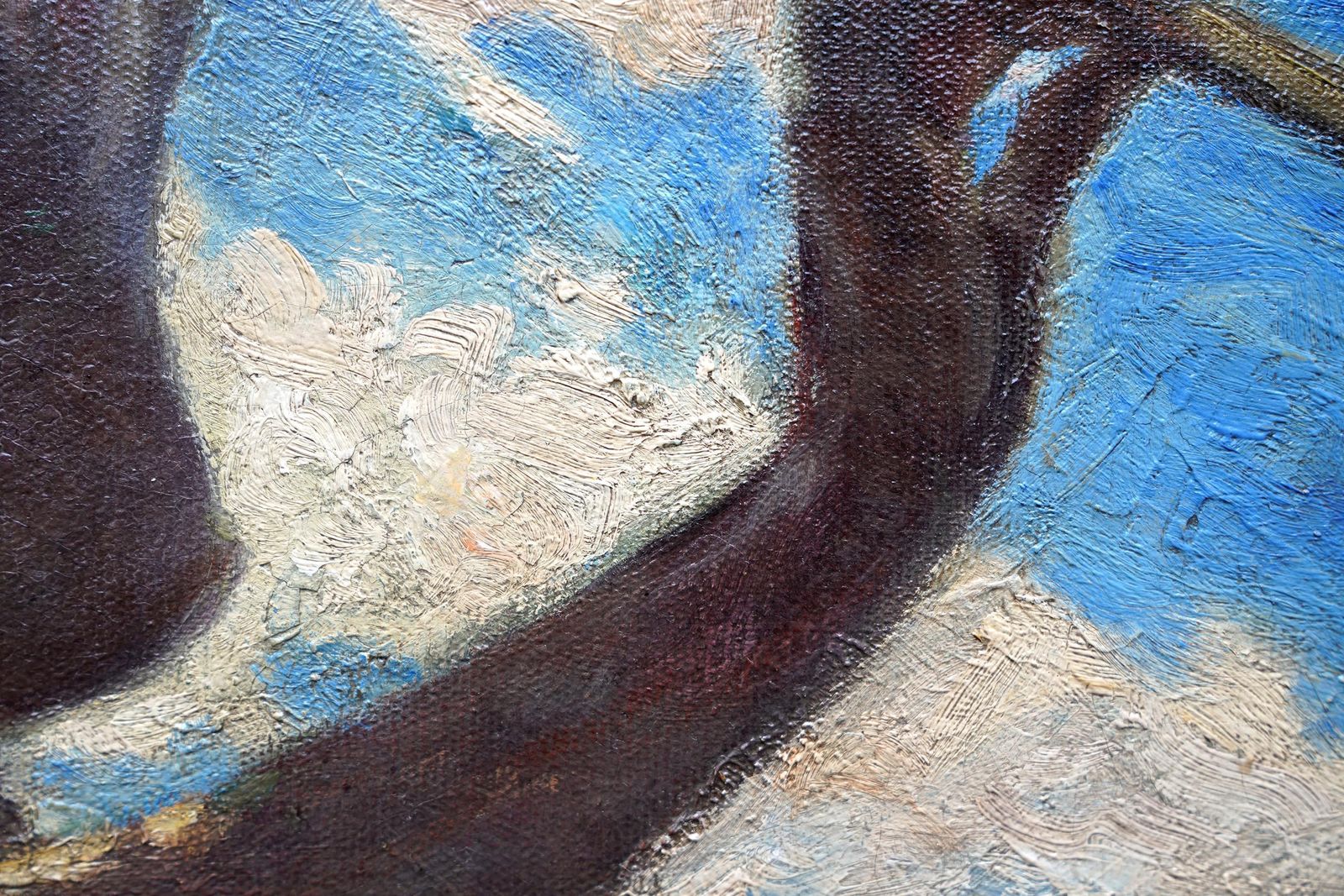
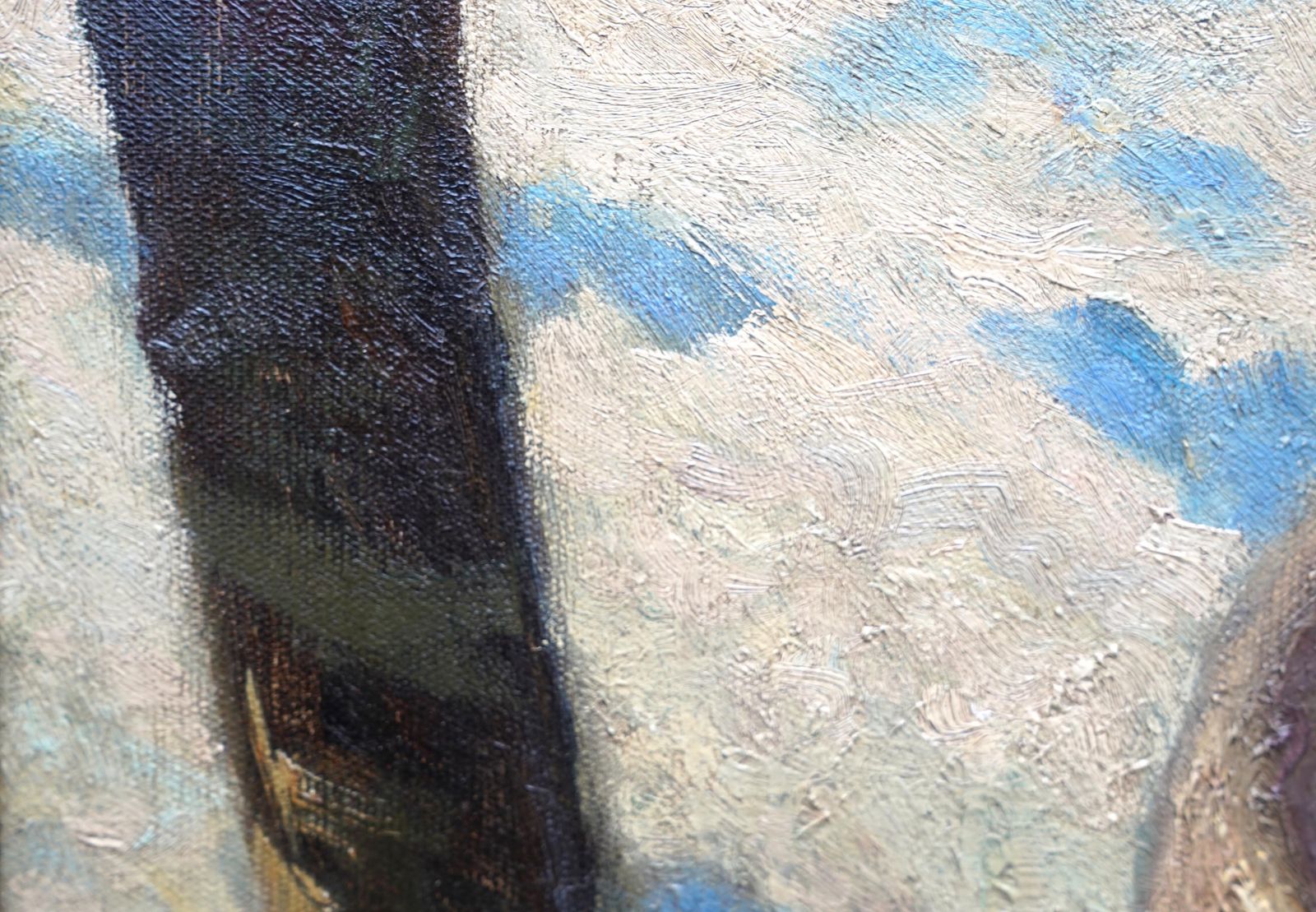
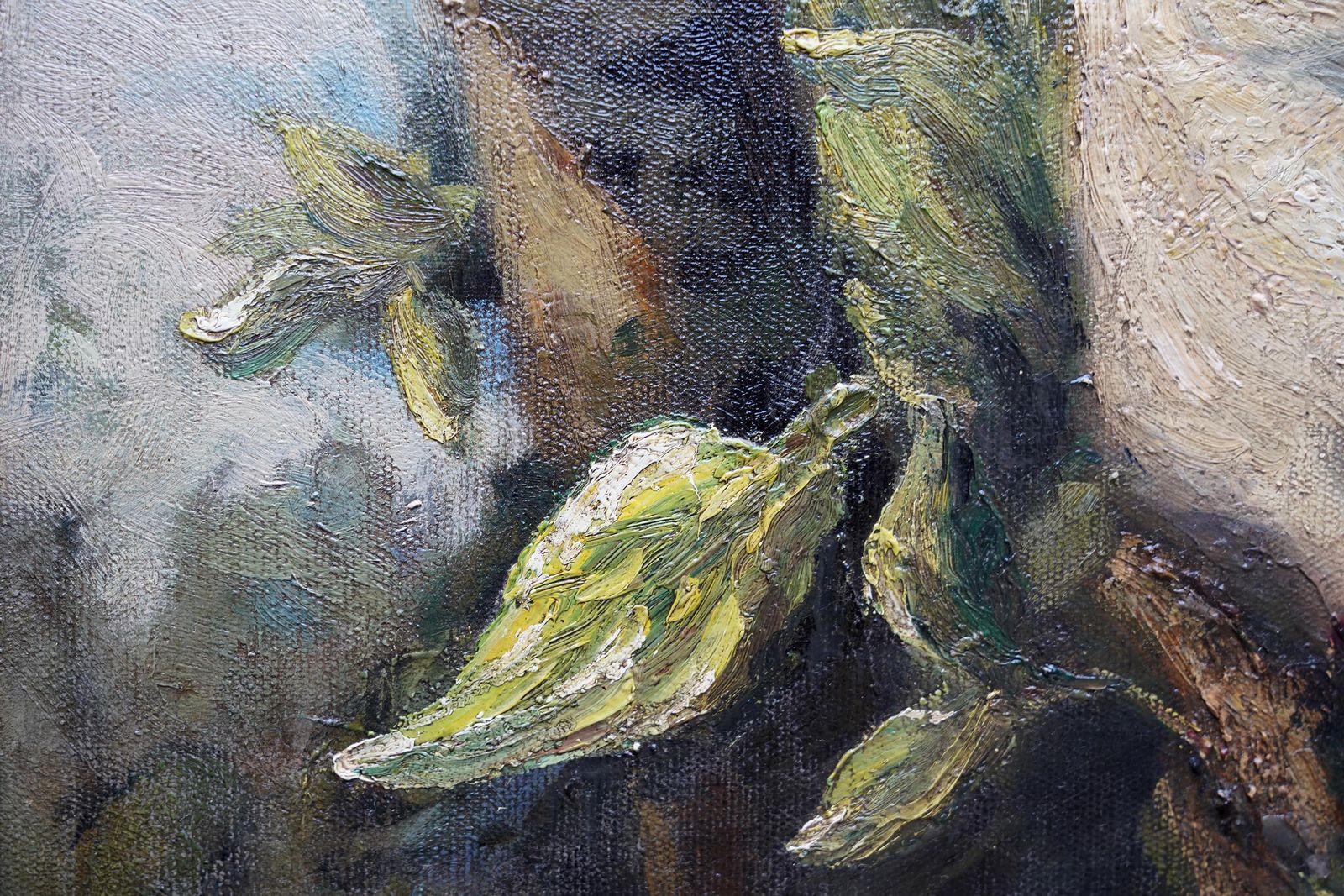
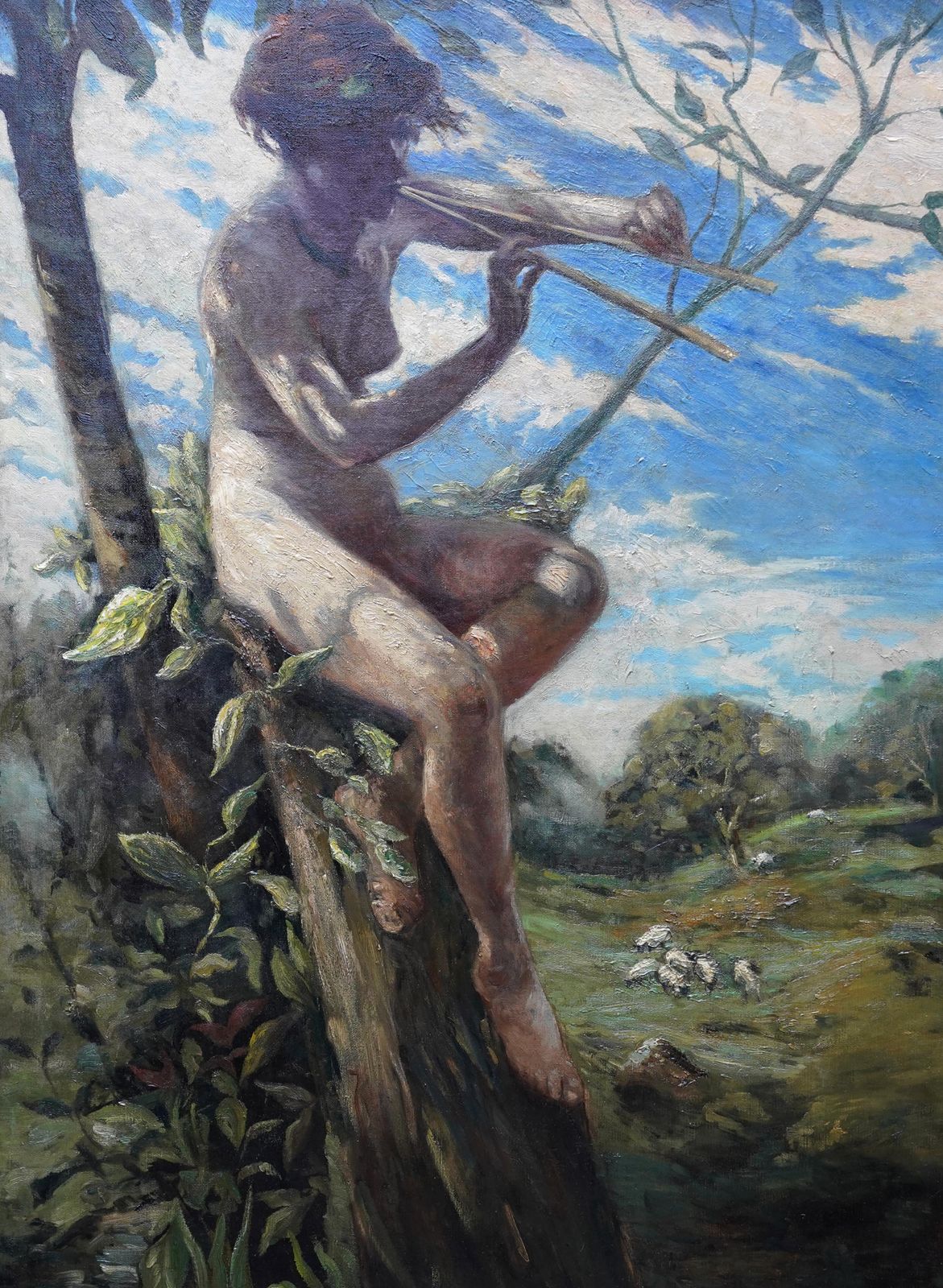
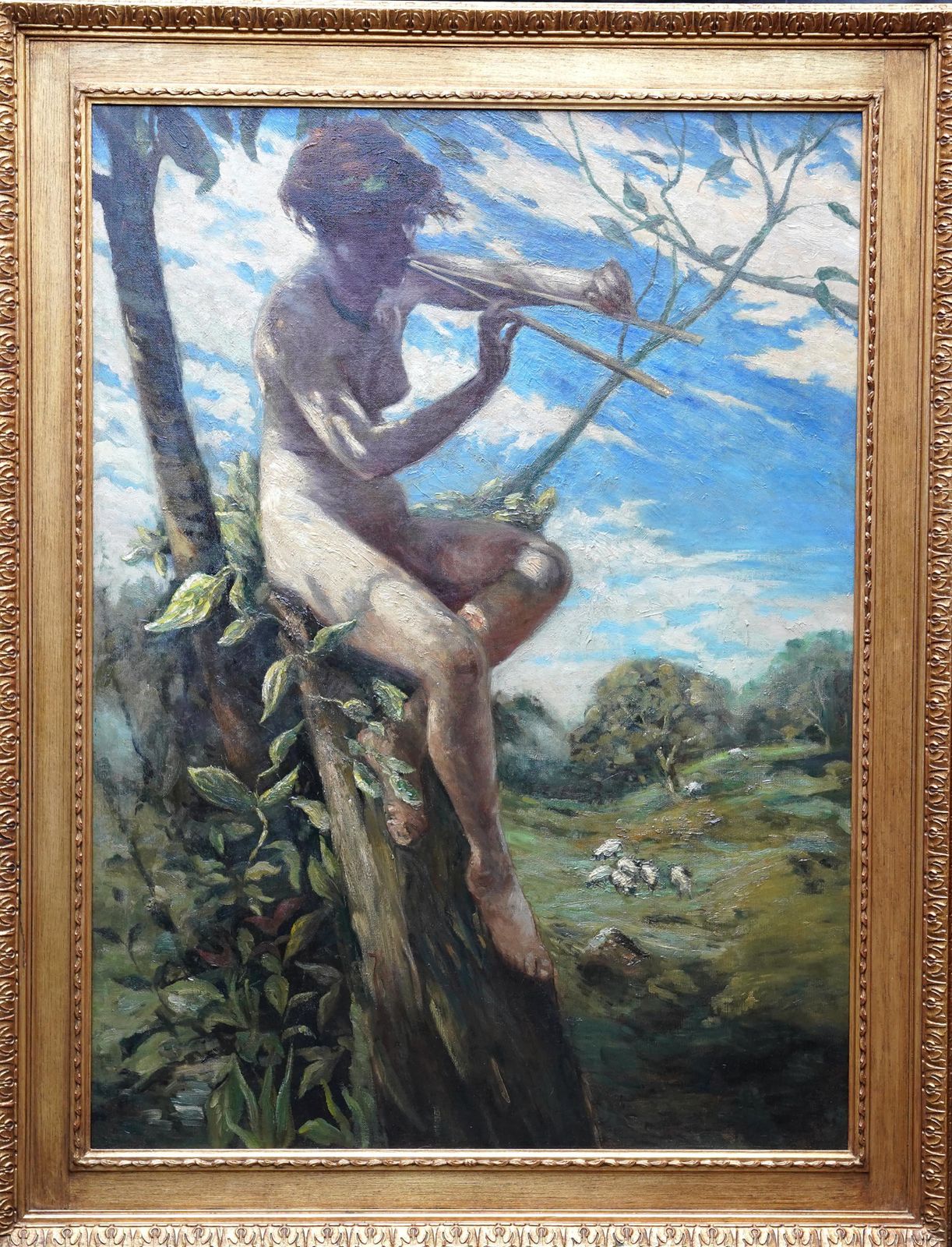
Tree Nymph In A Landscape American Impressionist 1920's Art Oil Painting

 Stourbridge, United Kingdom

Hassle-free returns
-
 Easy returns (14 days)
-
Free return if the item isn't as described
-
Buyer protection
Damage is rare, and you're fully protected if it happens.
Dimensions
Wear Condition
Good
Material
Oil Paint
Style
Vintage, Oriental, African, Victorian
Product Details
Description
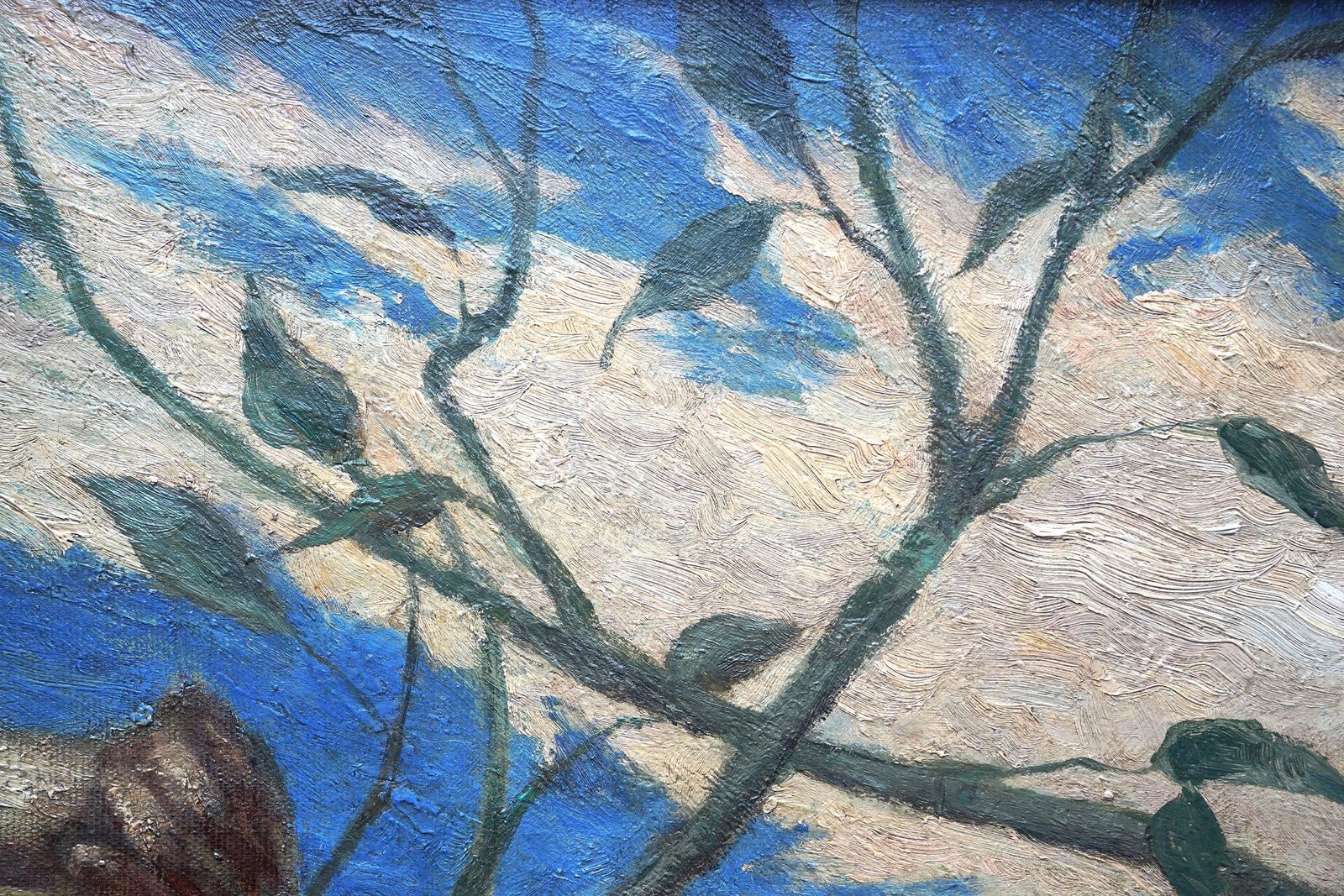
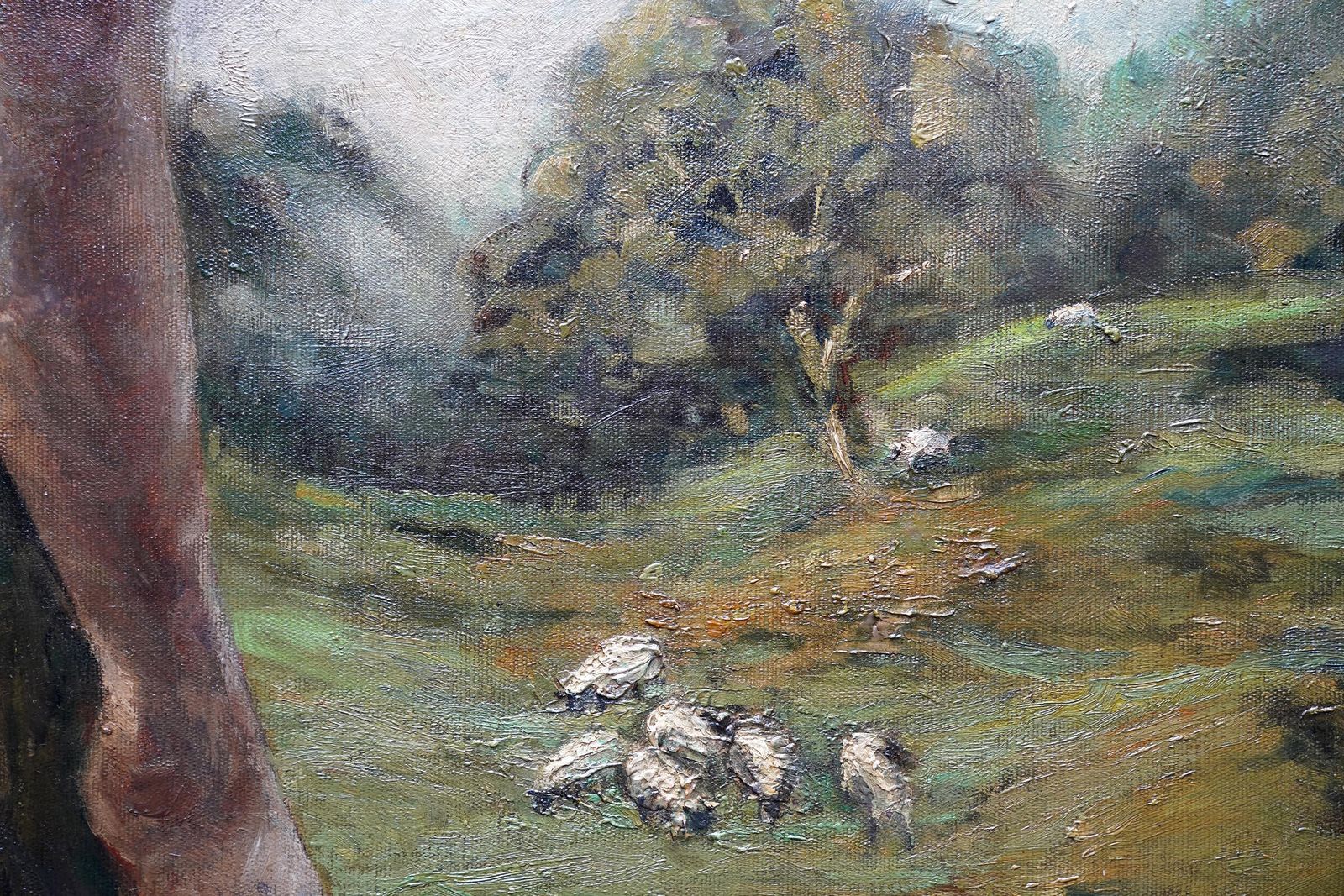
This gorgeous large American Impressionist oil painting is attributed to Lillian M. Genth. She was a favourite pupil of Whistlers whilst at an art school in Paris. She is best known for depicting female forms or nymphs in landscapes such as this, up until about 1928 when she focused on other topics. She had an estate in Connecticutt and would often paint models in the woods there. Although not initially accepted by Victorian Society, In 1908 her painting, The Lark, won her the Shaw Memorial Prize at the 83rd Annual Exhibition of the National Academy of Design. The Lark depicts a full female nude strolling through the woods with her head turned looking toward the sky as if she just heard a lark, as the title suggests. This painting successfully demonstrates Whistler’s influence on Genth through the integration of the nude form and the landscape. Our lovely painting's composition is of a nymph seated in a tree playing pipes with a blue sky as background, while sheep graze beyond her in a landscape. The dappled sunlight on her skin and hair are beautiful. This is a superb example of work by a female American Impressionist in the 1920's and visually stunning.
Unsigned.
Provenance: Berkshire estate.
Christies London
Condition. Oil on canvas, image size is 50 inches by 37 inches and in good condition.
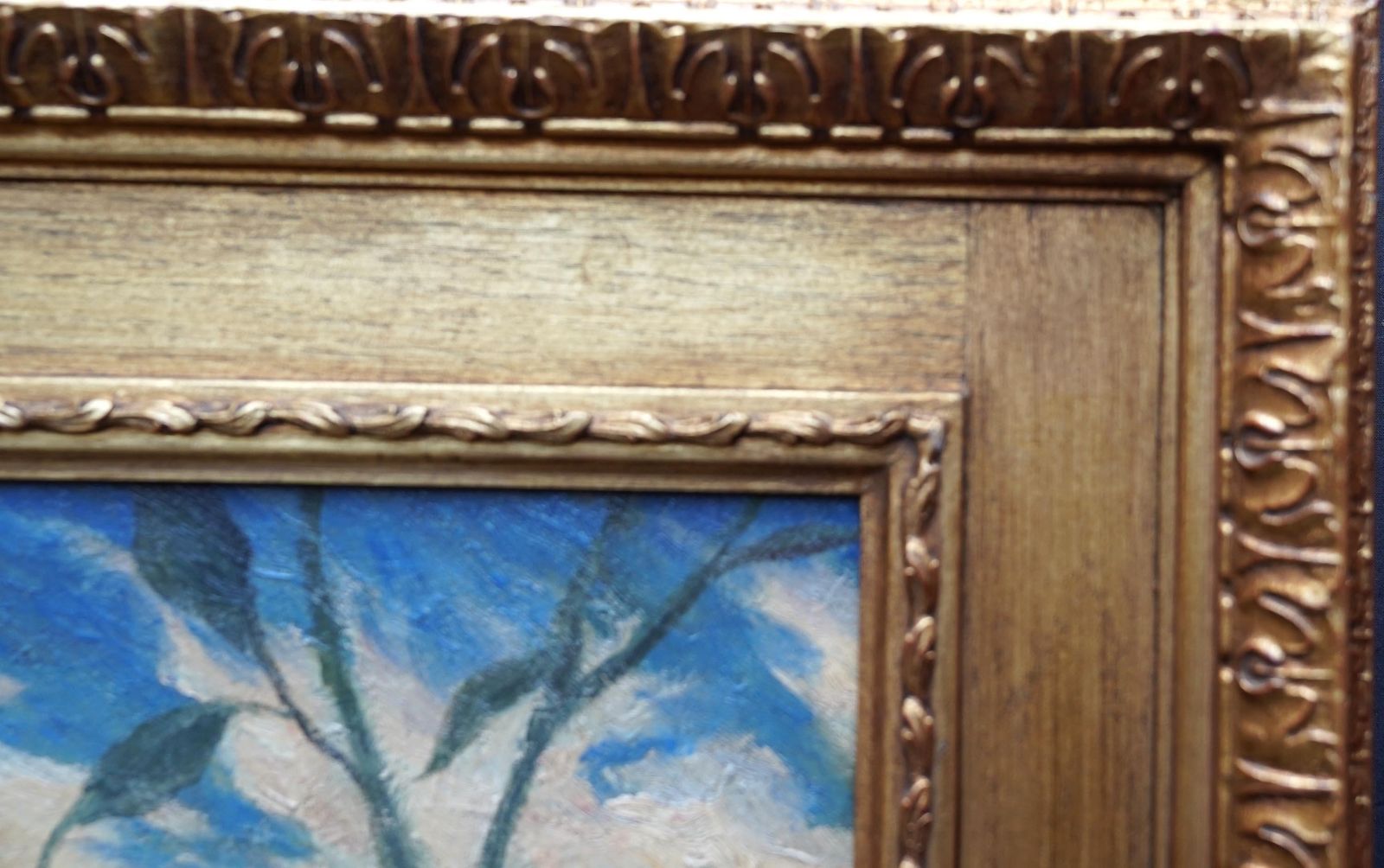
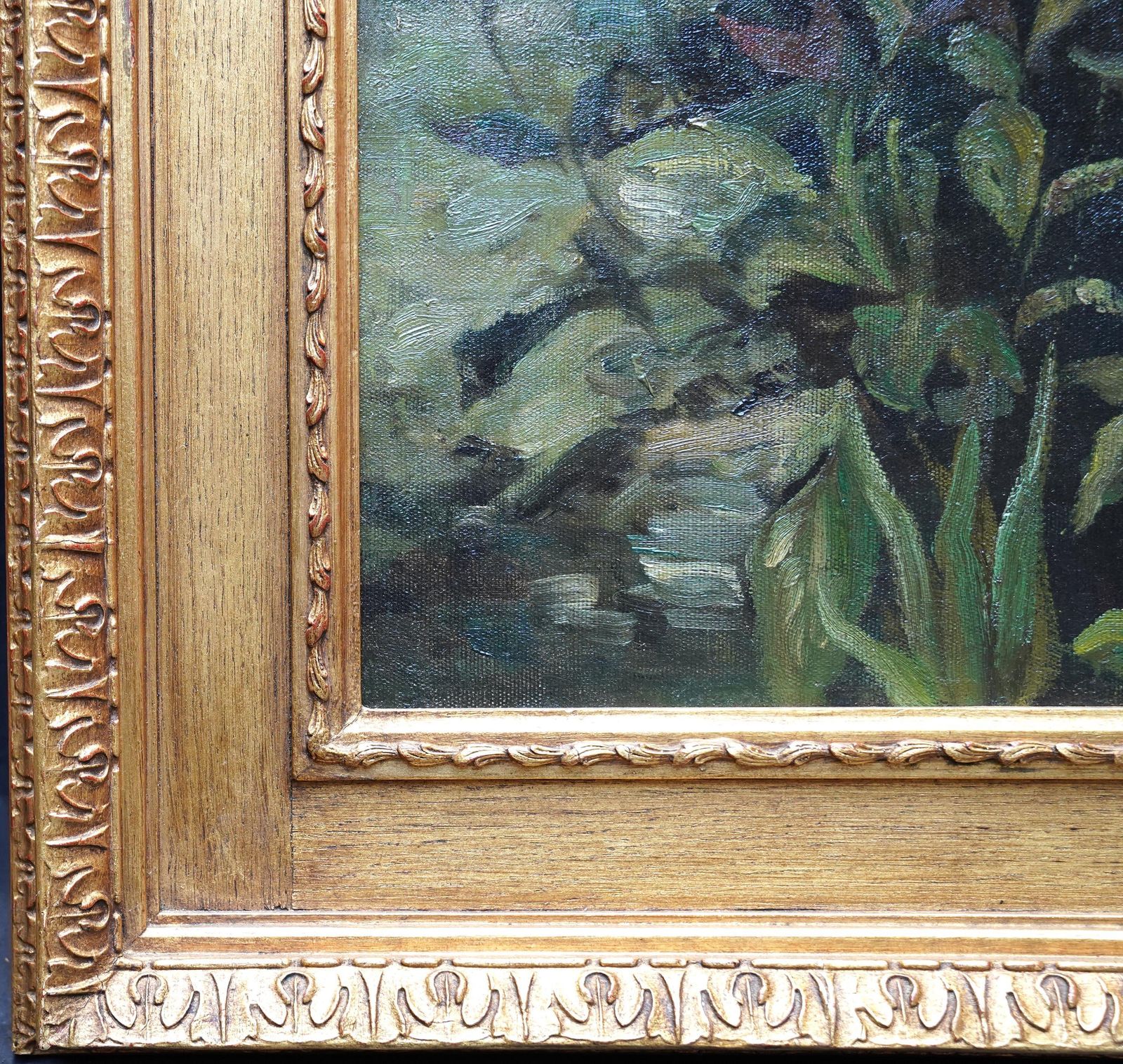
Frame. House an ornate gilt frame. Framed size is 57 inches by 44 inches and in good condition.
Lillian Mathilde Genth (1876 – March 28, 1953) was an American impressionist artist. She is best known for her depiction of female nudes in landscape settings. However, in the middle of her career she swore off painting female nudes and began painting more conservative paintings inspired by her travels. In about 30 years Genth appeared in 233 exhibitions, and while well renowned for her paintings while alive, her story and artwork have been lost in the retelling of American art history. Lillian Mathilde Genth was born in Philadelphia, Pennsylvania, the daughter of Matilda Caroline Rebscher and Samuel Adam. Genth began her art career by attending the Philadelphia School of Design for Women in Pennsylvania on scholarship. During her schooling years she worked to help support herself as a dress designer. At the Philadelphia School of Design for Women her primary teacher was Elliott Daingerfield. Daingerfield greatly influenced her style, which can be seen in the similar tonalist and coloristic qualities of her landscape scenes. Genth graduated from Philadelphia School of Design for Women in 1900. She received the William L. Elkins European fellowship for attainment in art from the Philadelphia School of Design, which sponsored her to paint in Europe for a year. During her time in Europe, Genth first settled in Paris, France in October 1900 where she enrolled in art classes at the Académie Carmen, an art school run by James McNeill Whistler. Whistler became a large influence on Genth’s work and she was known to be a favorite pupil of his. During one of Whistler’s visits to the school in 1900, he was so impressed by Genth’s work that he gave her a paint palette; an honor that she used and treasured for the rest of her career. This was an incredible compliment from Whistler, who rarely accepted women painters. Genth’s style is typically attributed to Whistler because of her paintings' tonalist qualities and because he taught her to see her paintings as a whole instead of in individual parts. After the Academie Carmen closed in 1901, Genth stayed in Europe for three more years. During this time she worked on painting landscapes, genre scenes, and waterfronts; her nudes would not begin for a few more years. In 1904 Genth returned to the United States and was living in New York City. It was at this point that her career began to flourish. In 1904 Genth showed at three exhibitions: the National Academy of Design, Art Club of Philadelphia, and Worcester Museum. In October of that same year she appeared in her first individual show at the Pennsylvania Academy of Fine Arts. Also in 1904 Genth received the Mary Shaw Prize for the best landscape in the show for her work Peasant Houses, Normandy at an exhibition at the Pennsylvania Academy of Fine Arts. Critics and the general public began noticing and appreciating Genth’s work during this beneficial year. Through the next couple of years Genth continued to show at the nation’s most important art galleries, museums, and art clubs. In 1906 Genth developed her interest in the female nude. She quit drawing her European-inspired landscapes and focused on the female form. She quickly developed skills in drawing the nude female form and established her style that depicts nude females in landscape settings. When Genth was asked why she changed her form she responded, Because to me the most beautiful thing in the world is the human figure outdoors. In Brittany, one day I took a model out and posed her in the open and I was at once filled with resentment at all the beauty I had been missing. The conservative Victorian society was not ready to accept Genth’s nude figures and at first her paintings were often rejected by exhibitions and advisors told her to abandon her new iconography. However, Genth, known for her fierce personality, persevered through these setbacks. In 1908 her painting, The Lark, won her the Shaw Memorial Prize at the 83rd Annual Exhibition of the National Academy of Design. The Lark depicts a full female nude strolling through the woods with her head turned looking toward the sky as if she just heard a lark, as the title suggests. This painting successfully demonstrates Whistler’s influence on Genth through the integration of the nude form and the landscape. The success of the painting relies on the focus of the painting as a whole to make the nude form grounded in the landscape instead of looking out of place. Also in 1908, Genth was elected into the National Academy of Design as an Associate. She was the youngest woman ever elected to this position at the academy. From 1910 until 1929 Genth appeared in at least 164 exhibitions. During these years she experienced a lot of success, popularity, and wealth. She split her time between her two residences; one is an apartment in New York City, and the other is a large estate in the Berkshire Mountains in Connecticut, which she named Hermitcliff. Hermitcliff was an estate of 70 acres of woodland and it was here that Genth was able to paint her models uninterrupted. She loved coming to Hermitcliff and used it well throughout the years. She said about her beloved estate, The things I have learned have come from the soil in the depths of my woods in Connecticut. After overcoming preliminary obstacles and achieving success in her nude forms, Genth began exploring other art forms. On August 12, 1928, Genth announced that she would no longer paint female nudes. She released a press release that said: “Miss Genth begs to announce that she has definitely discontinued painting nudes. In the future, she will devote herself to Spanish and Oriental themes exclusively. Genth's reasoning to stop painting nudes is still a mystery, although several of her friends revealed that Genth had become very religious. They said her new friends of the church convinced her to stop painting her nude figures. However, these accounts go against Genth’s strong-willed and determined personality. She was not the type of woman To succumb to accepted societal norms, as seen in her earlier career when she persevered with her nude paintings. Throughout the 1920s Genth made multiple trips to Spain and became enamored with the sun and culture of the exotic country. She wrote an article on her travels throughout Spain called “Castles in Spain” in which she wrote, “No one knows the glamour of Spain unless you have lived there—the glorious sunlight and flowers. Between 1926 and 1927 she traveled throughout Spain. Her paintings from this time show her passion and admiration for Spanish culture and include images of powerful women. Her paintings use vibrant colors and portray her women as strong, beautiful, and courageous. One of her most famous paintings from this time is Las Abanicas, which depicts four women in brightly colored garments participating in the Seville Fair, a festival in Sevilla, Spain. The painting consists of many patterns, colors, and brushstrokes coming together to create a beautiful and bright composition. Another aspect of Spanish culture that intrigued Genth was bullfighting and she created two notable paintings surrounding this theme: La Novia del Torero and Bull Fight. During her 1926 travels, Genth also stopped in North Africa to paint in the major cities. Genth was a curious woman and determined to find new and interesting subjects to paint and explore. She travelled alone and carried all of her materials and paintings with her and her time in North Africa was short but hectic. The art she made during these travels depicted a variety of different scenes of everyday life and portraits of the local women. In Genth’s own article “A Painting Trip in North Africa” she writes about stories from the trip and the experiences and hardships painting on the road. She discusses the vibrant markets and the foreign culture, but mainly describes the beautiful yet unique colors of the cities. In 1931 Genth returned from a trip to Asia and announced that she would cease painting European and African subjects and focus on the Orient. When asked her reasoning, she simply said, “People live in cycles”. One of the main reasons for her trip was a commission from King Pradjadhipok, the King of Siam. After extensive travel in the far east, Genth lived the rest of her life in New York City and showed in a few more exhibitions during the 1930s, but her shows became increasingly less frequent. In her later years she was driven to upstate New York every fall to witness the leaves change and painted small landscape sketches. She died on March 28, 1953, at her home in New York City at age 76. Genth's work is held in the permanent collections of many institutions, including the Hickory Museum of Art, the Frye Art Museum, the New Britain Museum of American Art, the University of Michigan Museum of Art, the Cheekwood Estate and Gardens, the Salisbury House, and the Smithsonian American Art Museum.
Condition report:
Good
Wear Condition
Good
Cancellations
We offer free cancellations and full refund for orders cancelled before dispatching. View full policy.
Returns
We have a 14-day return guarantee for orders from individual sellers, within the UK and European Union. View full policy.
Additional Delivery Info from Seller
Free collection available
Yes
Made to Last
The average lifespan of a Vinterior piece is 100 years, while modern flat-pack typically takes just 3 years to reach landfill. When you choose pre-loved, you can shop with confidence in quality, craftsmanship and longevity. With our top-rated customer service team and price match guarantee, there's no better way to shop pre-loved.

Professional Seller

Shopping at Vinterior


Similar Paintings
Similar Paintings
Add to a wishlist
Create Wishlist
Completethe room
Good design is all in the layering. Whether you're adding impact or refining the details, now’s the time to find what’s missing.
Wear conditions
Excellent
Shows little to no signs of wear and tear.
Good
May show slight traces of use in keeping with age. Most vintage and antique items fit into this condition.
Average
Likely to show signs of some light scratching and ageing but still remains in a fair condition.
Apparent Wear and Tear
Visible signs of previous use including scratches, chips or stains.
Please refer to condition report, images or make a seller enquiry for additional information.
Cancellations and Returns
Last updated: 12/02/2026
Clear, predictable protection for every pre-loved purchase.
Simple £75 flat return fee for UK-to-UK mainland furniture when you change your mind.
Applies to furniture with a final selling price of up to £5,000 (excluding delivery and service fees) and delivered from a UK mainland seller to mainland UK addresses. Excludes Northern Ireland, Channel Islands, Scottish Highlands & Islands, Isle of Wight and Isles of Scilly.
Buying vintage should feel inspiring, not uncertain.
Every order on Vinterior is backed by straightforward returns, free cancellations, and extra peace of mind for UK furniture purchases.
1. Free cancellations
Changed your mind before dispatch?
You can cancel any order before it's shipped for a full refund, including delivery.
To cancel an order, click Create cancellation on the order page.
Once an item has been dispatched, delivery costs are not refundable.
Bespoke, personalised or made-to-order pieces cannot be cancelled.
2. Returning an item
You have 14 days from delivery to request a return.
There are two return types:
A. The item isn't as described (free return)
If your piece arrives and it doesn't match the listing in any material way (incorrect description, undisclosed damage, inaccurate measurements, misleading photos), you are fully protected:
- Free return
- The seller or Vinterior arranges pickup
- Full refund, including outbound delivery costs once the seller receives the item
This applies to all purchases.
B. You changed your mind
UK-to-UK furniture deliveries:
To make UK furniture returns predictable and stress-free, we offer a simple flat return fee of £75.
- Applies to furniture delivered from a UK mainland seller to a mainland UK address. Excludes Northern Ireland, Channel Islands, Scottish Highlands & Islands, Isle of Wight and Isles of Scilly.
- Pickup arranged for you
- One clear fee, no surprises
We coordinate the return with either the seller's chosen courier or our trusted delivery partner.
All other items
Most smaller items are straightforward to return.
You can still return your item within 14 days.
- For smaller or parcel-sized items, you can choose to post the item back yourself using a tracked service, or the seller can suggest a preferred courier.
- For larger or more fragile pieces, the seller may recommend the safest return method.
- Return delivery costs vary depending on size and courier.
The seller will confirm the best option based on the item.
3. If your item arrives damaged
Damage on arrival is uncommon, especially for UK furniture deliveries.
But if something does go wrong, you're fully protected.
- Let us know as soon as possible (ideally within 72 hours of delivery) so we can resolve things quickly
- Share photos so we understand what happened
- We’ll help arrange a return and refund if needed
You’re always protected when something goes wrong in transit.
Your statutory rights apply for up to 30 days from delivery.
4. What can't be returned
Some items cannot be returned:
- Bespoke, personalised, or made-to-order pieces
- Items altered after delivery
5. How to start a return
- Log in to your Vinterior account
- Open your order
- Click Create a return
- Add notes + photos if relevant
We'll guide you through the rest.
6. What happens next
- We review your request, confirm the return and advise on next steps
- Pickup or return method is arranged
- The item is returned to the seller
- We issue your refund once the seller confirms the item's condition
Returns are completed smoothly once the pickup is arranged.
7. Refunds
Once the seller receives the piece back in the same condition it was sent, we'll issue your refund to your original payment method.
Once a refund is issued, it may take up to 5–10 working days for the funds to appear back on your original payment method, depending on your bank or card provider.
If the item is returned with new damage that wasn't present at delivery, the refund may be adjusted following review.
Need help?
If you have questions about a return or your order, our support team is here to help. Email us at [email protected] or find other ways to contact us here.
What your service fee covers
-
 14-day return guarantee
-
Flat-fee return shipping on UK furniture
-
Seller vetting
-
Dedicated customer support
| Order Value (£) | Fee (£) |
|---|---|
| 0 — 49.99 | 2.75 |
| 50 — 99.99 | 5.50 |
| 100 — 199.99 | 11.00 |
| 200 — 399.99 | 21.00 |
| 400 — 599.99 | 30.00 |
| 600 — 799.99 | 40.00 |
| 800 — 999.99 | 50.00 |
| 1,000 — 1,499.99 | 55.00 |
| 1,500 — 1,999.99 | 60.00 |
| 2,000 — 4,999.99 | 82.50 |
| 5,000+ | 110.00 |
Added at checkout, based on your basket total.
