


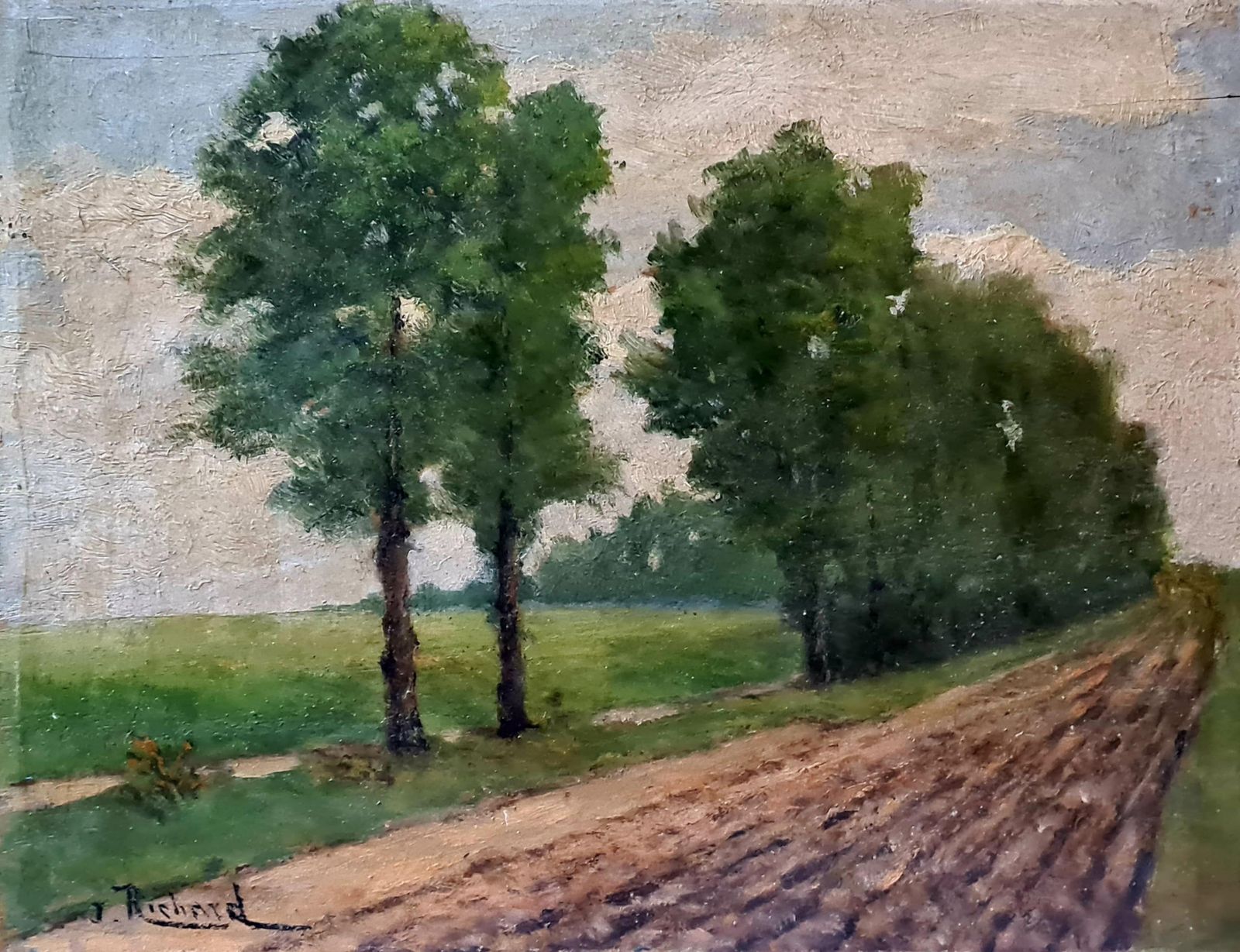
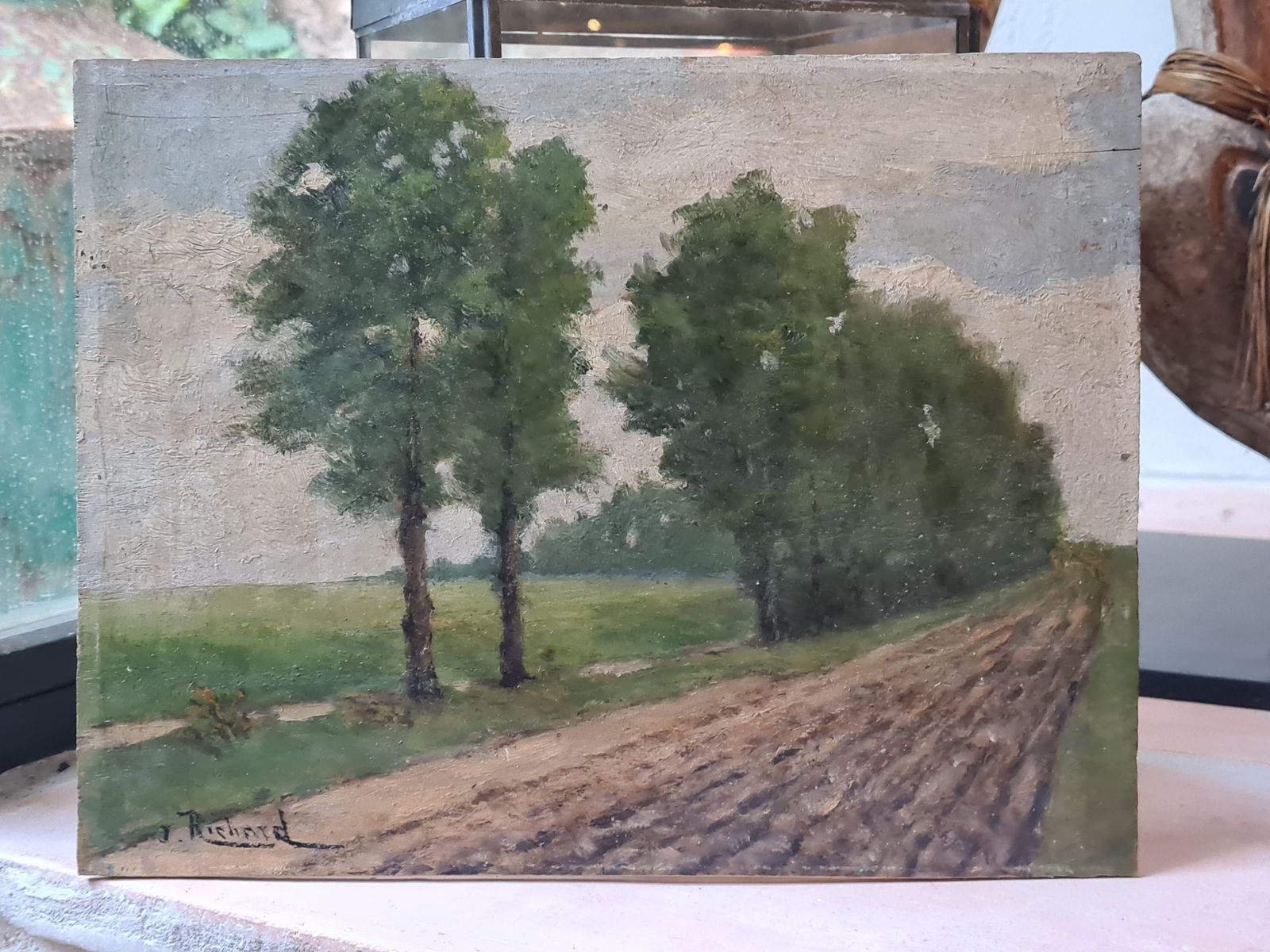
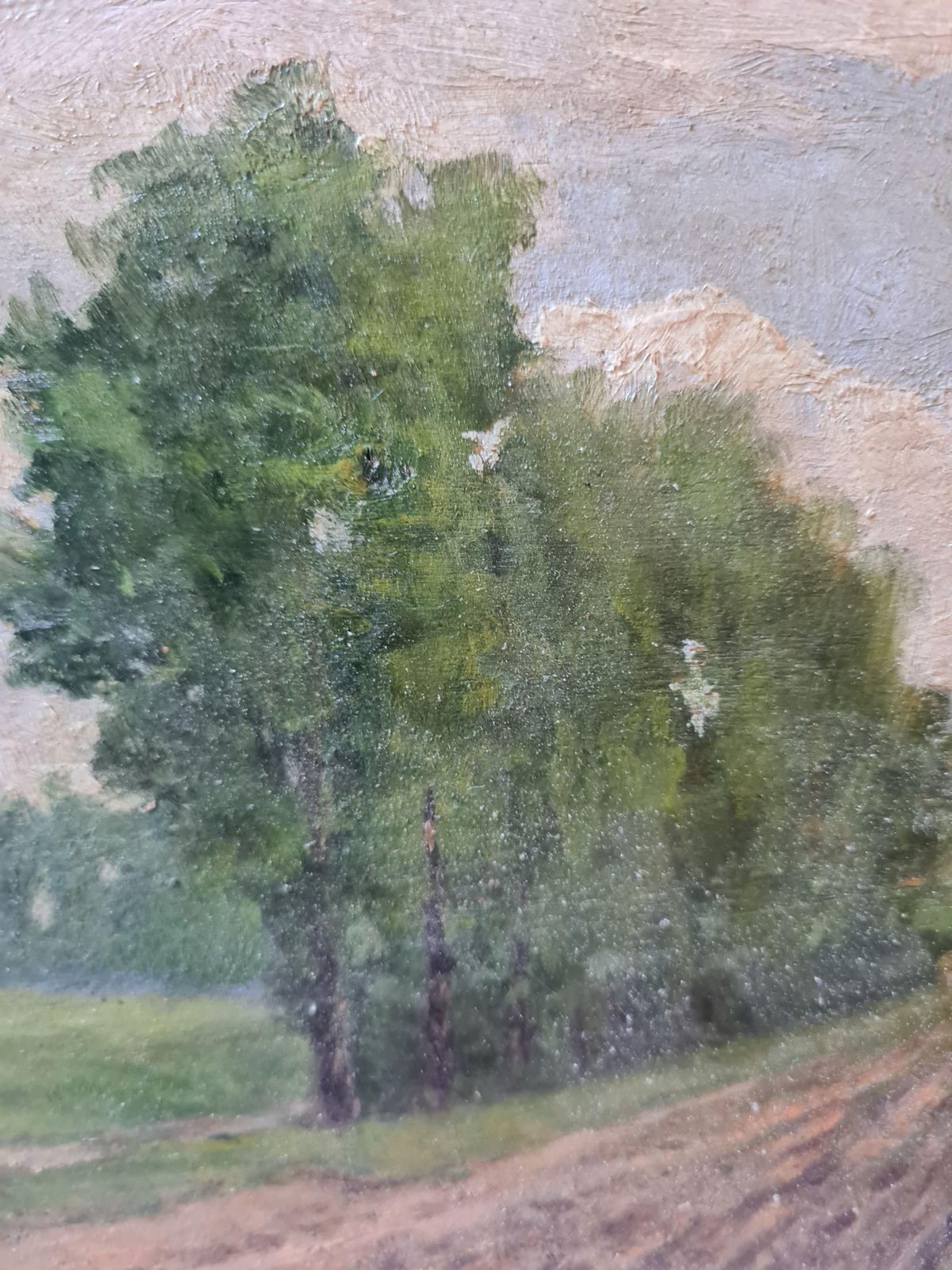
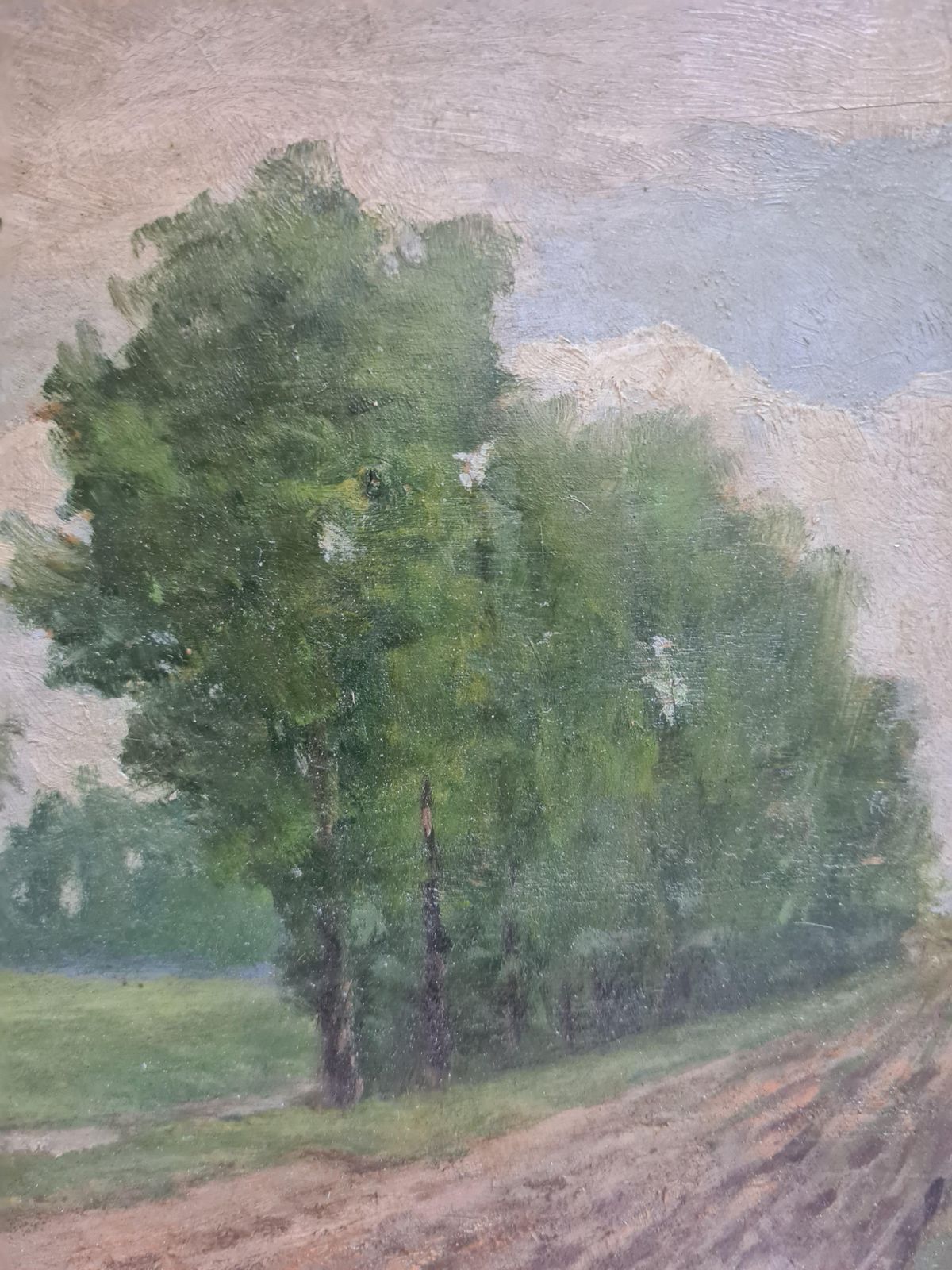
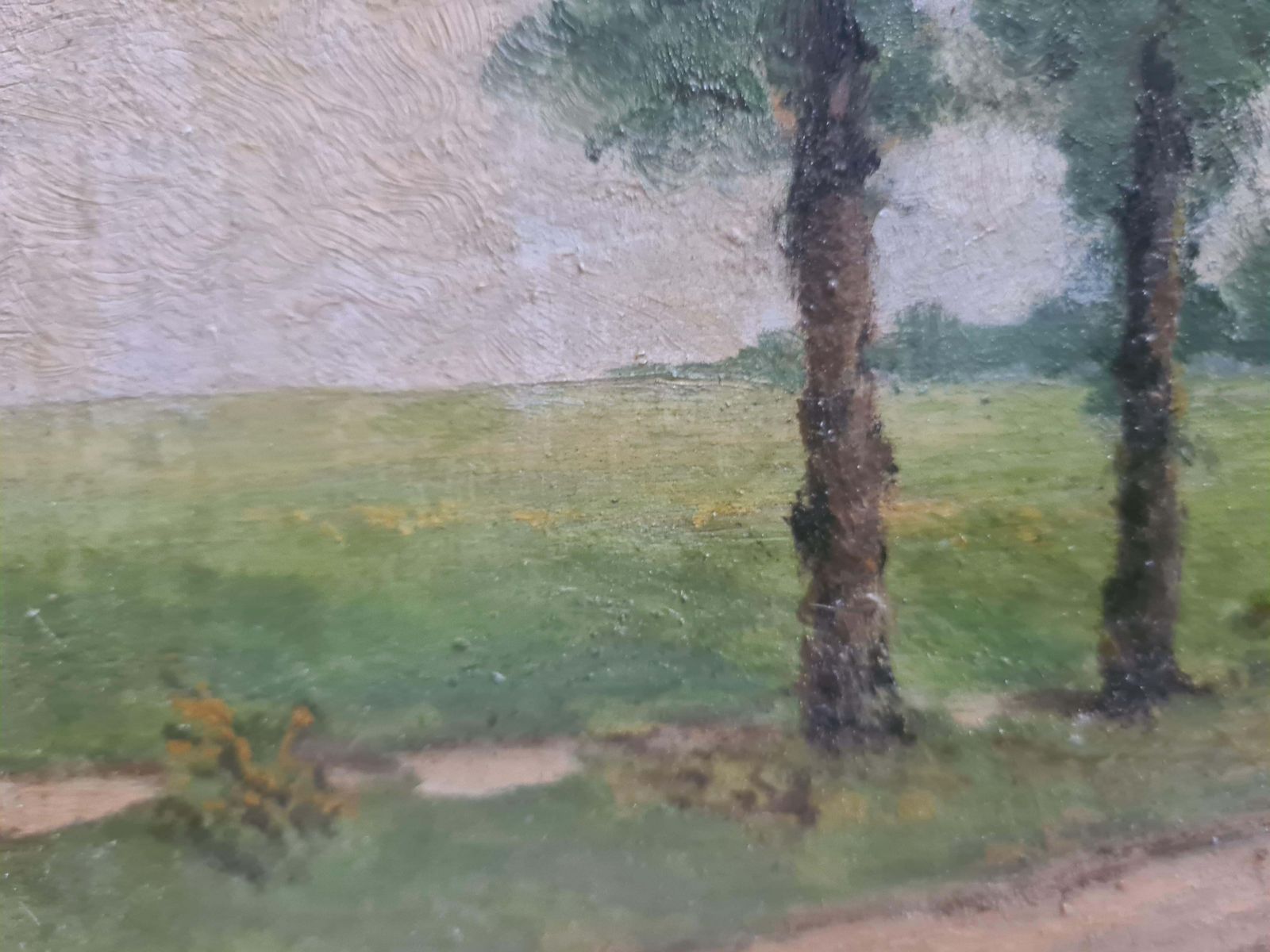
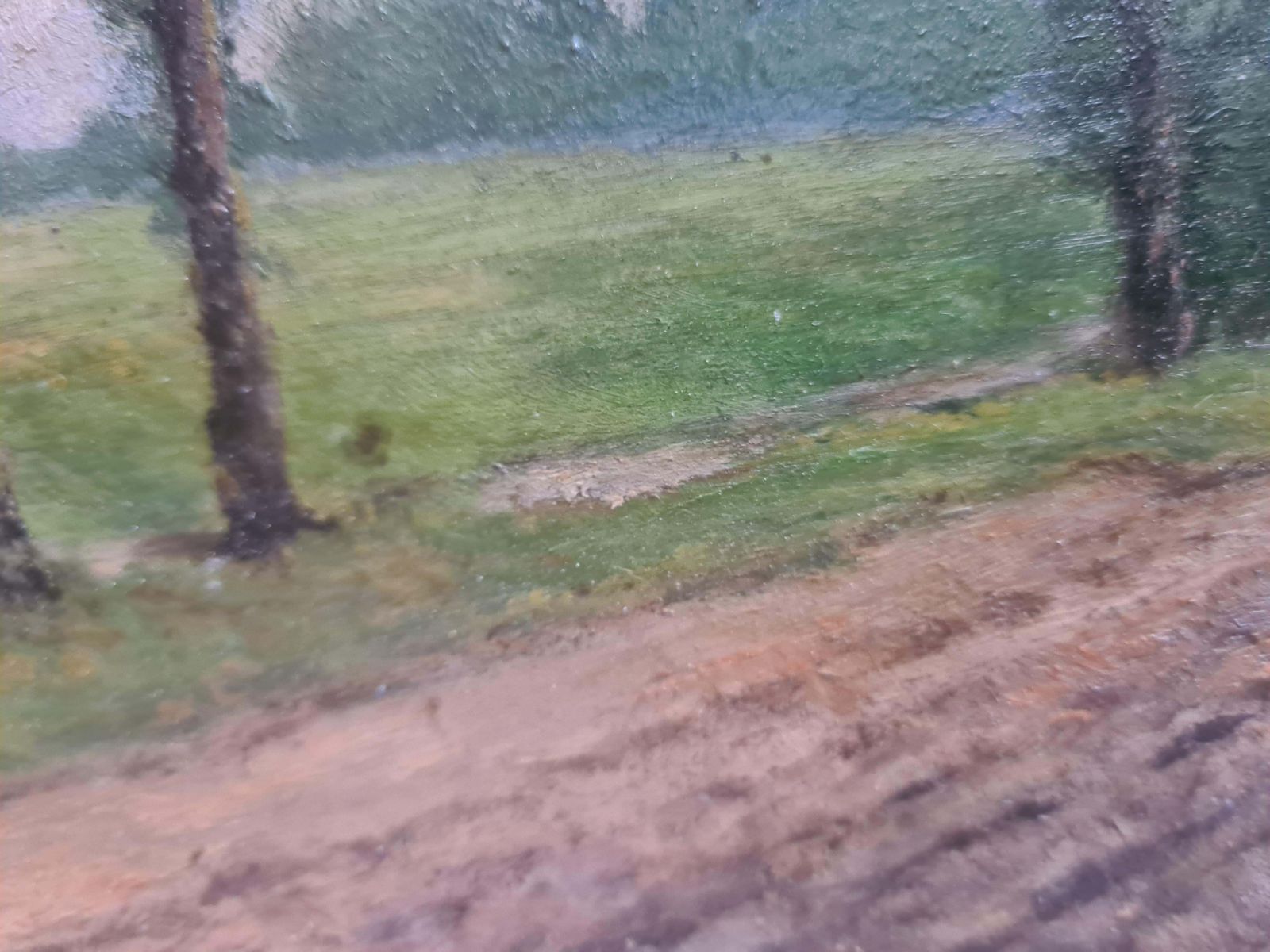
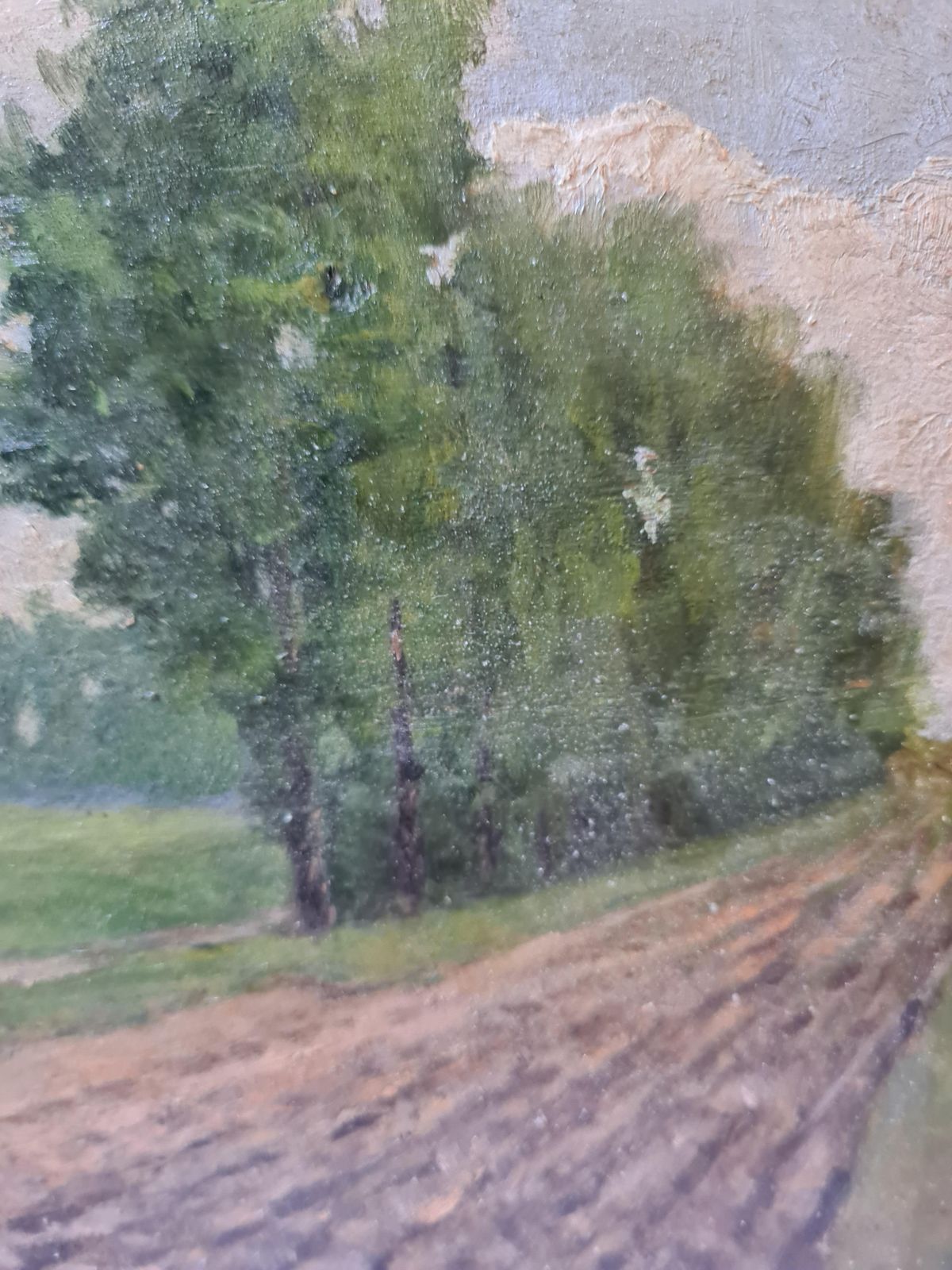
J Richardbarbizon School Landscape, The Poplar Trees, Late 19th Century Oil On Wood Panel

 Cotignac, France

Hassle-free returns
-
 Easy returns (14 days)
-
Free return if the item isn't as described
-
Buyer protection
Damage is rare, and you're fully protected if it happens.
Dimensions
Wear Condition
Good
Material
Oil Paint, Other Wood
Style
Antique
Product Details
Description
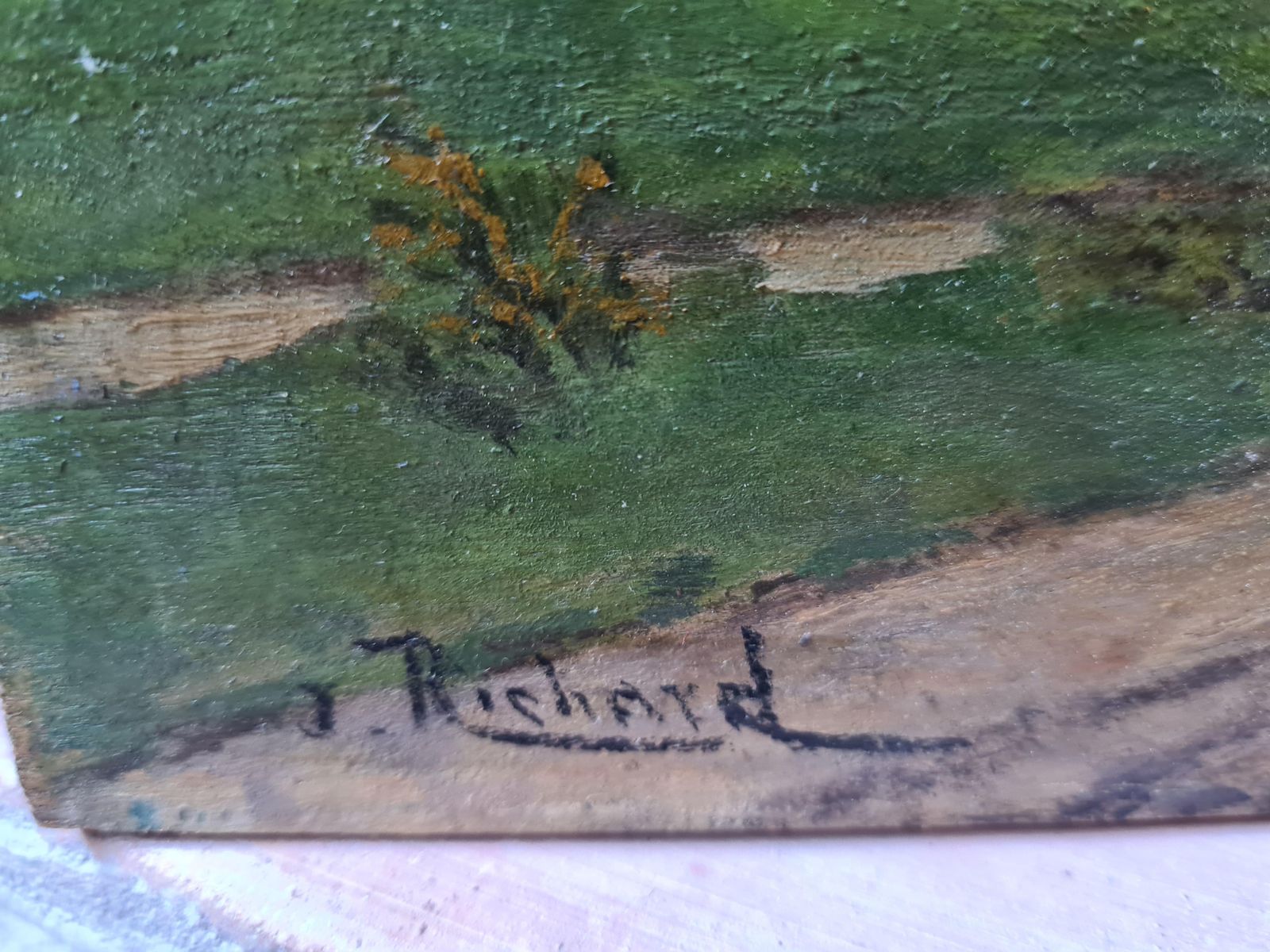
Late 19th Century French Barbizon School oil on wood panel of poplar trees in a landscape by Richard. The painting is signed bottom left. The painting is on a quality chamfered panel.
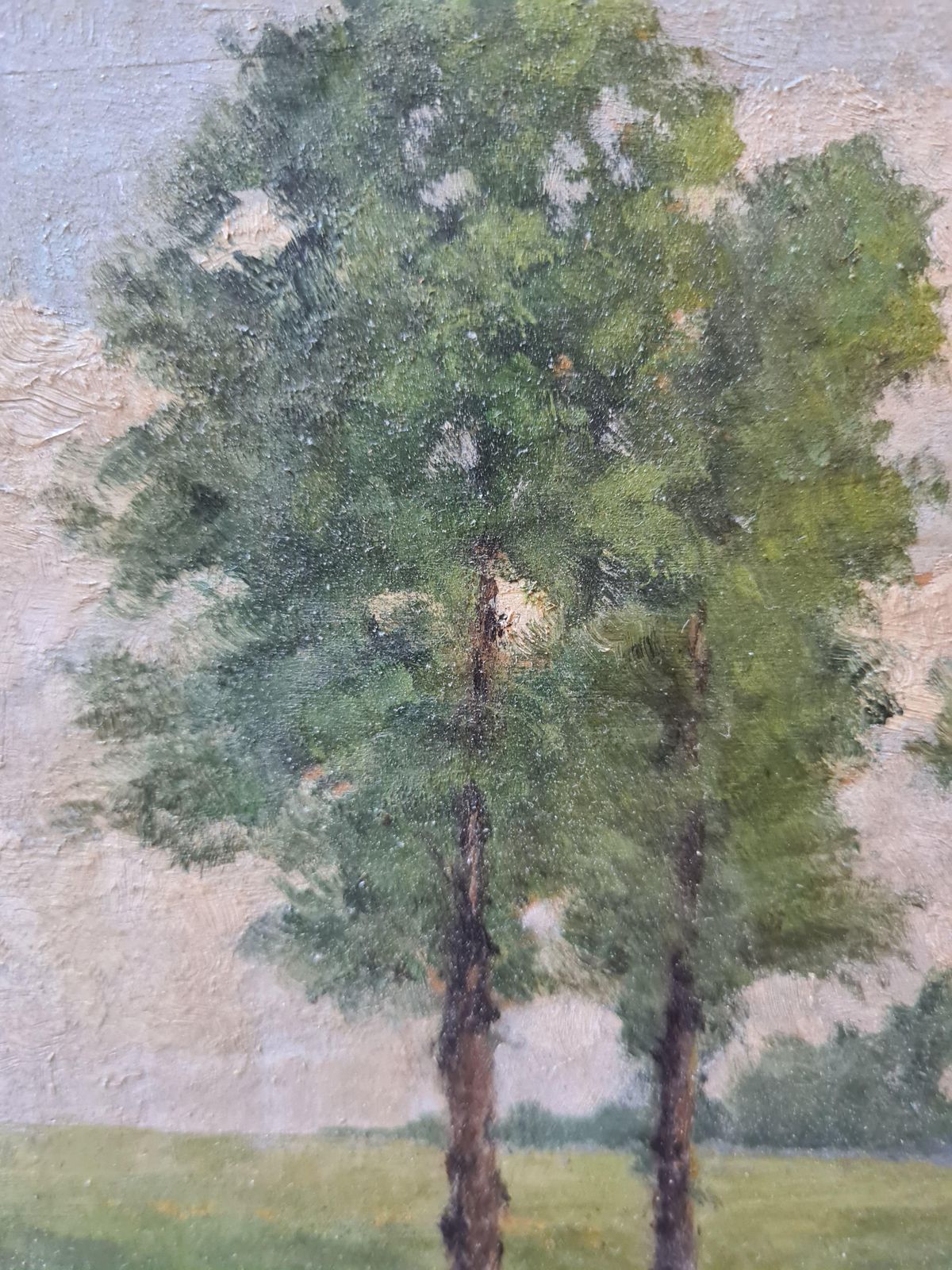
A very charming, almost impressionist, rendition of a line of iconic French trees in a landscape. Before them an earth drive has been ploughed up by the wheels of passing carts and horses. Richard has created a wonderful perspective that draws us in to the painting and he has created a contrast between the strong greens of the trees and fields against the whites and blues of the sky. The painting is reminiscent of the works of Monet from the 1890s. to whom the poplar trees were a continuing inspiration.
The Barbizon school of painters was part of an art movement towards Realism in art, which arose in the context of the dominant Romantic Movement of the time. The Barbizon school was active roughly from 1830 through 1870. It takes its name from the village of Barbizon, France, on the edge of the Forest of Fontainebleau, where many of the artists gathered. Most of their works were landscape paintings, but several of them also painted landscapes with farmworkers, and genre scenes of village life. Some of the most prominent features of this school are its tonal qualities, colour, loose brushwork, and softness of form.
The leaders of the Barbizon school were: Théodore Rousseau, Charles-François Daubigny, Jules Dupré, Constant Troyon, Charles Jacque, and Narcisse Virgilio Díaz. Jean-François Millet lived in Barbizon from 1849, but his interest in figures with a landscape backdrop sets him rather apart from the others. Jean-Baptiste-Camille Corot was the earliest on the scene, first painting in the forest in 1829, but his work has a poetic and literary quality which sets him somewhat apart. Other artists associated with the school, often pupils of the main group, include: Henri Harpignies, Albert Charpin, François-Louis Français and Émile van Marcke.
In 1824 the Salon de Paris exhibited works of John Constable, an English painter. His rural scenes influenced some of the younger artists of the time, moving them to abandon formalism and to draw inspiration directly from nature. Natural scenes became the subjects of their paintings rather than mere backdrops to dramatic events. During the Revolutions of 1848 artists gathered at Barbizon to follow Constable's ideas, making nature the subject of their paintings. The French landscape became a major theme of the Barbizon painters.
Millet extended the idea from landscape to figures — peasant figures, scenes of peasant life, and work in the fields. In The Gleaners (1857), for example, Millet portrays three peasant women working at the harvest. Gleaners are poor people who are permitted to gather the remains after the owners of the field complete the main harvest. The owners (portrayed as wealthy) and their laborers are seen in the back of the painting. Millet shifted the focus and the subject matter from the rich and prominent to those at the bottom of the social ladders. To emphasize their anonymity and marginalized position, he hid their faces. The women's bowed bodies represent their everyday hard work.
In the spring of 1829, Jean-Baptiste-Camille Corot came to Barbizon to paint in the Forest of Fontainebleau, he had first painted in the forest at Chailly in 1822. He returned to Barbizon in the autumn of 1830 and in the summer of 1831, where he made drawings and oil studies, from which he made a painting intended for the Salon of 1830; "View of the Forest of Fontainebleau'" (now in the National Gallery in Washington) and, for the salon of 1831, another "View of the Forest of Fontainebleau"'. While there he met the members of the Barbizon school: Théodore Rousseau, Paul Huet, Constant Troyon, Jean-François Millet, and the young Charles-François Daubigny.
During the late 1860s, the Barbizon painters attracted the attention of a younger generation of French artists studying in Paris. Several of those artists visited Fontainebleau Forest to paint the landscape, including Claude Monet, Pierre-Auguste Renoir, Alfred Sisley and Frédéric Bazille. In the 1870s those artists, among others, developed the art movement called Impressionism and practiced 'plein air' painting. In contrast, the main members of the school made drawings and sketches on the spot, but painted back in their studios.
The Post-Impressionist painter Vincent Van Gogh studied and copied several of the Barbizon painters as well, including 21 copies of paintings by Millet. He copied Millet more than any other artist. He also did three paintings in Daubigny's Garden.
The Barbizon painters also had a profound impact on landscape painting in the United States. This included the development of the American Barbizon school by William Morris Hunt. Several artists who were also in, or contemporary to, the Hudson River School studied Barbizon paintings for their loose brushwork and emotional impact. A notable example is George Inness, who sought to emulate the works of Rousseau. Paintings from the Barbizon school also influenced landscape painting in California. The artist Percy Gray carefully studied works by Rousseau and other painters which he saw in traveling exhibitions to inform his own paintings of California hills and coastline. The influence of the Barbizon painters may be seen in the extraordinary sporting dog paintings of Percival Rosseau (1859-1937), who grew up in Louisiana and studied at the Academie Julien.
Condition report:
Good. Small split to the panel top right.
Wear Condition
Good
Cancellations
We offer free cancellations and full refund for orders cancelled before dispatching. View full policy.
Returns
We have a 14-day return guarantee for orders from individual sellers, within the UK and European Union. View full policy.
Additional Delivery Info from Seller
Free collection available
Yes
Made to Last
The average lifespan of a Vinterior piece is 100 years, while modern flat-pack typically takes just 3 years to reach landfill. When you choose pre-loved, you can shop with confidence in quality, craftsmanship and longevity. With our top-rated customer service team and price match guarantee, there's no better way to shop pre-loved.

Professional Seller
Shopping at Vinterior


Similar Paintings
Similar Paintings
Add to a wishlist
Create Wishlist
Completethe room
Good design is all in the layering. Whether you're adding impact or refining the details, now’s the time to find what’s missing.
Wear conditions
Excellent
Shows little to no signs of wear and tear.
Good
May show slight traces of use in keeping with age. Most vintage and antique items fit into this condition.
Average
Likely to show signs of some light scratching and ageing but still remains in a fair condition.
Apparent Wear and Tear
Visible signs of previous use including scratches, chips or stains.
Please refer to condition report, images or make a seller enquiry for additional information.
Cancellations and Returns
Last updated: 12/02/2026
Clear, predictable protection for every pre-loved purchase.
Simple £75 flat return fee for UK-to-UK mainland furniture when you change your mind.
Applies to furniture with a final selling price of up to £5,000 (excluding delivery and service fees) and delivered from a UK mainland seller to mainland UK addresses. Excludes Northern Ireland, Channel Islands, Scottish Highlands & Islands, Isle of Wight and Isles of Scilly.
Buying vintage should feel inspiring, not uncertain.
Every order on Vinterior is backed by straightforward returns, free cancellations, and extra peace of mind for UK furniture purchases.
1. Free cancellations
Changed your mind before dispatch?
You can cancel any order before it's shipped for a full refund, including delivery.
To cancel an order, click Create cancellation on the order page.
Once an item has been dispatched, delivery costs are not refundable.
Bespoke, personalised or made-to-order pieces cannot be cancelled.
2. Returning an item
You have 14 days from delivery to request a return.
There are two return types:
A. The item isn't as described (free return)
If your piece arrives and it doesn't match the listing in any material way (incorrect description, undisclosed damage, inaccurate measurements, misleading photos), you are fully protected:
- Free return
- The seller or Vinterior arranges pickup
- Full refund, including outbound delivery costs once the seller receives the item
This applies to all purchases.
B. You changed your mind
UK-to-UK furniture deliveries:
To make UK furniture returns predictable and stress-free, we offer a simple flat return fee of £75.
- Applies to furniture delivered from a UK mainland seller to a mainland UK address. Excludes Northern Ireland, Channel Islands, Scottish Highlands & Islands, Isle of Wight and Isles of Scilly.
- Pickup arranged for you
- One clear fee, no surprises
We coordinate the return with either the seller's chosen courier or our trusted delivery partner.
All other items
Most smaller items are straightforward to return.
You can still return your item within 14 days.
- For smaller or parcel-sized items, you can choose to post the item back yourself using a tracked service, or the seller can suggest a preferred courier.
- For larger or more fragile pieces, the seller may recommend the safest return method.
- Return delivery costs vary depending on size and courier.
The seller will confirm the best option based on the item.
3. If your item arrives damaged
Damage on arrival is uncommon, especially for UK furniture deliveries.
But if something does go wrong, you're fully protected.
- Let us know as soon as possible (ideally within 72 hours of delivery) so we can resolve things quickly
- Share photos so we understand what happened
- We’ll help arrange a return and refund if needed
You’re always protected when something goes wrong in transit.
Your statutory rights apply for up to 30 days from delivery.
4. What can't be returned
Some items cannot be returned:
- Bespoke, personalised, or made-to-order pieces
- Items altered after delivery
5. How to start a return
- Log in to your Vinterior account
- Open your order
- Click Create a return
- Add notes + photos if relevant
We'll guide you through the rest.
6. What happens next
- We review your request, confirm the return and advise on next steps
- Pickup or return method is arranged
- The item is returned to the seller
- We issue your refund once the seller confirms the item's condition
Returns are completed smoothly once the pickup is arranged.
7. Refunds
Once the seller receives the piece back in the same condition it was sent, we'll issue your refund to your original payment method.
Once a refund is issued, it may take up to 5–10 working days for the funds to appear back on your original payment method, depending on your bank or card provider.
If the item is returned with new damage that wasn't present at delivery, the refund may be adjusted following review.
Need help?
If you have questions about a return or your order, our support team is here to help. Email us at [email protected] or find other ways to contact us here.
What your service fee covers
-
 14-day return guarantee
-
Flat-fee return shipping on UK furniture
-
Seller vetting
-
Dedicated customer support
| Order Value (£) | Fee (£) |
|---|---|
| 0 — 49.99 | 2.75 |
| 50 — 99.99 | 5.50 |
| 100 — 199.99 | 11.00 |
| 200 — 399.99 | 21.00 |
| 400 — 599.99 | 30.00 |
| 600 — 799.99 | 40.00 |
| 800 — 999.99 | 50.00 |
| 1,000 — 1,499.99 | 55.00 |
| 1,500 — 1,999.99 | 60.00 |
| 2,000 — 4,999.99 | 82.50 |
| 5,000+ | 110.00 |
Added at checkout, based on your basket total.
