


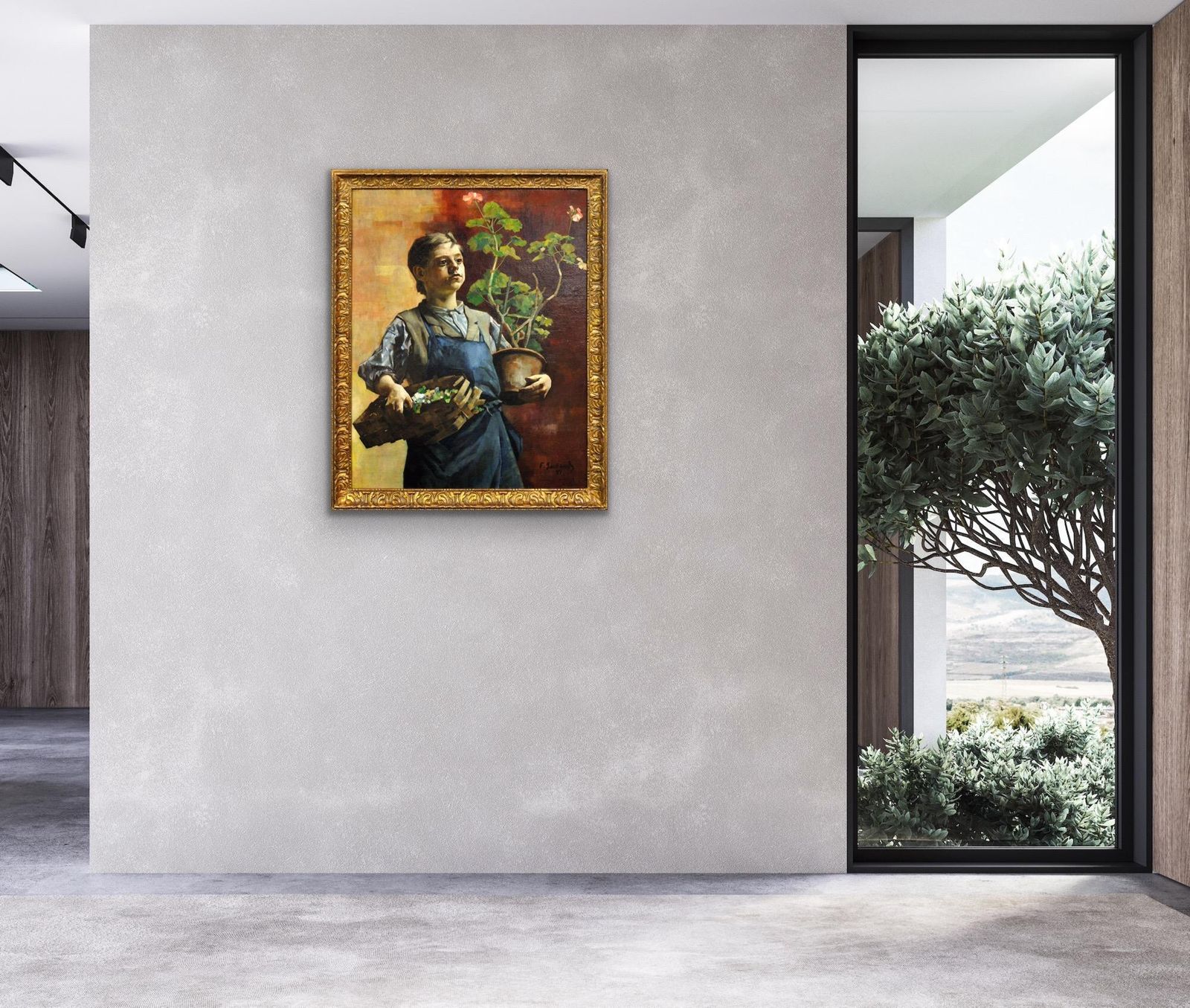
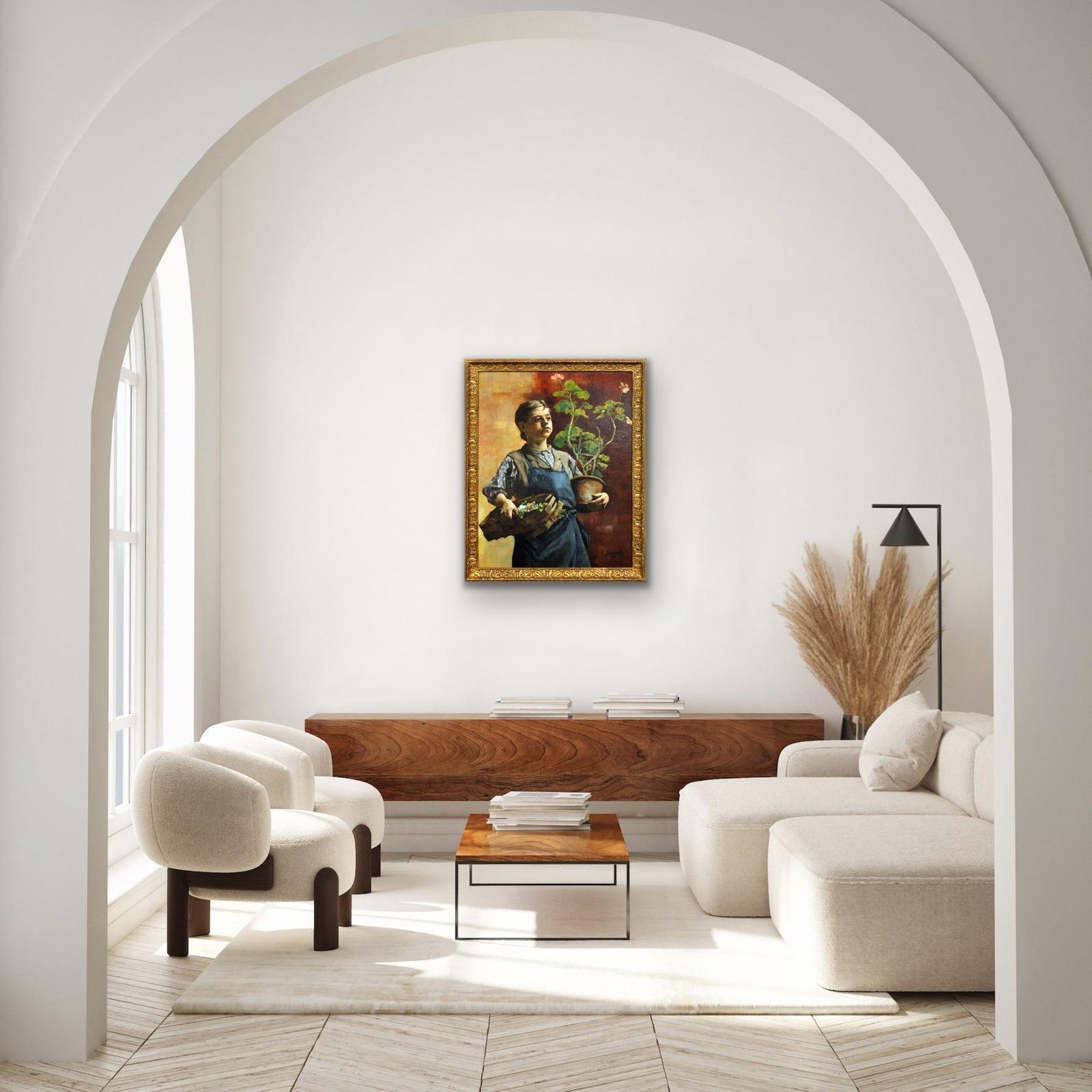
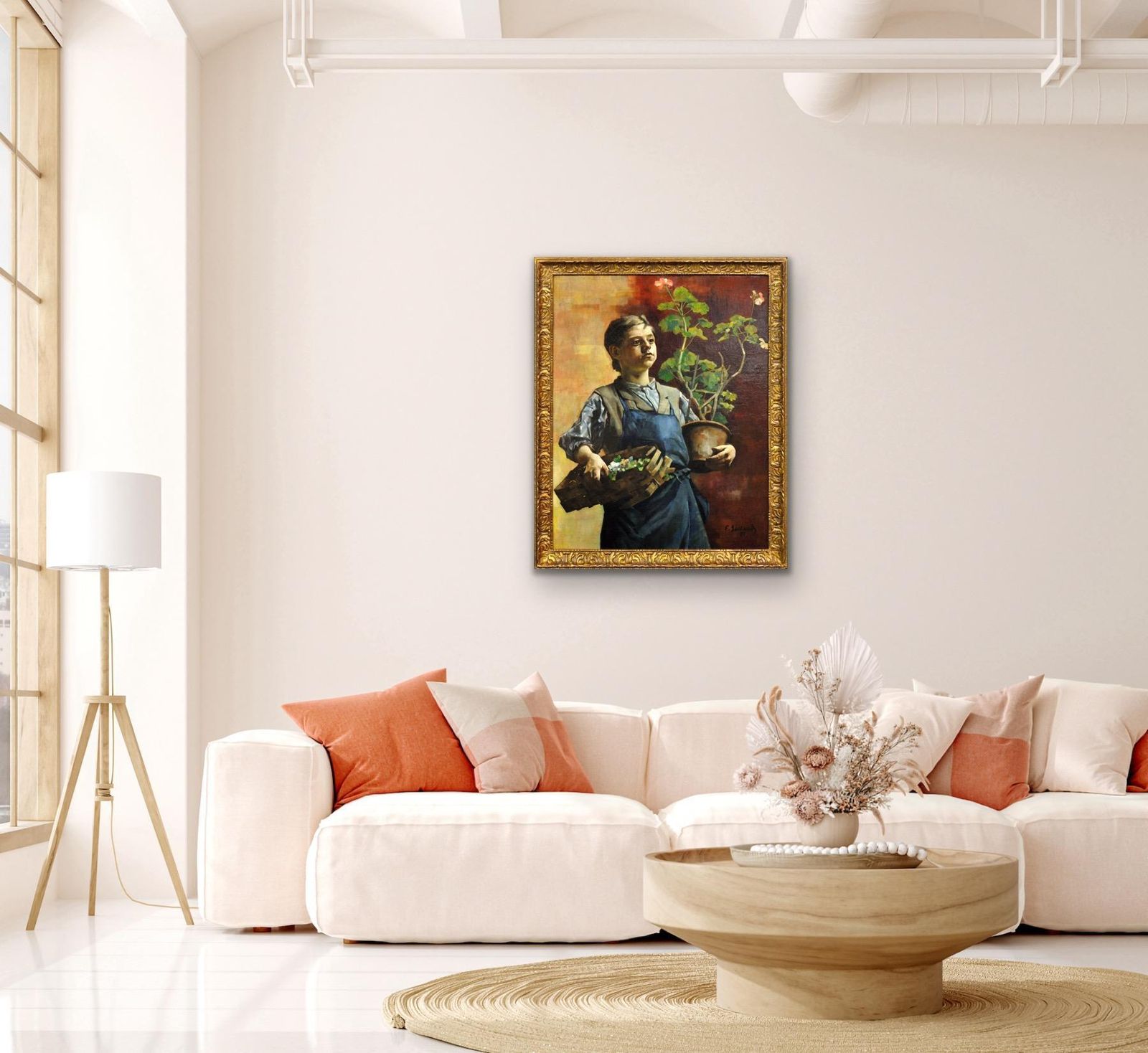
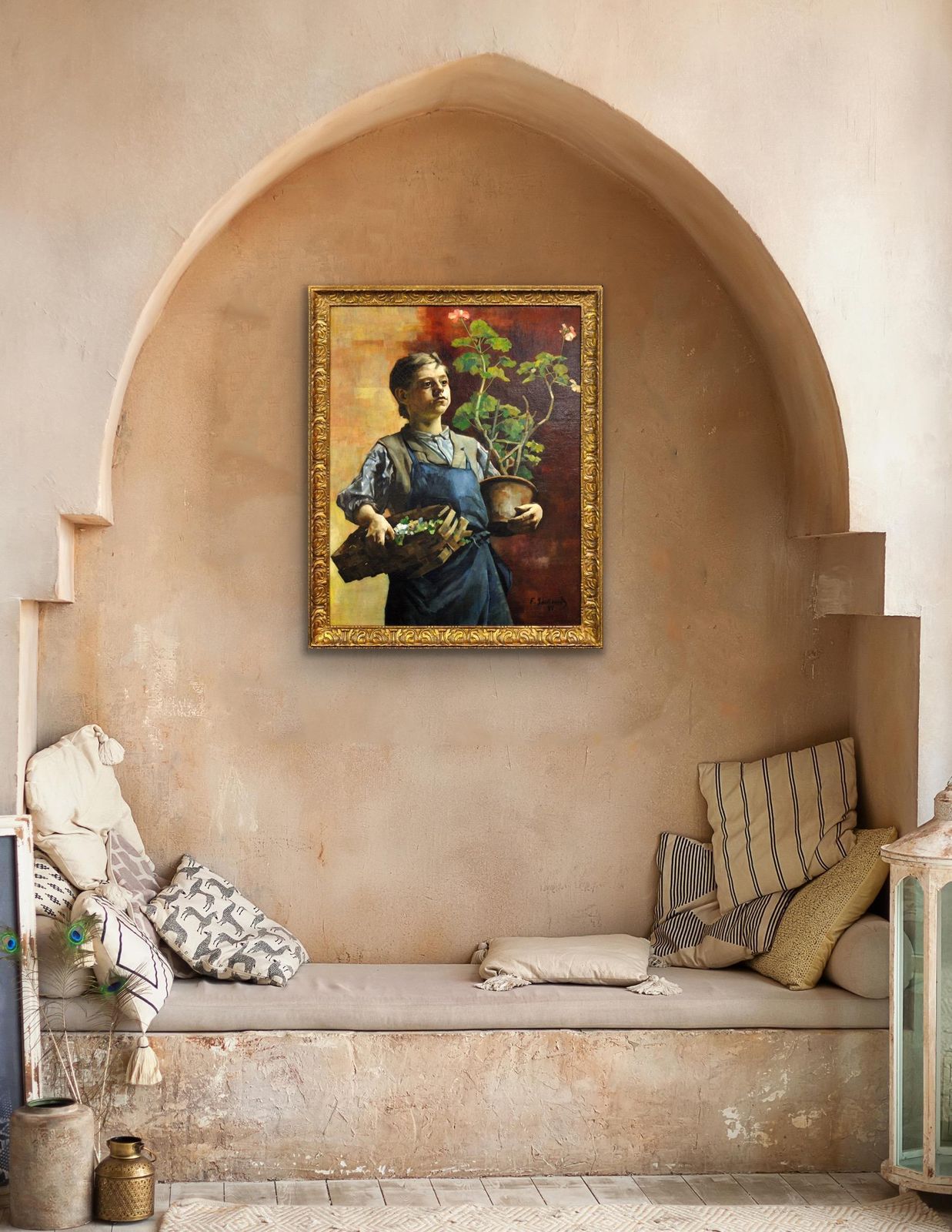
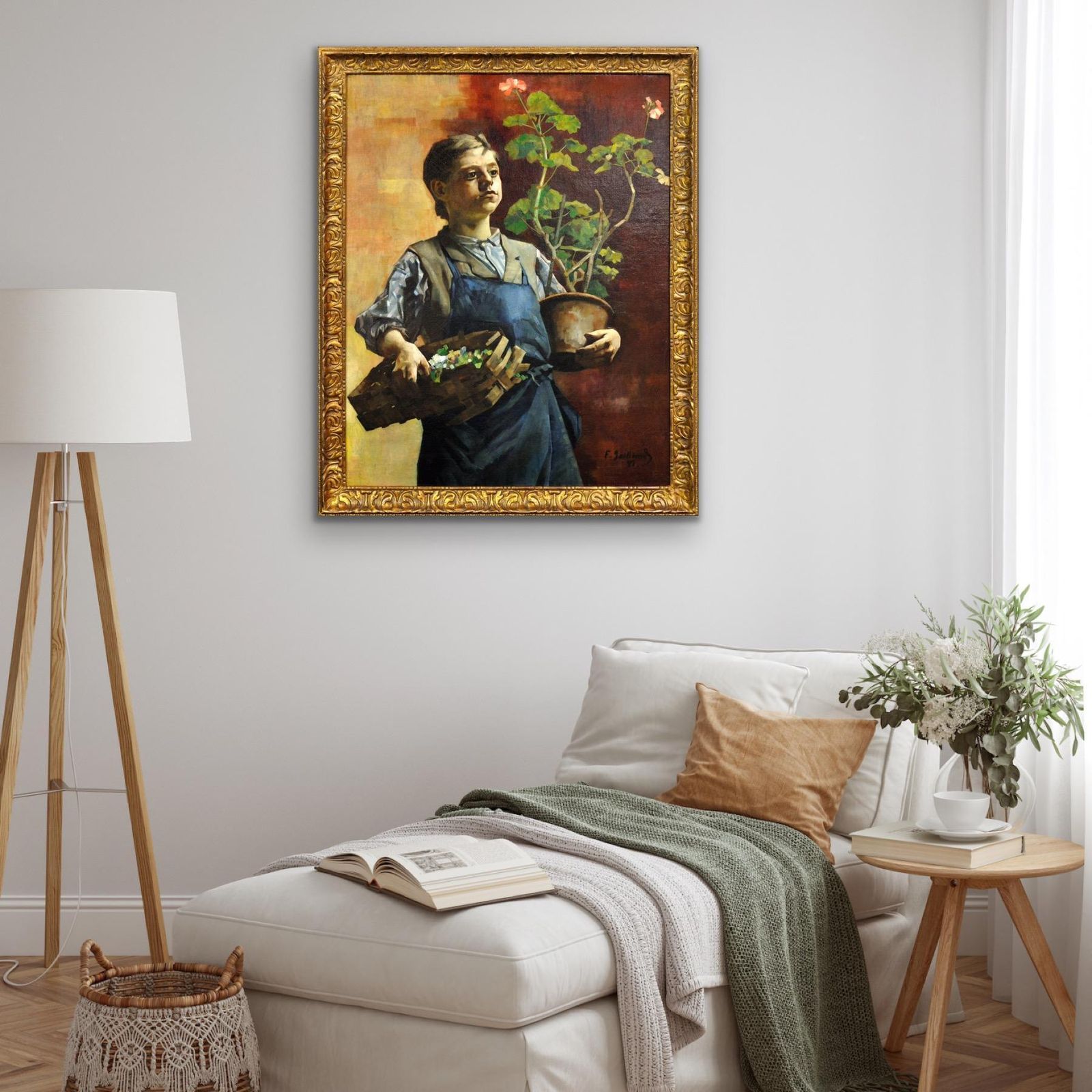
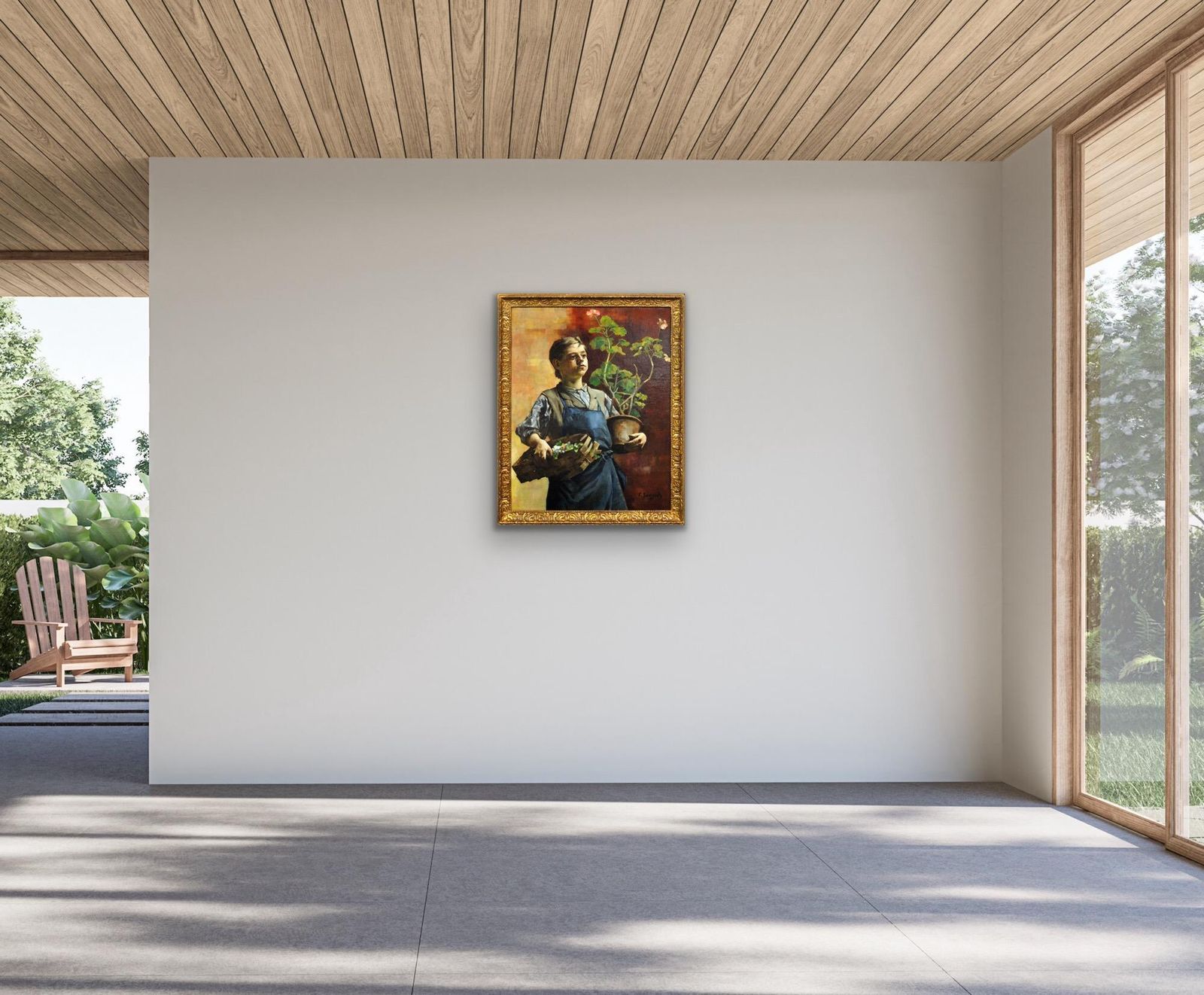
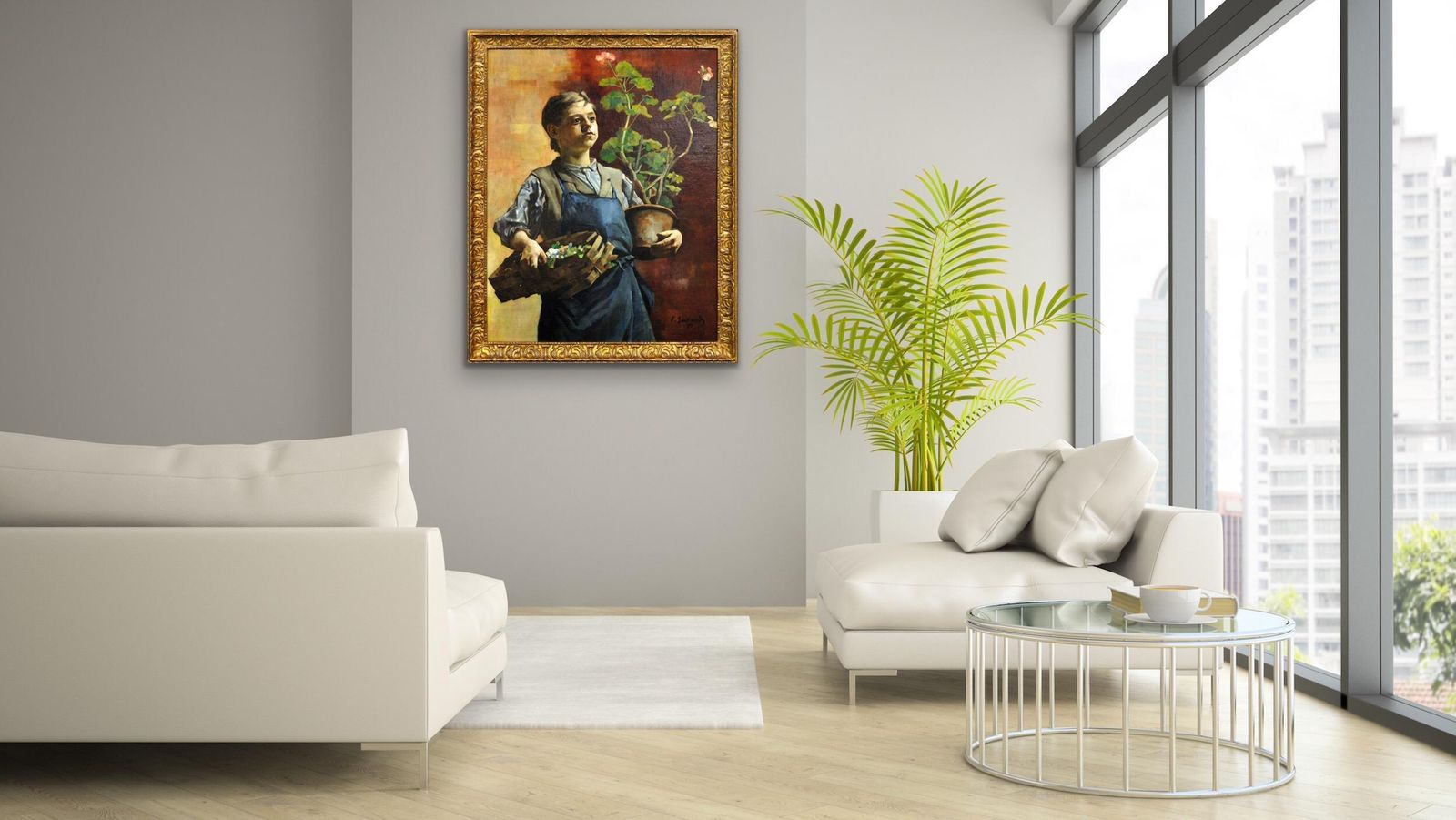
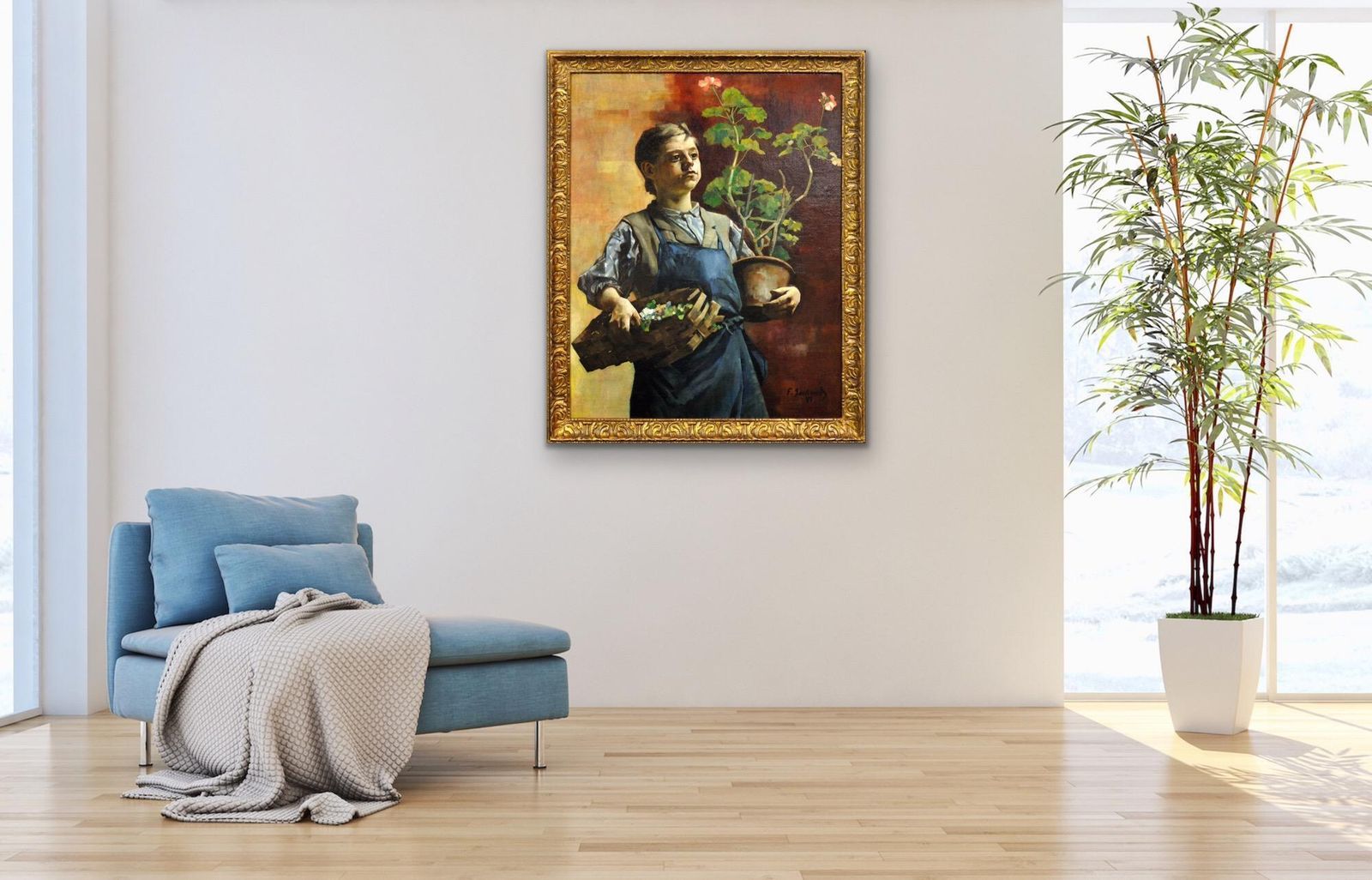
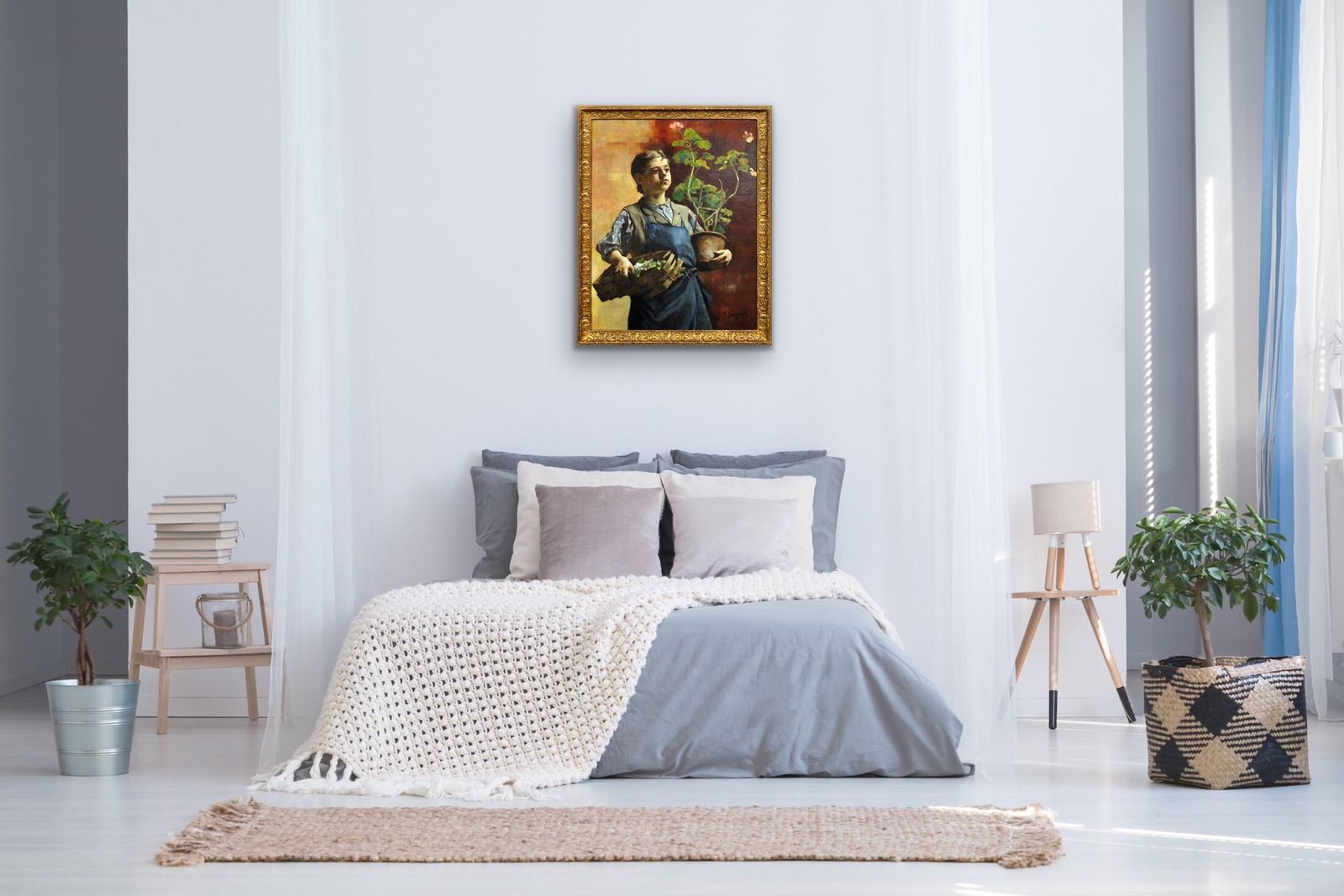
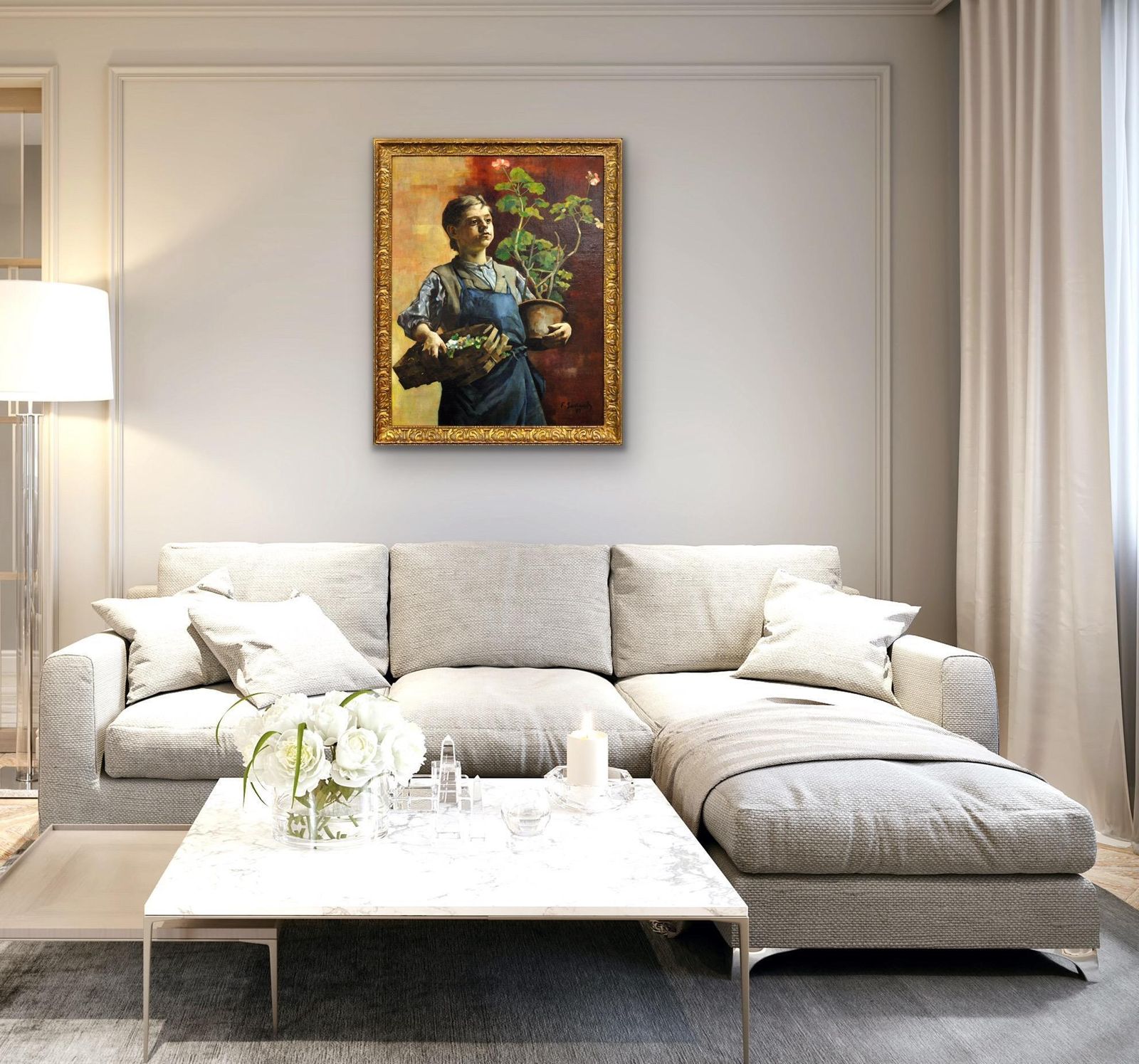
François Gailliard 1861 To 1932. Le Petit Jardinier. A Belgian Master Of Light And Form. Framed 1887 Luminist Oil Painting.

 Sutton Poyntz, Dorset, United Kingdom

Hassle-free returns
-
 Easy returns (14 days)
-
Free return if the item isn't as described
-
Buyer protection
Damage is rare, and you're fully protected if it happens.
Dimensions
Wear Condition
Good
Material
Oil on Canvas
Style
Antique
Product Details
Description
François Désiré Antoine Gailliard 1861 - 1932
Belgian ( b.1861 – d.1932 ).
Le Petit Jardinier, 1887
Oil On Canvas.
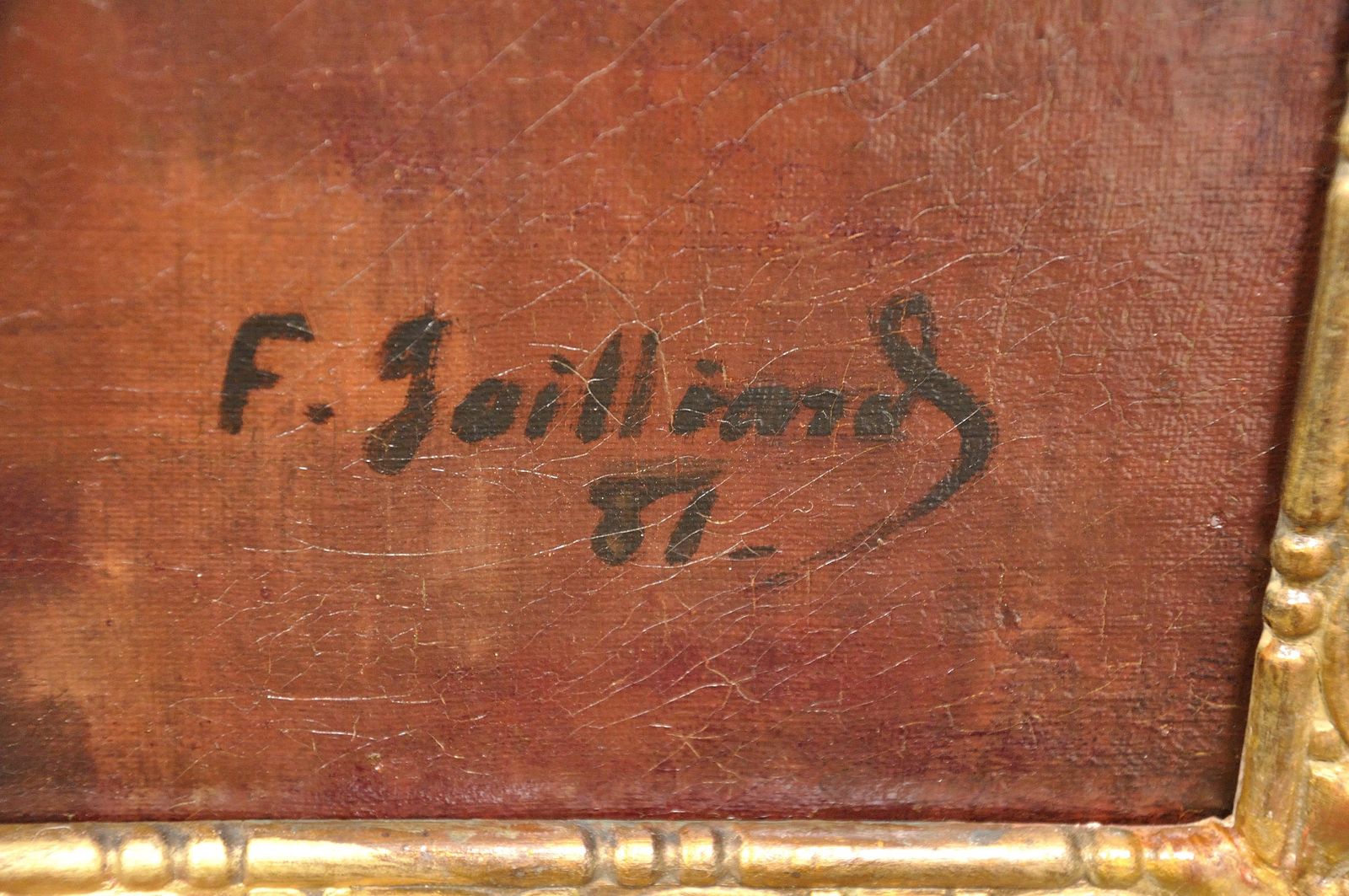
Signed & Dated Lower Right.
Image size 36.6 inches x 28.5 inches ( 93cm x 72.5cm ).
Frame size 41.7 inches x 33.5 inches ( 106cm x 85cm ).
Available for sale from Big Sky Fine Art in the English county of Dorset, this original oil painting is by the Belgian luminist artist François Gailliard and is dated 1887.
The canvas and the painted surface have benefitted from cleaning, restoration and conservation, which was performed on our instruction, supervision and approval.
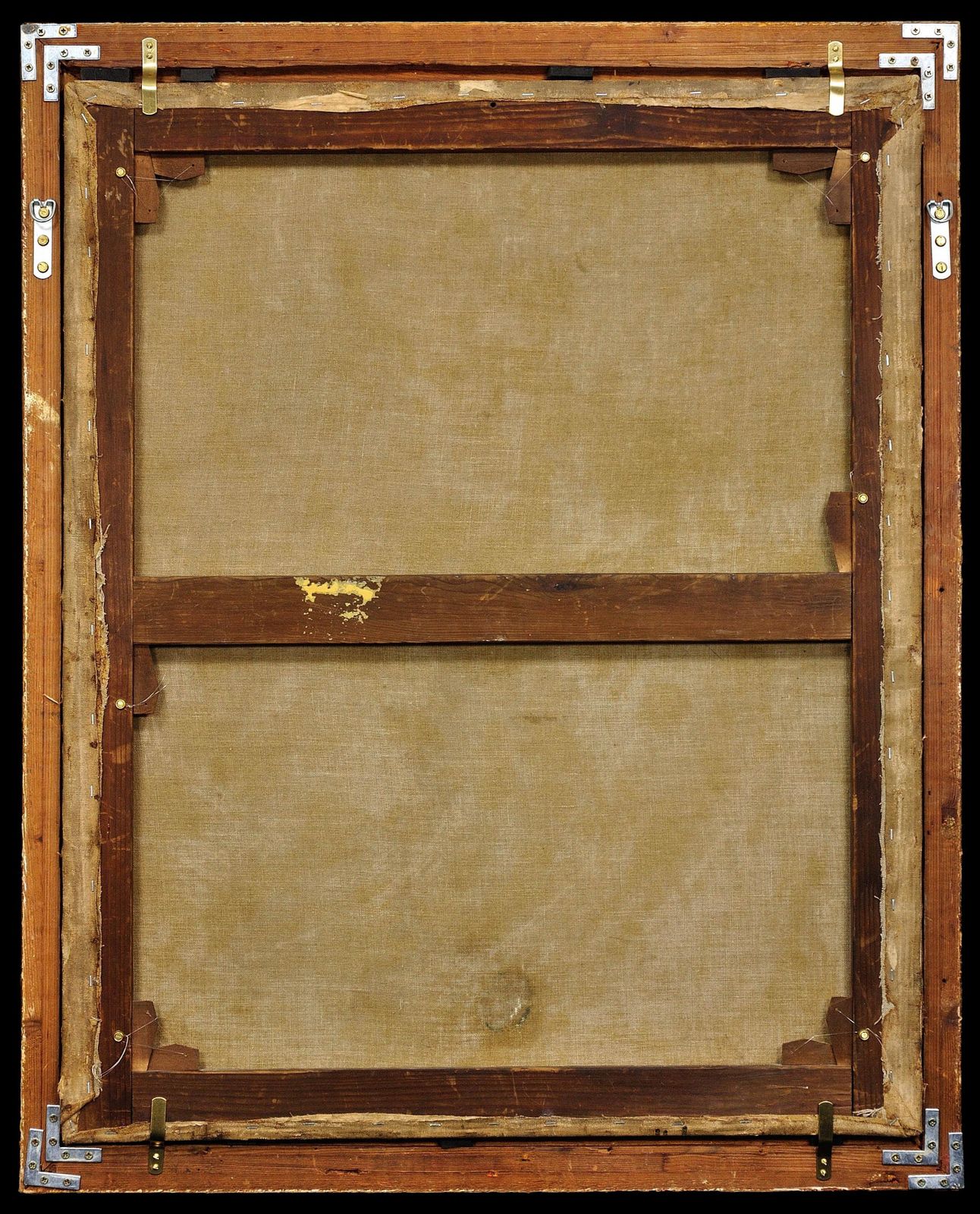
The painting is presented and supplied in its original frame. The frame has been restored and reinforced with supporting brackets along with new replacement hanging fittings.
This antique painting is now in very good condition. It wants for nothing and is supplied ready to hang and display.
The painting is signed and dated lower right.
The renowned Belgian luminist painter, François Désiré Antoine Gailliard (also known as Frans or Franz Gailliard) was born in November 1861, in Brussels, Belgium. He was the son of Désiré Gailliard, a baker, and Anne Hubert. He grew up during a period when the country’s artistic landscape was flourishing. Raised in an atmosphere that encouraged artistic expression, Gailliard showed an early talent for drawing and painting. He pursued formal training at the Académie Royale des Beaux-Arts in Brussels, one of Belgium’s most prestigious art institutions. There, he studied under influential artists and developed the foundational skills that would shape his career.
Gailliard initially joined the studio of Jean-François Portaels, then went on to study with Jules Hoeterickx, François Bossuet, and James Ensor. He also worked alongside Fernand Khnopt and became friends with James Abbott McNeill Whistler, the American artist, who he met in 1887 during stays in Berlin and Paris. He became part of the artistic and intellectual circles of Belgium, and other close friends included artists such as Alfred Stevens, Jean-Louis Forain and Félicien Rops. Finally, he joined the studio of Jean-Léon Gérôme in Paris.
The academic environment in Brussels exposed Gailliard to various artistic traditions, but his work reflected an interest in pushing beyond academic conventions. Gailliard was particularly drawn to the evolving styles of the time, especially Realism and early explorations of Impressionism and Luminism, which would later define his signature style.
Gailliard’s early work showed influences from the Barbizon School and other European Realists, focusing on meticulous, lifelike representations of nature, figures, and everyday scenes. Like many artists of his generation, he was deeply impacted by the works of French artists such as Jean-François Millet and Camille Corot, who emphasized the beauty in the ordinary and the rural. This focus on realism, combined with a sensitivity to light and atmosphere, became a defining feature of Gailliard’s work.
However, Gailliard also admired Impressionism and its experimental use of colour and light. By the late 19th century, the work of French Impressionists like Claude Monet and Pierre-Auguste Renoir had gained international attention, and Belgian artists, including Gailliard, were beginning to incorporate these new approaches into their own work. His art became a fusion of detailed realism and a growing interest in capturing fleeting moments, light, and atmosphere—characteristics that placed him in alignment with Belgium’s Luminism movement.
Gailliard’s paintings from this period are characterized by their use of light and their focus on everyday scenes, especially those connected to nature and the rural life of Belgium. While he was not a strict follower of Impressionist techniques, his work often employed similar methods, particularly the soft, diffused use of colour to create atmosphere. “Le Petit Jardinier” (1887), is one of his most notable works and exemplifies his ability to render both figures and nature with careful attention to light.
Gailliard’s paintings were usually large canvases presenting genre scenes, portraits, nudes and landscapes. His works often highlighted the beauty in the ordinary and displayed a sense of quiet dignity and respect for his subjects. He also produced news cartoons, presented in French, Belgian and English weekly newspapers such as Le patriote illustré, Le petit bleu, and the London Illustrated News.
Gailliard’s work was regularly exhibited both in Belgium and abroad. He presented his first painting at the 1881 Brussels Salon, then from 1882 to 1891 exhibited at the Salon des Artistes Français de Paris. He also exhibited in Berlin, and participated in major exhibitions, including those organized by influential art societies in Belgium such as Les XX and La Libre Esthétique, both known for promoting avant-garde art. Although Gailliard was not a founding member of these groups, his participation in their exhibitions placed him alongside other significant artists of his time, and he gained a reputation for his refined style and technical mastery. In 1897 he painted a portrait of King Chulalongkorn of Siam during his official visit to Belgium.
Gailliard married Julie Constantine Maus in Brussels in 1898. They had a son, Jean-Jacques Gailliard, who also became an artist, designer and engraver.
As Gailliard matured as an artist, his style remained rooted in realism and Luminism, though he also incorporated elements of Symbolism and Romanticism. His later works showed a deepening appreciation for mood and emotion, with a focus on portraits, landscapes, and scenes that often carried a sense of introspection. His paintings evoke a sense of calm and reflection, with light used not just to illuminate but to convey a deeper emotional or symbolic meaning.
Gailliard went on to become the director of the Academy of Fine Arts of Saint Gilles, where, through the later efforts of his son, his reputation lives on.
François Gailliard died in 1932 in Saint-Gilles, Brussels, where a street was named after him. He left behind a body of work that, while perhaps overshadowed by more radical movements of the time, remained respected for its craftsmanship and its commitment to realism and light. In the decades following his death, his work has been rediscovered and appreciated for its role in bridging the gap between Realism and the evolving movements of Impressionism and Luminism in Belgium. In 1957 he was given a retrospective tribute exhibition in the City Hall of Saint Gilles, organised by the Group d’Art Saint Gillois.
Today, Gailliard’s paintings are celebrated for their quiet elegance, their masterful treatment of light, and their sensitive portrayal of everyday life. His work continues to be exhibited in Belgian art institutions, and he is regarded as one of the key figures of late 19th and early 20th century Belgian art.
© Big Sky Fine Art
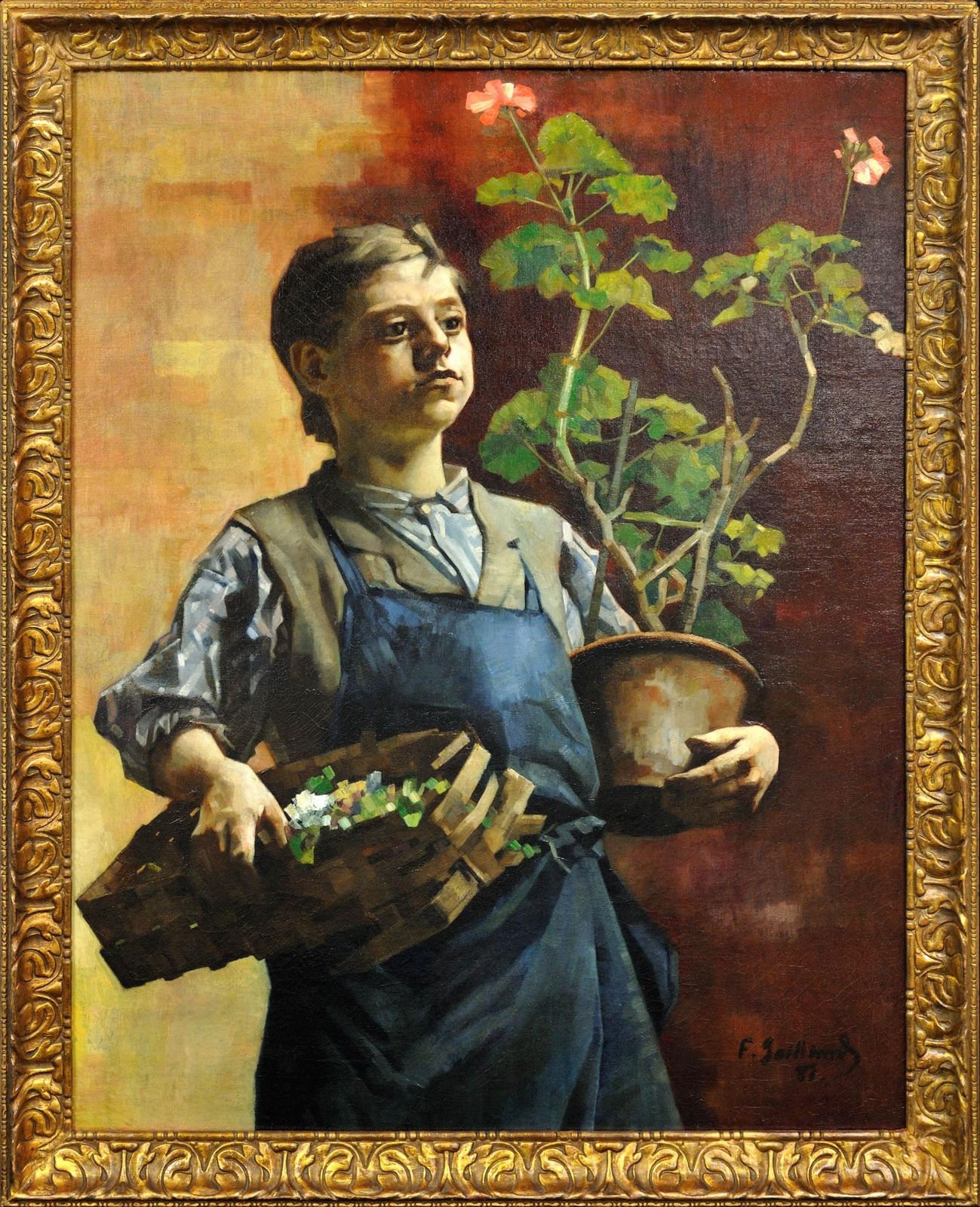
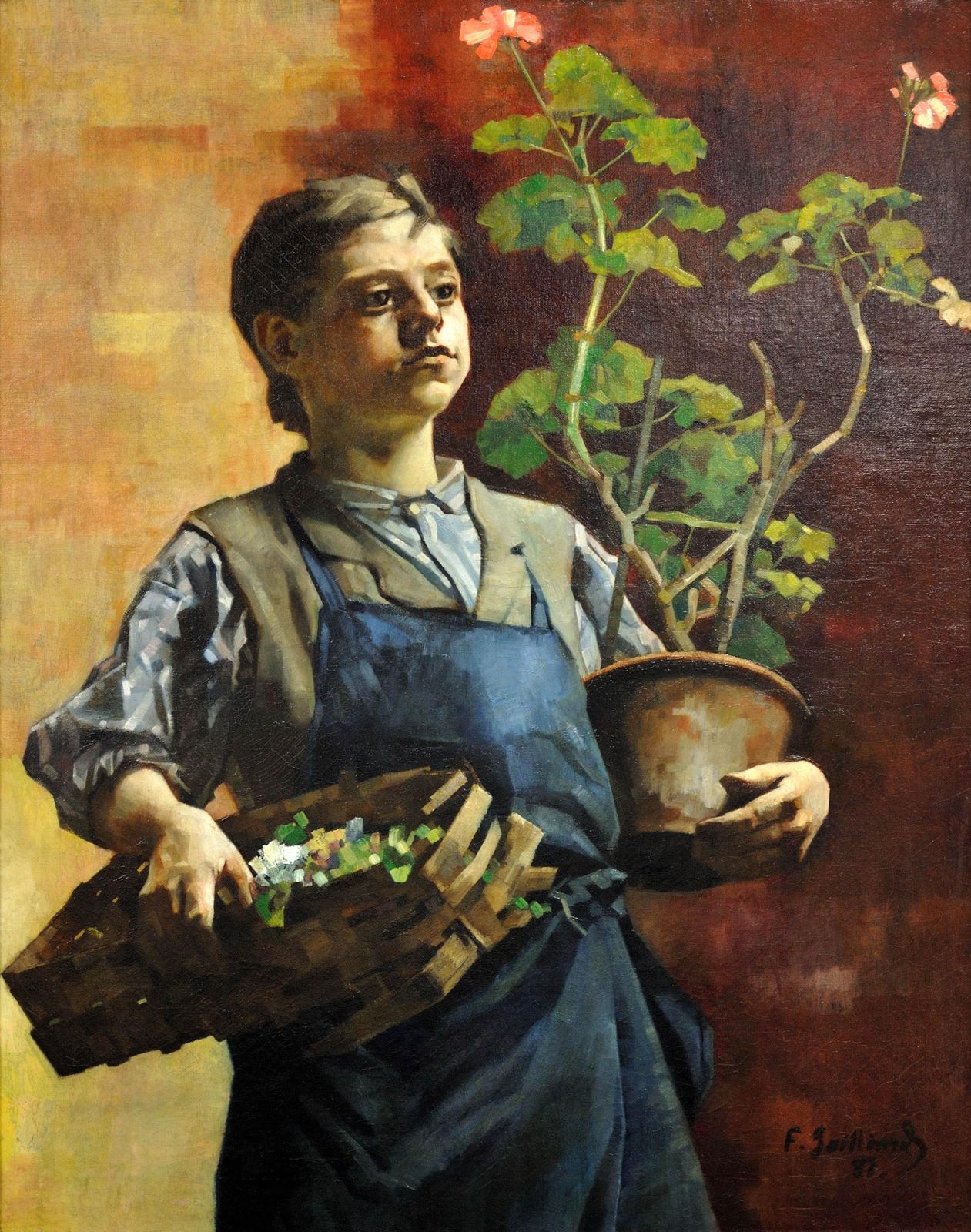
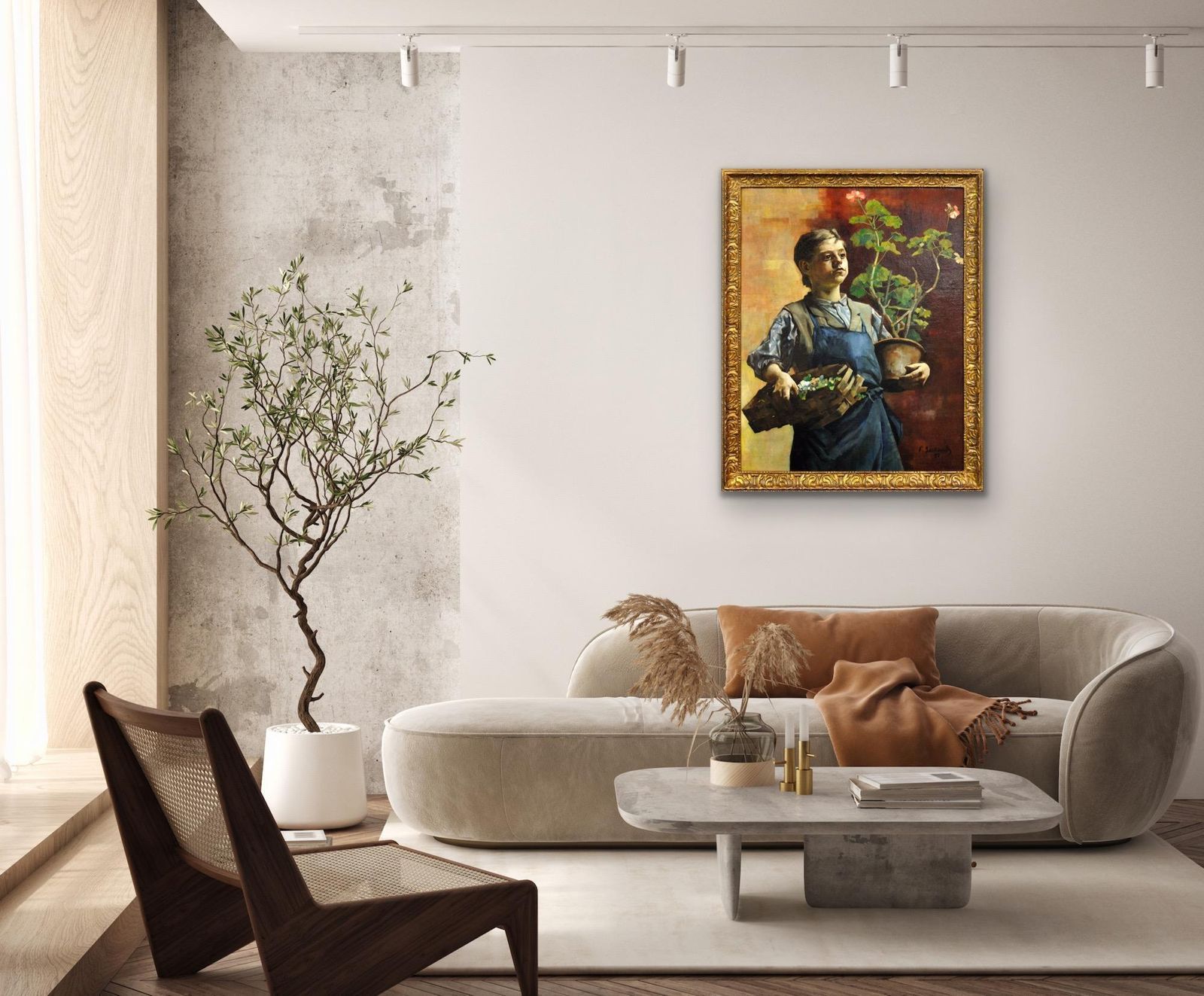
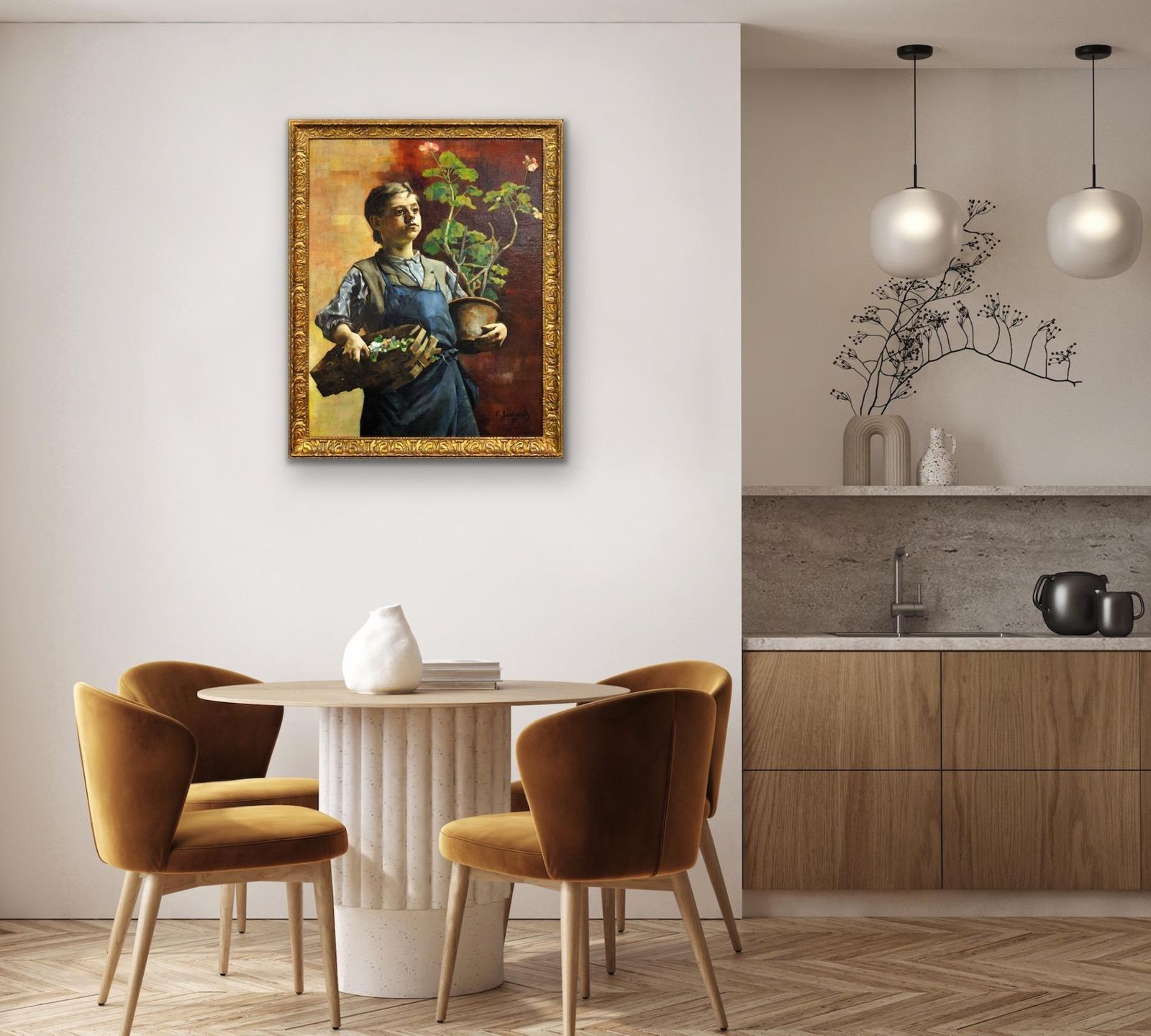
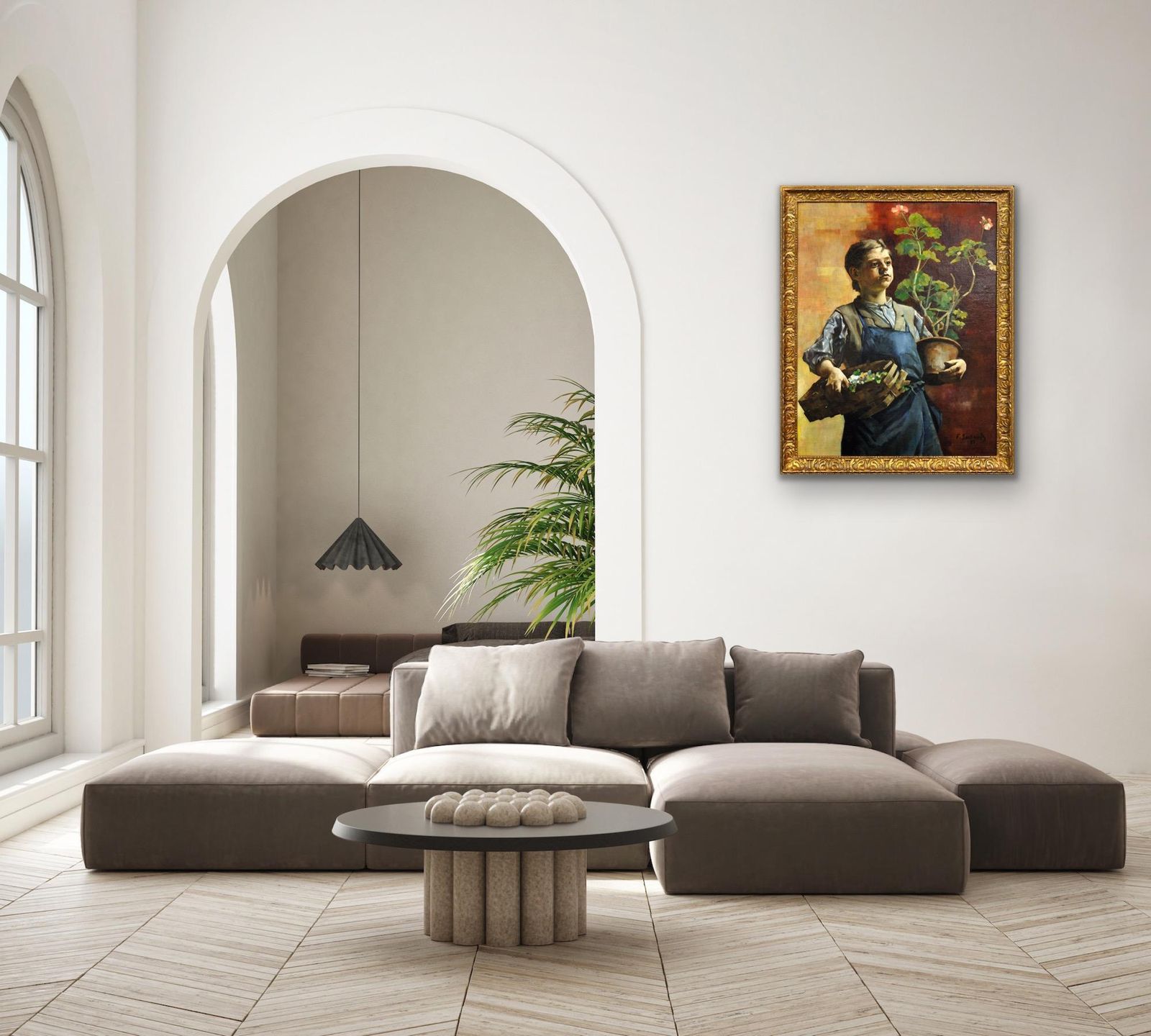
“Le Petit Jardinier” (1887) by François Gailliard (also known as Franz or Frans Gailliard) is a captivating and significant oil on canvas painting, signed and dated by the artist in the lower right corner.
In this evocative piece, a young boy, dressed in a blue apron over a striped shirt, stands confidently against a textured background of warm, earthy tones. His gaze is calm and proud. He holds a red geranium plant in a terracotta plant pot in his left hand, its delicate bloom standing out vividly against the darker tones of his attire. The red geranium, a recurring symbol in art for resilience and endurance, here becomes a focal point that further enhances the painting’s depth of meaning. In his right hand, he carries a battered wooden gardening trug.
The composition beautifully balances light and shadow, with the soft light illuminating the boy’s face and highlighting the red geranium and the vibrant green foliage. The repeated use of square ended brushstrokes gives the work a very modern feel, despite it being nearly 140 years old.
This painting holds historical significance as it was likely produced specifically as a tribute to the painting “Le Vieux Jardinier”, produced a year earlier by the leading Belgian artist, Emile Claus. Emile Claus was a leading figure in the Luminism movement and a few years older than Galliard. He would have been 39 when he painted “Le Vieux Jardinier”; Galliard would have been 26 when he painted “Le Petit Jardinier”. There is an intergenerational dialogue between the two works.
The two paintings share a theme and strong visual links: firstly, the gardener, one old, the other a young boy. This contrast between youth and age is a well-established artistic motif that often serves to explore different stages of life. Claus’s depiction of an older gardener and Gailliard’s representation of a young one can be seen as complementary—two sides of the same coin. Secondly, the blue apron: Clothing and tools often serve as symbols of profession and identity in artwork, and by having both gardeners wear the same attire, Gailliard may have been emphasizing their shared roles despite the age difference. Thirdly, the geranium: The potted red geranium held in the left hand of both figures is another strong connection between the two works. The repetition of this specific flower may symbolize continuity in the cycle of life or the nurturing aspect of gardening, which can be passed from one generation to the next. It’s unlikely this is coincidental, especially given how closely the other elements mirror each other.
The artists were from a shared artistic movement and influenced by similar developments, although it is not thought that they ever directly collaborated. Both artists were active in Belgium’s dynamic art scene, and they exhibited in many of the same galleries and artistic circles. Though Gailliard was younger, he came of age during the height of Claus’s career, and it’s highly likely that Gailliard was influenced by Claus’s explorations of light and colour.
The fact that Gailliard painted “Le Petit Jardinier” only a year after Claus’s “Le Vieux Jardinier” is particularly suggestive. Gailliard was likely familiar with Claus’s work, given Claus’s prominence in the Belgian art scene and his influence within the Luminist movement. The close timeline hints that Gailliard may have consciously crafted his painting as a variation or response to Claus’s work.
It was not uncommon for artists to create pieces in homage to or inspired by the work of their contemporaries, especially when they admired or were influenced by them. Gailliard’s painting could be seen as a respectful variation on Claus’s theme, exploring similar ideas but from a different perspective—youth instead of old age, the start of life’s journey instead of its twilight.
The interpretation of Gailliard’s painting as a tribute or a variation on Claus’s “Le Vieux Jardinier” adds a deeper layer of interest to “Le Petit Jardinier,” enhancing its narrative and its place within the broader context of Belgian art at the time. The symbolic and artistic links make Gailliard’s painting not just an independent work, but also a thoughtful nod to Claus, deepening its historical and artistic significance.
© Big Sky Fine Art
We provide a professional shipping and delivery service which is free to customers in the UK, Europe, USA and Canada. We can also provide other worldwide delivery on any purchase. Please contact us for further information.
Condition report:
Very Good.
The canvas and the painted surface have benefitted from cleaning, restoration and conservation, which was performed on our instruction, supervision and approval.
The painting is presented and supplied in its original frame. The frame has been restored and reinforced with supporting brackets along with new replacement hanging fittings.
This antique painting is in very good condition. It wants for nothing and is supplied ready to hang and display.
Additional dimensions information:
Image size 36.6 inches x 28.5 inches ( 93cm x 72.5cm ). Frame size 41.7 inches x 33.5 inches ( 106cm x 85cm ).
Wear Condition
Good
Cancellations
We offer free cancellations and full refund for orders cancelled before dispatching. View full policy.
Returns
We have a 14-day return guarantee for orders from individual sellers, within the UK and European Union. View full policy.
Additional Delivery Info from Seller
When you purchase a painting, we will make arrangements to deliver the painting to your required destination. There is no charge for packaging and delivery to the UK, Europe, USA or Canada.
We will take care of insurance too at no extra cost to you.
We will process your order after your payment is completed and have it ready for dispatch with 3 working days. Transit times within the UK are reliably 1-2 days. Transit times within mainland Europe are 2 to 7 days. Transit times to the USA are 3 to 7 days.
We will also arrange delivery elsewhere in the rest of the world for a modest charge, this will depend on the location and the size of the painting and the type of shipping necessary. You can enquire how much this will be prior to placing an order.
Delivery is by professional courier and paintings are carefully packaged according to their particular attributes.
We may offer a personal delivery service for some areas within the UK, by prior arrangement and enquiries as to this are welcome.
Estimated delivery time
Less than one week
Free collection available
Yes
Made to Last
The average lifespan of a Vinterior piece is 100 years, while modern flat-pack typically takes just 3 years to reach landfill. When you choose pre-loved, you can shop with confidence in quality, craftsmanship and longevity. With our top-rated customer service team and price match guarantee, there's no better way to shop pre-loved.

Shopping at Vinterior


Similar Paintings
Similar Paintings
Add to a wishlist
Create Wishlist
Completethe room
Good design is all in the layering. Whether you're adding impact or refining the details, now’s the time to find what’s missing.
Reviews
5.0

Based on 1 review


Wear conditions
Excellent
Shows little to no signs of wear and tear.
Good
May show slight traces of use in keeping with age. Most vintage and antique items fit into this condition.
Average
Likely to show signs of some light scratching and ageing but still remains in a fair condition.
Apparent Wear and Tear
Visible signs of previous use including scratches, chips or stains.
Please refer to condition report, images or make a seller enquiry for additional information.
Cancellations and Returns
Last updated: 12/02/2026
Clear, predictable protection for every pre-loved purchase.
Simple £75 flat return fee for UK-to-UK mainland furniture when you change your mind.
Applies to furniture with a final selling price of up to £5,000 (excluding delivery and service fees) and delivered from a UK mainland seller to mainland UK addresses. Excludes Northern Ireland, Channel Islands, Scottish Highlands & Islands, Isle of Wight and Isles of Scilly.
Buying vintage should feel inspiring, not uncertain.
Every order on Vinterior is backed by straightforward returns, free cancellations, and extra peace of mind for UK furniture purchases.
1. Free cancellations
Changed your mind before dispatch?
You can cancel any order before it's shipped for a full refund, including delivery.
To cancel an order, click Create cancellation on the order page.
Once an item has been dispatched, delivery costs are not refundable.
Bespoke, personalised or made-to-order pieces cannot be cancelled.
2. Returning an item
You have 14 days from delivery to request a return.
There are two return types:
A. The item isn't as described (free return)
If your piece arrives and it doesn't match the listing in any material way (incorrect description, undisclosed damage, inaccurate measurements, misleading photos), you are fully protected:
- Free return
- The seller or Vinterior arranges pickup
- Full refund, including outbound delivery costs once the seller receives the item
This applies to all purchases.
B. You changed your mind
UK-to-UK furniture deliveries:
To make UK furniture returns predictable and stress-free, we offer a simple flat return fee of £75.
- Applies to furniture delivered from a UK mainland seller to a mainland UK address. Excludes Northern Ireland, Channel Islands, Scottish Highlands & Islands, Isle of Wight and Isles of Scilly.
- Pickup arranged for you
- One clear fee, no surprises
We coordinate the return with either the seller's chosen courier or our trusted delivery partner.
All other items
Most smaller items are straightforward to return.
You can still return your item within 14 days.
- For smaller or parcel-sized items, you can choose to post the item back yourself using a tracked service, or the seller can suggest a preferred courier.
- For larger or more fragile pieces, the seller may recommend the safest return method.
- Return delivery costs vary depending on size and courier.
The seller will confirm the best option based on the item.
3. If your item arrives damaged
Damage on arrival is uncommon, especially for UK furniture deliveries.
But if something does go wrong, you're fully protected.
- Let us know as soon as possible (ideally within 72 hours of delivery) so we can resolve things quickly
- Share photos so we understand what happened
- We’ll help arrange a return and refund if needed
You’re always protected when something goes wrong in transit.
Your statutory rights apply for up to 30 days from delivery.
4. What can't be returned
Some items cannot be returned:
- Bespoke, personalised, or made-to-order pieces
- Items altered after delivery
5. How to start a return
- Log in to your Vinterior account
- Open your order
- Click Create a return
- Add notes + photos if relevant
We'll guide you through the rest.
6. What happens next
- We review your request, confirm the return and advise on next steps
- Pickup or return method is arranged
- The item is returned to the seller
- We issue your refund once the seller confirms the item's condition
Returns are completed smoothly once the pickup is arranged.
7. Refunds
Once the seller receives the piece back in the same condition it was sent, we'll issue your refund to your original payment method.
Once a refund is issued, it may take up to 5–10 working days for the funds to appear back on your original payment method, depending on your bank or card provider.
If the item is returned with new damage that wasn't present at delivery, the refund may be adjusted following review.
Need help?
If you have questions about a return or your order, our support team is here to help. Email us at [email protected] or find other ways to contact us here.
What your service fee covers
-
 14-day return guarantee
-
Flat-fee return shipping on UK furniture
-
Seller vetting
-
Dedicated customer support
| Order Value (£) | Fee (£) |
|---|---|
| 0 — 49.99 | 2.75 |
| 50 — 99.99 | 5.50 |
| 100 — 199.99 | 11.00 |
| 200 — 399.99 | 21.00 |
| 400 — 599.99 | 30.00 |
| 600 — 799.99 | 40.00 |
| 800 — 999.99 | 50.00 |
| 1,000 — 1,499.99 | 55.00 |
| 1,500 — 1,999.99 | 60.00 |
| 2,000 — 4,999.99 | 82.50 |
| 5,000+ | 110.00 |
Added at checkout, based on your basket total.
