


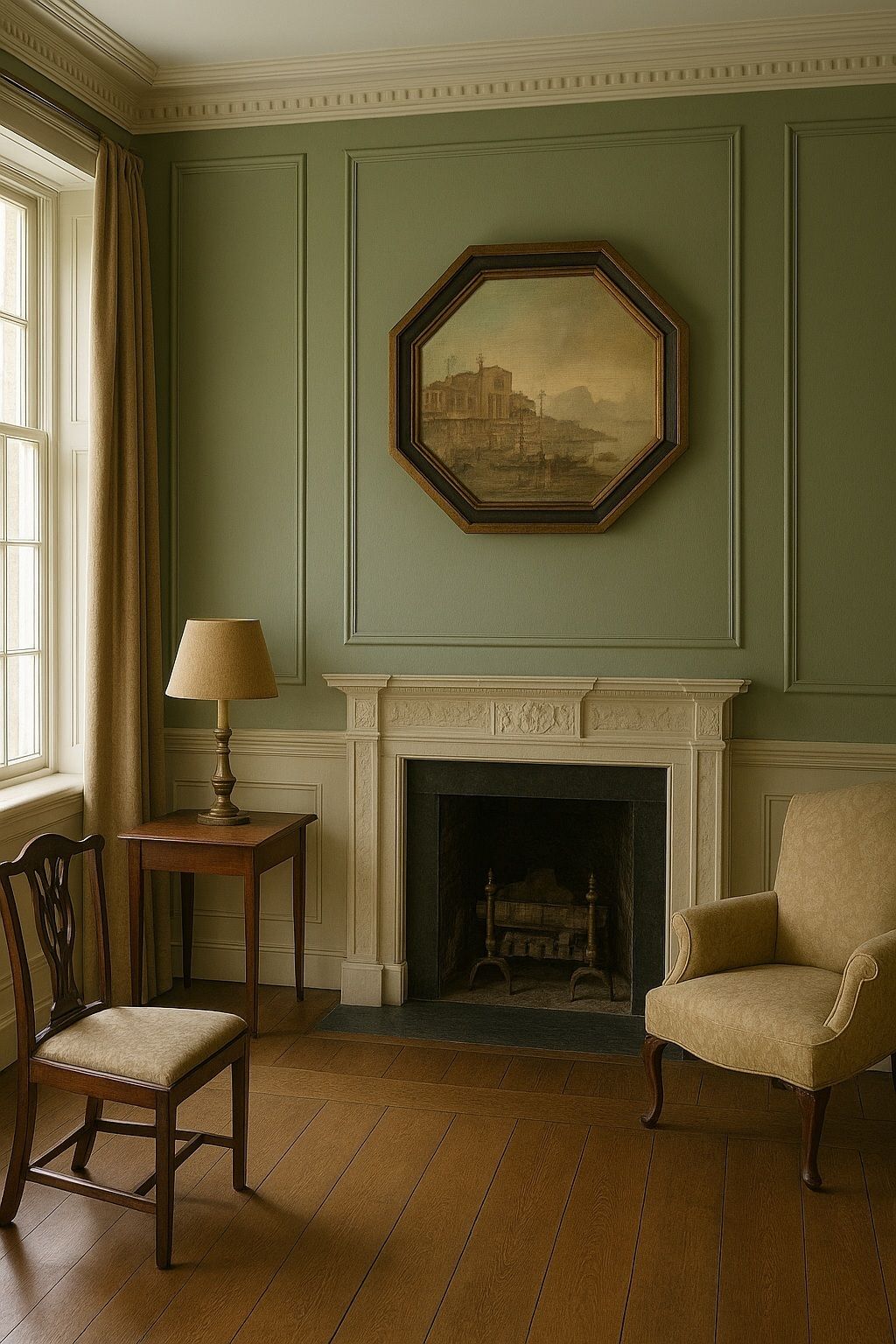
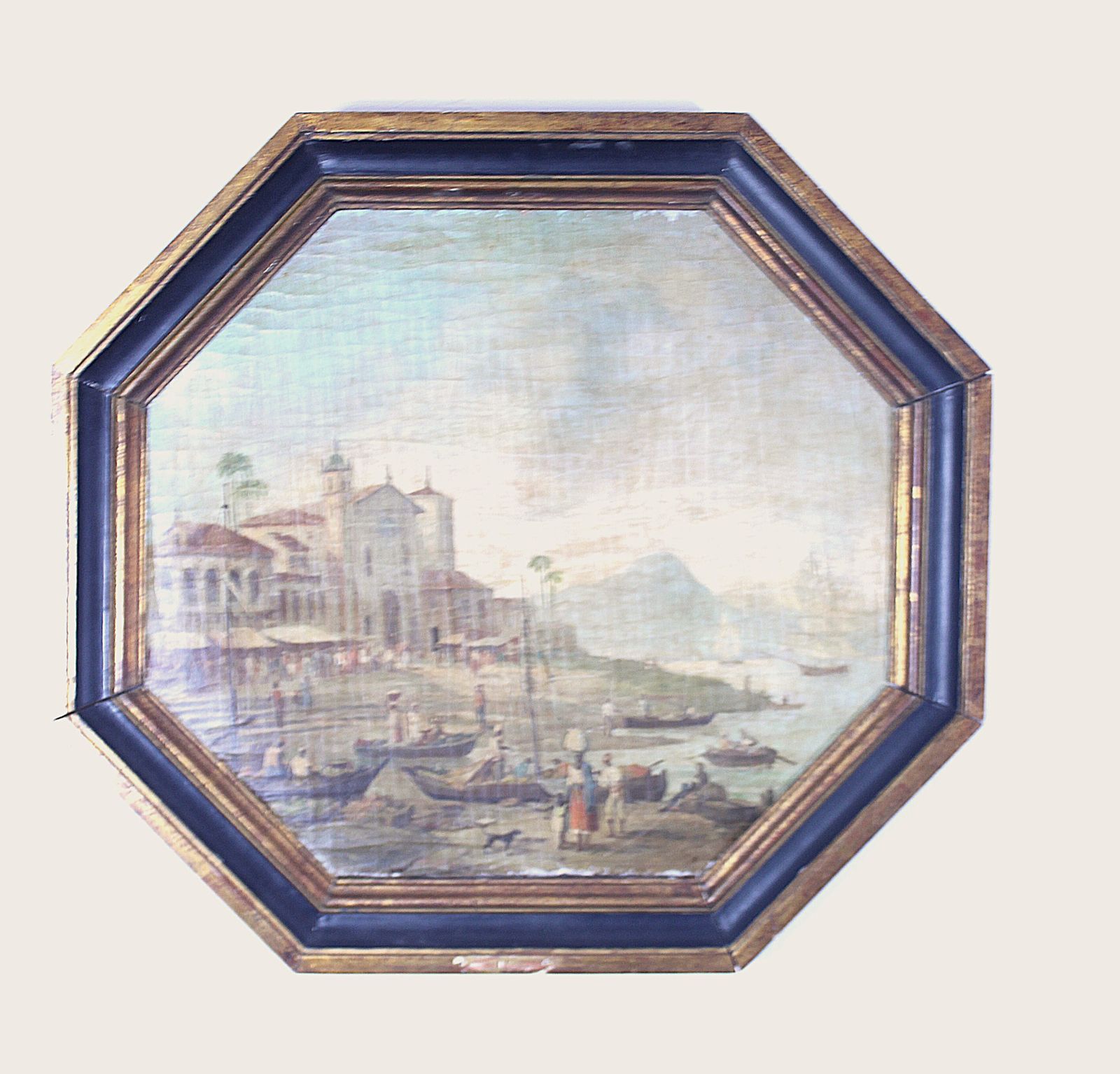
Early 19th Century Capriccio View Of Rio De Janeiro

 Seaford, United Kingdom

Hassle-free returns
-
 Easy returns (14 days)
-
Free return if the item isn't as described
-
Buyer protection
Damage is rare, and you're fully protected if it happens.
Dimensions
Wear Condition
Good
Material
Oil on Canvas
Style
Antique
Product Details
Description
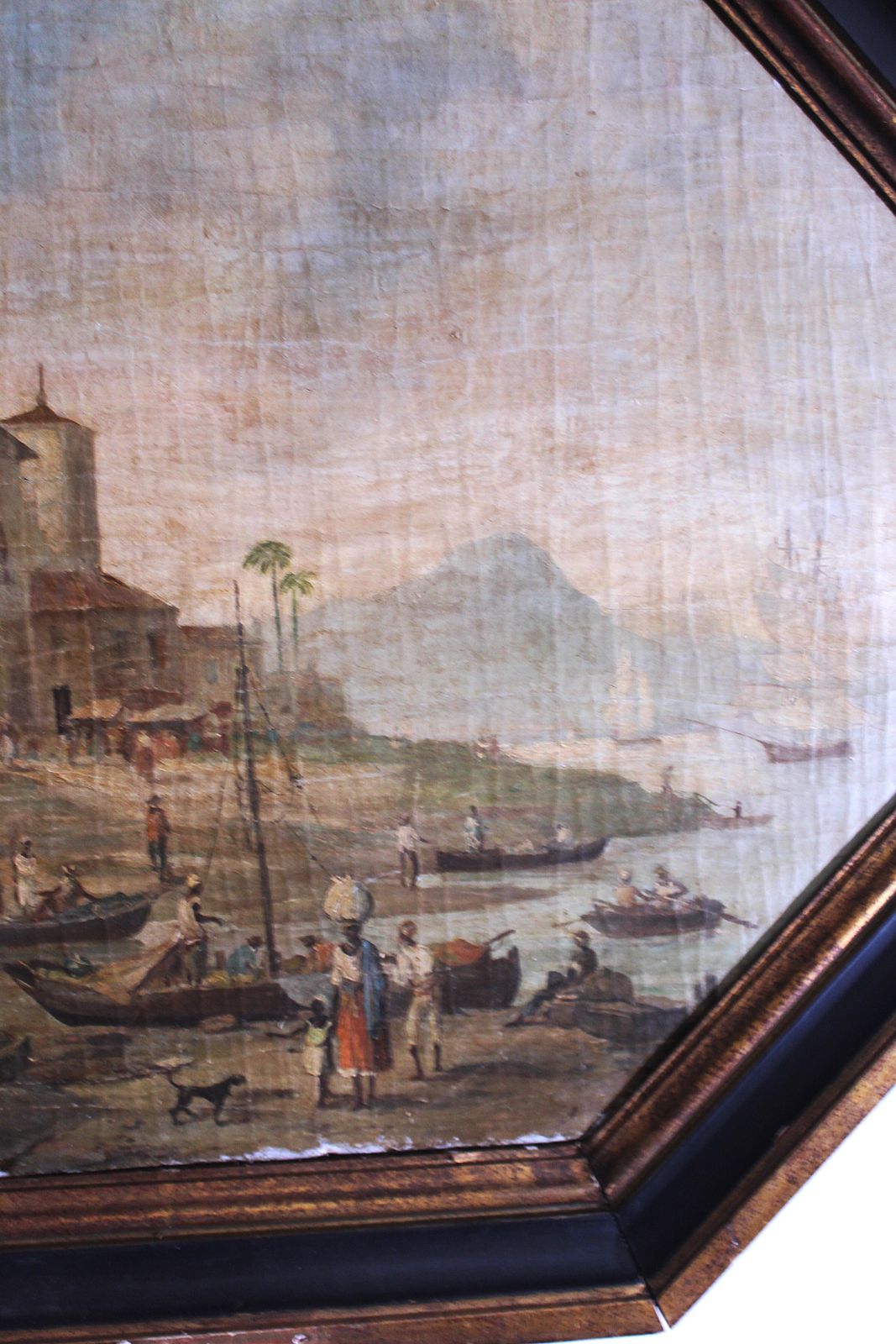
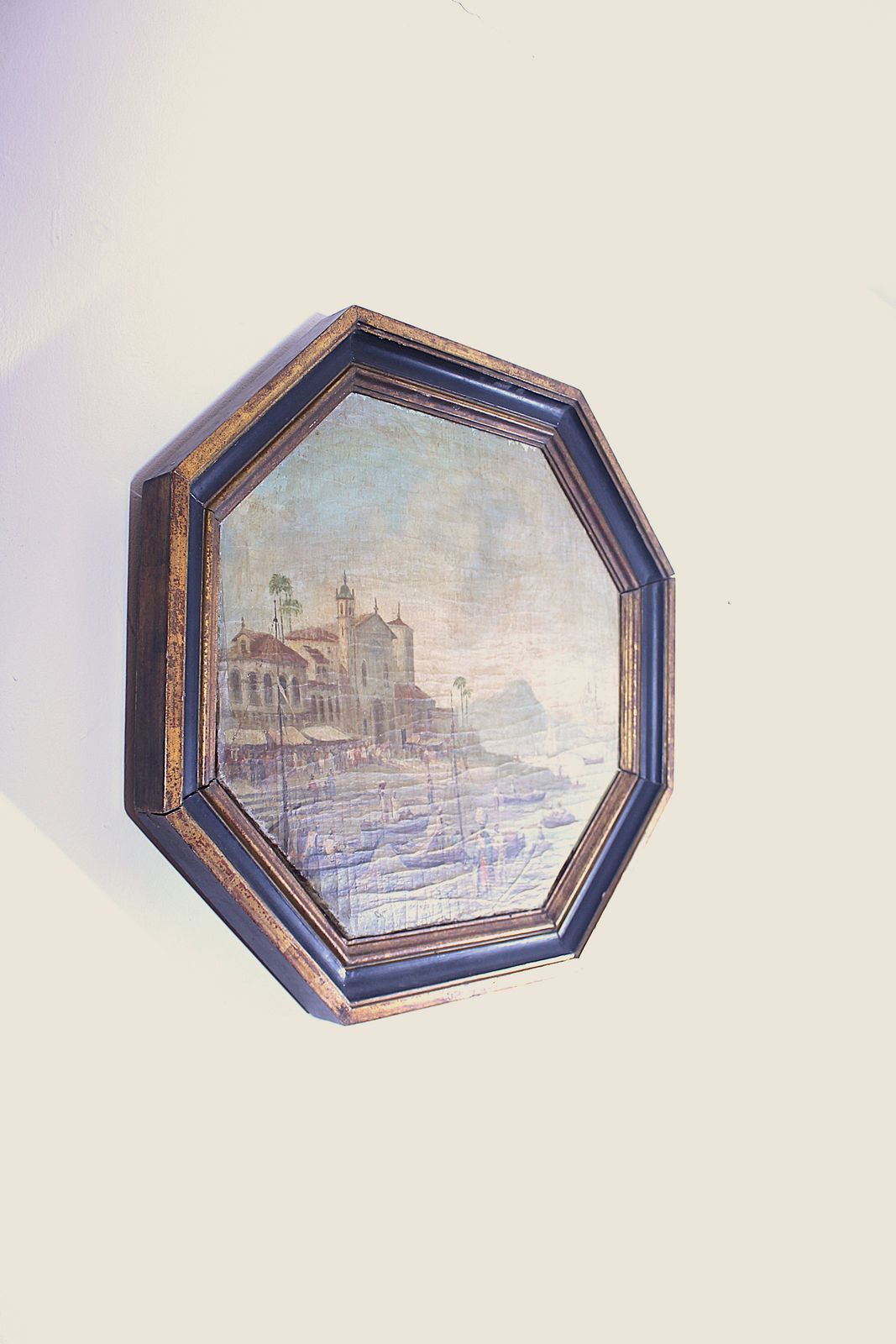
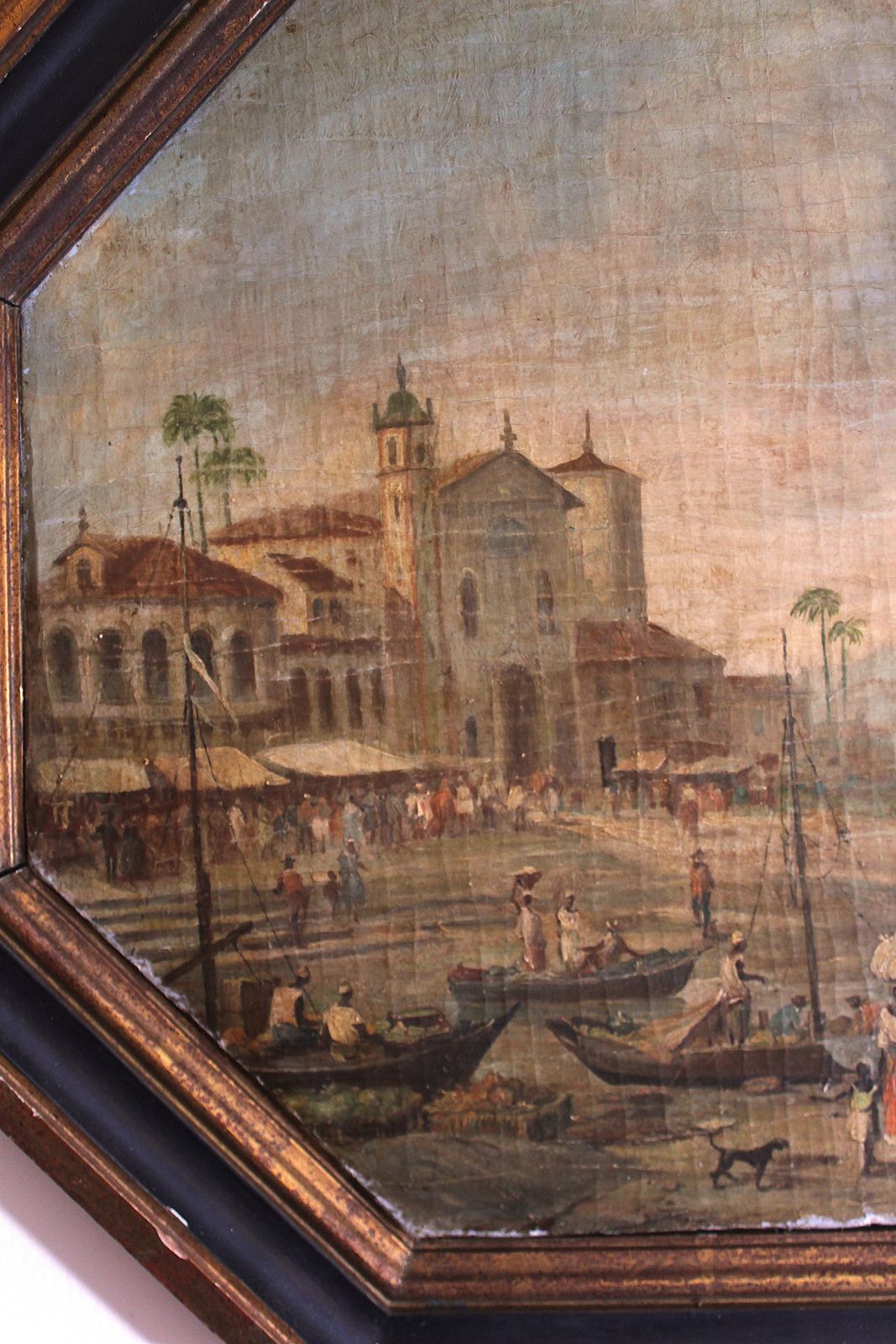
Early 19th century Capriccio view of Rio de Janeiro Painting
Probably painted circa 1810 by one of Jean-Baptiste Debret, Italian Students.
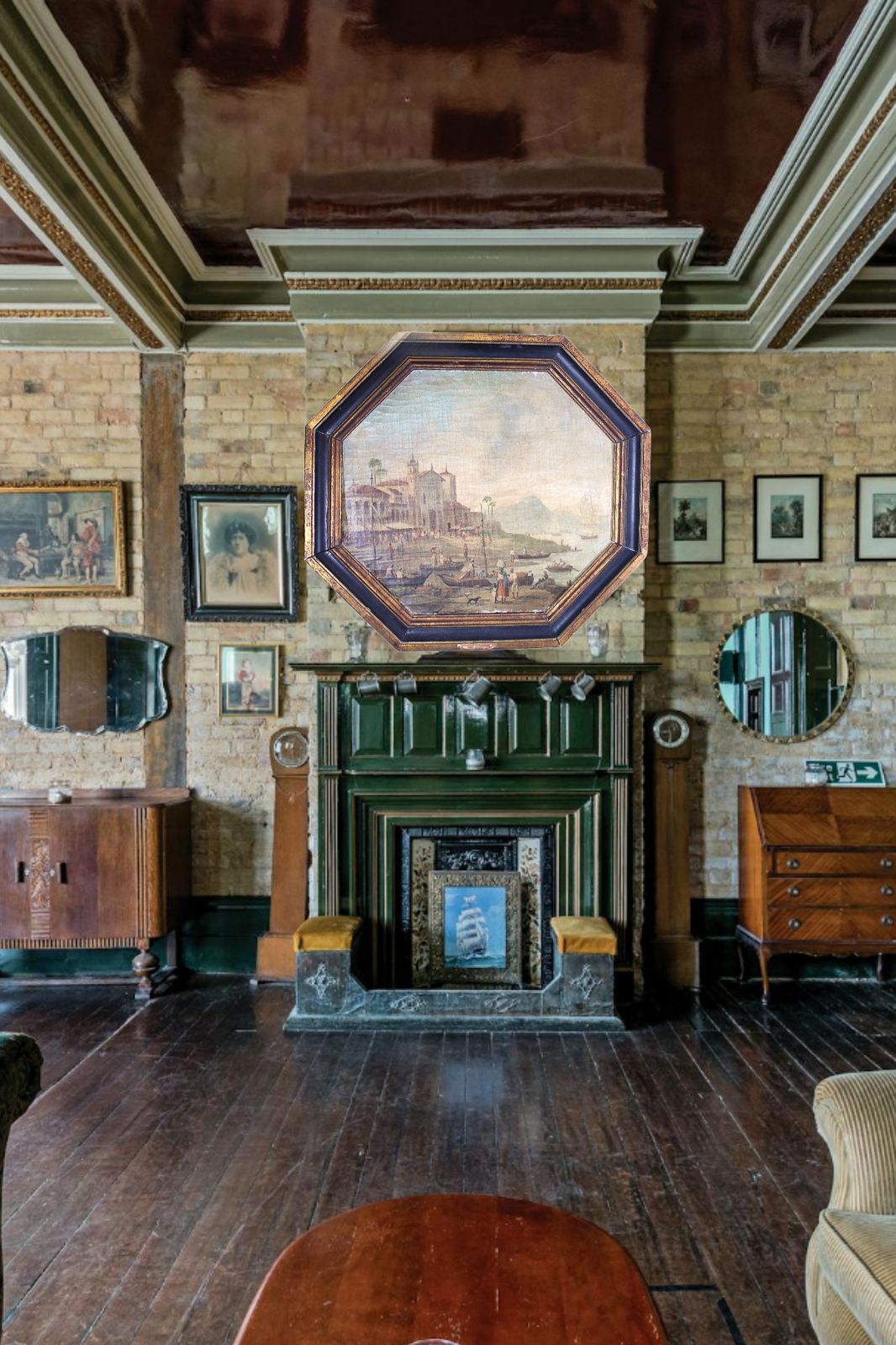
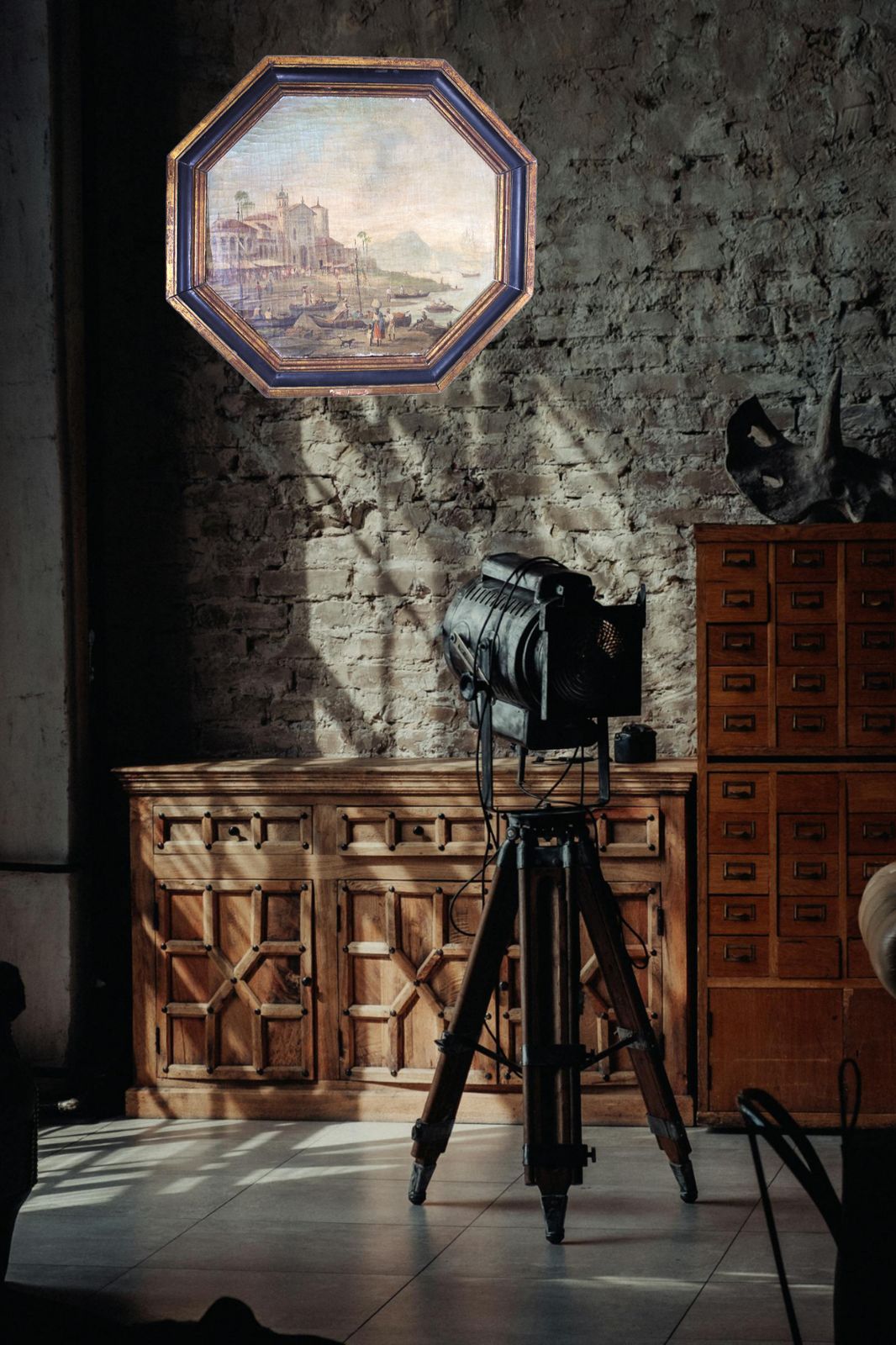
Styled interiors are for presentation purposes and intended to inspire. Final layout may vary
Historical Context of Early 19th Century Portuguese Colonial Brazil
1.1 Transition from Colony to Empire
During the early 19th century, Brazil underwent a seismic shift in its political status. Originally a colony under the Portuguese Empire, the arrival of the Portuguese Royal Court in Rio de Janeiro in 1808 rapidly elevated the city’s cultural and political importance. By 1815, Brazil was declared a kingdom united with Portugal, setting the stage for the emergence of the Empire of Brazil in 1822. This period of transformation—often termed the transitional period from colony to empire—fueled a wave of artistic production in cities like Rio de Janeiro.
1.2 European Artistic Influence in Brazil
With the French Artistic Mission in Rio (initiated in 1816) and the presence of various Portuguese and European artists, Brazilian art of the early 1800s began to reflect diverse influences, from neoclassical painting to the early rumblings of romanticism. Painters such as Jean-Baptiste Debret, and Nicolas-Antoine Taunay, and local luminaries like Manuel de Araújo Porto-Alegre contributed to the fine arts tradition in Brazil. Their works featured scenes of local life, portraits of Brazilian society, and imaginative vistas—sometimes referred to as “capriccios,” in which real elements were combined with artistic liberties to create an idealized panorama.
1.3 Rio de Janeiro as Cultural and Political Hub
Rio de Janeiro, often called the Imperial capital after Brazil’s independence, was home to foundational institutions like the Imperial Academy of Fine Arts (Academia Imperial de Belas Artes). Later evolving into the Escola de Belas Artes (School of Fine Arts in Rio), these academies nurtured the talents of emerging painters, who found patronage under the Royal Court and, subsequently, the Imperial Court. The city’s significance was further enhanced by the construction of significant buildings, the modernization of infrastructure, and the mingling of European courtly customs with the traditions of local inhabitants.
. Description of the Octagonal Oil on Canvas: A Capriccio View of Rio de Janeiro
2.1 Composition and Layout
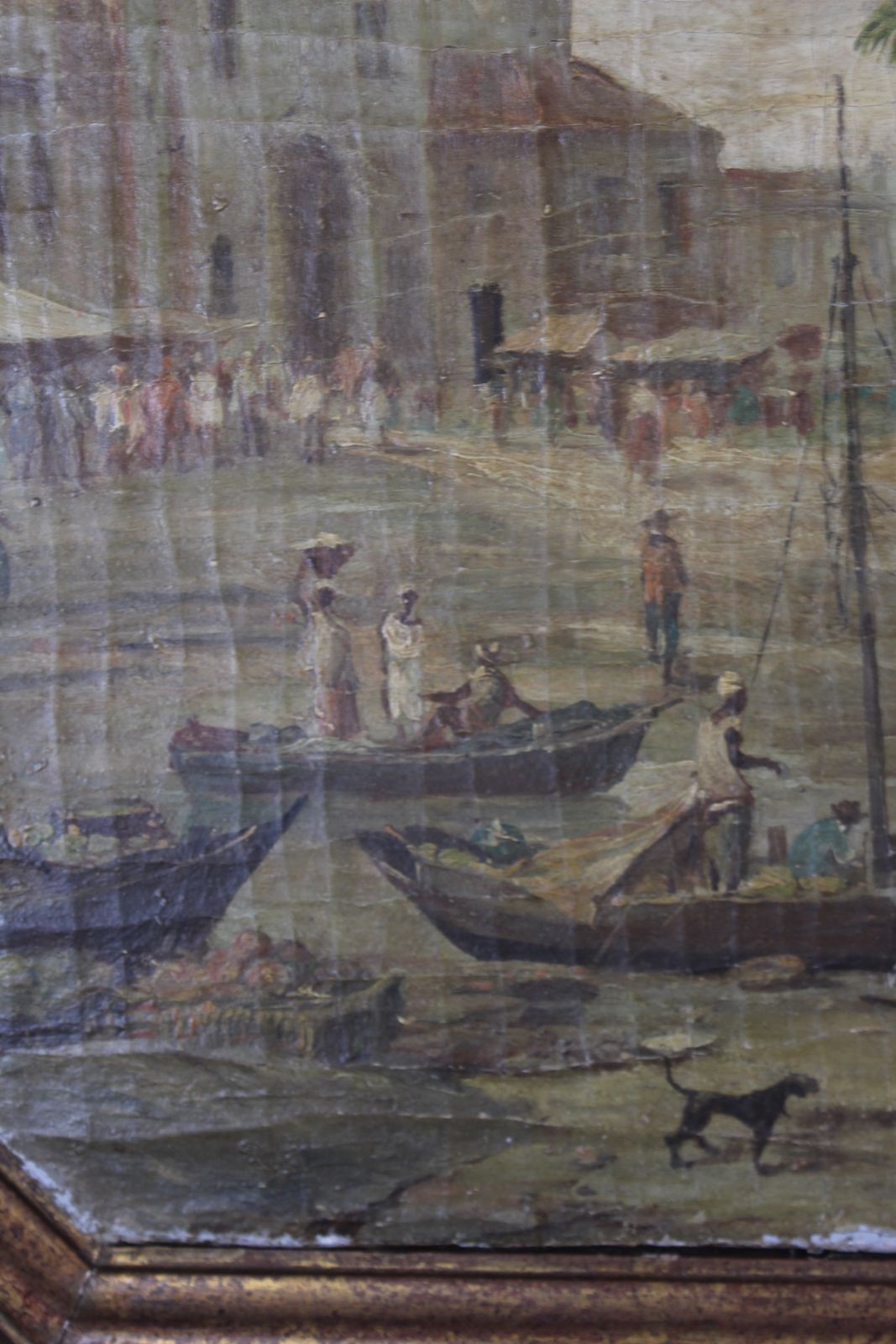
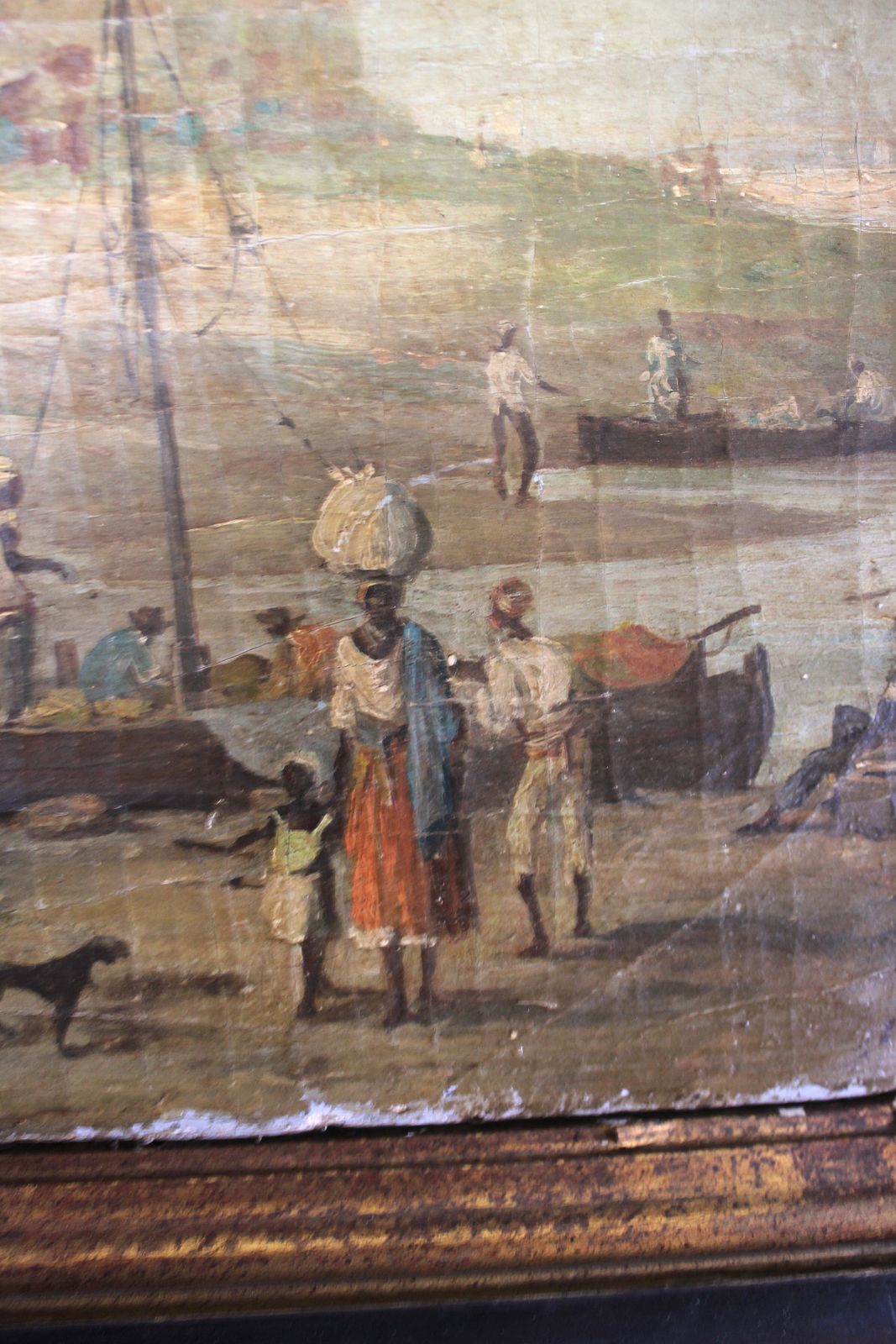
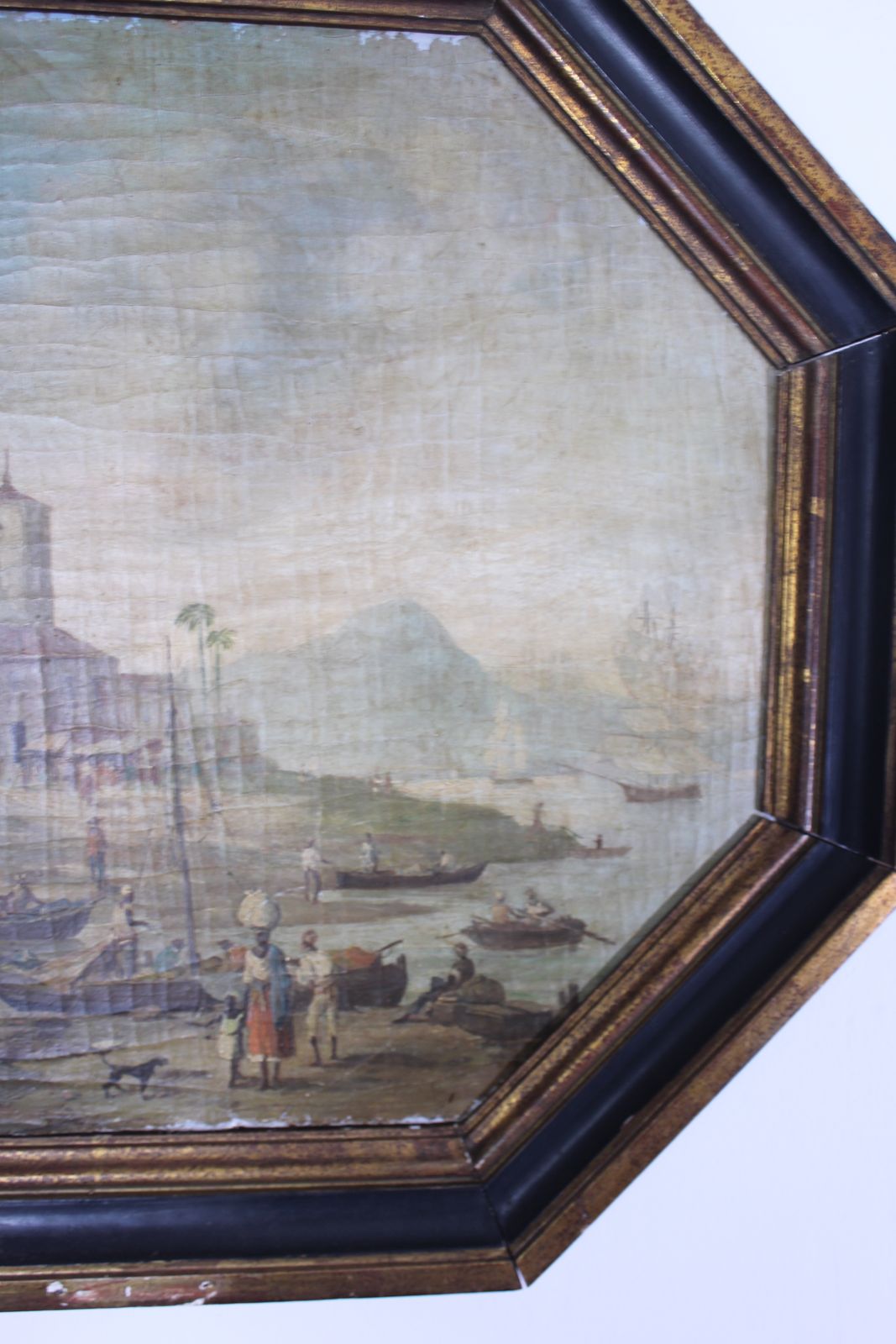
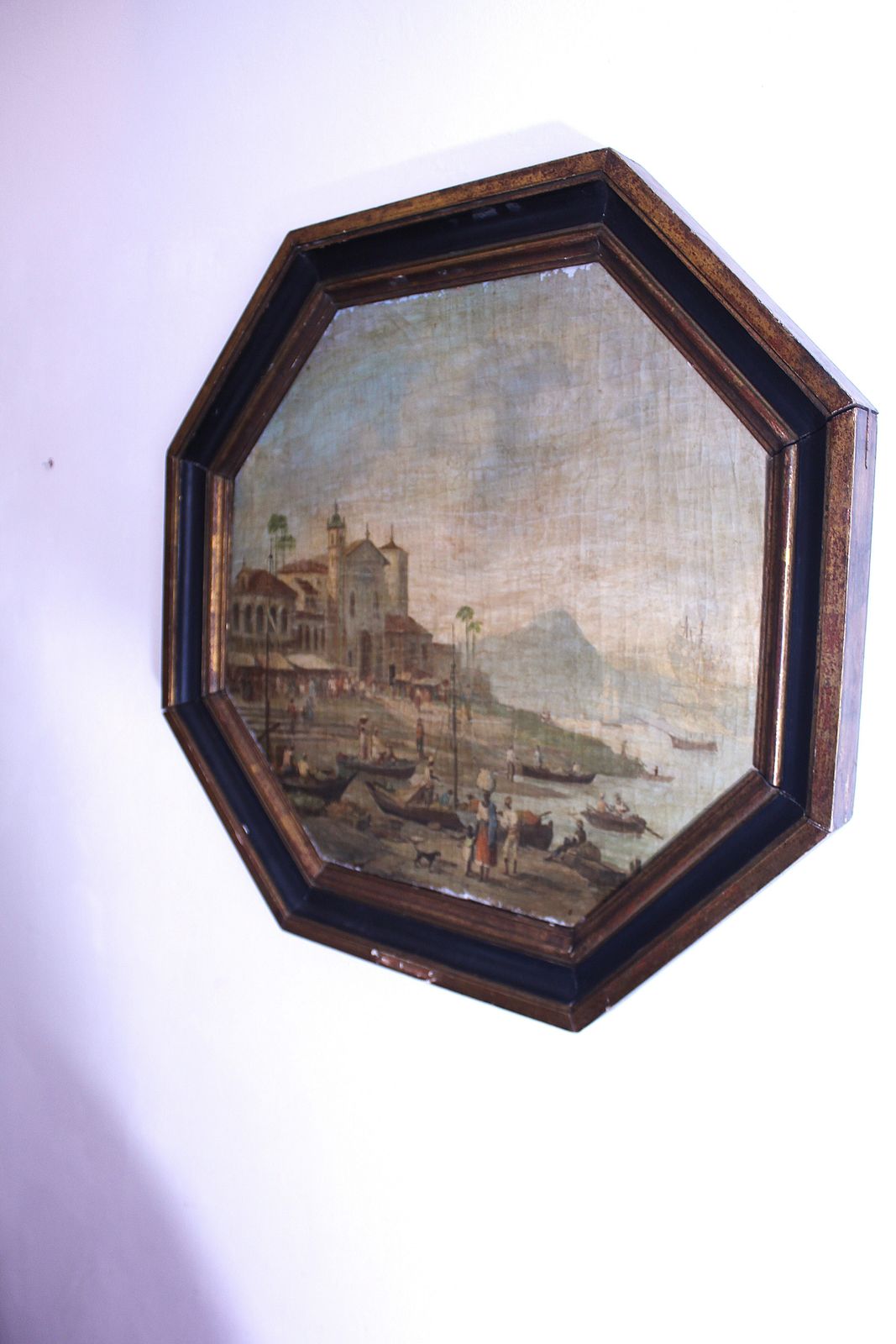
The most striking characteristic of this 19th-century Brazilian art piece is its octagonal shape, a relatively unusual format that draws the viewer’s gaze toward its centre. The composition showcases Rio de Janeiro’s shoreline in the early 1800s, brimming with merchant ships and smaller boats anchored near the shore. On the sand, there is a bustling crowd of local people—men and women carrying food and goods on their heads, loading and unloading boats, and engaging in everyday commerce. The backdrop of soaring mountains suggests Rio’s iconic topography, embodying the landscape that famously defines the city.
2.2 Architectural and Religious Landmarks
On the left side, one can discern the silhouette of a church believed to be Santa Lucia, a significant religious structure in the heart of early 19th-century Rio. This element provides viewers with a tangible reference point, linking the scene to an actual location. However, because this painting is labelled as a “capriccio,” the artist might have taken creative liberties by rearranging or amplifying certain features of the city. The melding of real and idealized elements is characteristic of these imaginative vistas.
2.3 Evoking Daily Life in Colonial Rio
One of the painting’s greatest appeals lies in its portrayal of daily life during the colonial era. Men and women from various backgrounds populate the scene. Some appear to be carrying goods on their heads, a common practice in Brazil that has persisted through different centuries. Others appear to be haggling or trading near small vessels, revealing the commercial pulse of an active port city. This focus on local people, combined with the grandeur of merchant ships, captures the tension and synergy between the every day and the extraordinary—a hallmark of Brazilian colonial painting that balances the grand narratives of empire with the rhythms of ordinary life.
2.4 An Amalgamation of Neoclassical and Romantic Influences
Although academic art in early 19th century Brazil was highly influenced by neoclassicism, the onset of romanticism can be spotted in the emotional portrayal of the sky, the lively palette, and the dramatic emphasis on nature’s beauty (the mountains, in particular). This duality reflects the fine arts tradition in Brazil during the transitional phase when artists were embracing multiple styles. As part of the School of Rio or the Rio de Janeiro school, painters often integrated academic techniques learned from European masters with emerging local subjects and influences.
3. Institutions and Artistic Movements
3.1 Imperial Academy of Fine Arts
Originally known as the Royal School of Sciences, Arts, and Crafts, the Imperial Academy of Fine Arts in Rio de Janeiro was instrumental in shaping 19th-century Brazilian art. Influential artists and teachers from Portugal, France, and other European nations congregated at the Academy, imparting their expertise to native students. As the monarchy consolidated power, the Academy enjoyed royal patronage, leading to the creation of Imperial Academy-style works that combined European academic rigour with Brazilian-themed subject matter.
3.2 Impact of the French Artistic Mission
The French Artistic Mission, which arrived in 1816, played a pivotal role in introducing advanced European artistic techniques, thereby elevating the overall quality of painting in Brazil. Artists like Jean-Baptiste Debret not only documented Brazilian society but also spearheaded the development of a local visual identity that aligned with both academicism and the national context of a blossoming empire. Debret, alongside others such as Nicolas-Antoine Taunay, mentored Brazilian artists, sowing the seeds of what would become the Brazilian academic art movement.
3.3 Religious, Historical, and Landscape Paintings
In addition to everyday scenes and historical compositions, religious iconography remained crucial throughout Portuguese colonial and imperial Brazil. Churches were omnipresent in cityscapes like Rio de Janeiro. Many colonial-era Brazilian portraits integrated religious elements, reflecting the Catholic legacy inherited from Portugal. Meanwhile, the dramatic landscapes around Rio, with its famed mountainous backdrop, provided fertile ground for romantic and neoclassical interpretations, as seen in colonial-era art.
4. Collecting and Buying Early 19th Century Brazilian Paintings
4.1
For collectors intrigued by Portuguese-Brazilian or Luso-Brazilian artworks, there are numerous avenues to explore. Terms like “antique Portuguese colonial art for sale,” “collecting 19th-century Rio de Janeiro artwork,” or “auction for early 19th-century Brazilian paintings” can help guide online searches. Auction houses, specialized art dealers, and reputable galleries often carry these historical pieces
4.3 Pricing and Market Trends
Because of their historical and cultural significance, Portuguese colonial Brazilian oil paintings can command notable prices in the art market. The rarity of surviving canvases from the early 1800s—especially those in good condition—drives demand among collectors. Modern interest in imperial Brazil and Rio de Janeiro as an imperial capital also contributes to growing market values. Prospective buyers should be prepared to navigate auctions, dealer negotiations, and potential competition among seasoned collectors.
5. Significance and Style: Why This Painting Matters
5.1 Preservation of a Transitional Period
This octagonal oil on canvas not only offers aesthetic pleasure but also serves as an invaluable historical document. It portrays Brazil at a time when it was shedding its colonial status and moving toward an imperial identity. The lively portrayal of merchants, local townspeople, and architectural elements encapsulates the transitional period—a critical turning point in Brazilian history.
5.2 Reflection of Academicism and Emerging Romanticism
The painting’s technique, likely influenced by academicism and the early wave of romanticism, illustrates how Brazilian art absorbed and adapted European methods to local realities. Rio’s harbour, with its dramatic mountainous backdrop, is a natural stage for romantic flourishes, while the systematic rendering of figures and architectural details points to an academic art background.
5.3 Synthesis of Heritage and Innovation
By blending Portuguese colonial influences with the developing identity of an independent Brazil, this artwork is a testament to the era’s cultural synthesis. The church of Santa Lucia, for instance, stands as a symbol of colonial religious heritage, while the bustling trade and fresh energy of the city hint at new beginnings and the forging of a unique Brazilian identity.
7. Concluding Thoughts: A Testament to Luso-Brazilian Heritage
This octagonal, early 19th-century oil on canvas from the Brazilian school of Portuguese colonial art stands out as a shining example of how local and European influences converged in colonial Brazil. Depicting a capriccio view of Rio de Janeiro, complete with merchant ships, local inhabitants, and the recognizable church of Santa Lucia, the painting immerses us in a vibrant scene that is both historically instructive and artistically enchanting. Beyond its aesthetic and historical significance, it serves as an emblem of a cultural tapestry woven from Portuguese traditions, indigenous roots, and emerging Brazilian identity.
For collectors and enthusiasts seeking to buy early 19th-century Brazilian paintings, this piece—and others like it—can represent a tangible connection to a pivotal era in Brazil’s evolution. From its fine arts tradition shaped by the Imperial Academy of Fine Arts to the European artistic influence brought by the French Artistic Mission, Brazil’s art historical narrative is both diverse and richly layered. Incorporating academic art, romanticism, and traces of neoclassicism, paintings from the Rio de Janeiro school speak to the dynamic cultural forces at play in imperial Brazil.
Measurements
Height 62 cm
Width 68
Condition report:
In Original condition, personal preferences could do with a light clean, fine craquelure throughout.
Wear Condition
Good
Cancellations
We offer free cancellations and full refund for orders cancelled before dispatching. View full policy.
Returns
We have a 14-day return guarantee for orders from individual sellers, within the UK and European Union. View full policy.
Additional Delivery Info from Seller
Free collection available
No
Made to Last
The average lifespan of a Vinterior piece is 100 years, while modern flat-pack typically takes just 3 years to reach landfill. When you choose pre-loved, you can shop with confidence in quality, craftsmanship and longevity. With our top-rated customer service team and price match guarantee, there's no better way to shop pre-loved.

Professional Seller
Shopping at Vinterior


Similar Paintings
Similar Paintings
Add to a wishlist
Create Wishlist
Completethe room
Good design is all in the layering. Whether you're adding impact or refining the details, now’s the time to find what’s missing.
Wear conditions
Excellent
Shows little to no signs of wear and tear.
Good
May show slight traces of use in keeping with age. Most vintage and antique items fit into this condition.
Average
Likely to show signs of some light scratching and ageing but still remains in a fair condition.
Apparent Wear and Tear
Visible signs of previous use including scratches, chips or stains.
Please refer to condition report, images or make a seller enquiry for additional information.
Cancellations and Returns
Last updated: 12/02/2026
Clear, predictable protection for every pre-loved purchase.
Simple £75 flat return fee for UK-to-UK mainland furniture when you change your mind.
Applies to furniture with a final selling price of up to £5,000 (excluding delivery and service fees) and delivered from a UK mainland seller to mainland UK addresses. Excludes Northern Ireland, Channel Islands, Scottish Highlands & Islands, Isle of Wight and Isles of Scilly.
Buying vintage should feel inspiring, not uncertain.
Every order on Vinterior is backed by straightforward returns, free cancellations, and extra peace of mind for UK furniture purchases.
1. Free cancellations
Changed your mind before dispatch?
You can cancel any order before it's shipped for a full refund, including delivery.
To cancel an order, click Create cancellation on the order page.
Once an item has been dispatched, delivery costs are not refundable.
Bespoke, personalised or made-to-order pieces cannot be cancelled.
2. Returning an item
You have 14 days from delivery to request a return.
There are two return types:
A. The item isn't as described (free return)
If your piece arrives and it doesn't match the listing in any material way (incorrect description, undisclosed damage, inaccurate measurements, misleading photos), you are fully protected:
- Free return
- The seller or Vinterior arranges pickup
- Full refund, including outbound delivery costs once the seller receives the item
This applies to all purchases.
B. You changed your mind
UK-to-UK furniture deliveries:
To make UK furniture returns predictable and stress-free, we offer a simple flat return fee of £75.
- Applies to furniture delivered from a UK mainland seller to a mainland UK address. Excludes Northern Ireland, Channel Islands, Scottish Highlands & Islands, Isle of Wight and Isles of Scilly.
- Pickup arranged for you
- One clear fee, no surprises
We coordinate the return with either the seller's chosen courier or our trusted delivery partner.
All other items
Most smaller items are straightforward to return.
You can still return your item within 14 days.
- For smaller or parcel-sized items, you can choose to post the item back yourself using a tracked service, or the seller can suggest a preferred courier.
- For larger or more fragile pieces, the seller may recommend the safest return method.
- Return delivery costs vary depending on size and courier.
The seller will confirm the best option based on the item.
3. If your item arrives damaged
Damage on arrival is uncommon, especially for UK furniture deliveries.
But if something does go wrong, you're fully protected.
- Let us know as soon as possible (ideally within 72 hours of delivery) so we can resolve things quickly
- Share photos so we understand what happened
- We’ll help arrange a return and refund if needed
You’re always protected when something goes wrong in transit.
Your statutory rights apply for up to 30 days from delivery.
4. What can't be returned
Some items cannot be returned:
- Bespoke, personalised, or made-to-order pieces
- Items altered after delivery
5. How to start a return
- Log in to your Vinterior account
- Open your order
- Click Create a return
- Add notes + photos if relevant
We'll guide you through the rest.
6. What happens next
- We review your request, confirm the return and advise on next steps
- Pickup or return method is arranged
- The item is returned to the seller
- We issue your refund once the seller confirms the item's condition
Returns are completed smoothly once the pickup is arranged.
7. Refunds
Once the seller receives the piece back in the same condition it was sent, we'll issue your refund to your original payment method.
Once a refund is issued, it may take up to 5–10 working days for the funds to appear back on your original payment method, depending on your bank or card provider.
If the item is returned with new damage that wasn't present at delivery, the refund may be adjusted following review.
Need help?
If you have questions about a return or your order, our support team is here to help. Email us at [email protected] or find other ways to contact us here.
What your service fee covers
-
 14-day return guarantee
-
Flat-fee return shipping on UK furniture
-
Seller vetting
-
Dedicated customer support
| Order Value (£) | Fee (£) |
|---|---|
| 0 — 49.99 | 2.75 |
| 50 — 99.99 | 5.50 |
| 100 — 199.99 | 11.00 |
| 200 — 399.99 | 21.00 |
| 400 — 599.99 | 30.00 |
| 600 — 799.99 | 40.00 |
| 800 — 999.99 | 50.00 |
| 1,000 — 1,499.99 | 55.00 |
| 1,500 — 1,999.99 | 60.00 |
| 2,000 — 4,999.99 | 82.50 |
| 5,000+ | 110.00 |
Added at checkout, based on your basket total.
