


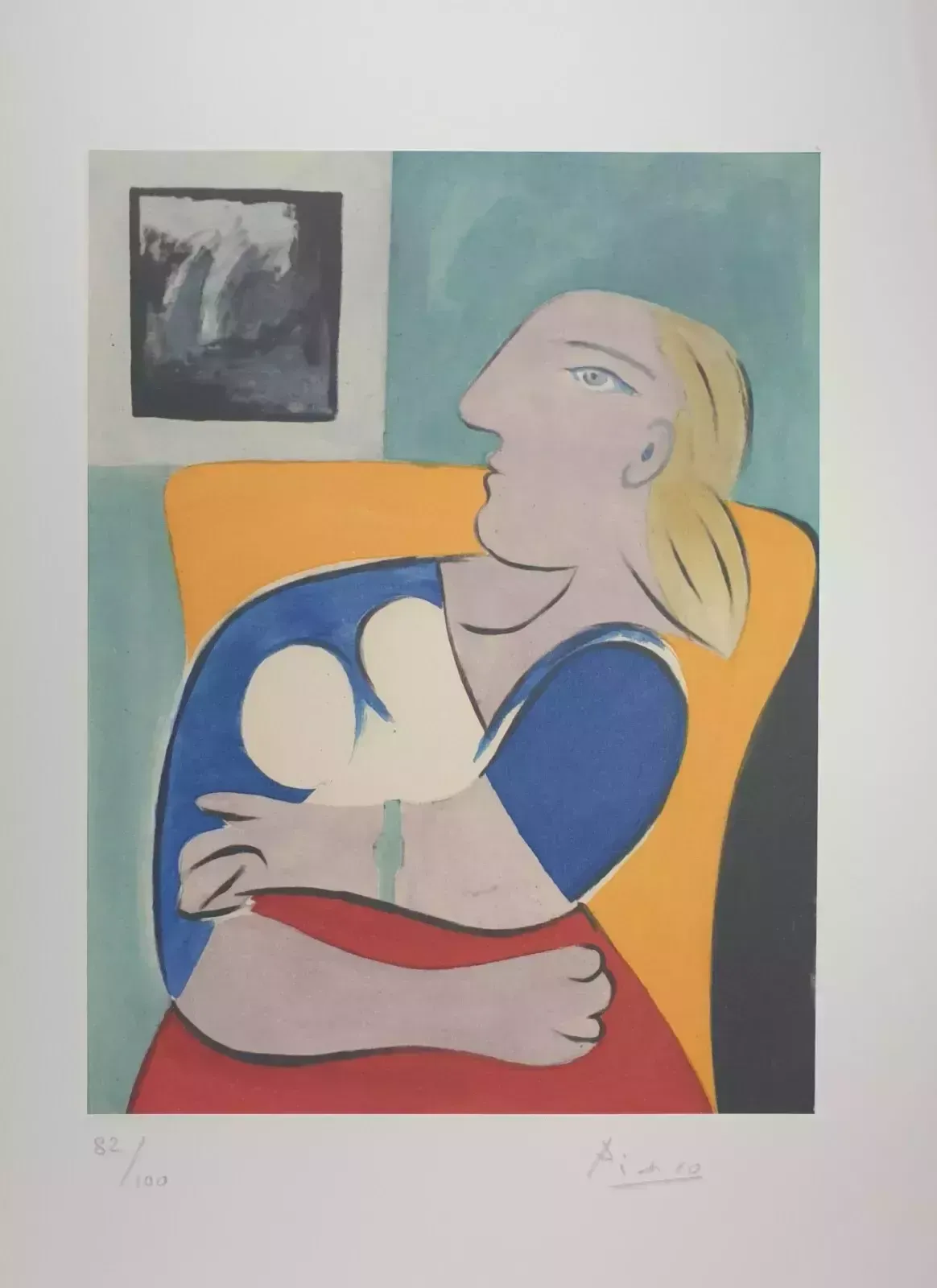
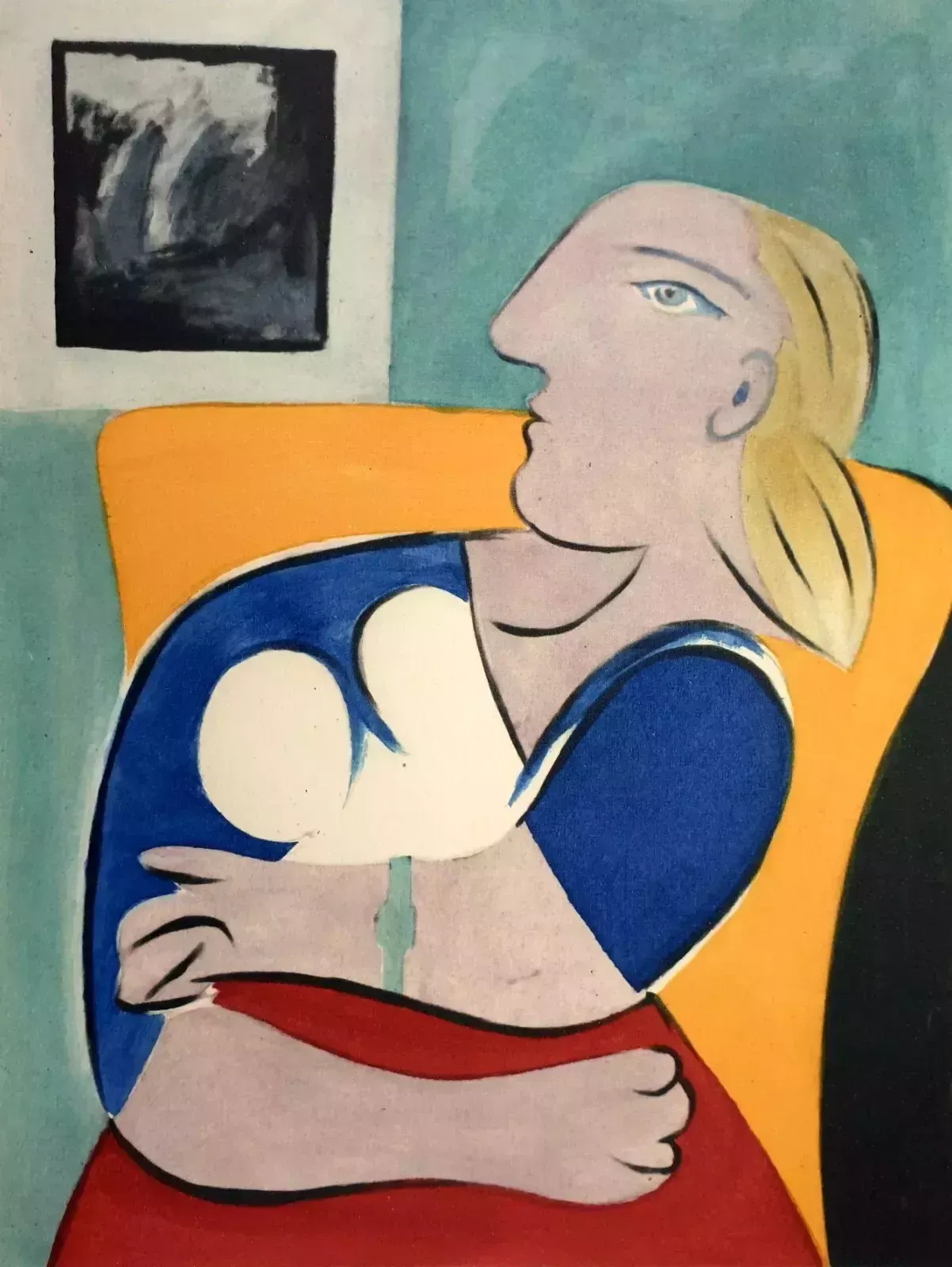
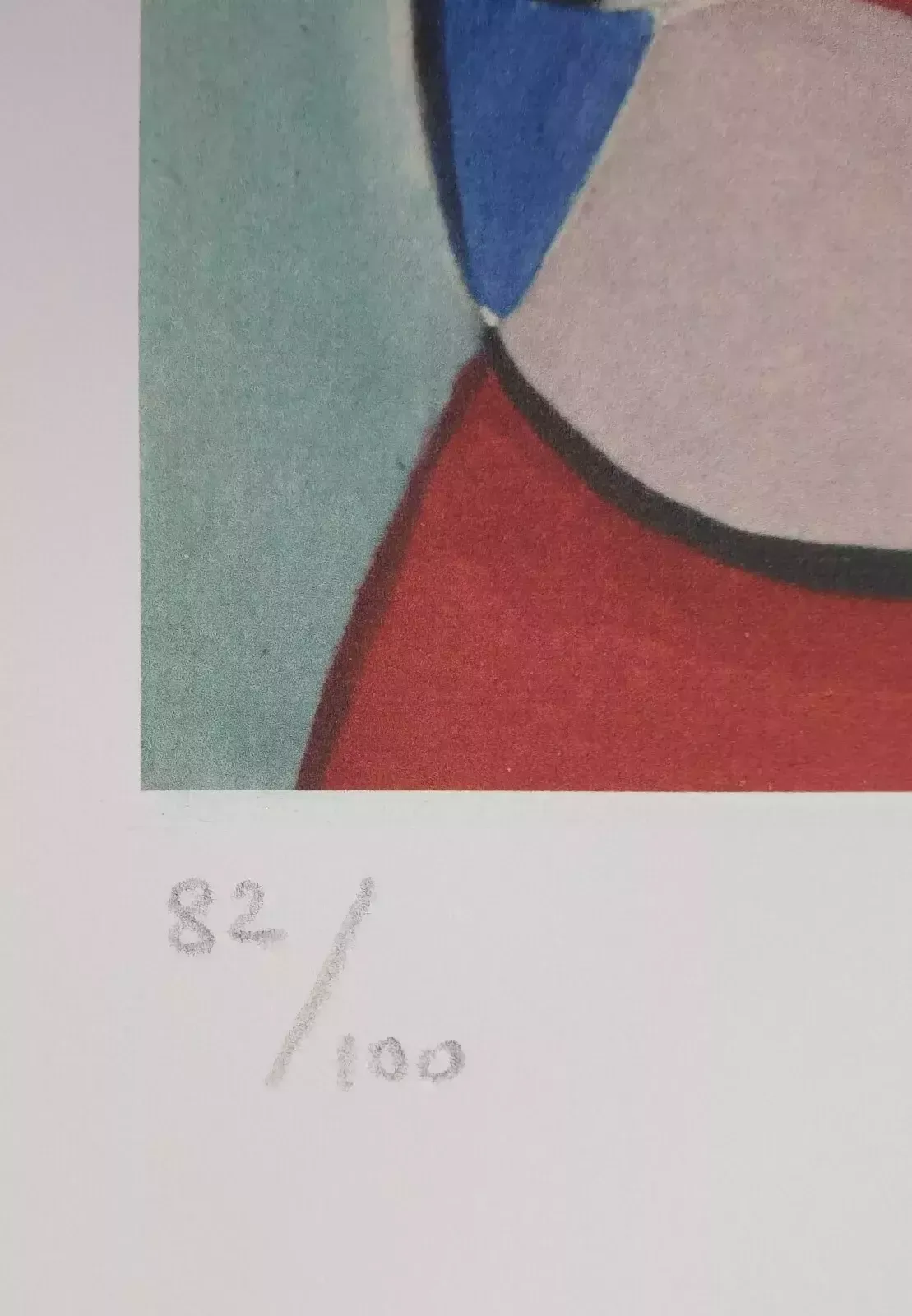
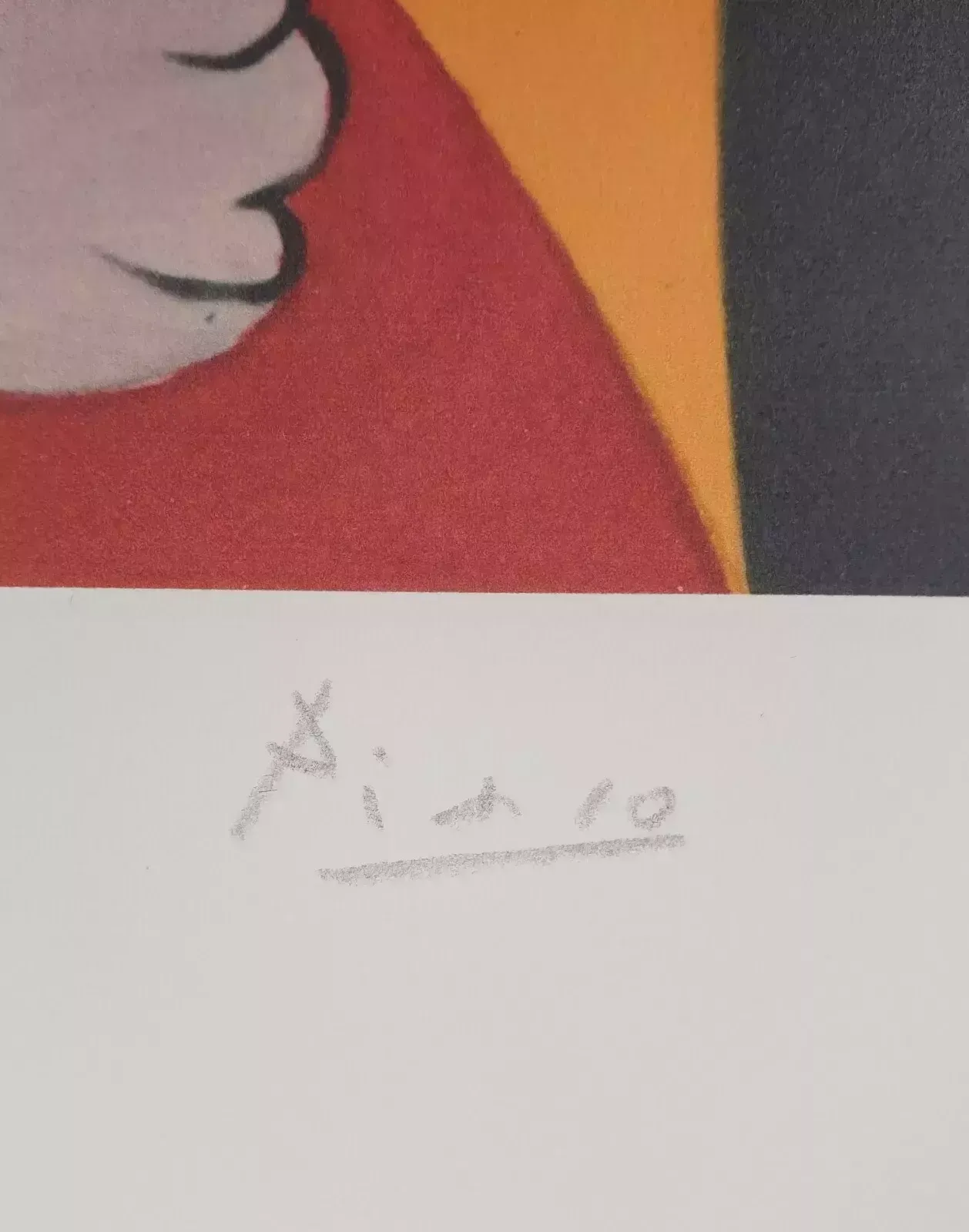
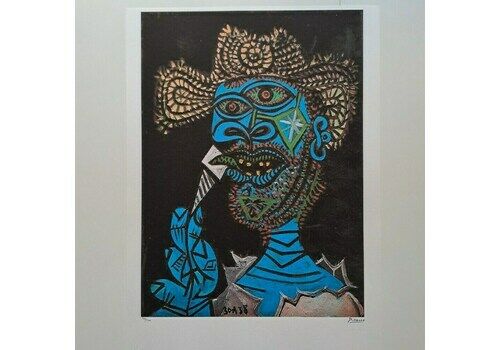
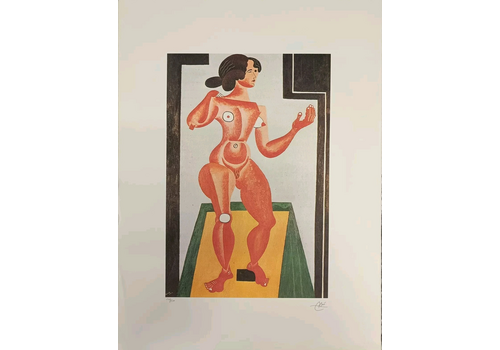
Pablo Picasso, Woman In Yellow Chair, Hand Signed Lithograph

 Vienna, Austria

Hassle-free returns
-
 Easy returns (14 days)
-
Free return if the item isn't as described
-
Buyer protection
Damage is rare, and you're fully protected if it happens.
Dimensions
Wear Condition
Good
Material
Paper
Style
Traditional
Product Details
Description
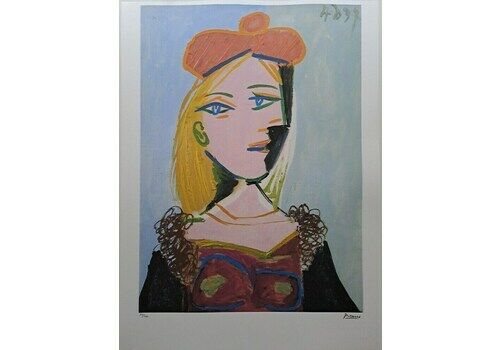
Pablo Picasso, Woman in Yellow Chair, Hand Signed Lithograph
The lithograph will be without a frame
LITHOGRAPHY is a printing process that uses a flat stone or metal plate on which the image areas are worked using a greasy substance so that the ink will adhere to them by, while the non-image areas are made ink-repellent.
A printing process based on the fact that grease and water do not mix. The image is applied to a grained surface (traditionally stone but now usually aluminium) using a greasy medium: such as a special greasy ink – called tusche, crayon, pencils, lacquer, or synthetic materials. Photochemical or transfer processes can also be used. A solution of gum arabic and nitric acid is then applied over the surface, producing water-receptive non-printing areas and grease-receptive image areas. The printing surface is kept wet so that a roller charged with oil-based ink can be rolled over the surface, and ink will only stick to the grease-receptive image area. Paper is then placed against the surface, and the plate is run through a press.
Lithography was invented in the late eighteenth century, initially using Bavarian limestone as the printing surface. Its invention made it possible to print a much wider range of marks and areas of tone than possible with earlier printmaking relief intaglio methods. It also made colour printing easier: areas of different colours can be applied to separate stones and overprinted onto the same sheet.
Offset lithography involves printing the image onto an intermediate surface before the final sheet. The process is ‘offset’ because the plate does not come in direct contact with the paper, which preserves the quality of the plate. With offset lithography, the image is reversed twice and appears on the final sheet the same way round as on the stone or plate.
ETCHING is a printmaking technique that uses chemical action to produce incised lines in a metal printing plate which then hold the applied ink and form the image
The plate, traditionally copper but now usually zinc, is prepared with an acid-resistant ground. Lines are drawn through the ground, exposing the metal. The plate is then immersed in acid, and the exposed metal is ‘bitten’, producing incised lines. Stronger acid and longer exposure produce more deeply bitten lines. The resist is removed, and ink applied to the sunken lines but wiped from the surface. The plate is then placed against the paper and passed through a printing press with great pressure to transfer the ink from the recessed lines. Sometimes ink may be left on the plate surface to provide a background tone.
Etching was used for decorating metal from the fourteenth century but was probably not used for printmaking much before the early sixteenth century. Since then many etching techniques have been developed, which are often used in conjunction with each other: soft-ground etching uses a non-drying resist or ground, to produce softer lines; spit bite involves painting or splashing acid onto the plate; open bite in which areas of the plate are exposed to acid with no resistance; photo-etching (also called photogravure or heliogravure) is produced by coating the printing plate with a light-sensitive acid-resist ground and then exposing this to light to reproduce a photographic image. Foul biting results from accidental or unintentional erosion of the acid resist.
Like engraving, etching is an intaglio technique. Intaglio refers to all printing and printmaking techniques that involve making indents or incisions into a plate or print surface which hold the ink when ink is applied to the surface and then wiped clean.
Pablo Picasso 1881-1973
School of Paris, painter, sculptor, etcher, lithographer, ceramist and designer, who has had enormous influence on 20th-century art and worked in an unprecedented variety of styles. Born at Malaga, Spain, son of an art teacher. His family moved to Barcelona, where he entered the School of Fine Arts 1895; then entered Madrid Academy 1897. Early showed great precocity. First visited Paris in autumn 1900, returned in 1901 when he had his first Paris one-man exhibition at the Galerie Vollard. Blue Period paintings of beggars and sad-faced women. Settled in Paris in 1904. In 1905 painted some pictures of circus folk and embarked on his Rose Period. 'Les Demoiselles d'Avignon' 1906-7 marked the beginning of a more revolutionary manner, influenced by Cezanne and Negro art. Met Braque in 1907 and with his collaboration created Cubism. Designed sets and costumes for Parade and other Diaghilev ballets 1917-24. Made some neo-classic figure paintings 1920-4, parallel to later Cubism. Started to make more violently expressive and metamorphic works in 1925, and in the following years frequently exhibited with the Surrealists. Important series of wrought-iron constructions and modelled sculptures 1928-34, illustrations for Ovid's Les Métamorphoses, Buffon's Histoire Naturelle etc. Awarded First Prize at the 1930 Pittsburgh International. His painting 'Guernica' 1937 was inspired by the destruction by bombing of the Spanish town of that name. Continued to live in Paris throughout the Occupation. From 1946 lived mainly in the South of France at Antibes, Vallauris, Cannes, and from 1958 near Aix-en-Provence, where he maintained a prolific output of paintings, sculptures, etchings, lithographs and ceramics. Died at Mougins, near Cannes.
Condition report:
Used
The piece is in overall good condition. Minimal wear was visible upon close examination: no tears, foxing, or notable damage. Please view photos for further reference.
Wear Condition
Good
Cancellations
We offer free cancellations and full refund for orders cancelled before dispatching. View full policy.
Returns
We have a 14-day return guarantee for orders from individual sellers, within the UK and European Union. View full policy.
Additional Delivery Info from Seller
Free collection available
Yes
Made to Last
The average lifespan of a Vinterior piece is 100 years, while modern flat-pack typically takes just 3 years to reach landfill. When you choose pre-loved, you can shop with confidence in quality, craftsmanship and longevity. With our top-rated customer service team and price match guarantee, there's no better way to shop pre-loved.


Shopping at Vinterior


Similar Lithographs
Similar Lithographs
Add to a wishlist
Create Wishlist
Completethe room
Good design is all in the layering. Whether you're adding impact or refining the details, now’s the time to find what’s missing.
Reviews
4.8

Based on 10 reviews




Wear conditions
Excellent
Shows little to no signs of wear and tear.
Good
May show slight traces of use in keeping with age. Most vintage and antique items fit into this condition.
Average
Likely to show signs of some light scratching and ageing but still remains in a fair condition.
Apparent Wear and Tear
Visible signs of previous use including scratches, chips or stains.
Please refer to condition report, images or make a seller enquiry for additional information.
Cancellations and Returns
Last updated: 12/02/2026
Clear, predictable protection for every pre-loved purchase.
Simple £75 flat return fee for UK-to-UK mainland furniture when you change your mind.
Applies to furniture with a final selling price of up to £5,000 (excluding delivery and service fees) and delivered from a UK mainland seller to mainland UK addresses. Excludes Northern Ireland, Channel Islands, Scottish Highlands & Islands, Isle of Wight and Isles of Scilly.
Buying vintage should feel inspiring, not uncertain.
Every order on Vinterior is backed by straightforward returns, free cancellations, and extra peace of mind for UK furniture purchases.
1. Free cancellations
Changed your mind before dispatch?
You can cancel any order before it's shipped for a full refund, including delivery.
To cancel an order, click Create cancellation on the order page.
Once an item has been dispatched, delivery costs are not refundable.
Bespoke, personalised or made-to-order pieces cannot be cancelled.
2. Returning an item
You have 14 days from delivery to request a return.
There are two return types:
A. The item isn't as described (free return)
If your piece arrives and it doesn't match the listing in any material way (incorrect description, undisclosed damage, inaccurate measurements, misleading photos), you are fully protected:
- Free return
- The seller or Vinterior arranges pickup
- Full refund, including outbound delivery costs once the seller receives the item
This applies to all purchases.
B. You changed your mind
UK-to-UK furniture deliveries:
To make UK furniture returns predictable and stress-free, we offer a simple flat return fee of £75.
- Applies to furniture delivered from a UK mainland seller to a mainland UK address. Excludes Northern Ireland, Channel Islands, Scottish Highlands & Islands, Isle of Wight and Isles of Scilly.
- Pickup arranged for you
- One clear fee, no surprises
We coordinate the return with either the seller's chosen courier or our trusted delivery partner.
All other items
Most smaller items are straightforward to return.
You can still return your item within 14 days.
- For smaller or parcel-sized items, you can choose to post the item back yourself using a tracked service, or the seller can suggest a preferred courier.
- For larger or more fragile pieces, the seller may recommend the safest return method.
- Return delivery costs vary depending on size and courier.
The seller will confirm the best option based on the item.
3. If your item arrives damaged
Damage on arrival is uncommon, especially for UK furniture deliveries.
But if something does go wrong, you're fully protected.
- Let us know as soon as possible (ideally within 72 hours of delivery) so we can resolve things quickly
- Share photos so we understand what happened
- We’ll help arrange a return and refund if needed
You’re always protected when something goes wrong in transit.
Your statutory rights apply for up to 30 days from delivery.
4. What can't be returned
Some items cannot be returned:
- Bespoke, personalised, or made-to-order pieces
- Items altered after delivery
5. How to start a return
- Log in to your Vinterior account
- Open your order
- Click Create a return
- Add notes + photos if relevant
We'll guide you through the rest.
6. What happens next
- We review your request, confirm the return and advise on next steps
- Pickup or return method is arranged
- The item is returned to the seller
- We issue your refund once the seller confirms the item's condition
Returns are completed smoothly once the pickup is arranged.
7. Refunds
Once the seller receives the piece back in the same condition it was sent, we'll issue your refund to your original payment method.
Once a refund is issued, it may take up to 5–10 working days for the funds to appear back on your original payment method, depending on your bank or card provider.
If the item is returned with new damage that wasn't present at delivery, the refund may be adjusted following review.
Need help?
If you have questions about a return or your order, our support team is here to help. Email us at [email protected] or find other ways to contact us here.
What your service fee covers
-
 14-day return guarantee
-
Flat-fee return shipping on UK furniture
-
Seller vetting
-
Dedicated customer support
| Order Value (£) | Fee (£) |
|---|---|
| 0 — 49.99 | 2.75 |
| 50 — 99.99 | 5.50 |
| 100 — 199.99 | 11.00 |
| 200 — 399.99 | 21.00 |
| 400 — 599.99 | 30.00 |
| 600 — 799.99 | 40.00 |
| 800 — 999.99 | 50.00 |
| 1,000 — 1,499.99 | 55.00 |
| 1,500 — 1,999.99 | 60.00 |
| 2,000 — 4,999.99 | 82.50 |
| 5,000+ | 110.00 |
Added at checkout, based on your basket total.
