


Rare Scottish Georgian Sterling Silver Snuff Mull Medical Liverpool Link C1820s

 Lincolnshire, United Kingdom

Hassle-free returns
-
 Easy returns (14 days)
-
Free return if the item isn't as described
-
Buyer protection
Damage is rare, and you're fully protected if it happens.
Dimensions
Wear Condition
Good
Material
Silver, Acacia
Style
Antique, Campaign, Georgian, Victorian
Product Details
Description
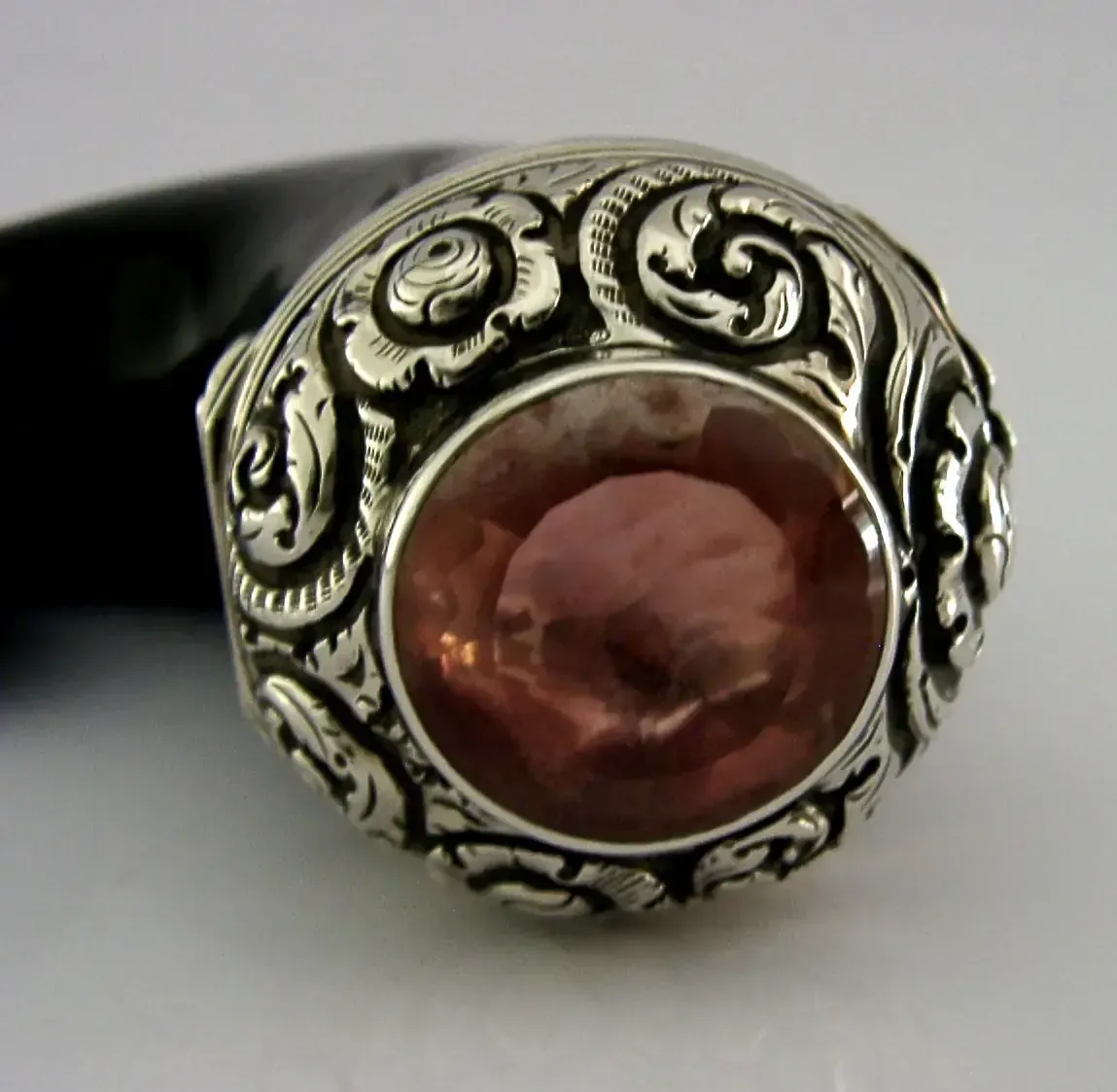
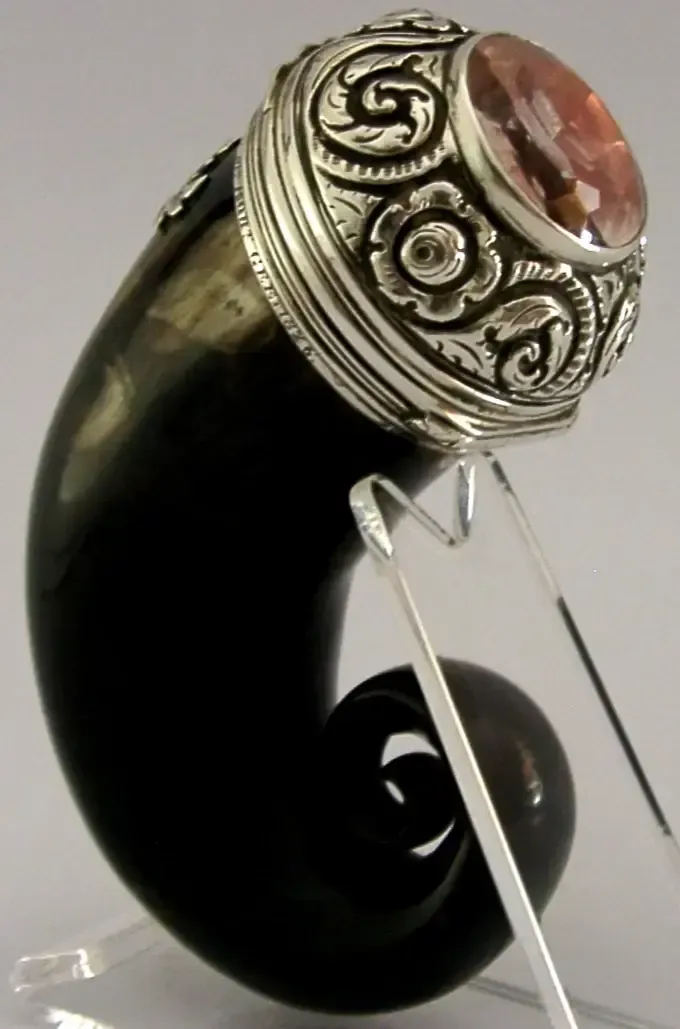
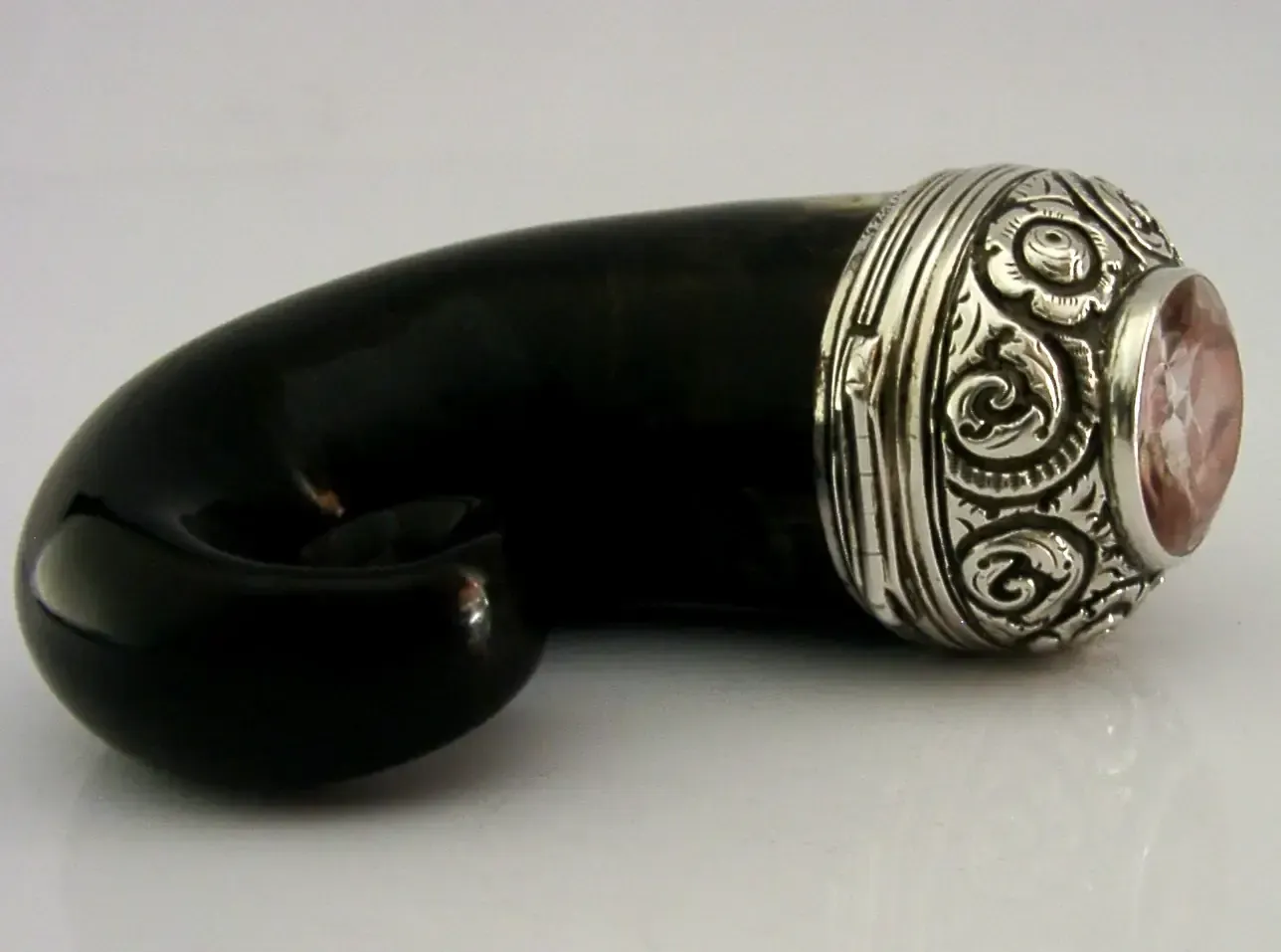
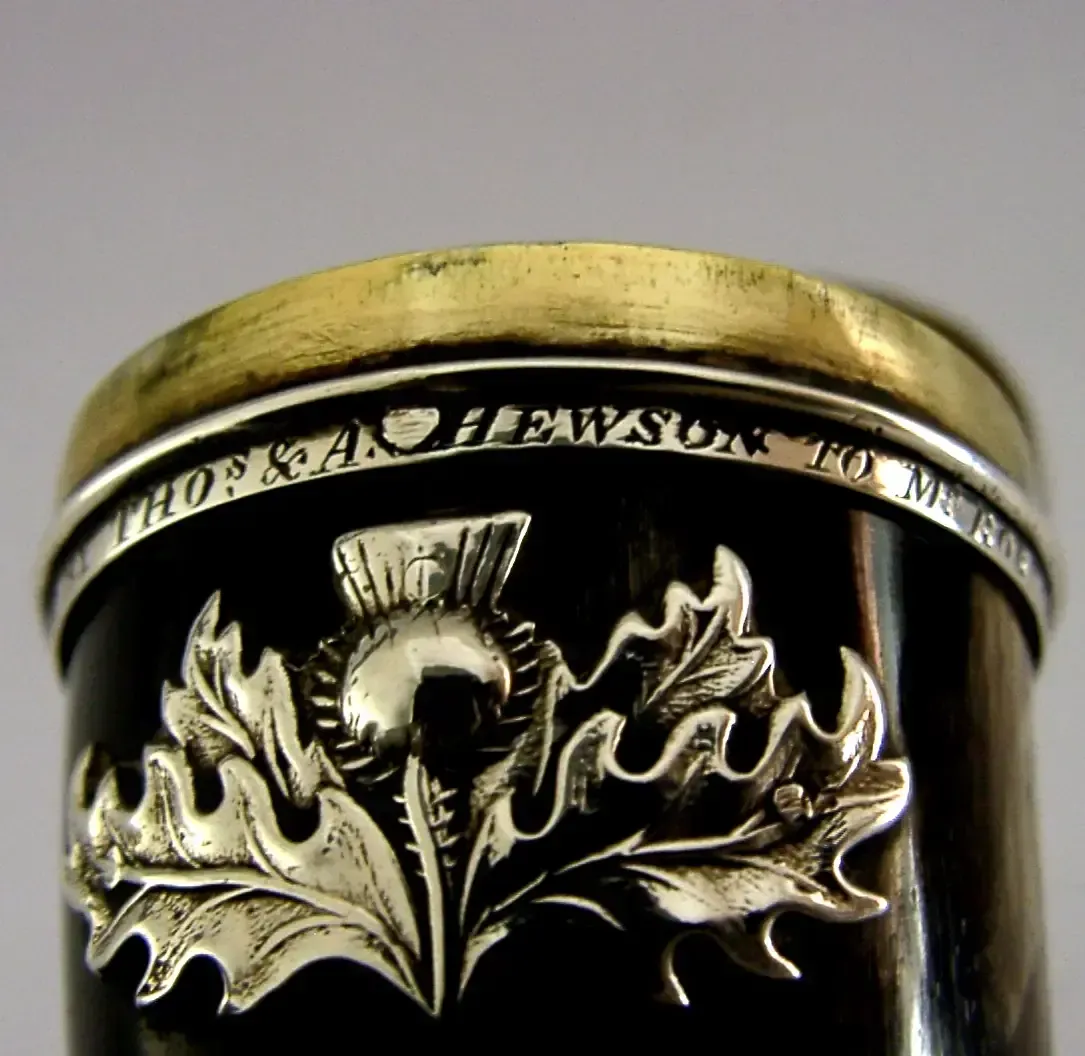
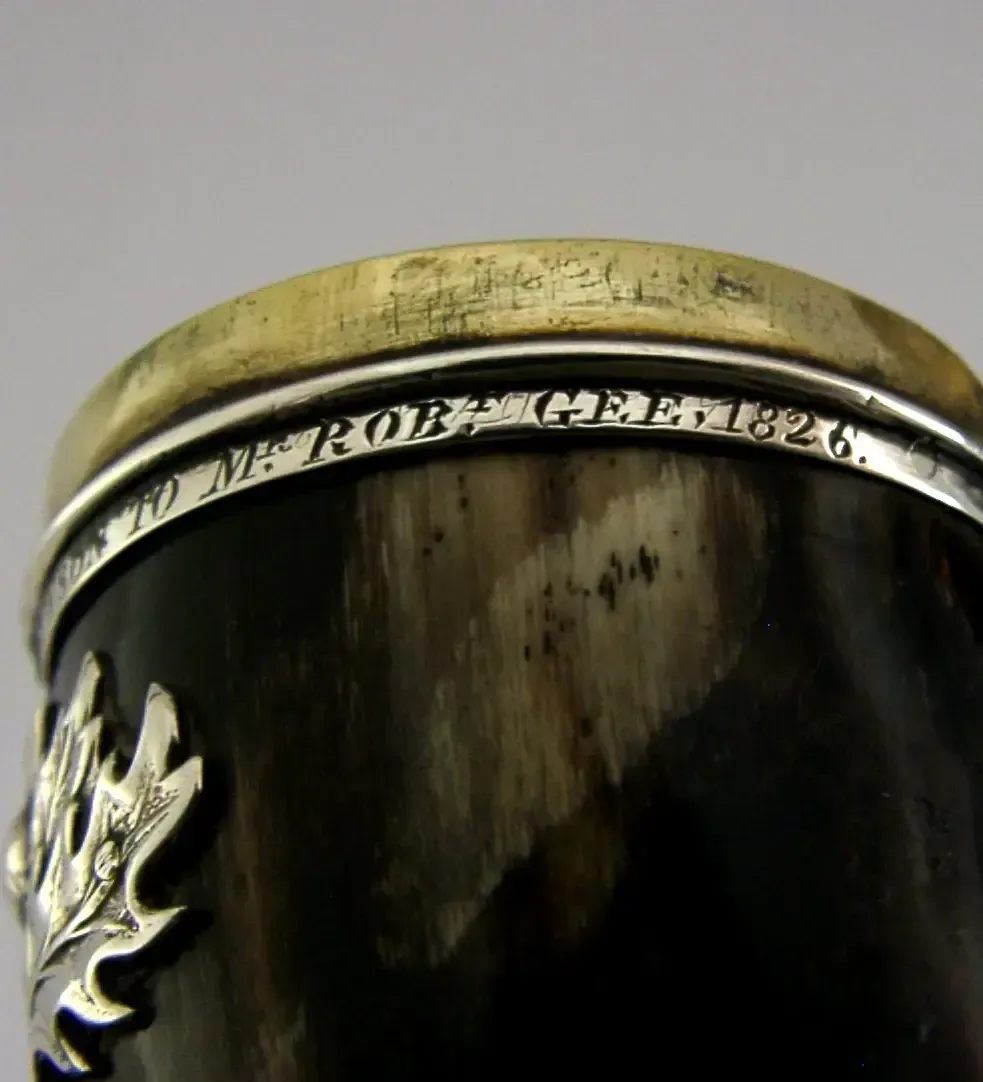
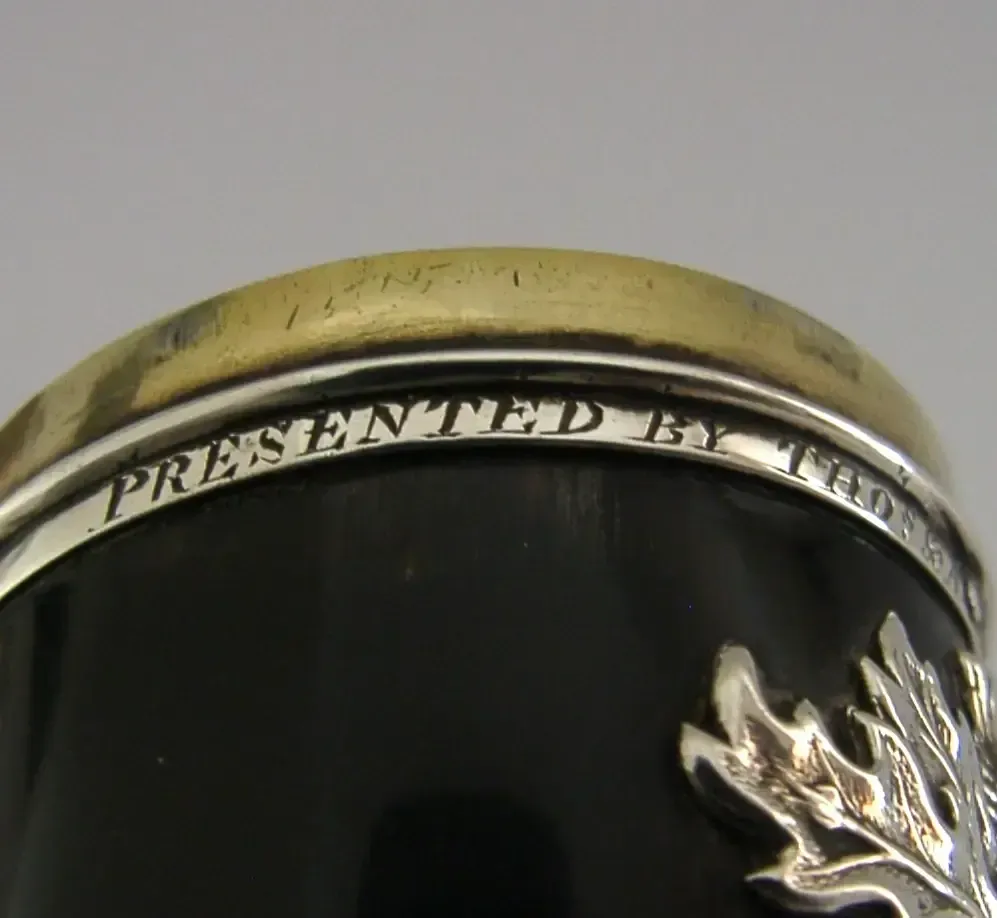
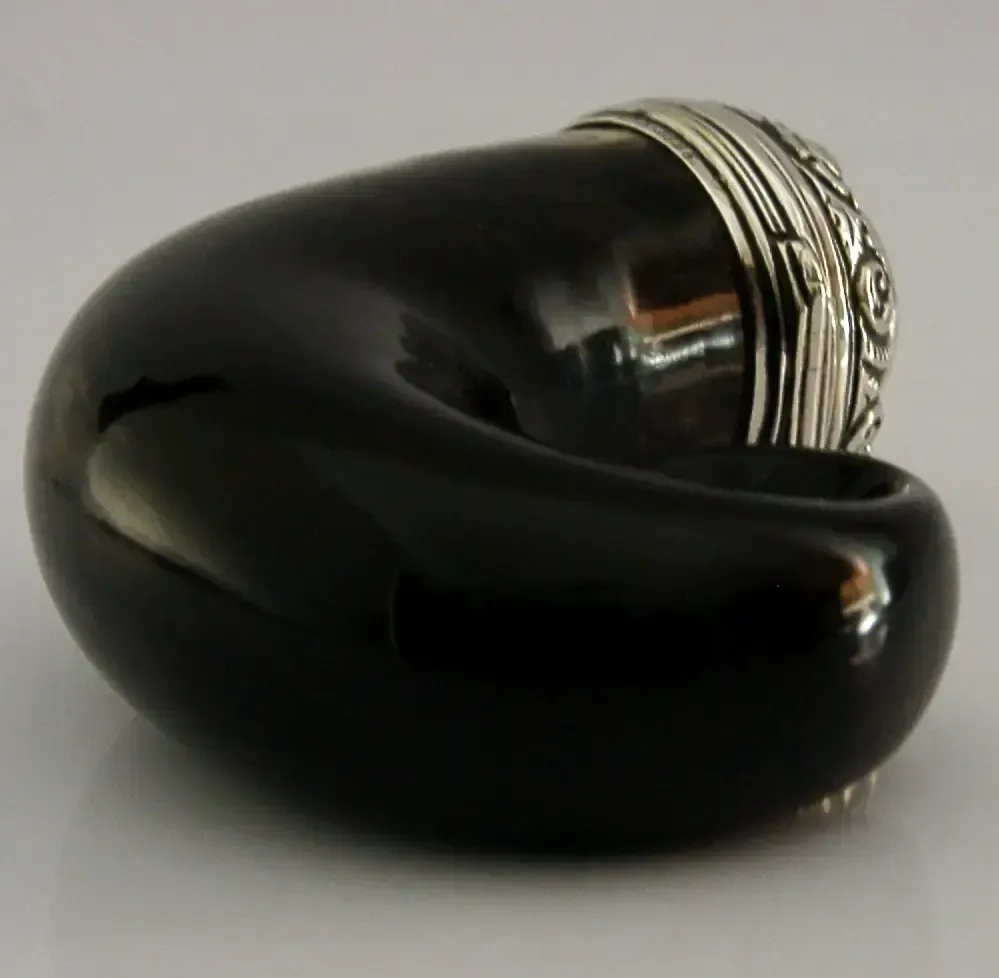
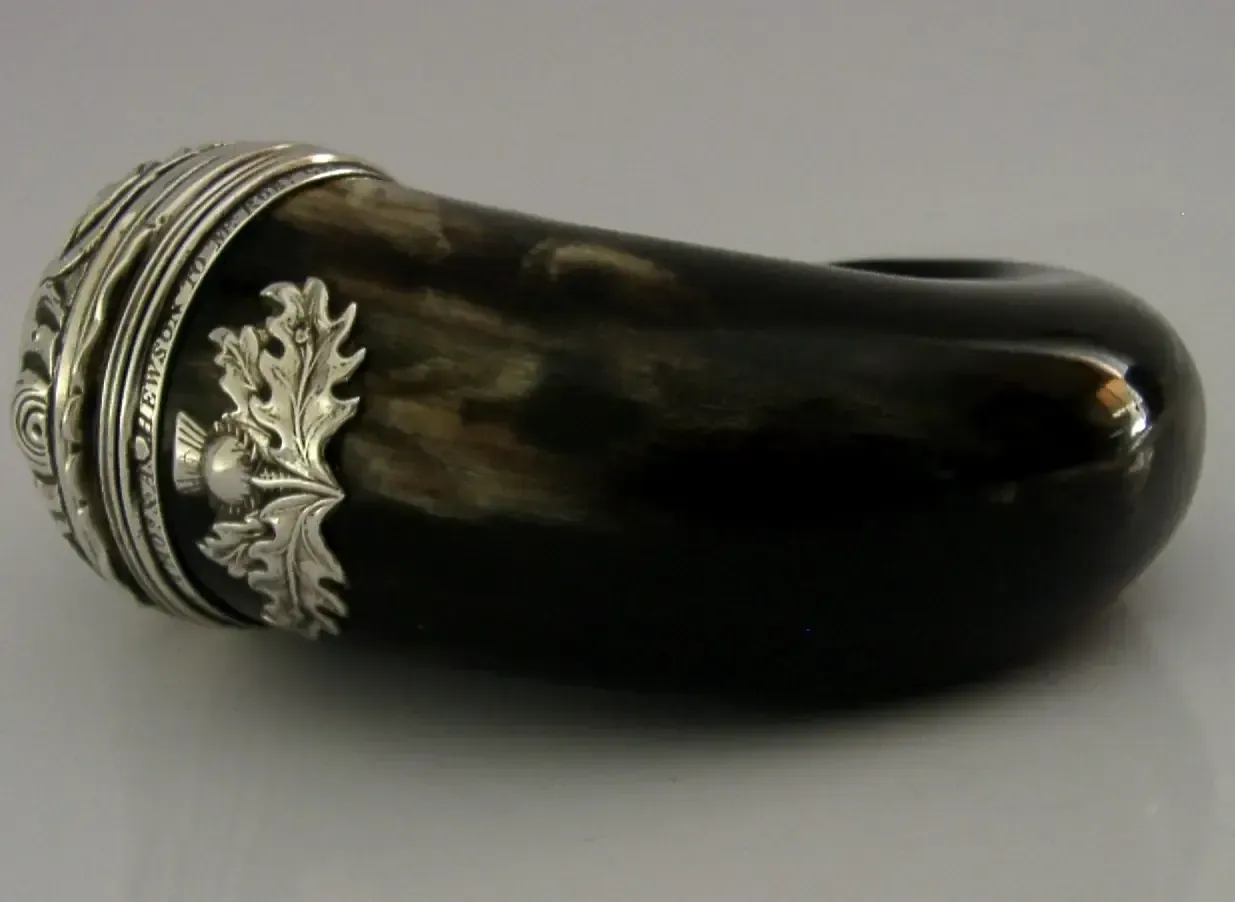
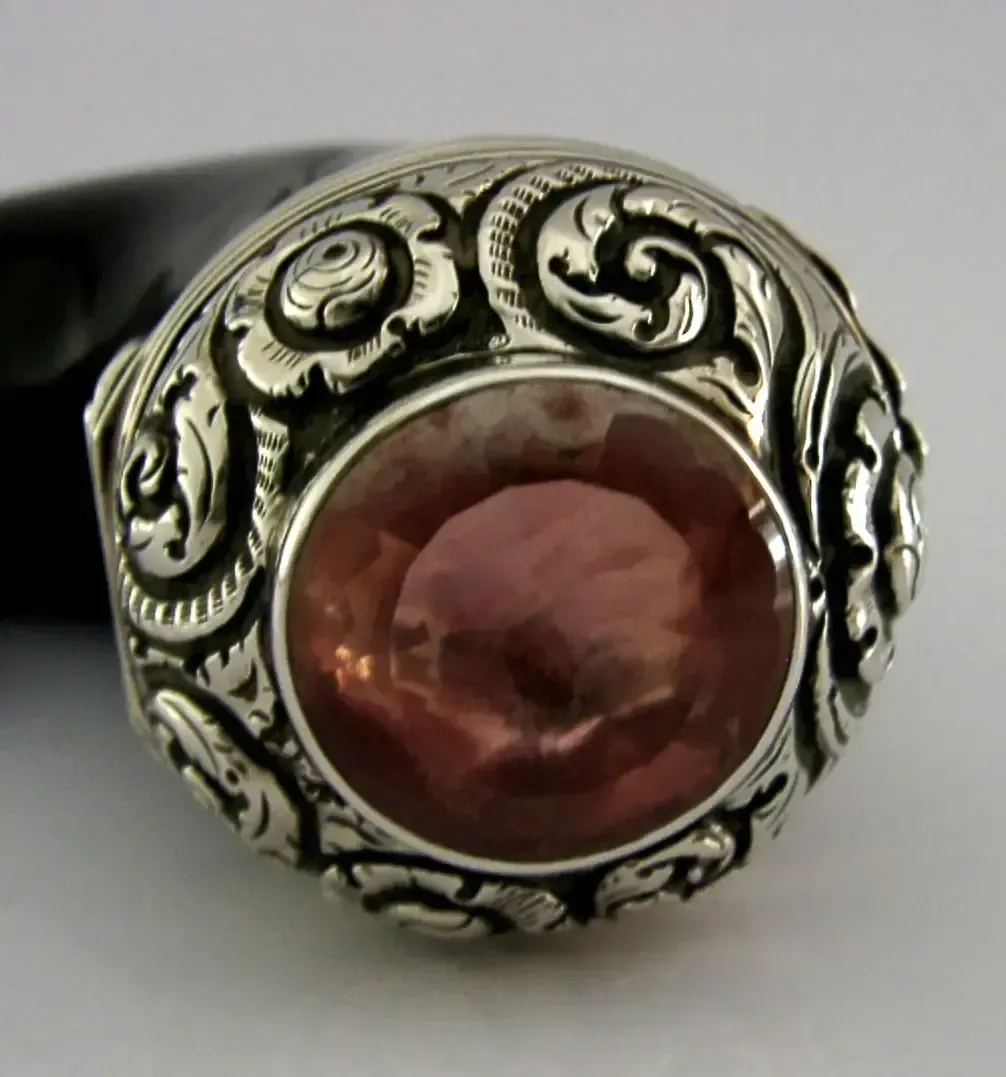
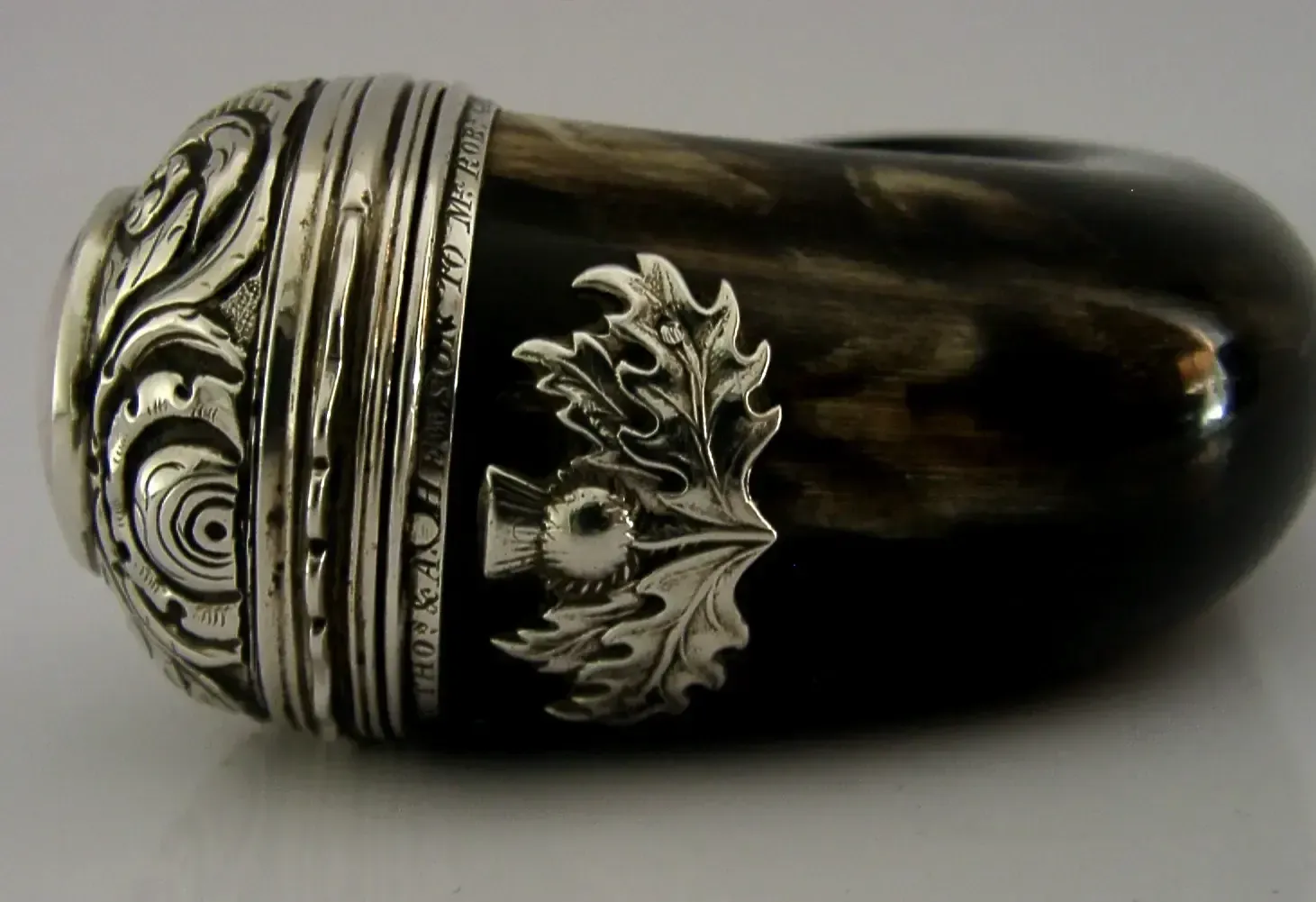
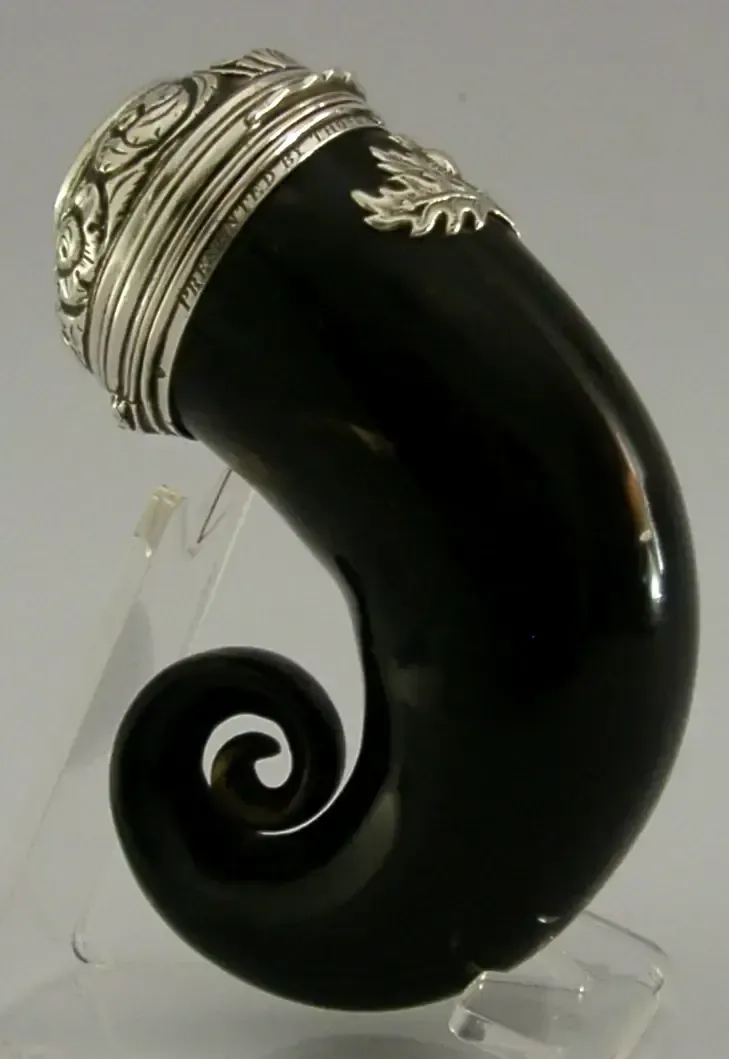
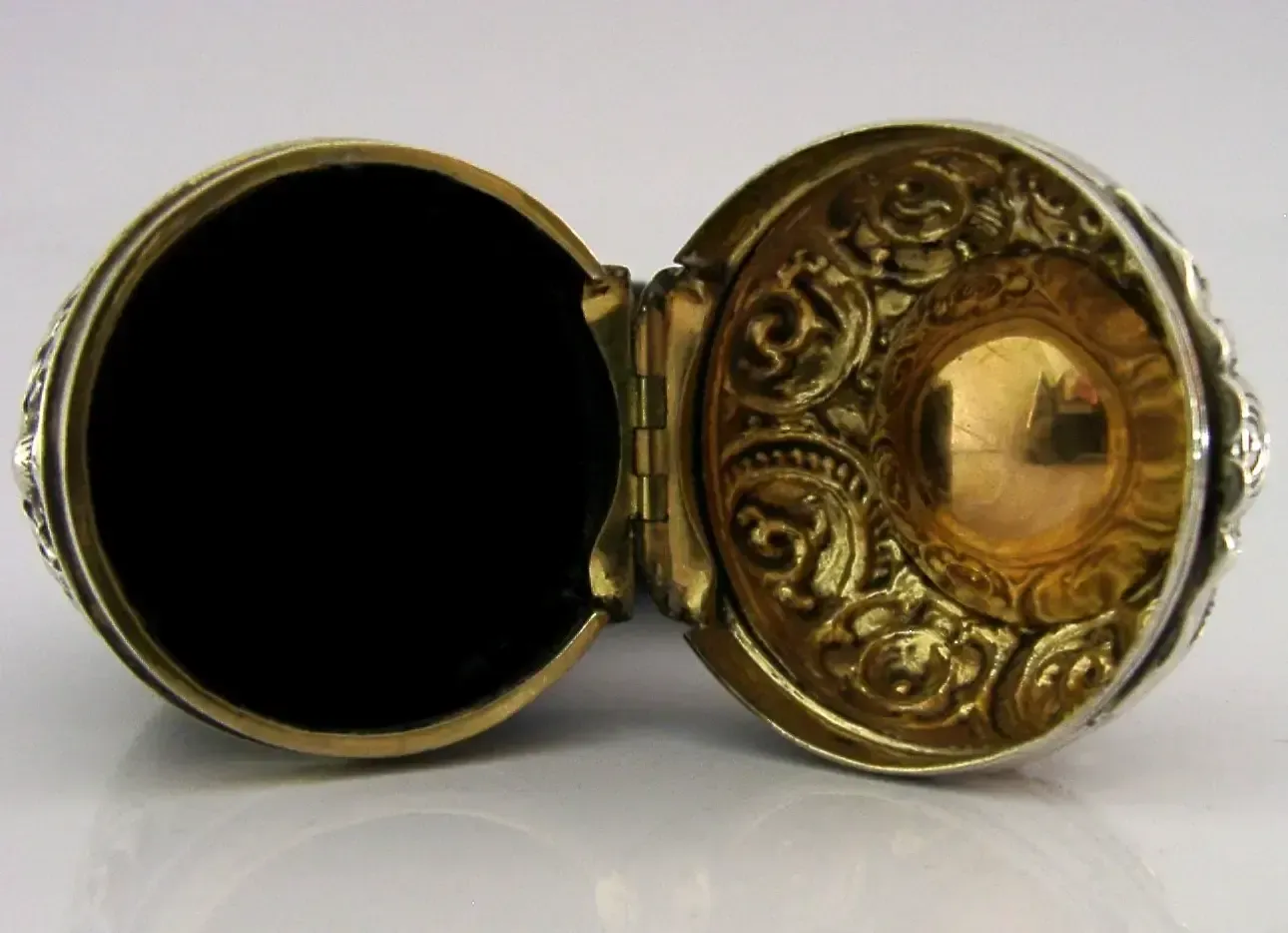
A beautiful fascinating and rare Scottish sterling silver and horn snuff mull. It is unmarked as is common but tests as high grade silver. It has been beautifully set with pink quartz, gilded inside, and most interestingly engraved 'PRESTENTED BY THOMAS & A HEWSON TO MR ROBERT GEE 1826'. I was told it belong to a prominent Liverpool MD and social reformer - below are details I believe relate to it. It appears Thomas Hewson was a surgeon during Georgian / Victorian times having studied medicine at University College London (and living in the area) where it appears Robert Gee (c1806-1891) had come to study, hence where they most likely met - Gee would have been about 20 at the time this was present possibly and appropriately around the time he graduated and may have left for further study in Edinburgh? Gee eventually settle in Liverpool where he wrote numerous papers and campaigned to improve conditions in the workhouses. It is in outstanding condition, (almost as new). It measures approx. 3.5 inches (8.8cm) long by 1.75 inches (4.2cm) wide and weighs 72 grams. A very high quality fascinating piece.
Following research already done:
Anne (nee Parkins, who took the name of Sherwin) married Thomas Ansaldo Hewson, a recently qualified surgeon, in 1823. She was nine years his senior – Thomas having been born on Christmas Day, 1786. Under their marriage settlement, Anne had the power to dispose of £37,900, a very substantial sum in those days. Thomas had clearly been strategic in marrying Anne, as the agreement confirmed that the expenses of their ‘establishment’ should be paid out of her property, 6 Woburn Place, whilst he would provide for the charges of horses and carriages.
What comes as a surprise is that in 1845, Thomas, a seemingly respectable London surgeon, was acquitted at the Central Criminal Court of ‘conspiring to procure an order for the confinement of a person of sound mind in a Lunatic Asylum.’ The report does not state who that person was. However, it is surely no coincidence that from exactly that date until his death, Thomas received the whole income of Anne’s property, and ‘continued the Woburn Place establishment. ‘
Thomas died on the 6th January 1851 aged 65, and is buried at All Souls, Kensal Green. His will, from December 1846, did ‘give the use of his furniture, plate, linen, jewels and household effects, including the jewels and effects which belonged to his wife before her marriage and which he has assumed by marital right, unto his wife for her life, and such wines and liquors as she might require.’ At the same time, he made generous donations of £500-£1,000 to nine London Hospitals and to the Society for the Relief of the Widows and Orphans of Medical Men.
Within a month of his death, an Inquisition was held at which Anne was formally declared to be of ‘unsound mind’ and backdating her lunacy to 3rd April 1845 – the year her husband had been acquitted. Her wealth at that time amounted to an income from freehold and leasehold property of £4,000 a year, besides the initial sum which had grown to £42,000, and was clearly being wrangled over by two camps.
Two nephews were at the centre of the tussle. One ‘had a large family and was a lay preacher – a missionary – recently gone out to India with a salary of £180 per year.’ The other nephew was William Parkins, who had grown up in Berkhamsted. It was clear which she favoured. Regarding the missionary nephew – ‘there was no evidence of any disposition on the part of the aunt to be generous towards her nephew, nor did it appear that she had ever made him an object of care and consideration.’ In contrast , she had placed William ‘at school, and had subsequently paid his apprenticeship fee and discharged the costs of his maintenance, and had intimated to him her intention to advance him in life; it was also shown that before her lunacy, Mrs Hewson had promised to let him have £500 to start in business on his own account, upon the faith of which he quitted a situation he held in a wholesale house, and before the lunacy she partly performed this promise by a gift of £50, and after the lunacy Mr Hewson gave Mr Parkins a check for £250, which was paid by the bankers out of the money to the account of Mrs Hewson’s money.’
So, by the time of the census on 30th March 1851 William Parkins, then aged 37 and described as a stationer, had moved into 6 Woburn Place with his wife and son, clearly to look after his widowed Aunt, who in the census is described as a Lunatic. The scale of her assets had probably kept her from an asylum.
By April that year he was clearly able to inject money into his thriving business, selling off the whole of the Fancy Stock at their Warehouse, 25 Oxford Street (opposite Soho-square) ‘previous to extensive alterations and improvements’.
Anne, was still residing at Woburn Place when she died just one year later, on the 18th July 1852, aged 75. William died in 1872. The Bookseller in November that year lamented that ‘a good man has passed away from amongst us … Mr WILLIAM PARKINS, the late head of the firm of Parkins and Gotto, in Oxford Street. Born at Great Berkhamstead, Herts, he was a man singularly active and energetic. Commencing some thirty years ago in Hanway Street, then Hanway Yard, he speedily established a considerable business by the introduction of the five-quire packets of paper (now so popular), the cheap manufacture of envelopes and the embossing of the same with initials, a branch of the trade then quite in its infancy. He soon removed to Oxford Street… and there, in conjunction with Mr. Gotto, entered upon a system of advertising which produced most satisfactory results, the business now being one of the largest in London. Before his death he amply provided for all related to him, and most generously remembered many who had no claims on him whatever. His loss will be most deeply felt, his unostentatious goodness making his memory blessed amidst those who knew him’.
One manifestation of this ‘unostentatious goodness’ was the very fine tomb for/to Anne Hewson in Rectory Lane Cemetery that he paid for, which bears the inscription: ‘This monument was erected by William Parkins (of this town) in memory of his aunt.’
William was buried at Kensal Green, so why did he particularly choose this Berkhamsted Cemetery for his aunt’s memorial? Very close to her monument is another elegant Classical memorial to John and Mary Parkins. (190) These were William’s parents. John Parkins was the first Sexton appointed to look after Rectory Lane Cemetery, so William was both celebrating his roots but also the fact that without his Aunt, he would probably have remained in the town. Towards the end of Anne’s life, ‘it was the wish of the lady, that she should be taken into the country during the summer months.’. It seems likely that William would have been taking her out to Berkhamsted, where his family still resided. William’s father died two years after Anne, and his daughter, Eliza Jane, later Quincey Lane is also buried in the Cemetery.
LMI adopted as their candidate Dr Robert Gee M D M RC P, who had joined the Institution on 6 February 1854 and who had given lectures to its members on the Liverpool Medical School and the LM I since 1864. Gee was forty eight years old, a native o f Denbigh who had received his medical education at University College London, Edinburgh, Paris and Heidelberg, from which university he had obtained his doctorate.65 He had settled in Liverpool about 1851 living at 10 Oxford Street and 6 Abercromby Square. He had built up a substantial private practice but he was also a resident surgeon at the Liverpool Workhouse (one of the largest workhouses in Europe), a consulting physician to the Hospital for Infectious Diseases and to the Hospital for Consumption and Diseases o f the Chest (18 64 ). When Gee died in 1891 his funeral service was held in the Workhouse Chapel. He was a lecturer in pathology at the Liverpool School o f Medicine and had a reputation as an authority on fevers, being instrumental in the establishment of Liverpool’s fever hospital in Netherfield Road.67 In view of his Welsh origins and his position as a deacon of the Calvinist Methodist Church in Oswald Street Liverpool, not surprisingly, he was enthusiastic in politics. The local press described him as, on behalf of the Radical party, ‘exerting himself strenuously both in municipal and parliamentary elections’.
Wear Condition
Good
Cancellations
We offer free cancellations and full refund for orders cancelled before dispatching. View full policy.
Returns
We have a 14-day return guarantee for all orders within the UK and European Union. View full policy.
Additional Delivery Info from Seller
Free collection available
No
Made to Last
The average lifespan of a Vinterior piece is 100 years, while modern flat-pack typically takes just 3 years to reach landfill. When you choose pre-loved, you can shop with confidence in quality, craftsmanship and longevity. With our top-rated customer service team, there's no better way to shop pre-loved.

Professional Seller
Shopping at Vinterior


Add to a wishlist
Create Wishlist
Wear conditions
Excellent
Shows little to no signs of wear and tear.
Good
May show slight traces of use in keeping with age. Most vintage and antique items fit into this condition.
Average
Likely to show signs of some light scratching and ageing but still remains in a fair condition.
Apparent Wear and Tear
Visible signs of previous use including scratches, chips or stains.
Please refer to condition report, images or make a seller enquiry for additional information.
Cancellations and Returns
Last updated: 12/02/2026
Clear, predictable protection for every pre-loved purchase.
Simple £75 flat return fee for UK-to-UK mainland furniture when you change your mind.
Applies to furniture with a final selling price of up to £5,000 (excluding delivery and service fees) and delivered from a UK mainland seller to mainland UK addresses. Excludes Northern Ireland, Channel Islands, Scottish Highlands & Islands, Isle of Wight and Isles of Scilly.
Buying vintage should feel inspiring, not uncertain.
Every order on Vinterior is backed by straightforward returns, free cancellations, and extra peace of mind for UK furniture purchases.
1. Free cancellations
Changed your mind before dispatch?
You can cancel any order before it's shipped for a full refund, including delivery.
To cancel an order, click Create cancellation on the order page.
Once an item has been dispatched, delivery costs are not refundable.
Bespoke, personalised or made-to-order pieces cannot be cancelled.
2. Returning an item
You have 14 days from delivery to request a return.
There are two return types:
A. The item isn't as described (free return)
If your piece arrives and it doesn't match the listing in any material way (incorrect description, undisclosed damage, inaccurate measurements, misleading photos), you are fully protected:
- Free return
- The seller or Vinterior arranges pickup
- Full refund, including outbound delivery costs once the seller receives the item
This applies to all purchases.
B. You changed your mind
UK-to-UK furniture deliveries:
To make UK furniture returns predictable and stress-free, we offer a simple flat return fee of £75.
- Applies to furniture delivered from a UK mainland seller to a mainland UK address. Excludes Northern Ireland, Channel Islands, Scottish Highlands & Islands, Isle of Wight and Isles of Scilly.
- Pickup arranged for you
- One clear fee, no surprises
We coordinate the return with either the seller's chosen courier or our trusted delivery partner.
All other items
Most smaller items are straightforward to return.
You can still return your item within 14 days.
- For smaller or parcel-sized items, you can choose to post the item back yourself using a tracked service, or the seller can suggest a preferred courier.
- For larger or more fragile pieces, the seller may recommend the safest return method.
- Return delivery costs vary depending on size and courier.
The seller will confirm the best option based on the item.
3. If your item arrives damaged
Damage on arrival is uncommon, especially for UK furniture deliveries.
But if something does go wrong, you're fully protected.
- Let us know as soon as possible (ideally within 72 hours of delivery) so we can resolve things quickly
- Share photos so we understand what happened
- We’ll help arrange a return and refund if needed
You’re always protected when something goes wrong in transit.
Your statutory rights apply for up to 30 days from delivery.
4. What can't be returned
Some items cannot be returned:
- Bespoke, personalised, or made-to-order pieces
- Items altered after delivery
5. How to start a return
- Log in to your Vinterior account
- Open your order
- Click Create a return
- Add notes + photos if relevant
We'll guide you through the rest.
6. What happens next
- We review your request, confirm the return and advise on next steps
- Pickup or return method is arranged
- The item is returned to the seller
- We issue your refund once the seller confirms the item's condition
Returns are completed smoothly once the pickup is arranged.
7. Refunds
Once the seller receives the piece back in the same condition it was sent, we'll issue your refund to your original payment method.
Once a refund is issued, it may take up to 5–10 working days for the funds to appear back on your original payment method, depending on your bank or card provider.
If the item is returned with new damage that wasn't present at delivery, the refund may be adjusted following review.
Need help?
If you have questions about a return or your order, our support team is here to help. Email us at [email protected] or find other ways to contact us here.
What your service fee covers
-
 14-day return guarantee
-
Flat-fee return shipping on UK furniture
-
Seller vetting
-
Dedicated customer support
| Order Value (£) | Fee (£) |
|---|---|
| 0 — 49.99 | 2.75 |
| 50 — 99.99 | 5.50 |
| 100 — 199.99 | 11.00 |
| 200 — 399.99 | 21.00 |
| 400 — 599.99 | 30.00 |
| 600 — 799.99 | 40.00 |
| 800 — 999.99 | 50.00 |
| 1,000 — 1,499.99 | 55.00 |
| 1,500 — 1,999.99 | 60.00 |
| 2,000 — 4,999.99 | 82.50 |
| 5,000+ | 110.00 |
Added at checkout, based on your basket total.
