


 Gifts
Gifts
 Back to articles
THE DIGEST
The Vintage Garden: Outdoor Objects Worth Finding
From teak garden furniture to cast iron urns and stone troughs, these are the vintage and antique outdoor objects that structure a garden and age into it, sourced second-hand on Vinterior.
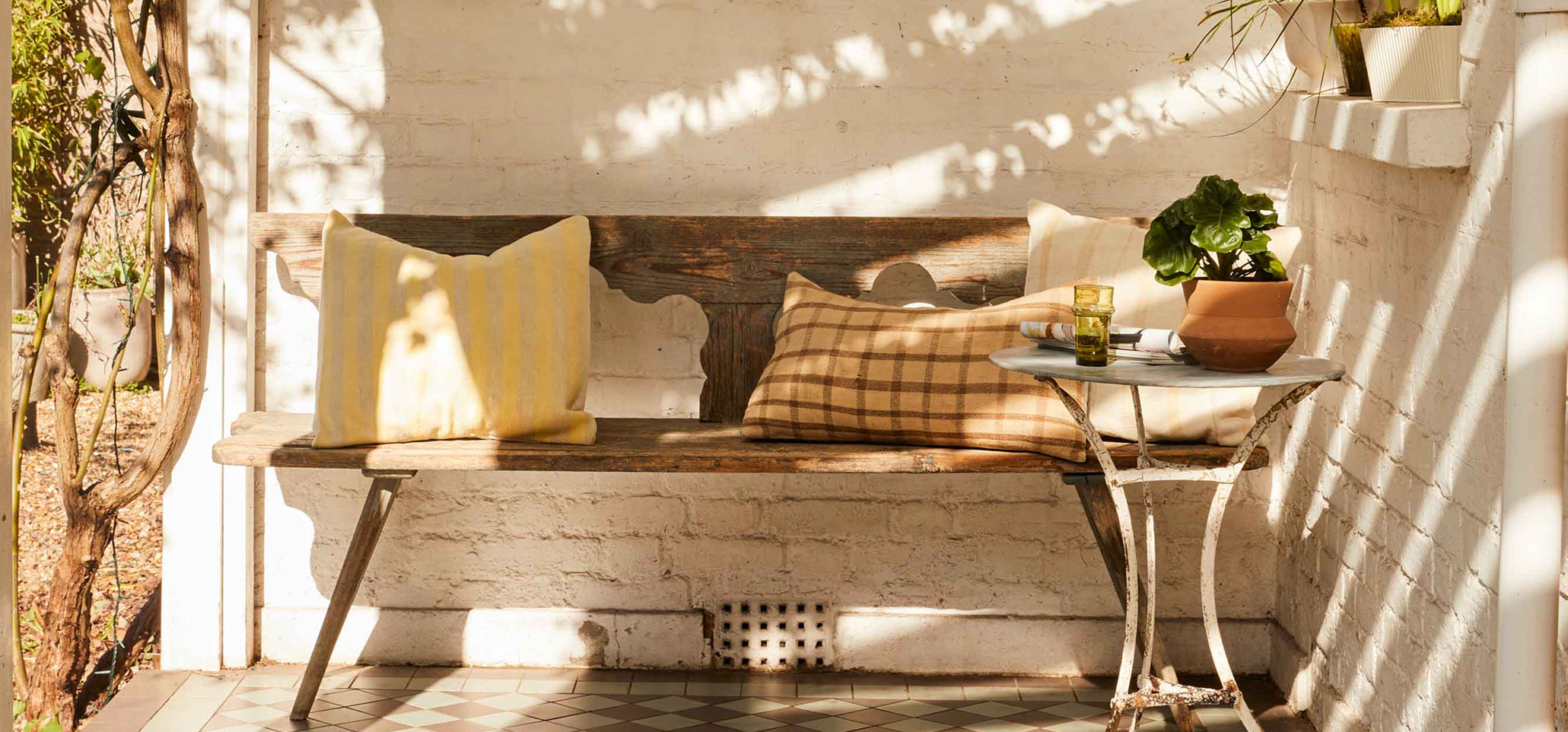
The terracotta urn at the end of a long border. The lead trough set into a stone wall. The pair of cast iron jardinieres framing a doorway. These are the objects that give a garden its structure, its sense of intention, and its staying power through the seasons when little is in flower. It is, broadly, what separates a garden that has been designed from one that has simply been planted.
Vintage and antique outdoor objects share a quality no contemporary substitute has convincingly replicated: they improve with time rather than degrade against it. Stone acquires moss and lichen that cannot be applied, only grown. Lead weathers to a soft pewter that holds light differently at every hour. Cast iron deepens in surface and density with every season it spends outside.
Buy fewer pieces than you think you need, and larger ones than feel comfortable indoors. What reads as substantial in a showroom can disappear in an outdoor space. Gardens have sky above them. Scale accordingly.
Garden furniture
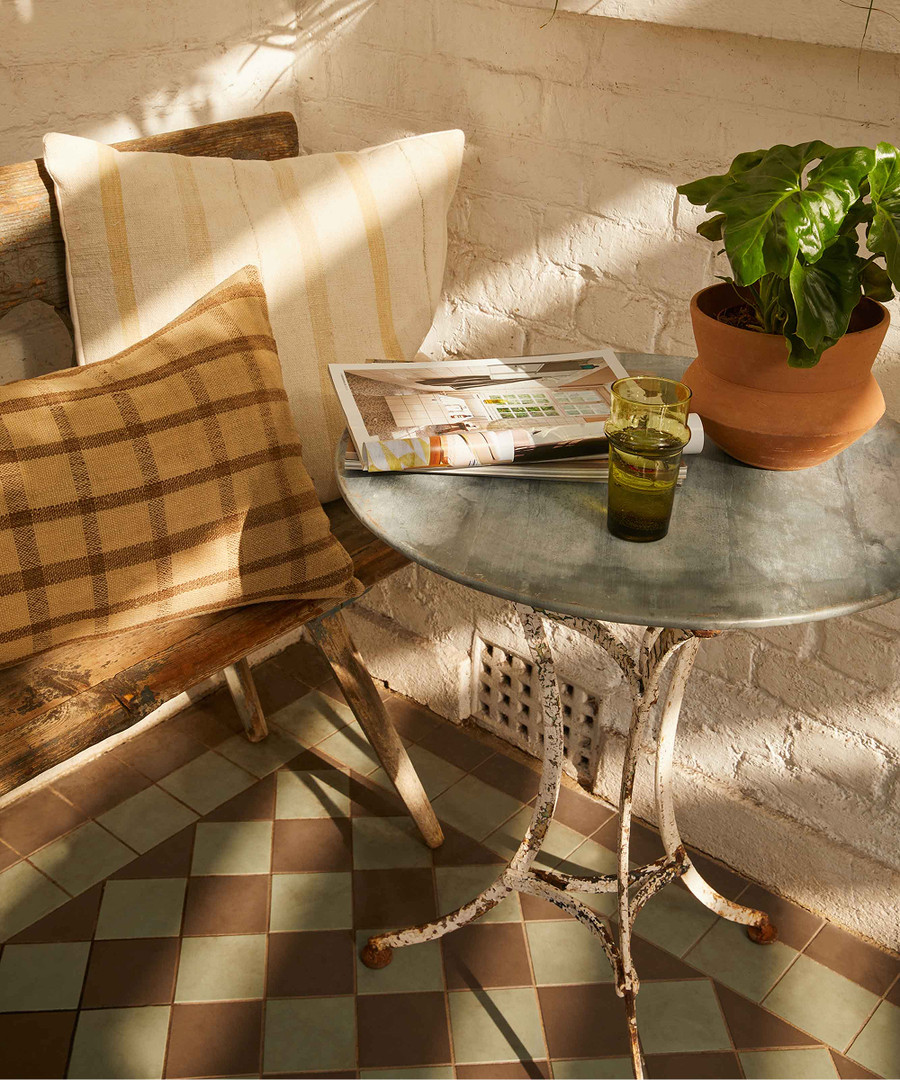
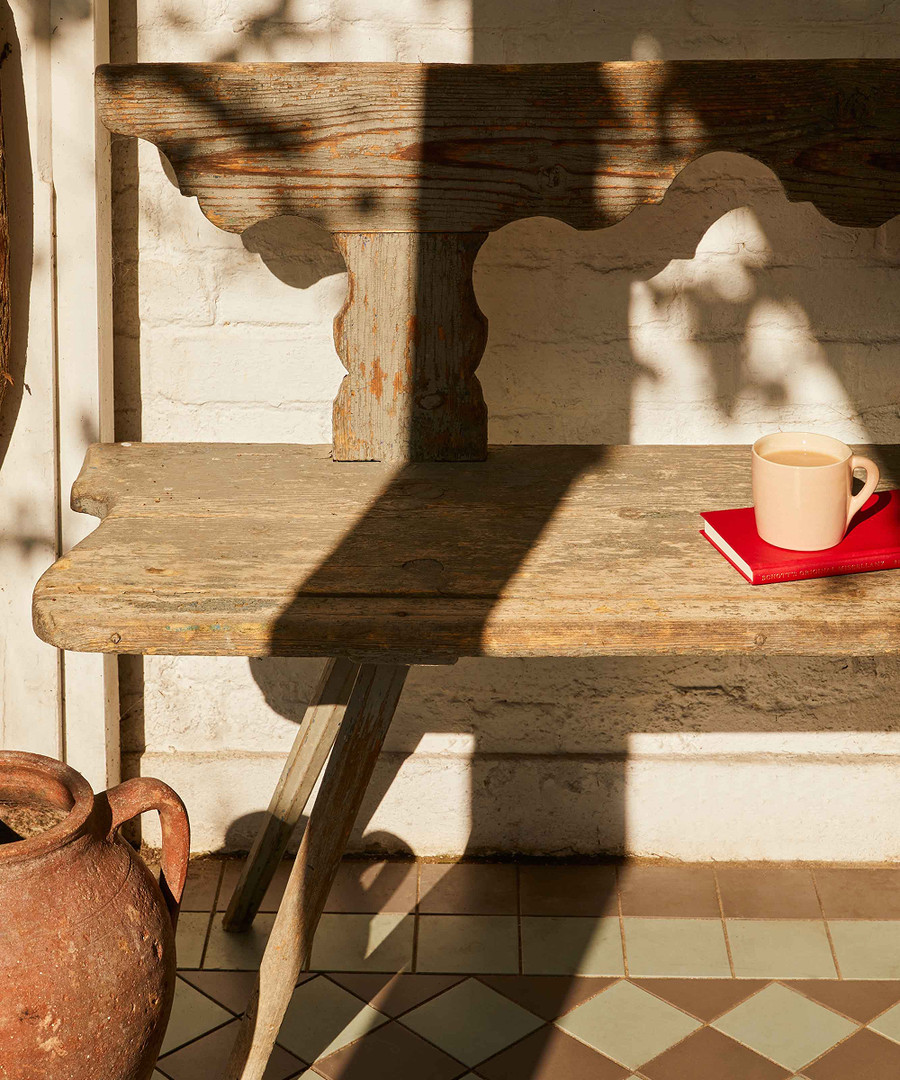
Vintage garden furniture was built to a standard the contemporary market rarely meets. Solid teak from Scandinavian manufacturers, wrought iron from British and French workshops, rattan produced before synthetic alternatives dominated the category: these are pieces designed to age well, and most of them have proved it.
Teak is the material of choice for anyone who wants furniture that can be left outside year-round. Its natural oil content resists moisture and temperature change without treatment, and it weathers to a silver-grey that reads as design rather than neglect. Look for solid construction, tight joinery, and pieces from Danish or Swedish makers working between the 1950s and 1980s.
Wrought iron and rattan each reward a different kind of garden. Wrought iron, produced in Britain and France from the nineteenth century onwards, has a weight and presence that no contemporary powder-coat replicates. Original bistro chairs and garden benches in wrought iron are among the best-value vintage garden pieces available: structurally robust, endlessly re-paintable, and better for their history. Rattan suits the spaces that sit between inside and out, the covered terrace, the shaded corner, the glazed extension that opens onto the garden. Pre-1980s rattan, made from natural cane before the category was overwhelmed by synthetic alternatives, has a tightness and craftsmanship that gives it genuine longevity.
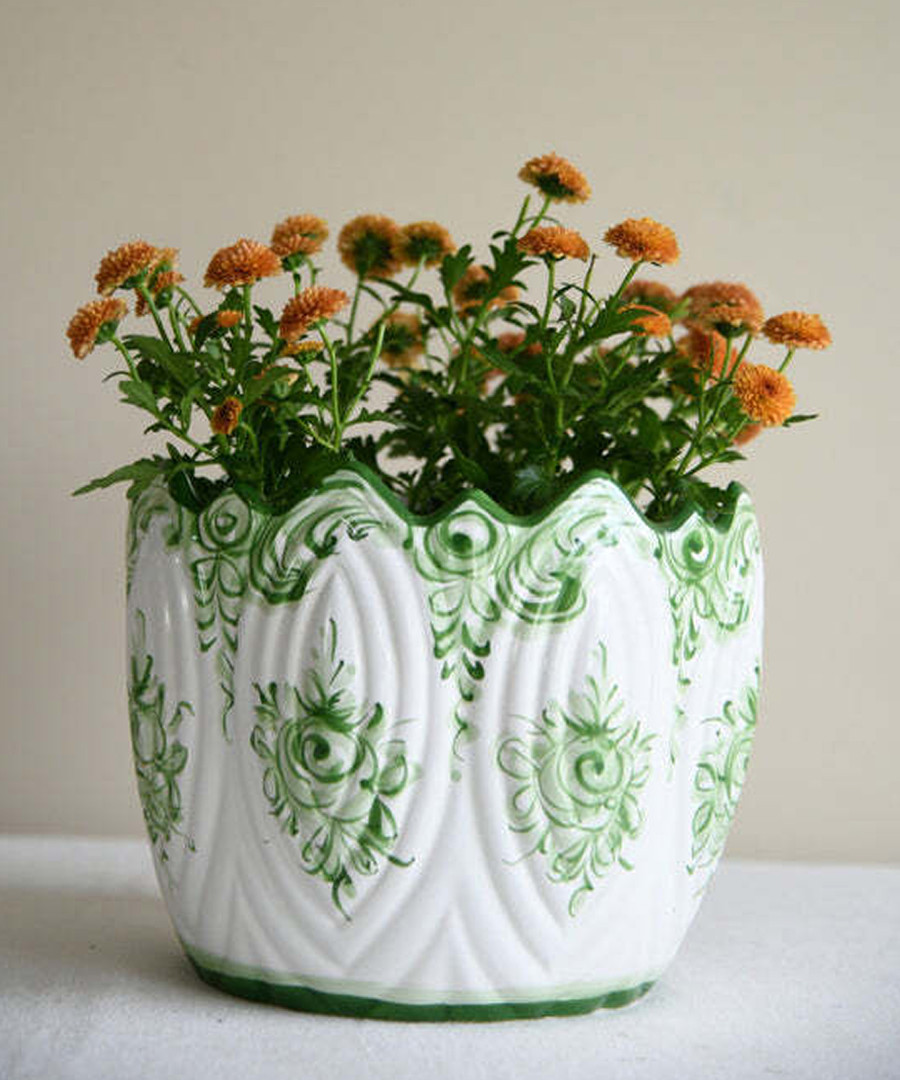
Decorative planters and urns
Most people buy a planter as an afterthought. Garden designers treat it as the point. In skilled hands a planter ends a sight line, frames an entrance, or lifts a terrace entirely. Stone, lead, glazed ceramic, cast iron: each material carries its own history of outdoor use and its own way of ageing. Choosing the right one is less about matching a garden scheme than understanding what each material wants to do.
Stone, lead and the value of permanence
Stone troughs are among the most interesting objects in the antique garden market. Originally agricultural, adopted by garden designers in the early twentieth century, they carry a permanence that nothing designed as a planter achieves. The sense that the container predates the garden, and will outlast it. Antique lead planters, used extensively in eighteenth-century English garden design, often carry embossed classical decoration and weather to a pewter-grey that suits almost any planting scheme. Both appreciate in ways terracotta never does.
The European ceramic tradition
Contemporary production has never matched the depth of colour and quality of glaze achieved by the European ceramic tradition at its height. Majolica jardinieres from Italian manufacturers, terracotta olive jars from Tuscan producers, blue and white delftware tulip pots: these were designed to be looked at, not merely planted into. A large antique olive jar against a white-painted wall or a glazed jardiniere with clipped box functions as outdoor sculpture as much as container. The planter, in other words, is not the supporting act. In a well-considered garden, it is often what you remember.
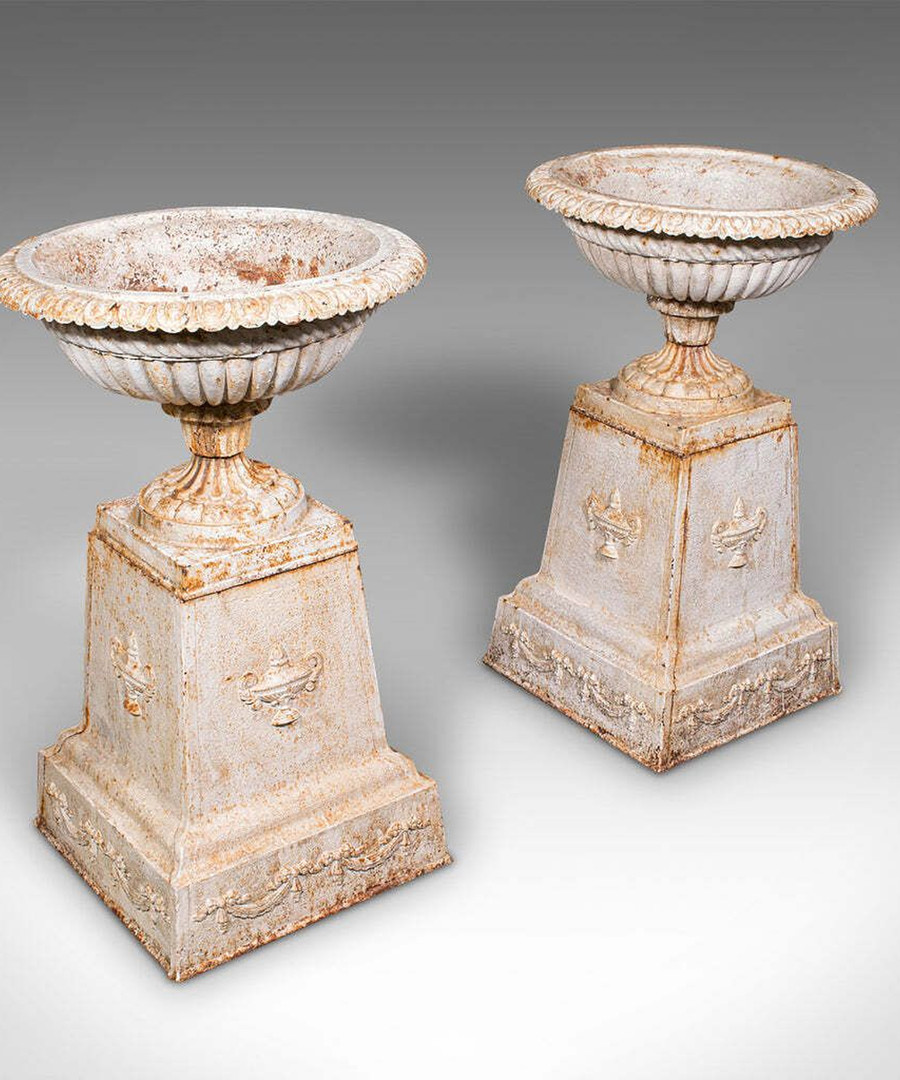
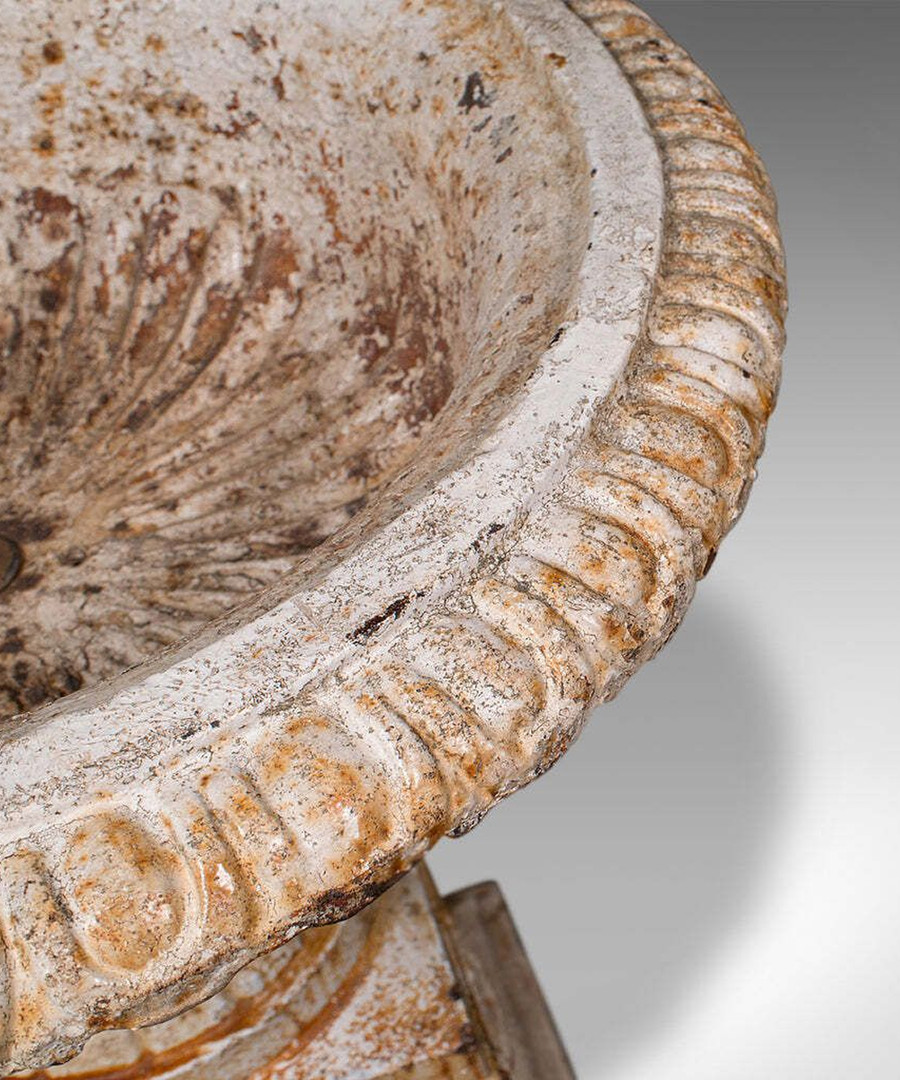
Cast iron & decorative garden pieces
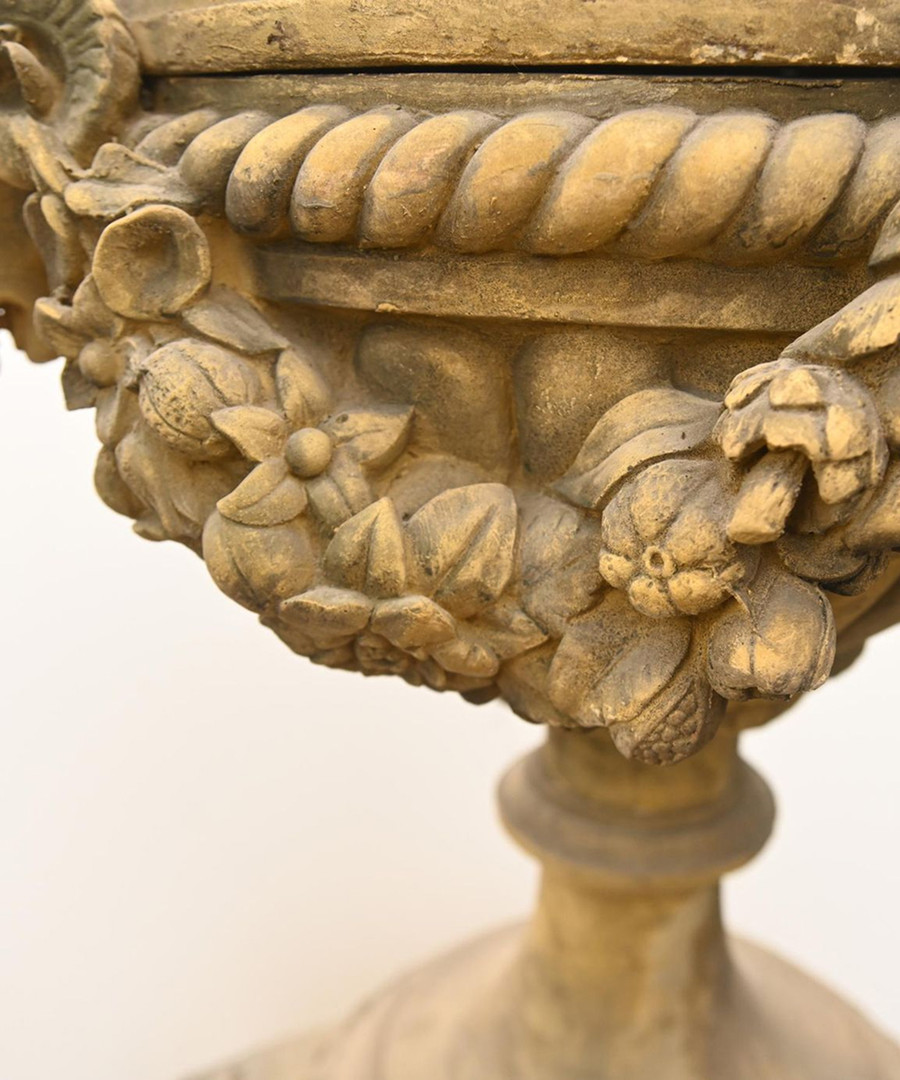
Cast iron has a longer history in the British garden than almost any other material. Victorian jardinieres, produced by foundries across the north of England from the mid-nineteenth century, were made to stand at entrances, on terraces, and along the edges of parterres. The detailing, acanthus leaf patterns, rope-twist borders, classical figures, is the kind that only casting allows: complex, precise, and permanent. Surface rust is, in most cases, part of the appeal. Structural integrity is what to assess.
Beyond the jardiniere, cast iron gives a garden its smaller grammar: boot scrapers at a back door, staddle stones anchoring a kitchen garden, fountain basins turning a blank wall into a focal point. These are the pieces that serious garden designers use to give a space its character at ground level, the details that read as considered rather than collected. Repaint in a deep green or leave the rust. Either way, it will look better in ten years than it does today.
The broader category of decorative garden pieces, wall-mounted masks, finials, obelisks, sundials on stone plinths, works on the same principle. These are objects that impose a geometry on a garden, create vertical interest when planting cannot, and earn their place across every season. The ones that look extraordinary against bare November branches are the ones worth finding.

