


 Back to articles
THE DIGEST
The Complete Guide to Artifort
Artifort produced some of the most collectible furniture of the 20th century. The Mushroom, the Tongue, the Ribbon, the Orange Slice: pieces that most Dutch people have encountered without necessarily knowing the name behind them. That anonymity is, in its way, a mark of how thoroughly Artifort succeeded. The best design doesn't announce itself. It simply works.
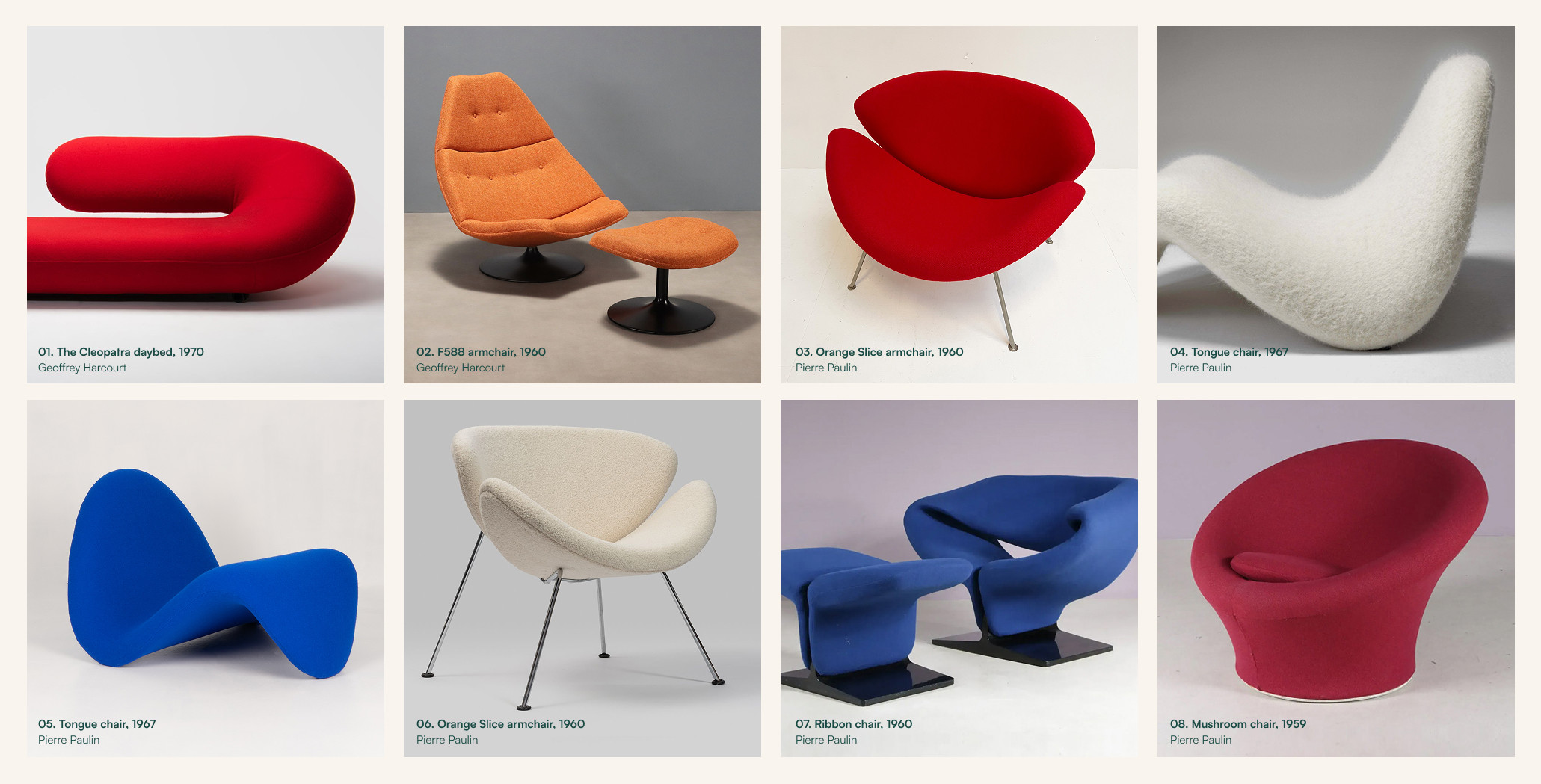
Not every design brand needs introduction. Artifort is one of them - at least in the Netherlands, where its chairs have been part of the furniture of daily life, quite literally, for the better part of sixty years.
The Mushroom, the Tongue, the Ribbon, the Orange Slice: these are pieces that most Dutch people have encountered somewhere - a waiting room, a family home, a hotel lobby - without necessarily knowing the name behind them. That anonymity is, in its way, a mark of how thoroughly Artifort succeeded. The best design doesn't announce itself. It simply works.
For collectors and interior designers approaching these pieces now, Artifort offers something worth paying close attention to: a Dutch design legacy with genuine international standing, a range of pieces whose formal quality holds up against anything produced in the same period anywhere in Europe, and a secondary market that still rewards careful looking. Here is what you need to know.
Where Artifort came from
The story begins modestly enough. In 1890, Jules Wagemans set up as an upholsterer in Maastricht. It was a local trade operation, producing serviceable furniture without particular ambition. His son Henricus broadened the scope, and by the late 1920s, with a showroom in Amsterdam, the brand had established itself as a respected Dutch manufacturer. The name Artifort - a contraction of arte and fortis, art and strength - was formalised in 1928.
Nothing about that early chapter hinted at what was coming. What changed everything was a single appointment.
In 1958, Kho Liang Ie joined Artifort as aesthetic consultant. Born in Indonesia and trained in the Netherlands, Kho was a designer with a precise eye and a calm certainty about what modern furniture should be. He committed Artifort to modernism without compromise, overhauled its approach to production, and then did something quietly decisive: he opened the brand to the best international design talent he could find.
Through Kho, Artifort became the kind of company that serious designers wanted to work with. Two of them would go on to define its golden era entirely.
Designers behind Artifort's golden era
Pierre Paulin came from France in 1958 and brought with him an approach to furniture that had no real precedent in the Netherlands. Working with foam, steel, and stretch fabrics borrowed from the garment industry, he built seating whose forms curved and folded in ways that conventional upholstery construction simply couldn't achieve. The results looked unlike anything else being made at the time.
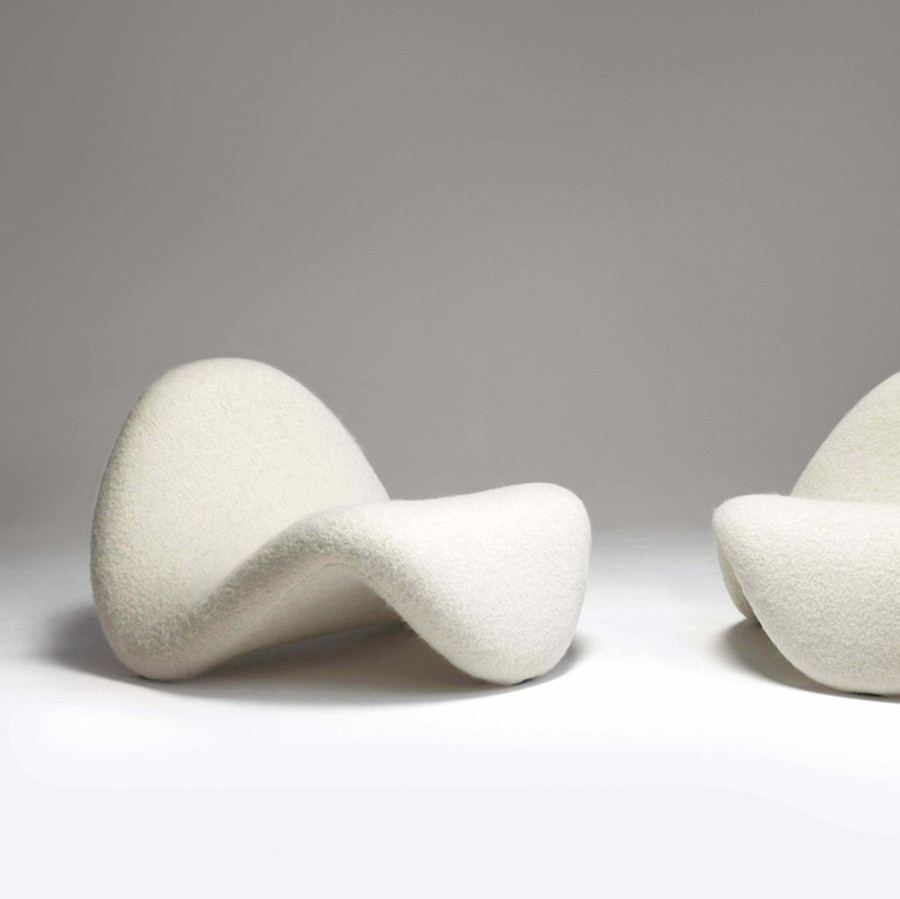
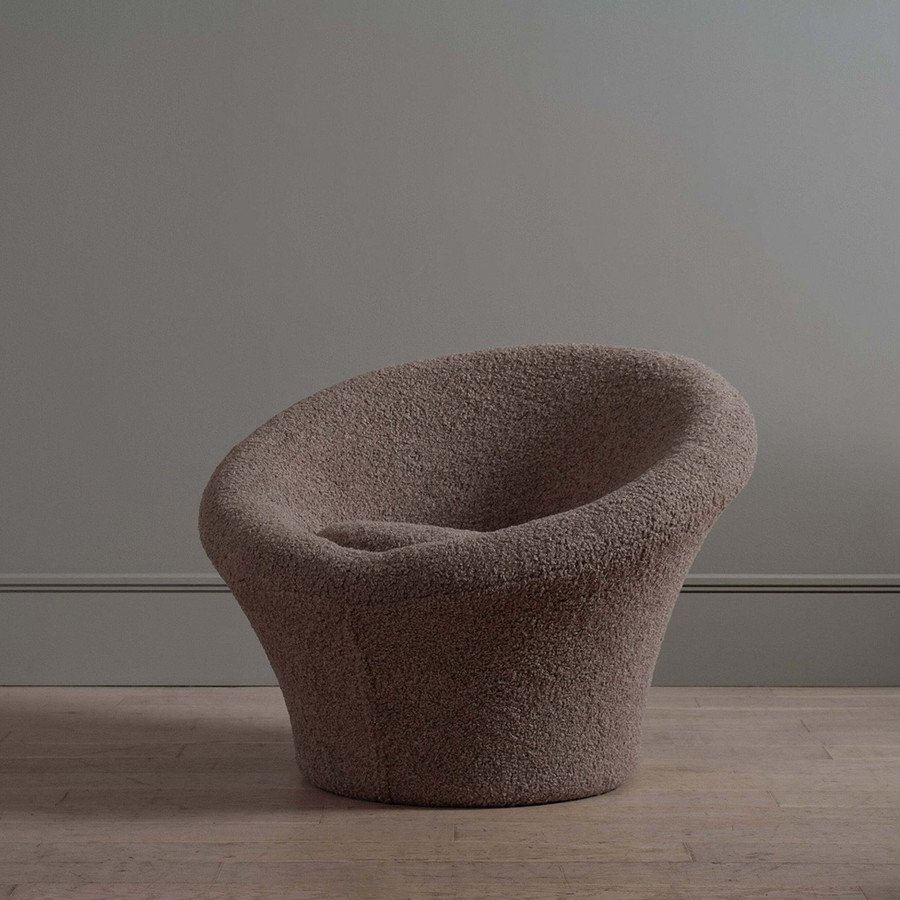
His most important Artifort designs span a decade of sustained invention. The Mushroom chair (1959) was the first to arrive, its rounded, enveloping profile a deliberate departure from the angular furniture that surrounded it. The Orange Slice (1960) followed: two mirrored shells framing a hollow centre, a chair that changes character depending on where you stand. The Ribbon (1966) is perhaps the most technically considered of the group - a single tubular steel frame, foam-covered, sheathed in jersey, folding into a seat, back, and headrest without a visible joint or seam. The Tongue (1967) was the most overtly playful: a wide, flat silhouette that arrived at exactly the moment Pop Art was making itself felt everywhere.
Comfortable, above all else. Paulin described his aim as making furniture that felt like a second skin, and these pieces never let the formal ambition get in the way of that. He came close.
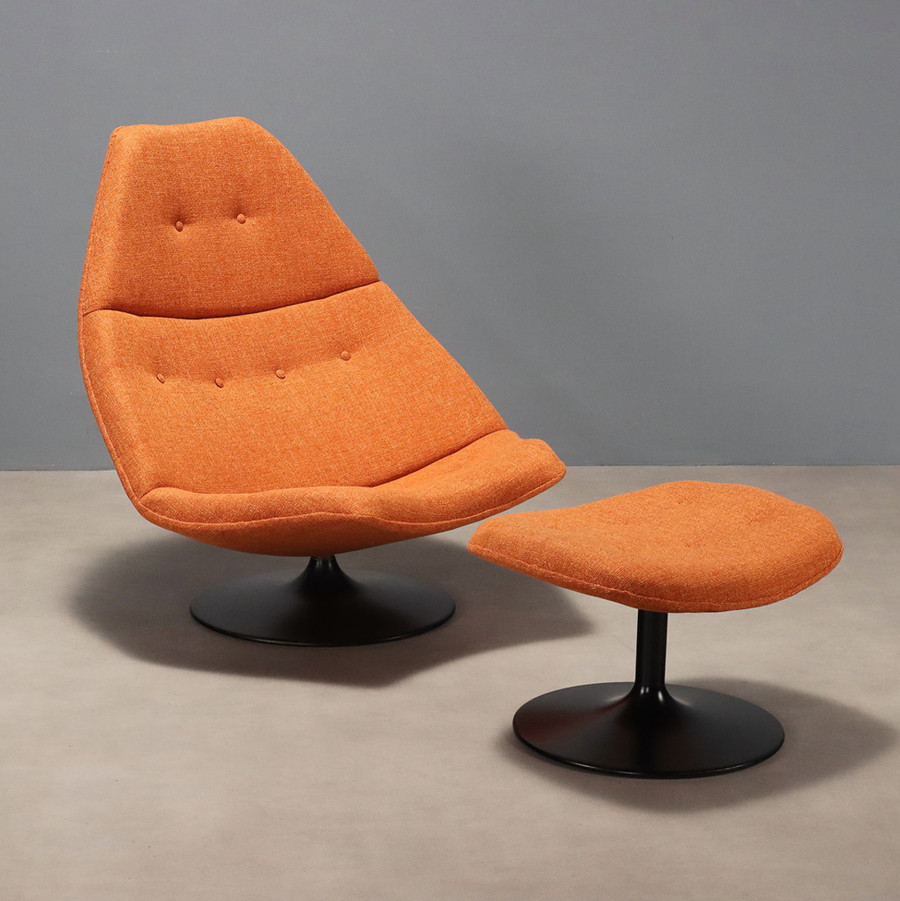
Geoffrey Harcourt, who began working with Artifort in 1962, was a different kind of designer: British, more restrained, less interested in formal provocation. His chairs are deeply upholstered and quietly authoritative - pieces whose quality reveals itself slowly rather than immediately. The F141 swivel chair, the F978 lounge, and the Cleopatra daybed (1970) are all worth seeking out. More than 20 Harcourt models went into production at Artifort, and the best of them age without effort.

Two further names deserve mention. Theo Ruth was Artifort's first permanent designer; his 1953 Penguin chair established the modernist direction that Kho Liang Ie would later push much further. Gijs Bakker - better known today as co-founder of Droog Design - contributed work representing the more experimental edge of the brand's output, and traces a direct line between Artifort's golden era and the conceptual Dutch design that followed.
The iconic Artifort chairs to know
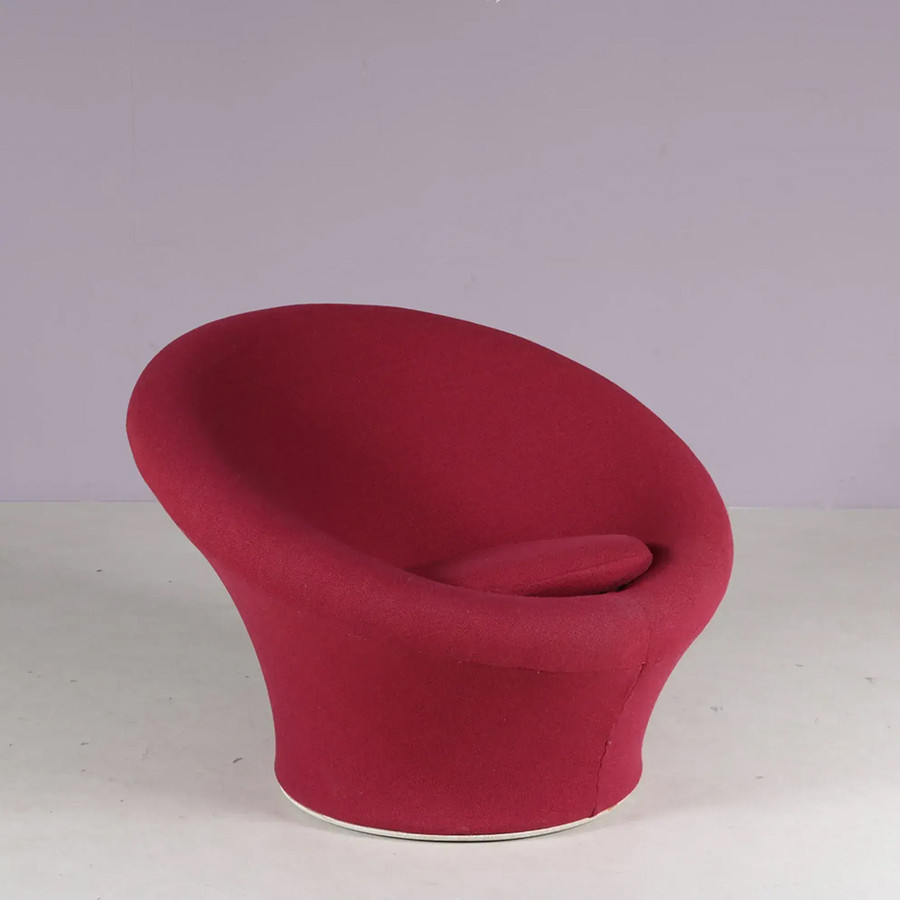
The Mushroom (F560), 1959. The piece most people associate with Artifort, and with good reason. The rounded silhouette has been produced in a wide range of colourways across the decades; original 1960s examples in classic tones - burnt orange, chocolate brown, olive - are the most sought after.
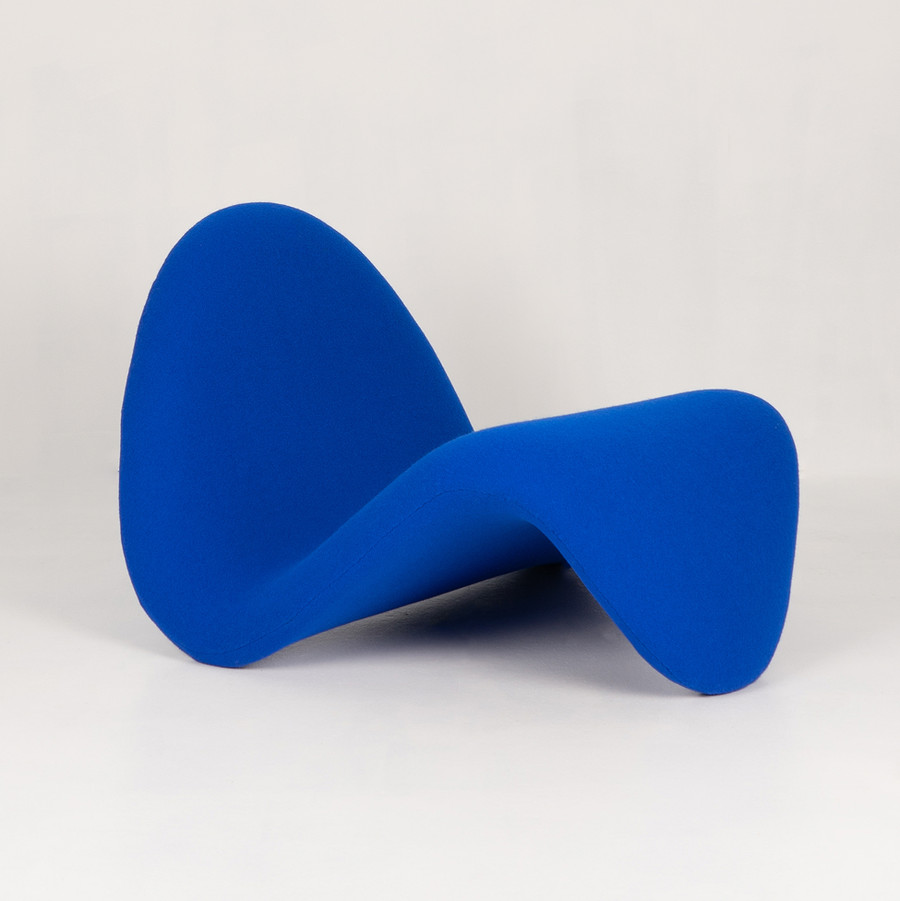
The Tongue (F577), 1967. Paulin's most overtly graphic design: wide, flat, and immediately recognisable. In its original colourways it reads as a confident design statement rather than a period relic, which is precisely why it continues to appear in serious contemporary interiors.
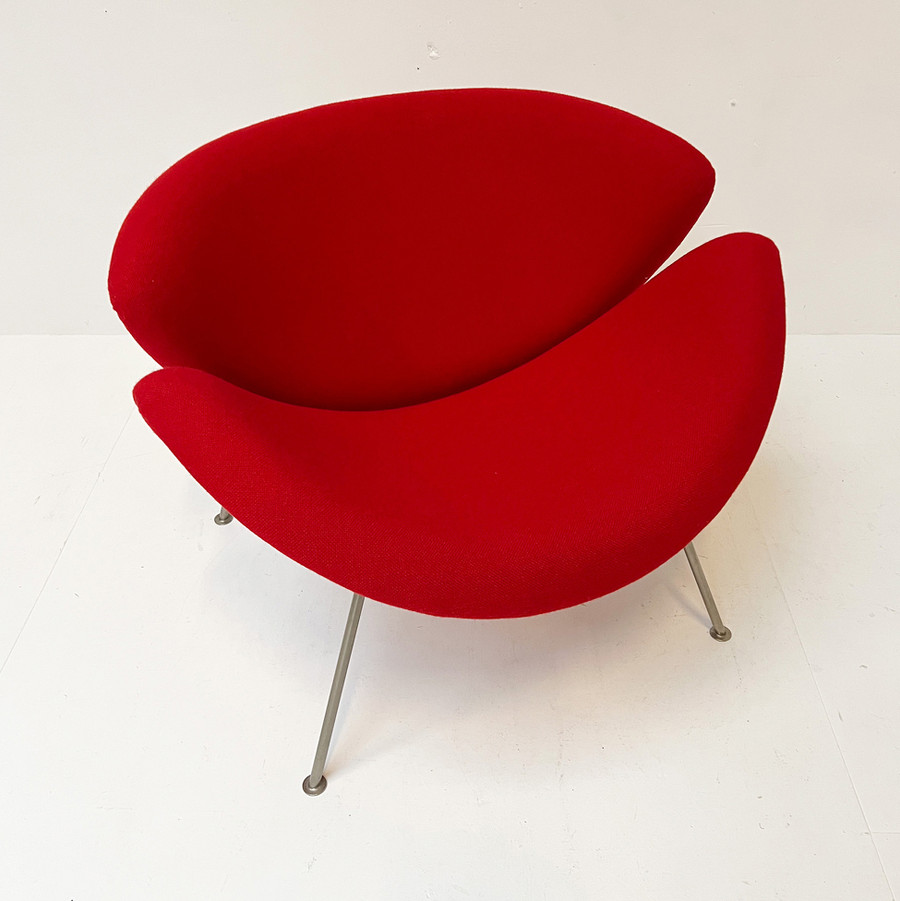
The Orange Slice (F437), 1960. Two mirrored shells, a hollow centre, legs that recede. In original two-tone colourways it is one of the more extraordinary chairs of its era - a piece that transforms the space around it.
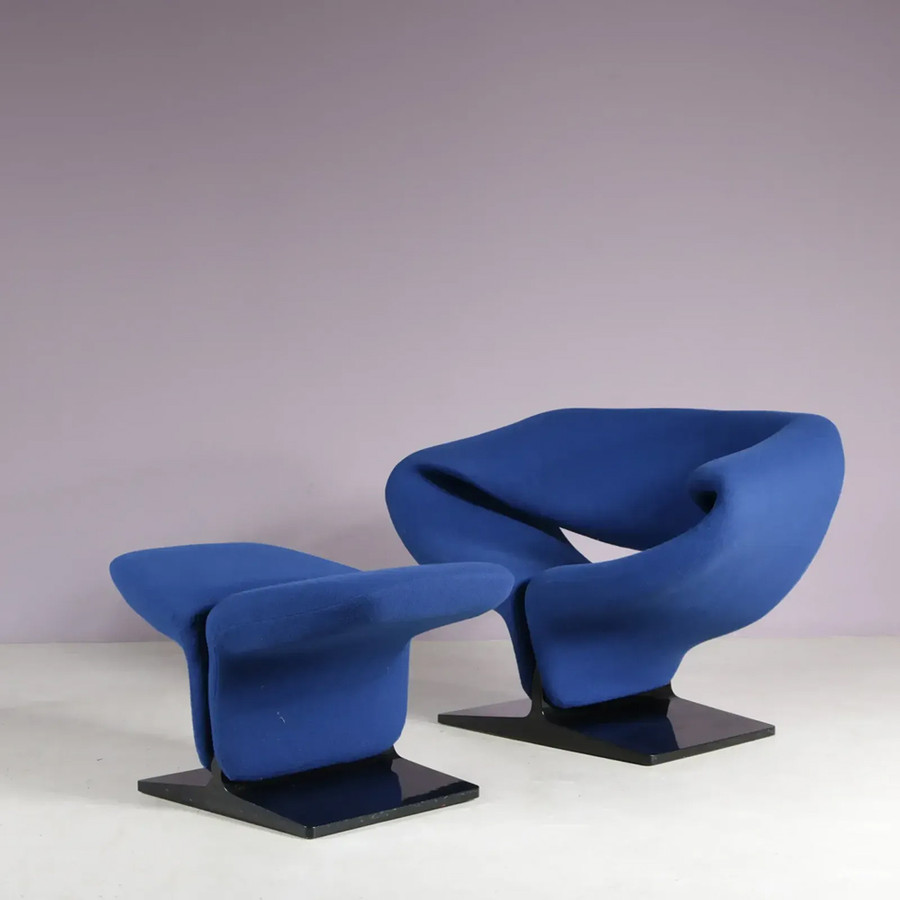
The Ribbon (F582), 1966. The most structurally complex of the Paulin pieces, and the one that rewards the most careful attention. A well-preserved original in good fabric is worth finding.
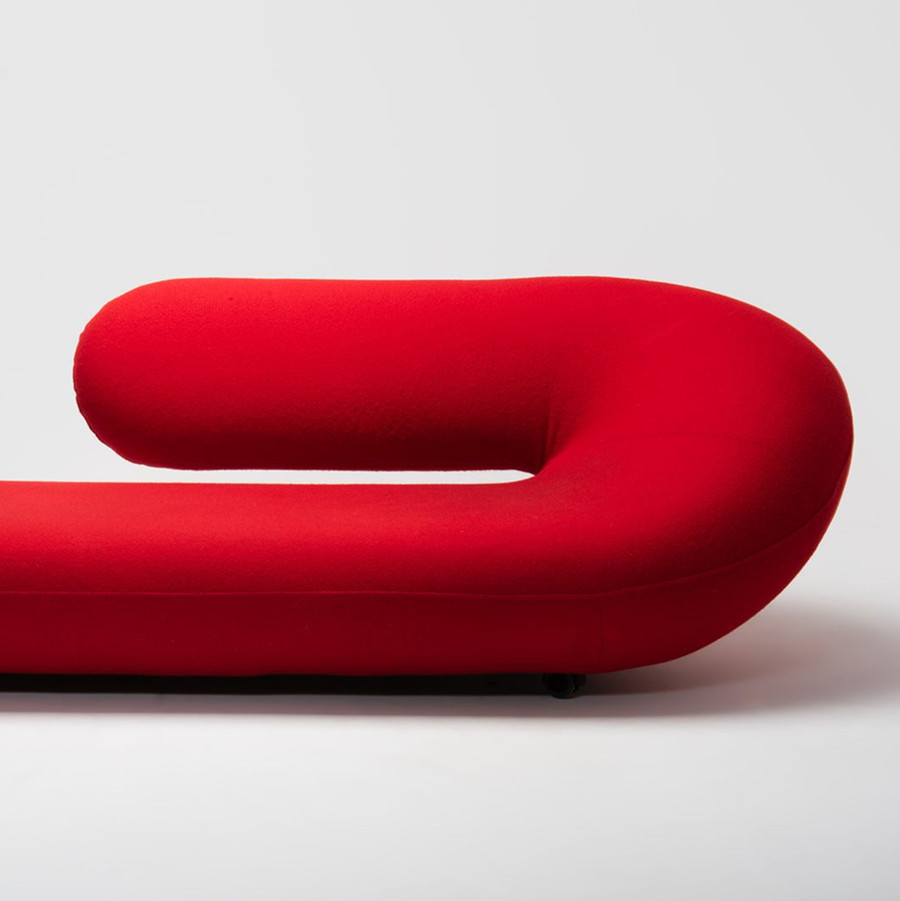
The Cleopatra daybed, 1970. Harcourt's most distinctive design, and a useful reminder that Artifort's story is not Paulin's alone. Sculptural, composed, and deeply comfortable: a piece for a particular kind of room.
How to identify an original Artifort
Because Artifort's most celebrated designs have been widely imitated and frequently misattributed, knowing what to look for matters.
Original Artifort pieces from the 1960s and 1970s carry a label on the underside of the frame, typically stamped or printed with the Artifort name, model number, and country of origin (Netherlands). Many also carry the designer's name. This is the first thing to check.
The construction tells its own story. Authentic Paulin pieces from this period use a tubular steel inner frame, covered in latex foam and sheathed in stretch jersey; there should be no visible seams on the outer surface of a well-preserved original. Check that chrome bases are consistent and original rather than replaced. Colourway is a reliable period indicator: the deep, saturated tones associated with 1960s and 1970s production - burnt orange, tobacco, cobalt, olive - are a reasonable guide to age, though fabric replacement is common and not necessarily a problem in itself.
Artifort did not license its designs to other manufacturers, which means genuine unlicensed copies are uncommon. Inaccurate attributions, however, are not. A chair described as "in the style of Paulin" or carrying no maker's mark is not an Artifort.
Vintage Artifort is worth collecting now
Dutch design has been undervalued outside the Netherlands for a long time, sitting quietly in the background while Scandinavian mid-century attracted most of the collector attention. That is changing, and Artifort is part of the reason.
For a Dutch audience, the reappraisal carries a particular kind of satisfaction. These pieces were never anonymous - they were considered design decisions, made at a time when the Netherlands was producing some of the most interesting furniture in Europe. Artifort's golden-era pieces were produced in modest volumes and have taken longer to attract serious collector attention outside the Netherlands than comparable Italian or Scandinavian work. There is still value to be found, particularly for buyers who look carefully rather than waiting for the obvious pieces to appear.
The pieces hold up because the thinking behind them was serious. Kho Liang Ie created the conditions; Paulin and Harcourt did the work. What they produced together - over barely two decades, in a factory in the Netherlands - belongs among the best furniture design of the 20th century. The rest of the world is catching up to what the Dutch have always known.
Feeling inspired?
Shop vintage Artifort on Vinterior.

