


 Back to articles
THE DIGEST
All You Need To Know About: Lacquer
This is the first in our Materials series - a closer look at the finishes, fabrics, and surfaces that define the objects we collect. We're starting with lacquer: a material that's been part of the decorative vocabulary for over seven thousand years, and has earned its place in every era it's touched.
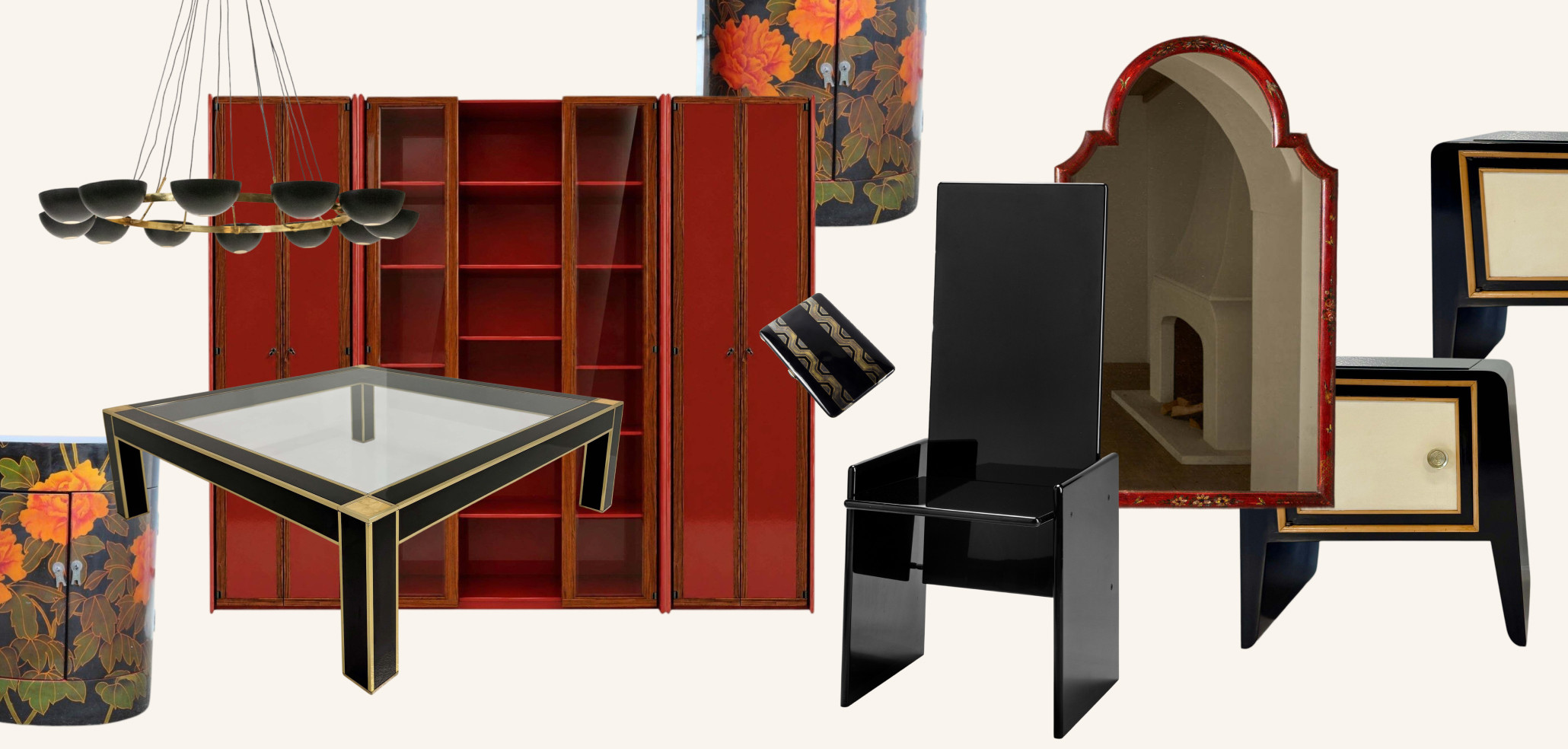
Lacquer is one of the oldest decorative finishes in the world, and one of the most misunderstood.
In its original form, lacquer is derived from the sap of the Toxicodendron vernicifluum tree, native to China and Japan. Harvested, filtered, and applied in layer after painstaking layer, each coat is left to cure in humidity before the next is added. The result, after as many as thirty coats and hours of hand-polishing between each, is a surface of unusual depth, glassy but warm, reflective but somehow rich. You can see into it rather than just off it.
This is urushi, the Japanese term for the craft tradition that's been practised continuously for over seven thousand years. Chinese lacquerware predates even that. The techniques (carving, inlaying, gilding) vary by region and century, but the material logic is the same: you are building a surface, not just coating one.
The lacquer most of us encounter in Western furniture is a descendant of that tradition, either using genuine Asian lacquer or, more commonly from the 18th century onwards, European imitations using shellac, varnish, or later synthetic resins. Modern lacquer finishes in design furniture are often cellulose- or polyurethane-based, sprayed and cured rather than hand-applied. The process is faster, but the effect (that saturated, sealed, almost liquid surface) is recognisably the same. Lacquer is applied to be the surface, distinguishing it from the likes of paint or varnish, that are applied to protect something underneath.
A history of lacquer furniture
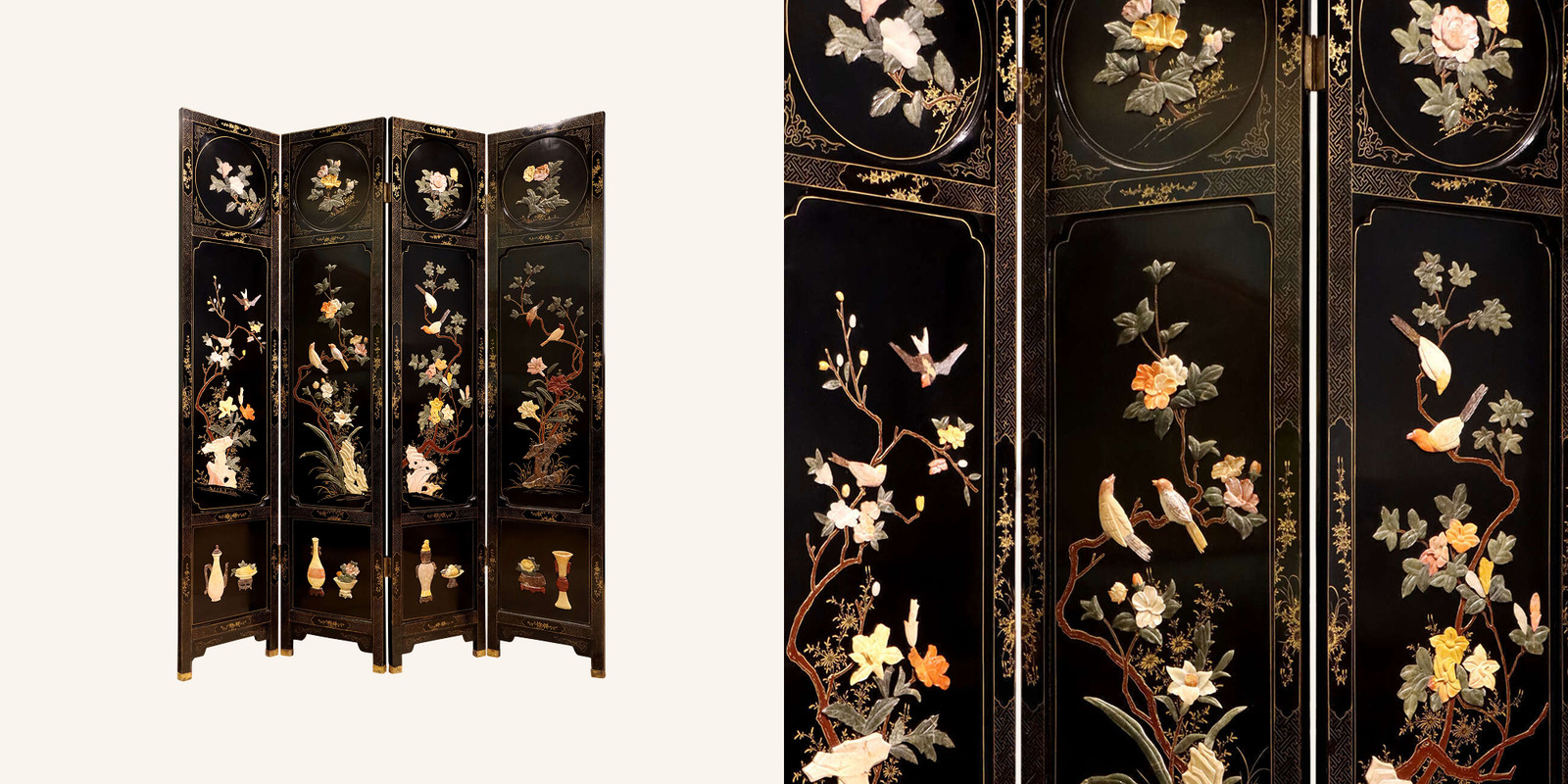
The 17th and 18th centuries: japanning and the chinoiserie craze
When European traders first encountered East Asian lacquerware in the 17th century, the demand was immediate and the supply hopelessly inadequate. Cabinets, screens, and panels arrived from China and Japan at enormous cost, often broken up and remounted into European forms on arrival. The appetite outpaced the supply so completely that European craftsmen developed their own version: japanning, a lacquer imitation using layers of shellac and varnish over a gesso ground, often decorated with raised chinoiserie scenes in gold.
The style swept through the courts of Europe. William and Mary furniture features lacquered cabinets on gilded stands. Boughton House, Chatsworth, Hampton Court: the great houses of England filled with japanned cabinets in black, red, and tortoiseshell, decorated with pagodas, figures, and birds that owed more to European imagination than to anything in China or Japan.
It was aspirational, Orientalist, and enormously influential. It established lacquer in the Western decorative vocabulary in a way that never fully faded.
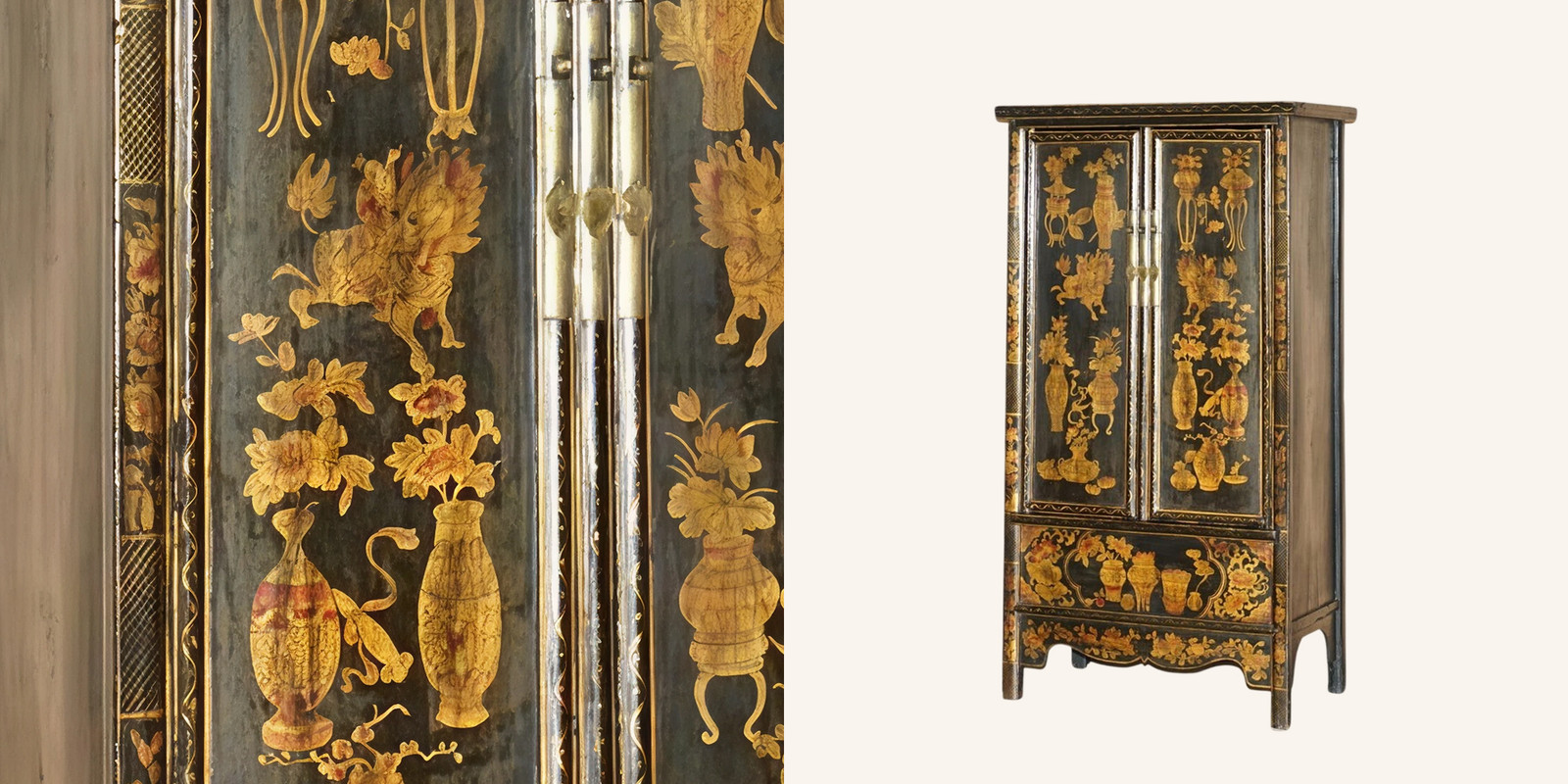
The 1920s and 1930s: Art Deco lacquer furniture and the lacquer masters
The second peak is the most significant for anyone buying vintage today. Art Deco's obsession with surface, geometry, and luxury found its ideal material in lacquer.
Eileen Gray trained under a Japanese lacquer master, Seizo Sugawara, in Paris. Her early furniture (the Bibendum chair, her lacquered screens, the extraordinary pieces she made before E.1027) show what happens when a genuinely rigorous designer engages with the material on its own terms. Her lacquer panels are not decoration applied to furniture. They are the thing.
Émile-Jacques Ruhlmann used lacquer on his ebony commodes and cabinets with a restraint that made the surface feel almost architectural. Jean Dunand, another Paris-based craftsman who trained with Sugawara alongside Gray, produced lacquer panels of breathtaking technical complexity, inlaid with eggshell, beaten metal, and carved relief.
This is the era that produced the pieces most sought after today. If you see a lacquered cabinet from the late 1920s or 1930s in a sale or on Vinterior, look very closely at the quality of the surface. The good ones have a depth that photographs can't capture.
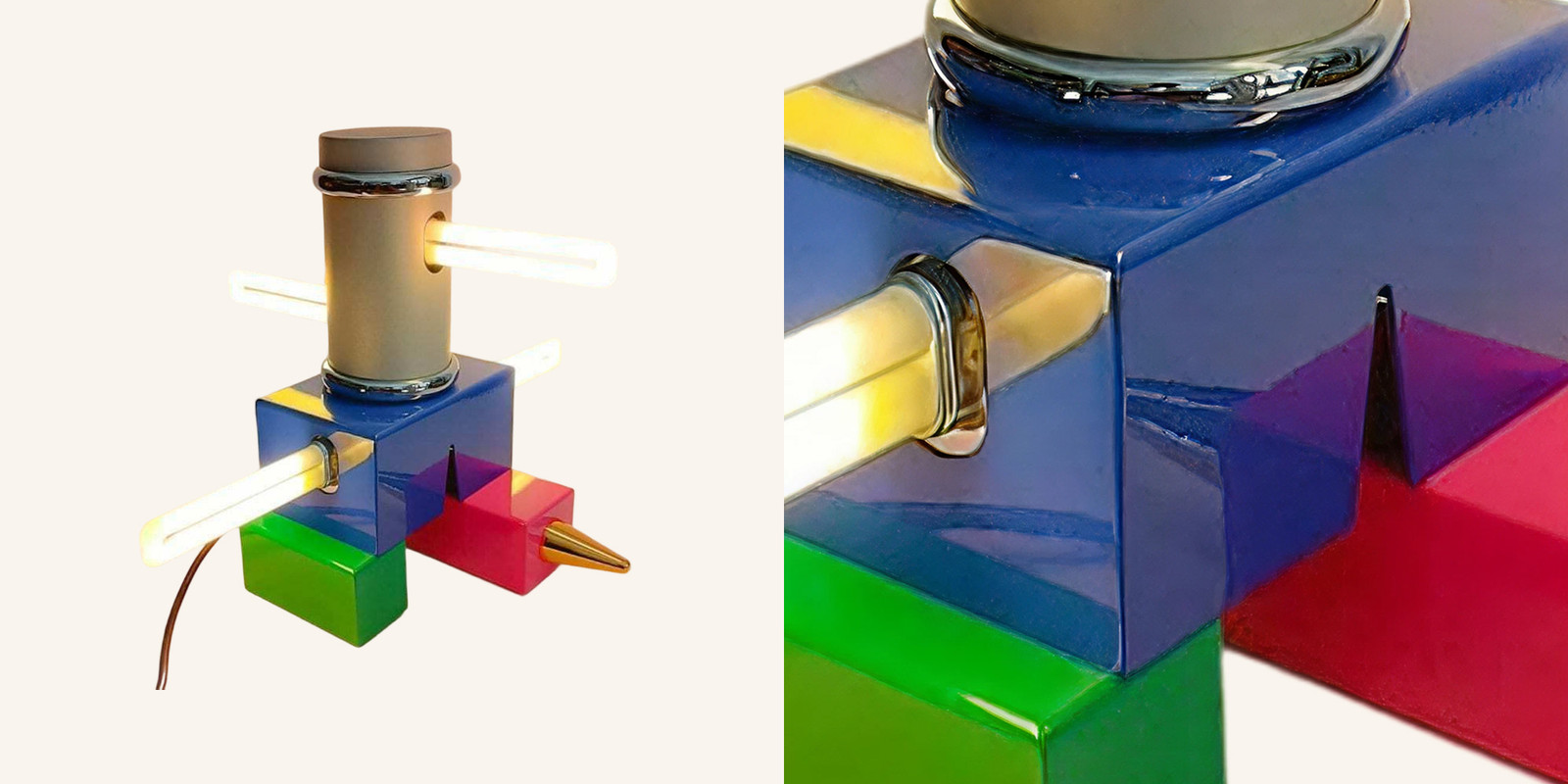
The 1970s and beyond: bold colour and the democratic lacquer
Lacquer's third significant moment is less rarified and more usable. Post-war furniture production brought lacquer finishes into domestic interiors at scale. High-gloss lacquered bedroom furniture, dining cabinets in deep aubergine and forest green, Chinese-influenced red lacquer pieces reworked by British and American manufacturers: the 1970s and 1980s used lacquer's visual weight as a deliberate statement in rooms that could carry it.
The Memphis Group took this further, applying lacquer to exuberantly shaped pieces in combinations nobody had considered tasteful. They were right to. Saturated colour, graphic form, no apology: the Memphis approach to lacquer influenced every designer who came after them, including those who would never admit it.
What emerged from this period is a large body of vintage lacquer furniture that is often undervalued precisely because it doesn't carry the provenance of the Art Deco masters. That can work in your favour.
How to use lacquer in your home
Lacquer is a strong material. It earns its keep by doing something most other surfaces can't: holding presence in a room without needing company.
A single lacquered sideboard in an otherwise neutral space (white walls, linen, pale timber floors) is usually enough. Lacquer doesn't need a supporting cast. The instinct to pair it with other strong pieces is usually wrong.
What lacquer works well with
Natural materials balance lacquer's precision. Raw linen, undyed cotton, jute, and unfinished stone all provide the kind of relaxed contrast that stops lacquer from feeling decorative rather than designed. Brass and unlacquered bronze age in ways that complement lacquer's sealed permanence. The patina of the metal against the depth of the surface creates a tension that feels considered.
Dark timber (ebonised oak, wenge, blackened ash) is lacquer's most historic companion. The Art Deco masters understood this instinctively. If you have a lacquered piece that needs grounding, dark wood nearby works.
Marble in cool tones (Carrara, Calacatta, Arabescato) alongside a deep lacquered cabinet creates the kind of interior that photographs beautifully and ages even better. Avoid marble and lacquer in the same warm-red family. The competition becomes noise.
Where lacquer furniture works best
Lacquer is most at home in rooms used deliberately: a dining room, a drawing room, a bedroom. It's less easy in spaces meant to feel casual. Kitchens and family rooms tend to fight against its formality. The exception is a drinks cabinet or bar cart, where lacquer's slightly theatrical quality is exactly the point.
In a bedroom, a lacquered chest of drawers or pair of lacquered bedside tables transforms the room's character without requiring structural change. A deep red or lacquered black chest against simple white bedding is an interior that needs nothing else to feel complete.
Buying vintage lacquer furniture
Lacquer shows wear more visibly than most materials. Fine crazing, small chips, and surface scratches are common in vintage pieces and usually appropriate to age. Deep scratches that break through to the substrate are harder to address. When buying, check corners and edges first. These are the points of highest stress. Minor surface wear often polishes out; structural damage to the layers rarely does.
Choosing a colour
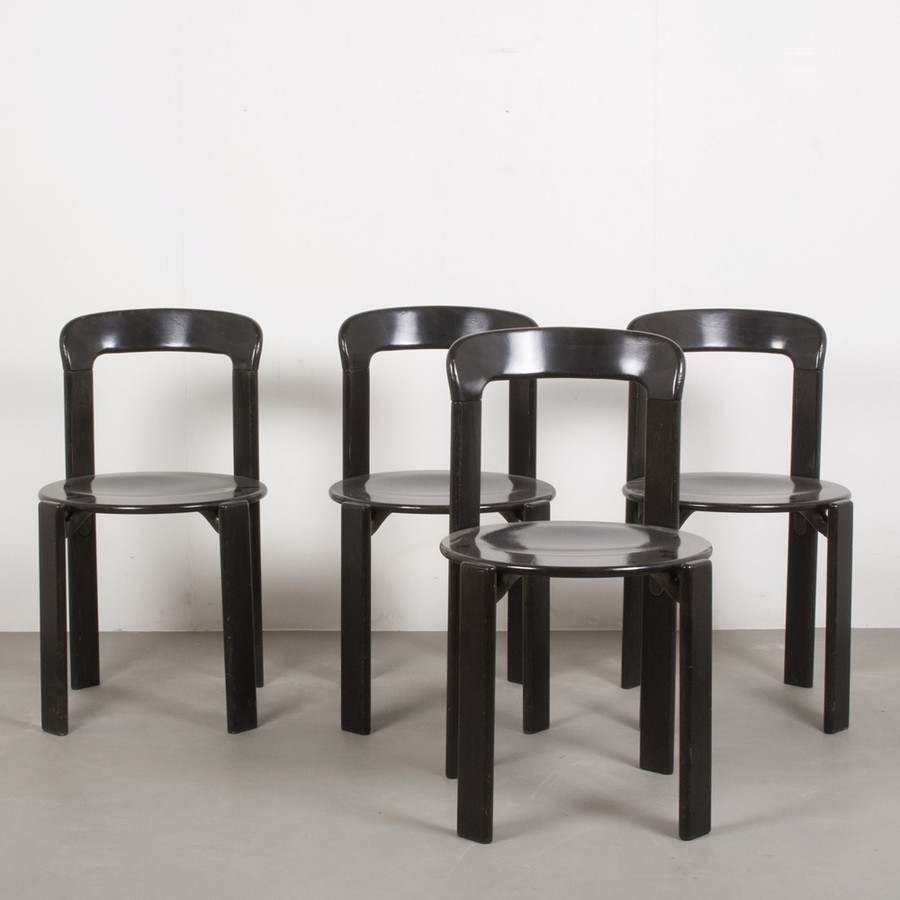
Black lacquer is the most versatile and the most enduring. It works in period and contemporary rooms, absorbs surrounding colour without distorting it, and holds its value on the secondary market.
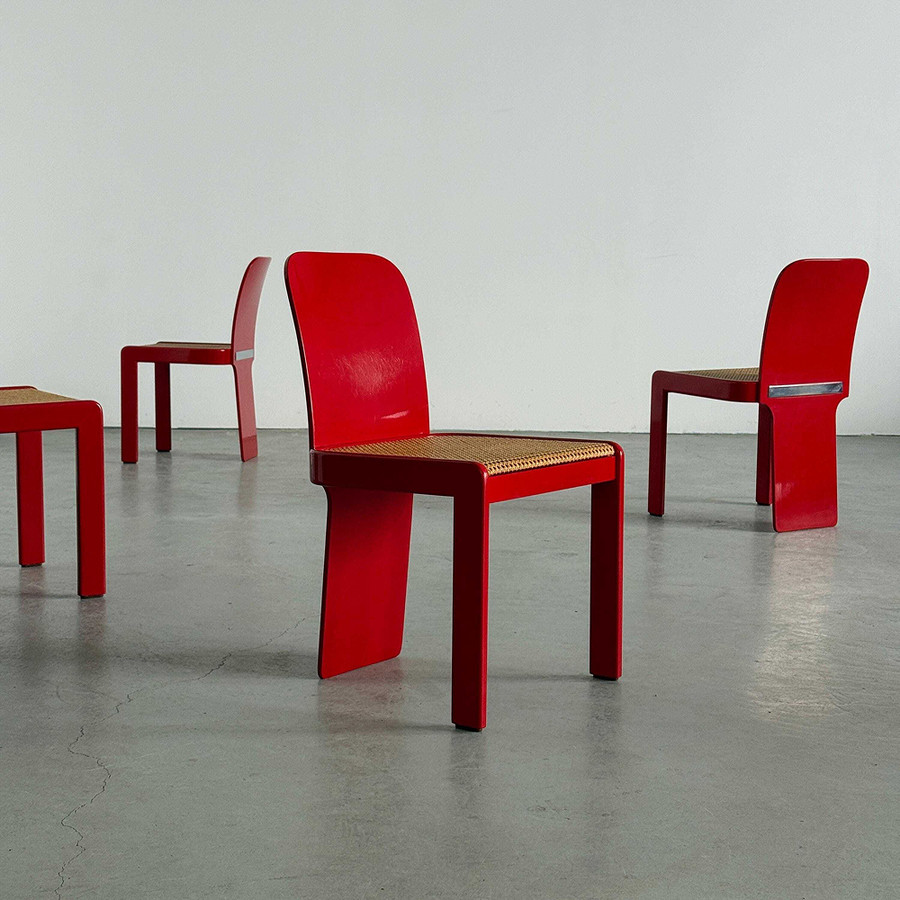
Red lacquer is specific but powerful. It reads as Chinese-influenced in traditional settings and as bold modernism in contemporary ones. The context determines the reading.
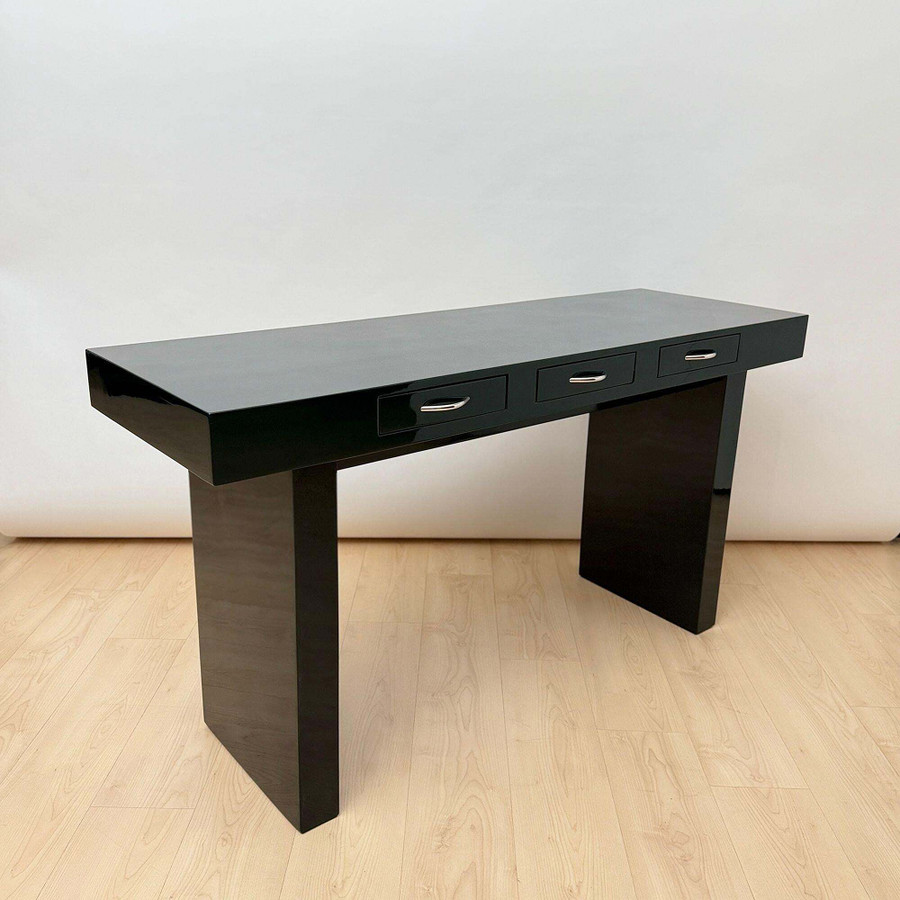
Deep greens, aubergines, and midnight blues are the lacquered colours most likely to feel fresh right now. Saturated, specific, warm enough to live with. They work especially well in north-facing rooms where lighter colour might flatten.
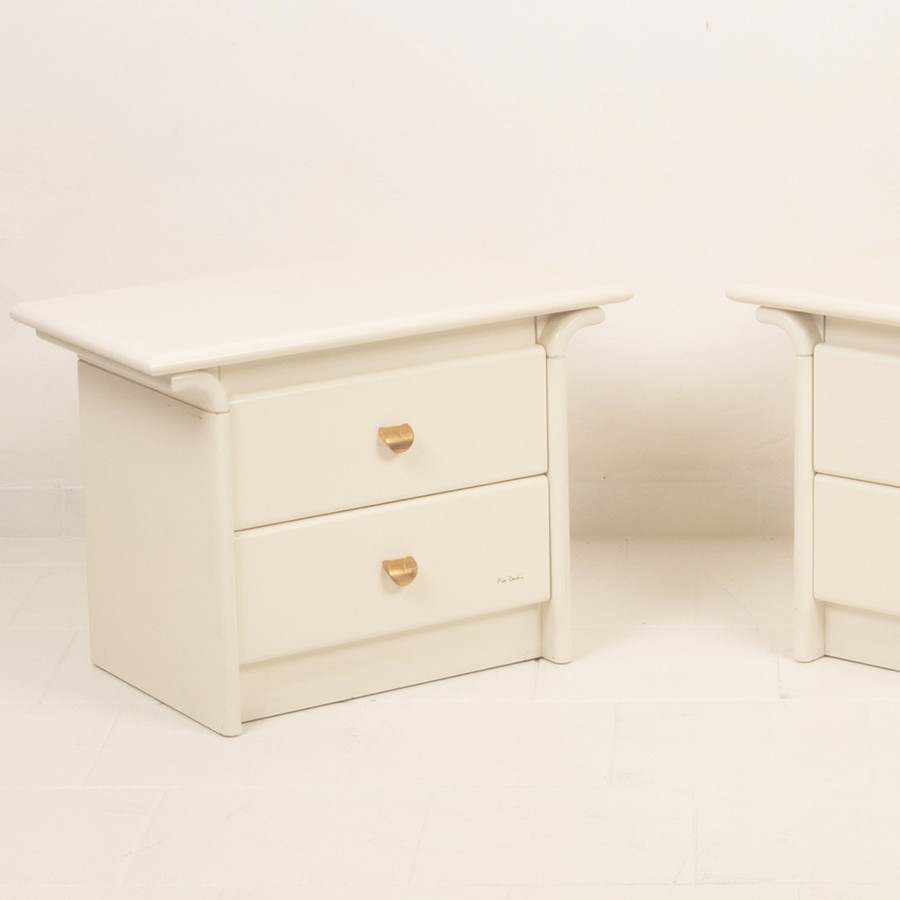
Pale lacquer (cream, ivory, high-gloss white) reads immediately as either Syrie Maugham or 1980s bedroom furniture, depending on the surrounding context. Both are perfectly valid references. Know which one you're making.
Feeling inspired?
Shop vintage lacquer furniture on Vinterior

