



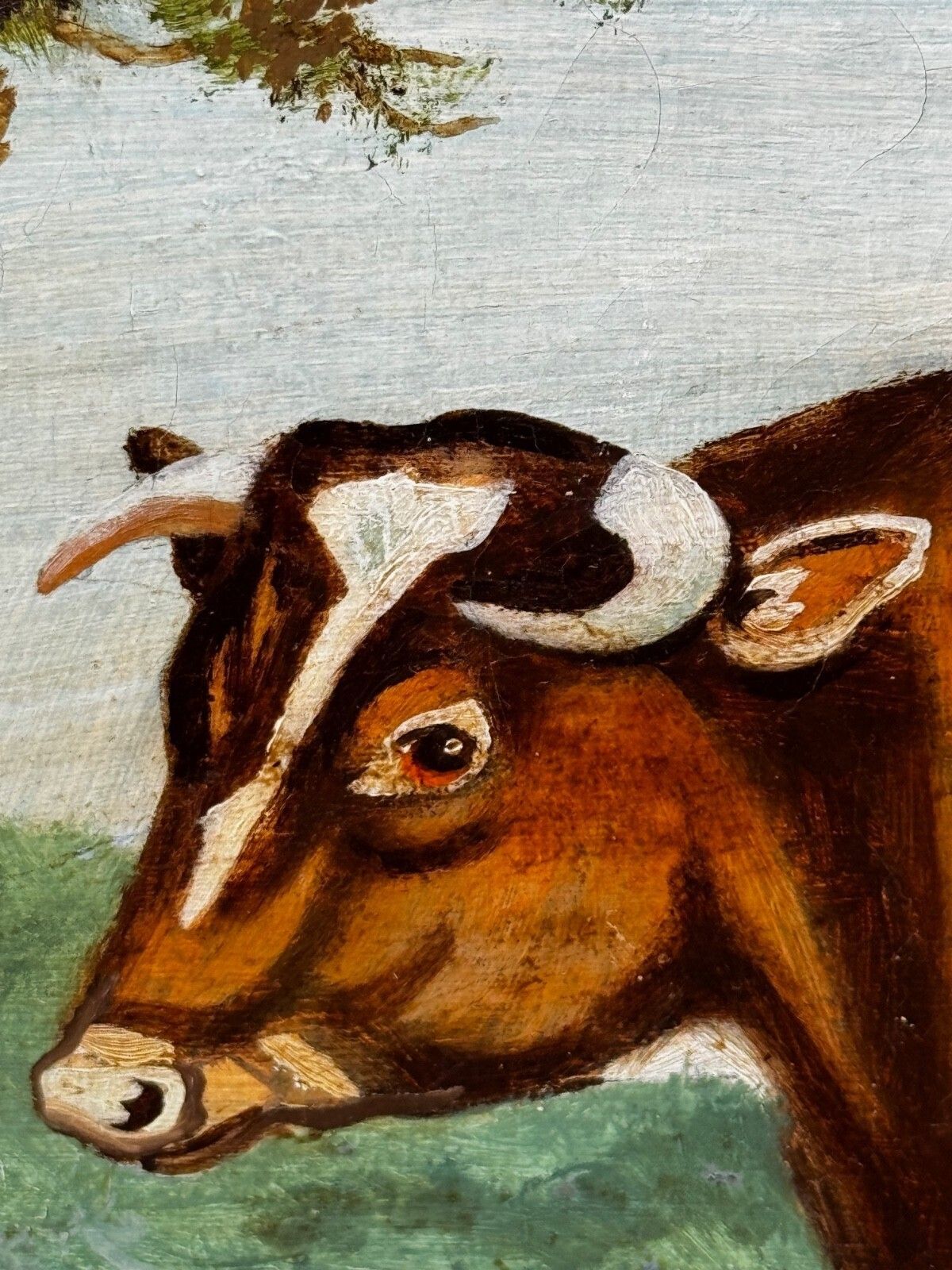
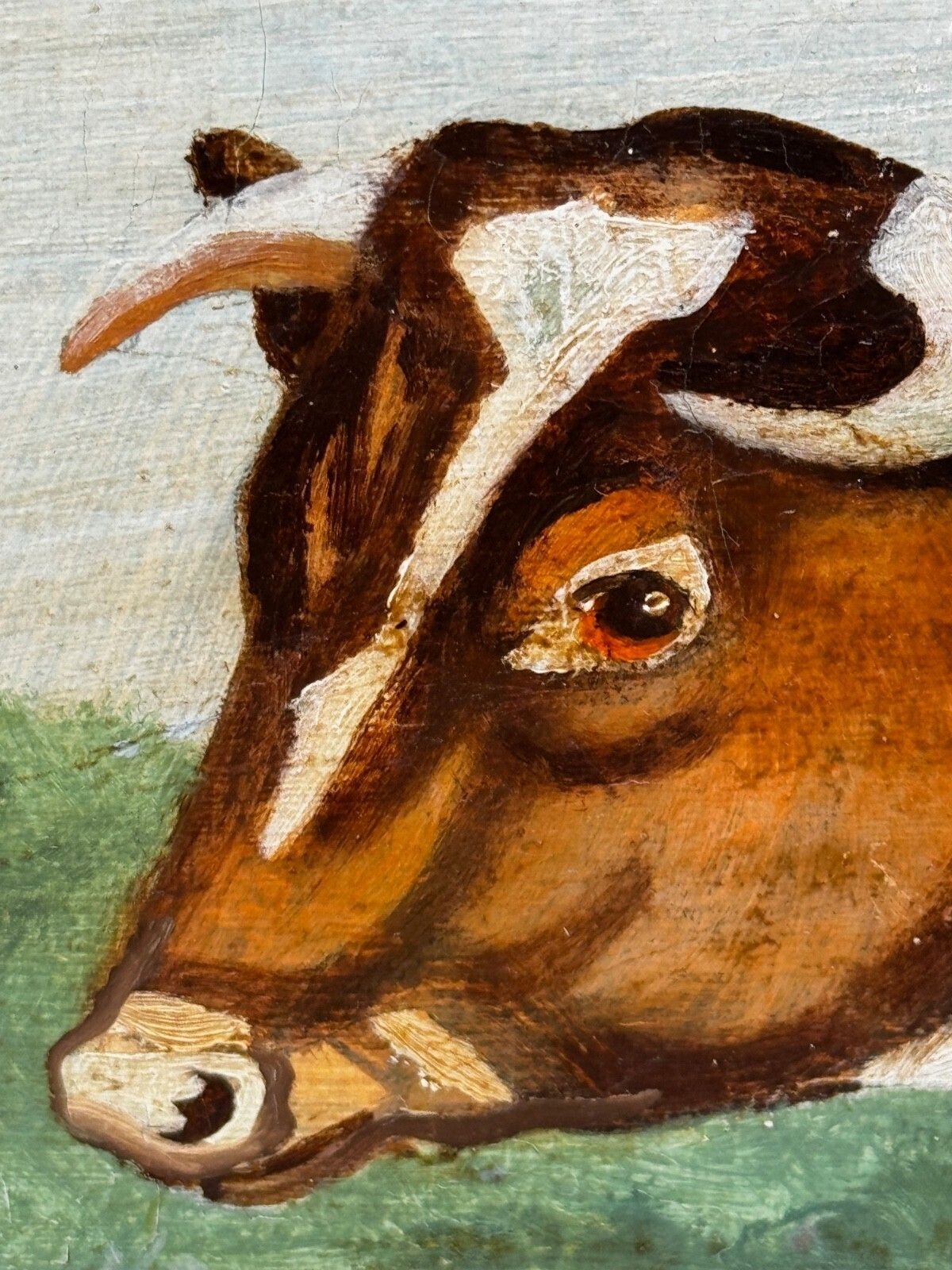
Victorian Prized Shorthorn Bull Oil Painting British School Manner William Ward

 London, United Kingdom

Hassle-free returns
-
 Easy returns (14 days)
-
Free return if the item isn't as described
-
Buyer protection
Damage is rare, and you're fully protected if it happens.
Dimensions
Wear Condition
Good
Material
Oil on Canvas
Style
Antique, Vintage, Traditional, Victorian
Product Details
Description
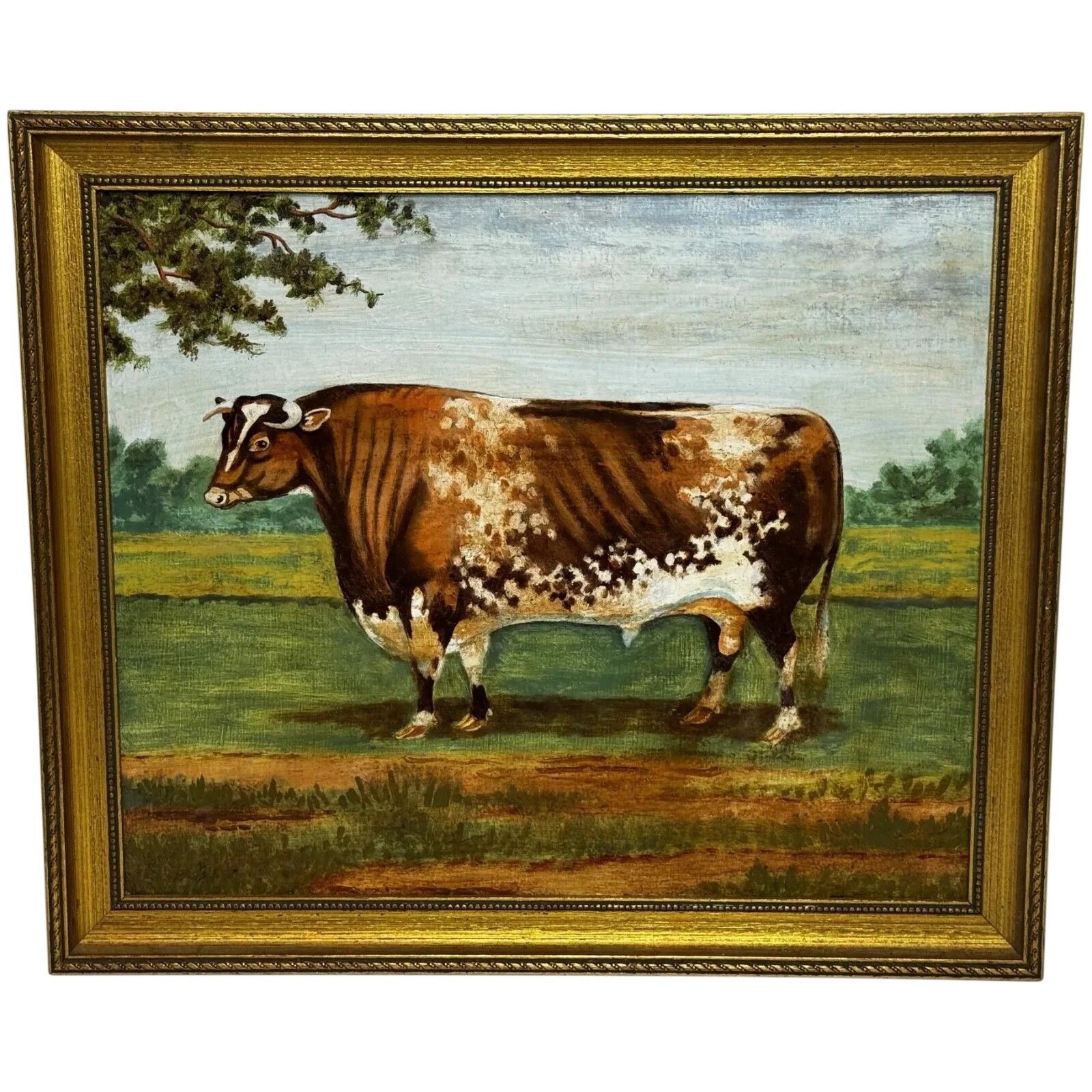
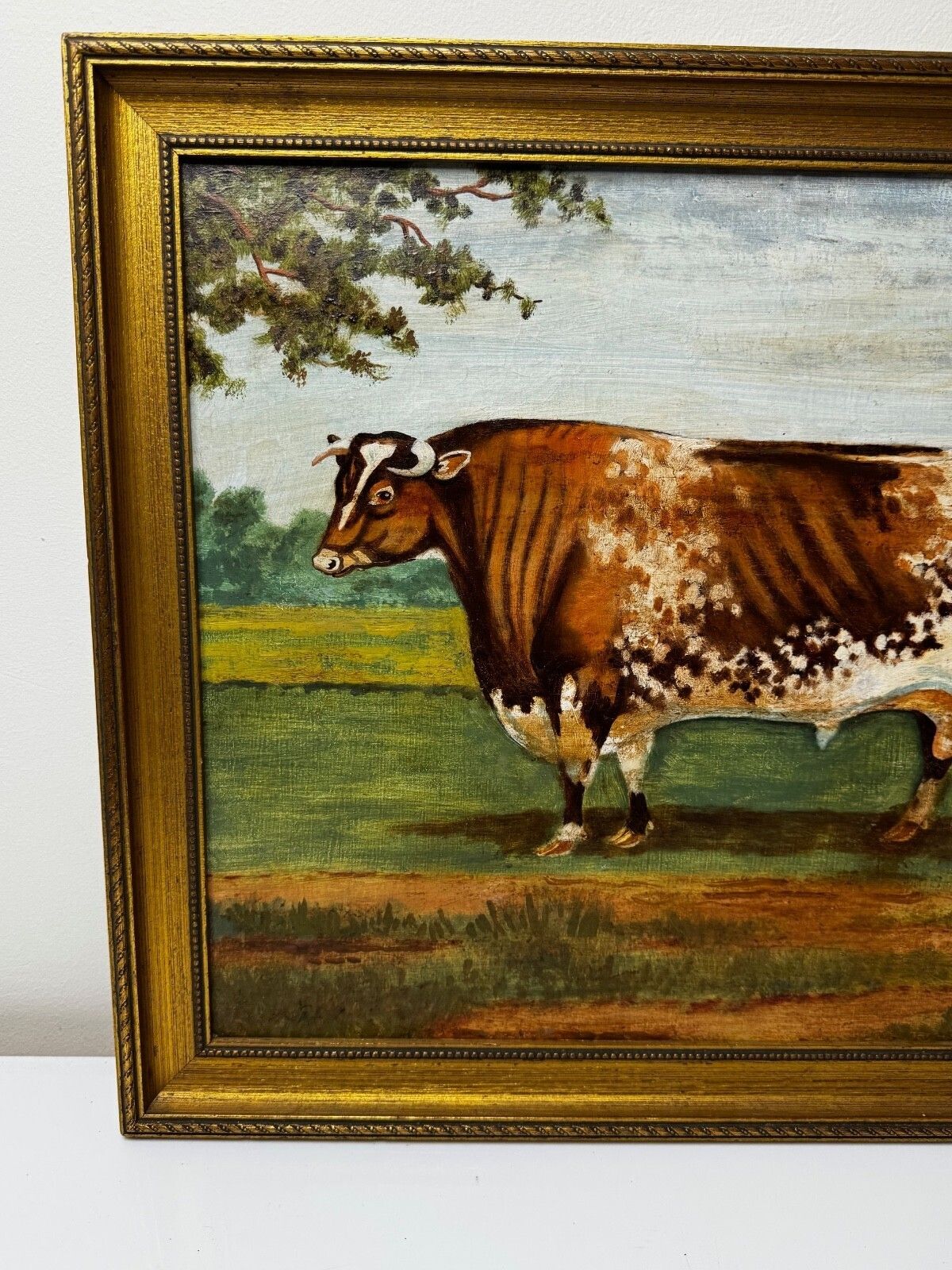
Victorian Prized Shorthorn Bull Oil Painting British School Manner William Ward c.1890
An exceptional late-Victorian British livestock portrait of a prized Shorthorn bull, British School in the manner of William Ward, with a researched Bourgeois Aîné, Paris F8 support, documented Golding Young & Mawer provenance, professional conservation and private loan and exhibition history.
Highlights
British School, in the manner of William Ward
Late 19th century, circa 1890
Oil on canvas
Prized Shorthorn bull in a pastoral landscape
British provincial and naïve livestock-painting tradition
Unsigned
Bourgeois Aîné, Paris registered trade mark verso
French F8 standard-format support
Stretcher marked 46 × 38 cm
Bourgeois Aîné trade mark registered in 1867
F8 46 × 38 cm format documented by Bourgeois Aîné in 1888
Golding Young & Mawer, Lincoln Fine Art Sale, 5 February 2025, Lot 119
Professionally conserved following assessment by Vanessa Andrew M.A.
Privately loaned and exhibited with the Famous Lord Hill Museum, Shropshire
Later decorative gilt frame
Ready to hang
Introduction
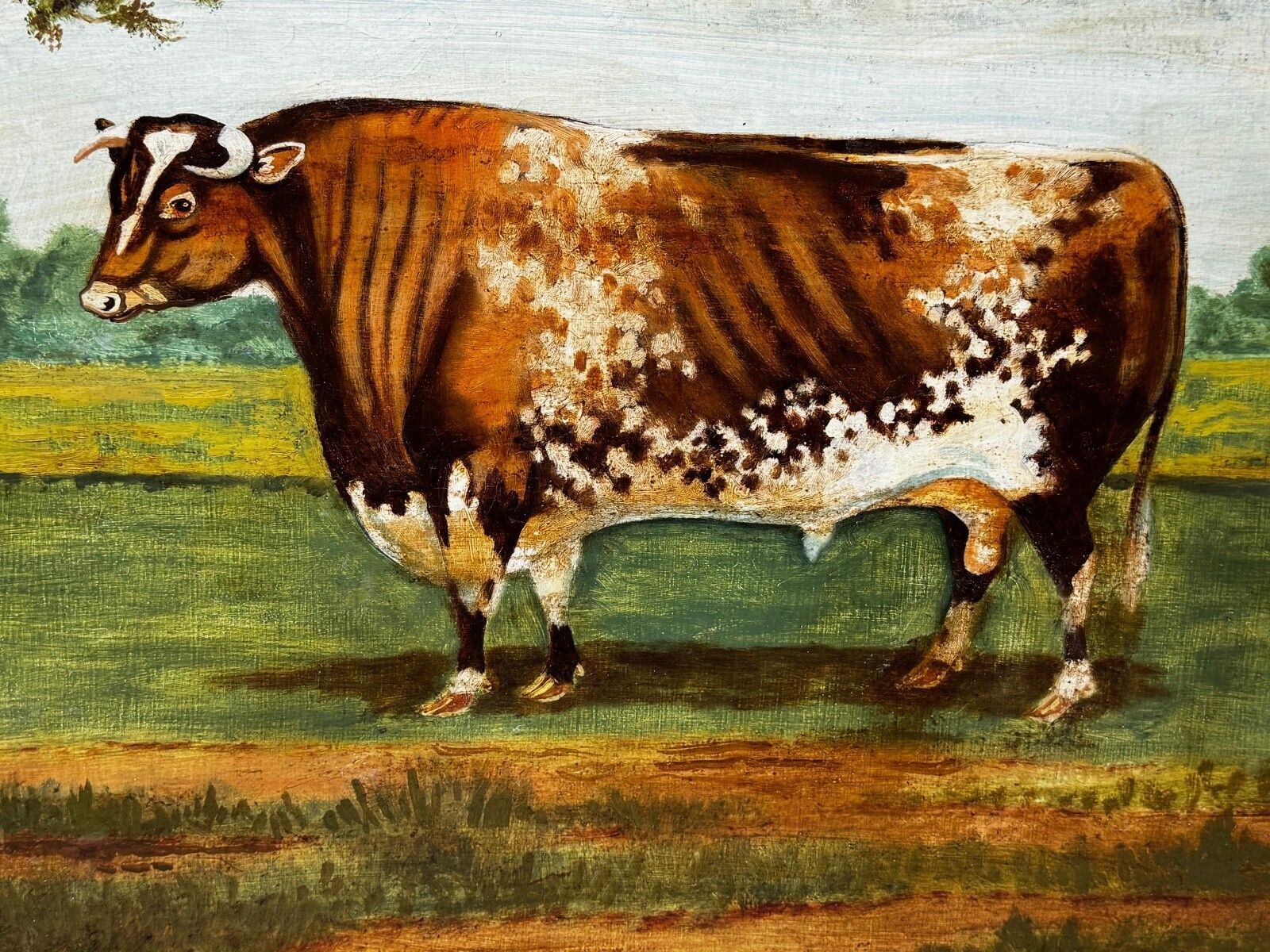
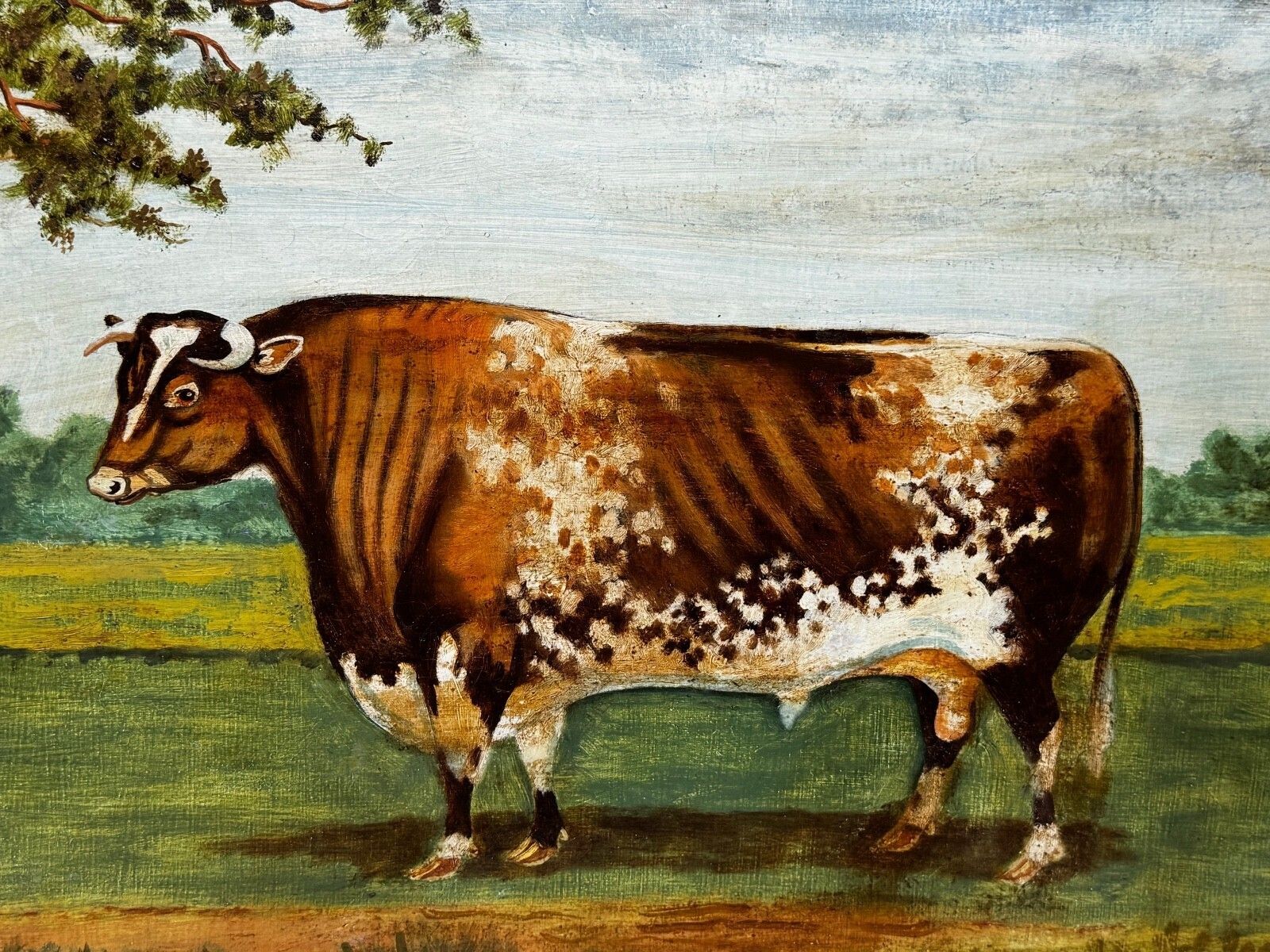
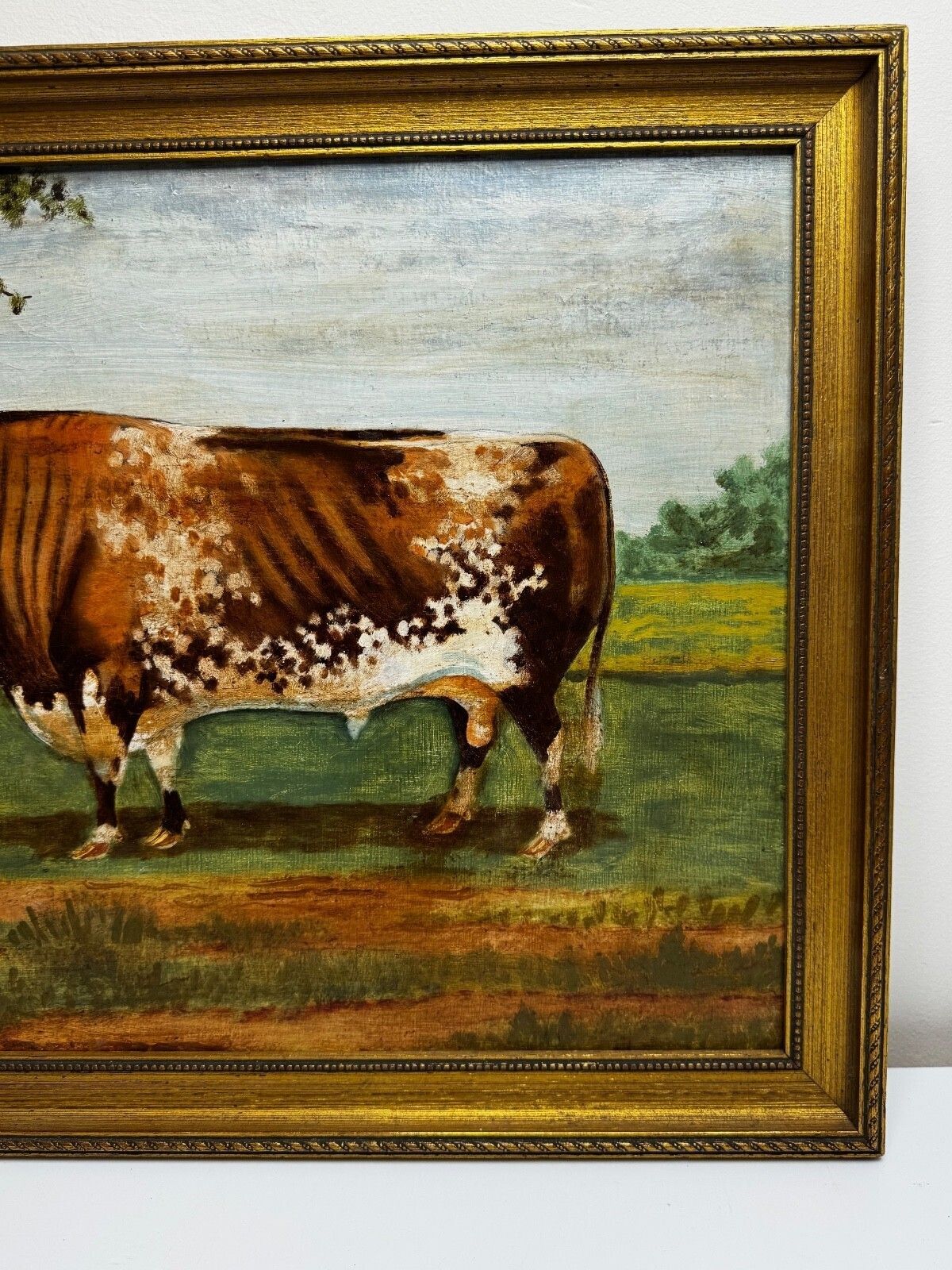
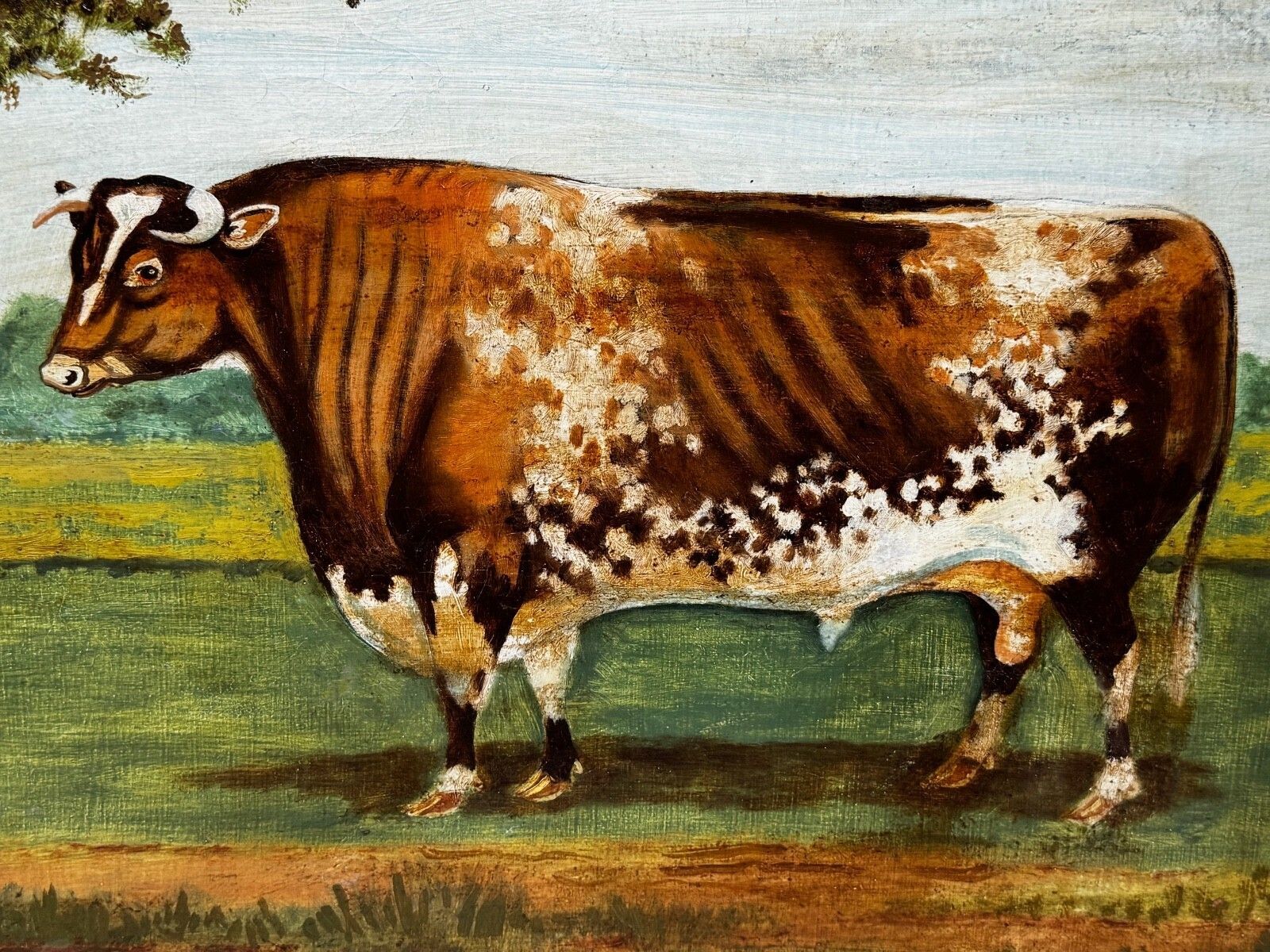
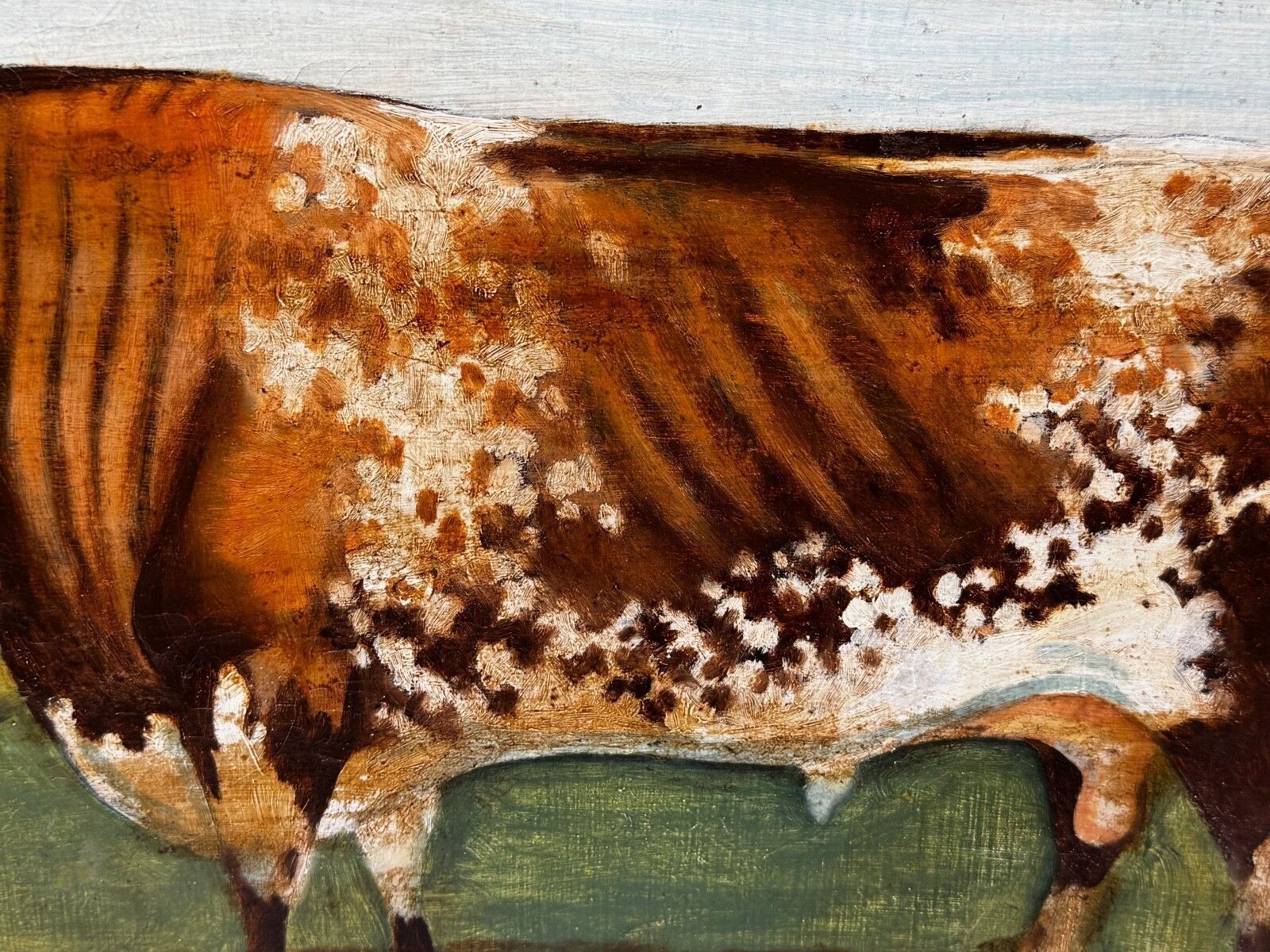
A wonderfully characterful late-Victorian oil painting depicting a substantial brown-and-white Shorthorn bull standing proudly in full left profile within an open pastoral landscape.
Dating to approximately 1890, the work belongs to the distinctive British tradition of livestock portraiture in which important cattle, horses, sheep and other animals were recorded for breeders, agriculturalists, landowners and country estates.
The bull dominates the composition.
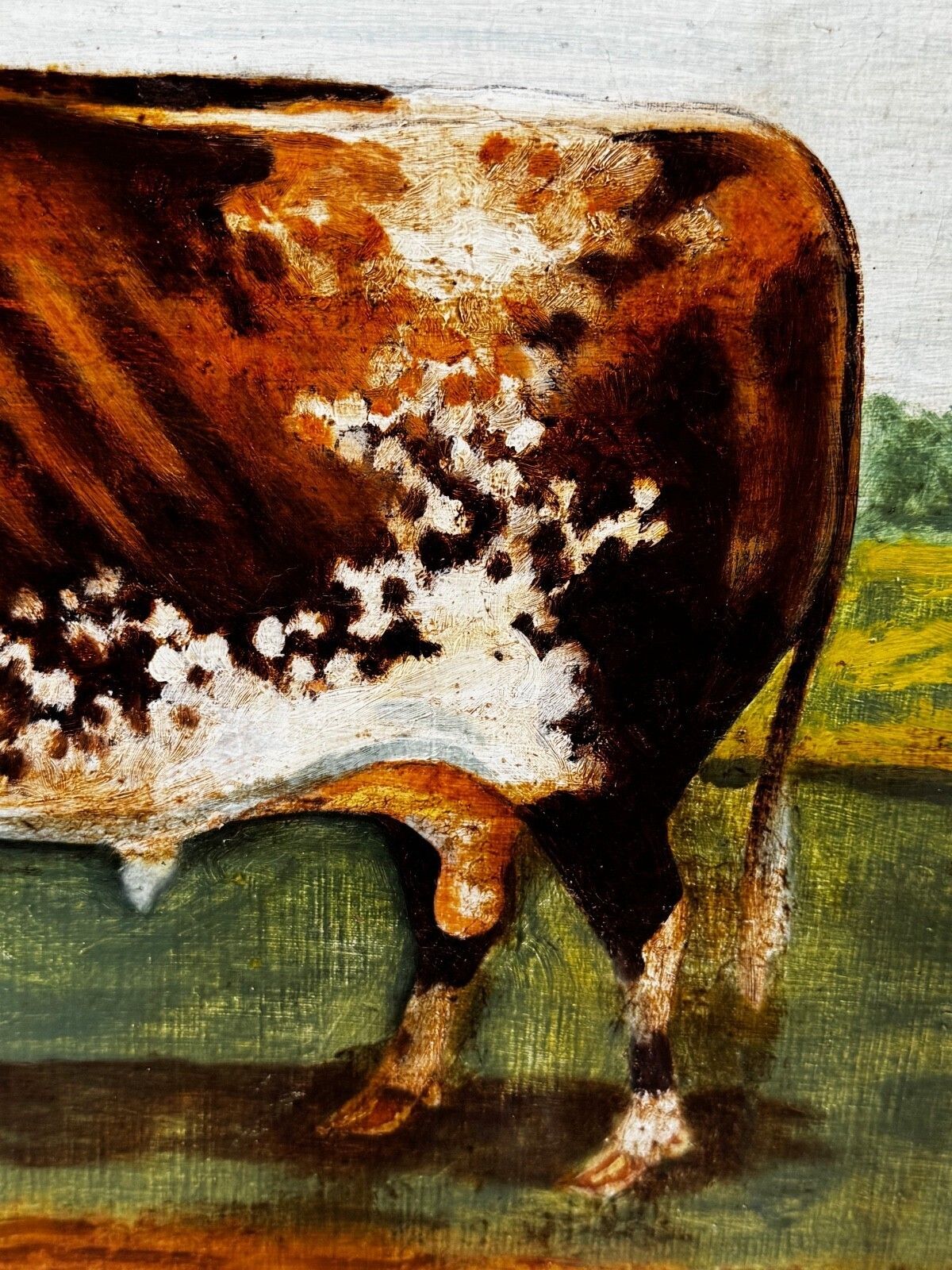
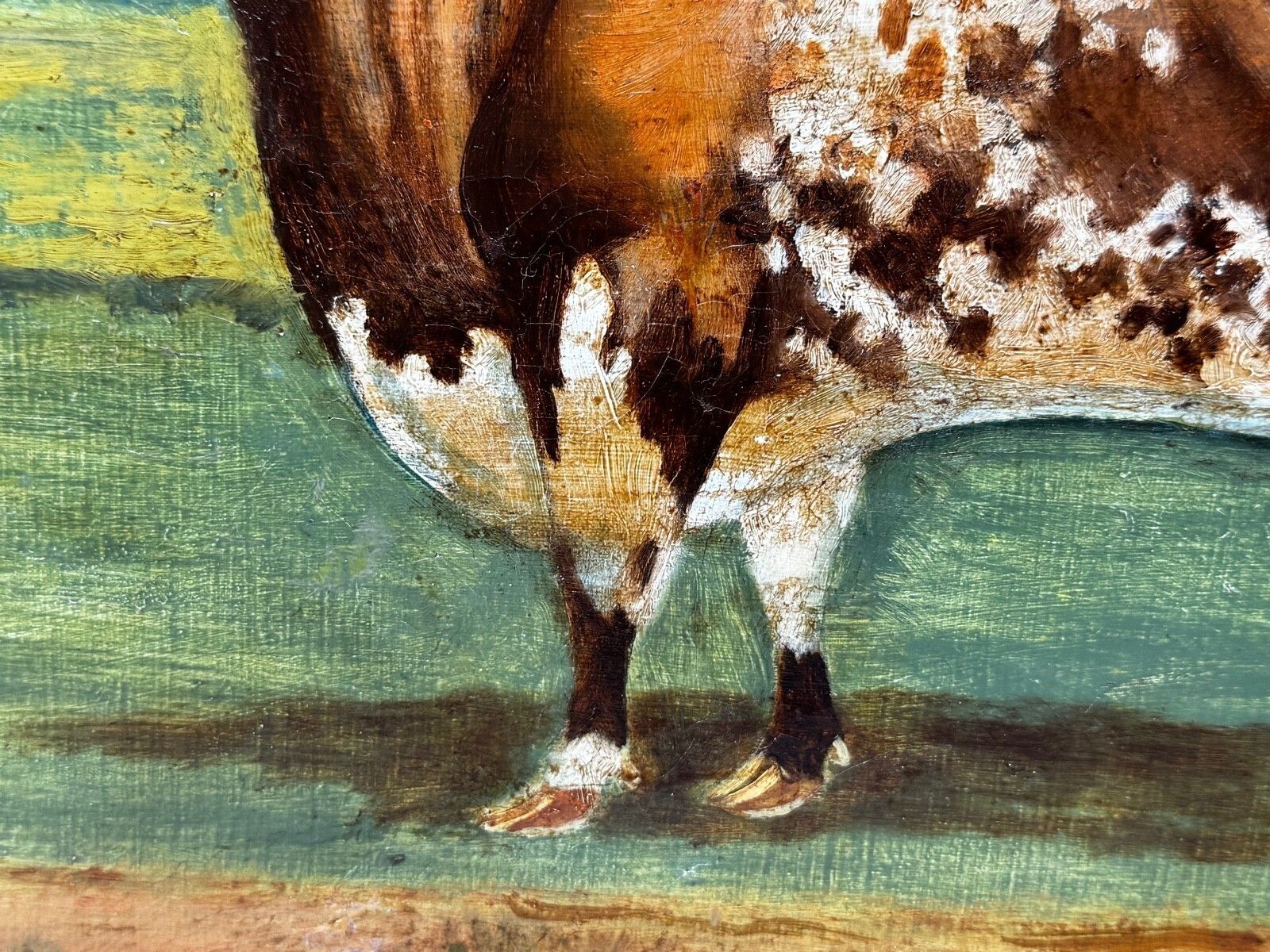
Its powerful body is painted in warm russet, chestnut, cream and white tones, contrasting beautifully against the green pasture and softly atmospheric blue-grey sky.
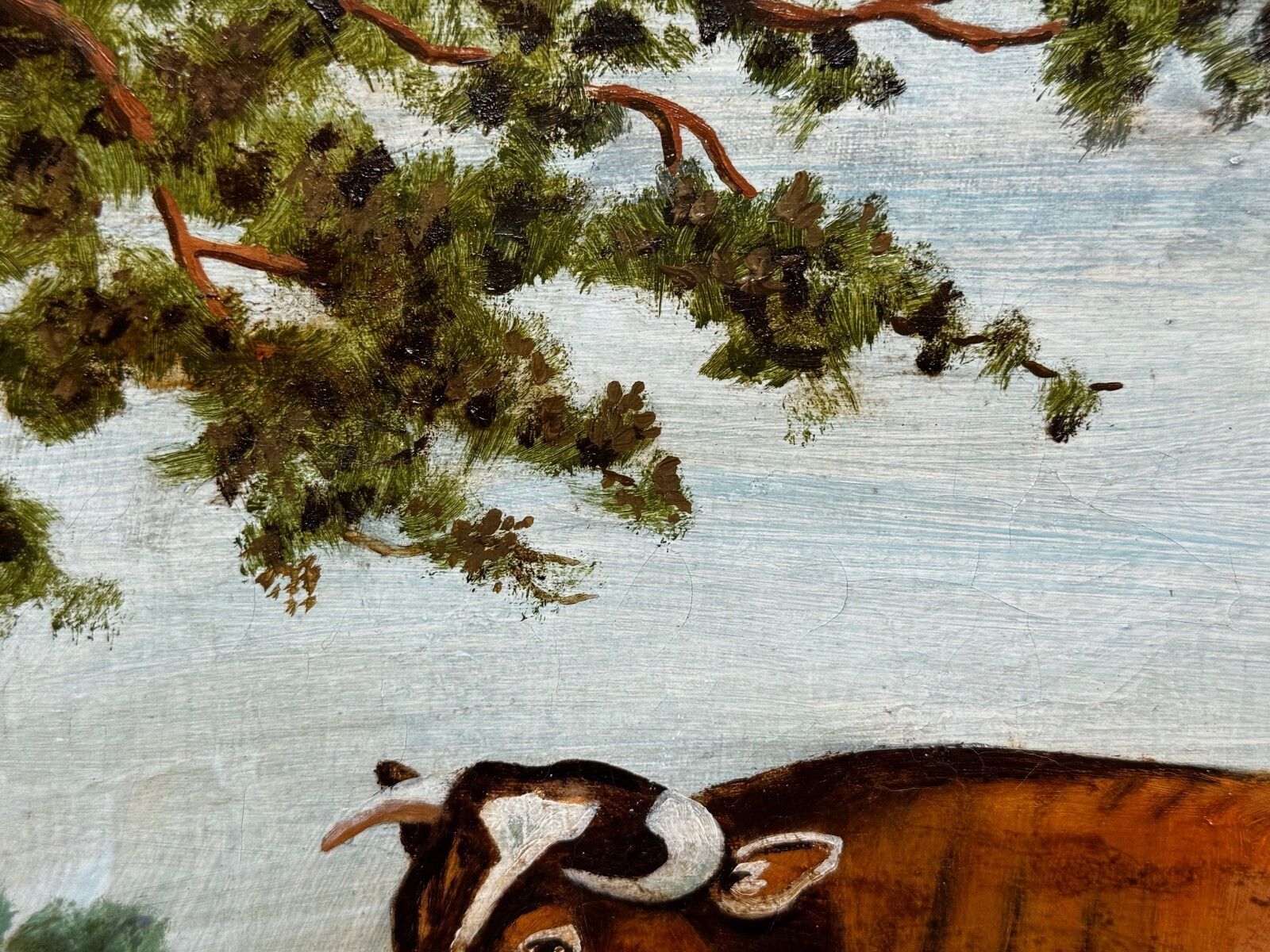
A mature tree rises at the upper left, framing the animal and balancing its long horizontal form.
The painter concentrates attention upon the Shorthorn's colouring, conformation and physical presence, while the surrounding landscape is treated more broadly and atmospherically.
The result combines agricultural realism with the distinctive directness and character now associated with British provincial, folk and naïve livestock painting.
The Prized Shorthorn
The Shorthorn occupies an important place within British agricultural history.
Developed principally in north-east England during the late 18th and 19th centuries, the breed became closely associated with the improvement of British livestock during the Agricultural Revolution and subsequently achieved international importance.
Breeders and estate owners frequently commissioned portraits of particularly important animals.
These paintings could commemorate prize winners, valuable breeding stock and significant bloodlines while simultaneously functioning as visual expressions of agricultural success and ownership.
The present bull is displayed in full lateral profile, allowing its distinctive coat pattern, substantial body, head, horns and conformation to be clearly appreciated.
This deliberate presentation is characteristic of the wider livestock-portrait tradition in which the animal itself, rather than the surrounding landscape, remained the principal subject.
Composition and Technique
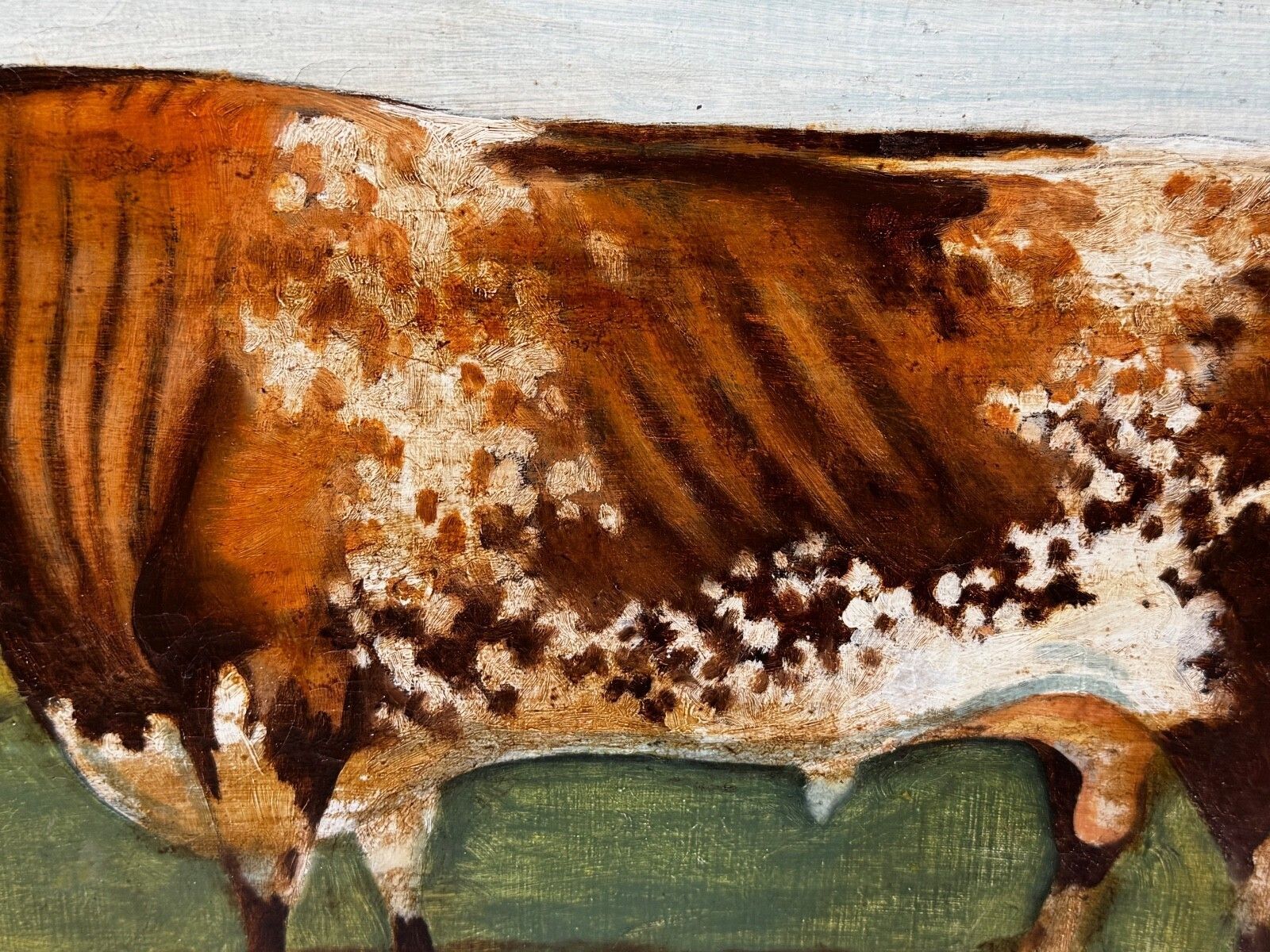
The bull's body is constructed from warm earthy pigments, with rich chestnut and russet areas interspersed with broad creamy-white markings.
Smaller touches of pigment articulate the hide, while darker linear passages emphasise the ribs, musculature and physical structure.
Particular attention has been given to the head.
The horns, eye, muzzle and distinctive facial colouring are carefully delineated, giving the animal an engaging sense of individuality.
The surrounding countryside is deliberately less detailed.
Broad passages of green and ochre describe the pasture, while the distant landscape recedes towards a low horizon beneath a softly worked sky.
This contrast concentrates the viewer's attention upon the animal and gives the painting the direct visual character associated with British livestock portraiture.
British School, In the Manner of William Ward
The painting is unsigned and is catalogued as:
British School, in the manner of William Ward.
This wording is deliberately qualified.
The work is not presented as a signed or authenticated painting by William Ward.
Rather, the attribution recognises its relationship to the wider British tradition of celebrated livestock imagery with which Ward's name became historically associated.
William Ward (1766–1826) was particularly important as a mezzotint engraver and helped disseminate celebrated British animal imagery after painters including Thomas Weaver and George Garrard.
The present painting is later in date but continues the established British tradition of presenting an important animal prominently in profile within a restrained landscape.
When the work appeared at Golding Young & Mawer in 2025, the auction house independently catalogued it simply as 19th Century British School.
An Important Discovery on the Reverse
One of the most fascinating aspects of the painting is hidden from normal view.
The reverse retains a historic horizontal lozenge-shaped registered trade mark incorporating a prominent serif letter B.
Detailed specialist research into the surviving mark has identified it with very high confidence as the registered trade mark of Bourgeois Aîné, Paris, an important French manufacturer and supplier of professional artists' materials.
The relevant Bourgeois trade mark was registered by François Alexandre Joseph Bourgeois on 24 May 1867.
The surviving mark therefore provides valuable physical evidence concerning the commercially manufactured support upon which the unidentified artist worked.
Bourgeois Aîné, Paris
Bourgeois Aîné formed part of the increasingly sophisticated professional artists' materials industry that developed during the 19th century.
Commercially prepared canvases and standardised stretchers allowed artists to purchase ready-prepared painting supports rather than undertaking every stage of canvas preparation themselves.
Comparable Bourgeois marks have been documented through specialist research into historic French artists' suppliers and museum technical studies of surviving painting supports.
The identification does not establish the identity or nationality of the painter.
It does, however, provide an independently researchable connection between the painting and the important Parisian artists' materials trade of the later 19th century.
The French F8 46 × 38 cm Support
Alongside the Bourgeois Aîné trade mark, the stretcher is clearly marked:
46 × 38
These measurements correspond to the traditional French F8, or Figure No. 8, standard canvas format.
Of particular significance, an 1888 Bourgeois Aîné standard-format list records F8 as 46 × 38 cm.
The painting therefore combines:
a Bourgeois Aîné registered trade mark
a 46 × 38 cm size designation
French F8 standard-format dimensions
commercially prepared fine-weave canvas
a keyed wooden stretcher
Together these characteristics form a coherent body of physical evidence compatible with later 19th-century manufacture.
The support evidence is consistent with the proposed circa 1890 dating, although the manufacturer's mark does not independently establish an exact year of execution.
A British Painting on a French Support
The presence of a French commercially manufactured support on a characteristically British livestock painting is particularly interesting.
It should not, however, be interpreted as proof that the painting was executed in France or by a French artist.
By the later 19th century, artists' materials circulated through increasingly international commercial networks.
Ready-prepared canvases and standard-format stretchers could therefore travel beyond the country in which they were manufactured.
The Bourgeois Aîné evidence consequently provides information about the painting's material history rather than establishing the nationality of its unidentified painter.
Golding Young & Mawer
The painting has documented auction provenance with the established auction house Golding Young & Mawer.
It appeared in the firm's Lincoln Fine Art Sale on 5 February 2025 as Lot 119.
Golding Young & Mawer catalogued the work as:
“19thC British School. Short horn bull in landscape, oil on canvas.”
This auction record provides valuable independent documentary evidence.
It records both the attribution to the 19th-century British School and the identification of the subject as a Shorthorn bull.
The painting was subsequently acquired from the sale by Cheshire Antiques Consultant LTD®.
Private Loan and Exhibition History
The painting was subsequently privately loaned and exhibited with the Famous Lord Hill Museum, Shropshire, where it formed part of a display relating to British rural and agricultural heritage.
The painting remained privately owned throughout the loan and exhibition period.
This distinction is important and the museum association is recorded as private loan and exhibition history, rather than museum ownership provenance.
Its inclusion within a display relating to Britain's rural heritage provided a particularly appropriate modern context for a painting originally created within the tradition of 19th-century agricultural and livestock portraiture.
Professional Conservation
The painting has undergone professional conservation following assessment by Vanessa Andrew M.A., Fine Art Conservator.
Her November 2025 condition report records the work as an oil painting by an unknown artist on commercially prepared fine-weave canvas supported upon a five-member wooden stretcher.
The canvas tension was recorded as good and the tacking edges sound.
Before treatment, areas of lifting and flaking paint were identified, principally across the left half of the painting, together with areas of paint loss, previous retouching, surface dirt, fibres and other marks.
A slightly discoloured varnish layer was also recorded.
The conservation programme addressed the stability and presentation of the painting through consolidation of vulnerable and raised paint, careful surface cleaning, appropriate treatment of previous overpaint, filling and retouching of losses and protective varnishing.
The objective of conservation was to stabilise and improve the visual coherence of the work while retaining its genuine historic character.
Historic craquelure, age-related texture and other evidence of the painting's considerable age remain visible.
Provenance
Private collection.
Golding Young & Mawer, Lincoln Fine Art Sale, 5 February 2025, Lot 119, catalogued as “19thC British School. Short horn bull in landscape, oil on canvas.”
Acquired from the above sale by Cheshire Antiques Consultant LTD®.
Thereafter in the collection/inventory of Cheshire Antiques Consultant LTD®.
Private Loan and Exhibition History
Privately loaned and exhibited with the Famous Lord Hill Museum, Shropshire, within a display relating to British rural and agricultural heritage.
The painting remained privately owned throughout the loan and exhibition period.
Dimensions
Framed:
Height: approximately 45 cm
Width: approximately 52 cm
Depth: approximately 3 cm
Canvas/support:
Approximately 46 × 38 cm, corresponding to the French F8 standard format.
Frame
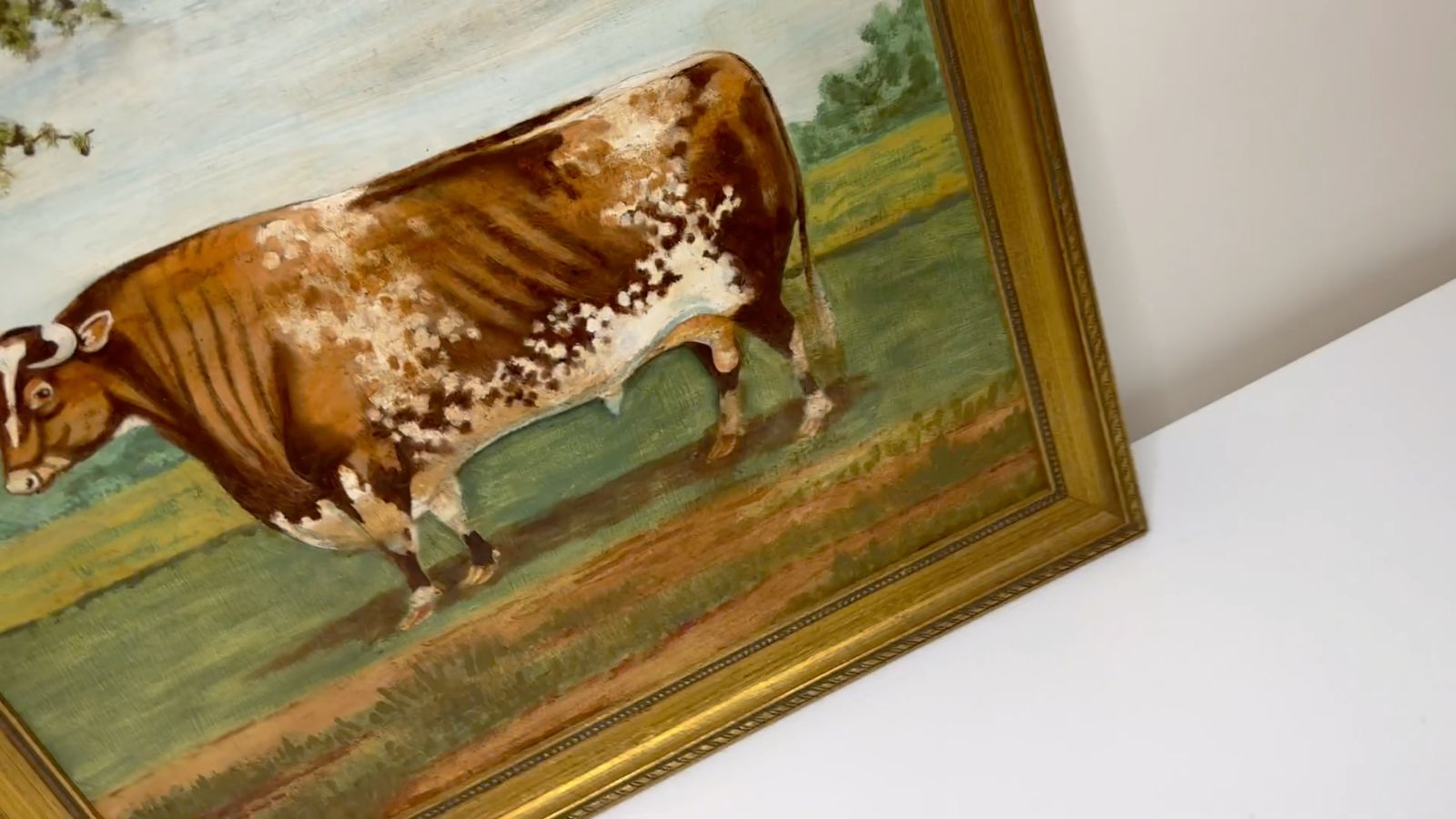
Presented in a later decorative gilt frame with moulded ornament and a traditional Victorian country-house appearance.
The warm gilding complements the russet, cream and green palette of the painting particularly effectively.
The frame displays areas of age-related rubbing, small chips, marks and minor losses to projecting decorative elements.
These are consistent with age and use.
The frame remains structurally sound and is fitted with hanging cord, allowing the painting to be displayed immediately.
Condition Report
The painting has been professionally conserved and presents well.
Historic craquelure, age-related surface texture, areas of professional retouching and minor imperfections remain visible upon close inspection, entirely consistent with a genuine late-19th-century oil painting.
The later decorative gilt frame displays rubbing, small chips, marks and minor decorative losses consistent with age and use.
Please study all photographs carefully as they form an integral part of the condition report.
Collecting Interest
This painting brings together several particularly interesting collecting fields.
It is an attractive example of Victorian animal painting, an historic representation of one of Britain's important cattle breeds, a work within the British provincial and naïve livestock tradition and an object retaining identifiable evidence of the international 19th-century artists' materials trade.
Its documented Golding Young & Mawer auction appearance provides a modern provenance point, while professional conservation and its private loan and exhibition with the Famous Lord Hill Museum add further chapters to its history.
The newly researched Bourgeois Aîné trade mark and F8 support are particularly interesting because they demonstrate how seemingly minor physical details on the reverse of a painting can contribute meaningfully to our understanding of its manufacture and date.
An appealing acquisition for collectors of British animal art, agricultural history, Shorthorn cattle, Victorian folk and naïve painting, sporting and country-house art.
Shipping
Worldwide shipping is available.
The painting will be professionally packaged using appropriate protective materials and dispatched fully insured.
International buyers are welcome. Please contact us for a destination-specific delivery quotation or to discuss any particular shipping requirements.
Certificate of Sale & Dealer Attribution
The artwork will be supplied with a Certificate of Sale & Dealer Attribution issued by Cheshire Antiques Consultant LTD®, recording the artwork’s catalogue details, attribution, provenance as stated, and details of the sale. This document accompanies the work as part of its ongoing ownership and provenance record.
Attribution and Research
The historical observations, provenance research, attribution analysis and contextual commentary presented within this catalogue entry represent the professional opinion of Cheshire Antiques Consultant LTD®. They are offered in good faith as informed scholarly assessments based upon the available evidence, comparative research, published reference material and our experience within the international fine art market.
These observations should be understood as professional opinions rather than definitive statements of fact or guarantees of authorship, attribution, date, origin, provenance or historical interpretation. As with all historic works of art, future documentary discoveries, technical examination, conservation analysis or advances in academic research may refine, expand or revise current interpretations.
Cheshire Antiques Consultant LTD®
Specialising in carefully curated British and European fine art, antiques and historic works of art.
Every artwork is professionally researched and catalogued using comparative scholarship, published reference material and more than two decades of experience within the international fine art market. We are committed to offering collectors works of artistic and historical merit accompanied by transparent provenance research, detailed catalogue descriptions and professional, client-focused service.
Additional photographs and further information are available upon request.
Condition report:
“Condition ReportThe painting has been professionally conserved and presents well.Historic craquelure, age-related surface texture, areas of professional retouching and minor imperfections remain visible upon close inspection, entirely consistent with a genuine late-19th-century oil painting.The later decorative gilt frame displays rubbing, small chips, marks and minor decorative losses consistent with age and use.
Wear Condition
Good
Cancellations
We offer free cancellations and full refund for orders cancelled before dispatching. View full policy.
Returns
We have a 14-day return guarantee for all orders within the UK and European Union. View full policy.
Additional Delivery Info from Seller
We offer Free standard delivery to the United Kingdom & alls Islands and International destinations for small and medium sized pieces only, shipping charges are additional for large pieces please ask for a quote. We offer full online tracking provided for all United Kingdom & International deliveries we ship the with the following parcel couriers for small to medium sized items usually on a next working day delivery service DHL, DPD, Parcelforce, Fedex delivered to your door.
For large and extra large & heavy items can be delivered Aardvark Art Services via 1 man van courier to door UK mainland only the driver will need help to unload! if you require 2 persons to help carry this will incur an additional surcharge please ask for a quote.
For international buyers import duty, sales taxes, customs charges, storage fees are are additional and are the responsibility of the buyer to pay.
Estimated delivery time
Less than one week
Free collection available
Yes
Made to Last
The average lifespan of a Vinterior piece is 100 years, while modern flat-pack typically takes just 3 years to reach landfill. When you choose pre-loved, you can shop with confidence in quality, craftsmanship and longevity. With our top-rated customer service team, there's no better way to shop pre-loved.

Professional Seller

 5.0
(2 reviews)
5.0
(2 reviews)
Shopping at Vinterior


Add to a wishlist
Create Wishlist
Reviews
About this seller
Located in London, United Kingdom
- Selling at Vinterior since 2017
- 108 sales
- Ships from London, United Kingdom
5.0
Based on 2 reviews


Wear conditions
Excellent
Shows little to no signs of wear and tear.
Good
May show slight traces of use in keeping with age. Most vintage and antique items fit into this condition.
Average
Likely to show signs of some light scratching and ageing but still remains in a fair condition.
Apparent Wear and Tear
Visible signs of previous use including scratches, chips or stains.
Please refer to condition report, images or make a seller enquiry for additional information.
Cancellations and Returns
Last updated: 12/02/2026
Clear, predictable protection for every pre-loved purchase.
Simple £75 flat return fee for UK-to-UK mainland furniture when you change your mind.
Applies to furniture with a final selling price of up to £5,000 (excluding delivery and service fees) and delivered from a UK mainland seller to mainland UK addresses. Excludes Northern Ireland, Channel Islands, Scottish Highlands & Islands, Isle of Wight and Isles of Scilly.
Buying vintage should feel inspiring, not uncertain.
Every order on Vinterior is backed by straightforward returns, free cancellations, and extra peace of mind for UK furniture purchases.
1. Free cancellations
Changed your mind before dispatch?
You can cancel any order before it's shipped for a full refund, including delivery.
To cancel an order, click Create cancellation on the order page.
Once an item has been dispatched, delivery costs are not refundable.
Bespoke, personalised or made-to-order pieces cannot be cancelled.
2. Returning an item
You have 14 days from delivery to request a return.
There are two return types:
A. The item isn't as described (free return)
If your piece arrives and it doesn't match the listing in any material way (incorrect description, undisclosed damage, inaccurate measurements, misleading photos), you are fully protected:
- Free return
- The seller or Vinterior arranges pickup
- Full refund, including outbound delivery costs once the seller receives the item
This applies to all purchases.
B. You changed your mind
UK-to-UK furniture deliveries:
To make UK furniture returns predictable and stress-free, we offer a simple flat return fee of £75.
- Applies to furniture delivered from a UK mainland seller to a mainland UK address. Excludes Northern Ireland, Channel Islands, Scottish Highlands & Islands, Isle of Wight and Isles of Scilly.
- Pickup arranged for you
- One clear fee, no surprises
We coordinate the return with either the seller's chosen courier or our trusted delivery partner.
All other items
Most smaller items are straightforward to return.
You can still return your item within 14 days.
- For smaller or parcel-sized items, you can choose to post the item back yourself using a tracked service, or the seller can suggest a preferred courier.
- For larger or more fragile pieces, the seller may recommend the safest return method.
- Return delivery costs vary depending on size and courier.
The seller will confirm the best option based on the item.
3. If your item arrives damaged
Damage on arrival is uncommon, especially for UK furniture deliveries.
But if something does go wrong, you're fully protected.
- Let us know as soon as possible (ideally within 72 hours of delivery) so we can resolve things quickly
- Share photos so we understand what happened
- We’ll help arrange a return and refund if needed
You’re always protected when something goes wrong in transit.
Your statutory rights apply for up to 30 days from delivery.
4. What can't be returned
Some items cannot be returned:
- Bespoke, personalised, or made-to-order pieces
- Items altered after delivery
5. How to start a return
- Log in to your Vinterior account
- Open your order
- Click Create a return
- Add notes + photos if relevant
We'll guide you through the rest.
6. What happens next
- We review your request, confirm the return and advise on next steps
- Pickup or return method is arranged
- The item is returned to the seller
- We issue your refund once the seller confirms the item's condition
Returns are completed smoothly once the pickup is arranged.
7. Refunds
Once the seller receives the piece back in the same condition it was sent, we'll issue your refund to your original payment method.
Once a refund is issued, it may take up to 5–10 working days for the funds to appear back on your original payment method, depending on your bank or card provider.
If the item is returned with new damage that wasn't present at delivery, the refund may be adjusted following review.
Need help?
If you have questions about a return or your order, our support team is here to help. Email us at [email protected] or find other ways to contact us here.
What your service fee covers
-
 14-day return guarantee
-
Flat-fee return shipping on UK furniture
-
Seller vetting
-
Dedicated customer support
| Order Value (£) | Fee (£) |
|---|---|
| 0 — 49.99 | 2.75 |
| 50 — 99.99 | 5.50 |
| 100 — 199.99 | 11.00 |
| 200 — 399.99 | 21.00 |
| 400 — 599.99 | 30.00 |
| 600 — 799.99 | 40.00 |
| 800 — 999.99 | 50.00 |
| 1,000 — 1,499.99 | 55.00 |
| 1,500 — 1,999.99 | 60.00 |
| 2,000 — 4,999.99 | 82.50 |
| 5,000+ | 110.00 |
Added at checkout, based on your basket total.
