


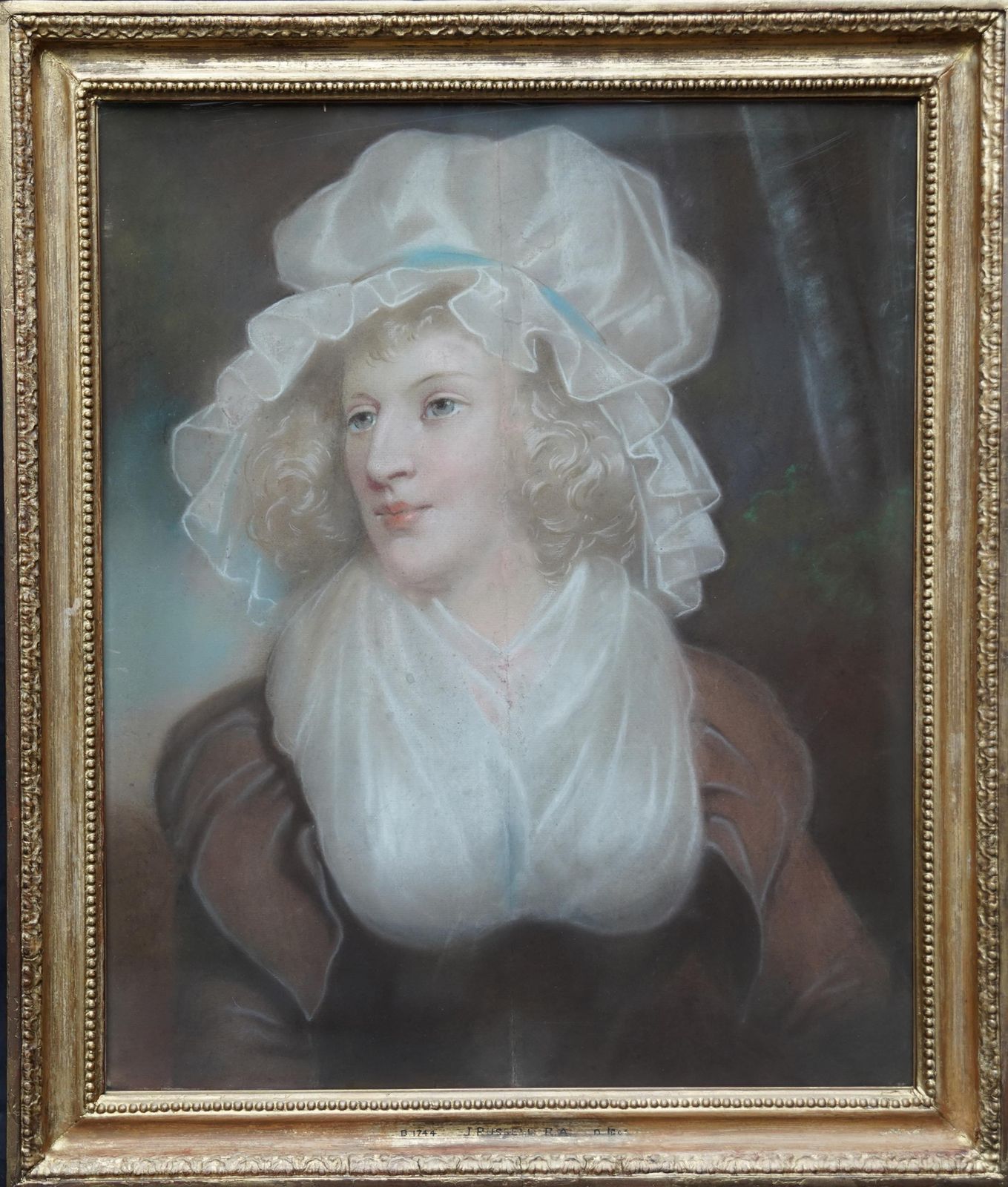
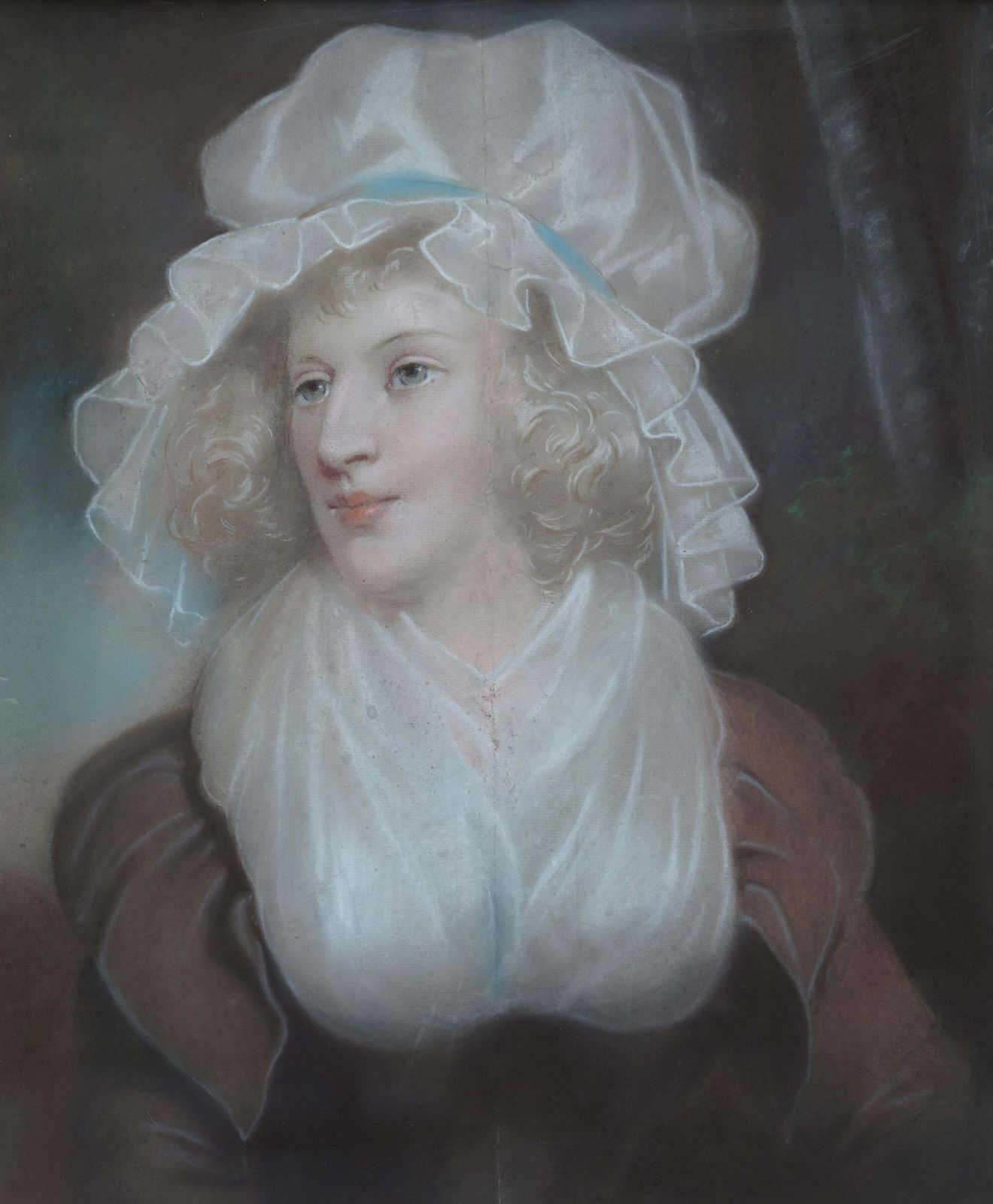
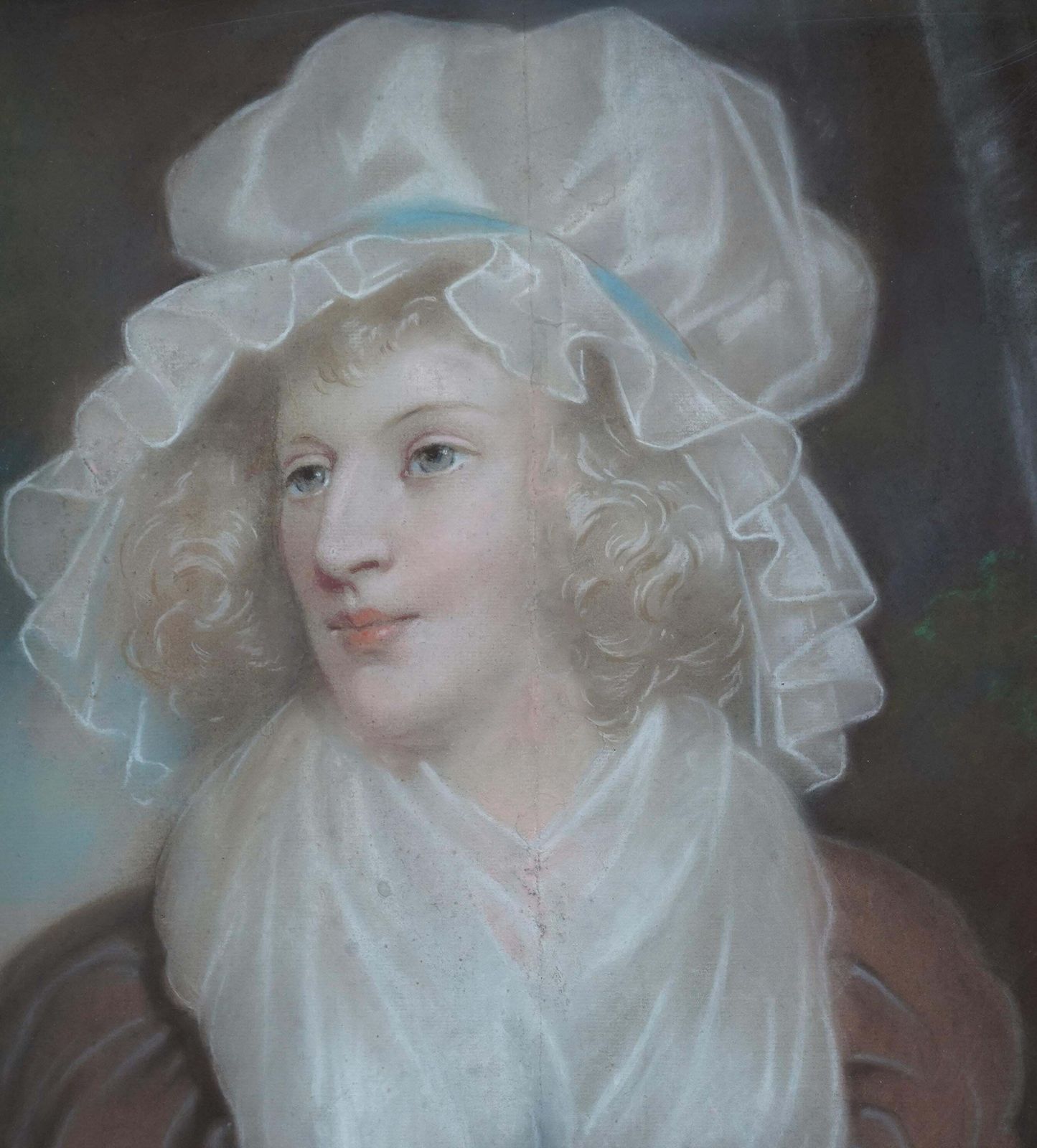
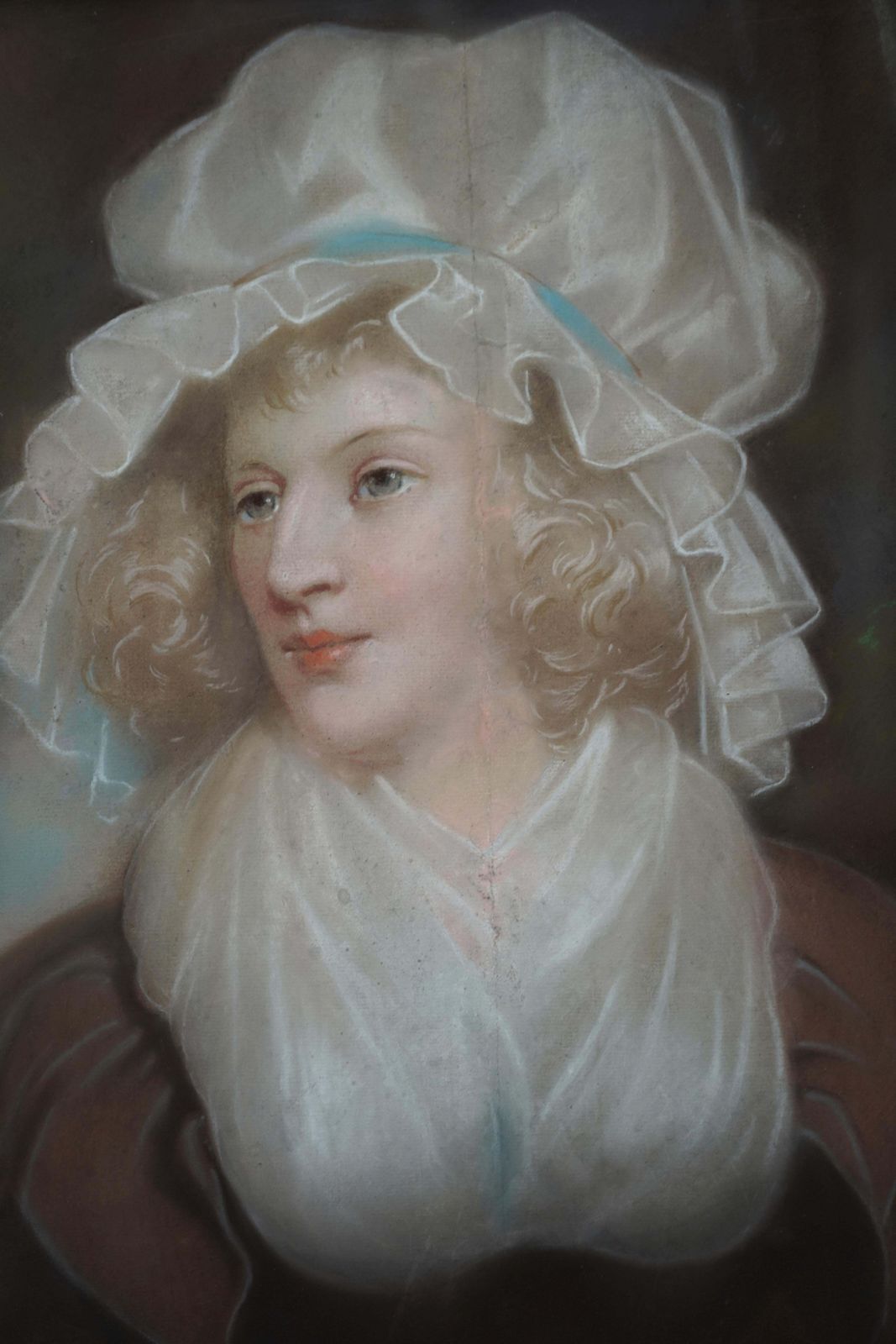
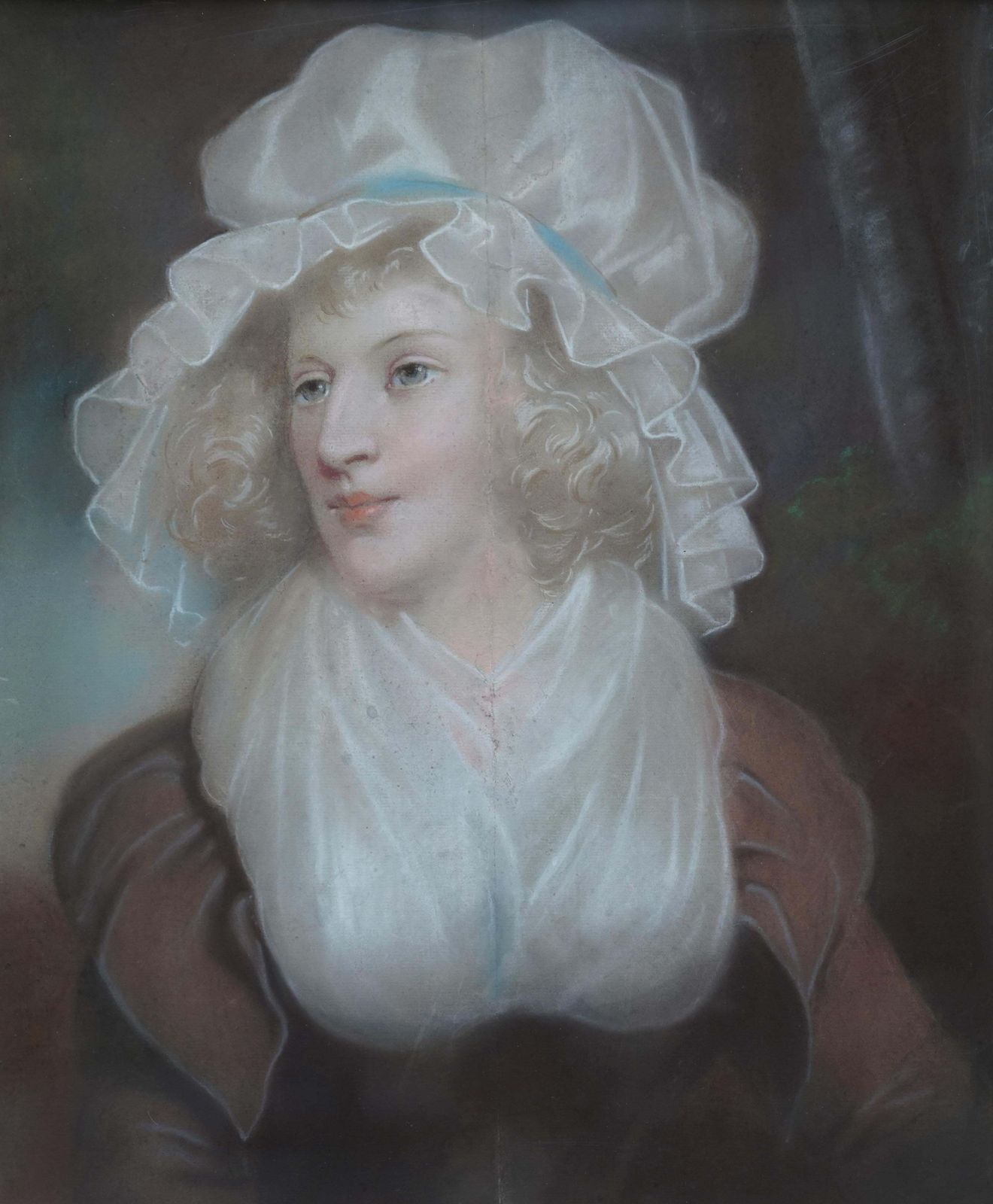
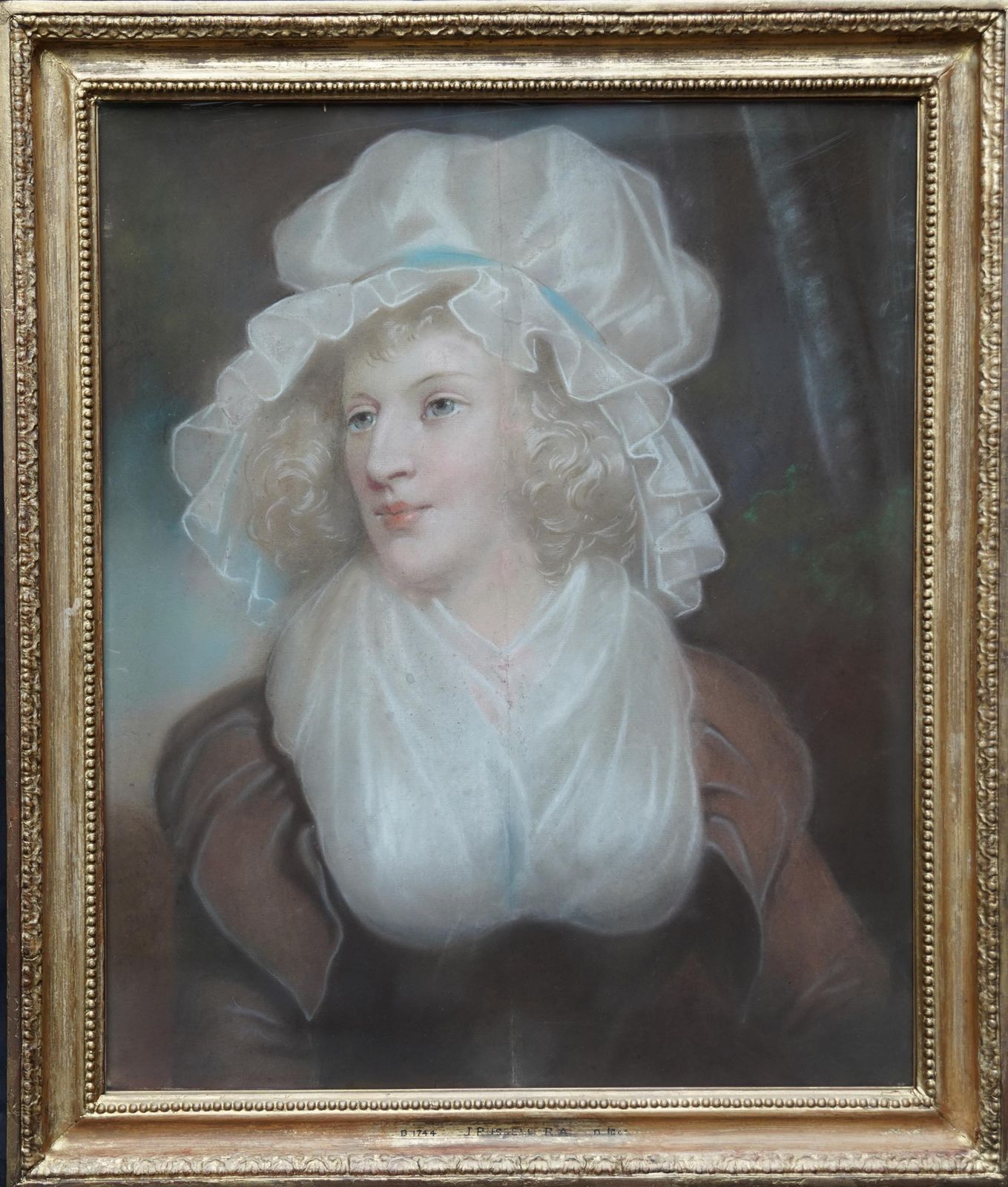
John Russell (Att)Portrait Of Lady In Mob Cap British Old Master 18th Century Art Oil Paintingcirca 1790

 Stourbridge, United Kingdom

Hassle-free returns
-
 Easy returns (14 days)
-
Free return if the item isn't as described
-
Buyer protection
Damage is rare, and you're fully protected if it happens.
Dimensions
Wear Condition
Good
Material
Oil Paint
Style
Antique, Shabby Chic
Product Details
Description
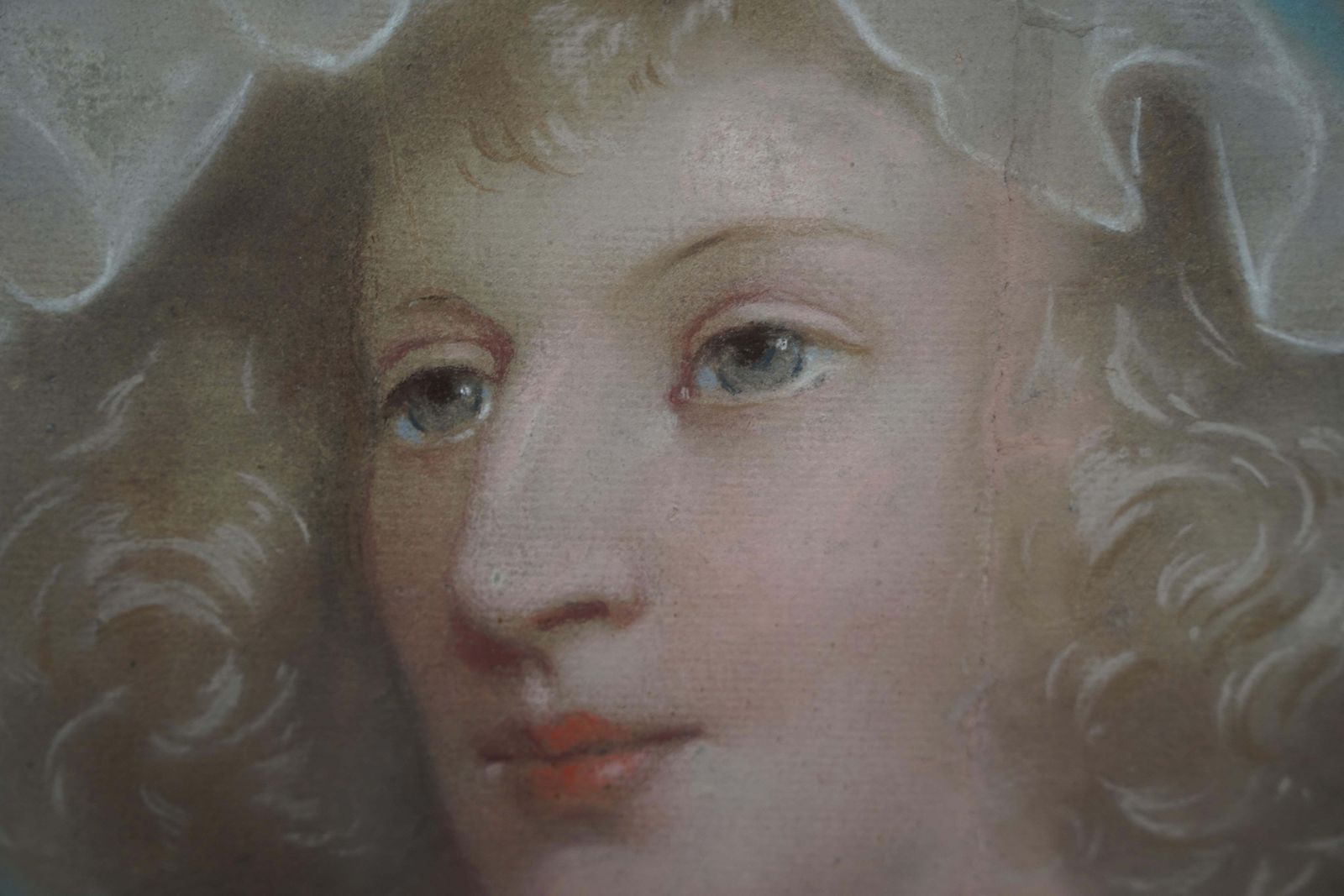
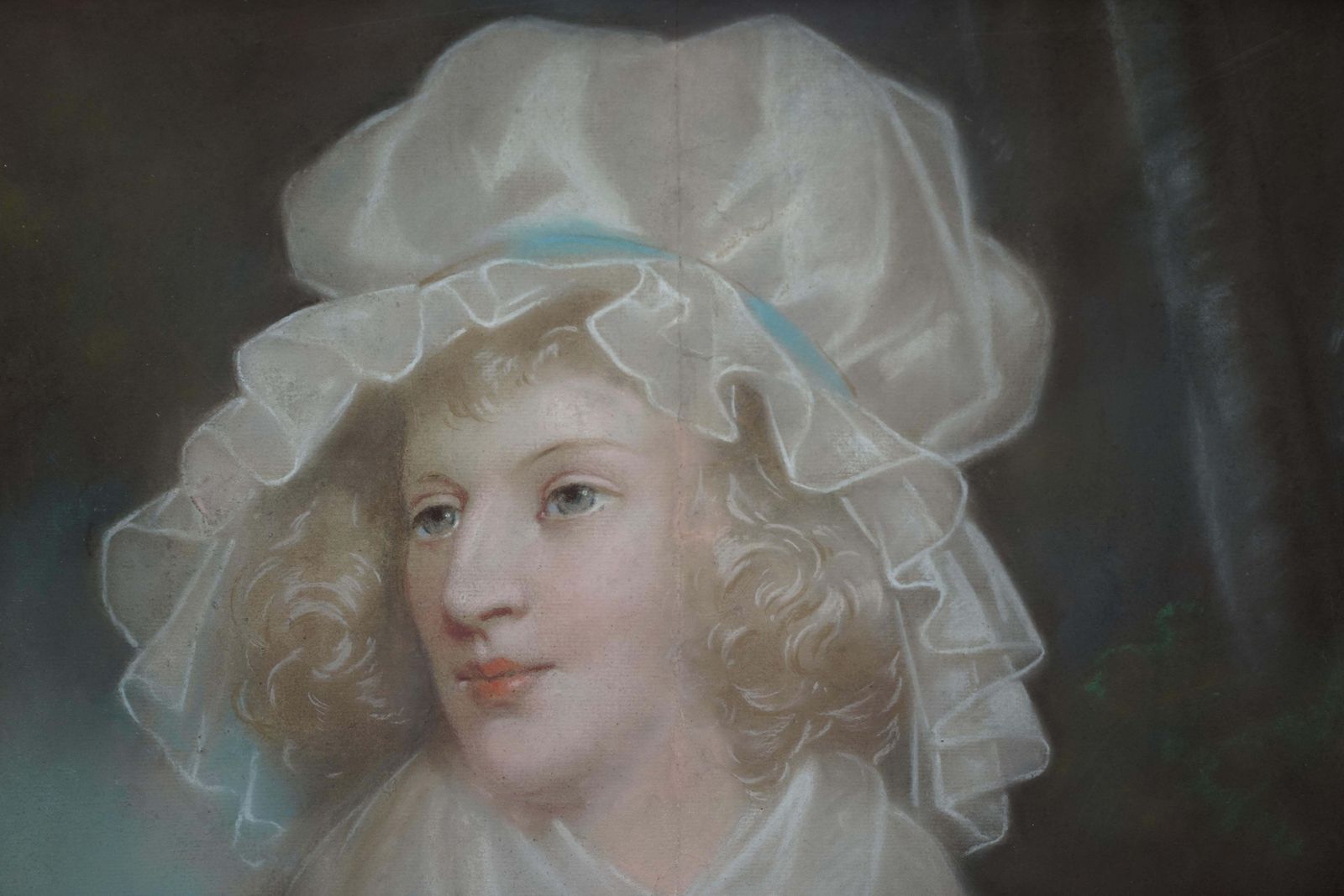
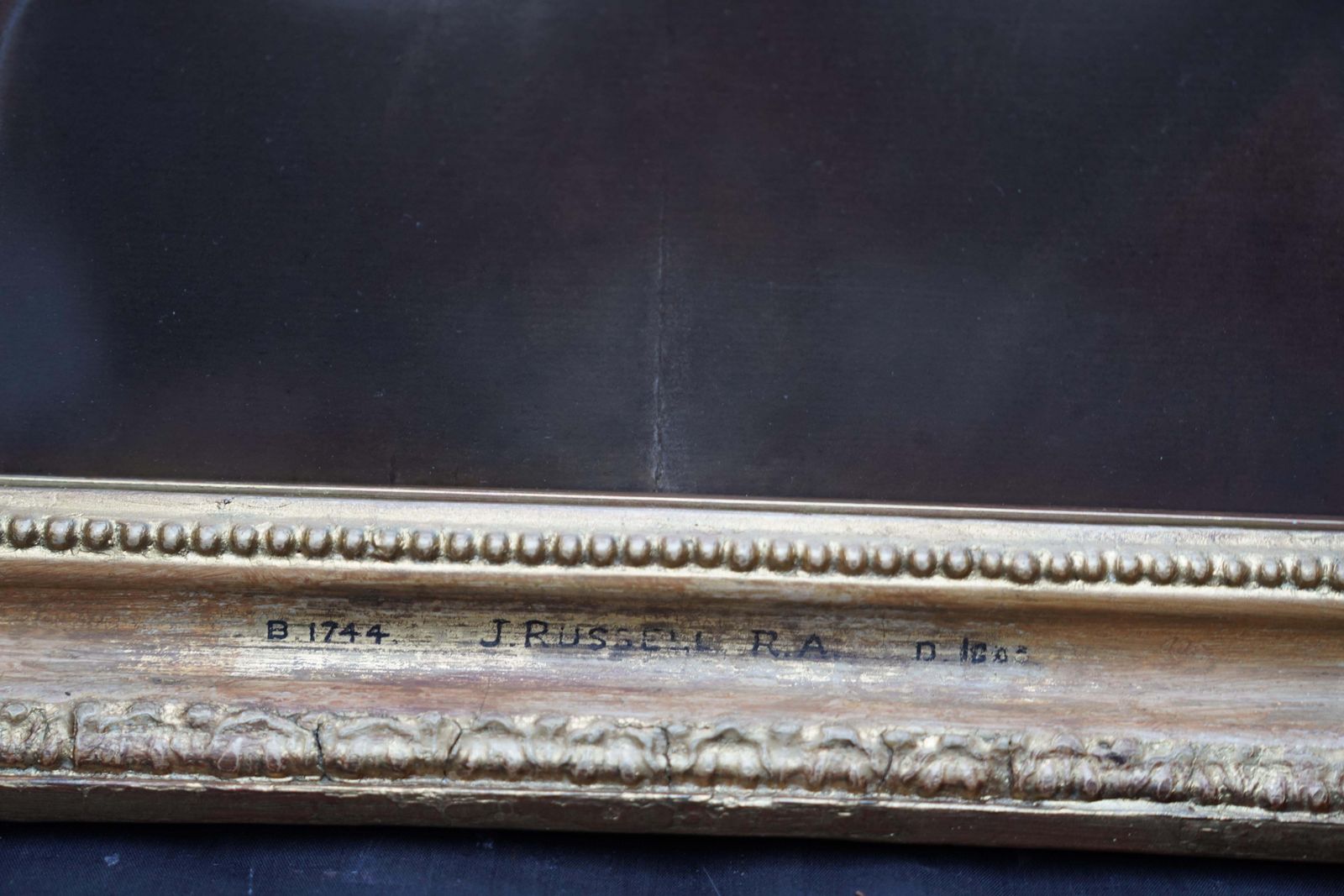
This charming British Old Master Regency pastel portrait is attributed to John Russell RA. Painted circa 1790 the composition is a blonde woman in pretty mob cap with a blue ribbon. A really lovely image.
Provenance. Oxford estate.
Condition. Oil pastel on paper, 23 inches by 19 inches unframed and in good condition but has line in paper in middle.
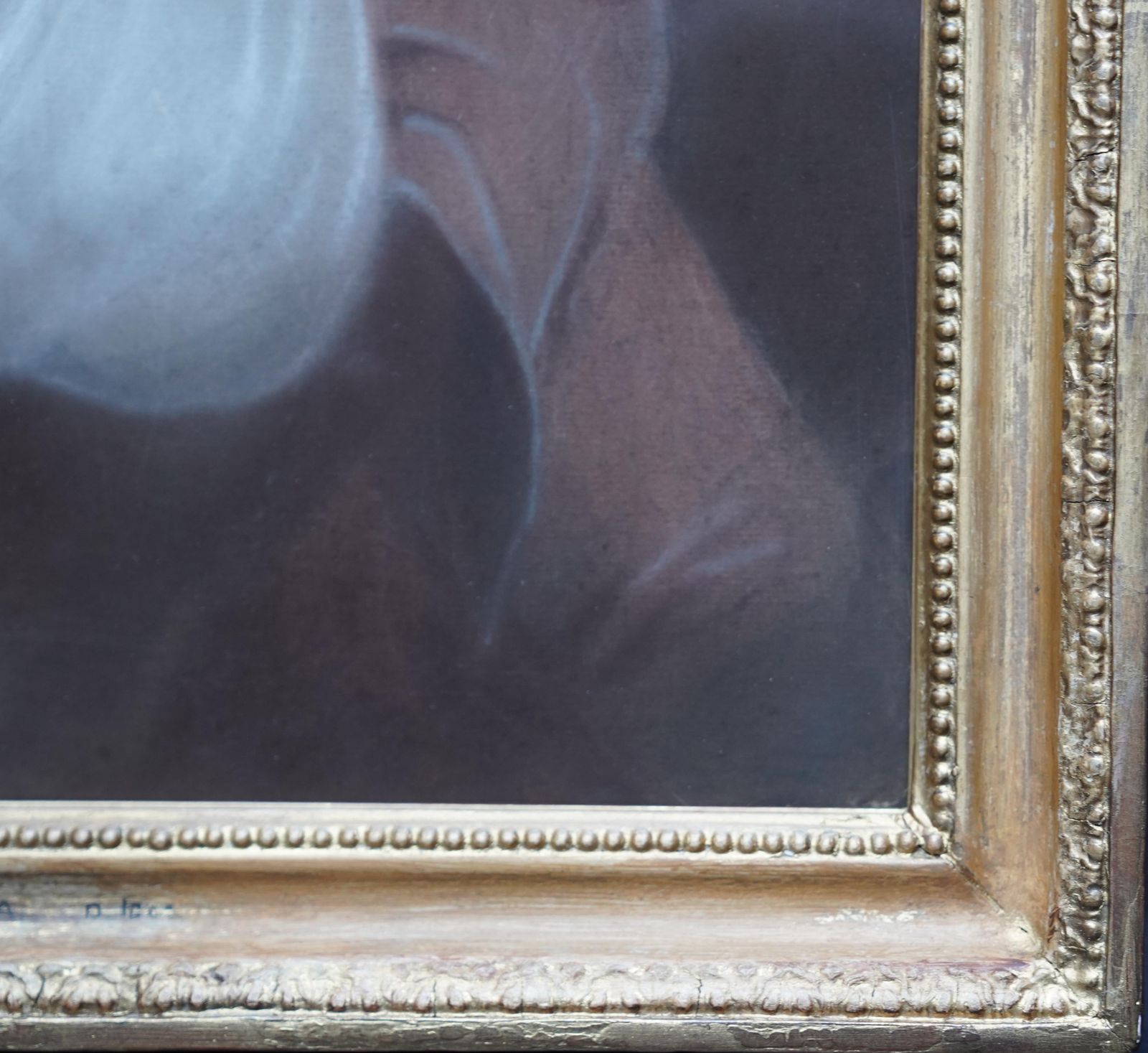
Frame. Housed in a fine frame, 30 inches by 26 inches framed and in good condition.
John Russell RA (1745-1806) was an English painter renowned for his portrait work in oils and pastels, and as a writer and teacher of painting techniques. Russell was born in Guildford, Surrey, the son of John Russell Snr., book and print seller and five times mayor of the town; his father was something of an artist, and drew and published two views of Guildford. Russell was educated at the Royal Grammar School, Guildford, and soon showed a strong inclination for art. He trained under Francis Cotes RA (of Cavendish Square, London), one of the pioneers of English pastel painting, and, like Cotes, was an admirer of the pastel drawings of Rosalba Carriera whose methods influenced his technique of "sweetening". At the age of 19 he converted to Methodism, which was the cause of tension with his family and with his teacher; he made no secret of his strong evangelical leanings and would attempt to preach and convert at every opportunity. Russell set up his own studio, in London, in 1767. He made the acquaintance of the notorious Dr. William Dodd, whose portrait he painted in 1768. He was introduced to Selina, Countess of Huntingdon, who unsuccessfully attempted to persuade him to give up painting and attend her Methodist ministers' training college at Trevecca in Wales. On 5 February 1770, he married Hannah Faden, daughter of a Charing Cross print and map seller, whom he had converted. They lived at No. 7 Mortimer Street, Cavendish Square, where he had moved in 1770. Russell's work caused him to travel extensively around Britain. In 1772, he wrote Elements of Painting with Crayons, by which time he had won premiums for his drawings from the Society of Arts in 1759 and 1760, and entered the Royal Academy school of art in 1770, winning its gold medal for figure drawing the same year. He exhibited at the Society of Artists of Great Britain in 1768 and showed 330 works at the Academy between 1769 until and his death. In 1770, Russell painted Methodist minister, George Whitefield (engraved by James Watson) and the future philanthropist, William Wilberforce, then only eleven years old. In 1771, he exhibited a portrait in oils of Charles Wesley at the Royal Academy and, in 1772, painted Selina, Countess of Huntingdon in pastel. This was a symbolic picture, and was lost on its voyage out; but it was engraved, and he later also painted her in oils. Also in that year he was elected an associate of the Royal Academy. The following year, 1773, he painted John Wesley (engraved by Bland). In 1788, after a long wait, Russell was elected a royal academician, in the same year painting a portrait of the naturalist Sir Joseph Banks. In 1789, he was commissioned to portray the royal physician Francis Willis. The results obviously pleased the monarch as, in 1790, he was appointed Crayon (pastel) Painter to King George III, Queen Charlotte, the Prince of Wales (both of whom Russell also painted) and the Duke of York. With such royal patronage, he developed a large and fashionable clientele. Russell was a man of deep religious beliefs, a devout follower of George Whitefield. He began an elaborate introspective diary in John Byrom's shorthand in 1766 and continued it to the time of his death. In it, he recorded his own mental condition and religious exercises, and occasionally information concerning his sitters. Though his religion appears to have become less militant after his marriage, his diary bears witness to his anxiety with regard to his spiritual welfare. Not only would he not work on Sunday, but he would allow no one to enter his painting-room. He was afraid to go out to dinner on account of the loose and blasphemous conversation which he might hear. He was on good terms with Sir Joshua Reynolds, with whom he dined at the academy, the Dilettanti Society, and the Literary Club (now The Club), but he records that on these or other festive occasions he always left early. He was troubled by ill-health for much of his life, and in 1803 became almost deaf following a bout of cholera. He died in Hull in 1806 after contracting typhus. Russell's work can be viewed at many galleries in the UK and around the world, but the largest collection is held by Guildford House Art Gallery in Guildford. Many of his portraits were engraved by, amongst others, Joseph Collyer, Charles Turner, James Heath, Dean, Bartolozzi and Trotter. Russell was interested in astronomy and made, with the assistance of his daughter, a lunar map, which he engraved on two plates which formed a globe showing the visible surface of the Moon – it took twenty years to finish. He also invented an apparatus for exhibiting the phenomena of the Moon, which he called "Selenographia". Russell's large and highly detailed pastel drawing of The Face of the Moon (1793–1797) is "the most faithful early representation of the lunar sphere". Some of his best portraits were of the era's acclaimed scientists, such as his friend William Herschel, who he depicted holding a stellar chart showing his discovery of Uranus. It was Herschel who provided the powerful telescope that Russell used for his painstaking lunar observations. Of his twelve children (of which four died in infancy), William Russell (1780–1870), exhibited portraits at the Royal Academy from 1805 to 1809. The National Portrait Gallery contains a portrait of Judge Sir John Bailey by him. Two of John's daughters, Anne and Jane became artists as well.
Condition report:
Good
Wear Condition
Good
Cancellations
We offer free cancellations and full refund for orders cancelled before dispatching. View full policy.
Returns
We have a 14-day return guarantee for all orders within the UK and European Union. View full policy.
Additional Delivery Info from Seller
Free collection available
Yes
Made to Last
The average lifespan of a Vinterior piece is 100 years, while modern flat-pack typically takes just 3 years to reach landfill. When you choose pre-loved, you can shop with confidence in quality, craftsmanship and longevity. With our top-rated customer service team, there's no better way to shop pre-loved.

Professional Seller

Shopping at Vinterior


Add to a wishlist
Create Wishlist
Wear conditions
Excellent
Shows little to no signs of wear and tear.
Good
May show slight traces of use in keeping with age. Most vintage and antique items fit into this condition.
Average
Likely to show signs of some light scratching and ageing but still remains in a fair condition.
Apparent Wear and Tear
Visible signs of previous use including scratches, chips or stains.
Please refer to condition report, images or make a seller enquiry for additional information.
Cancellations and Returns
Last updated: 12/02/2026
Clear, predictable protection for every pre-loved purchase.
Simple £75 flat return fee for UK-to-UK mainland furniture when you change your mind.
Applies to furniture with a final selling price of up to £5,000 (excluding delivery and service fees) and delivered from a UK mainland seller to mainland UK addresses. Excludes Northern Ireland, Channel Islands, Scottish Highlands & Islands, Isle of Wight and Isles of Scilly.
Buying vintage should feel inspiring, not uncertain.
Every order on Vinterior is backed by straightforward returns, free cancellations, and extra peace of mind for UK furniture purchases.
1. Free cancellations
Changed your mind before dispatch?
You can cancel any order before it's shipped for a full refund, including delivery.
To cancel an order, click Create cancellation on the order page.
Once an item has been dispatched, delivery costs are not refundable.
Bespoke, personalised or made-to-order pieces cannot be cancelled.
2. Returning an item
You have 14 days from delivery to request a return.
There are two return types:
A. The item isn't as described (free return)
If your piece arrives and it doesn't match the listing in any material way (incorrect description, undisclosed damage, inaccurate measurements, misleading photos), you are fully protected:
- Free return
- The seller or Vinterior arranges pickup
- Full refund, including outbound delivery costs once the seller receives the item
This applies to all purchases.
B. You changed your mind
UK-to-UK furniture deliveries:
To make UK furniture returns predictable and stress-free, we offer a simple flat return fee of £75.
- Applies to furniture delivered from a UK mainland seller to a mainland UK address. Excludes Northern Ireland, Channel Islands, Scottish Highlands & Islands, Isle of Wight and Isles of Scilly.
- Pickup arranged for you
- One clear fee, no surprises
We coordinate the return with either the seller's chosen courier or our trusted delivery partner.
All other items
Most smaller items are straightforward to return.
You can still return your item within 14 days.
- For smaller or parcel-sized items, you can choose to post the item back yourself using a tracked service, or the seller can suggest a preferred courier.
- For larger or more fragile pieces, the seller may recommend the safest return method.
- Return delivery costs vary depending on size and courier.
The seller will confirm the best option based on the item.
3. If your item arrives damaged
Damage on arrival is uncommon, especially for UK furniture deliveries.
But if something does go wrong, you're fully protected.
- Let us know as soon as possible (ideally within 72 hours of delivery) so we can resolve things quickly
- Share photos so we understand what happened
- We’ll help arrange a return and refund if needed
You’re always protected when something goes wrong in transit.
Your statutory rights apply for up to 30 days from delivery.
4. What can't be returned
Some items cannot be returned:
- Bespoke, personalised, or made-to-order pieces
- Items altered after delivery
5. How to start a return
- Log in to your Vinterior account
- Open your order
- Click Create a return
- Add notes + photos if relevant
We'll guide you through the rest.
6. What happens next
- We review your request, confirm the return and advise on next steps
- Pickup or return method is arranged
- The item is returned to the seller
- We issue your refund once the seller confirms the item's condition
Returns are completed smoothly once the pickup is arranged.
7. Refunds
Once the seller receives the piece back in the same condition it was sent, we'll issue your refund to your original payment method.
Once a refund is issued, it may take up to 5–10 working days for the funds to appear back on your original payment method, depending on your bank or card provider.
If the item is returned with new damage that wasn't present at delivery, the refund may be adjusted following review.
Need help?
If you have questions about a return or your order, our support team is here to help. Email us at [email protected] or find other ways to contact us here.
What your service fee covers
-
 14-day return guarantee
-
Flat-fee return shipping on UK furniture
-
Seller vetting
-
Dedicated customer support
| Order Value (£) | Fee (£) |
|---|---|
| 0 — 49.99 | 2.75 |
| 50 — 99.99 | 5.50 |
| 100 — 199.99 | 11.00 |
| 200 — 399.99 | 21.00 |
| 400 — 599.99 | 30.00 |
| 600 — 799.99 | 40.00 |
| 800 — 999.99 | 50.00 |
| 1,000 — 1,499.99 | 55.00 |
| 1,500 — 1,999.99 | 60.00 |
| 2,000 — 4,999.99 | 82.50 |
| 5,000+ | 110.00 |
Added at checkout, based on your basket total.
