


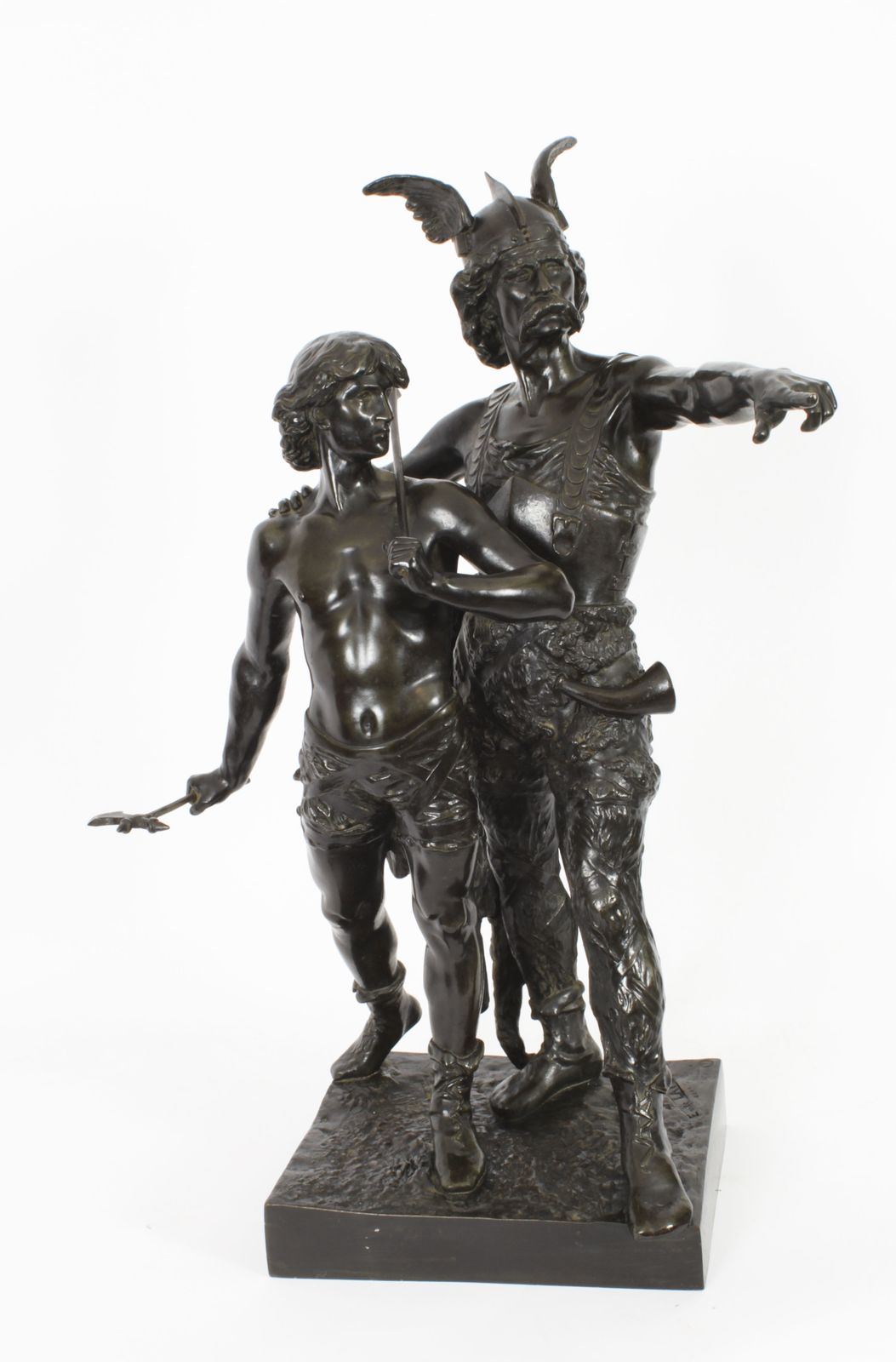
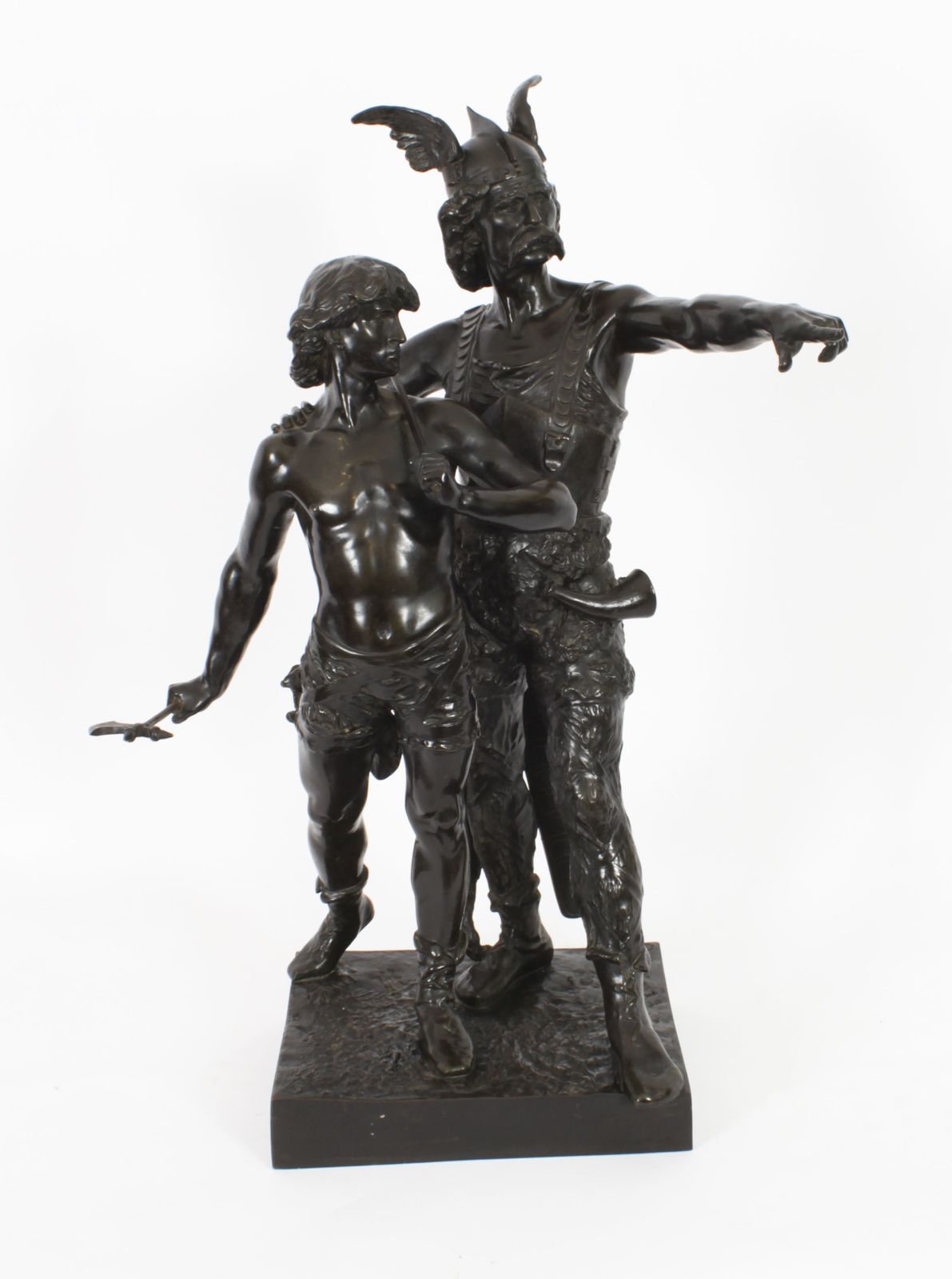
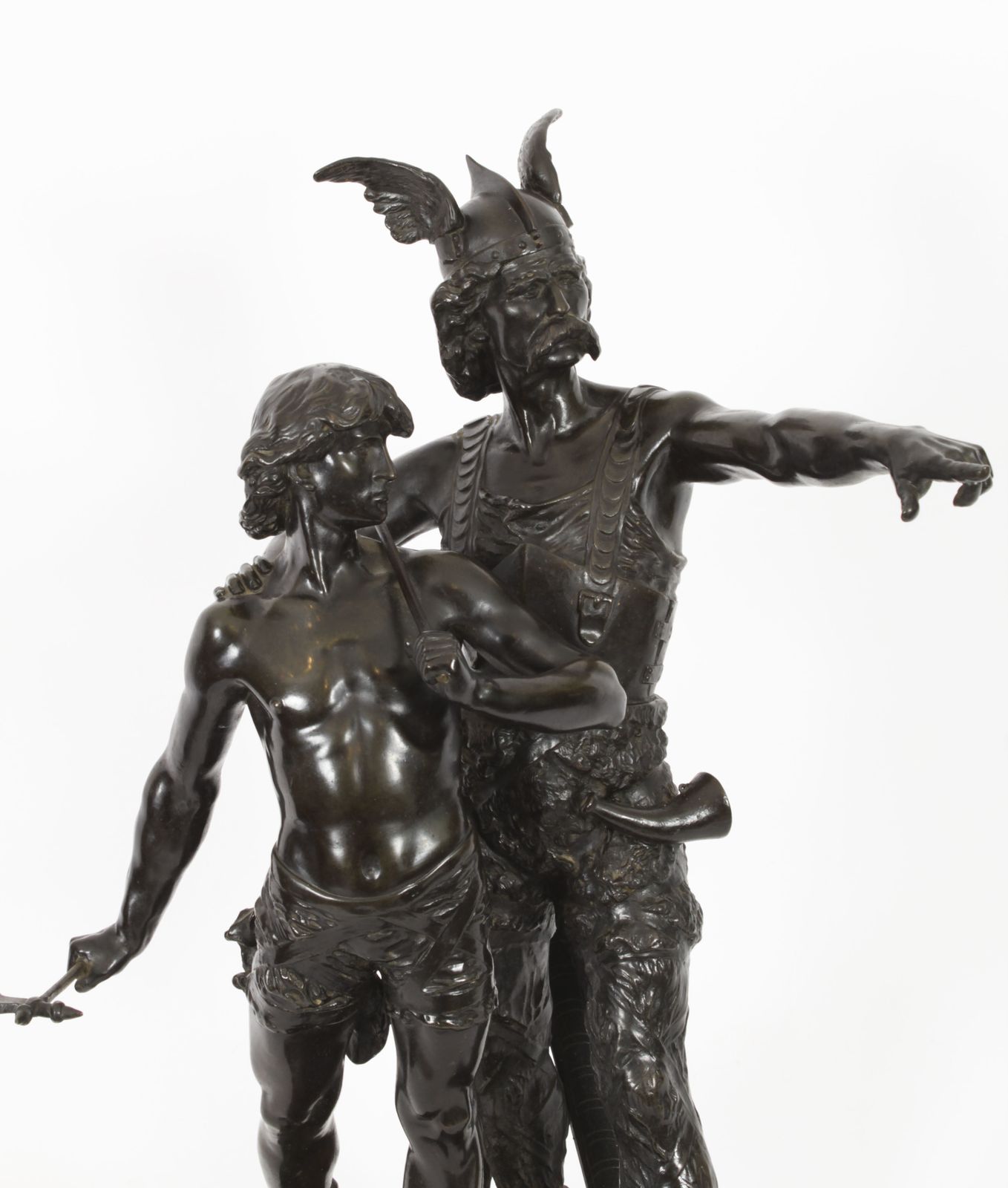
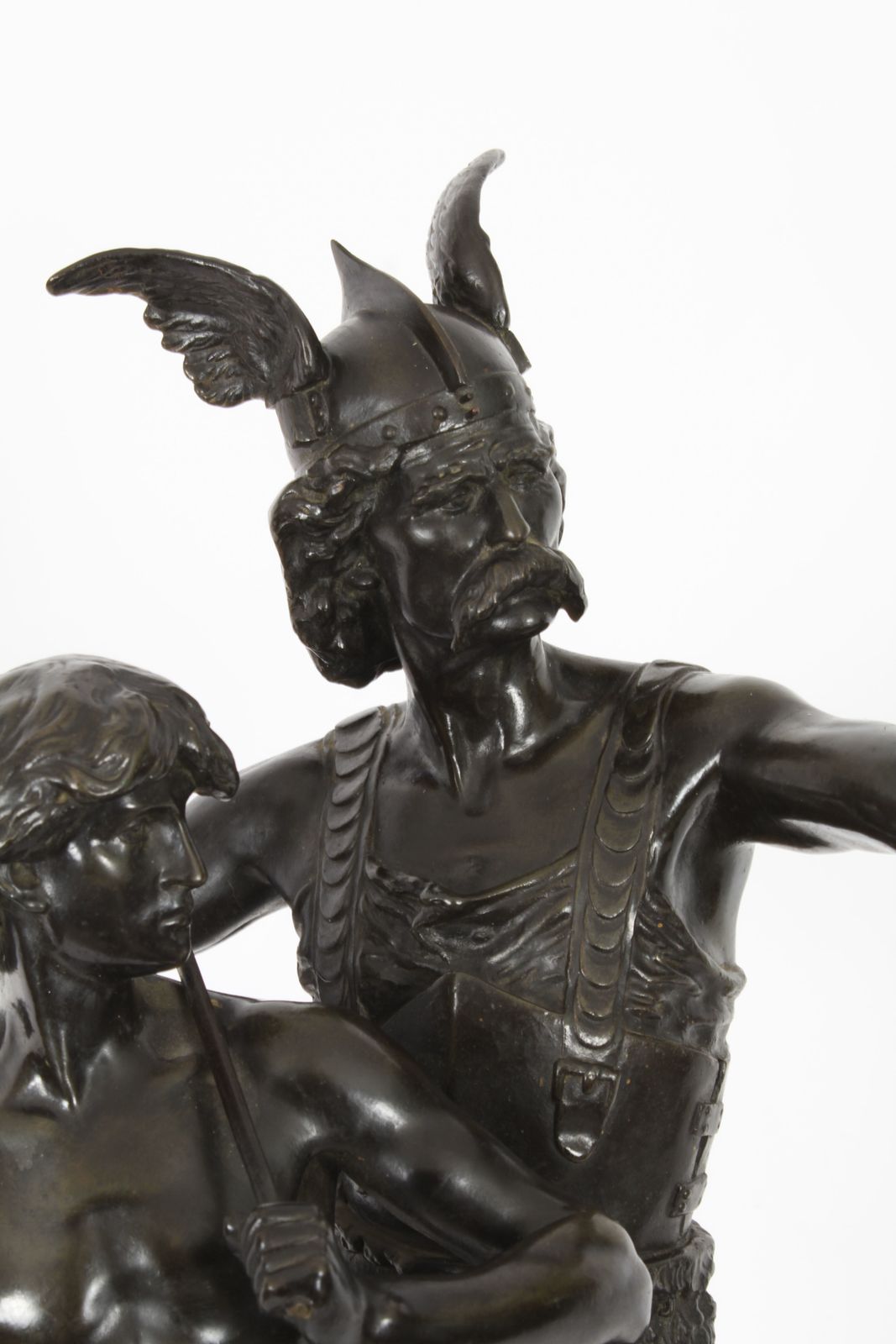
Antique Bronze Of Vercingetorix With His Son By Emile Laporte 19th C

 London, United Kingdom

Hassle-free returns
-
 Easy returns (14 days)
-
Free return if the item isn't as described
-
Buyer protection
Damage is rare, and you're fully protected if it happens.
Dimensions
Wear Condition
Excellent
Material
Bronze
Style
Antique, Campaign
Product Details
Description
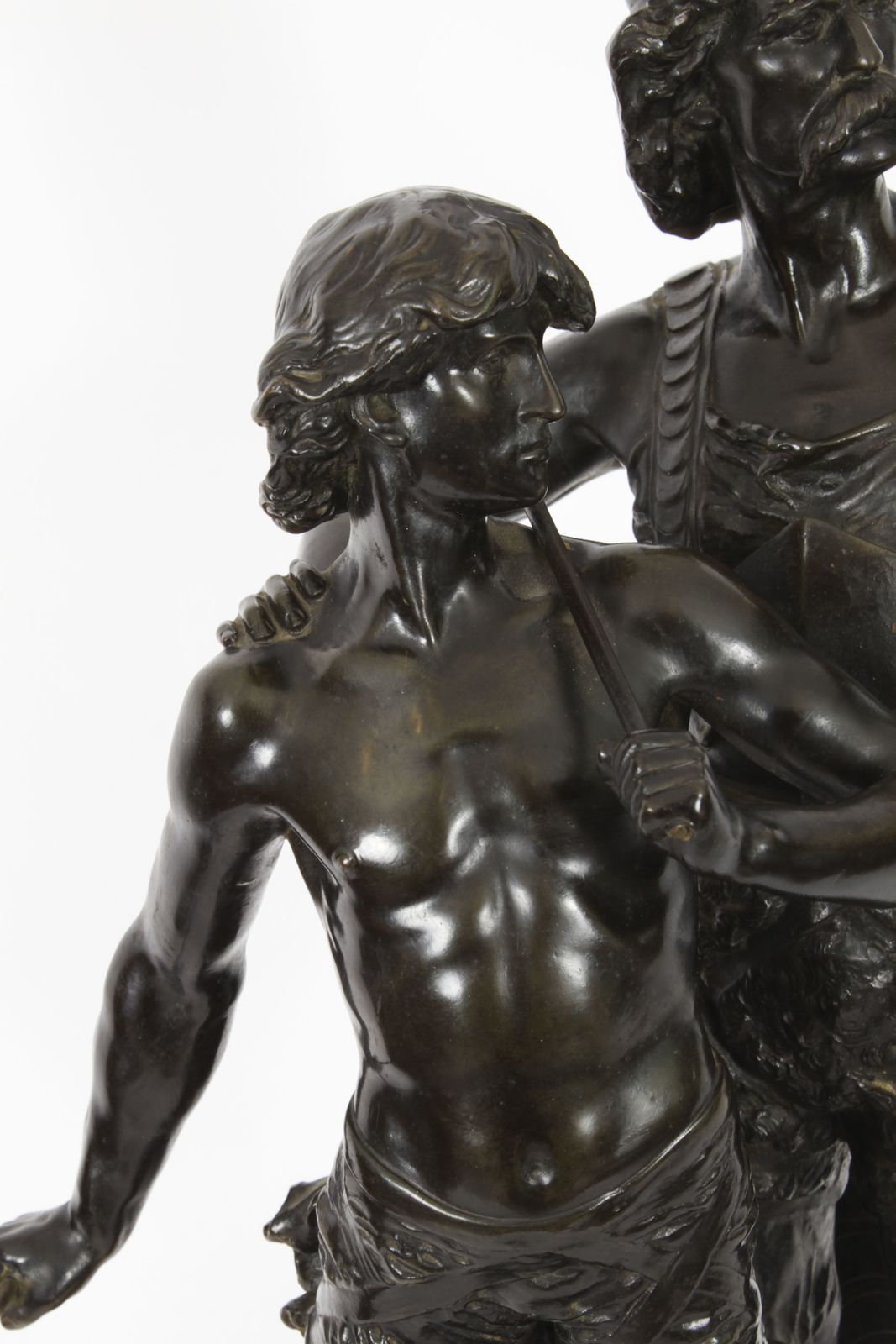
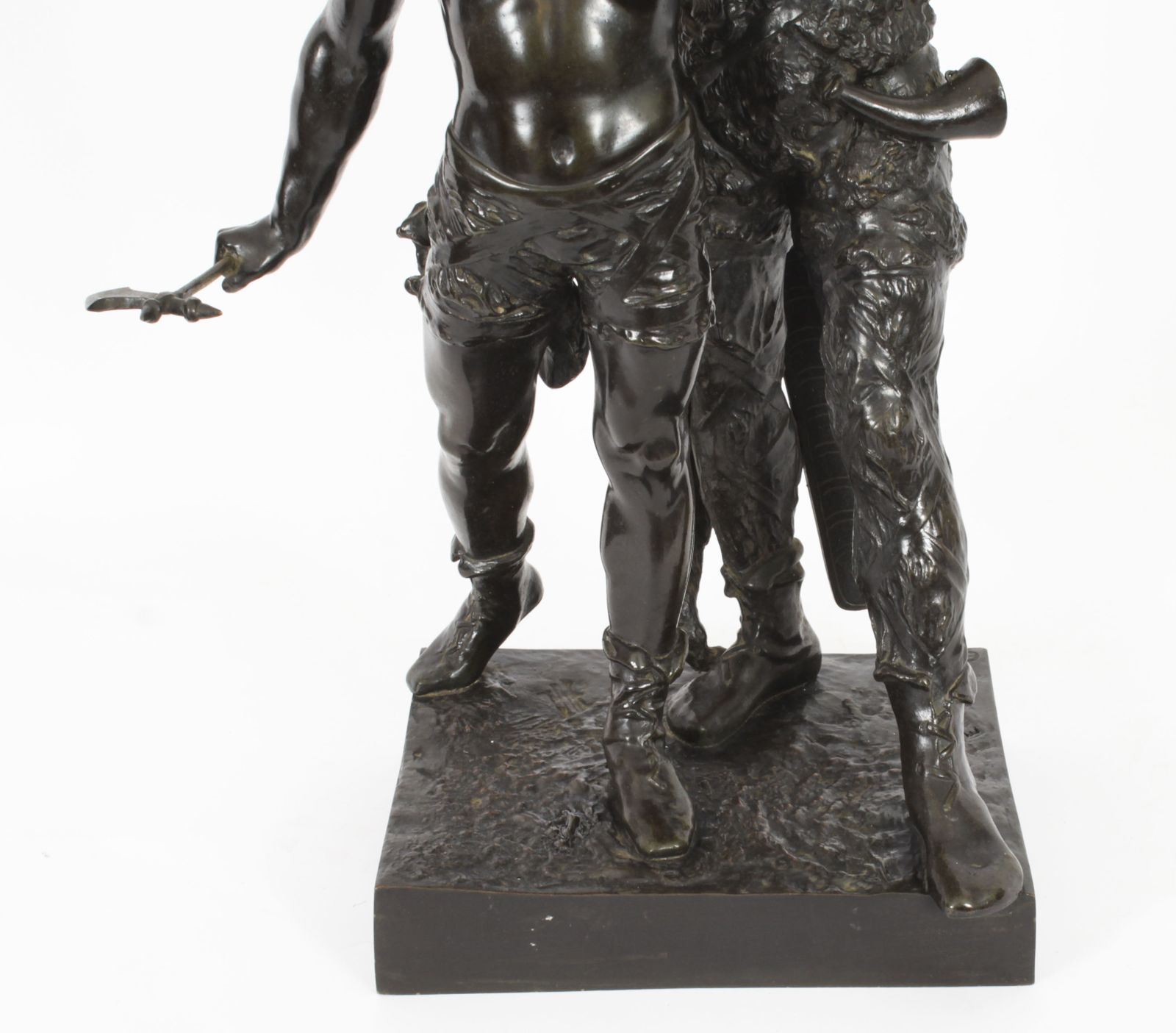
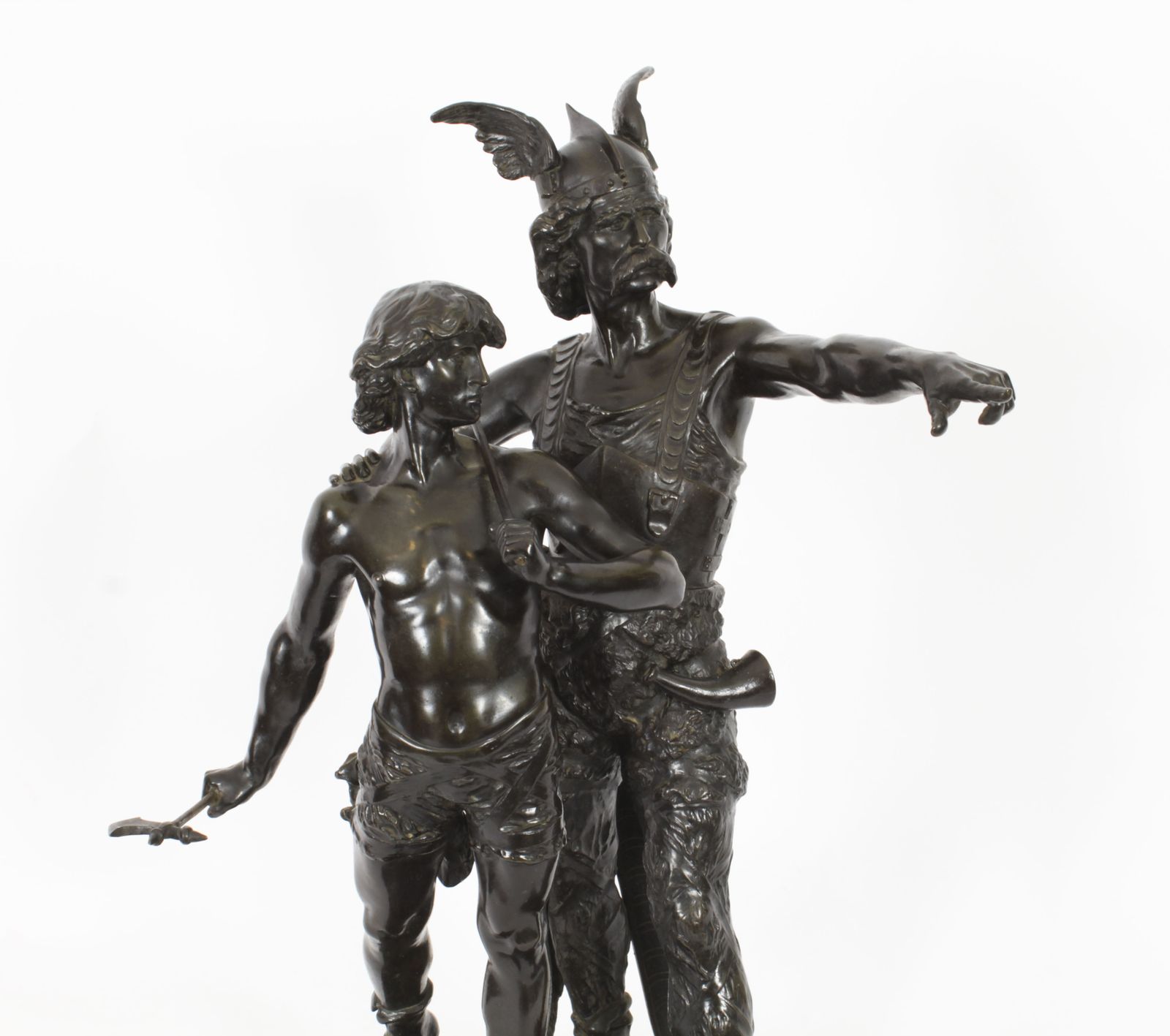
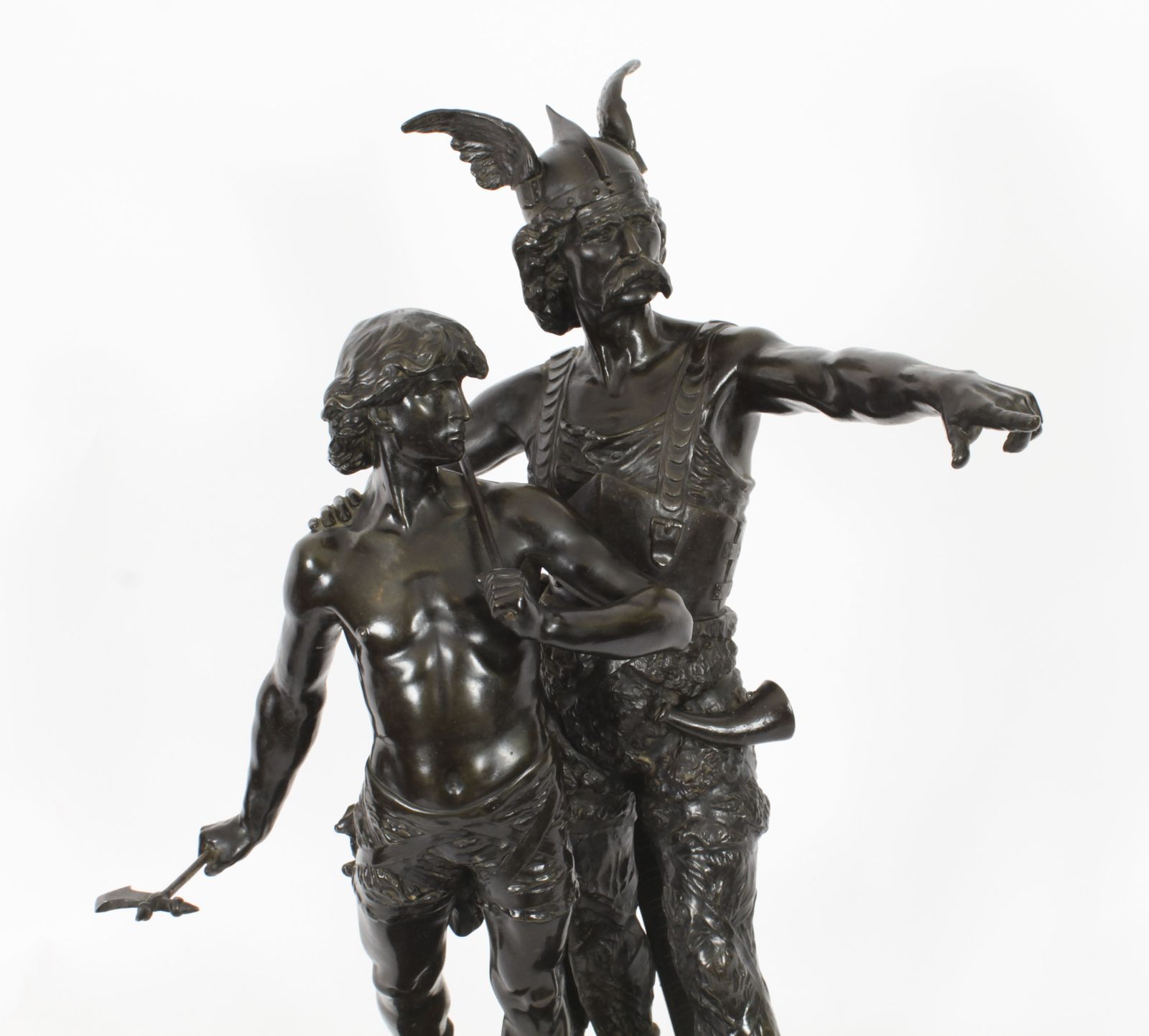
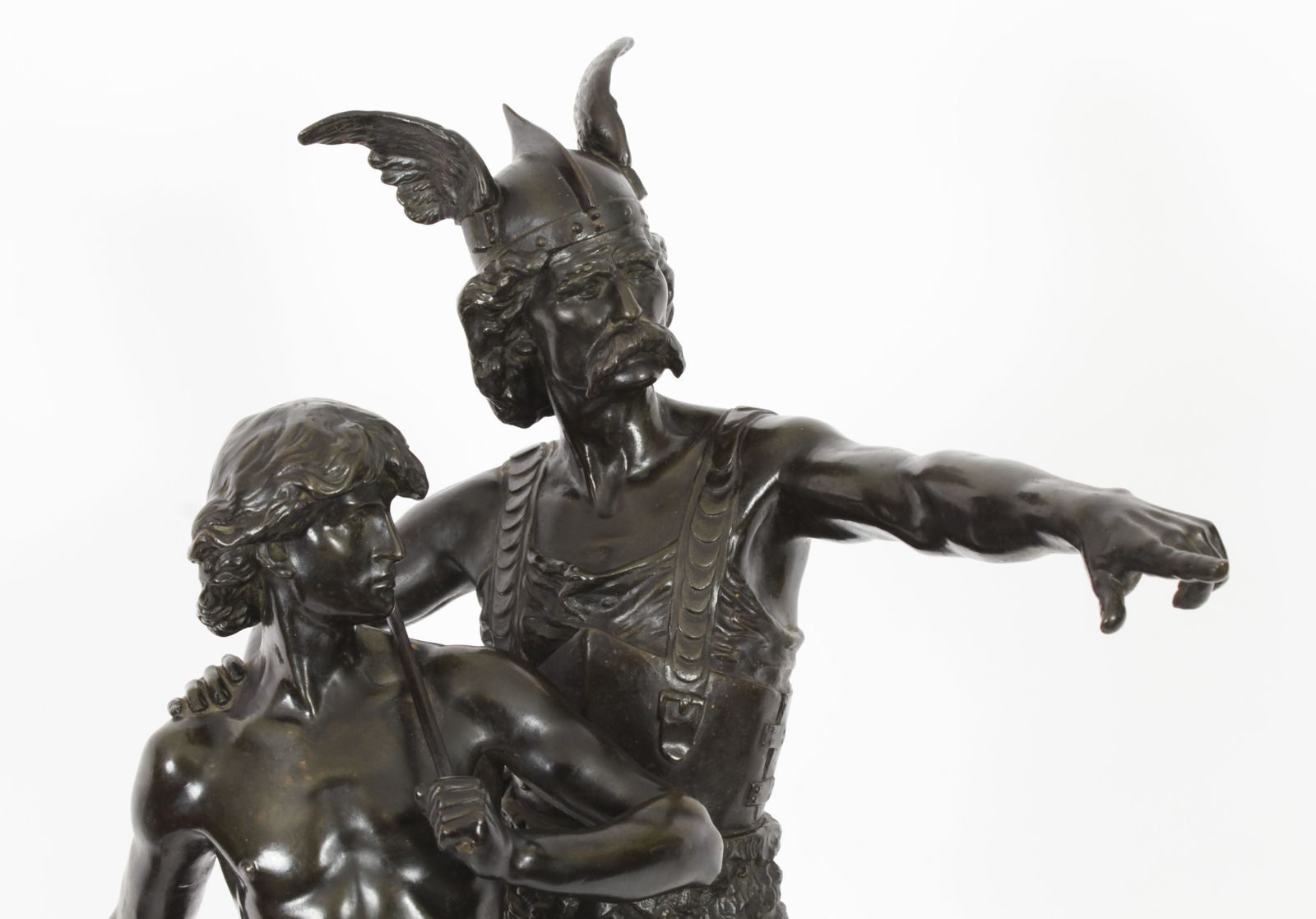
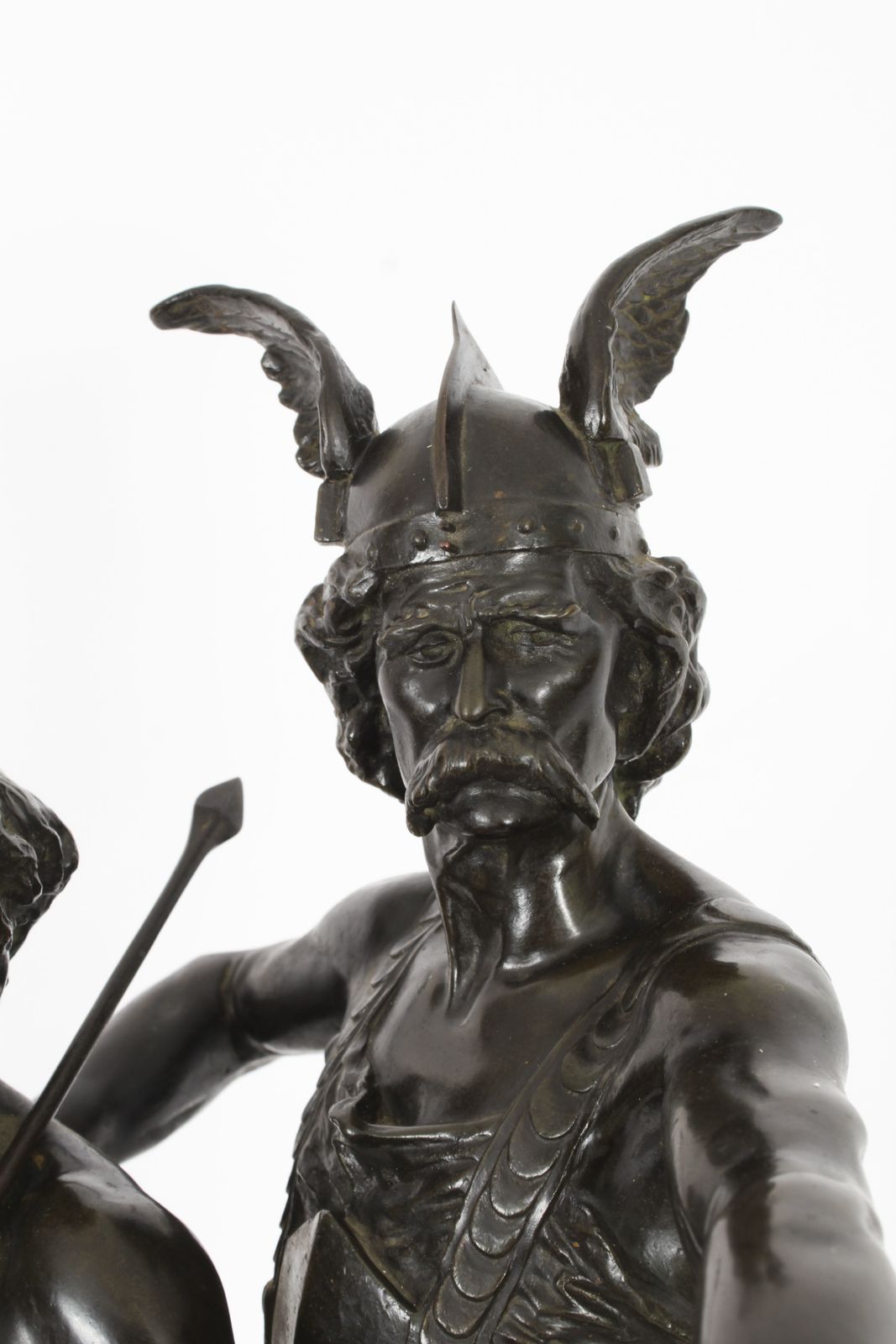
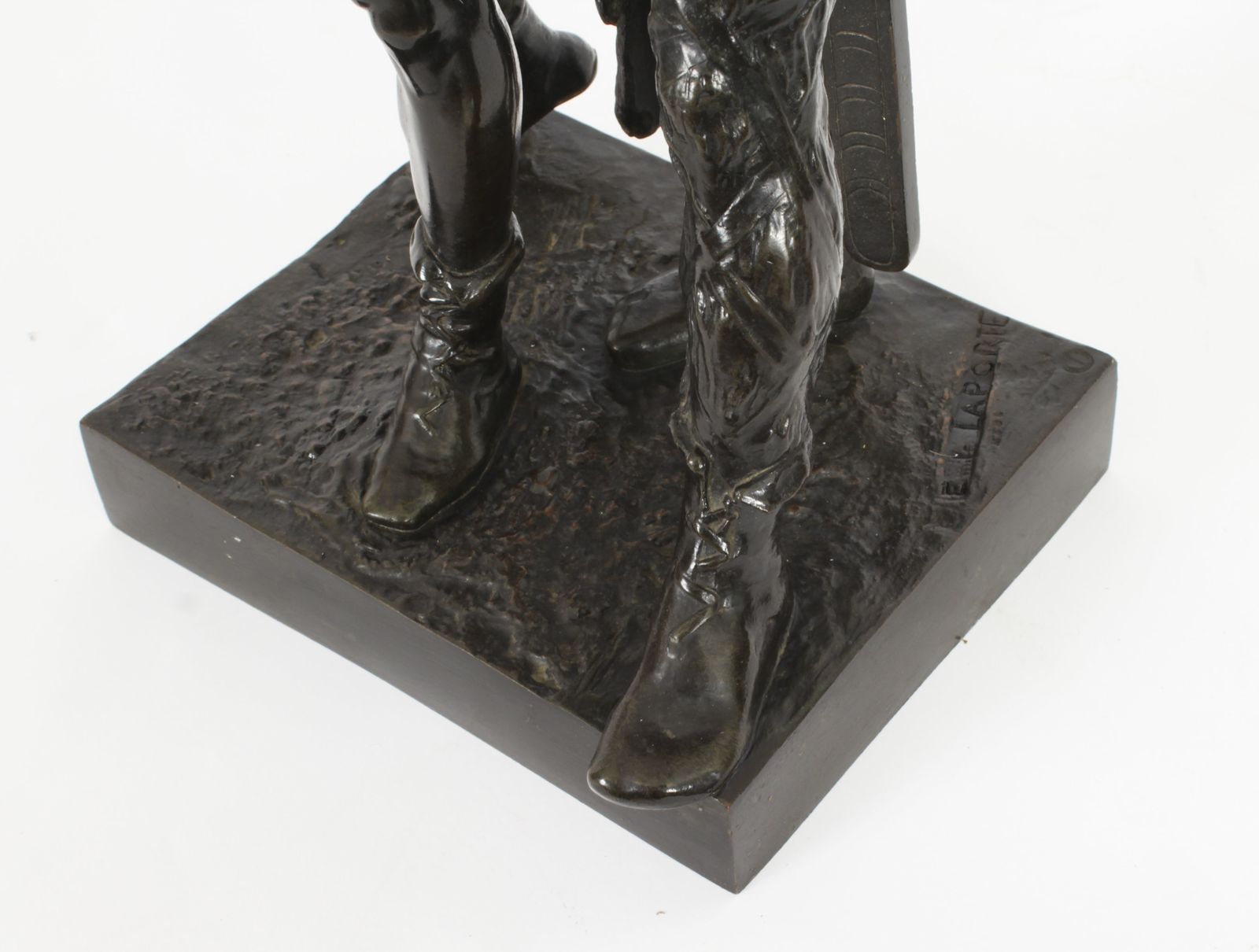
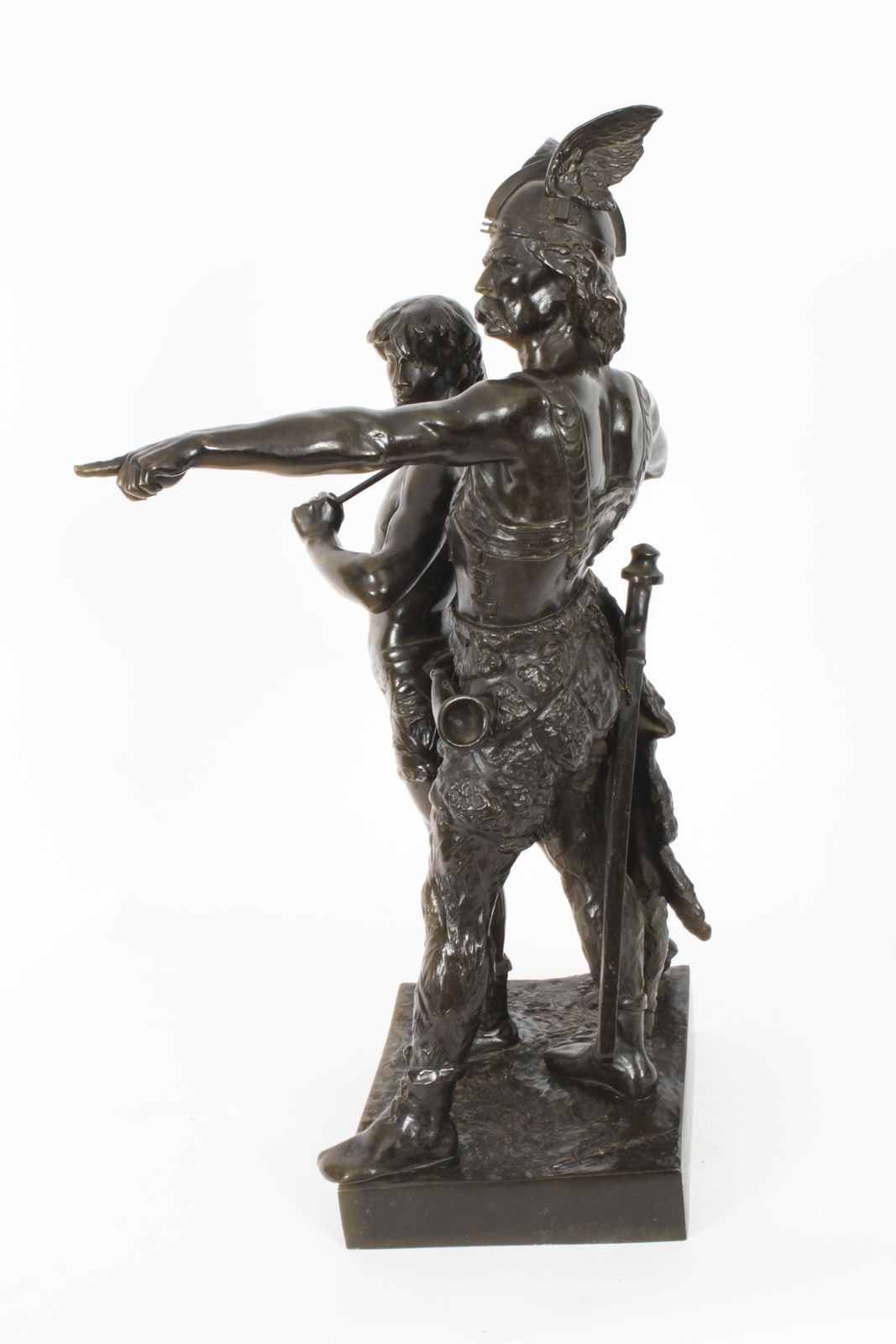
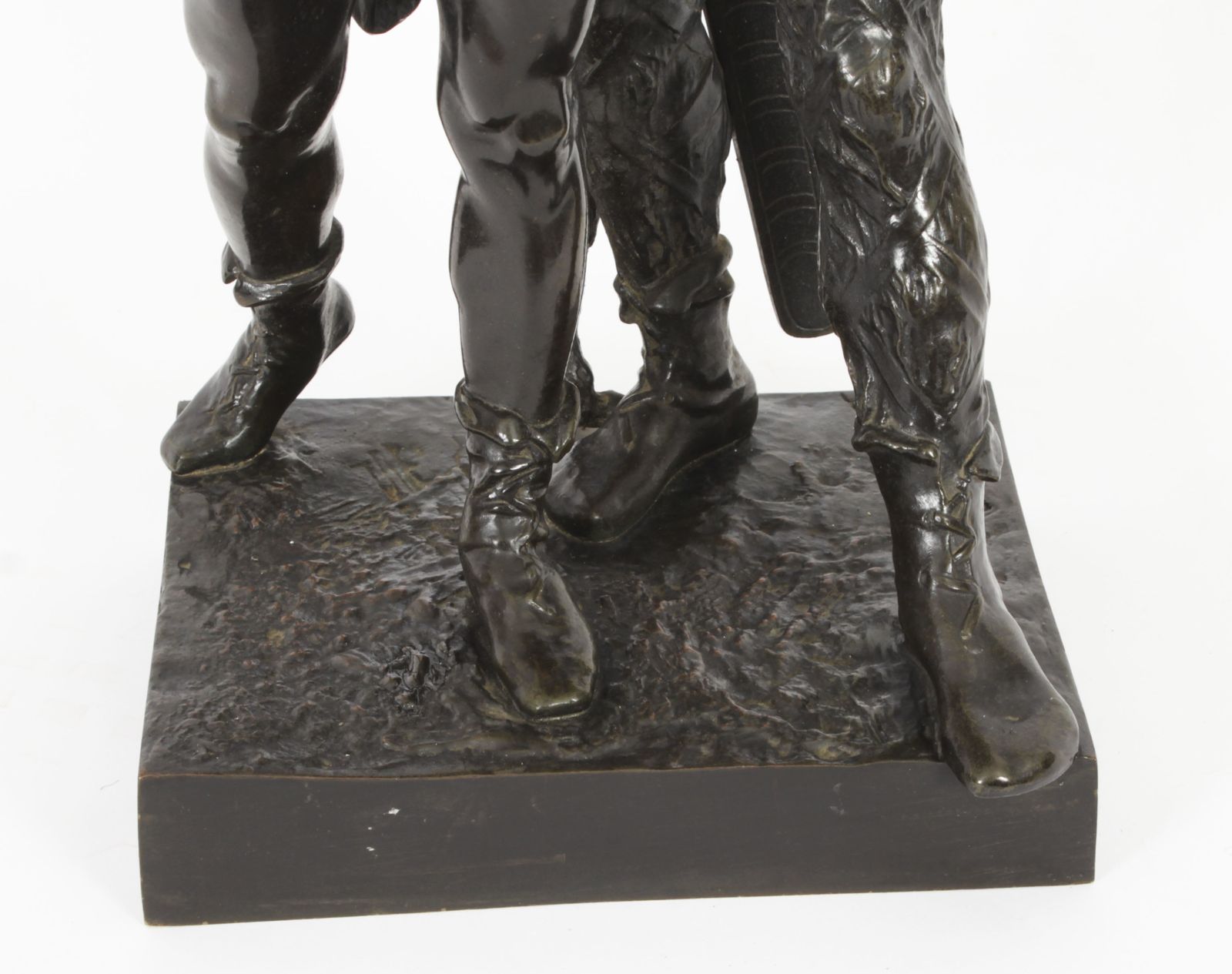
This is a large French bronze sculpture of Vercingetorix with his son by Emile Laporte (1858 - 1901), circa 1890 in date.
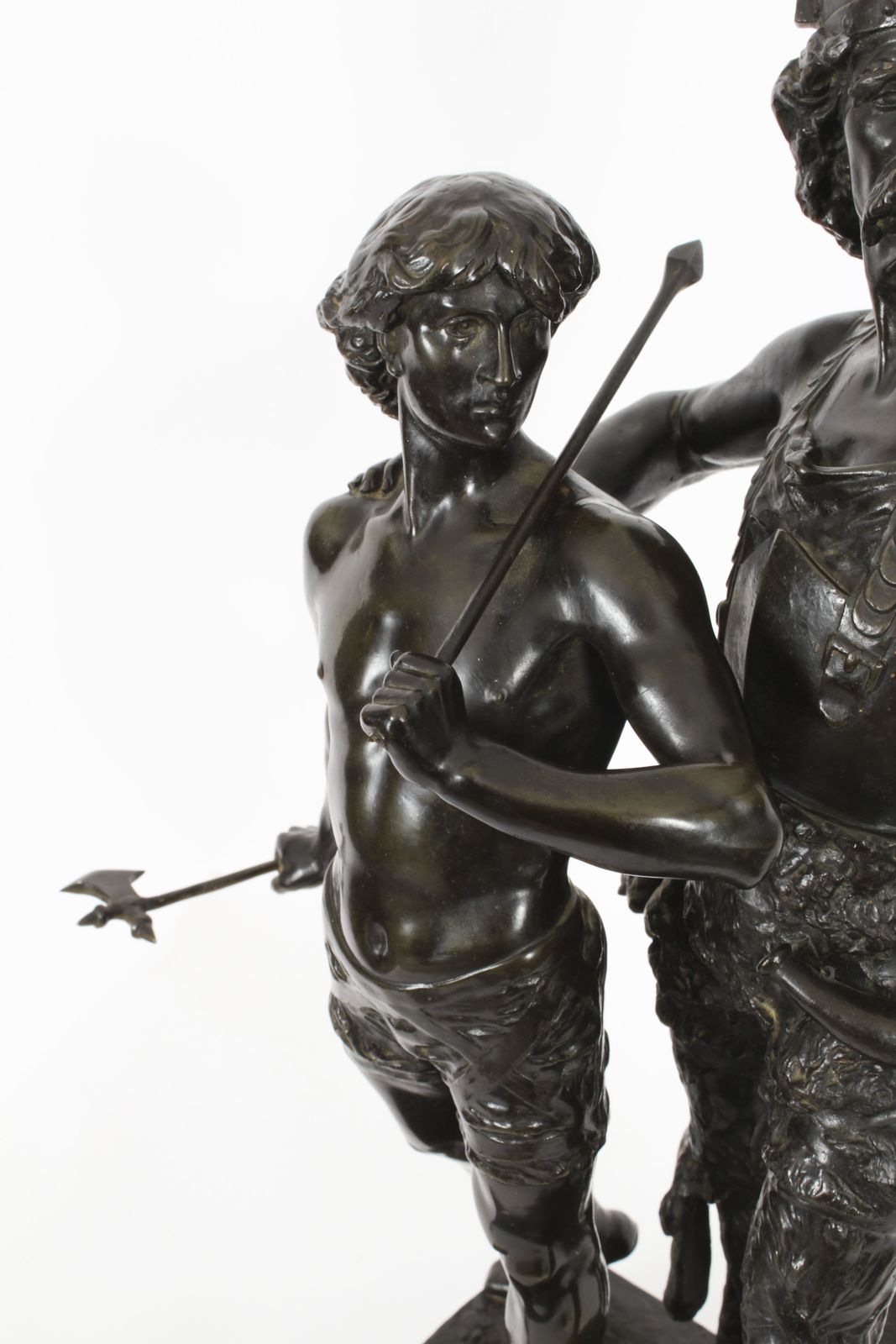
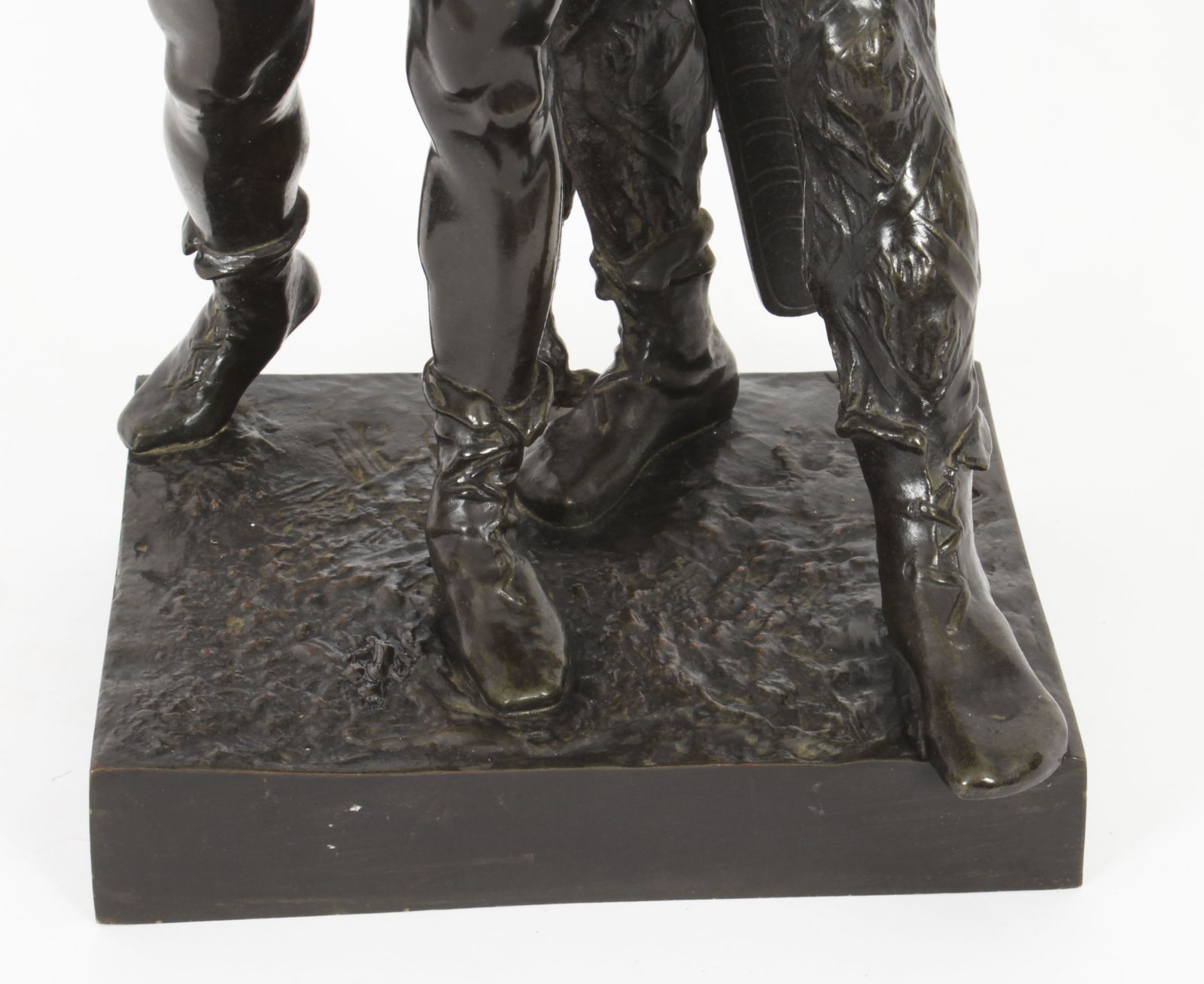
The standing figure of Vercingetorix wearing a winged helmet, with arm raised pointing into the distance, a figure of a of his son at his side, holding an axe in his right hand, raised on a rectangular naturalistically cast base, signed and numbered M585 & Salon Des Beaux Arts, Paris on the base.
Emile Laporte was a French sculptor (1858 Paris to 1907) who attended the Academy in Paris and was a student of Gabriel-Jules Thomas, Augustin Dumont, Jean-Marie Bonnassieux and Louis-Ernest Barrias.
Hi exhibited his work at the Salon of French artists from 1881, his last work exhibited there dates from 1905.
The attention to detail is absolutely fantastic and the sculpture is extremely life-like.
Condition:
In really excellent condition, please see photos for confirmation.
Dimensions in cm:
Height 61 x Width 42 x Depth 35
Dimensions in inches:
Height 2 foot x Width 1 foot, 4 inches x Depth 1 foot, 2 inches
In 53 BC, when Caesar had left for Italy after the summer campaign season, the Gallic tribes rebelled under the leadership of Vercingetorix, who raised an army against the Roman legions still wintering in Gaul. Hearing of the rebellion, Caesar crossed the mountains in the south, digging through snow drifts six feet deep, to rejoin his troops. "The very vigour and speed of his march in such wintry conditions," says Plutarch, "was a sufficient advertisement to the natives that an unconquered and unconquerable army was bearing down upon them" (Life of Julius Caesar, XXVI.3). To deprive the Romans of food and supplies, Vercingetorix had ordered a scorched-earth policy, and all the neighboring villages and farms were burned, "until fires were visible in all directions." But one tribe, already having torched twenty towns in a single day, refused to destroy its capital at Avaricum (Bourges), "almost the finest in Gaul, the chief defense and pride of their state."
Vergingetorix relented and set about to help defend the fortified town, which held a large supply of grain so desperately needed by the Romans. Caesar began a siege that lasted twenty-seven days. It now was early spring 52 BC, and, in spite of incessant rain, two wheeled towers, eighty-feet high, and ramps 330 feet long, over which they could be rolled into place, as well as a high siege terrace, were constructed in less than a month. The Gauls did all they could to counter or destroy the siege works. As the towers increased in height, so the defenders raised their own. They attacked the soldiers at work and tunneled under the terrace to undermine it. As the terrace approached the height of the wall, the defenders became desperate. Caesar writes that "They felt that the fate of Gaul depended entirely on what happened at that moment, and performed before our eyes an exploit so memorable that I felt I must not leave it unrecorded." It was almost midnight when they again had dug under the terrace and set it on fire. Opposite one of the towers, a Gaul was throwing pitch and tallow onto the fire when he was killed by an arrow from a catapult. Another man stepped forward to take his place and he, too, was killed. Another came forward and also was killed. This continued throughout the night until the fire finally was extinguished.
The next day, it began to rain heavily and, as the defenders took shelter, one of the siege towers was moved into position. The Gauls, taken by surprise, were dislodged from the walls and, panicked at the sight of the Romans surrounding them, threw down their weapons and fled. Exasperated at the length and difficulty of the siege, the Romans massacred the inhabitants. No-one was spared, "neither old men nor women nor children. Of the whole population—about forty thousand—a bare eight hundred who rushed out of the town at the first alarm got safely through to Vercingetorix."
Later that year, Vercingetorix and his men were trapped in the stronghold of Alesia, near present-day Dijon. Caesar surrounded the oppidum and began to construct siege works. The defenders had food only for a month, and Caesar hoped to starve them into surrender before reinforcements could arrive. The circumvallation extended around the town for ten miles, too large to be occupied by the Romans. It therefore was made more secure by a series of defenses. First, facing the town, a trench twenty-feet wide was dug to protect against surprise attack. Six hundred and fifty yards behind this ditch two more trenches were dug, each fifteen feet wide and the inner one filled with water. Behind these trenches was a palisaded rampart twelve feet high, with a breastwork of earth studded with forked branches. Around the entire circuit of the wall, towers were erected every 130 yards.
Still, there were attacks by the Gauls, and the siege works were strengthened even more. Tree trunks and strong branches were cut and sharpened, and buried securely in rows in front of the trenches. In front of them, diagonal rows of pits also were dug, each three-feet deep with a thick sharpened stake at the bottom and covered with brush to hide the trap. And, in front of these, blocks of wood were buried in the ground with iron barbs (stimuli) fixed in them. Aware that Vercingetorix had sent for reinforcements to break the siege, Caesar had an similar line of defense constructed facing outward to protect against attack from a relief force. By now, the food in the town had been exhausted, and it was determined that all those who could not fight were to be turned out. The inhabitants of Alesia, who had given refuge to Vercingetorix and his men, now were compelled to leave the town, together with their wives and children. Starving, they beseeched the Romans on the surrounding walls to take them in as slaves. But the population was refused any refuge and left to die of hunger between the two armies.
Caesar writes that 250,000 infantry and 8,000 cavalry assembled to relieve the besieged town. But the Gauls had difficulty communicating across the Roman siege works that ringed the oppidum and were not able to coordinate their efforts. Now surrounded, themselves, the Romans were able to repel the first assault. At midnight the next day, the Gauls suddenly attacked again, and Vercingetorix led his men out of the town in support. But it was too dark to see and, when the relief army came nearer the Roman defenses, "they suddenly found themselves pierced by the goads or tumbled into the pits and impaled themselves, while others were killed by heavy siege spears discharged from the rampart and towers." Before he could even reach the trenches, Vercingetorix heard the army retreating and was forced back behind the town walls. Again, the relief force reassembled: "The Gauls knew that unless they broke through the lines they were lost; the Romans, if they could hold their ground, looked forward to the end of all their hardships....on that day, he said, on that very hour, depended the fruits of all their previous battles." There was a desperate struggle. The Gauls filled the trenches with dirt and bundles of sticks, pulled down the breastworks with hooks, and drove the Romans from the towers. But Caesar, his presence marked by a scarlet cloak, attacked with cavalry and additional cohorts. The Gauls broke and fled, the relieving army giving up and returning to their homes.
Vercingetorix was forced to surrender and presented himself to Caesar. Confined and transported to Rome, he languished in the Tullianum for five years before being killed as part of his victor's triumph in 46 BC. Two years later, Caesar, himself, was dead.
Wear Condition
Excellent
Cancellations
We offer free cancellations and full refund for orders cancelled before dispatching. View full policy.
Returns
We have a 14-day return guarantee for orders from individual sellers, within the UK and European Union. View full policy.
Additional Delivery Info from Seller
Free delivery in London.
Estimated delivery time
Less than one week
Free collection available
Yes
Made to Last
The average lifespan of a Vinterior piece is 100 years, while modern flat-pack typically takes just 3 years to reach landfill. When you choose pre-loved, you can shop with confidence in quality, craftsmanship and longevity. With our top-rated customer service team and price match guarantee, there's no better way to shop pre-loved.


Shopping at Vinterior


Similar Free Standing
Similar Free Standing
Add to a wishlist
Create Wishlist
Completethe room
Good design is all in the layering. Whether you're adding impact or refining the details, now’s the time to find what’s missing.
Reviews
5.0

Based on 13 reviews



Wear conditions
Excellent
Shows little to no signs of wear and tear.
Good
May show slight traces of use in keeping with age. Most vintage and antique items fit into this condition.
Average
Likely to show signs of some light scratching and ageing but still remains in a fair condition.
Apparent Wear and Tear
Visible signs of previous use including scratches, chips or stains.
Please refer to condition report, images or make a seller enquiry for additional information.
Cancellations and Returns
Last updated: 12/02/2026
Clear, predictable protection for every pre-loved purchase.
Simple £75 flat return fee for UK-to-UK mainland furniture when you change your mind.
Applies to furniture with a final selling price of up to £5,000 (excluding delivery and service fees) and delivered from a UK mainland seller to mainland UK addresses. Excludes Northern Ireland, Channel Islands, Scottish Highlands & Islands, Isle of Wight and Isles of Scilly.
Buying vintage should feel inspiring, not uncertain.
Every order on Vinterior is backed by straightforward returns, free cancellations, and extra peace of mind for UK furniture purchases.
1. Free cancellations
Changed your mind before dispatch?
You can cancel any order before it's shipped for a full refund, including delivery.
To cancel an order, click Create cancellation on the order page.
Once an item has been dispatched, delivery costs are not refundable.
Bespoke, personalised or made-to-order pieces cannot be cancelled.
2. Returning an item
You have 14 days from delivery to request a return.
There are two return types:
A. The item isn't as described (free return)
If your piece arrives and it doesn't match the listing in any material way (incorrect description, undisclosed damage, inaccurate measurements, misleading photos), you are fully protected:
- Free return
- The seller or Vinterior arranges pickup
- Full refund, including outbound delivery costs once the seller receives the item
This applies to all purchases.
B. You changed your mind
UK-to-UK furniture deliveries:
To make UK furniture returns predictable and stress-free, we offer a simple flat return fee of £75.
- Applies to furniture delivered from a UK mainland seller to a mainland UK address. Excludes Northern Ireland, Channel Islands, Scottish Highlands & Islands, Isle of Wight and Isles of Scilly.
- Pickup arranged for you
- One clear fee, no surprises
We coordinate the return with either the seller's chosen courier or our trusted delivery partner.
All other items
Most smaller items are straightforward to return.
You can still return your item within 14 days.
- For smaller or parcel-sized items, you can choose to post the item back yourself using a tracked service, or the seller can suggest a preferred courier.
- For larger or more fragile pieces, the seller may recommend the safest return method.
- Return delivery costs vary depending on size and courier.
The seller will confirm the best option based on the item.
3. If your item arrives damaged
Damage on arrival is uncommon, especially for UK furniture deliveries.
But if something does go wrong, you're fully protected.
- Let us know as soon as possible (ideally within 72 hours of delivery) so we can resolve things quickly
- Share photos so we understand what happened
- We’ll help arrange a return and refund if needed
You’re always protected when something goes wrong in transit.
Your statutory rights apply for up to 30 days from delivery.
4. What can't be returned
Some items cannot be returned:
- Bespoke, personalised, or made-to-order pieces
- Items altered after delivery
5. How to start a return
- Log in to your Vinterior account
- Open your order
- Click Create a return
- Add notes + photos if relevant
We'll guide you through the rest.
6. What happens next
- We review your request, confirm the return and advise on next steps
- Pickup or return method is arranged
- The item is returned to the seller
- We issue your refund once the seller confirms the item's condition
Returns are completed smoothly once the pickup is arranged.
7. Refunds
Once the seller receives the piece back in the same condition it was sent, we'll issue your refund to your original payment method.
Once a refund is issued, it may take up to 5–10 working days for the funds to appear back on your original payment method, depending on your bank or card provider.
If the item is returned with new damage that wasn't present at delivery, the refund may be adjusted following review.
Need help?
If you have questions about a return or your order, our support team is here to help. Email us at [email protected] or find other ways to contact us here.
What your service fee covers
-
 14-day return guarantee
-
Flat-fee return shipping on UK furniture
-
Seller vetting
-
Dedicated customer support
| Order Value (£) | Fee (£) |
|---|---|
| 0 — 49.99 | 2.75 |
| 50 — 99.99 | 5.50 |
| 100 — 199.99 | 11.00 |
| 200 — 399.99 | 21.00 |
| 400 — 599.99 | 30.00 |
| 600 — 799.99 | 40.00 |
| 800 — 999.99 | 50.00 |
| 1,000 — 1,499.99 | 55.00 |
| 1,500 — 1,999.99 | 60.00 |
| 2,000 — 4,999.99 | 82.50 |
| 5,000+ | 110.00 |
Added at checkout, based on your basket total.
