


 Gifts
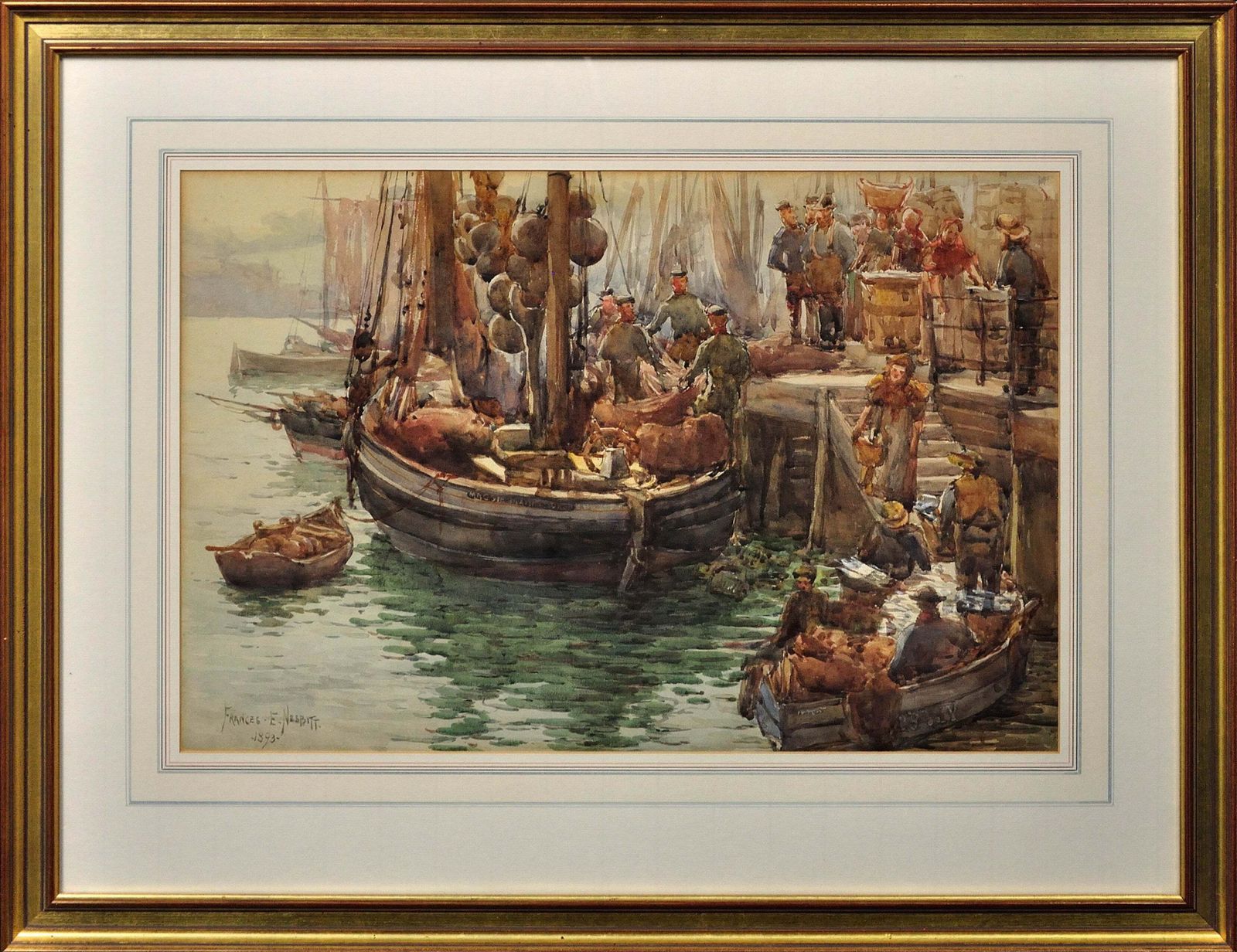
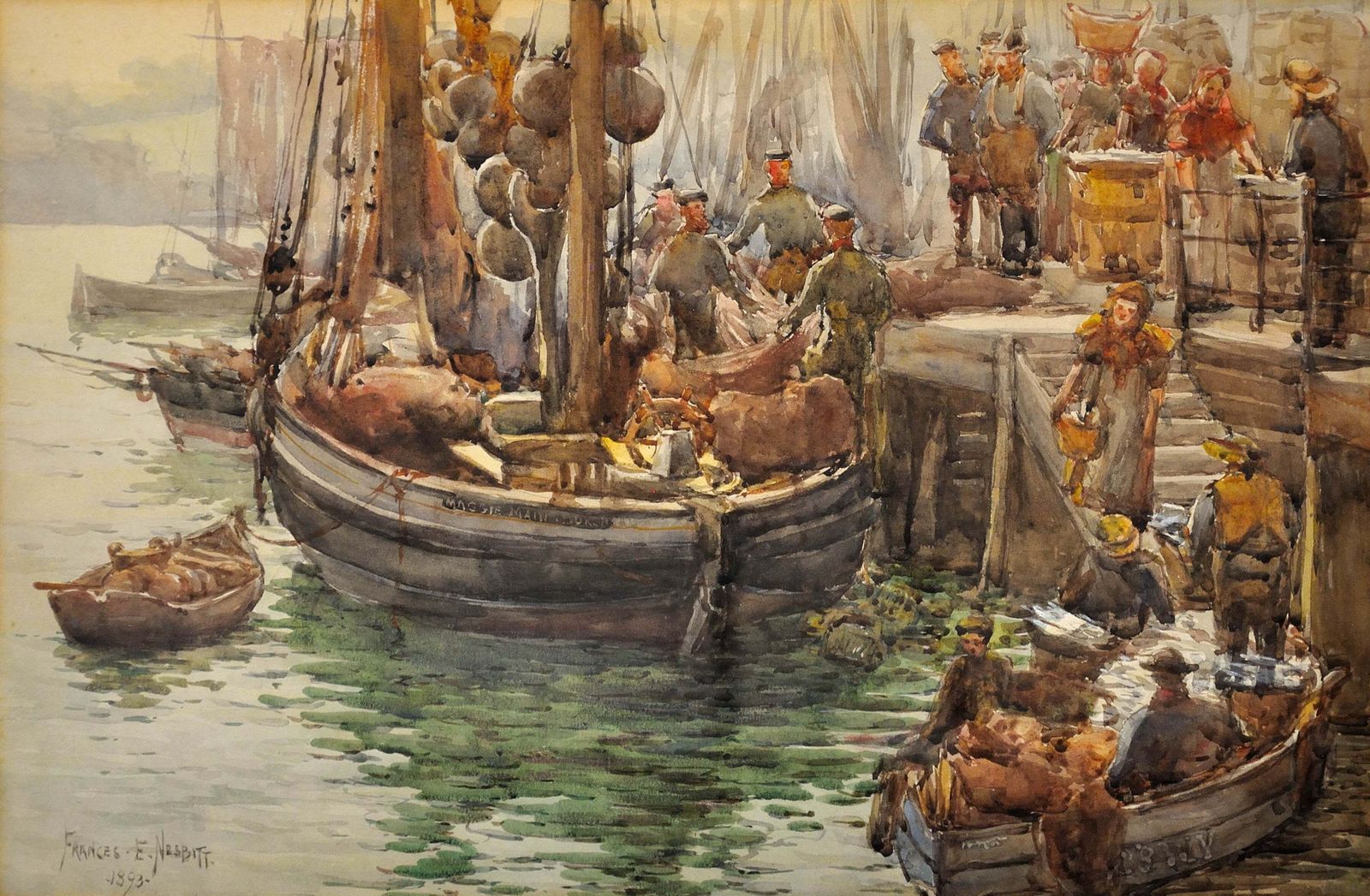
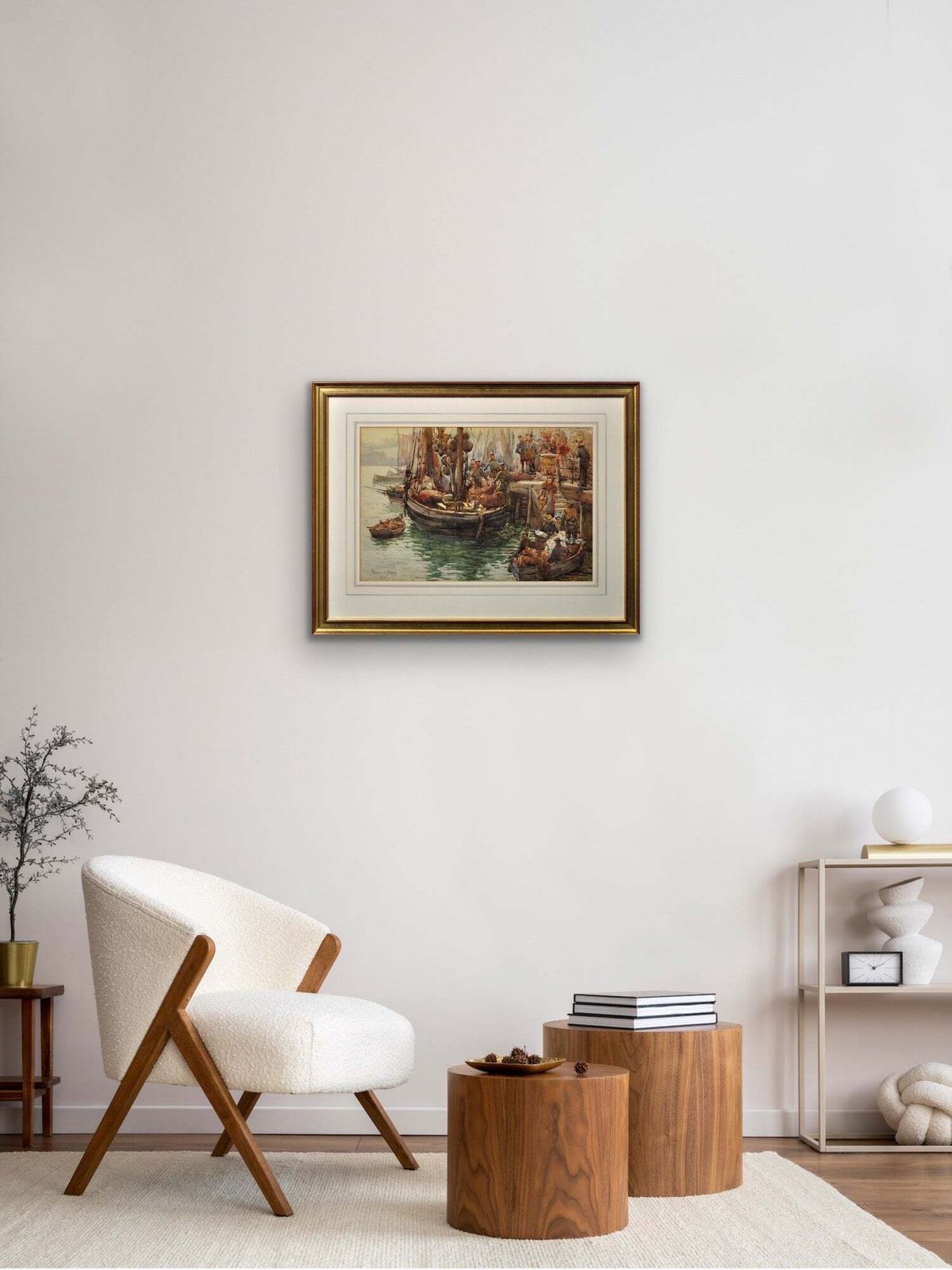
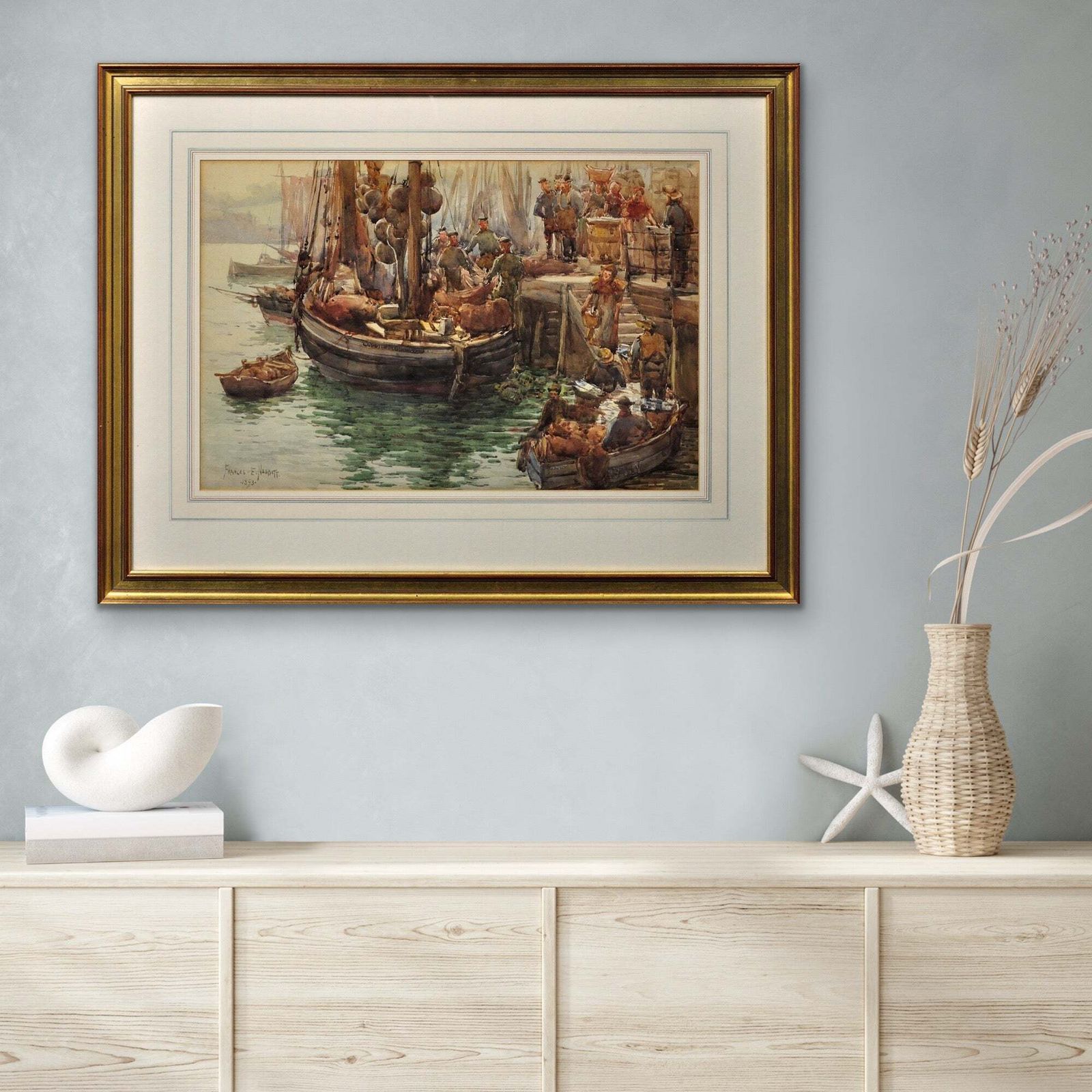
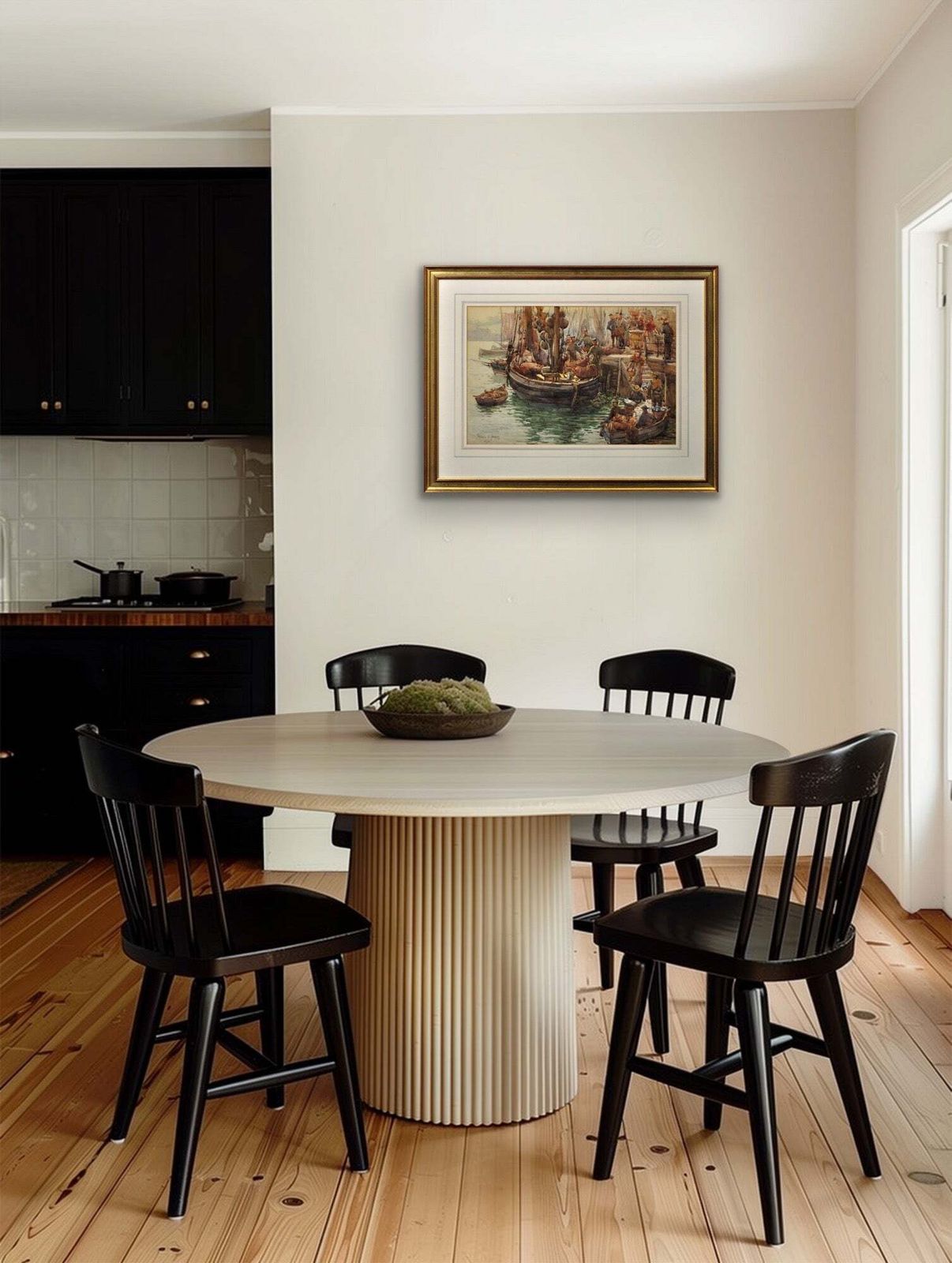
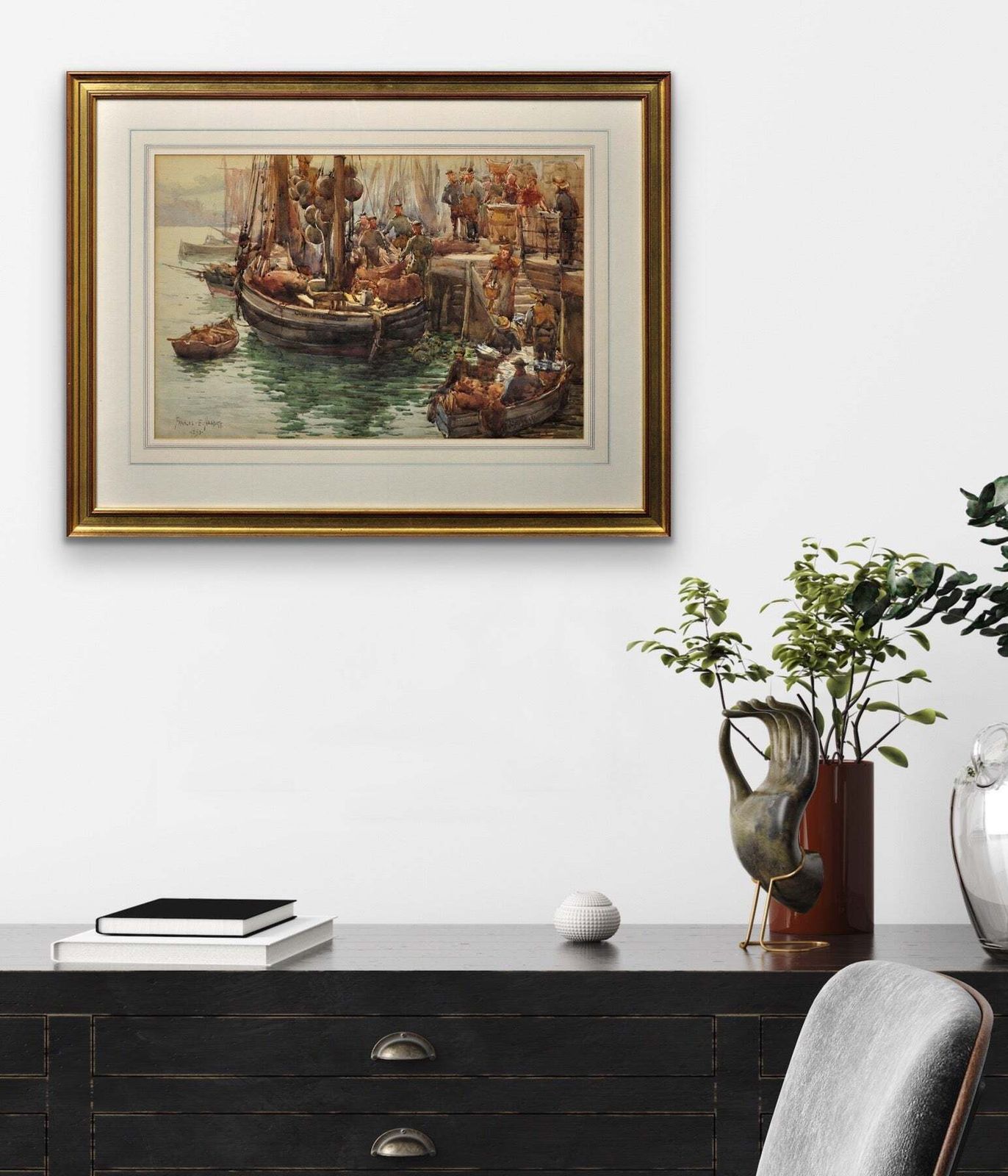
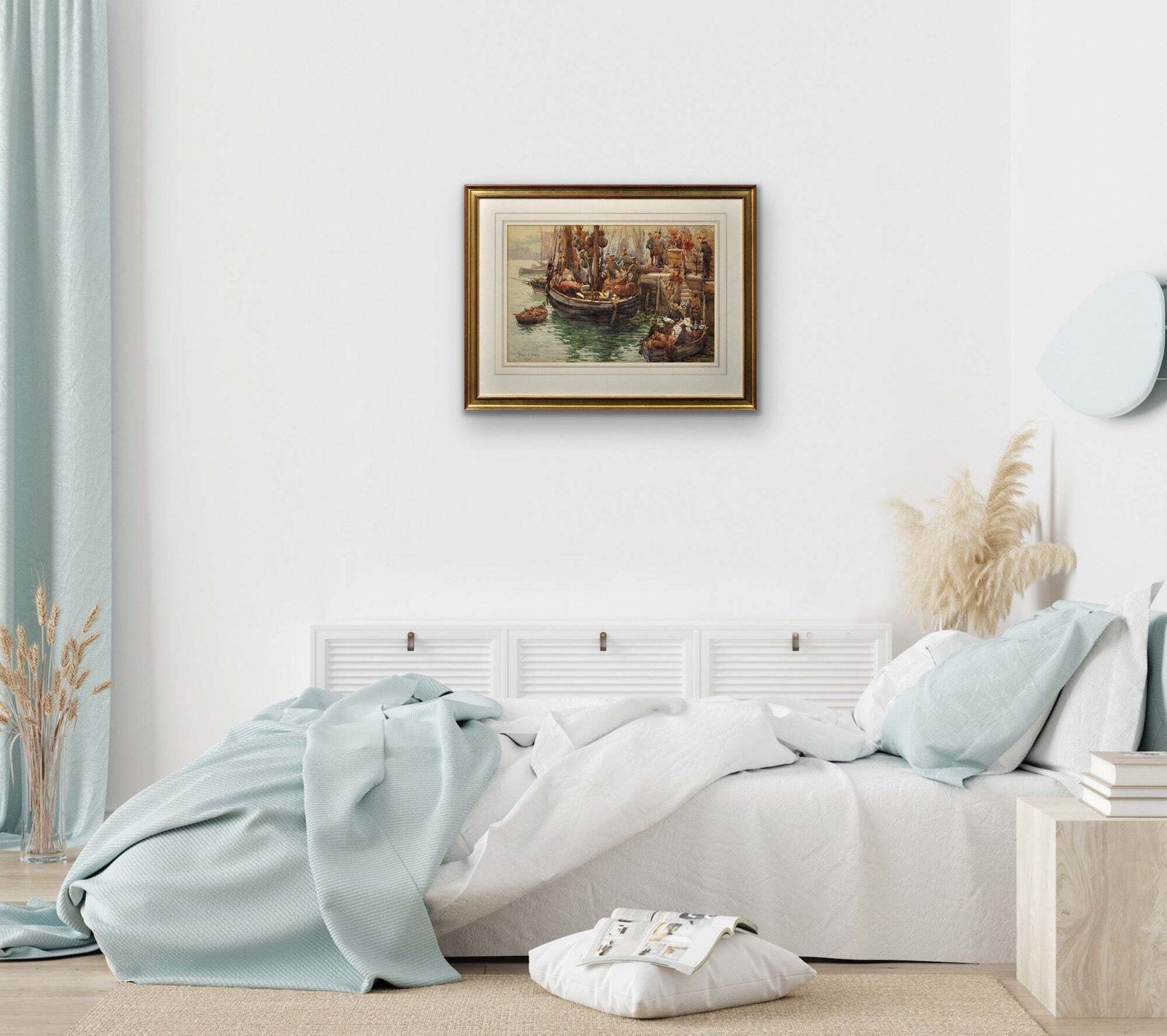
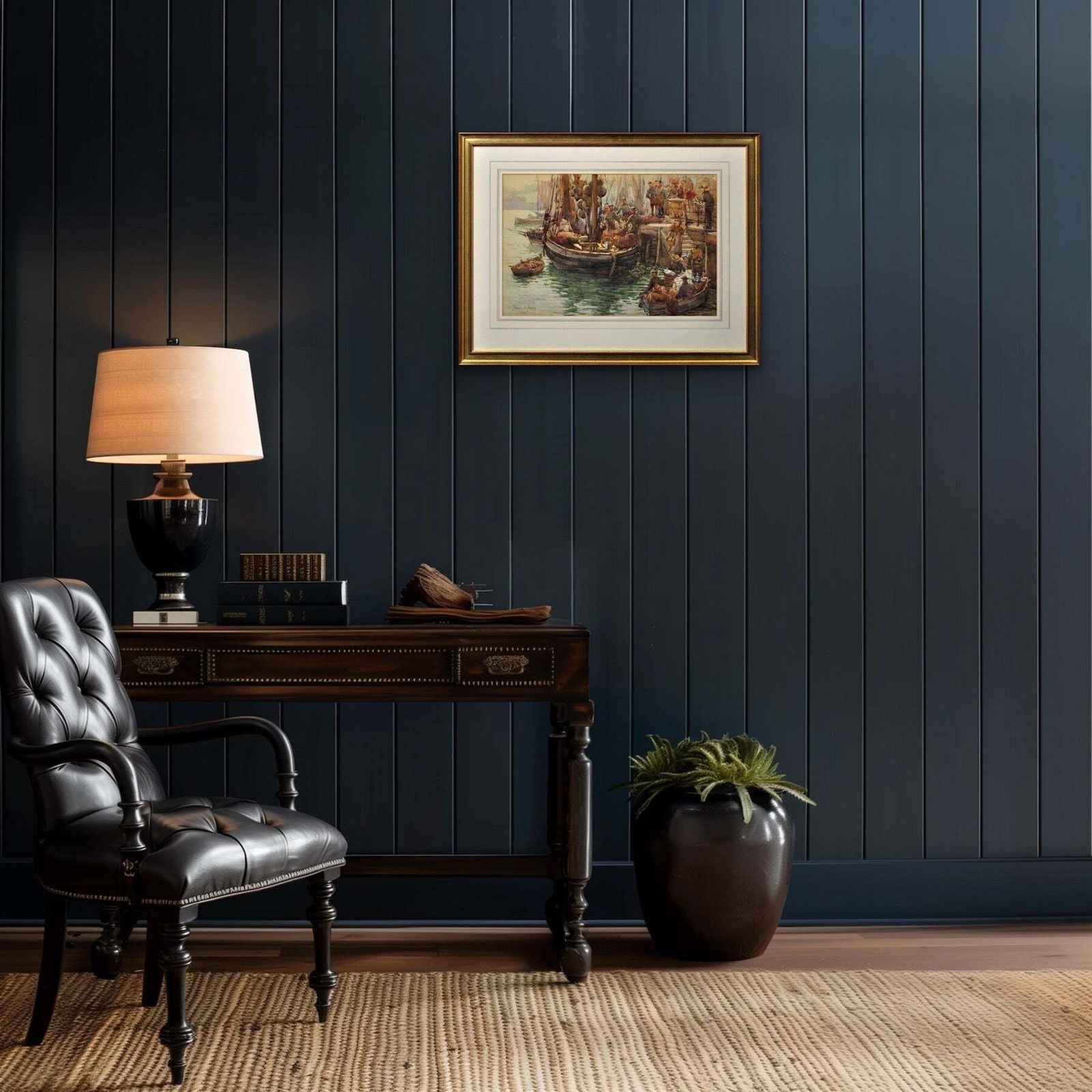
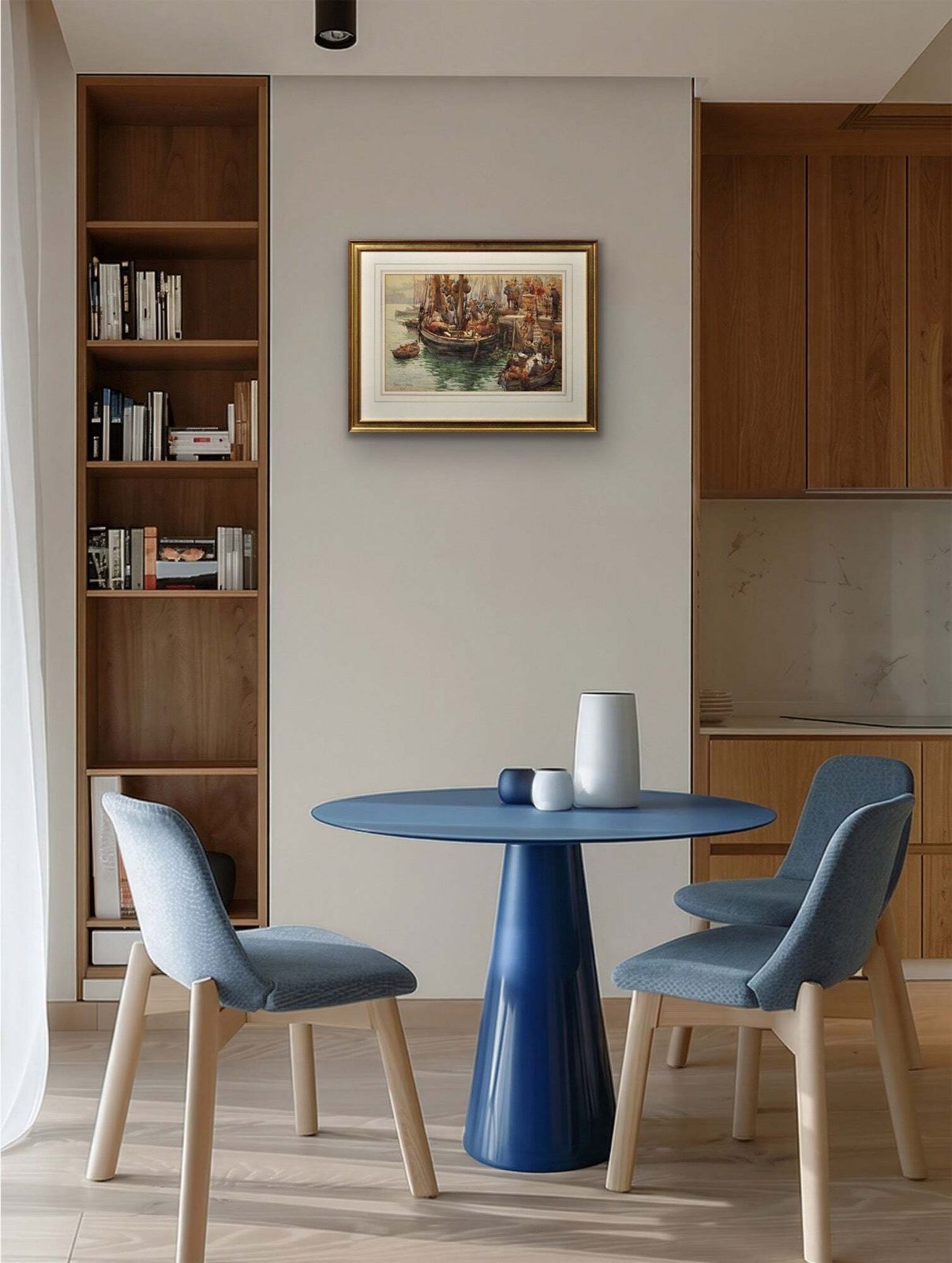
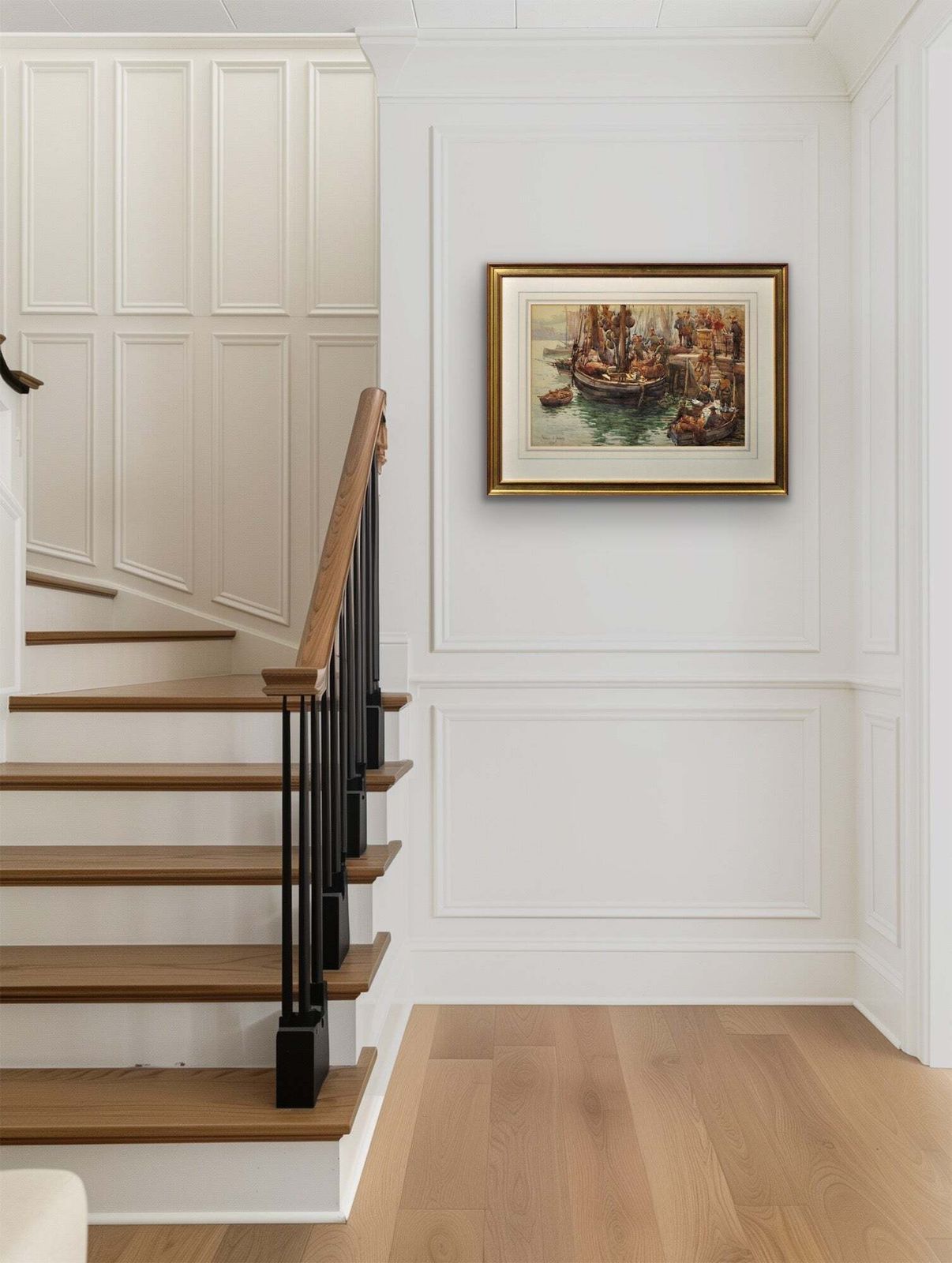
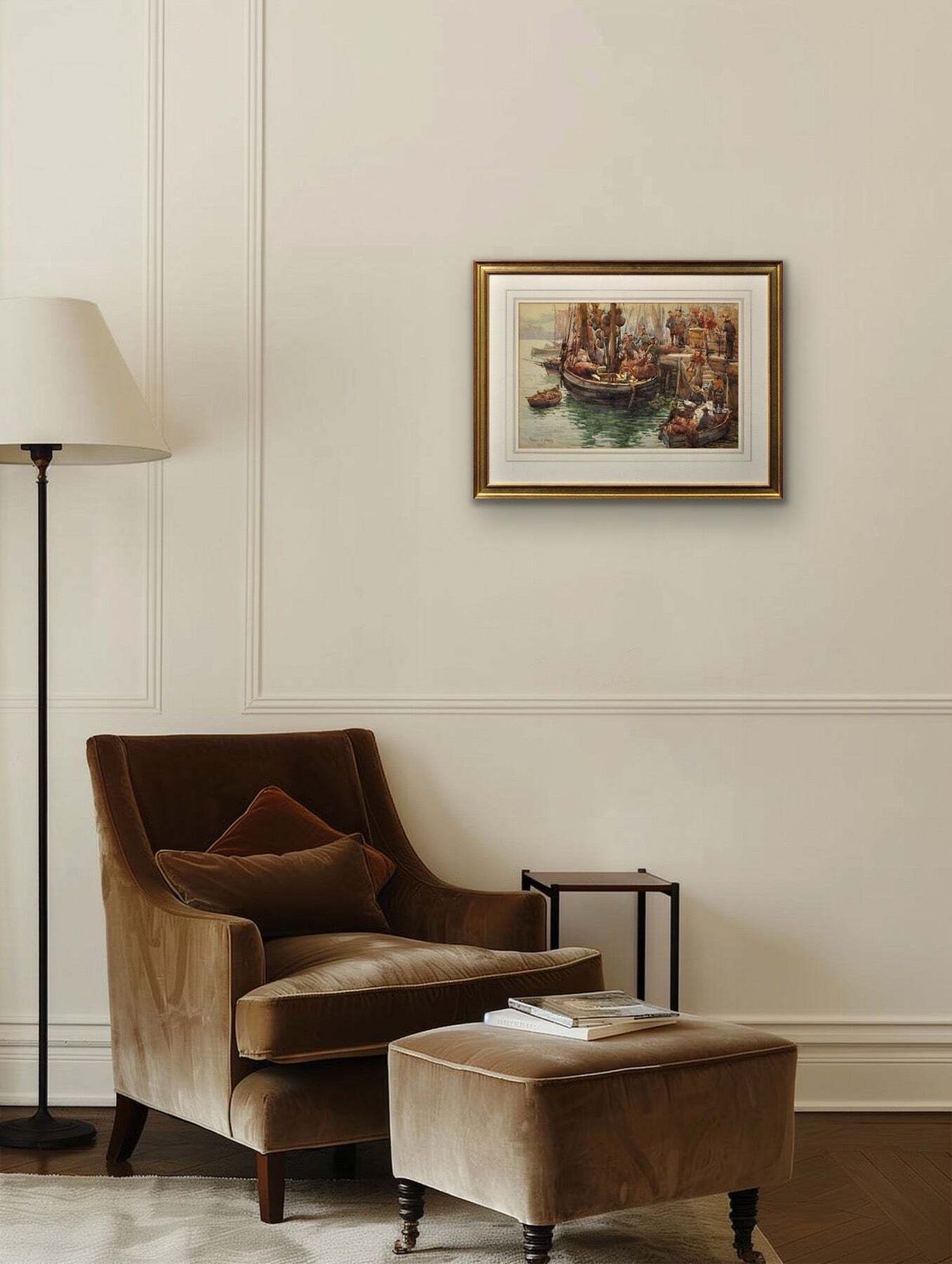
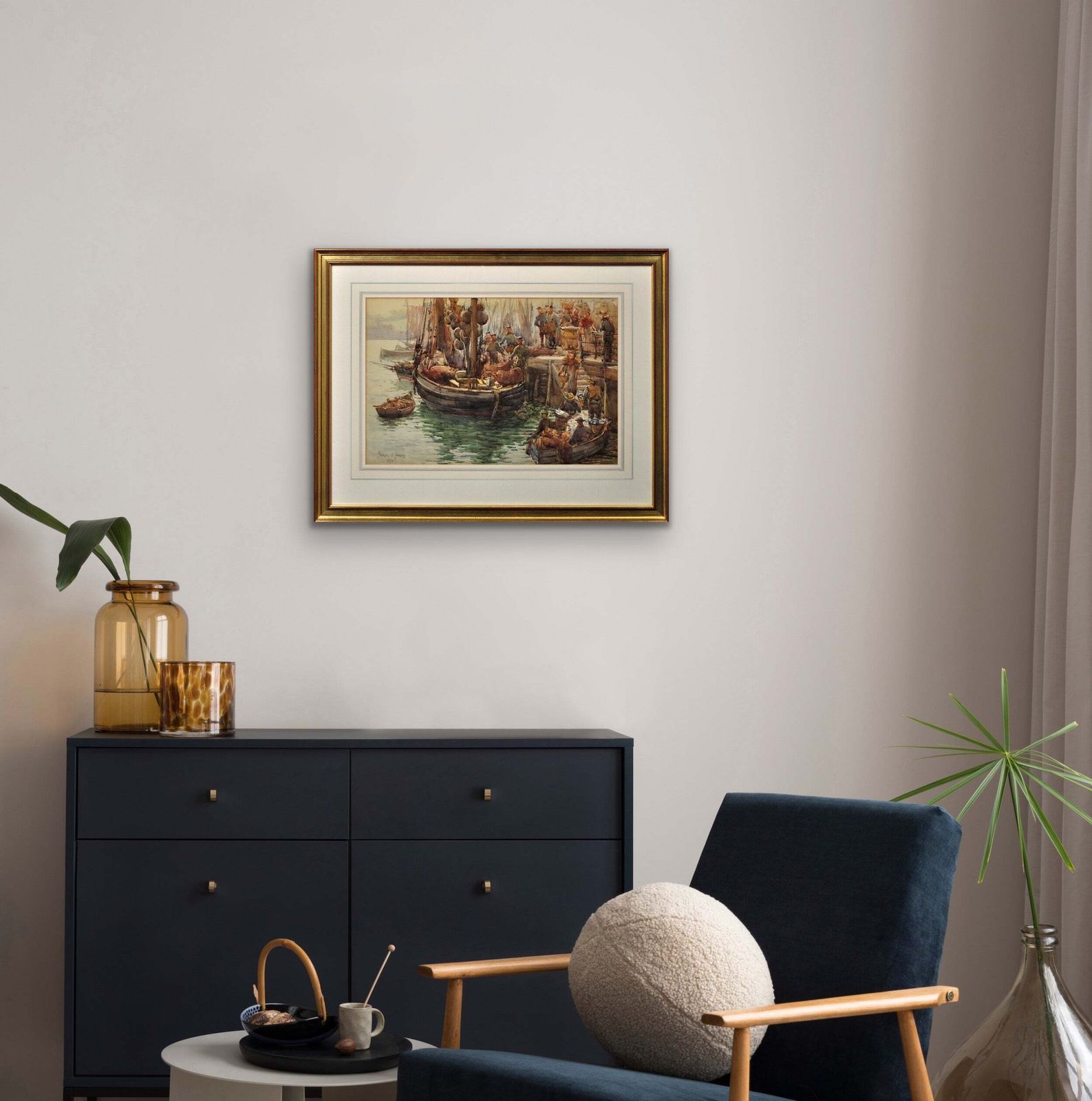
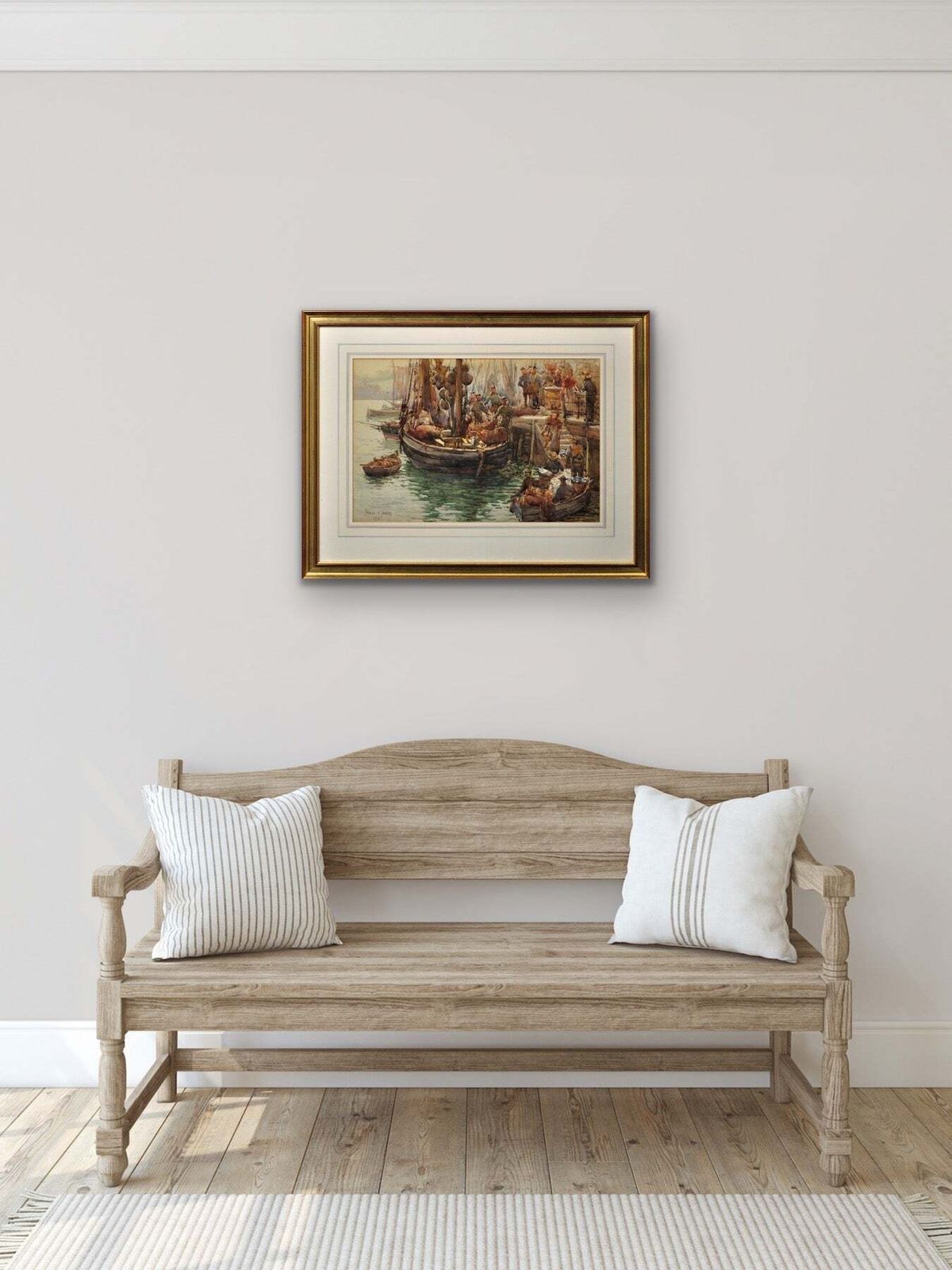
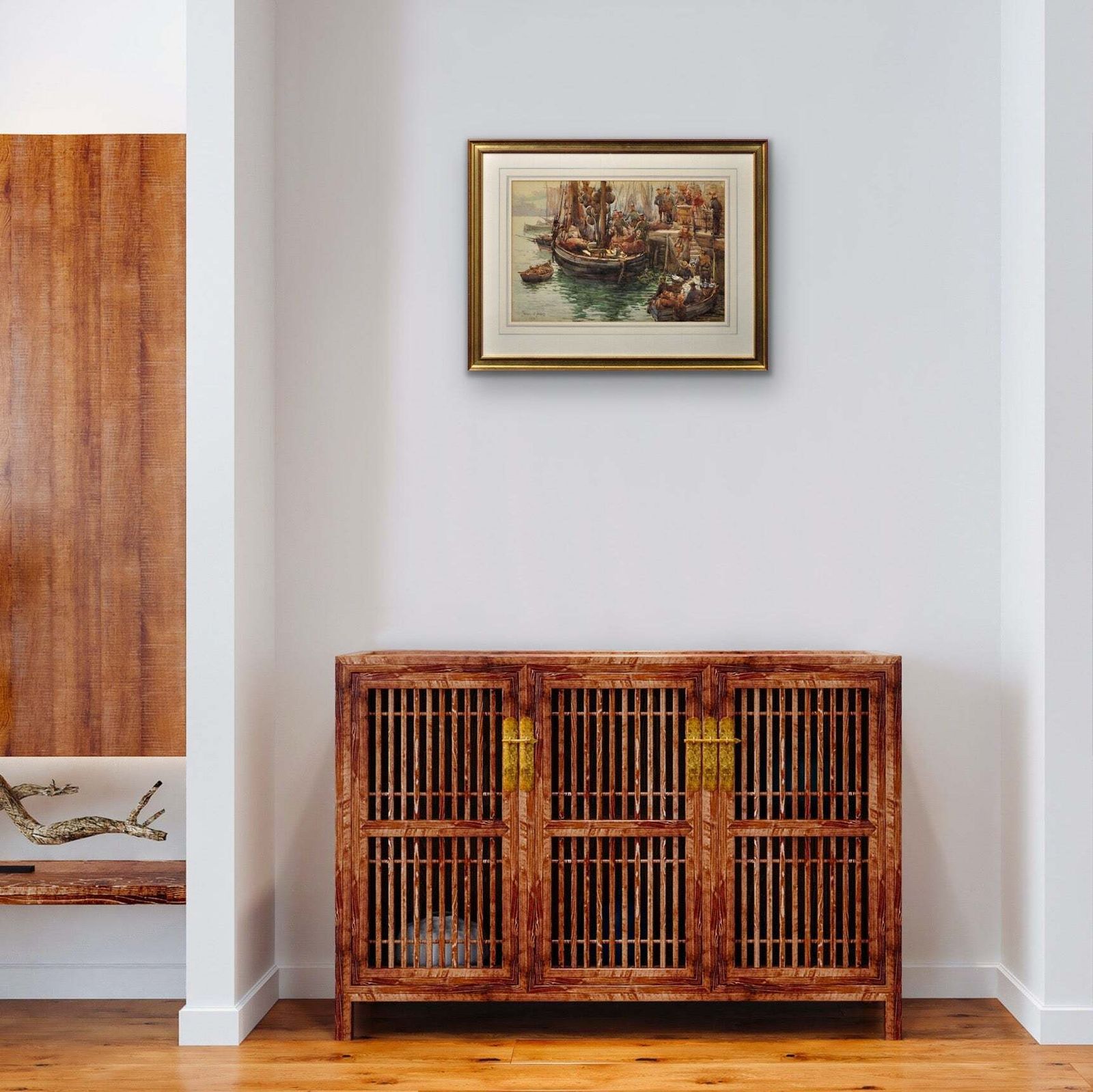
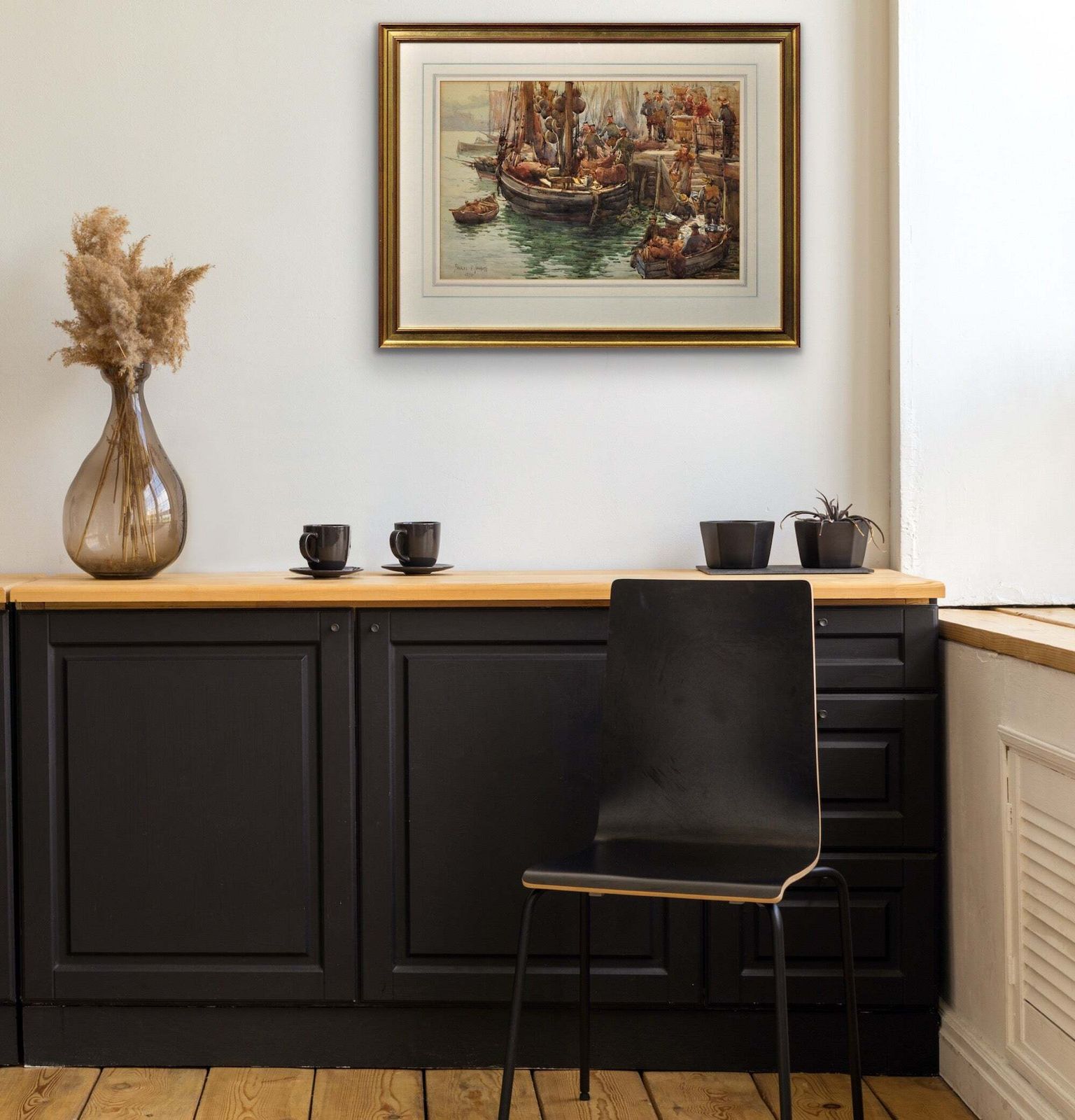
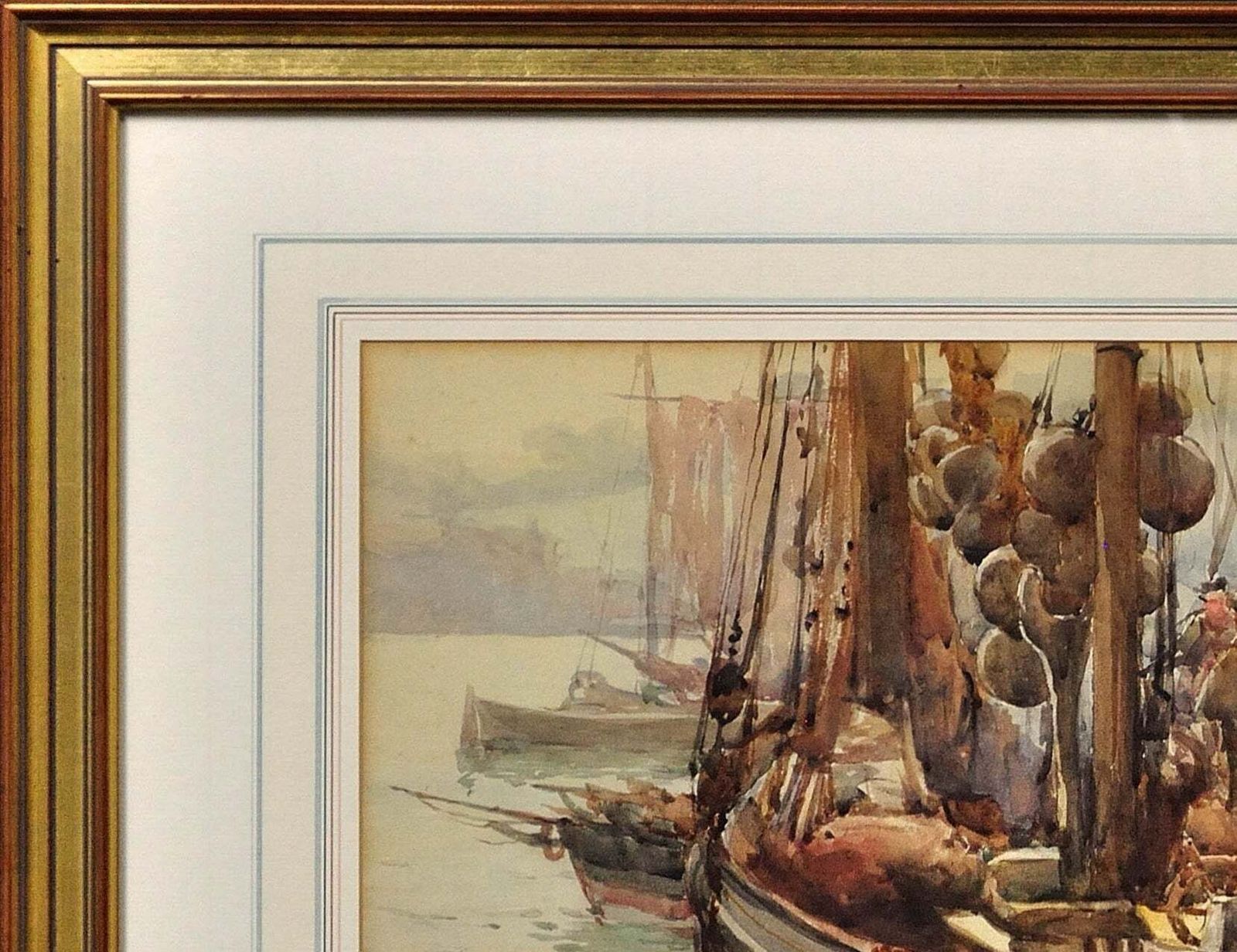
Frances Emily Nesbitt. A Moray Firth Zulu Fishing Boat Unloading Herring In Whitby, 1893. Framed Scottish Maritime Heritage Watercolour Painting.

 Sutton Poyntz, Dorset, United Kingdom

Hassle-free returns
-
 Easy returns (14 days)
-
Free return if the item isn't as described
-
Buyer protection
Damage is rare, and you're fully protected if it happens.
Dimensions
Wear Condition
Good
Material
Watercolour
Style
Antique, African, Traditional, Victorian, Edwardian
Product Details
Description
Frances Emily Nesbitt.
English ( b.1863 - d.1934 ).
A Moray Firth Zulu Fishing Boat Unloading Herring In Whitby, 1893.
Watercolor On Paper.
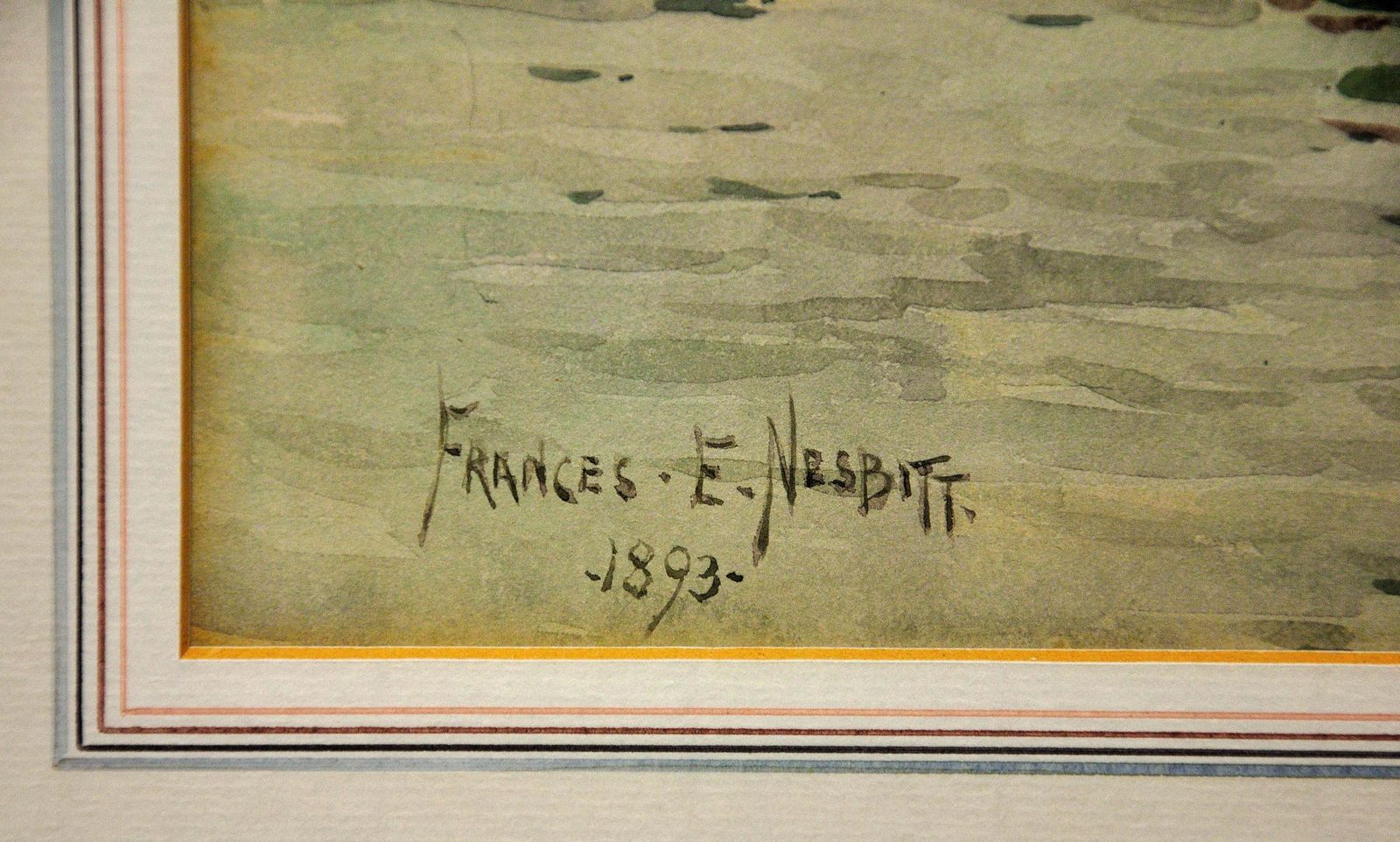
Signed And Dated 1893 Lower Left.
Image size 13.8 inches x 20.5 inches ( 35cm x 52cm ).
Frame size 22.4 inches x 28.9 inches ( 57cm x 73.5cm ).
Available for sale from Big Sky Fine Art in the English county of Dorset, this original painting is by the English female artist Frances Emily Nesbitt and is dated 1893.
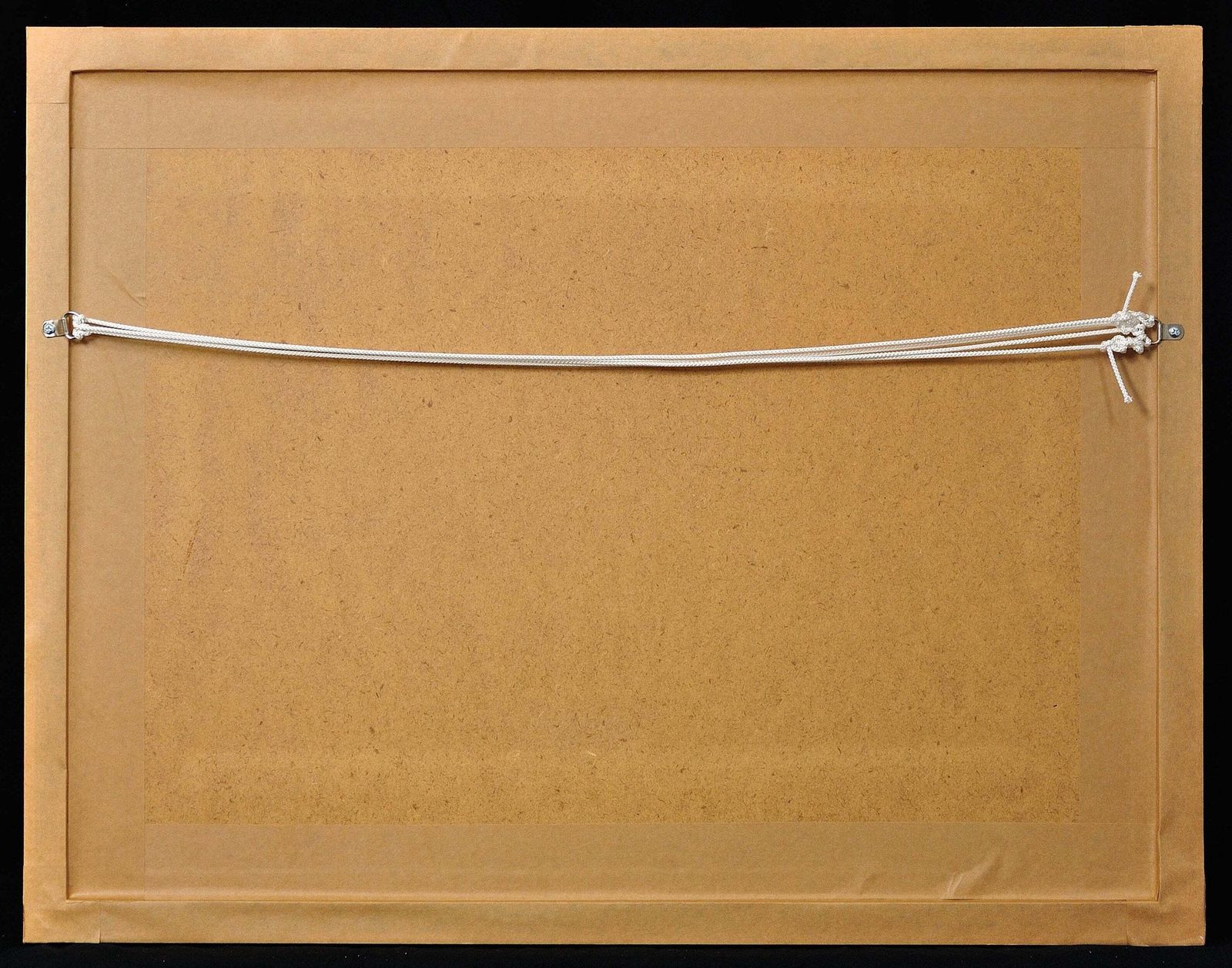
The watercolor is presented and supplied in a glazed frame dating from the 1960s (which is shown in these photographs). New hanging fittings and cord have replaced the aged items to ensure security. The framing materials are in good condition.
This antique watercolor painting is in very good condition. It wants for nothing and is supplied ready to hang and display.
The watercolor is signed and dated lower left.
Frances Emily Nesbitt was an accomplished English watercolor painter, illustrator and travel writer, best known for her atmospheric landscapes, architectural subjects, coastal scenes and depictions of everyday life encountered during her extensive travels throughout Europe and North Africa. Working during the late Victorian and Edwardian periods, she developed a distinctive style characterised by careful observation, confident draughtsmanship and a sensitive handling of light and colour. Her paintings frequently combine an interest in architectural and topographical detail with lively representations of local people, customs and activities.
Nesbitt was born on 23 October 1863 at Mountfield Place, Wolverhampton, Staffordshire, and baptised on 3 December of that year. She was the daughter of Francis Albert Nesbitt (1832–1866), a surgeon, and his wife Emily, née Fyson (c.1845–1918). Her father died when Frances was still a young child, leaving her mother to raise Frances and her younger brother, Henry Frank. By the time of the 1871 census, the family was living in Ipswich, Suffolk, where Frances subsequently attended the Ipswich School of Art. Her early artistic education provided the foundations for a career which would encompass painting, illustration, writing and extensive international travel.
From an early stage in her adult life, Nesbitt travelled widely, frequently accompanied by her widowed mother. Their journeys took them through France, Germany, Italy, Norway and the Netherlands, where Frances pursued her interests in history, architecture and the distinctive character of the places they visited. An accomplished linguist, she was able to engage more fully with the countries and communities she encountered. These travels provided an abundant source of artistic inspiration, and she produced numerous watercolors recording historic buildings, landscapes, harbours, street scenes and the daily activities of local inhabitants.
At a time when extensive international travel was considerably less accessible to women than it is today, Nesbitt’s journeys reflected an adventurous spirit, intellectual curiosity and a considerable degree of independence. Rather than concentrating solely upon celebrated monuments or picturesque scenery, she frequently turned her attention to working communities, markets, streets and harbours, capturing the atmosphere and character of ordinary life. Her paintings reveal both a keen observational eye and an appreciation of the relationship between people and their surroundings.
Her travels eventually extended beyond Europe into North Africa and the eastern Mediterranean, including Algeria, Tunisia, Egypt and Palestine. These journeys became particularly important to her artistic career. The brilliant Mediterranean light, distinctive architecture, vibrant street life and contrasting colours of the North African landscape offered subjects ideally suited to her watercolor technique. Her paintings of these regions demonstrate an assured handling of architectural detail, together with an ability to convey the warmth, colour and atmosphere of the places she visited.
In 1903, an exhibition at the Graves Galleries brought together approximately seventy of her watercolor drawings depicting subjects from Algeria, Egypt, Palestine, Italy and Spain. The scale and geographical range of this exhibition illustrate both her remarkable productivity and the extent to which travel had become central to her artistic career.
Her experiences in North Africa also provided the inspiration for her illustrated travel book, “Algeria and Tunis”, published in London by A. & C. Black in 1906. The book, which she both wrote and illustrated, was the result of approximately two years spent travelling through the region. It formed part of the publisher’s celebrated series of illustrated travel books, often known as Black’s Beautiful Books, which combined descriptive writing with high-quality colour reproductions of original artwork.
An accomplished work of travel writing and illustration, “Algeria and Tunis” provides a detailed account of the history, architecture, landscapes and everyday life of North Africa during the early twentieth century. Its descriptions and numerous watercolor illustrations offer a valuable historical record of the region at that time. The publication represented a significant achievement, demonstrating Nesbitt’s abilities not only as a painter but also as a knowledgeable and perceptive travel writer.
Alongside her travels and literary work, Nesbitt maintained an active exhibition career in Britain. She exhibited at numerous important artistic institutions, including the Royal Academy, the Royal Society of British Artists, the Royal Institute of Painters in Water Colours, the Royal Institute of Oil Painters, the Royal Hibernian Academy, the Walker Art Gallery in Liverpool and the Society of Women Artists.
She was particularly closely associated with the Society of Women Artists, to which she was elected an Associate in 1899, exhibiting more than one hundred works with the organisation during her career. Her participation placed her among a growing community of professional women artists seeking recognition and opportunities to exhibit their work at a time when the established artistic institutions remained predominantly male.
Contemporary exhibition records reveal the considerable variety of her subjects. These included “Flower Girls in Regent Street”, exhibited at the Royal Institute of Painters in Water Colours in 1896; “Whitby”, exhibited at Suffolk Street in 1898; “Ilfracombe”, exhibited at the Dudley Gallery in 1900; and “Jerusalem”, exhibited there in 1902. Such works demonstrate the breadth of her interests, encompassing British coastal and urban life alongside subjects encountered during her international travels.
Although her travels frequently took her abroad, Nesbitt maintained connections with several parts of England. Exhibition and biographical records associate her with London during the 1880s and early twentieth century, Ilfracombe in Devon around 1900, Louth in Lincolnshire in 1901, and Hertfordshire during her later years. Her mother’s address at 49 Roland Gardens, Kensington, also appears in family probate records, providing a further connection with London.
Throughout her career, Nesbitt worked principally in watercolor, a medium particularly well suited to her interests in travel, architecture and atmospheric effects. Her paintings combine an accomplished understanding of perspective and composition with a lively and sometimes impressionistic freedom of brushwork. Figures frequently play an important role in her compositions, bringing scale, movement and narrative to scenes which might otherwise be primarily architectural or topographical.
Her treatment of colour is equally distinctive. Whether depicting the muted light of a British harbour or the stronger contrasts of a North African street, she demonstrated an ability to adapt her palette to the character of the subject. Her paintings possess both documentary value and considerable artistic merit, recording places and ways of life with sensitivity and an evident interest in the people who inhabited them.
The original watercolor “A Moray Firth Zulu Fishing Boat Unloading Herring in Whitby”, painted in 1893, provides an excellent example of her British maritime subjects. The painting depicts the busy working life of Whitby harbour, with Scottish fishing vessels, fishermen and fish workers engaged in unloading the herring catch. Its carefully observed details of boats, rigging, figures and fishing equipment demonstrate Nesbitt’s interest in the practical activities of everyday life, while her accomplished handling of colour, reflections and atmosphere gives the composition a strong sense of immediacy. Painted before her major North African travels and publications, it illustrates the observational skills and artistic confidence already evident in her work during the 1890s.
Frances Emily Nesbitt died on 12 January 1934 at Hilltop, Bovingdon, Hertfordshire, aged seventy. Her estate was valued at approximately £38,270, a substantial sum at the time.
Nesbitt’s career represents a notable contribution to British watercolor painting during a period of increasing opportunities for professional women artists. Her extensive travels, linguistic abilities, regular participation in major exhibitions and achievements as both an artist and published author distinguish her as an unusually enterprising and independent figure of her generation.
© Big Sky Fine Art
A wonderfully detailed and atmospheric original watercolor by the English artist Frances Emily Nesbitt (1863–1934), depicting a bustling scene of fishing boats, fishermen and dockside activity in the historic North Yorkshire fishing port of Whitby in 1893.
This 1893 watercolor painting depicts the Moray fishing boat called “Maggie Main” who’s home port is Burghead. Records from 1899 show that “Maggie Main: carried the port letters and number INS983. The boat was classed as a Zulu 1st class with a length over keel of 50feet. The boat is recorded as being registered to a Mr Daniel Main of Hopeman, Both Burghead and Hopeman are settlements on the Moray Firth near Elgin with small harbours.
The surname Main occurs in high concentrations in the county of Morayshire (formerly known as Elginshire up until 1919). The Main family name is significant and synonymous with the fishing heritage along the Moray Firth.
The composition centres upon a traditional Scottish Zulu fishing boat, a distinctive type of sailing vessel developed on the Moray Firth coast during the late nineteenth century and widely used in the North Sea herring fisheries. Moored alongside the harbour quay, the vessel is surrounded by fishermen and fish workers engaged in the demanding business of unloading and handling the day’s catch. Its substantial wooden hull, tall masts, intricate rigging and fishing equipment are depicted with considerable attention to detail, providing a fascinating record of the working fishing vessels of the period.
Nesbitt captures the energy and activity of the harbour with an engaging collection of figures, each absorbed in their individual tasks. Fishermen work aboard the vessel and along the quayside, while women in traditional working dress carry baskets and attend to the fish. In the foreground, smaller boats laden with baskets and fishing equipment occupy the sheltered harbour waters, adding further interest and depth to the composition. The presence of numerous figures, together with the carefully observed details of the boats and their equipment, conveys the industrious character of a busy Victorian fishing port.
The artist’s accomplished handling of watercolor is particularly evident in her treatment of light and atmosphere. A restrained palette of warm ochres, earthy browns, muted reds and soft greys contrasts with the delicate greens and silvery reflections of the harbour water. Loose, expressive brushwork captures the movement of the water and the shifting effects of light, while more precise passages of drawing define the boats, figures and architectural details. The softly rendered background, with its suggestion of further vessels and harbour buildings, creates a convincing sense of space without distracting from the activity in the foreground.
The painting is also of considerable historical and maritime interest. During the late nineteenth century, Whitby was an established centre of the North Sea fishing industry, and the seasonal herring fisheries attracted vessels and crews from fishing communities along the eastern coasts of Britain. The presence of a Moray Firth Zulu fishing boat in Whitby illustrates the geographical reach of the Scottish herring fleets and the connections between the fishing ports of Scotland and northern England.
Painted in 1893, this watercolor provides an evocative visual record of a working harbour at a time when commercial fishing remained heavily dependent upon sail, manual labour and traditional methods of handling the catch. Beyond its documentary interest, it is an accomplished example of late Victorian British marine and coastal painting, combining lively figurative observation with an assured sense of composition, colour and atmosphere.
The painting is signed and dated 1893 by Frances Emily Nesbitt in the lower left corner.
© Big Sky Fine Art
We provide a professional shipping and delivery service which is free to customers in the UK, Europe, USA and Canada. We can also provide other worldwide delivery on any purchase. Please contact us for further information.
Condition report:
Very Good.
This antique watercolor painting is in very good condition. It wants for nothing and is supplied ready to hang and display.
Additional dimensions information:
Image size 13.8 inches x 20.5 inches ( 35cm x 52cm ). Frame size 22.4 inches x 28.9 inches ( 57cm x 73.5cm ).
Wear Condition
Good
Cancellations
We offer free cancellations and full refund for orders cancelled before dispatching. View full policy.
Returns
We have a 14-day return guarantee for all orders within the UK and European Union. View full policy.
Additional Delivery Info from Seller
When you purchase a painting, we will make arrangements to deliver the painting to your required destination. There is no charge for packaging and delivery to the UK, Europe, USA or Canada.
We will take care of insurance too at no extra cost to you.
We will process your order after your payment is completed and have it ready for dispatch with 3 working days. Transit times within the UK are reliably 1-2 days. Transit times within mainland Europe are 2 to 7 days. Transit times to the USA are 3 to 7 days.
We will also arrange delivery elsewhere in the rest of the world for a modest charge, this will depend on the location and the size of the painting and the type of shipping necessary. You can enquire how much this will be prior to placing an order.
Delivery is by professional courier and paintings are carefully packaged according to their particular attributes.
We may offer a personal delivery service for some areas within the UK, by prior arrangement and enquiries as to this are welcome.
Estimated delivery time
Less than one week
Free collection available
Yes
Made to Last
The average lifespan of a Vinterior piece is 100 years, while modern flat-pack typically takes just 3 years to reach landfill. When you choose pre-loved, you can shop with confidence in quality, craftsmanship and longevity. With our top-rated customer service team, there's no better way to shop pre-loved.

Shopping at Vinterior


Add to a wishlist
Create Wishlist
Reviews
5.0

Based on 1 review


Wear conditions
Excellent
Shows little to no signs of wear and tear.
Good
May show slight traces of use in keeping with age. Most vintage and antique items fit into this condition.
Average
Likely to show signs of some light scratching and ageing but still remains in a fair condition.
Apparent Wear and Tear
Visible signs of previous use including scratches, chips or stains.
Please refer to condition report, images or make a seller enquiry for additional information.
Cancellations and Returns
Last updated: 12/02/2026
Clear, predictable protection for every pre-loved purchase.
Simple £75 flat return fee for UK-to-UK mainland furniture when you change your mind.
Applies to furniture with a final selling price of up to £5,000 (excluding delivery and service fees) and delivered from a UK mainland seller to mainland UK addresses. Excludes Northern Ireland, Channel Islands, Scottish Highlands & Islands, Isle of Wight and Isles of Scilly.
Buying vintage should feel inspiring, not uncertain.
Every order on Vinterior is backed by straightforward returns, free cancellations, and extra peace of mind for UK furniture purchases.
1. Free cancellations
Changed your mind before dispatch?
You can cancel any order before it's shipped for a full refund, including delivery.
To cancel an order, click Create cancellation on the order page.
Once an item has been dispatched, delivery costs are not refundable.
Bespoke, personalised or made-to-order pieces cannot be cancelled.
2. Returning an item
You have 14 days from delivery to request a return.
There are two return types:
A. The item isn't as described (free return)
If your piece arrives and it doesn't match the listing in any material way (incorrect description, undisclosed damage, inaccurate measurements, misleading photos), you are fully protected:
- Free return
- The seller or Vinterior arranges pickup
- Full refund, including outbound delivery costs once the seller receives the item
This applies to all purchases.
B. You changed your mind
UK-to-UK furniture deliveries:
To make UK furniture returns predictable and stress-free, we offer a simple flat return fee of £75.
- Applies to furniture delivered from a UK mainland seller to a mainland UK address. Excludes Northern Ireland, Channel Islands, Scottish Highlands & Islands, Isle of Wight and Isles of Scilly.
- Pickup arranged for you
- One clear fee, no surprises
We coordinate the return with either the seller's chosen courier or our trusted delivery partner.
All other items
Most smaller items are straightforward to return.
You can still return your item within 14 days.
- For smaller or parcel-sized items, you can choose to post the item back yourself using a tracked service, or the seller can suggest a preferred courier.
- For larger or more fragile pieces, the seller may recommend the safest return method.
- Return delivery costs vary depending on size and courier.
The seller will confirm the best option based on the item.
3. If your item arrives damaged
Damage on arrival is uncommon, especially for UK furniture deliveries.
But if something does go wrong, you're fully protected.
- Let us know as soon as possible (ideally within 72 hours of delivery) so we can resolve things quickly
- Share photos so we understand what happened
- We’ll help arrange a return and refund if needed
You’re always protected when something goes wrong in transit.
Your statutory rights apply for up to 30 days from delivery.
4. What can't be returned
Some items cannot be returned:
- Bespoke, personalised, or made-to-order pieces
- Items altered after delivery
5. How to start a return
- Log in to your Vinterior account
- Open your order
- Click Create a return
- Add notes + photos if relevant
We'll guide you through the rest.
6. What happens next
- We review your request, confirm the return and advise on next steps
- Pickup or return method is arranged
- The item is returned to the seller
- We issue your refund once the seller confirms the item's condition
Returns are completed smoothly once the pickup is arranged.
7. Refunds
Once the seller receives the piece back in the same condition it was sent, we'll issue your refund to your original payment method.
Once a refund is issued, it may take up to 5–10 working days for the funds to appear back on your original payment method, depending on your bank or card provider.
If the item is returned with new damage that wasn't present at delivery, the refund may be adjusted following review.
Need help?
If you have questions about a return or your order, our support team is here to help. Email us at [email protected] or find other ways to contact us here.
What your service fee covers
-
 14-day return guarantee
-
Flat-fee return shipping on UK furniture
-
Seller vetting
-
Dedicated customer support
| Order Value (£) | Fee (£) |
|---|---|
| 0 — 49.99 | 2.75 |
| 50 — 99.99 | 5.50 |
| 100 — 199.99 | 11.00 |
| 200 — 399.99 | 21.00 |
| 400 — 599.99 | 30.00 |
| 600 — 799.99 | 40.00 |
| 800 — 999.99 | 50.00 |
| 1,000 — 1,499.99 | 55.00 |
| 1,500 — 1,999.99 | 60.00 |
| 2,000 — 4,999.99 | 82.50 |
| 5,000+ | 110.00 |
Added at checkout, based on your basket total.
