


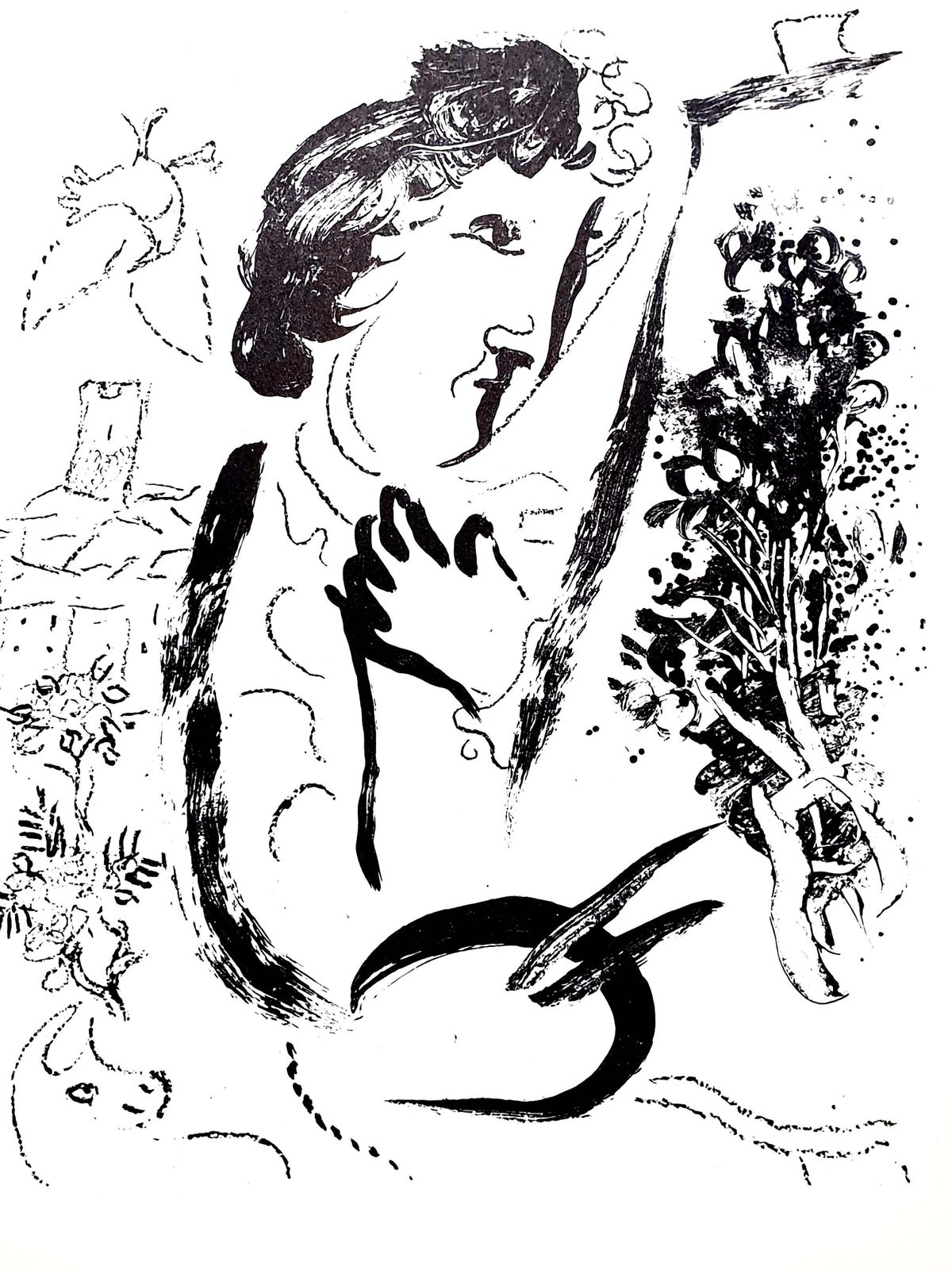
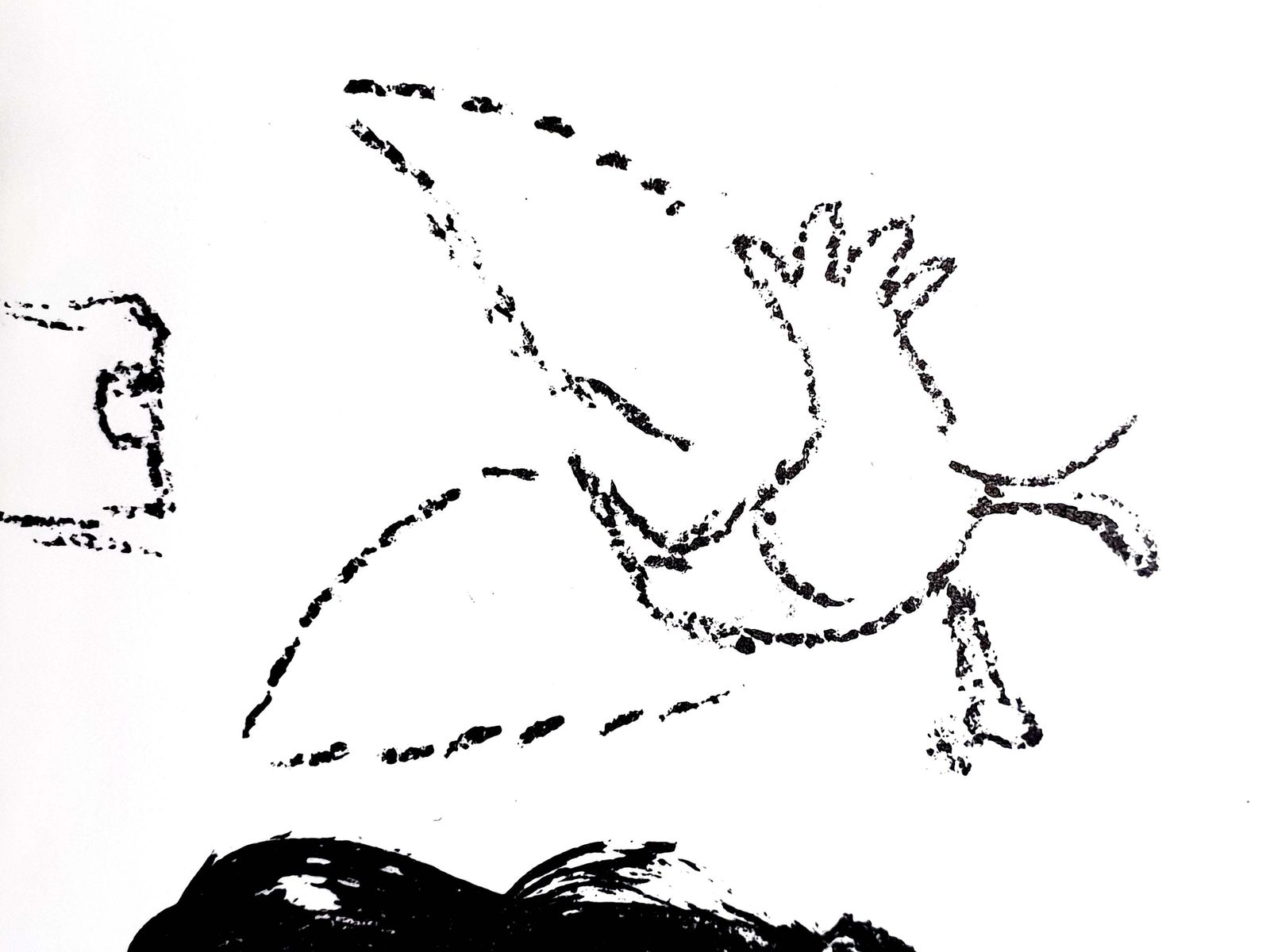
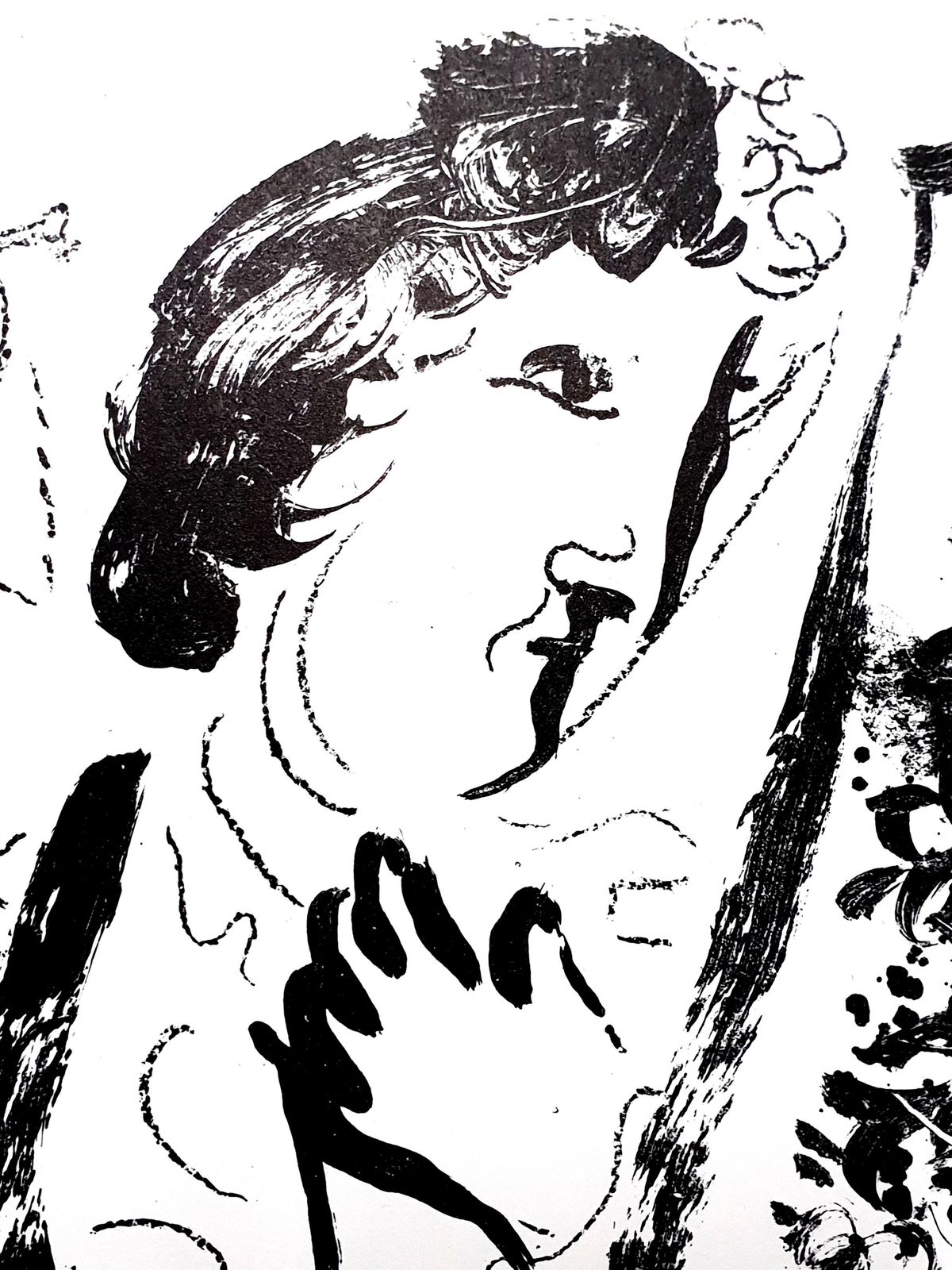
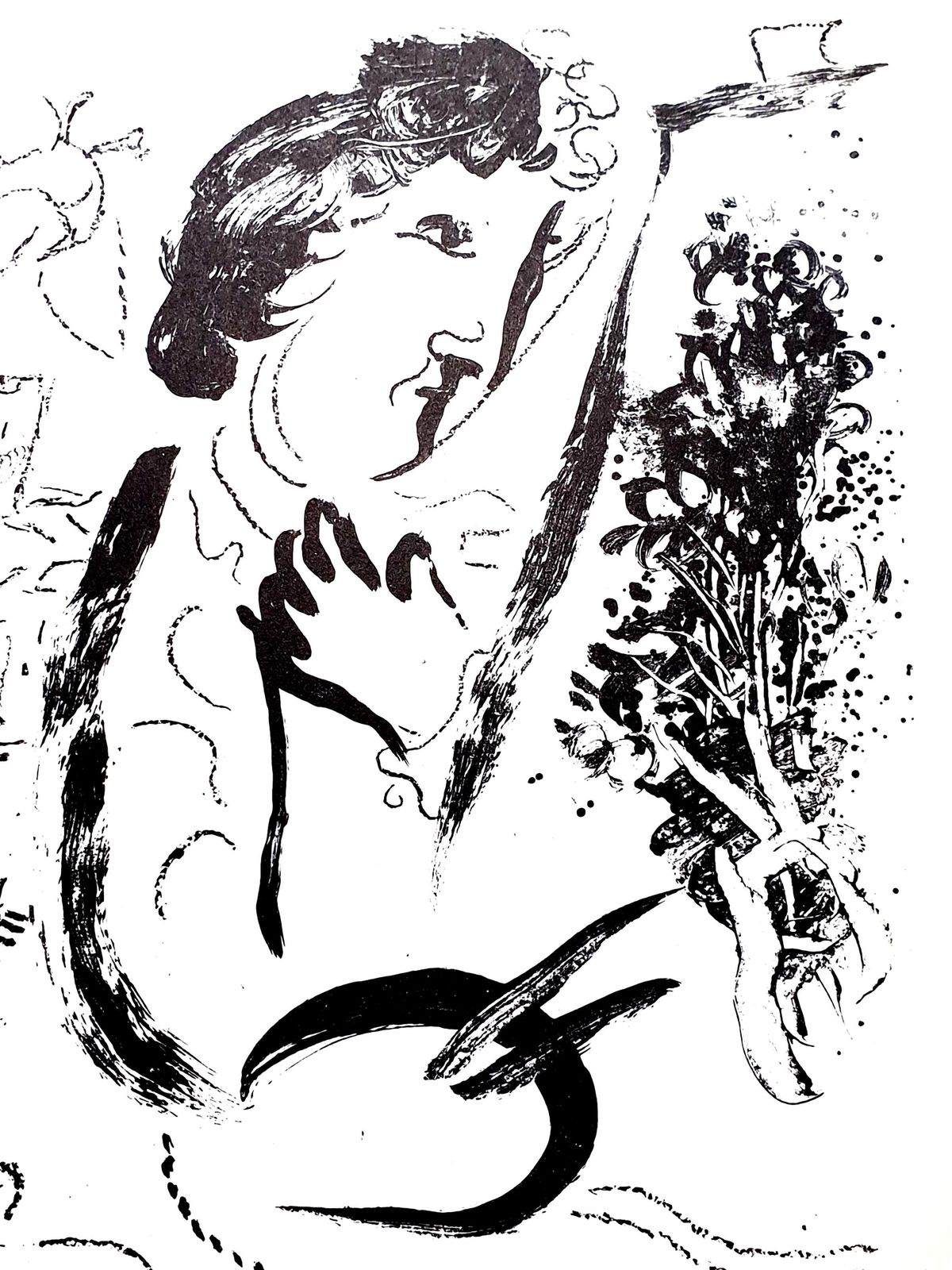
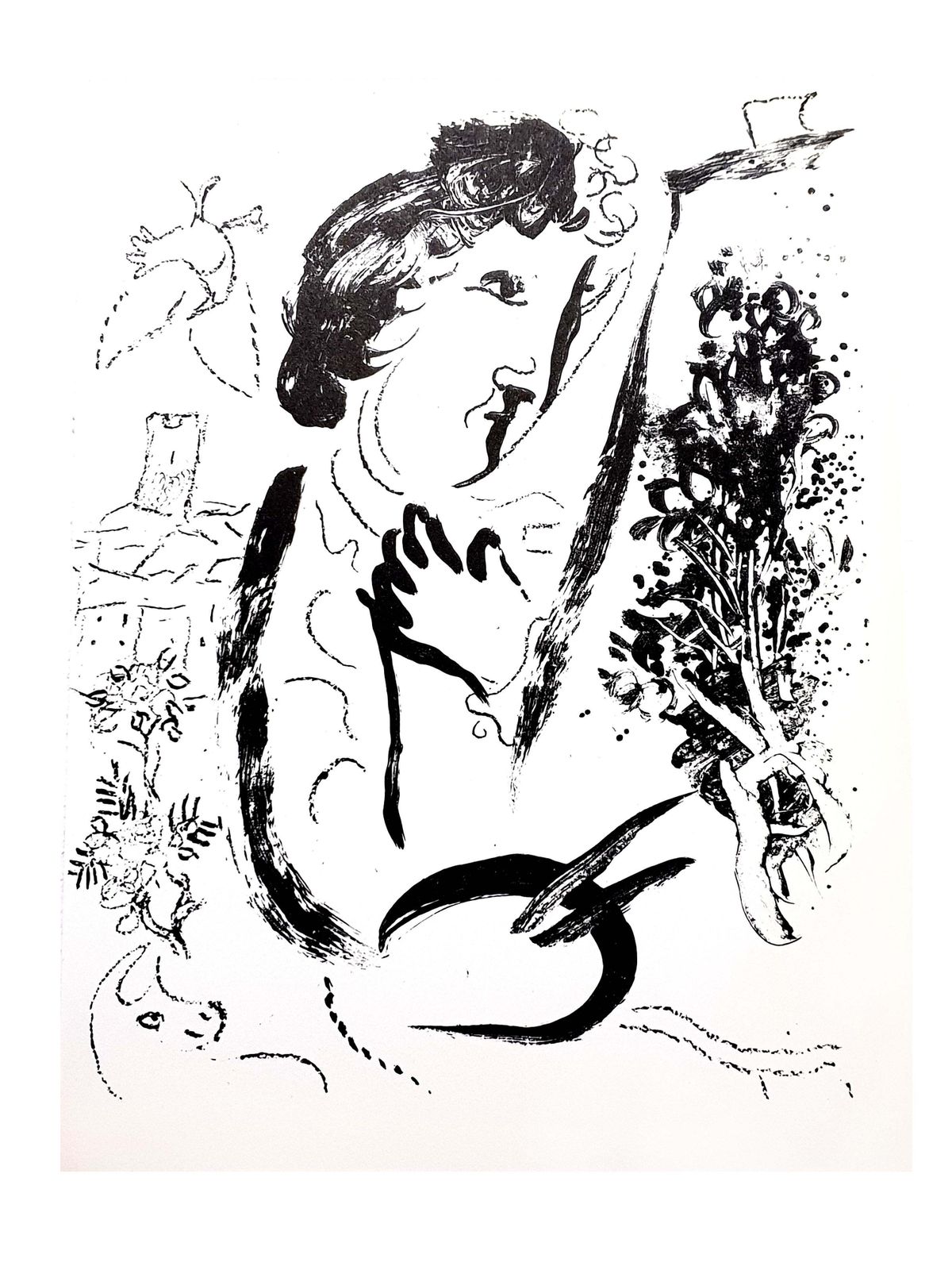
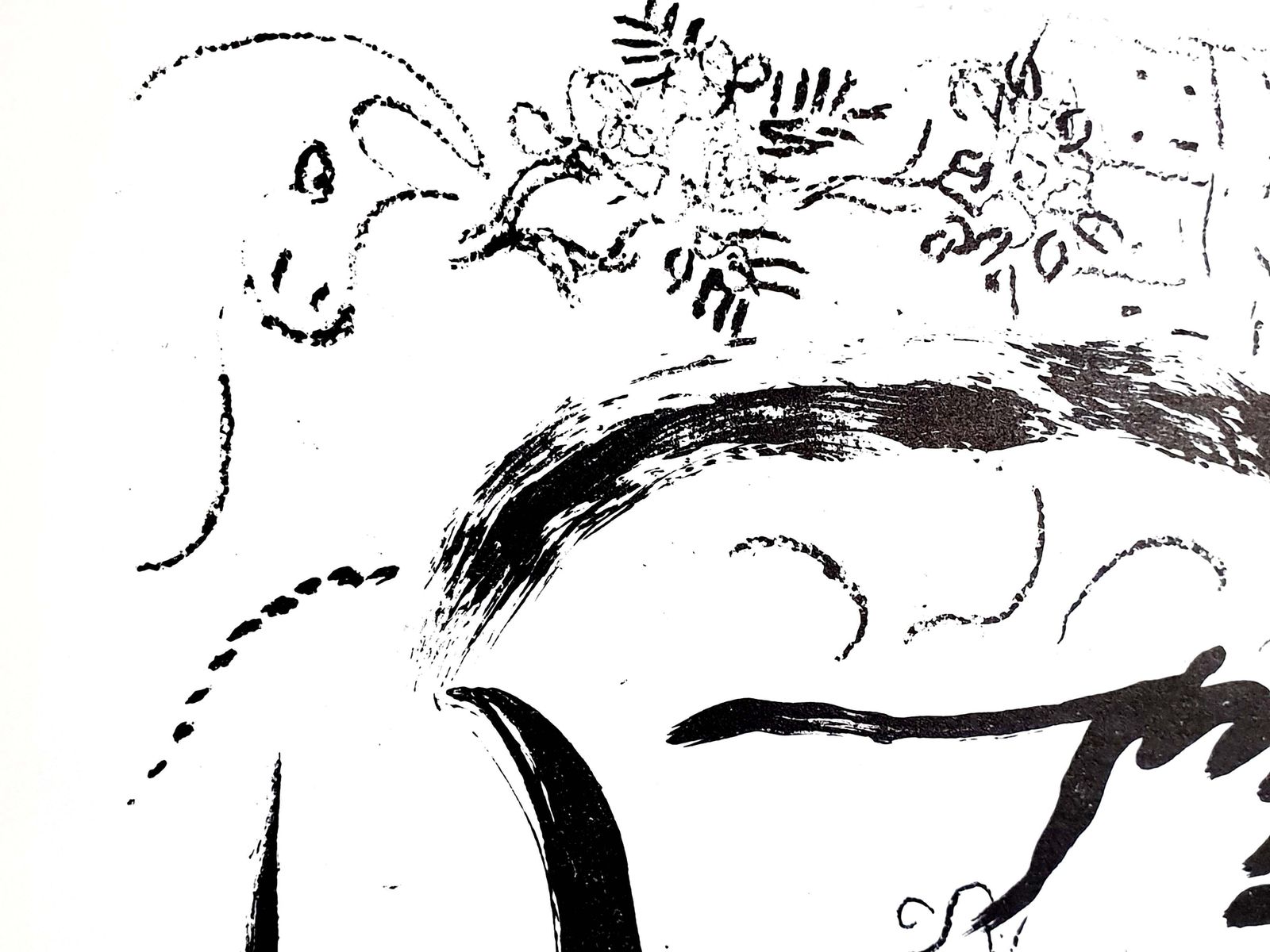
Marc Chagall, litografía, 1963

 Genève, Switzerland
Medidas
Estado de conservación
Buen estado
Material
Papel
Estilo
Movimiento moderno, Vintage, Retro, Mobiliario de campaña
Detalles del producto
Descripción
Marc Chagall
Litografía
1963
Medidas: 32 x 24 cm
Referencia: Chagall Lithographe 1957-1962. VOLUME II.
Edición no firmada de más de 5.000
Estado: Excelente
Marc Chagall (nacido en 1887)
Marc Chagall nació en Bielorrusia en 1887 y desarrolló un interés temprano por el arte. Tras estudiar pintura, en 1907 dejó Rusia para trasladarse a París, donde vivió en una colonia de artistas a las afueras de la ciudad. Fusionando su propia imaginería personal y onírica con pinceladas del fauvismo y el cubismo populares en Francia en aquella época, Chagall creó sus obras más perdurables -incluida I and the Village (1911)-, algunas de las cuales se presentaron en las exposiciones del Salon des Indépendants. Tras regresar a Vitebsk para una visita en 1914, el estallido de la Primera Guerra Mundial dejó a Chagall atrapado en Rusia. Regresó a Francia en 1923, pero se vio obligado a huir del país y de la persecución nazi durante la Segunda Guerra Mundial. Tras encontrar asilo en los EE. UU., Chagall se dedicó al diseño de escenografía y vestuario antes de regresar a Francia en 1948. En sus últimos años, experimentó con nuevas formas artísticas y recibió encargos para producir numerosas obras a gran escala. Chagall murió en Saint-Paul-de-Vence en 1985.
La aldea
Marc Chagall nació en una pequeña comunidad jasídica a las afueras de Vitebsk, Bielorrusia, el 7 de julio de 1887. Su padre era pescadero y su madre regentaba una pequeña tienda de artículos diversos en la aldea. De niño, Chagall asistió a la escuela primaria judía, donde estudió hebreo y la Biblia, antes de ingresar posteriormente en la escuela pública rusa. Durante este tiempo comenzó a aprender los fundamentos del dibujo, pero, quizá más importante aún, absorbió el mundo que le rodeaba, almacenando las imágenes y temas que ocuparían un lugar central en la mayor parte de su obra posterior.
A los 19 años, Chagall se matriculó en una escuela de arte privada exclusivamente judía y comenzó su formación formal en pintura, estudiando brevemente con el retratista Yehuda Pen. Sin embargo, dejó la escuela después de varios meses y se trasladó a San Petersburgo en 1907 para estudiar en la Sociedad Imperial para la Protección de las Bellas Artes. Al año siguiente, ingresó en la Escuela Svanseva, donde estudió con el escenógrafo Léon Bakst, cuya obra había formado parte de los Ballets Russes de Sergei Diaghilev. Esta experiencia temprana resultaría fundamental para la carrera posterior de Chagall.
A pesar de esta instrucción formal y de la gran popularidad del realismo en Rusia en aquel momento, Chagall ya estaba estableciendo su propio estilo personal, caracterizado por una irrealidad más onírica y por las personas, lugares e imágenes más cercanos a su corazón. Algunos ejemplos de este periodo son Window Vitebsk (1908) y My Fianceé with Black Gloves (1909), que retrataba a Bella Rosenfeld, con quien se había comprometido recientemente.
La colmena
A pesar de su romance con Bella, en 1911 una asignación del miembro del parlamento ruso y mecenas del arte Maxim Binaver permitió que Chagall se trasladara a París, Francia. Tras instalarse brevemente en el barrio de Montparnasse, Chagall se mudó más lejos, a una colonia de artistas conocida como La Ruche («La colmena»), donde empezó a trabajar codo con codo con pintores abstractos como Amedeo Modigliani y Fernand Léger, así como con el poeta vanguardista Guillaume Apollinaire. Por insistencia de estos, y bajo la influencia del sumamente popular fauvismo y cubismo, Chagall aclaró su paleta y alejó aún más su estilo de la realidad. I and the Village (1911) y Homage to Apollinaire (1912) se encuentran entre sus primeras obras parisinas, periodo ampliamente considerado como el más exitoso y representativo.
Aunque su obra se distinguía estilísticamente de la de sus contemporáneos cubistas, entre 1912 y 1914 Chagall expuso varias pinturas en la exposición anual Salon des Indépendants, donde obras de artistas como Juan Gris, Marcel Duchamp y Robert Delaunay estaban causando sensación en el mundo del arte parisino. La popularidad de Chagall empezó a extenderse más allá de La Ruche y, en mayo de 1914, viajó a Berlín para ayudar a organizar su primera exposición individual en la Galería Der Sturm. Chagall permaneció en la ciudad hasta que la aclamada muestra se inauguró aquel junio. Después regresó a Vitebsk, ignorando los fatídicos acontecimientos que estaban por venir.
Guerra, paz y revolución
En agosto de 1914, el estallido de la Primera Guerra Mundial impidió los planes de Chagall de regresar a París. Sin embargo, el conflicto apenas frenó su producción creativa; al contrario, le proporcionó acceso directo a las escenas de su infancia, tan esenciales en su obra, como se aprecia en pinturas como Jew in Green (1914) y Over Vitebsk (1914). Sus pinturas de este periodo también mostraron ocasionalmente el impacto de la guerra en la región, como en Wounded Soldier (1914) y Marching (1915). Pero a pesar de las penurias de la vida en tiempos de guerra, este resultó ser también un periodo alegre para Chagall. En julio de 1915 se casó con Bella, y al año siguiente ella dio a luz a una hija, Ida. Su presencia en obras como Birthday (1915), Bella and Ida by the Window (1917) y varias de sus pinturas de «amantes» ofrece un vistazo al oasis de felicidad doméstica que Chagall encontró en medio del caos.
Para evitar el servicio militar y permanecer con su nueva familia, Chagall aceptó un puesto de administrativo en el Ministerio de Economía de Guerra en San Petersburgo. Allí comenzó a trabajar en su autobiografía y se sumergió en la escena artística local, entablando amistad con el novelista Boris Pasternak, entre otros. También expuso su obra en la ciudad y pronto obtuvo un reconocimiento considerable. Esa notoriedad resultaría importante tras la Revolución Rusa de 1917, cuando fue nombrado Comisario de Bellas Artes en Vitebsk. En su nuevo cargo, Chagall emprendió diversos proyectos en la región, incluida la fundación de la Academia de las Artes en 1919. A pesar de estos esfuerzos, las diferencias entre sus colegas terminaron por desilusionar a Chagall. En 1920 dejó su cargo y trasladó a su familia a Moscú, la capital de Rusia tras la revolución.
En Moscú, Chagall recibió pronto el encargo de crear escenografías y vestuarios para diversas producciones en el Teatro Yiddish Estatal de Moscú, donde también pintó una serie de murales titulados Introduction to the Jewish Theater. En 1921, Chagall también trabajó como profesor en una escuela para huérfanos de guerra. Sin embargo, para 1922, Chagall comprobó que su arte había dejado de gozar de favor y, buscando nuevos horizontes, abandonó Rusia definitivamente.
Huida
Tras una breve estancia en Berlín, donde intentó sin éxito recuperar las obras expuestas en Der Sturm antes de la guerra, Chagall trasladó a su familia a París en septiembre de 1923. Poco después de su llegada, el marchante de arte y editor Ambroise Vollard le encargó una serie de aguafuertes para una nueva edición de la novela de Nikolai Gogol de 1842, Dead Souls. Dos años más tarde, Chagall comenzó a trabajar en una edición ilustrada de las Fables de Jean de la Fontaine y, en 1930, creó aguafuertes para una edición ilustrada del Antiguo Testamento, para lo cual viajó a Palestina con el fin de investigar.
La obra de Chagall durante este periodo le brindó un nuevo éxito como artista y le permitió viajar por toda Europa en los años 30. También publicó su autobiografía, My Life (1931), y en 1933 recibió una retrospectiva en la Kunsthalle de Basilea, Suiza. Pero al mismo tiempo que crecía la popularidad de Chagall, también lo hacía la amenaza del fascismo y el nazismo. Señalado durante la «limpieza» cultural emprendida por los nazis en Alemania, se ordenó retirar la obra de Chagall de los museos de todo el país. Varias piezas fueron posteriormente quemadas y otras aparecieron en una exposición de «arte degenerado» celebrada en Múnich en 1937. La angustia de Chagall ante estos perturbadores acontecimientos y la persecución de los judíos en general puede verse en su pintura de 1938, White Crucifixion.
Con el estallido de la Segunda Guerra Mundial, Chagall y su familia se trasladaron a la región del Loira antes de mudarse más al sur, a Marsella, tras la invasión de Francia. Encontraron un refugio más seguro cuando, en 1941, el director del Museo de Arte Moderno (MOMA) de Nueva York añadió el nombre de Chagall a una lista de artistas e intelectuales considerados en mayor riesgo debido a la campaña antijudía de los nazis. Chagall y su familia estuvieron entre los más de 2.000 que recibieron visados y escaparon de esta manera.
Puertos atormentados
Al llegar a Nueva York en junio de 1941, Chagall descubrió que ya era un artista reconocido allí y, a pesar de la barrera del idioma, pronto se integró en la comunidad de artistas europeos exiliados. Al año siguiente, el coreógrafo Léonide Massine le encargó el diseño de la escenografía y el vestuario para el ballet Aleko, basado en "The Gypsies" de Alexander Pushkin y con música de Pyotr Ilyich Tchaikovsky.
Pero incluso mientras se instalaba en la seguridad de su hogar temporal, los pensamientos de Chagall estaban frecuentemente consumidos por el destino de los judíos de Europa y la destrucción de Rusia, como indican pinturas como The Yellow Crucifixion (1943) y The Juggler (1943). Un golpe más personal afectó a Chagall en septiembre de 1944, cuando su amada Bella murió a causa de una infección viral, dejando al artista incapacitado por el dolor. La tristeza por la pérdida de su esposa perseguiría a Chagall durante los años siguientes, representada de la manera más conmovedora en sus pinturas de 1945 Around Her y The Wedding Candles.
Superando su dolor, en 1945 Chagall comenzó el diseño de escenografía y vestuario para una producción del ballet The Firebird de Igor Stravinsky, que se estrenó en 1949, se representó hasta 1965 y ha sido puesta en escena en numerosas ocasiones desde entonces. También inició una relación con una joven artista inglesa llamada Virginia McNeil, quien en 1946 dio a luz a su hijo, David. Por aquella época, Chagall fue también el protagonista de exposiciones retrospectivas en el MOMA y en el Art Institute of Chicago.
Volver
Tras siete años de exilio, en 1948 Chagall regresó a Francia con Virginia y David, así como con la hija de Virginia, Jean, de un matrimonio anterior. Su llegada coincidió con la publicación de la edición ilustrada de Dead Souls, que había sido interrumpida por el comienzo de la guerra. La edición de Fables con su obra se publicó en 1952 y, después de que Chagall completara los aguafuertes que había comenzado en 1930, su biblia ilustrada se publicó en 1956.
En 1950, Chagall y su familia se trasladaron al sur, a Saint-Paul-de-Vence, en la Riviera francesa. Virginia lo dejó al año siguiente, pero en 1952 Chagall conoció a Valentina “Vava” Brodsky y se casó con ella poco después. Valentina, que se convirtió en la pragmática representante de Chagall, aparece en varios de sus retratos posteriores.
Consolidado como pintor, Chagall comenzó a diversificarse, trabajando en la escultura y la cerámica, además de dominar el arte de las vidrieras. Gran parte de su obra posterior más importante consiste en encargos a gran escala en todo el mundo. Entre los hitos de este periodo se encuentran sus vidrieras para la sinagoga del Hadassah Hebrew University Medical Center en Jerusalén (terminadas en 1961), la catedral de Saint-Étienne en Metz (terminadas en 1968), el edificio de la ONU en Nueva York (terminadas en 1964) y la iglesia All Saint’s en Maguncia, Alemania (terminadas en 1978); el techo de la Ópera de París (terminado en 1964); y los murales para la Metropolitan Opera de Nueva York (terminados en 1964), para la cual también diseñó la escenografía y el vestuario de una producción de 1967 de The Magic Flute de Wolfgang Amadeus Mozart.
En 1977, Chagall recibió la Gran Medalla de la Legión de Honor, la máxima distinción de Francia. Ese mismo año, se convirtió en uno de los pocos artistas de la historia en recibir una exposición retrospectiva en el Louvre. Murió el 28 de marzo de 1985 en Saint-Paul-de-Vence a los 97 años, dejando tras de sí una vasta colección de obras y un rico legado como artista judío icónico y pionero del movimiento moderno.
Informe de estado:
Excelente estado
Estado de conservación
Buen estado
Cancelaciones
Ofrecemos cancelación gratuita y reembolso íntegro para los pedidos cancelados antes del envío. Ver la política completa.
Devoluciones
Ofrecemos devolución en 14 días para todos los pedidos en el Reino Unido y la Unión Europea. Ver la política completa.
Información adicional del vendedor sobre el envío
Recogida en persona gratuita
No
Hecho para durar
Una pieza de calidad está hecha para durar, mientras que los muebles de montaje en kit suelen sustituirse al cabo de pocos años. Al elegir muebles de segunda mano, apuestas por la calidad, el oficio y la durabilidad. Y nuestro equipo de atención al cliente, muy bien valorado, te acompaña en cada compra.

Vendedor profesional
Comprar en Vinterior


Añadir a favoritos
Crear lista de favoritos
Estado de conservación
Excelente estado
Apenas presenta signos de uso, o ninguno.
Buen estado
Puede presentar ligeras marcas de uso propias de su edad. La mayoría de las piezas vintage y antiguas encajan en este estado.
Estado aceptable
Es probable que presente algunos arañazos leves y signos de envejecimiento, pero se conserva en un estado aceptable.
Signos de uso visibles
Signos visibles de uso anterior, como arañazos, desconchones o manchas.
Consulta el informe de estado y las fotos, o envía una consulta al vendedor para obtener más información.
Cancelaciones y devoluciones
Last updated: September 2026
Important note on country-specific provisions: This document is structured in two layers. Layer A (Sections 1 to 9 below) sets out the common terms that apply uniformly across all markets. Layer B, sets out in the country-labelled sections at the end of this document ("Germany", "France", "Netherlands"), contains additional or replacement provisions that apply only to you if you are habitually resident in the relevant country, to the extent required by that country's mandatory consumer-protection law. Please check whether a Layer B section applies to you based on your country of habitual residence before relying on Layer A alone.
1. Free cancellations
Changed your mind before dispatch?
You can cancel any order before it's shipped for a full refund, including delivery costs.
To cancel an order, click Create cancellation on the order page.
Once an item has been dispatched, delivery costs are not refundable — except where you exercise your statutory right of withdrawal under section 2 below, in which case the refund rules in section 7 apply. If you do not accept the shipping charge outside of that statutory right, you can cancel and receive a full refund, provided that (a) the order has not yet been dispatched, and (b) you cancel within 24 hours of receiving the order confirmation.
Bespoke, personalised or made-to-order pieces cannot be cancelled.
2. Returning an item
You have a statutory right of withdrawal. You may withdraw from this contract within fourteen (14) days without giving any reason. The withdrawal period shall expire fourteen (14) days after the day on which you, or a third party other than the carrier indicated by you, acquires physical possession of the goods. See the country-specific section applicable to your country of habitual residence for any mandatory withdrawal-function requirement that applies in addition to the methods described below.
To exercise your right of withdrawal, you must inform us of your decision to withdraw from this contract by means of a clear statement (e.g. a letter sent by post or an e-mail). You may use the model withdrawal form set out below, but it is not obligatory. To meet the withdrawal deadline, it is sufficient for you to send your communication concerning the exercise of the right of withdrawal before the withdrawal period has expired. For full details on your right of withdrawal, please see our dedicated withdrawal information page at vinterior.co/right-of-withdrawal.
Model withdrawal form
I/We (*) hereby give notice that I/We (*) withdraw from my/our (*) contract of sale of the following goods (*) / for the provision of the following service (*)
Ordered on (*) / received on (*)
Name of consumer(s)
Address of consumer(s)
Signature of consumer(s) (only if this form is notified on paper)
Date
(*) Delete as appropriate.
There are two return types:
A. The item isn't as described (free return)
If your piece arrives and it doesn't match the listing in any material way (incorrect description, undisclosed damage, inaccurate measurements, misleading photos), you are fully protected:
- Free return
- The Vendor or Vinterior arranges pickup
- Full refund, including outbound delivery costs once the Vendor receives the item
This applies to all purchases.
B. You changed your mind
In the event of withdrawal, you shall bear the direct costs of returning the goods. The actual cost will depend on the size of the item and the courier used.
- Applies to furniture delivered within the EU.
- Pickup arranged for you
- Return costs correspond to the actual costs charged by the courier
We coordinate the return with either the Vendor's chosen courier or our trusted delivery partner.
3. If your item arrives damaged
Damage on arrival is uncommon, especially for furniture deliveries within the EU.
But if something does go wrong, you're fully protected.
- Let us know as soon as possible (ideally within 72 hours of delivery) so we can resolve things quickly. Reporting transport damage promptly helps us assert our own claims against the carrier. However, this does not affect your statutory rights in relation to defects; in particular, you are not obliged to inspect the goods within a certain period of time or to report defects in order to retain your statutory rights, save where mandatory local law requires notification within a specified period, in which case see the country-specific section applicable to your country of habitual residence.
- Share photos so we understand what happened
- We'll help arrange a return and refund if needed
You're always protected when something goes wrong in transit.
Your statutory warranty rights remain unaffected. The statutory limitation period is twenty-four (24) months from delivery in accordance with applicable law. For used goods, the limitation period shall be reduced to one (1) year from delivery, provided that you have been expressly and separately informed of this reduction prior to the conclusion of the contract. This reduction shall not apply in cases of intent, gross negligence, injury to life, body or health, or fraudulent concealment of a defect. This is the default position; see the country-specific section applicable to your country of habitual residence at the end of this document for any modification to the limitation period start date or the treatment of used goods.
4. What can't be returned
The right of withdrawal does not apply to the following goods in accordance with applicable consumer protection law:
- Bespoke, personalised, or made-to-order pieces
- Goods that have been handled beyond what is necessary to establish their nature, characteristics and functioning (such as by waxing, repairing, sanding, or otherwise altering the goods) may be subject to compensation for any resulting diminution in value in accordance with applicable law; however, this does not affect your statutory right of withdrawal as such.
- Sealed goods which are not suitable for return due to health protection or hygiene reasons, where the seal has been removed after delivery.
5. How to start a return
- Log in to your Vinterior account
- Open your order
- Click Create a return
- Add notes + photos if relevant
We'll guide you through the rest. See the country-specific section applicable to your country of habitual residence for any additional mandatory withdrawal function.
6. What happens next
- We review your request, confirm the return and advise on next steps
- Pickup or return method is arranged
- The item is returned to the Vendor
- We issue your refund once the Vendor confirms the item's condition
Returns are completed smoothly once the pickup is arranged.
7. Refunds
In the event of withdrawal, we shall reimburse all payments received from you, including the costs of delivery (with the exception of supplementary costs resulting from your choice of a type of delivery other than the least expensive type of standard delivery offered by us) and, where applicable, the Vinterior Service Fee, without undue delay and in any event not later than fourteen (14) days from the day on which we are informed of your decision to withdraw from this contract. We may withhold reimbursement until we have received the goods back or you have supplied evidence of having sent back the goods, whichever is the earliest. This is the default position; see the country-specific section applicable to your country of habitual residence for any modification to the refund trigger date.
Once a refund is issued, it may take up to 5–10 working days for the funds to appear back on your original payment method, depending on your bank or card provider.
You shall only be liable for any diminished value of the goods resulting from the handling of the goods other than what is necessary to establish the nature, characteristics and functioning of the goods. This liability applies only where you have been duly informed of your right of withdrawal.
8. Governing law
These terms and any disputes arising out of or in connection with them shall be governed by and construed in accordance with the laws of England and Wales. The United Nations Convention on Contracts for the International Sale of Goods (CISG) shall not apply. Notwithstanding the foregoing, if you are a consumer habitually resident in a member state of the European Union, the choice of English law shall not deprive you of the protection afforded by the mandatory provisions of the law of the country in which you habitually reside that cannot be derogated from by agreement (including, without limitation, your statutory withdrawal rights, minimum guarantee periods, and any mandatory information requirements). The choice of English law operates in addition to, and does not override, any such mandatory protections. Any dispute arising out of or in connection with these terms or their subject matter or formation (including non-contractual disputes or claims) shall be subject to the non-exclusive jurisdiction of the courts of England and Wales. If you are a consumer habitually resident in an EU member state, you retain the right to bring proceedings before the courts of your country of habitual residence, and nothing in these terms affects that right.
9. Online Dispute Resolution and Consumer Arbitration
We are neither obliged nor willing to participate in dispute resolution proceedings before a consumer arbitration body, unless otherwise required by law. See the country-specific section applicable to your country of habitual residence for the competent alternative/consumer dispute resolution body, where mandatory local law requires one.
10. Order of priority between Layer A and Layer B
In the event of any conflict or inconsistency between the provisions of Sections 1 to 9 above ("Layer A") and a country-labelled section set out below ("Layer B"), the relevant Layer B section shall prevail, but only in respect of, and only to the extent applicable to, consumers habitually resident in that country. For all other consumers, Layer A shall continue to apply in full. Layer B applies in place of or in addition to the equivalent provision(s) of Layer A, to the extent required by the mandatory law of the relevant country.
Country-specific provisions (Layer B)
Germany
Where you are a consumer habitually resident in Germany, the following provisions apply in place of or in addition to the equivalent provision in the main body (Layer A), to the extent required by mandatory German law.
G1. Warranty limitation period (Section 3)
The statutory limitation period for claims based on defects is two (2) years from delivery of the goods, in accordance with Section 438 of the German Civil Code (Bürgerliches Gesetzbuch, "BGB"). For used goods, the limitation period may be reduced to one (1) year from delivery, provided that you have been expressly and separately informed of this reduction prior to the conclusion of the contract, in accordance with Section 476 BGB. This reduction shall not apply in cases of intent, gross negligence, injury to life, body or health, or fraudulent concealment of a defect.
G2. Consumer dispute resolution (Section 9)
We are neither obliged nor willing to participate in dispute resolution proceedings before a German consumer arbitration board (Verbraucherschlichtungsstelle), unless otherwise required by mandatory German law. The European Commission's online dispute resolution (ODR) platform is no longer operational.
France
Where you are a consumer habitually resident in France, the following provisions apply in place of or in addition to the equivalent provision in the main body (Layer A), to the extent required by mandatory French law.
F1. Notification of defects (Section 3)
This does not affect your statutory rights in relation to defects, save that, in some EU member states, mandatory national law may require you to notify the seller of a defect within a specified period (typically within two months of discovering it) in order to retain your statutory rights; where such a requirement applies in your country of habitual residence, it prevails. Subject to the foregoing, you are not obliged to inspect the goods within a certain period of time or to report defects in order to retain your statutory rights.
F2. Legal guarantee of conformity (Section 3)
Your statutory warranty rights remain unaffected. The statutory liability period is a minimum of twenty-four (24) months from delivery, or such longer period (or, where applicable, a period determined by reference to the expected lifespan of the goods) as may be mandatory under the law of your country of habitual residence. For used goods, the liability period may be reduced to not less than one (1) year from delivery only where such reduction is permitted under the law of your country of habitual residence and you have been expressly and separately informed of this reduction prior to the conclusion of the contract; where such reduction is not permitted, as is the case in France, where the full two (2) year legal guarantee of conformity (garantie légale de conformité, Articles L217-3 et seq. of the French Consumer Code) applies to used goods, the full statutory period applies. This reduction shall not apply in cases of intent, gross negligence, injury to life, body or health, or fraudulent concealment of a defect. These rights are in addition to any other mandatory statutory guarantees available to you under French law, including the guarantee against hidden defects (garantie des vices cachés, Articles 1641 et seq. of the French Civil Code).
F3. Consumer dispute resolution (Section 9)
If you are a consumer habitually resident in France, you may refer any dispute free of charge to the competent French consumer ombudsman (médiateur de la consommation) whose contact details must be inserted before publication, after first submitting a written complaint to us. We are otherwise neither obliged nor willing to participate in dispute resolution proceedings before a consumer arbitration body, unless otherwise required by law.
Netherlands
Where you are a consumer habitually resident in the Netherlands, the following provisions apply in place of or in addition to the equivalent provision in the main body (Layer A), to the extent required by mandatory Dutch law.
N1. Mandatory withdrawal function (Sections 2 and 5)
Since 19 June 2026, Dutch law (Article 6:230oa of the Dutch Civil Code, "DCC") requires that, in addition to the methods described in Section 2, we ensure you can exercise your right of withdrawal by submitting a notice of withdrawal via a clearly labelled, permanently accessible function on the Site (a "cancellation button"), using unambiguous wording that makes clear that it enables the contract to be terminated. The notice of withdrawal function allows you to provide or confirm: (a) your name; (b) details identifying the contract from which you wish to withdraw; and (c) the electronic means by which we will confirm your withdrawal to you.
N2. Free return - refund trigger (Section 7, item A)
We will refund all payments received from you, including the outbound delivery costs, without undue delay and in any event within fourteen (14) days from the day on which we receive your notice of withdrawal (Article 6:230r(1) DCC). Within that period, we may withhold the refund until whichever is earliest of: (a) our receipt of the returned item, or (b) your provision of evidence that you have sent it back (Article 6:230r(4) DCC).
N3. Return costs disclosure (Section 2, item B)
Before concluding the distance contract, we must state the total price of the goods, including all return costs. If these costs cannot reasonably be calculated in advance, we must inform you that such additional return costs may be payable.
N4. Warranty limitation period (Section 3)
You must notify us of a defect within a reasonable time after discovering it (a notification within two months of discovery is always considered timely), failing which your rights based on non-conformity may lapse, in accordance with Article 7:23(1) DCC. The limitation period for claims based on non-conformity of the Goods is two (2) years from the date on which you notified us of the defect, in accordance with Article 7:23(2) DCC (not from the date of delivery).
N5. Refund timing (Section 7)
The 14-day refund period runs from the moment you notify us of your withdrawal from the contract, in accordance with Article 6:230r(1) DCC, and not from the date we receive the goods back. We will process your refund using the same payment method you used for the original transaction. We will not apply any other payment method without your express agreement, and you will not incur any fees as a result of the reimbursement.
N6. Consumer dispute resolution (Section 9)
The European Commission's online dispute resolution (ODR) platform is no longer operational. If you are a consumer habitually resident in the Netherlands and wish to pursue an unresolved dispute, you may contact us directly via the Site or bring proceedings before the competent Dutch court in accordance with Section 8, or, where applicable, a recognised Dutch dispute resolution body.
Qué cubre la tarifa de servicio
-
 Devolución en 14 días
-
Devoluciones con tarifa fija para muebles en el Reino Unido
-
Verificación de vendedores
-
Atención al cliente dedicada
| Importe del pedido (£) | Tarifa (£) |
|---|---|
| 0 a 49,99 | 2,75 |
| 50 a 99,99 | 5,50 |
| 100 a 199,99 | 11,00 |
| 200 a 399,99 | 21,00 |
| 400 a 599,99 | 30,00 |
| 600 a 799,99 | 40,00 |
| 800 a 999,99 | 50,00 |
| 1.000 a 1.499,99 | 55,00 |
| 1.500 a 1.999,99 | 60,00 |
| 2.000 a 4.999,99 | 82,50 |
| 5.000+ | 110,00 |
Se añade al tramitar el pedido, según el importe total de tu cesta.

