


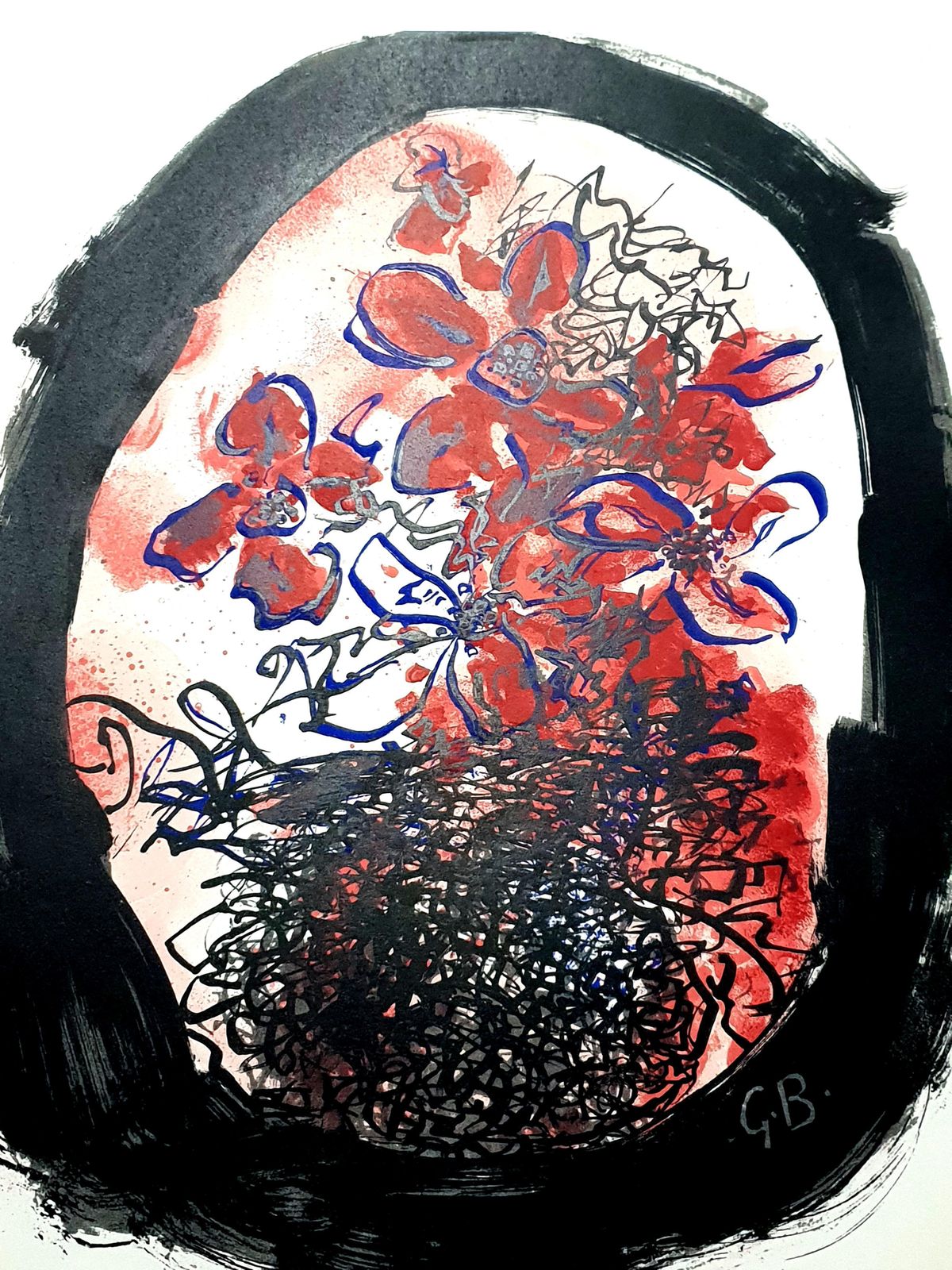
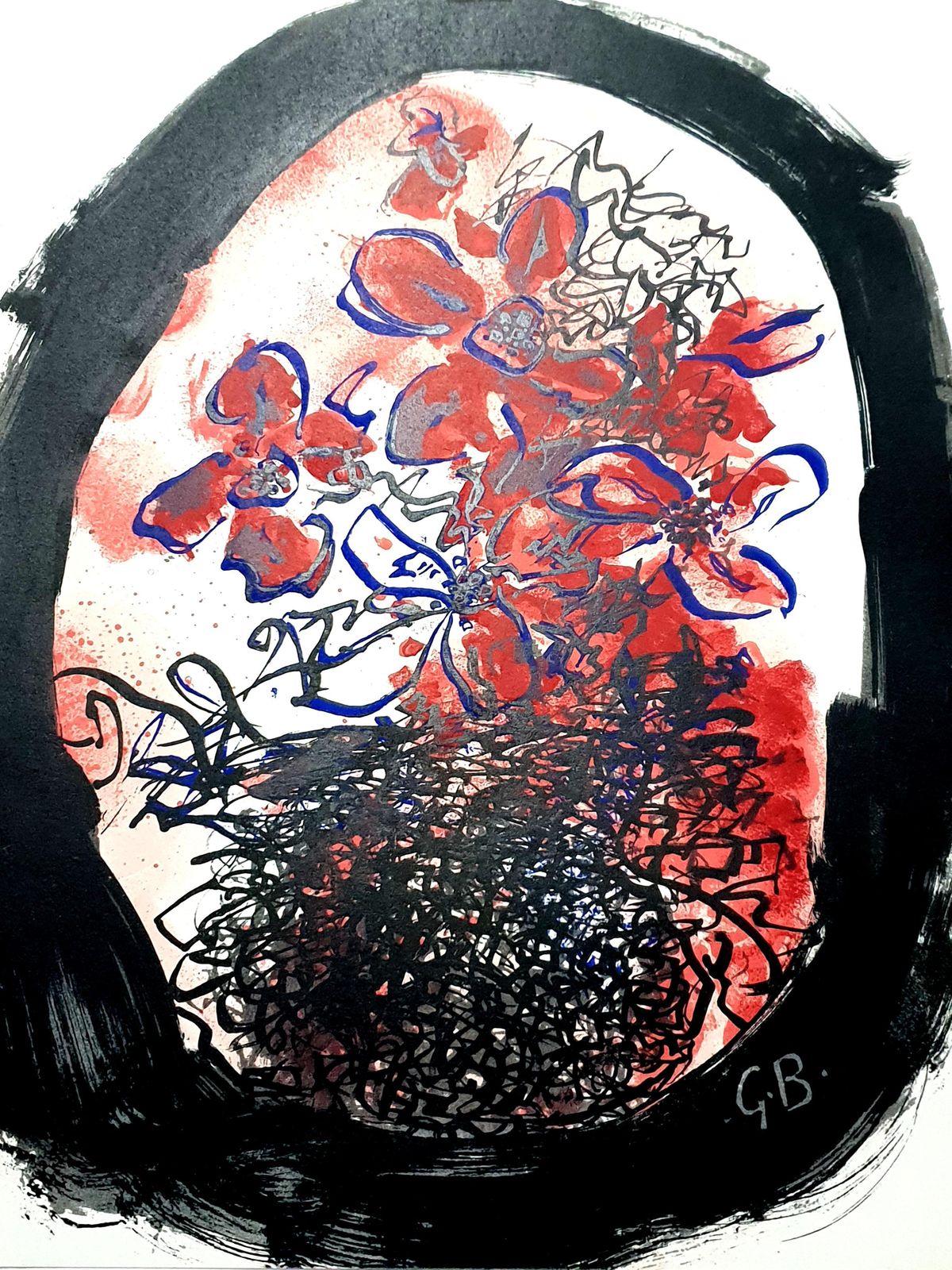
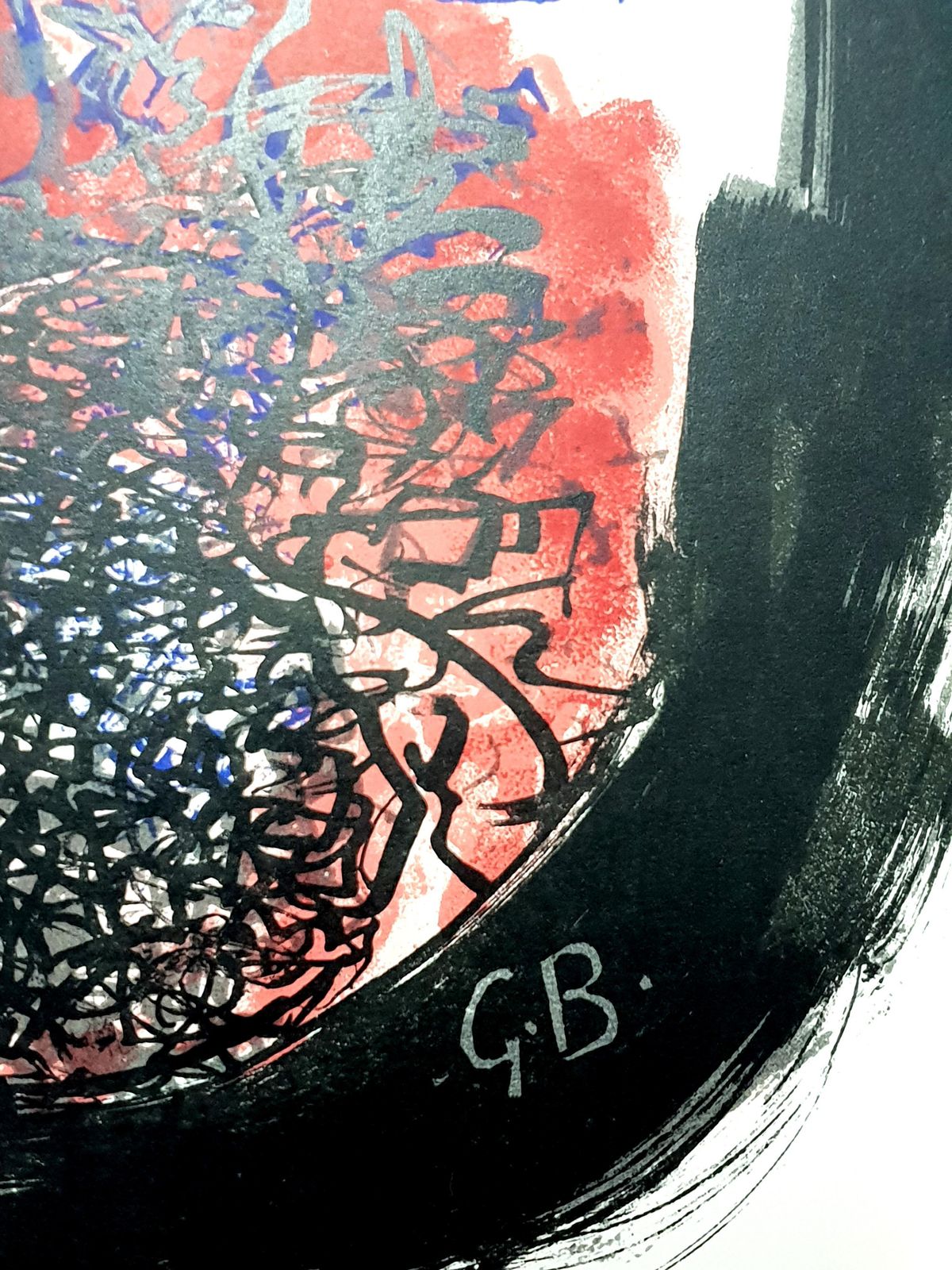
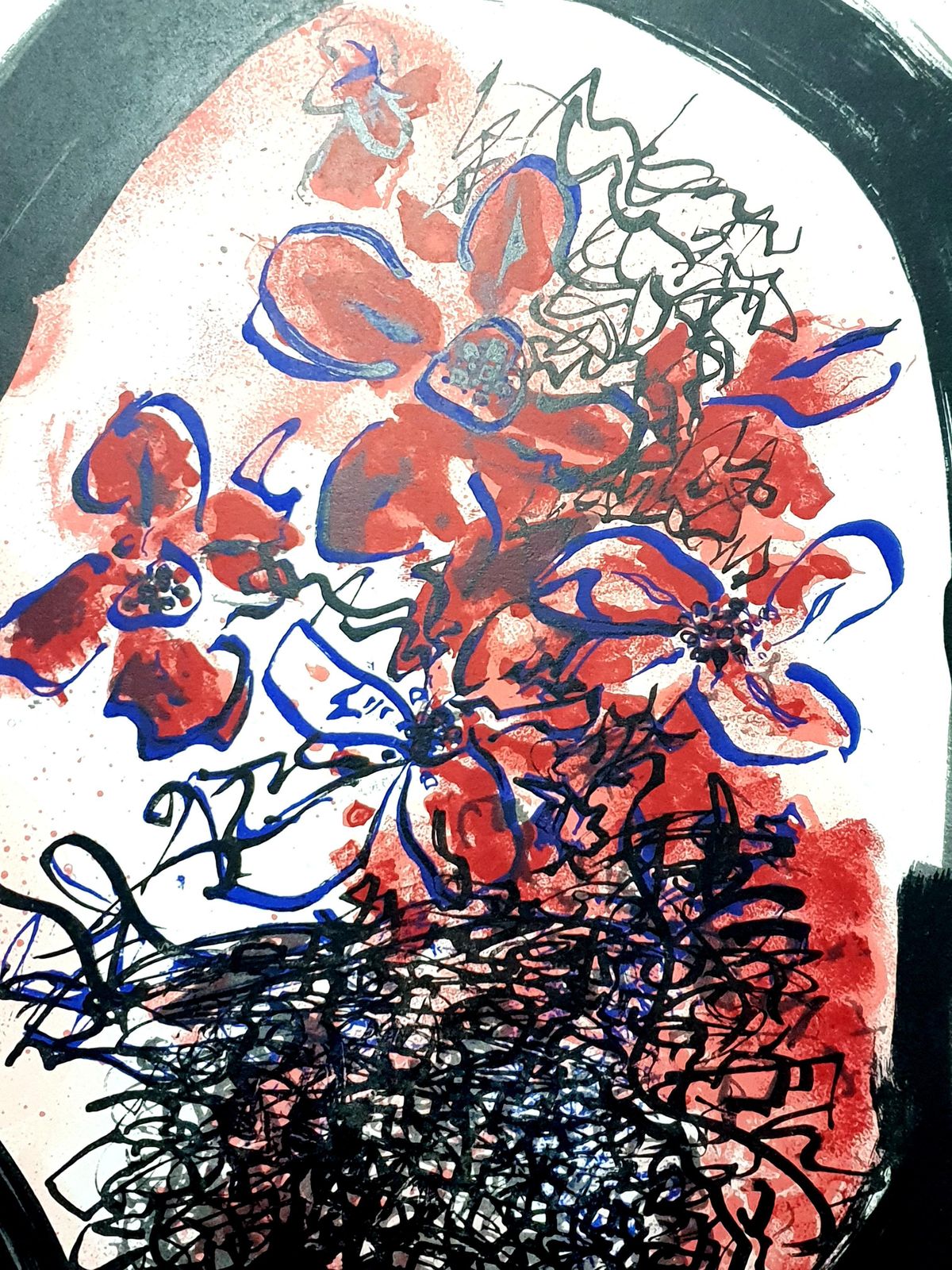
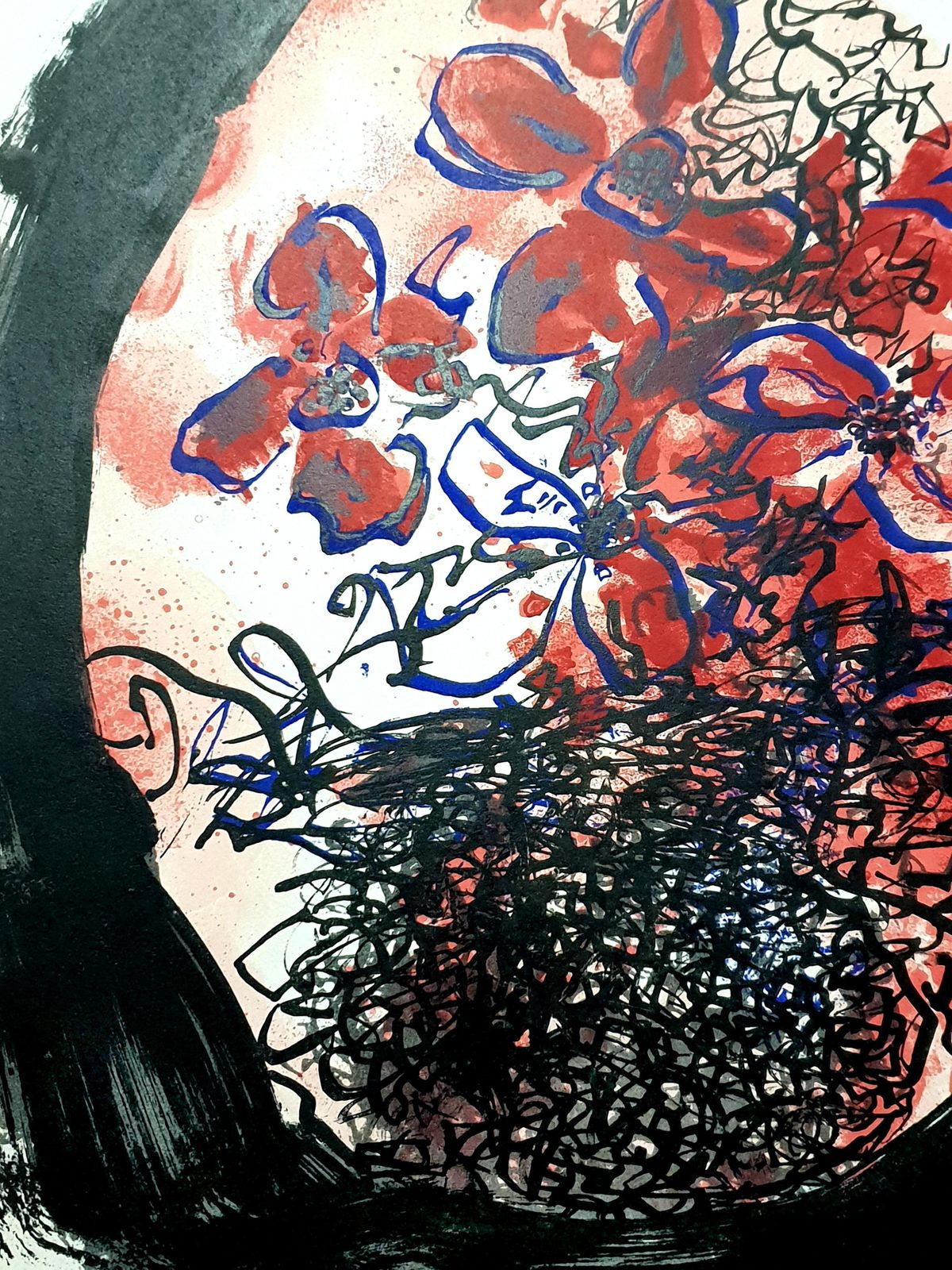
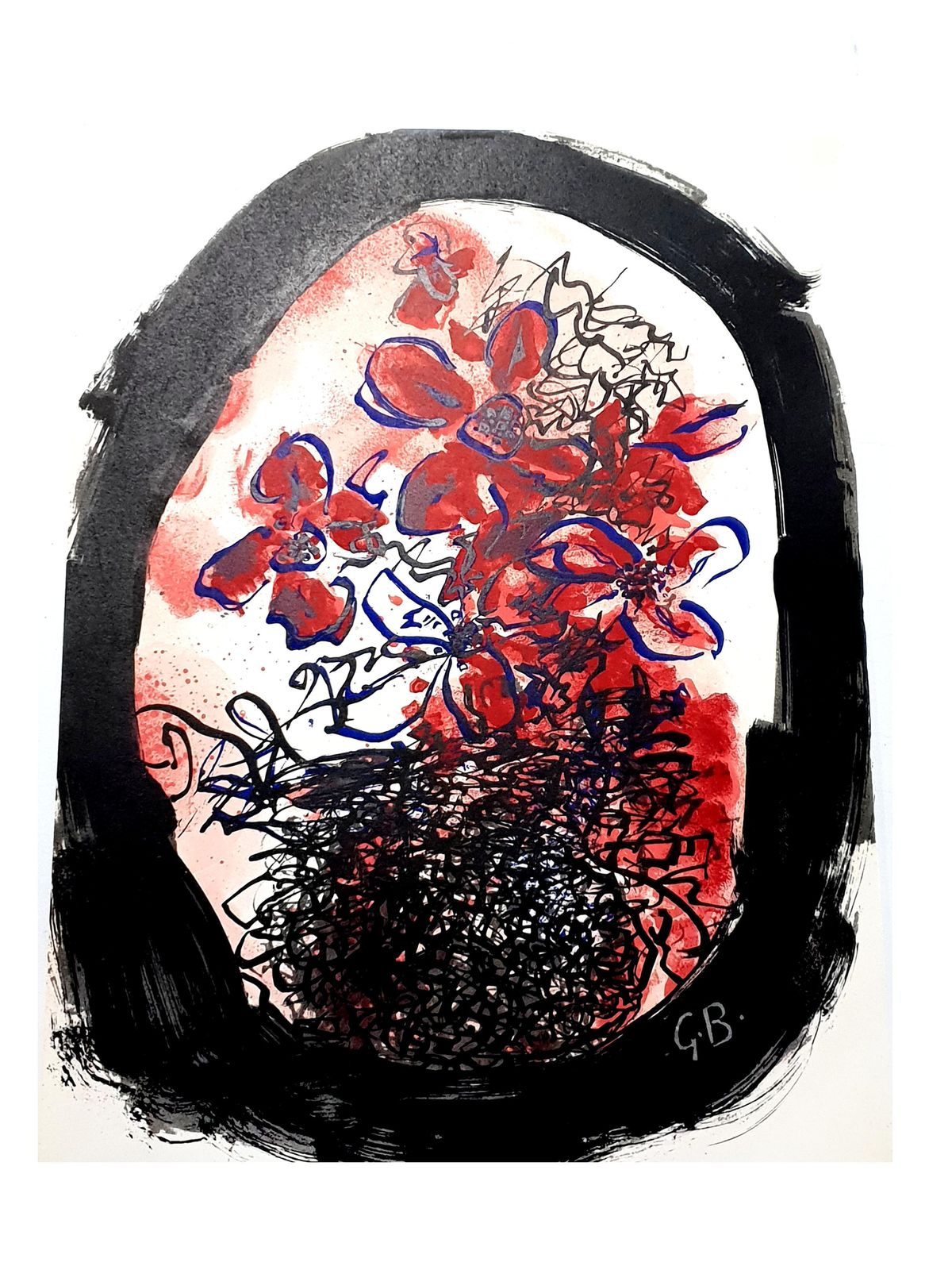
Georges Braque, litografía, 1963

 Genève, Switzerland
Medidas
Estado de conservación
Buen estado
Material
Papel
Estilo
Vintage, Retro
Detalles del producto
Descripción
Georges Braque, litografía
1963
Medidas: 32 x 24 cm
Andre Sauret, Monte Carlo
El padre del cubismo
Georges Braque inició y desarrolló tres periodos que el historiador del arte distingue dentro del cubismo: el cubismo de Cézanne (1907-1909), el analítico (1909-1912) y el sintético (1912-1922).
Postimpresionista y fauvista, Braque dejó de adherirse a la contingencia de una vía decorativa u otra. Las pinturas de Cézanne expuestas en el Grand Palais durante la retrospectiva de 1907 fueron una revelación: Cézanne buscó e inventó un lenguaje pictórico. Siguiendo sus pasos, Braque se dirigió al sur siguiendo las razones del Maestro. Regresó con paisajes de L'Estaque y de La Ciotat, manteniendo el modelo geométrico de Cézanne y la continuidad de los "pasajes" de una superficie a otra para crear la sensación de "giro" del objeto representado. Pero quiso ir más allá de las consecuencias de la visión de Cézanne. En sus pinturas Casas en L'Estaque (1908) simplifica los volúmenes de las casas y prescinde del detalle eliminando puertas y ventanas: el ritmo plástico es lo que construye el cuadro. El Gran Desnudo, obra maestra del periodo, puede considerarse la primera obra del cubismo de Cézanne.
La sistematización y profundización de los descubrimientos de Braque abrieron la puerta al cubismo analítico. En 1909, su pintura se volvió más cerebral que sensual. El patrón se recrea en la bidimensionalidad del lienzo, dejando de lado cualquier perspectiva ilusionista. En Naturaleza muerta con violín, los objetos se analizan en facetas según sus elementos característicos, y cada faceta remite a una vista particular del objeto. Hay tantas facetas como puntos de vista seleccionados: el cuadro refleja el conocimiento del objeto y la ubicuidad del ojo. Además, Braque busca la esencia de los objetos en el mundo más que su contingencia, lo que explica la ausencia de una fuente de luz y el uso de colores apagados (gris, ocre), aspectos contingentes del objeto. Pero la lógica formal impuso las facetas, borró cualquier anécdota del objeto y finalmente llevó su pintura a un hermetismo más marcado, al borde de la abstracción (como se ve en la serie del Castillo de Roche-Guyon).
Ansioso por mantener lo concreto y rechazando a toda costa que la lógica del cubismo llevara las pinturas hacia lo abstracto, Braque reintrodujo signos de realidad en sus obras en 1912, marcando el inicio del cubismo sintético. Los historiadores hablan de "signos de lo real" en lugar de realidad porque lo que interesa a Braque no es plasmar la realidad en un cuadro, sino crear una pintura que, por su lenguaje, remita a lo real. Para ello, inventó dos técnicas principales del siglo XX: las inclusiones y las aportaciones. Las inclusiones consisten en pintar objetos que no tienen profundidad real, materiales (el papel pintado de madera falsa en Naturaleza muerta con naipes es una inclusión pictórica) o letras (inclusión caligráfica en Portugués), realizadas primero a pincel y, meses después, con plantilla. Las aportaciones se definen por contraste con el collage sobre lienzo de materiales ajenos: papel pegado o de lija, serrín, etc. En cuanto a los collages, Braque utilizó por primera vez en septiembre de 1912 un trozo de papel adhesivo que imitaba la madera falsa en Compota y vaso, luego el envoltorio de tabaco Bock en 1912-1913, o un anuncio en Damier, 1913. Las aportaciones e inclusiones remiten a un objeto externo en el cuadro, sin "emular" dicho objeto. Lejos de sus apariencias, los objetos se representan en la esencia más cercana al sentido de los objetos en el mundo real.
Fue también en la época del cubismo sintético cuando Braque inventó la escultura en papel. Desafortunadamente, no queda ninguna prueba viva, aunque una fotografía permite constatarlo: papel y cartón.
Periodo de las Metamorfosis (1961-1963).
En 1961, Georges Braque trabajó en una cabeza griega para el Louvre que lo obsesionaba, y deseaba liberar su mente. Intentó varias veces plasmarlo en la pintura, pero el resultado fue insatisfactorio. Pensó en la metamorfosis definitiva: su cabeza griega proyectada en tres dimensiones. Llamó a su estudio al barón Heger Loewenfeld, maestro lapidario, y le transmitió su entusiasmo durante aquel "encuentro fatídico". Nueve meses después, en honor a los ochenta años de Georges Braque, Heger Loewenfeld regaló al Maestro el anillo de Circe: la famosa cabeza griega finalmente exorcizada, tallada en ónice. Braque pidió entonces a Loewenfeld que identificara otros temas que lo atormentaran.
A partir de bocetos fechados y firmados por Georges Braque, Heger Loewenfeld dio forma a obras en los campos de la joyería, el arte lapidario, la escultura y el etrog.
En septiembre de 1962, Heger de Loewenfeld y André Malraux se reunieron en el Ministerio de Asuntos Culturales. Los dos hombres compartieron sus impresiones estéticas en torno a las preciosas esculturas del gabinete presentadas por el barón. Malraux, fascinado, consideró que se trataba de "la apoteosis de Braque" y ordenó en el acto que se organizara lo antes posible una exposición de estas obras maestras, a las que llamó "joyas".
En marzo de 1963, la exposición "Bijoux de Braque" se inauguró en el Louvre, Pavillon Marsan. Fue un éxito y la muestra se prolongó hasta mediados de mayo.
Mientras "Jewelry Braque" viajaba desde Francia hacia Nueva York, Georges Braque falleció el 31 de agosto de 1963. Durante treinta años, Heger Loewenfeld presentó la colección a millones de espectadores entusiastas en todo el mundo.
A la muerte de Heger Loewenfeld, le sucedió Armand Israel.
Georges Braque - su vida (1882-1963)
1882 (13 de mayo): Nace en Argenteuil. Su abuelo tiene un negocio de pintura.
1890: La familia Braque se traslada a Le Havre. Su padre funda una empresa de pintura de edificios.
1893: Se matricula en clases nocturnas de Bellas Artes.
1899: Antes de terminar sus estudios, hace el aprendizaje con su padre y luego con un contratista de pintura decorativa.
1900: Continúa su aprendizaje como pintor y decorador en París. Recibe lecciones de dibujo en el taller municipal de Batignolles.
1901-1902: Servicio militar cerca de Le Havre.
1902: Se traslada a Montmartre y se matricula en la Académie Humbert.
1905: Fauves en el Salon d'Automne.
1906: Primera exposición en el XXII Salon des Independants. Del 12 de junio al 11 de septiembre: viaje a Amberes con Friesz, donde realiza sus primeras pinturas de gatos.
1907: En el XXIII Salon des Independants (marzo), vende sus pinturas al crítico de arte Wilhelm Uhde y al comerciante de origen alemán Kahnweiler. Continúa sus pinturas fauvistas en La Ciotat con Friesz (mayo), L'Estaque (finales de septiembre y nuevamente en octubre y noviembre). Entra gradualmente en contacto con Picasso.
1908: Tercera estancia en L'Estaque (finales de mayo). El Salon d'Automne rechaza las pinturas de Braque por su estilo innovador. Kahnweiler las acepta inmediatamente y organiza la primera exposición individual del artista. El catálogo cuenta con un prólogo de Apollinaire. El crítico Louis Vauxcelles descubre los "cubos": nace el cubismo.
Se acerca más a Picasso, casi a diario; Braque se describe a sí mismo como un "alpinista".
1912: Se muda con Octavia (conocida como Marcelle) Lapré. Pasa el verano con Picasso en Aviñón. Firma su primer contrato con Kahnweiler (noviembre).
1914: Movilizado. La galería Kahnweiler es incautada como "propiedad perteneciente al enemigo", junto con todas las pinturas cubistas de Braque.
1915: Herido, Braque es trepanado.
1916: Licenciado, regresa a Aviñón.
1917: Comienza a escribir su cuaderno. Publica "Pensamientos y reflexiones sobre la pintura" en la revista Nord-Sud. Firma un contrato con el marchante Léonce Rosenberg.
1918: Comienza sus dibujos Diarios.
1919: Expone en la galería L'Effort Moderne de Léonce Rosenberg.
1921: Vende sus pinturas pertenecientes al receptor Kahnweiler. En el Hotel Drouot, se enfrenta a Léonce Rosenberg, a quien acusa de vender sus cuadros a un precio bajo.
1923: Extinguidos los últimos fuegos del cubismo, Braque busca un nuevo aire. Firma un contrato con el marchante de arte Paul Rosenberg.
1925: Se traslada a su nueva casa y estudio construido por Auguste Perret, cerca del Parc Montsouris en París.
1926 (14 de noviembre): Fallece su esposa Octavia Lapré en el distrito 14 de París.
1929: Desarrolla una casa-taller en Varengeville-sur-Mer, Normandía.
Durante la ocupación, permanece en París.
1947: Su nuevo marchante es Aimé Maeght.
1948: Gran Premio de Pintura en la Bienal de Venecia. Maeght publica ediciones del cuaderno de Georges Braque (1917-1947).
1953: Braque realiza el techo de la sala Henri II del Louvre.
1954: Decoración del Mas Bernard en Saint-Paul-de-Vence. Crea vidrieras para la iglesia de Varengeville. Entrevista con Dora Vallier en la revista Cahiers d'art.
1960: Exposición de su obra gráfica en la Biblioteca Nacional.
1961: Exposición del taller de Braque en el Louvre. Conoce a Heger de Loewenfeld.
1963: Exposición Jewelry Braque en el Museo de Artes Decorativas (marzo-mayo). Fallece (31 de agosto) mientras la colección "Les Bijoux de Braque" viaja a Nueva York a bordo del barco France. Panegírico frente a la columnata del Louvre, pronunciado por André Malraux, Ministro de Estado de Asuntos Culturales, y transmitido por la ORTF (3 de septiembre). Entierro en el cementerio marino de Varengeville-sur-Mer (4 de septiembre).
Informe de estado:
Buen estado
Estado de conservación
Buen estado
Cancelaciones
Ofrecemos cancelación gratuita y reembolso íntegro para los pedidos cancelados antes del envío. Ver la política completa.
Devoluciones
Ofrecemos devolución en 14 días para todos los pedidos en el Reino Unido y la Unión Europea. Ver la política completa.
Información adicional del vendedor sobre el envío
Recogida en persona gratuita
No
Hecho para durar
Una pieza de calidad está hecha para durar, mientras que los muebles de montaje en kit suelen sustituirse al cabo de pocos años. Al elegir muebles de segunda mano, apuestas por la calidad, el oficio y la durabilidad. Y nuestro equipo de atención al cliente, muy bien valorado, te acompaña en cada compra.

Vendedor profesional
Comprar en Vinterior


Añadir a favoritos
Crear lista de favoritos
Estado de conservación
Excelente estado
Apenas presenta signos de uso, o ninguno.
Buen estado
Puede presentar ligeras marcas de uso propias de su edad. La mayoría de las piezas vintage y antiguas encajan en este estado.
Estado aceptable
Es probable que presente algunos arañazos leves y signos de envejecimiento, pero se conserva en un estado aceptable.
Signos de uso visibles
Signos visibles de uso anterior, como arañazos, desconchones o manchas.
Consulta el informe de estado y las fotos, o envía una consulta al vendedor para obtener más información.
Cancelaciones y devoluciones
Last updated: September 2026
Important note on country-specific provisions: This document is structured in two layers. Layer A (Sections 1 to 9 below) sets out the common terms that apply uniformly across all markets. Layer B, sets out in the country-labelled sections at the end of this document ("Germany", "France", "Netherlands"), contains additional or replacement provisions that apply only to you if you are habitually resident in the relevant country, to the extent required by that country's mandatory consumer-protection law. Please check whether a Layer B section applies to you based on your country of habitual residence before relying on Layer A alone.
1. Free cancellations
Changed your mind before dispatch?
You can cancel any order before it's shipped for a full refund, including delivery costs.
To cancel an order, click Create cancellation on the order page.
Once an item has been dispatched, delivery costs are not refundable — except where you exercise your statutory right of withdrawal under section 2 below, in which case the refund rules in section 7 apply. If you do not accept the shipping charge outside of that statutory right, you can cancel and receive a full refund, provided that (a) the order has not yet been dispatched, and (b) you cancel within 24 hours of receiving the order confirmation.
Bespoke, personalised or made-to-order pieces cannot be cancelled.
2. Returning an item
You have a statutory right of withdrawal. You may withdraw from this contract within fourteen (14) days without giving any reason. The withdrawal period shall expire fourteen (14) days after the day on which you, or a third party other than the carrier indicated by you, acquires physical possession of the goods. See the country-specific section applicable to your country of habitual residence for any mandatory withdrawal-function requirement that applies in addition to the methods described below.
To exercise your right of withdrawal, you must inform us of your decision to withdraw from this contract by means of a clear statement (e.g. a letter sent by post or an e-mail). You may use the model withdrawal form set out below, but it is not obligatory. To meet the withdrawal deadline, it is sufficient for you to send your communication concerning the exercise of the right of withdrawal before the withdrawal period has expired. For full details on your right of withdrawal, please see our dedicated withdrawal information page at vinterior.co/right-of-withdrawal.
Model withdrawal form
I/We (*) hereby give notice that I/We (*) withdraw from my/our (*) contract of sale of the following goods (*) / for the provision of the following service (*)
Ordered on (*) / received on (*)
Name of consumer(s)
Address of consumer(s)
Signature of consumer(s) (only if this form is notified on paper)
Date
(*) Delete as appropriate.
There are two return types:
A. The item isn't as described (free return)
If your piece arrives and it doesn't match the listing in any material way (incorrect description, undisclosed damage, inaccurate measurements, misleading photos), you are fully protected:
- Free return
- The Vendor or Vinterior arranges pickup
- Full refund, including outbound delivery costs once the Vendor receives the item
This applies to all purchases.
B. You changed your mind
In the event of withdrawal, you shall bear the direct costs of returning the goods. The actual cost will depend on the size of the item and the courier used.
- Applies to furniture delivered within the EU.
- Pickup arranged for you
- Return costs correspond to the actual costs charged by the courier
We coordinate the return with either the Vendor's chosen courier or our trusted delivery partner.
3. If your item arrives damaged
Damage on arrival is uncommon, especially for furniture deliveries within the EU.
But if something does go wrong, you're fully protected.
- Let us know as soon as possible (ideally within 72 hours of delivery) so we can resolve things quickly. Reporting transport damage promptly helps us assert our own claims against the carrier. However, this does not affect your statutory rights in relation to defects; in particular, you are not obliged to inspect the goods within a certain period of time or to report defects in order to retain your statutory rights, save where mandatory local law requires notification within a specified period, in which case see the country-specific section applicable to your country of habitual residence.
- Share photos so we understand what happened
- We'll help arrange a return and refund if needed
You're always protected when something goes wrong in transit.
Your statutory warranty rights remain unaffected. The statutory limitation period is twenty-four (24) months from delivery in accordance with applicable law. For used goods, the limitation period shall be reduced to one (1) year from delivery, provided that you have been expressly and separately informed of this reduction prior to the conclusion of the contract. This reduction shall not apply in cases of intent, gross negligence, injury to life, body or health, or fraudulent concealment of a defect. This is the default position; see the country-specific section applicable to your country of habitual residence at the end of this document for any modification to the limitation period start date or the treatment of used goods.
4. What can't be returned
The right of withdrawal does not apply to the following goods in accordance with applicable consumer protection law:
- Bespoke, personalised, or made-to-order pieces
- Goods that have been handled beyond what is necessary to establish their nature, characteristics and functioning (such as by waxing, repairing, sanding, or otherwise altering the goods) may be subject to compensation for any resulting diminution in value in accordance with applicable law; however, this does not affect your statutory right of withdrawal as such.
- Sealed goods which are not suitable for return due to health protection or hygiene reasons, where the seal has been removed after delivery.
5. How to start a return
- Log in to your Vinterior account
- Open your order
- Click Create a return
- Add notes + photos if relevant
We'll guide you through the rest. See the country-specific section applicable to your country of habitual residence for any additional mandatory withdrawal function.
6. What happens next
- We review your request, confirm the return and advise on next steps
- Pickup or return method is arranged
- The item is returned to the Vendor
- We issue your refund once the Vendor confirms the item's condition
Returns are completed smoothly once the pickup is arranged.
7. Refunds
In the event of withdrawal, we shall reimburse all payments received from you, including the costs of delivery (with the exception of supplementary costs resulting from your choice of a type of delivery other than the least expensive type of standard delivery offered by us) and, where applicable, the Vinterior Service Fee, without undue delay and in any event not later than fourteen (14) days from the day on which we are informed of your decision to withdraw from this contract. We may withhold reimbursement until we have received the goods back or you have supplied evidence of having sent back the goods, whichever is the earliest. This is the default position; see the country-specific section applicable to your country of habitual residence for any modification to the refund trigger date.
Once a refund is issued, it may take up to 5–10 working days for the funds to appear back on your original payment method, depending on your bank or card provider.
You shall only be liable for any diminished value of the goods resulting from the handling of the goods other than what is necessary to establish the nature, characteristics and functioning of the goods. This liability applies only where you have been duly informed of your right of withdrawal.
8. Governing law
These terms and any disputes arising out of or in connection with them shall be governed by and construed in accordance with the laws of England and Wales. The United Nations Convention on Contracts for the International Sale of Goods (CISG) shall not apply. Notwithstanding the foregoing, if you are a consumer habitually resident in a member state of the European Union, the choice of English law shall not deprive you of the protection afforded by the mandatory provisions of the law of the country in which you habitually reside that cannot be derogated from by agreement (including, without limitation, your statutory withdrawal rights, minimum guarantee periods, and any mandatory information requirements). The choice of English law operates in addition to, and does not override, any such mandatory protections. Any dispute arising out of or in connection with these terms or their subject matter or formation (including non-contractual disputes or claims) shall be subject to the non-exclusive jurisdiction of the courts of England and Wales. If you are a consumer habitually resident in an EU member state, you retain the right to bring proceedings before the courts of your country of habitual residence, and nothing in these terms affects that right.
9. Online Dispute Resolution and Consumer Arbitration
We are neither obliged nor willing to participate in dispute resolution proceedings before a consumer arbitration body, unless otherwise required by law. See the country-specific section applicable to your country of habitual residence for the competent alternative/consumer dispute resolution body, where mandatory local law requires one.
10. Order of priority between Layer A and Layer B
In the event of any conflict or inconsistency between the provisions of Sections 1 to 9 above ("Layer A") and a country-labelled section set out below ("Layer B"), the relevant Layer B section shall prevail, but only in respect of, and only to the extent applicable to, consumers habitually resident in that country. For all other consumers, Layer A shall continue to apply in full. Layer B applies in place of or in addition to the equivalent provision(s) of Layer A, to the extent required by the mandatory law of the relevant country.
Country-specific provisions (Layer B)
Germany
Where you are a consumer habitually resident in Germany, the following provisions apply in place of or in addition to the equivalent provision in the main body (Layer A), to the extent required by mandatory German law.
G1. Warranty limitation period (Section 3)
The statutory limitation period for claims based on defects is two (2) years from delivery of the goods, in accordance with Section 438 of the German Civil Code (Bürgerliches Gesetzbuch, "BGB"). For used goods, the limitation period may be reduced to one (1) year from delivery, provided that you have been expressly and separately informed of this reduction prior to the conclusion of the contract, in accordance with Section 476 BGB. This reduction shall not apply in cases of intent, gross negligence, injury to life, body or health, or fraudulent concealment of a defect.
G2. Consumer dispute resolution (Section 9)
We are neither obliged nor willing to participate in dispute resolution proceedings before a German consumer arbitration board (Verbraucherschlichtungsstelle), unless otherwise required by mandatory German law. The European Commission's online dispute resolution (ODR) platform is no longer operational.
France
Where you are a consumer habitually resident in France, the following provisions apply in place of or in addition to the equivalent provision in the main body (Layer A), to the extent required by mandatory French law.
F1. Notification of defects (Section 3)
This does not affect your statutory rights in relation to defects, save that, in some EU member states, mandatory national law may require you to notify the seller of a defect within a specified period (typically within two months of discovering it) in order to retain your statutory rights; where such a requirement applies in your country of habitual residence, it prevails. Subject to the foregoing, you are not obliged to inspect the goods within a certain period of time or to report defects in order to retain your statutory rights.
F2. Legal guarantee of conformity (Section 3)
Your statutory warranty rights remain unaffected. The statutory liability period is a minimum of twenty-four (24) months from delivery, or such longer period (or, where applicable, a period determined by reference to the expected lifespan of the goods) as may be mandatory under the law of your country of habitual residence. For used goods, the liability period may be reduced to not less than one (1) year from delivery only where such reduction is permitted under the law of your country of habitual residence and you have been expressly and separately informed of this reduction prior to the conclusion of the contract; where such reduction is not permitted, as is the case in France, where the full two (2) year legal guarantee of conformity (garantie légale de conformité, Articles L217-3 et seq. of the French Consumer Code) applies to used goods, the full statutory period applies. This reduction shall not apply in cases of intent, gross negligence, injury to life, body or health, or fraudulent concealment of a defect. These rights are in addition to any other mandatory statutory guarantees available to you under French law, including the guarantee against hidden defects (garantie des vices cachés, Articles 1641 et seq. of the French Civil Code).
F3. Consumer dispute resolution (Section 9)
If you are a consumer habitually resident in France, you may refer any dispute free of charge to the competent French consumer ombudsman (médiateur de la consommation) whose contact details must be inserted before publication, after first submitting a written complaint to us. We are otherwise neither obliged nor willing to participate in dispute resolution proceedings before a consumer arbitration body, unless otherwise required by law.
Netherlands
Where you are a consumer habitually resident in the Netherlands, the following provisions apply in place of or in addition to the equivalent provision in the main body (Layer A), to the extent required by mandatory Dutch law.
N1. Mandatory withdrawal function (Sections 2 and 5)
Since 19 June 2026, Dutch law (Article 6:230oa of the Dutch Civil Code, "DCC") requires that, in addition to the methods described in Section 2, we ensure you can exercise your right of withdrawal by submitting a notice of withdrawal via a clearly labelled, permanently accessible function on the Site (a "cancellation button"), using unambiguous wording that makes clear that it enables the contract to be terminated. The notice of withdrawal function allows you to provide or confirm: (a) your name; (b) details identifying the contract from which you wish to withdraw; and (c) the electronic means by which we will confirm your withdrawal to you.
N2. Free return - refund trigger (Section 7, item A)
We will refund all payments received from you, including the outbound delivery costs, without undue delay and in any event within fourteen (14) days from the day on which we receive your notice of withdrawal (Article 6:230r(1) DCC). Within that period, we may withhold the refund until whichever is earliest of: (a) our receipt of the returned item, or (b) your provision of evidence that you have sent it back (Article 6:230r(4) DCC).
N3. Return costs disclosure (Section 2, item B)
Before concluding the distance contract, we must state the total price of the goods, including all return costs. If these costs cannot reasonably be calculated in advance, we must inform you that such additional return costs may be payable.
N4. Warranty limitation period (Section 3)
You must notify us of a defect within a reasonable time after discovering it (a notification within two months of discovery is always considered timely), failing which your rights based on non-conformity may lapse, in accordance with Article 7:23(1) DCC. The limitation period for claims based on non-conformity of the Goods is two (2) years from the date on which you notified us of the defect, in accordance with Article 7:23(2) DCC (not from the date of delivery).
N5. Refund timing (Section 7)
The 14-day refund period runs from the moment you notify us of your withdrawal from the contract, in accordance with Article 6:230r(1) DCC, and not from the date we receive the goods back. We will process your refund using the same payment method you used for the original transaction. We will not apply any other payment method without your express agreement, and you will not incur any fees as a result of the reimbursement.
N6. Consumer dispute resolution (Section 9)
The European Commission's online dispute resolution (ODR) platform is no longer operational. If you are a consumer habitually resident in the Netherlands and wish to pursue an unresolved dispute, you may contact us directly via the Site or bring proceedings before the competent Dutch court in accordance with Section 8, or, where applicable, a recognised Dutch dispute resolution body.
Qué cubre la tarifa de servicio
-
 Devolución en 14 días
-
Devoluciones con tarifa fija para muebles en el Reino Unido
-
Verificación de vendedores
-
Atención al cliente dedicada
| Importe del pedido (£) | Tarifa (£) |
|---|---|
| 0 a 49,99 | 2,75 |
| 50 a 99,99 | 5,50 |
| 100 a 199,99 | 11,00 |
| 200 a 399,99 | 21,00 |
| 400 a 599,99 | 30,00 |
| 600 a 799,99 | 40,00 |
| 800 a 999,99 | 50,00 |
| 1.000 a 1.499,99 | 55,00 |
| 1.500 a 1.999,99 | 60,00 |
| 2.000 a 4.999,99 | 82,50 |
| 5.000+ | 110,00 |
Se añade al tramitar el pedido, según el importe total de tu cesta.

